Boxing's Ageless Wonder: Bernard Hopkins Adds to Unmatched Legacy as He Nears 50
When 49-year-old Bernard Hopkins (55-6-2) steps into the squared circle against the fearsome Sergey Kovalev on Saturday at the Boardwalk Hall in Atlantic City, there will be no place to hide. Age, infirmity, timidity, strength and courage all come to the surface in the ring, moments of adversity informing character and deciding futures.
And boxing, no matter how sweet the science is, does not forgive. It's no place for an old man, nine weeks away from turning 50. Reflexes and reaction time fade. The brain shrinks and stretches. Science has spoken, and according to researchers in lab coats, a man Hopkins' age, simply put, shouldn't be here.

One of the best middleweights in the history of boxing, defending his title a record 20 consecutive times in the '90s and 2000s, Hopkins should have ridden off into the sunset long ago. A place in the Boxing Hall of Fame awaits.
Yet something compels him to continue on in the ring. Is he still proving himself after years as one of boxing's most overlooked talents? Does he remember his time in the prison system, remember how boxing saved his life? Or is it just that hard to walk away from something you do so well?
Whatever the reason, his return to the top of the sport, 19 years after taking the world middleweight title from Segundo Mercado and nine years removed from losing it to Jermain Taylor, is nothing short of remarkable.
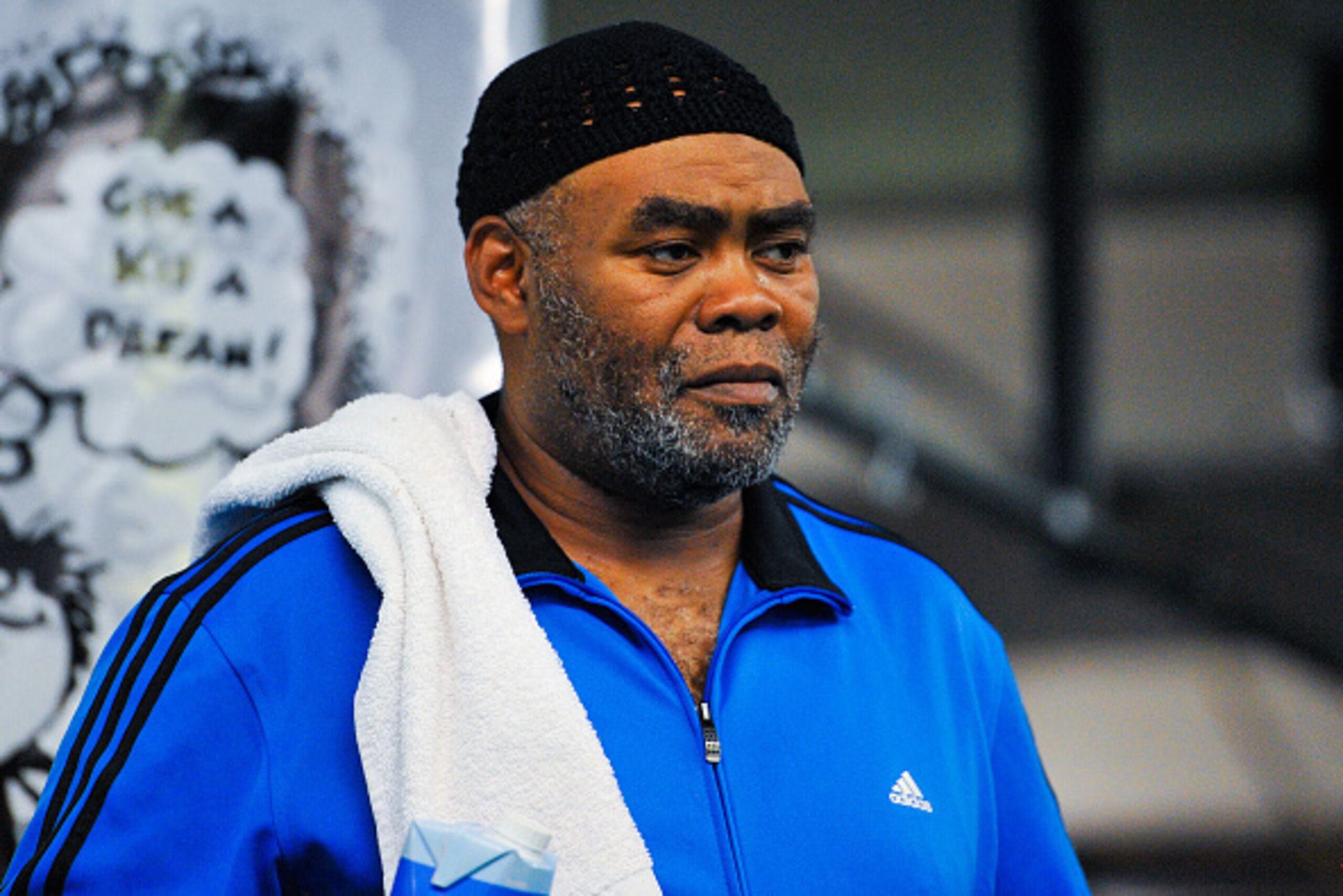
"He shouldn't be able to take a punch at his age. If you hit an average 50-year-old man in the face, it would affect the rest of his life," trainer Naazim Richardson told Bleacher Report. "... I can't really compare Bernard to anyone because there's never really been a 49-year-old fighter competing at a world championship level like this. It's never been done before.
"I can't call another trainer to ask him, 'What did you do with your 50-year-old fighter to get him ready for a world championship?' This is uncharted territory."
Questions about his age are a matter of course. Hopkins has been answering them for 10 years. And for 10 years he's attributed his longevity to clean living. But clean living is more, he says, than avoiding alcohol, cigarettes and the nightlife. It all starts with what he puts into his mouth.
"Whole Foods, Trader Joe's—they get a lot of my money," Hopkins said. "I understood early in my career that I have to take care of my body. I have disciplined myself. That's the simplest thing to say. But how many people in any walk of life have that long-term discipline?
"If I ate fast food and processed food and had a drink now and then, I wouldn't be doing this interview with you. I'd be behind a microphone or somebody's trainer with a bucket in my hand. But instead I'm teaching, I'm preaching this lifestyle and I'm fighting at the same time."
Nutrition, of course, is just the tip of the iceberg.
"You can do all the right things out of the ring. If you don't have an offense and a defense to protect that brain, you're not going to last," Hopkins said. "I don't give a damn how good your lifestyle is.
"Genetics is a percentage of it. There's good fortune, what I call it, because I don't believe in luck. And, I don't think it's too cocky to say this, being one of the best defensive fighters of the last 20 or 30 years of boxing. When it comes to abuse. All that plays a role."
Preparing for the upcoming bout, whether it's shadowboxing in a local pool to save wear on his legs, focusing intently on a tennis ball to work his hand-eye coordination at the track or sparring for 12 hard rounds at the Joe Hand Boxing Gym in Philadelphia, isn't just part of a training camp for Hopkins. He doesn't get in shape for a few months, fight and then go back to his regular life.
This is his life.
"Fighters want to jump into a camp and prepare themselves for a fight. But before that they walk around heavy. Bernard doesn't do that," Richardson said. "He's been on this walk for a long time. It's been a long walk at the elite level. So we can focus on the small things. Because it's a lifestyle for him. He's always training. He's always doing something."
While Hopkins recognizes other sports, especially football, may be just as hard, they are still just games. Boxing, however, is something much darker.
"In my sport, I look at it as being more than a contest. I look at it as war," Hopkins said. "That's the way Marvin Hagler thought. Everybody has their own button they need to push. Whatever they do in sports or life. To function the way they need to function.
"It's what separates the ones who are normal or average—still good players—from the ones that are special. Don't settle for being average. Average is second place in this world."
The desire to be something more than average is a powerful motivator. And, despite his gruff persona, so is a desire to be loved. Hopkins has been the villain so long, it must feel good to be the respected elder statesman.
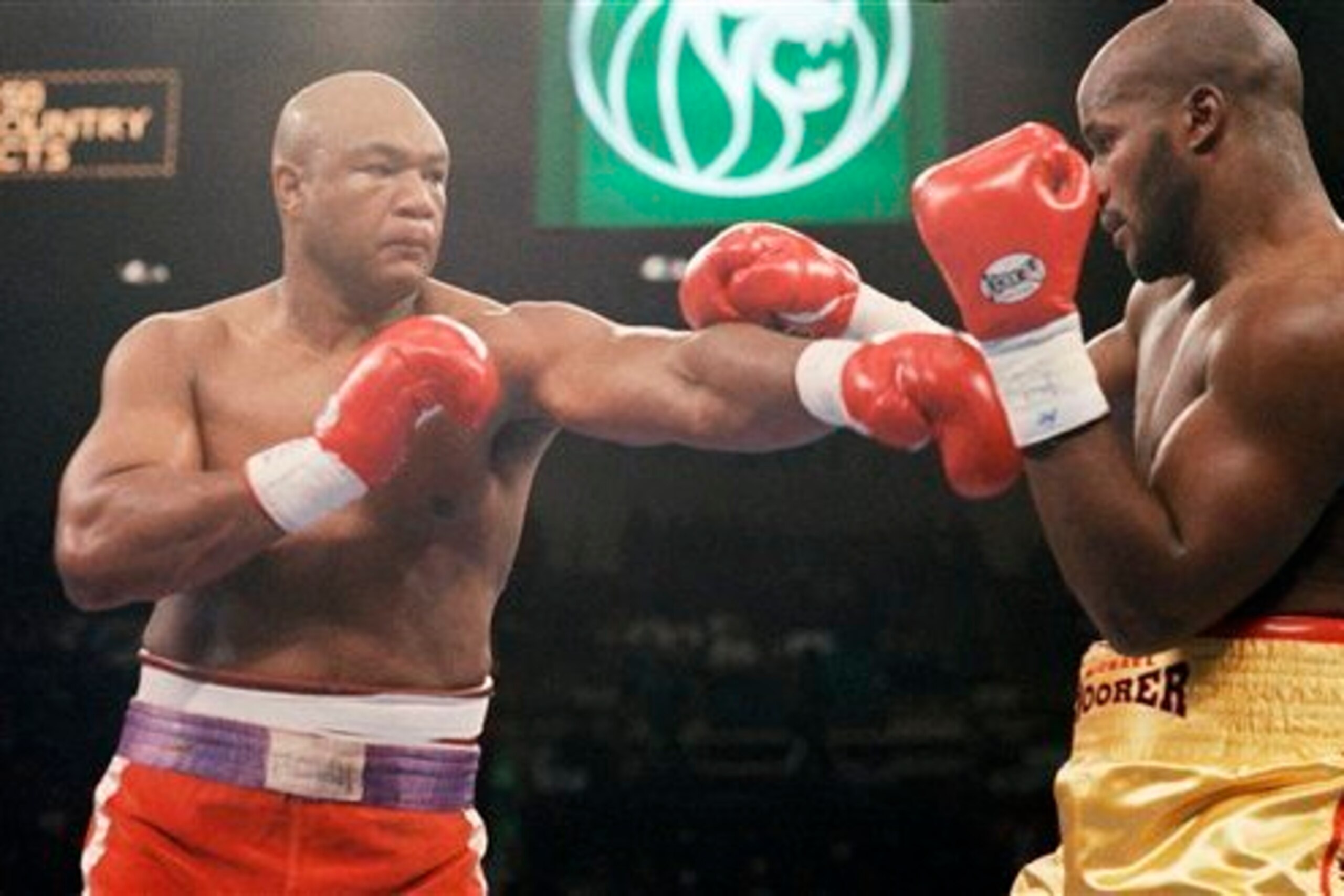
If it's a story that seems familiar, that's because it is. Hopkins, in some ways, is George Foreman—but a Foreman without the winning smile and the countertop grill.
There are other differences too.
When Foreman won the heavyweight crown from Michael Moorer back in 1994 at the grand old age of 45, it mattered. The two made the cover of Sports Illustrated, and the fight was huge news across the country. Today, though Hopkins-Kovalev will be live on HBO, it doesn't carry the same cultural cache.
"Our sport doesn't get the attention that mainstream sports get. If [Hopkins] was a baseball player at this age, winning the World Series and pitching shutouts, he'd be on the cover of every magazine including Home and Garden," Richardson said. "If he was a football player, you'd be sick of him he'd be in so many magazines and shows. But our sport doesn't get that kind of attention."
Hopkins, in fact, is far from a household name. In his biggest fights, against Oscar De La Hoya and Felix Trinidad, he was the opponent, what those in boxing call "the B-side." This, despite being the better man in the ring. It's driven him, haunted him for years—and, he admits, may still be pushing him into the ring today.
"It took a lot of suffering to prove that I belong, but it paid off," Hopkins told Bleacher Report. "I think when you beat all the obstacles and jump all the hurdles they put in front of you, personal or non-personal, and you still prevail, even your worst enemy, your worst critic or naysayer, has to get out of the way and duck, disappear or pay homage and respect to the victorious one.
"I never got paid like the Roy Joneses or the James Toneys. They skipped over me. And that was one of the motivations that continues to keep me in the game. It took a long time to get here, so I'll leave on my own terms. It will be on historic terms. On win column terms."
Six years ago, Hopkins fell short against Hall of Famer Joe Calzaghe. Though it was a close decision, the Welshman's fast hands appeared too much for a fighter who was a then-unthinkable 43 years of age. For the first time Hopkins seemed a truly faded fighter.
"Since that time Bernard Hopkins has had at least two rebirths and at least two times people said, 'OK, now he's finally done,'" commentator and boxing historian Al Bernstein said. "When he lost that fight to Chad Dawson [in 2012], didn't we all think he was done? The part of his story that I can't begin to wrap my head around, and nobody else can either, is how we keep getting these periods where it looks like the end and he comes up with another performance that's shockingly good. At an age no one should be."
| Fighter | Year | Result |
| Segundo Mercado | 1995 | TKO (7) |
| Felix Trinidad | 2001 | TKO (12) |
| Oscar De La Hoya | 2004 | KO (9) |
| Antonio Tarver | 2006 | UD |
| Jean Pascal | 2011 | UD |
Hopkins, of course, is not your average man. He's not even your average championship boxer. He's an anomaly. And that, quite possibly, is a very dangerous thing for a man to be.
"Few fighters are able to compete successfully at that age. ... Combat sports are for young men and women. In other words, there is no senior division, nor should there be. It's not golf," VADA president and former ringside physician Dr. Margaret Goodman said. "You don't see 50-year-old football players. But in boxing and MMA, who you are matched against can make a difference."
Hopkins, however, prides himself on taking the toughest fights, matching himself hard even at an advanced age. He considers himself a throwback in this sense and points out even the best fighters rarely manage to make contact.
Statistics back him up. According to Compubox (per BoxingScene.com), Hopkins' opponents only manage to land half as many shots on him as they did on previous opponents. But it's hard to quantify the toll boxing takes on the human brain. And what happens in a fight is only part of the story.
"It's not the ring that bothers me as much as what trauma are they undergoing in the gym. The risks are great at any age, but sometimes we all stay too long at the fair," Goodman counters. "From a neurological standpoint, as we age our brain does shrink. The bridging veins that connect the brain to its coverings are stretched.
"As a result, when the head is struck there is a stronger chance for those veins to tear. There is an increased susceptibility to hemorrhage. How much, no one knows. Regarding cognitive function, the results of the repeated blows are often not determined until over the age of 40 or older. So, the more you are susceptible to blows in a fight or the gym, the greater your risks are of cumulative damage resulting in dementia."
Like all older fighters, New Jersey put Hopkins through a battery of additional tests in order to get his license, and he passed with flying colors. But the boxing community is cynical about that kind of rubber stamp for good reason. Muhammad Ali, to this day, looms large, a fighter who was sent out to the ring long after the signs of his dementia were becoming clear.
"Whether we'll all look back at this time and see we were enablers, I don't know. I hope that's not the case. ... [Hopkins] is so articulate, we don't see any of those outward signs," Bernstein said. "I don't really even think about that with Bernard because people don't hit him very much. He's a defensive wizard."
It's this defensive wizardry, perhaps, that has kept Hopkins out of the spotlight for much of his career. Hopkins has always struggled—for opportunities, fights and respect. Never a touted prospect or golden boy, he worked his way up from the very bottom, emerging from a stint at Graterford State Penitentiary for robbery in 1988 and taking his first professional fight for just $50.
"I sat in a cell for five years. Just a bed, a sink and a toilet," Hopkins said. "I ain't been back in three decades. You would have never known me if I'd kept the same mentality. Or you'd wish you didn't know me if I'd kept the same mentality.
"You have to go back to my personal life to understand where I'm at today. How hard was it walking off nine years of parole with a GED? God. To me, that's bigger than what I'm doing now. I'm not being modest. People are making a big deal of what I'm doing. I love doing interviews and letting people who don't know me realize I exist in this world. And by all means, make a big deal. It's just time to be real.
"To me, the bigger story is how does an inner city youth in America, who fell down the statistic line, succeed? Towards the graveyard. A statistic. Buried somewhere in the penitentiaries of America. I didn't have $30 million in the bank then. I didn't have nothing to buy what I wanted to buy. I don't have a PhD. I didn't go to Harvard, Yale, Stanford. I don't have none of these things. I don't have things fortunate people brag about when they introduce themselves."
Hopkins scraped and clawed to a championship opportunity, traveling to Ecuador for a match with local favorite Mercado. He was the opponent in that 1994 fight but refused to believe it. Hopkins was dropped twice, but he earned a draw with pure power of will.
"Fighting my way back to a draw in Ecuador, fighting an Ecuadorian. That's character. Athletes, if they stay in the game long enough, have to show what they're made of. Who they are," Hopkins remembered. "All the accolades I wear now—I didn't have those things then. But I stood up. I got up."
Four months later the title would be his after he dispatched Mercado in a rematch. Amazingly enough, Hopkins was already past a boxer's traditional prime in that first title win, having celebrated his 30th birthday in the months between the two Mercado contests.
"People get confused," Richardson said. "They think he fought Felix Trinidad in his prime. When he fought Trinidad he was old. Thirty-six. He was already an old fighter. A lot of people don't understand this sport and they don't understand that 30 in boxing is old. This guy is ancient. You have to sit back and realize how impressive this is."
It's that experience, the struggle to climb a ladder that was constantly tilted by the boxing establishment, Hopkins says, that allowed him to surpass Foreman's astounding feat. That kept him going after common sense said he should have long since hung up the gloves.
In 2010 Hopkins journeyed to Quebec to face reigning champion Jean Pascal in the champ's home province. Pascal hurt him badly, knocking him to the mat twice early. It seemed this would be the final chapter. But Hopkins refused to be stopped, rallying to earn a draw.
On May 21, 2011, then a sprightly 46 years of age, Hopkins defeated Pascal in a return bout to win the WBC Light Heavyweight Championship. It was Mercado revisited, 16 years after the fact, and one of the most amazing performances of his career.
"Fast forward to Jean Pascal. Canada. Everything goes full circle," Hopkins continues. "Jean Pascal didn't understand that I've been down many times. Worry when I get up. Worry when I get up. I'm not afraid to lose. I'm not afraid to lose. I'll fight anyone out there who wants to fight. That's why I look at myself as a throwback. I go in there, I train to win, I eat to win, I sleep to win, I dream to win. But when it comes down to it, anything is possible in that squared circle."
Win or lose against Kovalev, an undefeated slugger who has won 23 of 25 by knockout, Hopkins' place in boxing history is secure. When lists are made, he knows he'll be among the very best of all time.
"Nothing lasts forever. Not even life," Hopkins said. "It's going to be hard to think about where and in what book you have to put my legacy from start to end. You can't just put me anywhere.
"It's going to be a debate. Not a debate about should or shouldn't or deserve. It's going to be where. Match me with any other athlete. Past or present. And let's see where. That debate's going to last longer than my career. In my golden years I'm going to have a ball watching that debate. Where."
"Alien vs. Krusher: Hopkins vs. Kovalev" is a 12-round unification bout for the IBF, WBA and WBO Light Heavyweight World titles. The HBO World Championship Boxing telecast begins Saturday at 10:45 p.m. ET/PT.
Jonathan Snowden is Bleacher Report's Lead Combat Sports Writer. Unless otherwise noted, all quotes acquired firsthand.

.jpg?w=2560 "Reported Details of Seahawks-K9 Split ⛓️💥")