Arsene Wenger Must Make the Tough Decisions to Keep Arsenal Playing 4-4-2
Arsene Wenger has wisely restored the 4-4-2 as Arsenal's formation of choice. But the Frenchman must make the tough decisions to keep it that way.
Since Wenger went back to his roots and reintroduced a version of 4-4-2, the Gunners have won two league matches by the combined score of 5-0. Granted, it certainly hasn't hurt to have faced relegation-troubled Sunderland and Burnley in those games.
But it would be churlish to ignore the impact returning to a more balanced formation has had on Arsenal's fortunes. Balance is the key phrase when it comes to the 4-4-2, as well as why it suits Wenger's teams best.
TOP NEWS

Alex Morgan Announces Birth of 3rd Child 👶

Final Men's Ballon d'Or Rankings 📊

Most to Blame at Man Utd? 😡

He referenced that quality after Arsenal beat Burnley 3-0, per Arsenal.com: "We played 4-4-2 and we played like that against Sunderland. It works because he [Alexis] works very hard so we can afford to do it. We have to balance the midfield and defence."
The 4-4-2 covers the dimensions of a pitch perfectly and is structured in such a way to foster partnerships. In any ideal version of the formation, the key partnerships run through the spine of the team.
Two commanding centre-backs hold sway in defence, while a pair of skilled, but equally tenacious midfielders dominate the flow of possession in the middle. Ahead of them, two pacy and combative strikers combine to create and convert chances.
The whole thing should be bracketed by a pair of full-backs who work in a symbiotic way, both offensively and defensively with intelligent wide midfielders. That's it in a nutshell.
The reason it works so well for Arsenal is that Wenger's game is all about combination play and fluidity from a solid base. In Arsenal's last two games, Wenger has ensured that solid base by selecting both Mathieu Flamini and Mikel Arteta together in central midfield.
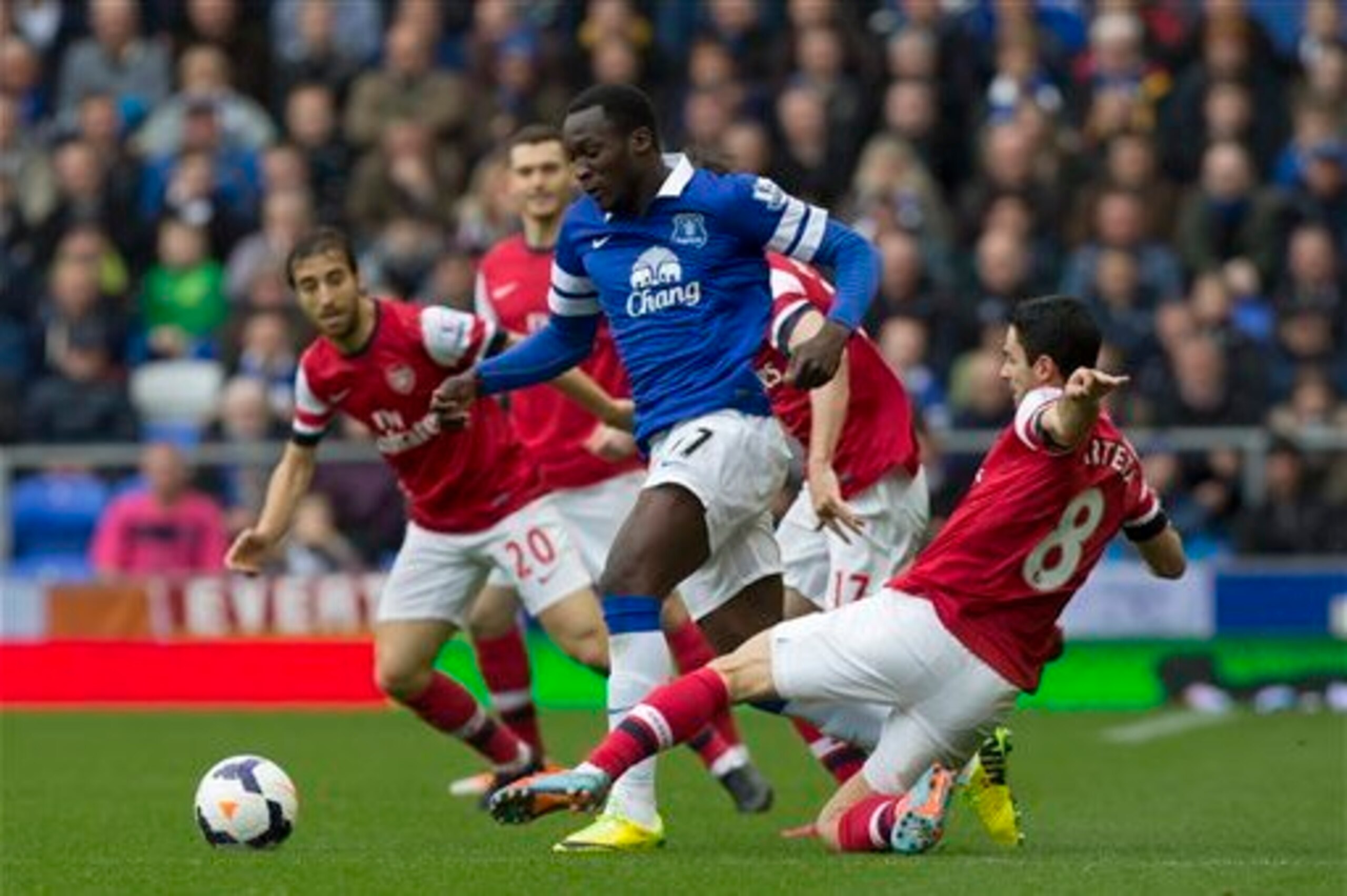
The veteran duo are the closest to natural defensive midfielders in this squad. But neither are the quickest, nor ever likely to offer much going forward.
In a style of play demanding quick transitions from defending to attacking, Wenger needs a raiding buccaneer, ready and willing to also forage forward and link his team together.
Fortunately, he already has one in the shape of Aaron Ramsey. But would combining Ramsey's forward-thinking instincts with the steady positional play of say Arteta, really give the Gunners the strength they need in the middle?
This represents Wenger's first tough decision. Partnering Ramsey with either Arteta or Flamini, might not give a largely lightweight team the defensive cover it needs.
But it's still a risk worth taking if it means playing the formation that suits Wenger's philosophy, and by extension his teams, best. Wenger referenced how his team has played with more unity and structure in recent matches, per the London Evening Standard.
"In the recent games at home we were not patient and we have learned," the Frenchman noted. "We look a bit more balanced between offence and defence. We were less in trouble when we lost the ball, we were serious and that is very important in the efficiency."
Maintaining that balance is the dilemma facing Wenger if he wants to retain football's classic shape (and he certainly should). For example, which players best protect the integrity of the team's shape on the flanks?
Recent games have seen Santi Cazorla operate on the left, while Alex Oxlade-Chamberlain has taken up residence on the right. That's worked while Mesut Ozil and Theo Walcott have been injured, but what about when both are available again (Walcott is already back)?
Few would argue that Ozil, at least at his best, can offer more creatively than Cazorla—who is certainly struggling at the moment. There should be no doubt at all that Walcott is a greater threat to an opposition defence than the more industrious Chamberlain, who only exceeds his international teammate in general play.

But would either Ozil or Walcott track back with enough regularity to help out their full-back? History says that's not very likely.
However, history is exactly that. On the surface, playing Ozil wide—not something he always enjoys—along with Walcott, who has always played as more striker than midfielder, could leave Arsenal vulnerable.
But it's another risk worth taking for the fluency it would give the Gunners going forward. Yet it means leaving people out.
The same problem faces Wenger further forward. At the moment, he is reaping the rewards of a complementary partnership between Alexis Sanchez and Danny Welbeck.
Wenger had plenty of praise for the pairing after the dismantling of Burnley, per Arsenal.com: "I’m very happy. [Alexis and Danny Welbeck] work well together. At the moment I’m playing Alexis through the middle because we can use his runs and he’s dangerous."

A key to that partnership, and the formation as a whole, has been playing Sanchez centrally, where he's certainly more dangerous than from the flanks. Wenger indicated as much following the Burnley win, per Arsenal.com:
"Since he’s played through the middle he looks more goal dangerous. Now it looks to me that he’s really dangerous through the centre of the pitch because he’s in full confidence, he’s physically strong, he likes to take people on as well and he makes perfect runs. Through the centre of the pitch maybe he’s more dangerous.
"
Playing a forward as ultra-talented as Sanchez where he can do the most damage can't change. It can't change even when Olivier Giroud, the most proficient link player among Arsenal's strikers, returns from injury.
The ex-Montpellier man is "miles ahead of schedule," according to Wenger, per Mirror writer John Cross. So what does Wenger do when he's fully ready?
Welbeck works well with Sanchez because, while he's far from an accomplished finisher, he's a grafter who will run tirelessly to pull markers away and make room for the runs of Sanchez and others.
Yet Giroud, while certainly not a composed finisher in his own right, is still more prolific and creative than Welbeck.
The issue Wenger faces is what partnerships does he trust the most in midfield and attack? Solving the problem will require tough decisions to maintain the current 4-4-2 structure.
Tough decisions like choosing Ozil or Cazorla, because this midfield won't accommodate both. It means resisting trying to play Giroud and Welbeck in the same forward line if it means shifting Welbeck out wide.
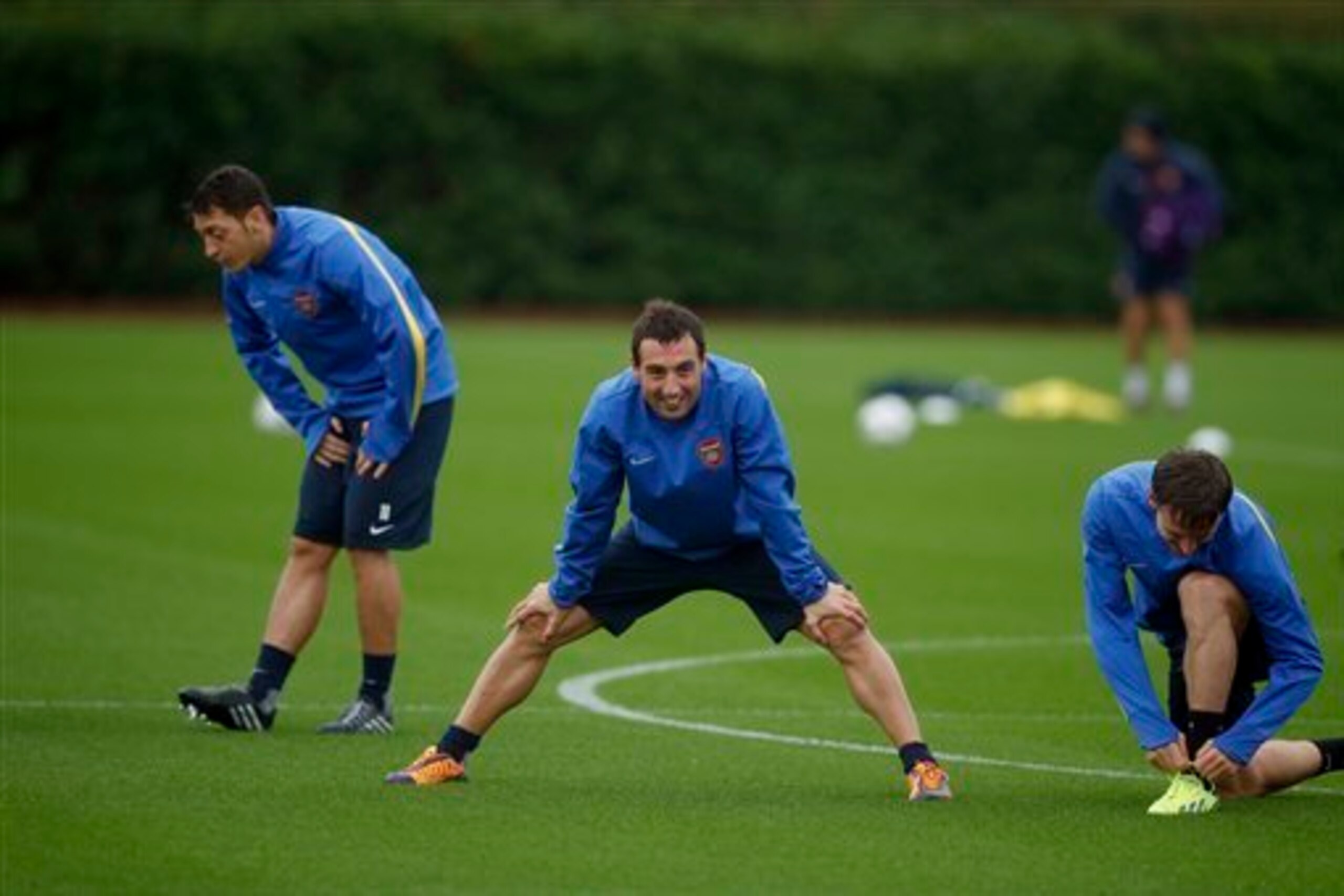
That's something Wenger has worryingly hinted at in the past, per Daily Star reporter Rhys Turrell:
"Welbeck and [Giroud] can play together in the centre or separately. Welbeck also played on one side to Manchester United.
Welbeck played in the same team with [Wayne] Rooney and [Robin] van Persie. He can play down the sides.
"
But that's exactly the type of wrong decision that might make everybody feel included and valued, yet ultimately wrecks the balance of the team by pushing players into unfamiliar positions.
Wanting to fit all of his players into a formation has been a long-standing issue for Wenger. It's especially pertinent with a squad featuring Ozil, Ramsey, Cazorla, Jack Wilshere, Chamberlain and Walcott.
Including their talents is the motivation behind the 4-1-4-1 so often deployed since this season began. That formation, with its ability to house multiple central playmakers, is an admirable tactical shift from Wenger.
When it works, Arsenal's litany of schemers can produce some truly wonderful football. But the 4-1-4-1 won't work for the current team over the course of this season.
It won't work because this squad doesn't possess the right player to hold the fort in front of the back four. It won't work because it will mean moving Sanchez out of the central areas where he's lethal.
What suits this squad best is 4-4-2. Ramsey can join a more naturally sitting player such as Arteta or Flamini to form a more complementary dynamic in central midfield.
Sanchez can partner either Giroud or Welbeck to act as the live wire foil to a hard-working target man. As for the flanks, Ozil, if motivated, can be the wandering creative force Robert Pires was for years in Wenger's best teams.
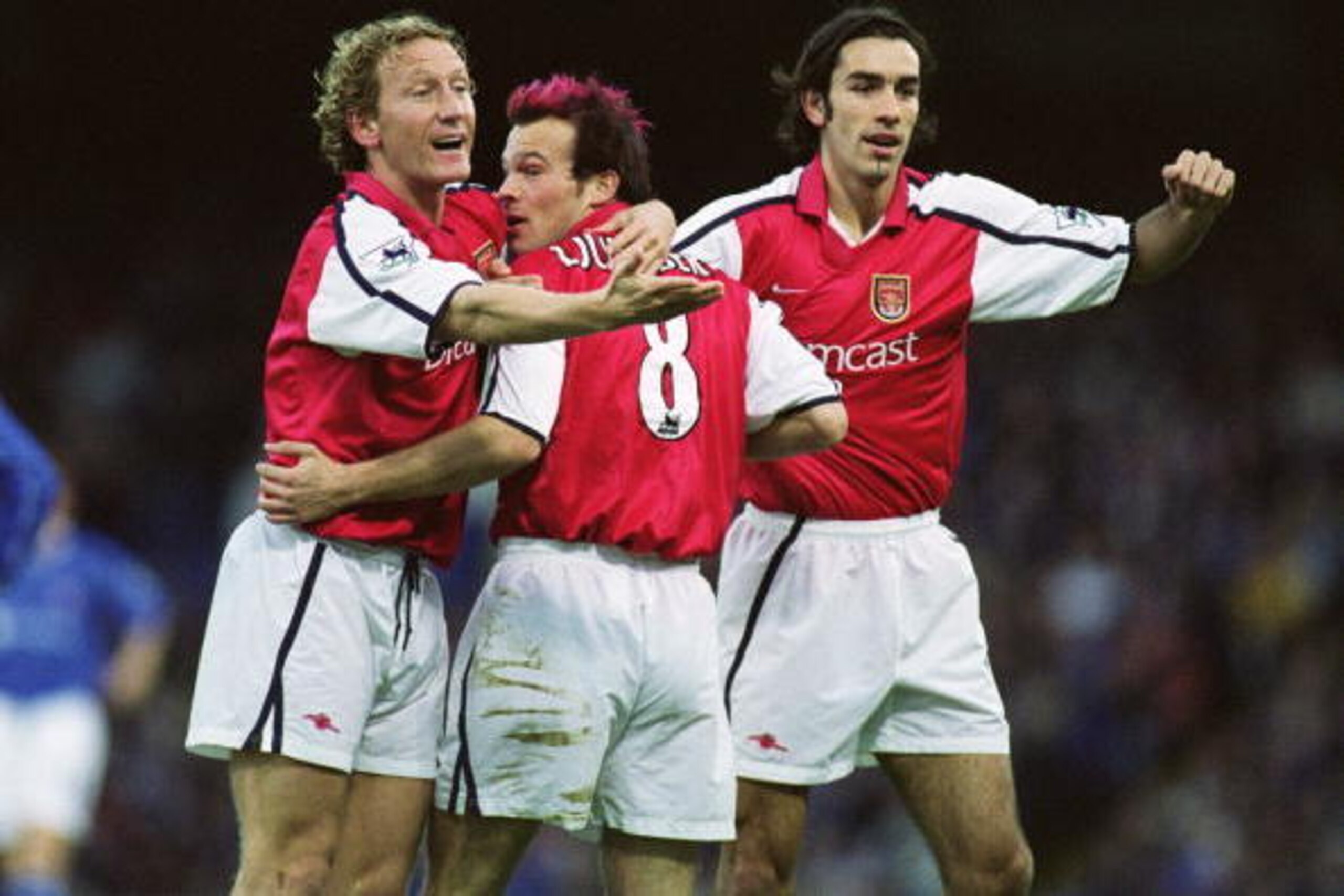
In the same way, Walcott can be the Freddie Ljungberg-type who treats the right wing as a de facto supporting forward role via clever runs between the lines.
Of course, all of this depends on Wenger being willing to treat stars such as Wilshere, Cazorla, Chamberlain and one of Welbeck or Giroud as fringe players, rather than regular starters.
But they're the tough decisions that can yield a balanced team playing in a system that gives it the best chance to win. After that, only time will tell how far the 4-4-2 can take Arsenal this season.