

Top 25 ODI Wicket Takers at Lord's
As the the famous Lord's Cricket Ground celebrates it's bicentenary year and the World Cup looms large in the cricket calendar, we take a look back at the most successful bowlers in the ODI format at the home of cricket.
How do James Anderson and Stuart Broad, the pace duo spearheading England at the forthcoming World Cup, compare with the great England bowlers of the modern era like Ian Botham and Darren Gough?
Glenn McGrath found Lord's very much to his liking in whites but which visiting players have worked the Lord's slope most effectively to enjoy profitable days in coloured clothing?
Read on to find out which bowlers have taken the most wickets in ODI history at Lord's. Players with the same number of wickets are separated by average, with wickets taken at a lower average placing bowlers higher on the list.
25. Tim Southee (New Zealand)
1 of 25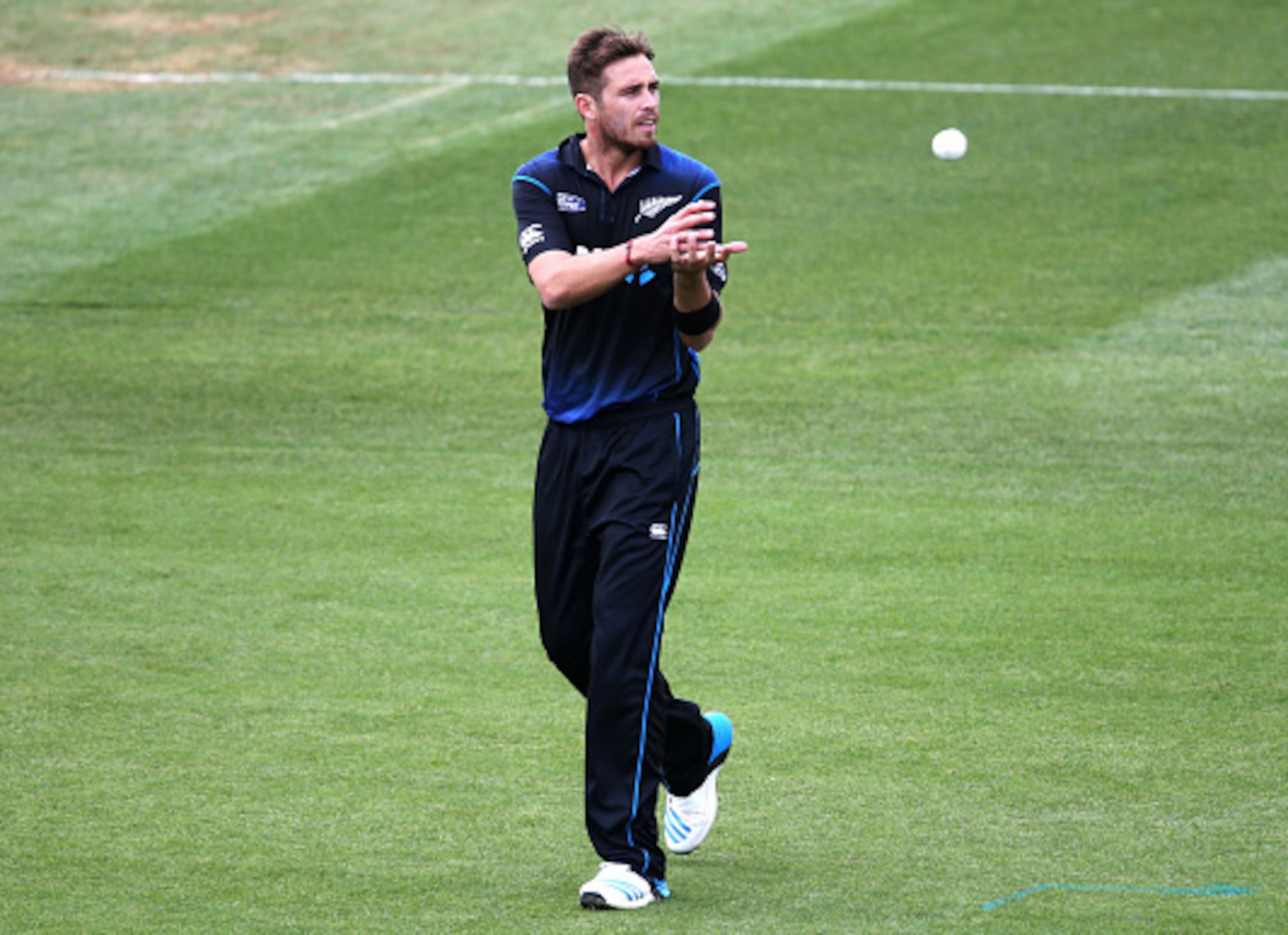
Wickets at Lord's: 6
Matches at Lord's: 2
Average at Lord's: 14.33
Best figures at Lord's: 3/37
Lord's has been a happy hunting ground for New Zealand with wins in their last two visits, and Tim Southee is one of a pair of Kiwis that have made it onto this list on the strength of those bowling performances alone.
Southee bowls at good pace with the ability to achieve late outswing and has found the Lord's slope a great assistant early in the innings, having Alastair Cook (twice) and Ian Bell caught behind nibbling at the moving white ball.
24. Derek Pringle (England)
2 of 25
Wickets: 7
Matches: 5
Average: 30.42
Best: 4/42
Essex seamer Derek Pringle has fairly unremarkable international stats with bowling averages in excess of 35 in Tests and ODIs. He did however, have an appetite for hard graft that appealed to captains, and on his good days he could be very effective.
In the World Cup final in Australia in 1992, he was the standout performer with the ball, taking 3/22 from his 10 overs against Pakistan, removing both overs cheaply to give England the best possible start.
That year, Pringle found good form with the ball and in the last of his five appearances at Lord's a few months later he produced his best effort in his 44-match ODI career, taking 4/42 to help skittle Pakistan for 199 and secure victory for England.
23. Bob Willis (England)
3 of 25Wickets: 7
Matches: 5
Average: 25.28
Best: 2/24
One of England's greatest ever fast bowlers, Bob Willis is best known for his stunning effort with the red ball in the famous Botham Test at Headingley in 1981, when his 8/43 secured the most famous of victories.
Willis also had a fine record in ODIs, taking his 80 wickets in 64 games at a fraction lower than his Test average of 25.2, and he maintained this consistency at Lord's.
Helping England progress to the semi-finals of a home World Cup in 1983, Willis was at his most impressive at Lord's taking a tidy and effective 2/24 from his 12 overs in a 60 over game, his early wickets restricting Pakistan to a total of 193 that was easily reached by England with nearly 10 overs to spare.

.jpg?w=2560 "NFL Paris Football")
.jpg?w=2560 "Seahawks Chiefs Football")
22. Muttiah Muralitharan (Sri Lanka)
4 of 25Wickets: 7
Matches: 4
Average: 22.28
Best: 5/34
Sri Lankan legend Muttiah Muralitharan is the leading wicket taker in the two longest established formats with 800 Test scalps and 534 in ODIs, so it is no surprise to see the formidable finger-spinner feature in this list.
Despite touring England three times, Muralitharan only played one Test at the home of cricket. On that occasion, he failed to replicate the form he showed on the other side of the capital in 1998 when he bowled Sri Lanka to victory at The Oval with 9/65 on top of seven first innings wickets.
In ODIs he had more success at Lord's and that same summer he terrorised England batsman with the white ball, too. In a triangular series with South Africa he went wicketless in the group game versus England at Lord's before taking apart their top order in the final four days later.
After an opening stand of 132 had England well set, Murali dismissed five of the top six with 5/34 to keep the score within range, and Sri Lanka duly romped to victory with 17 balls to spare.
21. Joel Garner (West Indies)
5 of 25Wickets: 7
Matches: 4
Average: 17.14
Best: 5/38
At 6'8", Joel "Big Bird" Garner was a fearsome prospect in both formats with more than 400 international wickets, forming part of the most destructive pace attack in cricket history alongside Michael Holding, Andy Roberts, Colin Croft and Malcolm Marshall.
In ODIs he was a particularly effective bowler at the death, possessing great control at express pace and an ability to bowl yorkers seemingly at will.
He was not only a big man but also a man for the big occasion, and in the 1979 World Cup final at Lord's he was at his unplayable best. Garner's 5/38 remain the best figures recorded in a final, with four England batsmen clean-bowled, three of them returning to the famous pavilion without a run to their name.
20. Tim Bresnan (England)
6 of 25
Wickets: 8
Matches: 9
Average: 51.12
Best: 2/41
A doughty cricketer who will always be remembered for his stunning effort with the ball in the 2010-2011 Ashes win in Australia, Bresnan has turned in some excellent performances for England but makes this list by virtue of playing a large number of games rather than particularly notable performances at Lord's.
Hi average of 51.12 in nine ODIs at the home of cricket is far lower than anyone else in the top 25, and his skiddy swing bowling has never brought him the significant rewards at Lord's that he has enjoyed at other English grounds like Trent Bridge, Edgbaston and Southampton.
19. Shoaib Akhtar (Pakistan)
7 of 25
Wickets: 8
Matches: 5
Average: 29.25
Best: 4/28
Shoaib Akhtar was known as "The Rawalpindi Express" for his searing pace and was the first man to exceed 100 miles per hour on the speed gun back in 2003. His ability to swing the ball at high velocity meant he was often unplayable, but equally the pace on the ball often helped it to the boundary that bit quicker.
Lord's has seen both sides of Shoaib in ODI cricket, and twice he suffered at the hands of the great Australian sides.
In 2004, he went for 70 runs in eight overs for one wicket with Andrew Symonds, in particular, flaying him for 42 runs off 17 deliveries on his way to a hundred. More painfully, he was helpless as Pakistan were thrashed in the 1999 World Cup Final, wicketless for 37 runs from four overs as the Aussies cruised to their target in 20 overs and one ball.
He found England more obliging hosts, playing his part in two victories from three games at Lord's and returning impressive figures of 4/28 to claim man-of-the-match honours in an easy victory in 2006.
18. Andy Roberts (West Indies)
8 of 25
Wickets: 8
Matches: 6
Average: 28.75
Best: 4/27
Another of the great West Indian pace armoury of the late 1970s and early 1980s to leave his mark on Lord's in ODIs was Andy Roberts.
Five of his top six ODI bowling figures were registered against England between 1976 and 1980, and the second best of those came at Lord's in the summer of 1976.
Two days after his 4/32 led the West Indies to victory against England at Scarborough, the home side found no answers to the same questions as Roberts repeated the trick, destroying the hosts' top order with 4/27 and easing the West Indies to an unassailable 2-0 lead in the three match series.
Roberts was also highly effective in the 1983 World Cup final at Lord's, taking 3/32 to restrict India to 183, though on this occasion his teammates were not equal to the task with the bat.
17. Shane Warne (Australia)
9 of 25Wickets: 8
Matches: 4
Average: 23.5
Best: 4/33
The greatest leg-spinner of all-time with more than 1,000 international wickets to his name, Shane Warne was so often the scourge of England and his first visit to Lord's was an enjoyable one.
Match figures of 8/159 set up an innings victory in the second Test of the 1993 Ashes, demonstrating that his "ball of the century" in the previous Test was no fluke.
Warne only played one ODI against England at Lord's, going wicketless in 2001, but he reserved his best performances in coloured clothing at the home of cricket against Pakistan.
In 2001 he set up a comfortable victory with 3/56 in the final of a tri-series, providing a gentle reminder of a far more significant effort on the same ground two years earlier.
In 1999, Warne's man-of-the-match performance in the World Cup final was decisive. At 69/3 after 20 overs, things weren't looking great for Pakistan, but they were still in the game when Warne came on to bowl.
He struck in his second over, and his nine over spell of 4/33 reduced Pakistan to 129/9. The final wicket yielded just three runs and Australia reached their target at a canter.
16. Glenn McGrath (Australia)
10 of 25Wickets: 8
Matches: 6
Average: 22.62
Best: 3/25
It is fitting that Glenn McGrath and Shane Warne are one after the other in this list, having formed such a potent combination of wily spin and deceptively quick seam bowling in the great Australia sides of the 1990s and early 21st century.
McGrath possessed outstanding control and rarely leaked runs while taking wickets regularly, so was ideally suited to limited overs cricket.
Only one bowler in this list had a better economy rate than his 3.12 runs per over, and McGrath's mastery of the Lord's slope was such that he bowled a remarkable 14 maidens from the 58 he sent down in ODIs.
His best figures at Lord's came in a rare tied game with England in 2005, where he took 3/25, but of greater consequence was his characteristically tight bowling in the 1999 World Cup Final against Pakistan.
McGrath's nine overs yielded just 13 runs for two wickets. His opening five over spell of 1/5 including three maidens was exceptional and created the pressure that Warne would brilliantly exploit to run through the middle order.
15. Lasith Malinga (Sri Lanka)
11 of 25
Wickets: 8
Matches: 3
Average: 16.5
Best: 3/26
Like his fellow Sri Lankan Muralitharan, Lasith Malinga is a true one-off, his unorthodox, slingy action making it desperately hard for batsman to pick.
Keeping the ball out against Malinga's rapid inswinging yorkers is difficult enough, let alone scoring runs, and he has had great success in the ODI format, becoming the first player to take three hat-tricks in 2011.
In three ODIs at Lord's, Malinga has helped Sri Lanka achieve three victories against England, and though his control has at times deserted him, twice going at more than five runs per over, he has always taken wickets.
Malinga's most recent visit included a masterclass of new-ball bowling, removing Alastair Cook with the first ball of the innings and Ian Bell in his second over in a four over spell of 2/8 with two maidens.
His figures were tarnished by Jos Buttler's late assault, but he showed characteristic nerve to take a wicket, force a run out and concede just four from a final over where 12 would have cost Sri Lanka victory.
14. Michael Kasprowicz (Australia)
12 of 25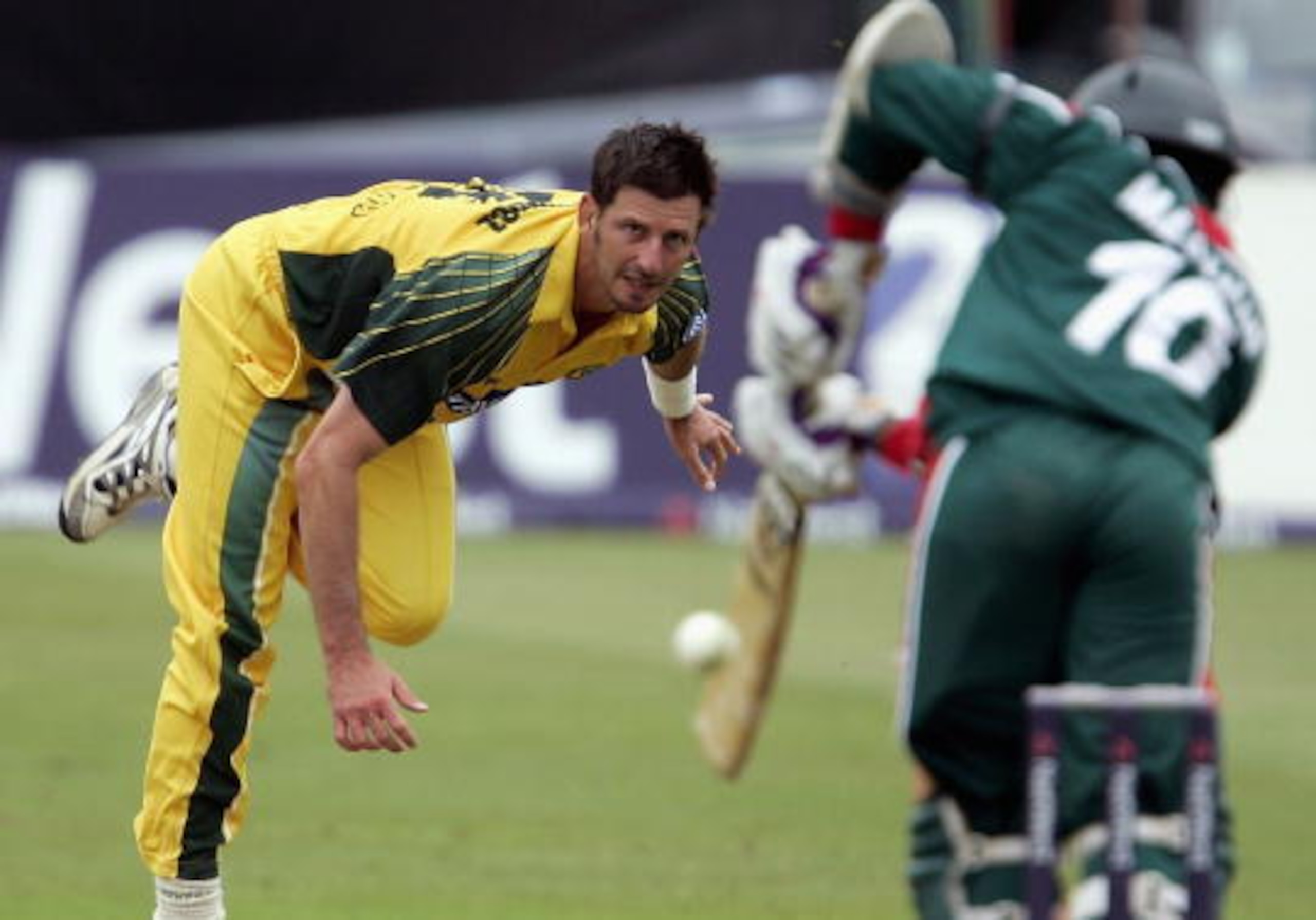
Wickets: 8
Matches: 3
Average: 15.87
Best: 5/47
One of the less celebrated performers from Australia's period of dominance and perhaps best remembered on these shores for his last wicket dismissal in the famous Edgbaston Ashes Test in 2005, in his 2004 prime Michael Kasprowicz was rapid and accurate enough to keep Brett Lee out of the Test side.
His unerring control at good pace made him arguably more effective in the shorter format where his ODI career bowling average of 24.98 is markedly better than his Test average of 32.88, and he reaped the rewards of time spent on the county circuit by excelling in England. Three of his four best ODI figures were registered on English soil in 2004.
None of these were against England, with two coming in the Champions Trophy and the other in a warm-up game against Pakistan at Lord's, where his 5/47 secured a narrow 10-run victory.
13. Daniel Vettori (New Zealand)
13 of 25Wickets: 8
Matches: 2
Average: 7.75
Best: 5/30
A canny cricketer with great control and strong variation in place and flight, Kiwi Daniel Vettori has by far the best average of anyone in this list, turning in two stellar performances at the home of cricket to take eight wickets in two ODIs at just 7.75 apiece.
He has not featured at the famous ground in St. John's Wood since 2008, but anyone there on that day will recall a masterful display of spin bowling where both Ravi Bopara and Luke Wright were bamboozled by his variations and saw their stumps rearranged by arm balls they failed to pick.
Vettori's excellent display then confirmed a great affinity for Lord's following his match-winning performance against West Indies in the 2004 Champions Trophy Final, where his 5/30 sealed a thumping victory for New Zealand.
Vettori ran through the middle order removing every batsman from No. 4 to No. 8, a hugely impressive feat when you consider that includes the maestro Brian Lara and the indefatigable Shivnarine Chanderpaul.
12. Ashley Giles (England)
14 of 25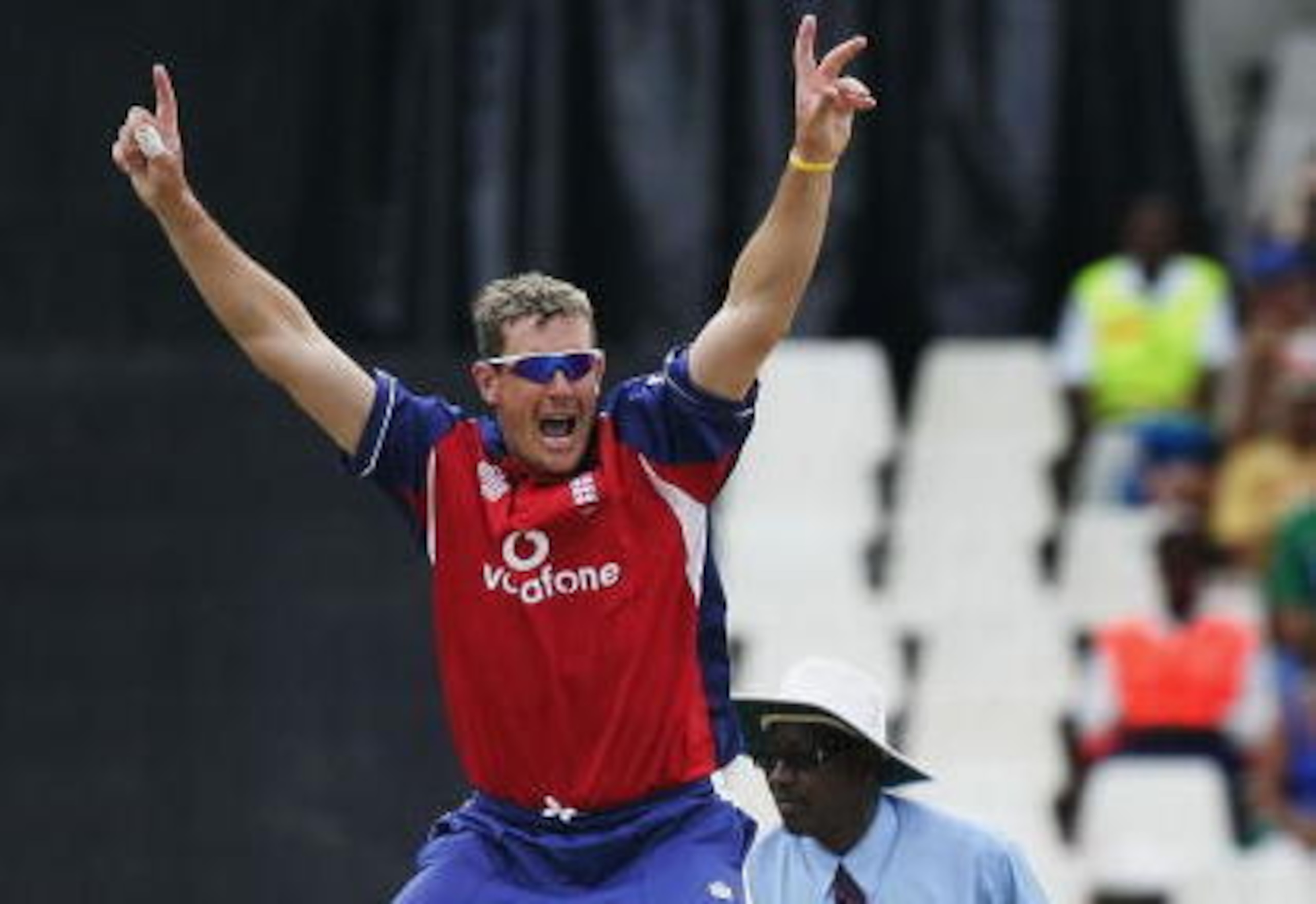
Wickets: 9
Matches: 8
Average: 30.88
Best: 3/39
Before the emergence of Monty Panesar and Graeme Swann for England, Ashley Giles fulfilled spin bowling duties, and though he perhaps lacked the incision of the pair that followed, he rarely let England down, either.
In Tests, his tidy spells often held up an end to allow an array of fast-bowling talent to rampage in at the other end and take the wickets, and in ODIs his role was similarly one of containment.
Giles offered England control more than wickets, and in ODIs he averaged fewer than one wicket per game with 55 scalps at 37.61 in his 62 matches, but some of his efforts at Lord's were among his best in a coloured England shirt.
Even when wicketless, he never went at more than 4.3 runs per over, and in the 2003 tri-series final he played his part in dismissing South Africa for 107 for a crushing victory, taking 2/3 from the three overs he was required to bowl, backing up the sterling work carried out by England's seamers.
11. Malcolm Marshall (West Indies)
15 of 25Wickets: 9
Matches: 6
Average: 23.66
Best: 3/38
Another from the conveyor belt of fearsome fast-bowlers developed by the West Indies in the late 1970s, Malcolm Marshall has a convincing case for being the best of the lot, allying express pace with immaculate control and a devastating ability to swing the ball both ways.
Such was the formidable nature of the West Indies attack that wickets were often shared around, but Marshall was consistent at Lord's and performed well there during the 1983 World Cup.
In the West Indies group match victory over Australia, he was the pick of the bowlers with 2/36 when everyone else went for more than 50 in a high-scoring game.
In the final, his 2/24 was in keeping with an excellent display by the entire pace attack to bowl India out for 183, an effort that would ultimately prove to be in vain.
10. Alan Mullally (England)
16 of 25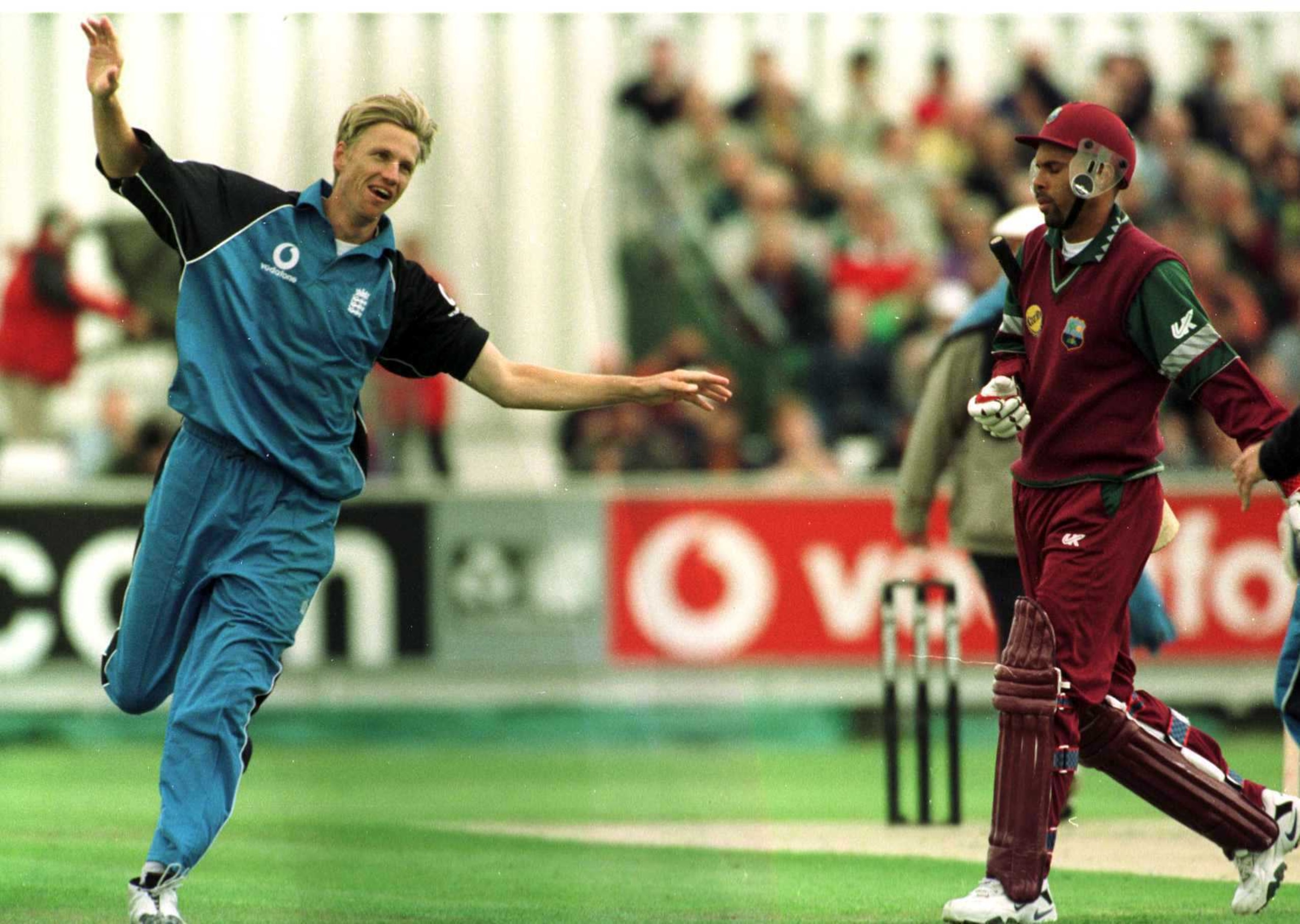
Wickets: 9
Matches: 6
Average: 19.22
Best: 4/37
Few fast bowling rankings will find Alan Mullally nestled one place above Malcolm Marshall, but having played the same number of ODIs at the home of cricket, the lanky left-arm seamer has taken the same number of wickets at a better average than the West Indian legend.
An inconsistent Test bowler, Mullally offered England excellent control with the white ball in hand. Of the dozen Englishman in the top 25 wicket takers at Lord's, only Bob Willis went for fewer runs per over than the 3.6 conceded by Mullally, and his ODI performances saw him ranked No. 2 in the world at one stage.
In an otherwise dismal World Cup at home, where Zimbabwe progressed from the group stage at the expense of the hosts, Mullally got England off to the best possible start. Taking on reigning champions Sri Lanka, Mullally produced an inspirational display of 4/37 to set up victory.
9. Steve Harmison (England)
17 of 25Wickets: 10
Matches: 6
Average: 23.5
Best: 4/22
Few England bowlers have performed across such a broad spectrum of quality as Steve Harmison, veering from wayward fodder on some days to unplayable hostility on others.
Such unpredictability was not ideally suited to ODI cricket, where control and reliability are paramount, and this is reflected in his career economy rate above five runs per over. Consequently, he played fewer games in this format than in Tests.
When his radar was functioning, however, Harmison could be an excellent bowler in ODIs, his steepling bounce angled in at batsmen proving difficult to score from and easy to get out to, and in his pomp around 2004-2005 he found his best form twice at Lord's.
In 2004, India scored at least four per over from each bowler except Harmison, who impressed with 4/22 from his 10 overs. Classy players like Sourav Ganguly, VVS Laxman and Rahul Dravid fell victim.
In 2005, a fortnight before he ripped through Australia's top order to light up Day 1 of the Ashes at Lord's, he gave a hint of things to come with an impressive spell of 3/27 from 10 overs as Australia were bundled out for 196, with Harmison counting the prize scalp of captain Ricky Ponting among his wickets.
8. Michael Holding (West Indies)
18 of 25Wickets: 10
Matches: 6
Average: 18.5
Best: 3/28
The highest ranked of the West Indian quartet who thrilled the Lord's crowd with their destructive fast bowling in the 1970s and 1980s, Michael Holding equalled Steve Harmison's haul of 10 wickets from five matches through a similar brand of express pace and bounce.
Holding, though, was a far more daunting prospect for batsmen with his long, predatory run-up and unerring accuracy, and his wickets at Lord's cost five runs fewer each.
After going wicketless in his first ODI at Lord's in 1976, Holding tended to bring his A-game thereafter.
The 1979 World Cup final against England typified Holding's value in limited overs cricket, as the hosts struggled to score from his tight, aggressive bowling before the man known as Whispering Death triggered a collapse with breakthrough wickets.
Requiring nearly five per over, England averaged two per over from the eight sent down by Holding.
Once the opening partnership of 129 between Mike Brearley and Geoffrey Boycott was ended by Holding, the pressure built up from his economical opening spell told, as Joel Garner blitzed the middle order to seal a resounding 92 run victory.
7. Ian Botham (England)
19 of 25Wickets: 11
Matches: 10
Average: 35.9
Best: 2/36
England's leading wicket taker in Tests, Ian Botham remains the finest English all-rounder to have graced Lord's. Despite this, he never quite thrilled Lord's crowds in coloured clothing as he did in whites. His record with the ball in ODIs at Lord's is solid, but this is a cricketer who regularly dealt in the spectacular.
In Tests, Botham took eight five-fors at Lord's including his two best figures of 8/34 and 8/103. Though he proved a reliable wicket taker over the course of 10 ODIs at the home of cricket, compared with his exploits in Tests, a record of 11 wickets at 35.9 with a best return of 2/36 falls below the lofty standards he set in the longer format.
His most notable appearance at Lord's in ODIs proved a disappointing one. In the 1979 World Cup final, Botham was the pick of England's seam bowlers with 2/44 from 12 overs, though both wickets were tail-enders and he was ultimately unable to prevent his Somerset colleague Viv Richards from blasting a match-winning hundred.
6. Stuart Broad (England)
20 of 25Wickets: 16
Matches: 11
Average: 30.81
Best: 4/64
Half of one of England's most successful new ball pairings, Stuart Broad can blow hot and cold and his performances at Lord's reflect this tendency.
On four occasions he has gone wicketless for more than four per over, and his best haul of four wickets still cost 64 runs from 10 overs against Australia.
When Broad finds his groove he can be unplayable, and he tends to take wickets in clutches. He has twice been devastating in claiming seven wickets in a Test innings at Lord's, but in ODIs he has taken more than two wickets only twice in eleven games and struggled to tie batsmen down.
His economy rate of 4.92 at Lord's is worse than all but one bowler in the top ten.
Nonetheless, Broad retains that unquantifiable ability to make things happen. This was evident in his best display in a Lord's ODI against the West Indies in 2007.
Shivnarine Chanderpaul and Dwayne Bravo had put on 60 for the fourth wicket chasing a very gettable 225, before Broad made the breakthrough with two wickets in an over, triggering a collapse of four wickets for 26 runs that effectively ended the contest. Broad's spell of 3/22 from nine overs was decisive.
5. Graeme Swann (England)
21 of 25
Wickets: 16
Matches: 8
Average: 18.37
Best: 4/37
A rarity for England in recent years, Graeme Swann was a spin bowler who offered England both containment and an attacking option. Level with Stuart Broad on 16 wickets, Swann has gone for exactly one run fewer per over and his average of 18.37 is considerably better than Broad's 30.81.
Swann rarely disappointed at Lord's, going for fewer than four per over in six of his eight ODIs at the ground, though sadly he was generally alone in this regard in an often ineffective England side. His five best performances with the white ball at Lord's, including 4/37 against Pakistan in 2010, were all in losing causes.
In each game he was England's most economical bowler, aside from the odd part-timer sending down five overs or fewer, and nobody took more wickets in any of them bar one game when Broad took four expensive wickets for twice the runs Swann conceded for three.
4. Andrew Flintoff (England)
22 of 25Wickets: 18
Matches: 11
Average: 17
Best: 4/32
England's most crowd-pleasing cricketer since Ian Botham, Andrew Flintoff has come closer than anyone to matching the magic of Ian Botham in an England shirt.
Like the legendary Botham, he produced some stellar performances at the home of cricket, but unlike Botham, his ODI record at Lord's is actually more impressive than his record in Tests.
In nine ODIs he took more than one wicket, and in four of his 11 matches sent at least three bastmen back to the pavilion. His ODI average at Lord's is bettered by only one bowler in the top ten, and his strike rate of a wicket every 21.7 deliveries is equal best too.
Flintoff banged the ball in hard, and his ability to move the rising ball away from the bat on the Lord's slope made him both dangerous and difficult to score from. A fearsome prospect at first change, he was a useful option to apply the brakes to brisk starts, to break partnerships, and to keep scoring down at the death.
His best ODI performance at Lord's versus Pakistan in 2003, where he took 4/32 in 10 overs, reflected his valuable ability to do a job at any point in the innings, taking wickets in the 10th, 14th, 34th and final overs.
3. Brett Lee (Australia)
23 of 25Wickets: 18
Matches: 7
Average: 16.22
Best: 5/41
Australian speed-merchant Brett Lee is by far the most successful overseas bowler at Lord's, claiming 18 wickets in just seven ODIs between 2001 and 2012.
Lee has the best strike rate of any bowler in the top ten and equals Andrew Flintoff with a wicket every 21.7 deliveries, better than anyone else in the top ten.
Regularly clocking over 90 miles per hour, the pace on the ball can just help it reach the boundary quicker, and Lee has had a few off days at the home of cricket, going for 57 against England in 2012 and for 67 against Pakistan back in 2004.
More frequently, Lee has been too hot for English batsmen to handle, becoming the first bowler to take two five-wicket hauls in ODIs.
In 2005 he accounted for the England middle order despite some battling efforts from Flintoff and Paul Collingwood to claim 5/41 to set up victory.
Four years later, Lee was at his devastating best, offering a masterclass in fast yorkers that English batsmen had no answer to. Four times bails were sent flying as Lee collected another man-of-the-match award with 5/49.
2. James Anderson (England)
24 of 25Wickets: 19
Matches: 16
Average: 40.36
Best: 3/31
James Anderson tops the list of Test wicket takers at Lord's, and his record of 73 wickets at 25.3 in 16 Tests is outstanding.
In ODIs, he places second more by virtue of having played five more games than anyone below him than from particularly excelling at Lord's. His record of 19 wickets at 40.36 is unspectacular for a bowler of his immense ability, and the average is well below his career ODI average of 29.1.
Anderson is arguably the finest exponent of swing bowling currently playing, but he can be vulnerable in the shorter game when the ball does not swing and batsmen go after the hard new ball.
At Lord's he has suffered in this regard, going for more than 50 runs in 10 of his 16 ODIs there, the worst case being 10 wicketless overs for 75 runs against Australia in 2010.
Despite having the worst economy rate in the top 10 wicket takers, there have been days at Lord's when Anderson has made the white ball talk in a language that batsmen could not understand.
In 2007 he found his best form, returning 2/23 from eight overs against West Indies and 2/28 from nine against India with disciplined and skilled new ball spells.
1. Darren Gough (England)
25 of 25
Wickets: 27
Matches: 16
Average: 22.7
Best: 5/44
So often England's lone bright spot in the grim 1990s and at the heart of the changing fortunes under Nasser Hussain at the turn of the century, Darren Gough was a whole-hearted competitor who could swing the ball both ways.
A genuine strike-bowler, Gough tops this list comfortably with 27 wickets. Though he played at least five more ODIs at Lord's than everyone bar James Anderson, he took wickets regularly and often excelled.
Unlike Anderson, whose best Lord's memories were mostly earned with the red ball, Gough upped his one day game at the home of cricket, averaging nearly four runs fewer per wicket than over the course of his whole ODI career.
In 1997, he was inspirational against Australia, taking 5/44 in a high-scoring match where he dismissed the Aussie top four, setting up a victory fondly remembered for Ben Hollioake's stunning debut knock of 63 from 48 balls.
In 2003, he produced another artful display against South Africa, returning parsimonious figures of 2/9 from seven overs and forming a potent new ball partnership with a young James Anderson, playing his first international summer, who took 3/50 as South Africa were skittled for 107.
All statistics taken from ESPNCricinfo.






