3 Lessons the Red Sox Can Learn from the Royals and Giants
The Boston Red Sox have a lot of work to do if they plan to return to the promised land of the World Series in 2015.
They must rebuild a rotation that was gutted by midseason trades and a lack of development from their young starters. They must shore up a bullpen that stands to lose as many as four key contributors from 2014. And they will need to take a good, long look at third base and decide if an external force must be acquired to compete with or replace Will Middlebrooks and Garin Cecchini.
The Sox are no strangers to what it takes to compete at the highest level, of course. They are just one year removed from their 2013 title and have won three pennants in the last decade.
TOP NEWS

MLB Commissioner Defends Salary Cap
Miz Sets WS Record Already ⛽
Brewers Get 1st WS Win Since 1982 💪
That being said, there’s still plenty that Ben Cherington and Co. can learn from this year’s World Series entrants, the Kansas City Royals and the San Francisco Giants. And while pointers such as "defense matters," "speed kills," and "timely hitting is key" are all valid, there are subtler but equally important lessons to be learned from the AL and NL pennant winners.
With that in mind, let's examine three broad strategies the Red Sox can follow to return to relevancy soon.
Homegrown Talent Is Important …
Among the most obvious and important lessons the Red Sox should take home from looking at the Royals' and Giants' rosters is that it's incredibly important to draft, develop and retain homegrown talent.
The Royals feature the likes of Salvador Perez, Eric Hosmer, Mike Moustakas, Alex Gordon, Jarrod Dyson, Billy Butler, Yordano Ventura, Danny Duffy, Brandon Finnegan, Kelvin Herrera and Greg Holland among their key homegrown contributors.

The Giants are reaping the rewards of player development in the likes of Buster Posey, Andrew Susac, Brandon Belt, Joe Panik, Brandon Crawford, Pablo Sandoval, Madison Bumgarner, Tim Lincecum, Hunter Strickland and Sergio Romo.
Each team also features prominent imports, to be sure, but the cores of both the Royals and the Giants squads are comprised of young players who were developed through each team's farm system.
The Red Sox, of course, know of the importance of such an organizational approach. When they won the World Series in 2013, the likes of Dustin Pedroia, Xander Bogaerts, Will Middlebrooks, Jacoby Ellsbury, Jon Lester, Clay Buchholz, Felix Doubront, Brandon Workman and Junichi Tazawa all played significant parts in their victories.
It's crucial, then, that the Red Sox continue to let their next wave of talent flourish and grow in the major leagues. Bogaerts and Mookie Betts have a chance to be franchise cornerstones, and players like Christian Vazquez, Garin Cecchini, Jackie Bradley Jr., Anthony Ranaudo and Matt Barnes may all serve as role players on first-division clubs, too.
Using a young, homegrown nucleus can allow the Red Sox to allocate significant financial resources to the areas of the club that need shoring up from the outside, and provides stability in terms of projecting out what needs will be in the future. The Red Sox may have been burned by going a little too young in 2014, but their general strategy behind team construction is still a good one.
… But Don't Be Hesitant to Make Trades
While it's true that drafting, developing and deploying homegrown players are keys for success in today's MLB, the Red Sox should also look at the Giants and Royals rosters and understand that at a certain point, it's OK to give up some young talent to add star power to your major league club.
For the Royals, the most obvious example of this strategy comes in the James Shields trade, a deal in which Kansas City acquired Shields and Wade Davis for stud prospect Wil Myers, plus Jake Odorizzi, Patrick Leonard and Mike Montgomery.
The move was widely panned for the Royals when it was made, as it seemed hard to believe that the Royals would give up 12-plus years of control of Myers and Odorizzi for two years of Shields and a swingman in Davis.
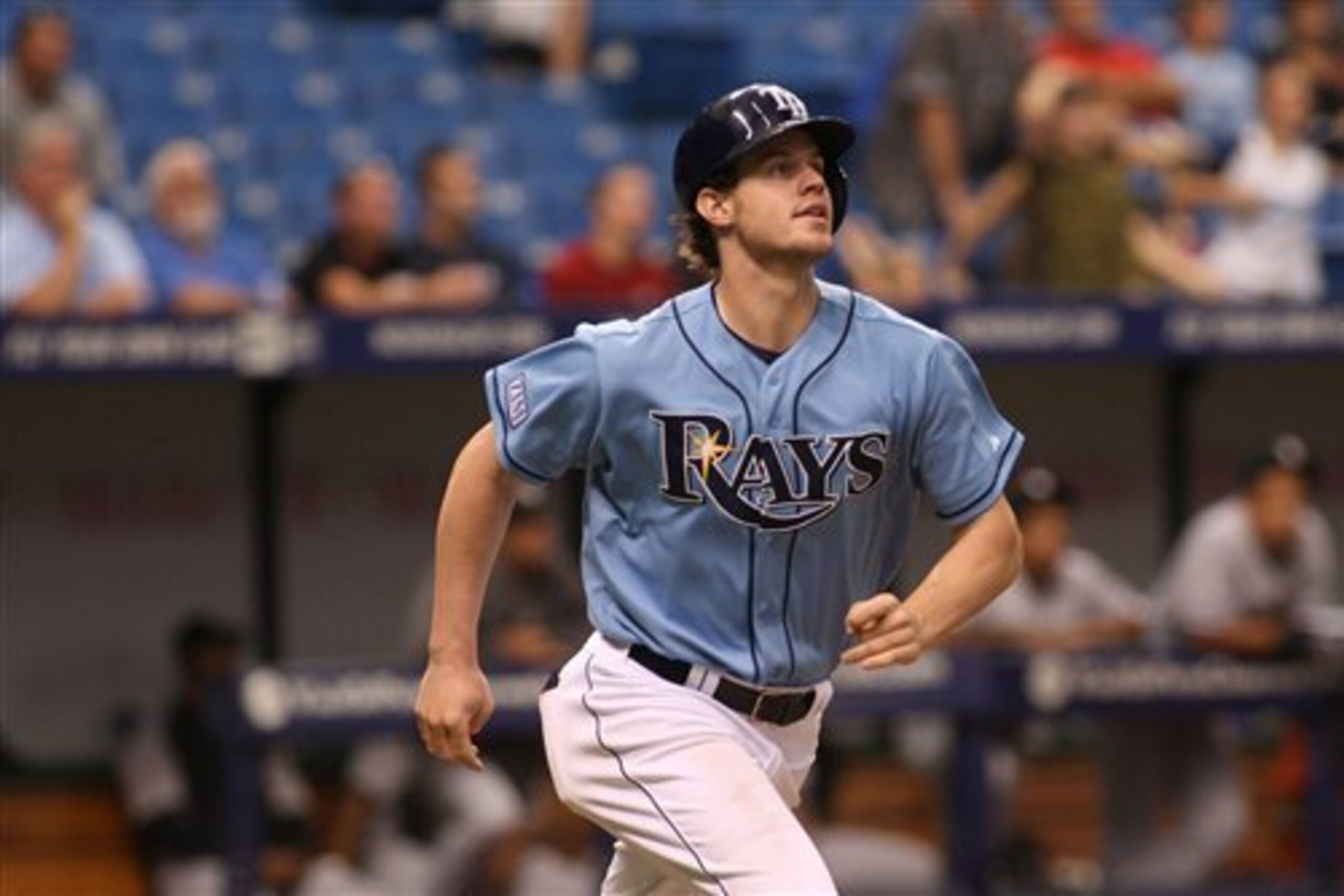
That trade very well may continue to haunt the Royals in future years, but no one in Kansas City minds that they made it right now. Despite his postseason struggles, Shields has been phenomenal for the Royals during his tenure, and Davis has blossomed into one of the game’s best relievers. Odorizzi has had an up-and-down career with the Rays so far, and Myers regressed badly in 2014 after impressing in 2013.
The Giants, meanwhile, have a broader history of giving up young talent to acquire accomplished veterans. Tommy Joseph was considered a decent prospect when they gave him up for Hunter Pence, and that move continues to pay dividends for San Francisco. And back in 2011, the Giants gave up Zack Wheeler for Carlos Beltran, and while the move didn’t pay off in a World Series championship, it did give the Giants a much better shot at competing next season.
Lesser moves such as the Royals’ trade for Nori Aoki and the Giants’ trade for Jake Peavy highlight the need to be willing to add complementary pieces, too, much as the Red Sox did in 2013 with their own acquisition of Peavy.
It’s difficult for an organization to strike a balance between nurturing their own talent and knowing when to give that talent away, but both World Series participants this season prove that there is indeed a time and a place to sell away young assets for more proven ones.
That doesn’t mean the Red Sox should be in a rush to trade a Bogaerts or a Betts, but if they have the opportunity to land a significant talent without completely mortgaging their future, they should feel free to roll the dice.
Dominant Bullpens
Finally, the Royals and Giants prove that while the Red Sox need to spend a significant amount of time and energy revamping their rotation this offseason, they must pay attention to rebuilding their bullpen, too.
The Royals finished with the majors' best bullpen, according to FanGraphs, and finished with the third-best ERA at 3.30. The Giants’ bullpen notched a 3.01 ERA to finish as the league’s fifth-best reliever corps by that metric, though FanGraphs had them as the third-to-least valuable bullpen in the game.

Still, with players like Greg Holland, Wade Davis, Kelvin Herrera, Santiago Casilla, Jeremy Affeldt and Yusmeiro Petit throwing, the World Series is chock full of dominating, high-leverage relievers.
While 2014 was a tough year for the Sox, their bullpen was actually one of the few bright spots of the team. Boston’s ‘pen ranked 12th in the majors in ERA at 3.33, and they were the third-most valuable unit in the game, according to FanGraphs. Koji Uehara and Andrew Miller formed a devastating one-two punch for most of the season, and most relievers aside from Edward Mujica and Craig Breslow had decent seasons, too.
With Uehara and Burke Badenhop slated to hit free agency, Miller already gone and Breslow’s status up in the air, only Tazawa, Mujica and Tommy Layne figure to repeat as key bullpen performers in 2014. That means the Red Sox will need to either sign for or trade one or two prominent relievers in order to shore up that part of their 2015 roster.
As NESN.com’s Ricky Doyle reported in September, the Red Sox have professed an interest in retaining Uehara’s services. But even if they move in another direction, they should be active players in a free-agent market that includes Miller, David Robertson, Francisco Rodriguez, Luke Gregerson, Pat Neshek and several other intriguing options.
However, another point—and one that ties in nicely with the emphasis on young players covered above—is that many of the Red Sox's "failed" pitching prospects have a chance to thrive in the bullpen.

Brandon Workman has already demonstrated an ability to be an effective reliever at the MLB level, and one would assume the Red Sox will try him there again in 2015. Scouts have long wondered whether Allen Webster would be more effective in the pen than in the rotation, and Matt Barnes, Anthony Ranaudo and Edwin Escobar could all head to the bullpen, too.
Having several high-profile prospect names settle in as relievers may seem like a letdown, but odds are the Royals aren’t too disappointed with how Kelvin Herrera and Wade Davis turned out.
The Red Sox have a chance to add a major infusion of youth and talent to their bullpen simply by shifting the roles of some of their prospects, and if they can shore up their rotation through free agency and trades, they could have several dynamic arms coming out of the pen in 2015.
.png?w=2560)


.jpg?w=2560 "NFL House in Paris Closes for Protests")
.jpg?w=2560 "Trevon Diggs Cut by Seahawks")