Minnesota Vikings vs. Tampa Bay Buccaneers: Breaking Down Tampa Bay's Game Plan
The Tampa Bay Buccaneers return from their bye week looking for just their second win of the season under new head coach Lovie Smith. They’ll welcome the 2-5 Minnesota Vikings to Raymond James Stadium this week, hoping to shake off the stink of yet another humiliating loss.
Two weeks ago, the Bucs were demolished at home by the Baltimore Ravens, as Joe Flacco threw five touchdown passes in the first half to put Tampa Bay down 38-0 at halftime, the largest halftime deficit for a home team in NFL history. The Ravens would close the deal 48-17, sending the Bucs into the bye week licking their wounds and searching for answers.
TOP NEWS
.jpg?w=2560 "NFL Paris Football")
NFL House in Paris Closes for Protests
.jpg?w=2560 "Seahawks Chiefs Football")
Trevon Diggs Cut by Seahawks
.jpg?w=2560 "Colts Football")
Jonathan Taylor Landing Spots
The Vikings are coming off a disappointing road loss to the Buffalo Bills, falling 17-16 on a last-second touchdown pass from veteran journeyman Kyle Orton to rookie standout Sammy Watkins.
Both teams have had their positive moments, but overall, the 2014 season has been full of disappointment so far. Mike Glennon has sparked the Tampa Bay offense in relief of the injured Josh McCown, but the Bucs defense has struggled as they acclimate to the Tampa 2 scheme. Rookie quarterback Teddy Bridgewater has flashed at times, as has first-year running back Jerick McKinnon in place of Adrian Peterson, but Mike Zimmer’s bunch still has just two wins to show for their trouble.
Let’s take a look at Tampa Bay’s game plan on both sides of the ball heading into Sunday’s game.
When Tampa Bay Has the Ball
As is the case in most games, the Bucs’ chances of success start up front. Tampa Bay’s offensive line has struggled to protect the quarterback throughout the season, and they haven’t fared much better in the ground game. Even though the 14 sacks they’ve given up over six games might not look terrible, the Bucs have allowed opposing pass-rushers to batter both McCown and Glennon on too many dropbacks.
On the ground, the Bucs simply haven’t been able to provide consistent running room for their backs. Doug Martin is averaging just 2.9 yards per carry on the year, while backup Bobby Rainey has been much more effective at just under five yards per carry. Just how sad is the Bucs’ running attack? Injured quarterback Josh McCown leads the team in rushing touchdowns with two, both of which he got in the same game.
Penalties haven't helped this group, either, whether from returning starters like right tackle Demar Dotson, or high-priced free-agent signings like left tackle Anthony Collins:
The Bucs offense has been considerably more efficient since Glennon took over under center, but the second-year pro will be facing a Vikings defense that ranks ninth in the NFL in passing yards allowed. Minnesota is also tied for sixth in the league in sacks, led by seven from defensive end Everson Griffen.
If Tampa Bay wants any chance at moving the ball effectively this week, the offensive line will have to give their quarterback a clean pocket and do a better job of creating holes for Rainey and Martin.
Despite the more impressive play as a unit since Glennon has been at quarterback, the Bucs offense still ranks 30th in the league in total yards per game and 26th in points per game. This matchup could be a solid opportunity to improve on that scoring ranking, as they face a Vikings team that has allowed almost twice as many touchdowns as their offense has scored.
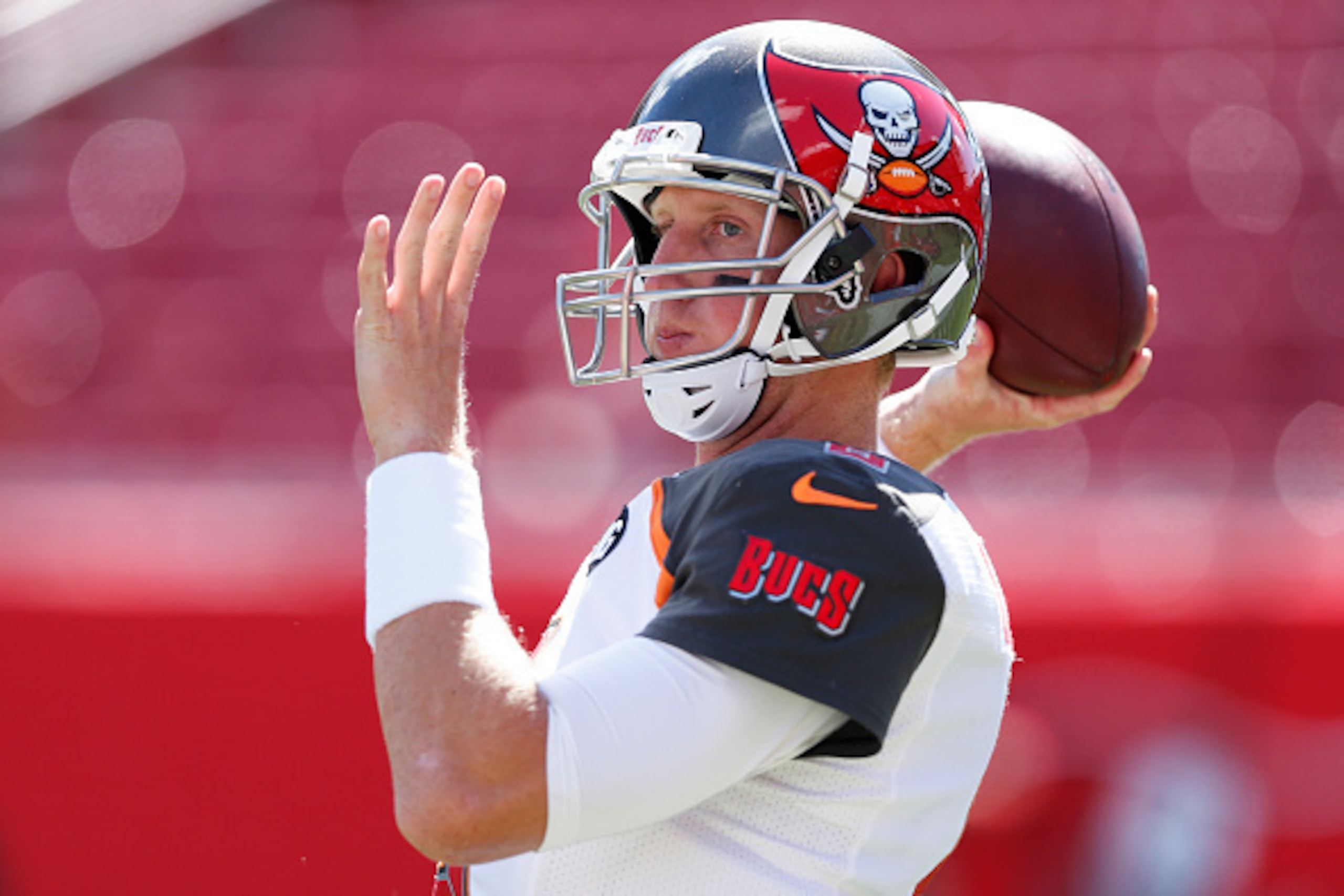
Tampa Bay’s defense has had enough struggles of their own this season, but one area where they could use some help from their offense is third-down conversions. The Bucs currently rank 24th in the NFL, converting just 37 percent of their third-down attempts, which is keeping their defense from getting much rest on the sideline in between drives.
Why is it even more imperative for the Bucs to convert on third downs than any other team? Because they happen to sport the worst punting average in the NFL. Behind the leg of Michael Koenen, Tampa Bay is the only team in the NFL averaging fewer than 40 yards per punt this season.
What does this add up to? A tired defense that is put back on the field too quickly against an opposing offense that has favorable field position far too often. The Bucs need to keep themselves in manageable third-down situations, convert them and keep their underperforming punter on the sideline.
When Minnesota Has the Ball
The Bucs face a fairly advantageous quarterback matchup this week, but they haven’t taken full advantage of similar situations to far this year. Rookie Teddy Bridgewater has thrown just one touchdown pass to five interceptions this season, and he’s already missed a game this year due to an ankle injury.

However, Bridgewater will face a Tampa Bay defense that surrendered impressive passing performances to the likes of Austin Davis and Derek Anderson. Tampa Bay currently owns the worst pass defense in the NFL, allowing just shy of 300 yards per game.
The Bucs’ Tampa 2 defense is widely known as a “bend but don’t break” scheme, allowing opposing offenses to eat up yards in small chunks, but clamping down in the red zone, forcing frequent turnovers and not allowing a large number of big plays down the field. Tampa Bay has succeeded in the big-play department so far this season, allowing just three passing plays of over 40 yards, tied for fourth-lowest in the NFL.
But the takeaways haven’t come often enough from the Bucs defense, and they haven’t been able to keep their opponents out of the end zone much, allowing a league-worst 34 points per game.

The Vikings might not have to rely on their rookie quarterback much, however, if the Bucs can’t improve their performance against the run this week. Tampa Bay is allowing just over 128 yards per game on the ground, good enough for 25th in the league, while the ground game has been Minnesota’s best weapon so far this season.
Despite the absence of Adrian Peterson, the Vikings rushing attack ranks 10th in the league, averaging more than 125 yards per game. McKinnon and Matt Asiata have split most of the workload in the backfield, with Asiata leading the team with three touchdowns and McKinnon averaging 5.1 yards per carry in his first NFL season.
The Bucs simply have to stop the run this week and force the rookie quarterback to beat them through the air. If McKinnon and Asiata get going early, it could easily be another long day for Bucs fans.
If the Bucs are able to corral the running game, there’s one weapon they need to keep a close eye on, wherever he lines up. Cordarrelle Patterson hasn’t fully lived up to his lofty preseason expectations, but he’s flashed the playmaking ability that forces any defense to give him their full attention. Now it's just a matter of whether or not the Vikings can take advantage of Patterson's talents:
"I'm guessing there are a lot of Vikings fans who wonder why Cordarelle Patterson is only featured on a game-ending lateral circus.
— SI NFL (@si_nfl) October 19, 2014"
Especially if their rushing attack struggles, the Vikings should get creative in getting the ball into Patterson’s hands. He’s a threat to take it to the house every time he touches the ball, and all it takes is one electrifying play to break a game wide open and demoralize a defense, especially if Tampa Bay’s offense keeps their defensive counterparts on the field as much as usual.
*All stats courtesy of NFL.com
Luke Easterling is a featured columnist covering the Tampa Bay Buccaneers and NFL Draft for Bleacher Report. He is also the Editor/Senior Writer for The Draft Report. Follow him on Twitter @LukeEasterling.
.jpg?w=2560)