Why Formula One Has to Stem the Street Circuit Tide
Street circuits have long been a bit of a novelty in Formula One.
Tight and twisty with uneven surfaces and barriers inches from the racing line, they're the once- or twice-yearly forays into a world far removed from the purpose-built race tracks upon which most of the action takes place.
Though grands prix on such circuits are rarely the most exciting of affairs, they've always been worth watching because we get to see something different.
.jpg?w=2560 "NFL Paris Football")

.jpg?w=2560 "Seahawks Chiefs Football")
But recent developments indicate this may soon no longer be the case. F1 is at risk of being overrun by street circuits, and the tide needs to be held back.
There's nothing fundamentally wrong with a grand prix on a street circuit.
Monaco remains interesting (to some fans) more than 60 years after the world championship first visited the Mediterranean shores. Singapore—for all its dearth of overtaking opportunities—isn't a horrible venue, providing it's held at night.
Adelaide was simply awesome, Montjuic was a thing of beauty, Long Beach always managed to put on a show and Detroit was nothing if not a challenge.
Even Fair Park in Dallas was a decent venue, providing we ignore the excessive heat and the way the track surface fell apart over the course of the weekend.
Seven good, interesting street circuits. But had all seven occupied slots in the calendar in the same year, even the most ardent fan would have found himself tempted by the "off" button on his remote control.
Not because there was anything specifically wrong with any of the individual tracks. Rather, because street race after street race would have caused the the fun factor to fade and the novelty to wear very thin indeed.
Especially if that calendar had also included a few dismal, character-lite street-style venues like Valencia, Sochi and Abu Dhabi.
But that could be what we're heading towards.
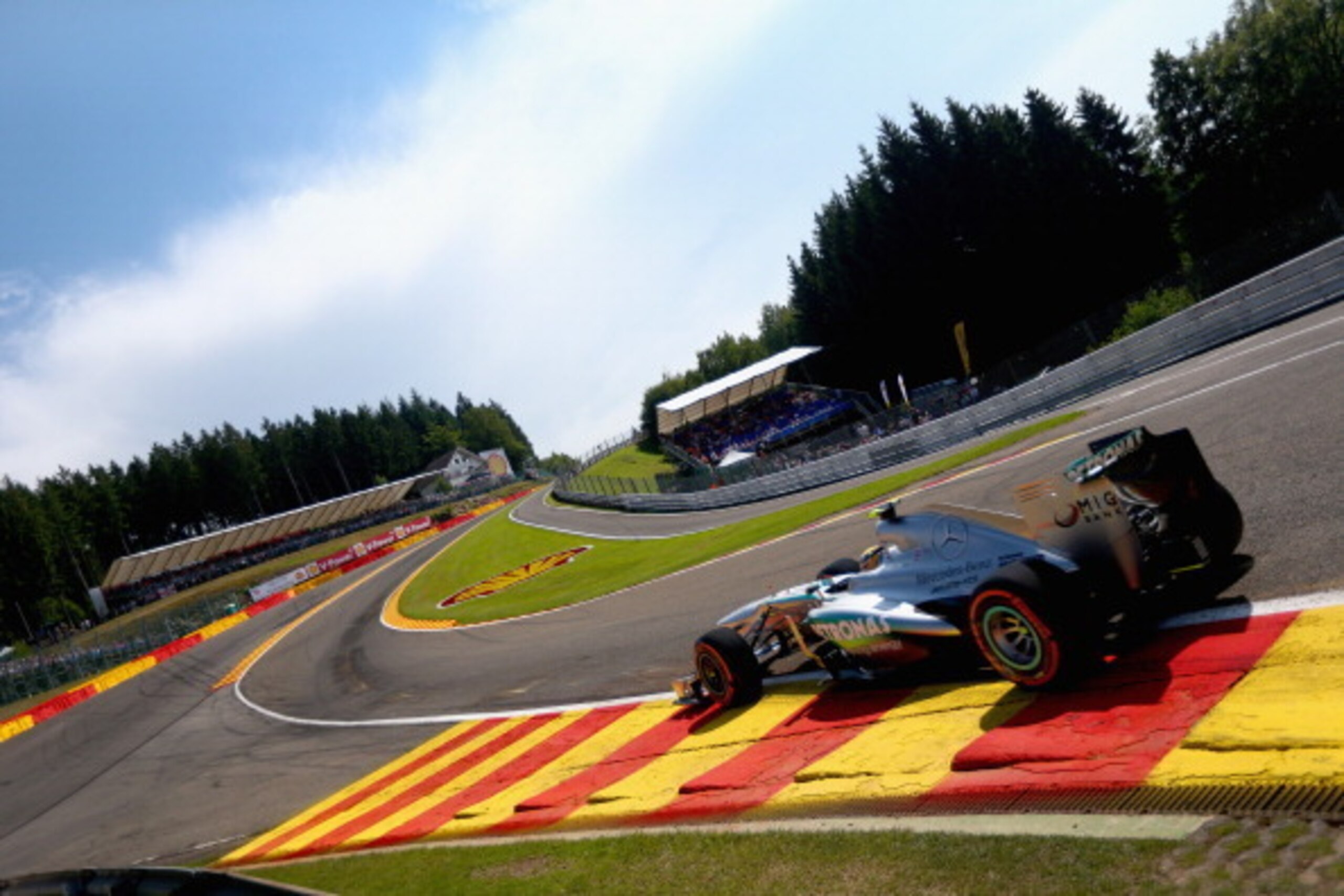
Formula One cars are magnificently engineered masterpieces, designed to be the quickest cars in the world around race tracks. Drop them (carefully) onto the starting grid at Silverstone, Spa or Suzuka and you'll see them doing what they do best.
They'll get to display their abilities around fast corners, slow corners and everything in between. They'll get a chance to spend time in long, difficult corners with increasing or decreasing radii and power down smooth, wide straights.
We'll see them go up and down hills, defend and attack through sequences with multiple viable lines and attack every kerb in a quest for the best lap times.
But drop these beautiful machines onto an average street circuit and they won't do those things.
They're not designed for pootling around sharp, often 90-degree corners on dirty, bumpy roads designed for Ford Fiestas and Fiat 500s. And it shows.
Again, that's not a bad thing—it's different. There's a new wow factor, because the cars are doing something unusual and outside their comfort zone. Every corner sees the drivers come within inches of unforgiving metal barriers, and that's something special.
But if it happens time and again over the course of a season, the attraction will die.
"Oh, this is special" becomes, "oh no, not another street circuit."
And unfortunately, "another street circuit" seems to be what F1 is aiming for. And another one. And another one.
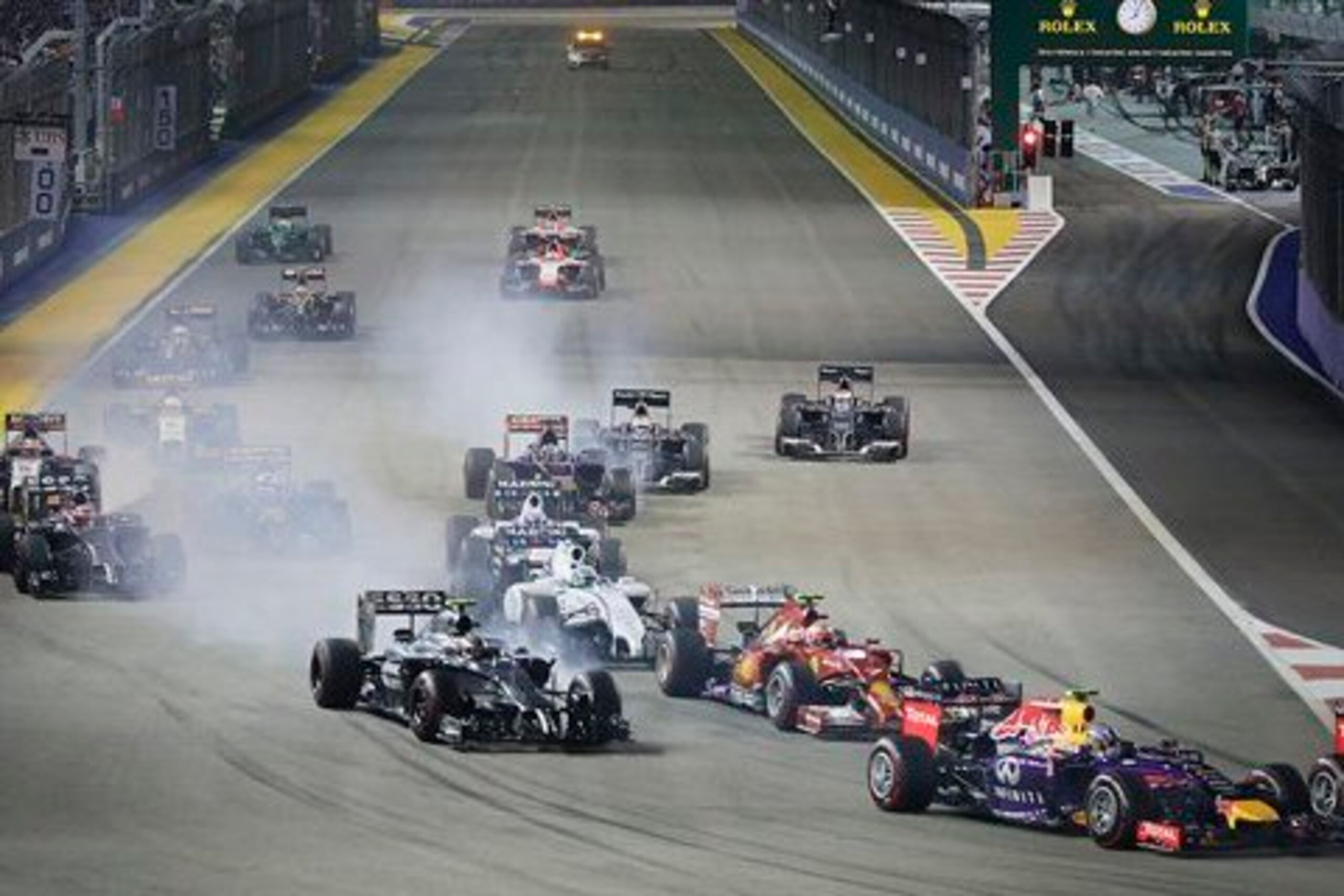
Monaco has been around a long time, and it was recently joined by Singapore.
Also present are the artificial hybrids, currently Sochi and Abu Dhabi, which try to be street circuits and race tracks but fail to excel at being either.
Four street-style circuits isn't a bad number on a calendar of around 20 races. But a glance into the pipeline of future or proposed races is enough to send a chill down the spine.
Baku in Azerbaijan is set to join the party in 2016. There will be three true street circuits, alongside two in a street style.
It may not end there.
In September, NBC Sport reported that a street race in Seoul, South Korea, may become a reality in the near future.
Then come the three American races mentioned in recent years. The New Jersey "Vaporware Grand Prix" appears to have at last passed into the ether, but Long Beach and Las Vegas remain at least on the periphery of a backroom table.
Dropping into Latin America, F1's return to the Autodromo Hermanos Rodriguez almost didn't happen—Autoweek reported a street circuit in Cancun had a contract for the Mexican Grand Prix from 2014 onwards.

Fortunately, Mexico City wanted its baby back.
Further south, Autosprint (English reporting via Sky Sports F1) reported a few years ago that the Argentine Grand Prix was set to return at a street circuit. Nothing came of it then, but there's nothing to stop the idea coming back in a more serious fasion.
Thailand is also looking to get involved. A street circuit in Bangkok was, quite recently, set for the 2015 calendar. F1Fanatic published the proposed layout.
Autosport later reported this route, and the race with it, was torpedoed by the city government as it ran through an important conservation area.
But like Argentina, Thailand could easily return to the negotiating table.
Alongside the more highly publicised prospective venues, quiet movements exist in Greece and South Africa—both for city-based grands prix.
There was even a street race planned for Rome, starting from 2012.
Happily, this one also bit the dust—but the sheer number proposed in recent years is cause for significant concern.

F1 started as a primarily European championship, before expanding into a slightly more global series throughout the 1970s.
From the 1990s onwards it continued to expand, moving further out of its European heartland until it reached its current size and spread.
It's now seen by countries all over the world, even those with no great interest in racing, as a perfect marketing tool. They'll spend a fortune in hosting fees, but don't want to fork out more than they need to in initial outlays.

To them, and especially in a world still recovering from the global financial crisis, a race on existing public roads is a far more attractive proposition than designing and building a state-of-the-art racing facility somewhere in the middle of the countryside.
It's not only cheaper (in the short term), but—as with Baku and Sochi—it allows the country to show off its primary tourist attractions while presenting a far more accessible destination for race-going visitors.
And, unfortunately, the commercial rights holders are usually more interested in making as much money as they can than they are in putting the cars on quality race tracks.
But three full-on street circuits is enough. If we include the pseudo-street Sochi and Abu Dhabi, we'll have five and they'll account for a quarter of the 20-race calendar.
Some would argue that's already too much. The usually dismal F1Fanatic "rate the race" scores for street races (2008, 2009, 2010, 2011, 2012, 2013) would agree with them. There certainly shouldn't be any more.
It's time to encourage prospective F1 host countries to take the route chosen by Malaysia, China, Bahrain, the United States and Turkey—real circuits with real corners, designed for real racing featuring the most exquisitely engineered cars on the planet.
Wise words can come from the most unexpected of places, and a Stella Artois glass once told me, "You wouldn't serve champagne in a teacup."
Sage advice for the powers that be.