15 Athletes Who Need Thicker Skin
The elite athletes of the world are a study in contradiction—supremely confident and accustomed to competing day in and day out for their own job, yet, somehow offended by the seemingly irrelevant.
A bad call, a Twitter sleight...things that go both ways and certainly are never a long as a season.
Of course it's human nature to get ticked off about something that really doesn't matter, but not sweat those things that could truly ruin your day. However, it seems so small when a pro athlete at the top of his or her game gets so discombobulated over the kind of petty stuff that means so little in the long run.
People get paid to do different things; and if you're lucky, you get paid to do something you love and are great at. World class athletes are scrutinized and publicized because they compete in high-profile sporting events that demand the kind of ability and talent that a tiny fraction of mankind possesses.
These are 15 athletes who need thicker skin.
Cam Newton, Carolina Panthers
1 of 15
While I believe that the criticism heaped on Panthers quarterback Cam Newton throughout his NFL career has, often times, been excessive, I also believe that he could have done a better job deflecting some of it. Newton’s abrasive way with the media hasn’t served him well to this point—and that’s not including any interesting choices in fashion that may have raised some questions.
The first real signs of concern came in October 2012, following a 19-14 loss to the Dallas Cowboys. Having seen his team fall to 1-5 in his second season, an exasperated Newton told reporters at a postgame press conference that he had no answers and would happily bring in a suggestion box, in case any of them had the magic formula that eluded him.
Proving his tone deafness once again in September 2014, prior to a game against the Lions, Newton absurdly referred to Detroit defensive end Ndamukong Suh as “Donkey Kong Suh” five different times during a single press conference. Maybe he legitimately thought he struck comedy gold with a very obvious and tired joke or maybe he was just trying to marginalize someone else the way he’s often felt marginalized, but either way it was surprisingly off-putting.
Matt Adams, St. Louis Cardinals
2 of 15
In April 2014 Cardinals first baseman Matt Adams got a little too intense with a Reds fan in the Cincinnati stands who beat him to a play on a foul ball. This is, quite simply, part of the game in baseball—chalk it up to home field advantage. In St. Louis, it wouldn’t have been a problem.
Most guys know how to brush it off, but Adams got physical with the fan who grabbed the ball, making an intentional move to push him before making his way back onto the field. In comments to the St. Louis Post-Dispatch’s Rick Hummel, Adams tried to write the whole thing off as incidental contact, but it was clear his actions were intentional.
The incident was reviewed by the league office for potential disciplinary action, but apparently it wasn’t deemed serious enough merit any such action. So you could say…no harm…no foul. (See what I did there?)
Julius Randle, Los Angeles Lakers
3 of 15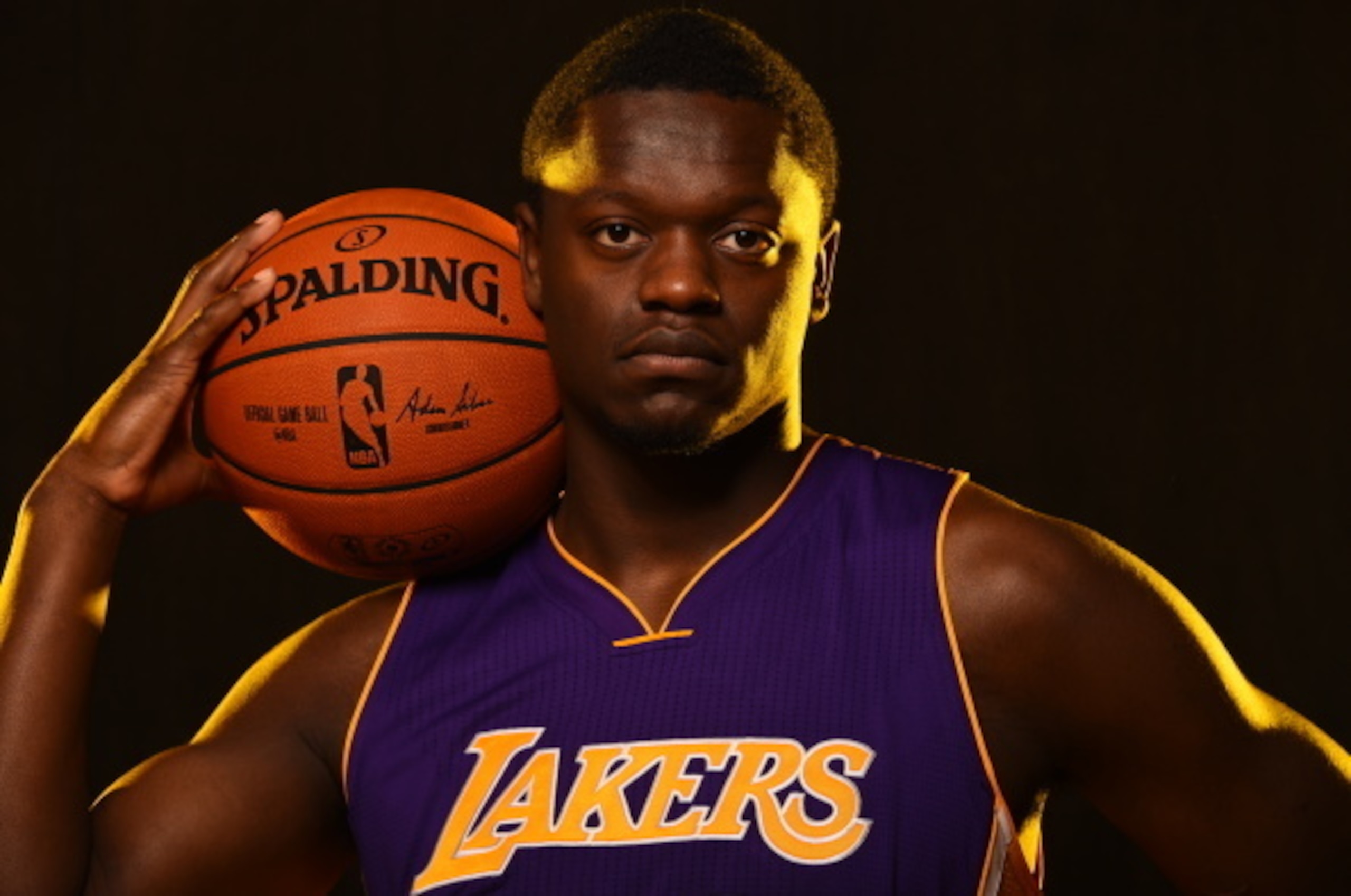
After putting in the traditional one-and-done season at Kentucky, power forward Julius Randle declared for the 2014 NBA draft and was selected by No. 7 overall by the Los Angeles Lakers. Coming off an unlikely (for Kentucky, at least) NCAA championship run in which the Wildcats came up just short and being the first-round draft pick of the most storied franchise in the league, one would think Randle would’ve been floating on cloud nine.
Well, one would be wrong.
While most players at the draft keep things positive (except Zach LaVine, who really went another direction this year), Randle didn’t think of the moment so much as a celebration but a time for airing grievances and issuing idle threats. "I think I should've went higher for sure, but, you know, the teams that passed on me will regret it,” is what he said to ESPN’s Jay Williams after being selected.
Though he personally discounted injury concerns about his foot, there’s no question that it was an issue going into the draft. Any team that didn’t select him had a very legitimate reason to pass, and the fact that they did actually put him in a better position than he would’ve been in had he ended up somewhere like Milwaukee or Philadelphia—if Randle thinks passing on him will prove egregious enough for the Bucks and Sixers to regret, clearly he knows nothing of those franchises.
And seriously, though, a rookie with this kind of ego and attitude? Maybe he'll make them regret the decision over time, but in the moment the the six teams that passed on him were probably feeling pretty good about the decision.
.jpg?w=2560 "NFL Paris Football")

.jpg?w=2560 "Seahawks Chiefs Football")
Geno Smith, New York Jets
4 of 15
On one hand, being successful at the quarterback position in the NFL long-term requires the type of personality that can absorb criticism and learn from the constructive variety without letting it drag him down.
On the other hand, Jets fans can be brutal.
Second-year Jets quarterback Geno Smith, who was drafted No. 39 overall out of WVU in 2013, and his time as a starter has been about as smooth as a crash landing. It’s not going to get any easier if he keeps letting that vocal home crowd get the best of him.
Kobe Bryant, Los Angeles Lakers
5 of 15
Though the persona of Lakers great Kobe Bryant is often seen as tough as nails, thanks in large part to his unflappable confidence in a feud with former teammate Shaquille O’Neal, the truth is that criticism has always struck him deeper than he’d have us believe.
In May 2013 former coach Phil Jackson revealed that Bryant is “very sensitive” to criticism, which can be easily observed by how often he feels the need to respond. In recent years he’s responded to barbs from Mark Cuban, NFL great Jim Brown, and U.S. men’s soccer coach Jurgen Klinsmann, among many others.
Arian Foster, Houston Texans
6 of 15
Texans running back Arian Foster went undrafted out of Tennessee in 2009, before going on to three consecutive Pro Bowl seasons in Houston from 2010-12. During that time he definitely played with a chip on his shoulder, but, with the exception of letting himself be dragged into the gutter by ESPN troll Colin Cowherd, he was generally a likable guy.
Then in 2013, Foster caught the injury bug—he played in just eight games and finished the season with 1/3 the offensive production he had averaged in the three previous seasons. Considering he had signed a five-year extension worth almost $45 million the year before and the Texans finished 2-14, some level of criticism was unavoidable.
Unfortunately, Foster, who curiously tweeted out an MRI as a reply to fans doubting his fantasy value in August 2011, isn’t particularly adept at shouldering criticism. In recent months he’s displayed his disdain for the media through a number of condescending and repetitive interviews (like this, this, and this), and supplemented his media hate on Twitter, accusing “it” of spreading propaganda.
Maybe Foster thinks he’s doing something noble here, but all he’s doing is proving his own inability to deal with the slightest bit of criticism. Some herald his trolling of the media as heroic or otherwise admirable, when in reality it's just kind of...weird...and sad.
Stephen Curry, Golden State Warriors
7 of 15
In April 2013 Warriors point guard Steph Curry got into a verbal altercation with a Nuggets fan after a particularly “frustrating” playoff loss, that per Yahoo! Sports’ Dan Devine. Though the whole team struggled in the loss, Curry was the only one to let his temper get the better of him.
As he exited the court at the Pepsi Center in Denver, Curry was caught by prying eye of TNT’s cameras, making the very bad decision to confront a loudmouth bro that was heckling him from his irritatingly good seats. It doesn’t matter how big the loss was, nothing good ever comes from this sort of fan interaction.
Lamarr Houston, Chicago Bears
8 of 15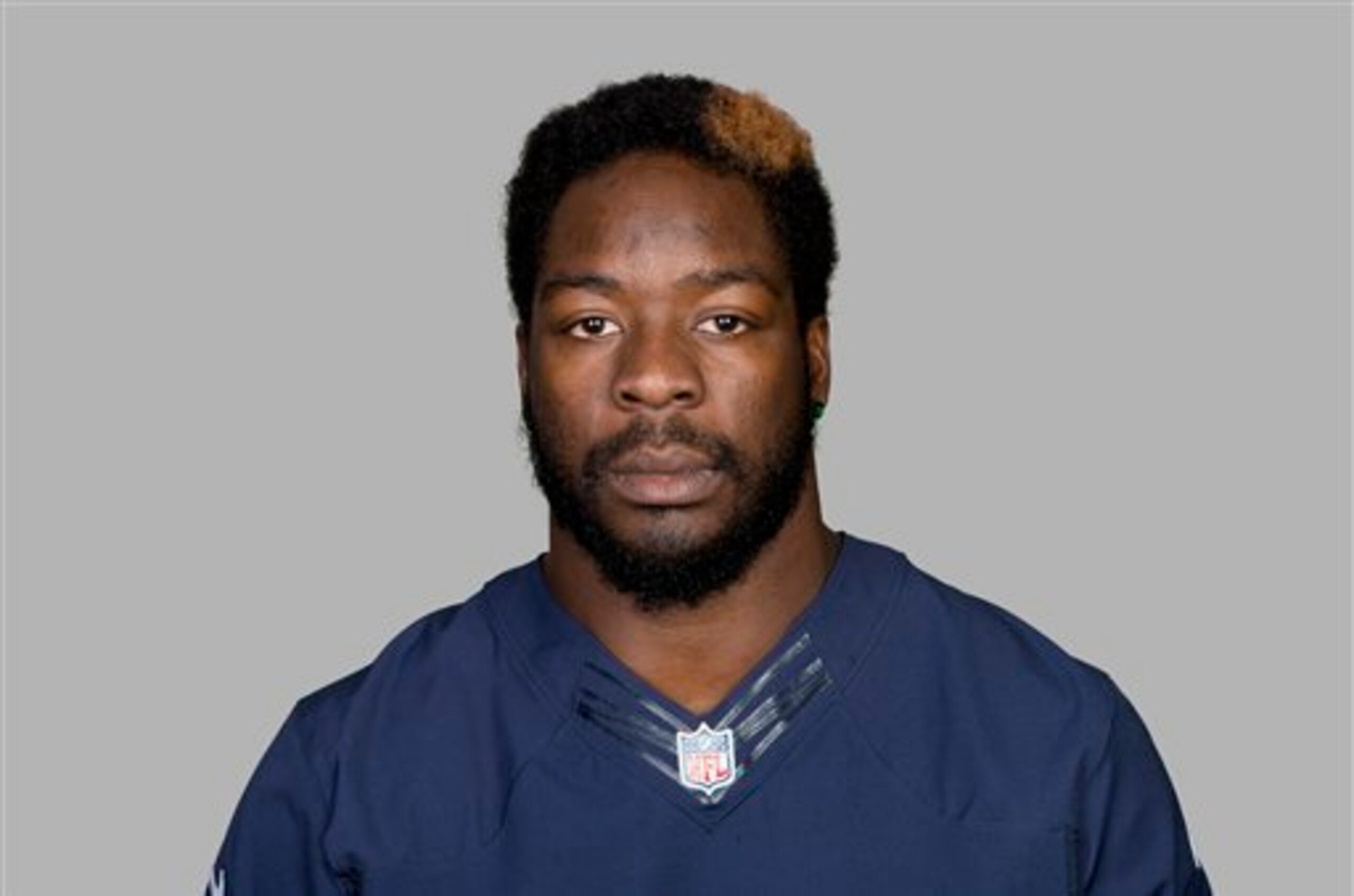
After losing in embarrassing (blowout) fashion to the division rival Packers and blowing a huge lead and losing to the Panthers in consecutive weeks, the Bears dropped to 2-3 after five games. Criticism came fast and furious, especially on Twitter, and nobody took it worse than Lamarr Houston.
Houston is, as the Chicago Tribune’s Steve Rosenbloom notes, “a $35 million free-agent defensive end who began the week tied for 198th in the NFL with zero sacks and averages one stinkin’ tackle a game.” He is also a guy that is easily goaded into saying stupid things by irate fans.
In a few ill-conceived tweets, Houston defended the awesomeness of a 2-3 record, said anyone who dared criticized him or the team wasn’t a real fan, and basically concluded that football was too complicated for the small brains of the viewing public and that analyzing the game should be left to those who play it.
It’s far to say that Houston’s tweets didn’t do much to quell criticism from fans, who apparently didn’t appreciate him telling them to “eat dirt.”
Imagine that.
Floyd Mayweather Jr., Boxing
9 of 15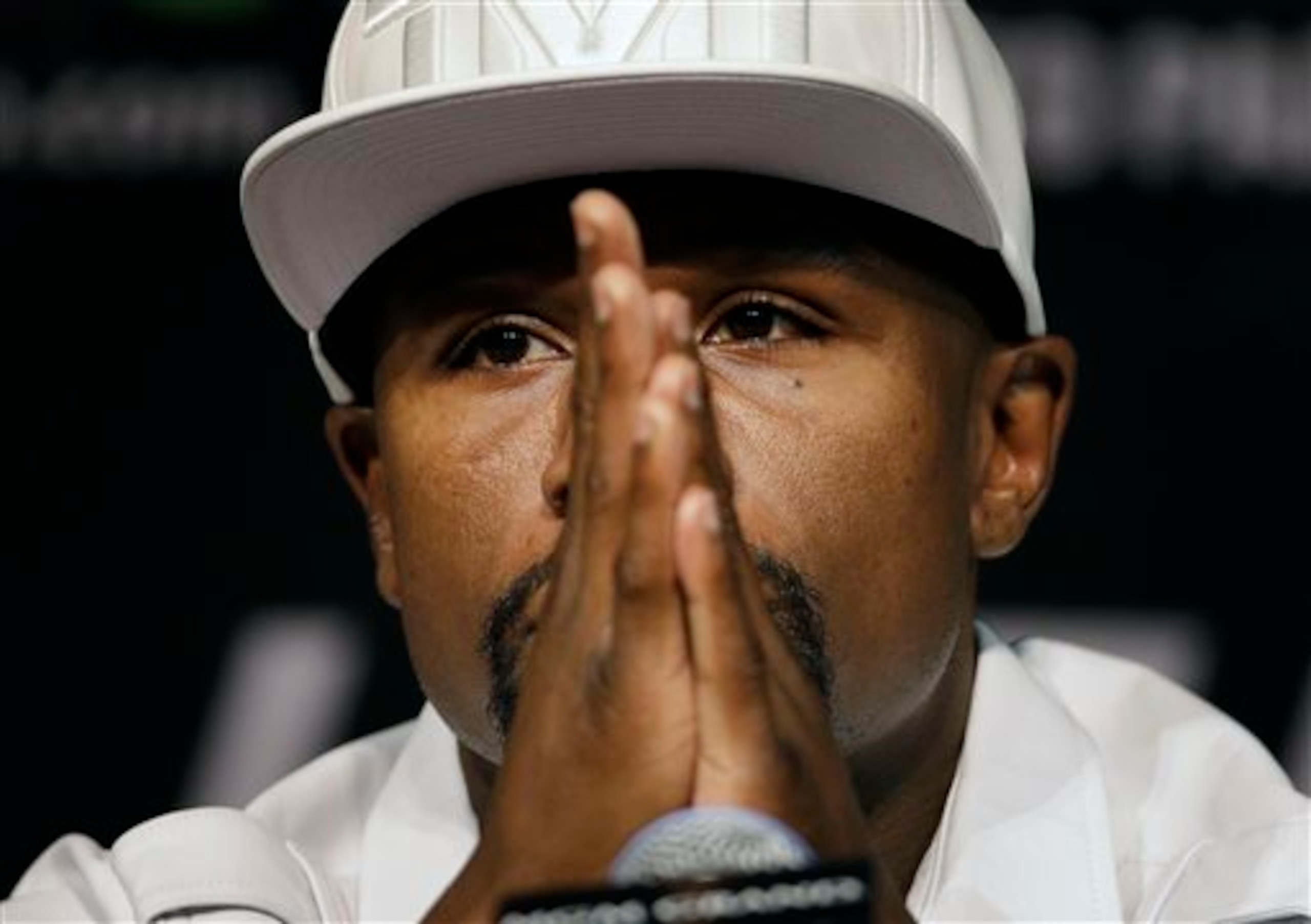
For all his bravado and bluster, you’d think that undefeated boxer Floyd “Money” Mayweather was the most confident and egomaniacal person on the planet. The egomaniacal bit might be true, but the truth is that Mayweather reveals himself as thin skinned and easy to bait far more than he likely realizes.
Mayweather recently ripped into ESPN’s Stephen A. Smith, who has always been annoyingly complimentary of Floyd Money, but finally acquiesced about his undefeated dodging of a fight with Manny Pacquiao. Not that it was the first time Mayweather proved he could take a physical punch better than a verbal jab.
Over the years Mayweather has lashed out at anyone who has dared to cross him—sometimes in much scarier ways than others. Nothing said publicly ever goes ignored. Aside from going back and forth with prospective opponents and members of the media, recently Floyd Money “bit back” against former BFF 50 Cent, who mocked his reading abilities.
Or inabilities, as the case may be. Whatever the case may be, Mayweather's decision to use his bank balance to combat criticism is nothing new. He routinely brags about his gambling “winnings” on Instagram, which, now more than ever, seems more like a preemptive strike at anyone of less means (see: everyone) who may take a shot at Mayweather than anything else.
Dwight Howard, Houston Rockets and Robert Griffin III, Washington Redskins
10 of 15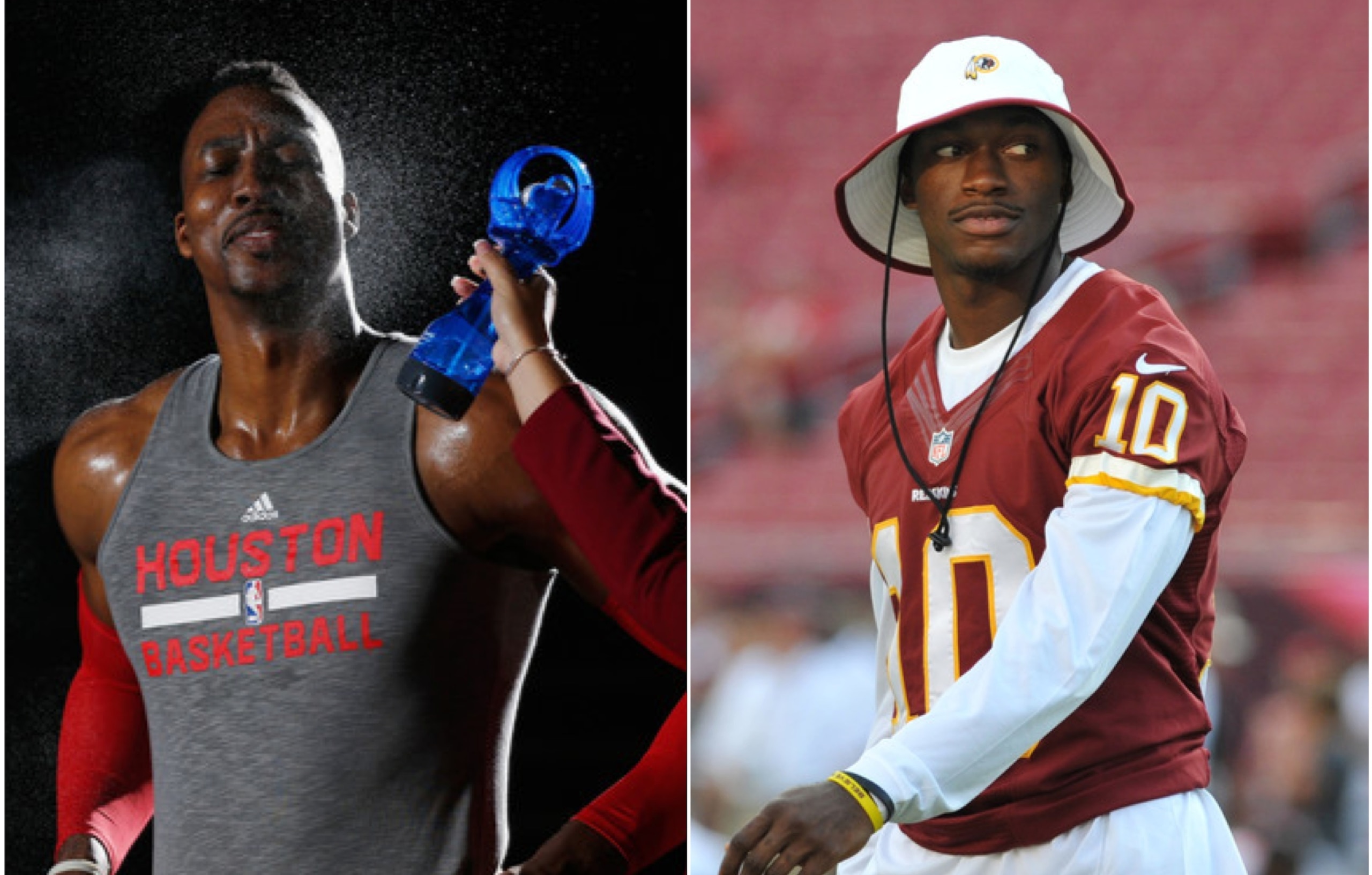
Rockets superstar big man Dwight Howard and Redskins quarterback Robert Griffin III probably don’t seem like they have that much in common with each other on the surface, but the two of them share the ultimate thin-skinned athlete attribute—a meddling father.
There’s nothing that says “I can’t handle myself” than a parent intervening on his or her offspring’s behalf. That’s happened several times over the years for both Howard and Griffin, with Howard’s father usually defending him and Griffin usually defending his father’s presence.
Without getting into the myriad of reasons Howard and Griffin may be overly reliant on their fathers, it’s safe to say their respective involvement in the dramas surrounding their sons has not been well received by anyone—teammates, fans and the media alike.
CM Punk, (Former) WWE
11 of 15
Former wrestler CM Punk, who left WWE earlier this year for reasons that are still being speculated upon, has been among the most popular faces in the organization for years. Though every superstar displays a natural flair for the dramatics, not every drama queen is created equal.
Back in October 2012, Punk proved that not all WWE drama is scripted, when he went decidedly off-script during a filming of Monday Night Raw in Sacramento. The drama inside the ring may be predetermined, but stepping into the crowd is definitely a step into the unknown, one which Punk proved can end poorly.
According to TMZ, “Punk went into the crowd after a match…and several fans began to get physical with him. At first, Punk shrugged off the fans…but the wrestler snapped when someone made contact with the back of Punk’s head.
The altercation was, naturally, caught on video. Punk has always been happy to play the heel, heckling fans and speaking down to them in condescending monologues, but he has proven himself a bit more susceptible to slights (from both fans and his employers) than he would probably like to admit.
Marcus Smart, Boston Celtics
12 of 15
An athlete verbally engaging with a fan in anger is always a bad idea. An athlete verbally engaging with a fan in anger and then physically engaging with said fan is always a much, much worse idea.
That’s exactly what Marcus Smart, then at Oklahoma State, did in February 2014.
It happened following a tough loss to Texas Tech, when OK State was ranked No. 19. According to ESPN:
"Smart tried to block Jaye Crockett's dunk attempt from behind with 6.2 seconds to go but stumbled out of bounds behind the basket. As he was being helped up, he appeared to exchange words with a fan in the front row before lunging for the fan and pushing him with two hands. The fan, wearing a black Texas Tech shirt, stumbled backward but did not fall.
"
Following the incident there were reports that the fan who was shoved had used a racial slur, which is what could have triggered Smart crossing the line. Though that accusation was generally accepted in the aftermath of the incident, it’s worth noting that the fan in question did deny using a slur.
Regardless of what triggered Smart’s actions, there’s no denying that he would have been better served by ignoring the combative blowhard in the stands.
AJ McCarron, Cincinnati Bengals
13 of 15
After three straight seasons as a full-time starter at Alabama and four seasons overall, quarterback AJ McCarron, who won two BCS Championships under center for the Tide, was under the impression that he’d be selected relatively high in the 2014 NFL draft.
Whether he was intentionally given a false impression in meetings with teams or he’s just terrible at taking the temperature of a room and made a lot of ridiculous assumptions based on his own self-evaluation, McCarron made no secret of his surprise after free-falling to the fifth round. He was selected No. 164 overall by the Bengals but publicly predicted he’d be chosen “somewhere between 16th and 35th.”
According to McCarron, he was unfairly penalized for being “too honest” and that his confidence was being misread as “cockiness.” Ever since then, McCarron has been rubbing people the wrong way: overreacting to reports from unnamed sources on Twitter, talking about his “sacrifices” for Nick Saban, publicly criticizing Alabama, publicly retreating on his criticism of Alabama and then blaming the media (those always dastardly villains!) for directly quoting him rather than reading between the lines.
The fact of the matter is that McCarron was “hurt” by his draft fall—his words, not mine—and almost every headline he’s made since has been a direct result of a bruised ego. It's time to let this all go and focus on...literally anything else.
Hope Solo, U.S. Women's Soccer
14 of 15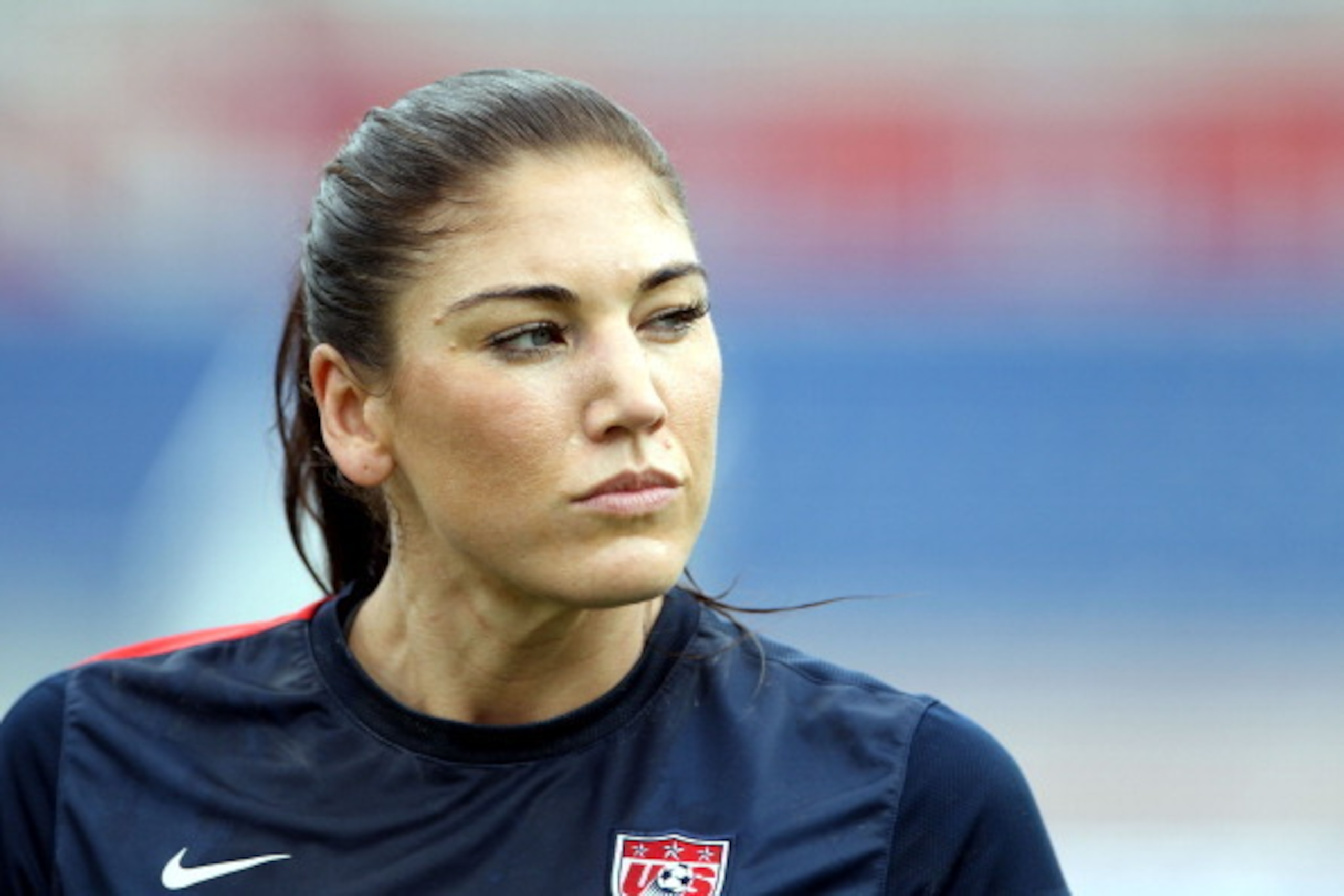
U.S. women’s soccer goalkeeper Hope Solo has a proven track record of not being able to take the slightest bit of criticism. She first showed her true colors in the fall of 2011, when she was eliminated from Dancing with the Stars.
Solo’s celebrity actually carried her much further in the competition than her flatfooted clomping should’ve allowed, but when she was ousted two shows short of the finale, the anger on her face was plainly evident. Solo reportedly threw a fit backstage and refused the standard post-elimination press tour—a year later (in her ridiculously titled memoir: Solo: A Memoir of Hope) she accused her partner on the show of abusing her and claimed the entire show was “rigged.”
In July 2012 Solo again lashed out, this time at a former teammate during the the London Olympics. Brandi Chastain, who was working as an analyst for NBC at the time, had the nerve to give Team USA an “A-minus because of defensive issues,” for a 3-0 victory over Columbia. Solo took to Twitter to chastise Chastain, putting words in her mouth and accusing her of not trying “2 grow the sport.”
Aaron Rodgers, Green Bay Packers
15 of 15
Ask anyone (who is able to be the least bit objective) who are the best quarterbacks in the NFL and the Packers’ Aaron Rodgers will always find himself mentioned among the top five—and usually in the No. 1 position.
Though Green Bay has been one of the steadiest and most successful franchises in the league since forever, Rodgers found himself in the unenviable position of succeeding Brett Favre three years after he was drafted No. 24 out of Cal by the Packers in 2005.
Considered a tossup with Utah’s Alex Smith as to who would go No. 1, Rogers obviously never thought he’d fall 23 spots after the 49ers opted for Smith. It’s “obvious” in that Rodgers has been citing this imaginary chip on his shoulder and various naysayers ever since to motivate him—despite the fact that things turned out substantially better for him than they did for Smith.
At this point, stories about Rogers’ infamous chip are an annual event (2011, 2012, 2013, 2014) and that horrible professor who gave him an “F” in college has certainly learned a lesson about speaking her opinion.
It’s such a joke that in August 2013, The Onion teased, “BREAKING: Packers Fear Aaron Rodgers Fractured Shoulder Chip.” But after several Pro Bowl seasons and one of the most unlikely Super Bowl championship runs in NFL history, maybe it’s time to stop worrying about Rodgers’ wounded ego.