Despite Loss, Vikings Defense Showing Continued Improvement
The improvement of the Minnesota Vikings defense stands as one of few silver linings following the team’s 17-3 home loss to the Detroit Lions.
Growth had to be the realistic goal for the 2014 defense considering the overhaul in personnel and scheme over the offseason. The unit is still young, and lumps would have to be taken. Numerous players had taken a few coming into Sunday’s game against Detroit.
Even in previous games when the Vikings defense provided glimpses of brilliance, little success was sustained. Caveats always stood out, giving reasons to be skeptical about how quickly Mike Zimmer could possibly turn the unit around.
TOP NEWS
.jpg?w=2560 "NFL Paris Football")
NFL House in Paris Closes for Protests
.jpg?w=2560 "Seahawks Chiefs Football")
Trevon Diggs Cut by Seahawks
.jpg?w=2560)
B/R's Expert Week 7 NFL Picks 🔮
Considering St. Louis was down to QB No. 3 in Week 1, this Sunday’s game may actually be Minnesota’s most impressive defensive display to date under the new coach. Progress is happening.
Against a viable offense and experienced quarterback, the Vikings defense checked numerous boxes.
Generating a pass rush without excessive blitzing was the first check mark. In previous games, pressures were frequently the effect of intelligent blitzing. The front four was not often able to beat blocks on its own and disrupt opposing quarterbacks with regularity. While Minnesota did reach Matthew Stafford with a few blitzes, the defense also brought more consistent pressure without bring extra rushers.

The second and third levels of the defense made their impact felt as well. Linebackers pursued to the perimeter well on run plays, getting numerous stops around the line of scrimmage. Outside of a few contact penalties, the secondary challenged the Lions receivers consistently by tightening coverage and contesting throws.
Impressively, the Minnesota defense had success on Sunday playing with shorter fields due to the offense’s struggles. Per Football Outsiders, the average start of opponents’ drives entering Sunday’s game was the 29-yard line. The average Lions drive began on the 36-yard line. While those seven yards don’t seem significant, they add up over the course of 13 drives.
For most of the game, it seemed as if Minnesota should not have been within two scores of Detroit. Credit the defense. The group wasn’t always given favorable positions but helped out the offense more often than not.
Minnesota should have been failing in the field-position battle quite miserably. The defense earned five three-and-outs of the 13 Detroit drives, though. Getting off the field quickly kept the field position from being too lopsided.
The Vikings’ ability to earn three-and-outs has grown throughout the season, too. Minnesota has gotten opposing offenses off the field after three downs at a higher percentage in each of the last three games than any of the first three.

*Creating a turnover within first three plays counted as a three-and-out. Drives ending before three plays at the end of a half omitted.
Minnesota forced the opponent’s offense to punt after three plays on 23.3 percent of drives through the first three weeks. Over the last three, that number jumped to 44.4 percent. That means the offense gets back on the field quicker, and the defense saves its legs.
Improved third-down defense is a big reason why the Vikings were able to get off the field quickly on a number of drives.
Before the Detroit game, Minnesota’s defense had allowed first downs on 32 of 67 third-down plays. That 48 percent conversion rate left them No. 26 in the league, hardly a formidable look. That course was completely reversed on Sunday. Detroit converted on a single third-down attempt out of 13. If any stat tells of the defense's improvement against the Lions, that one is it.
Credit goes to all three levels of the defense. The early-down defense kept the Lions in longer down-and-distance situations. Then the rush disrupted Stafford’s rhythm. Even when the quarterback had time to work through options, tight coverage frequently left him holding onto the ball longer than he would have liked.
One of the crucial factors to Minnesota’s improvement on defense is the development of players who were unknown quantities coming into the season. Rookie linebacker Anthony Barr, cornerback Josh Robinson and defensive tackle Tom Johnson fit that description, and each played a big part in Minnesota’s success against Detroit.
As a rookie who had never actually played off the ball as a linebacker before this season and had only played two seasons on the defensive side of the ball in college, Barr’s instant impact is a testament to Zimmer’s coaching. Barr has transitioned to the new role with ease because his coach is maximizing athletic talents through proper usage.
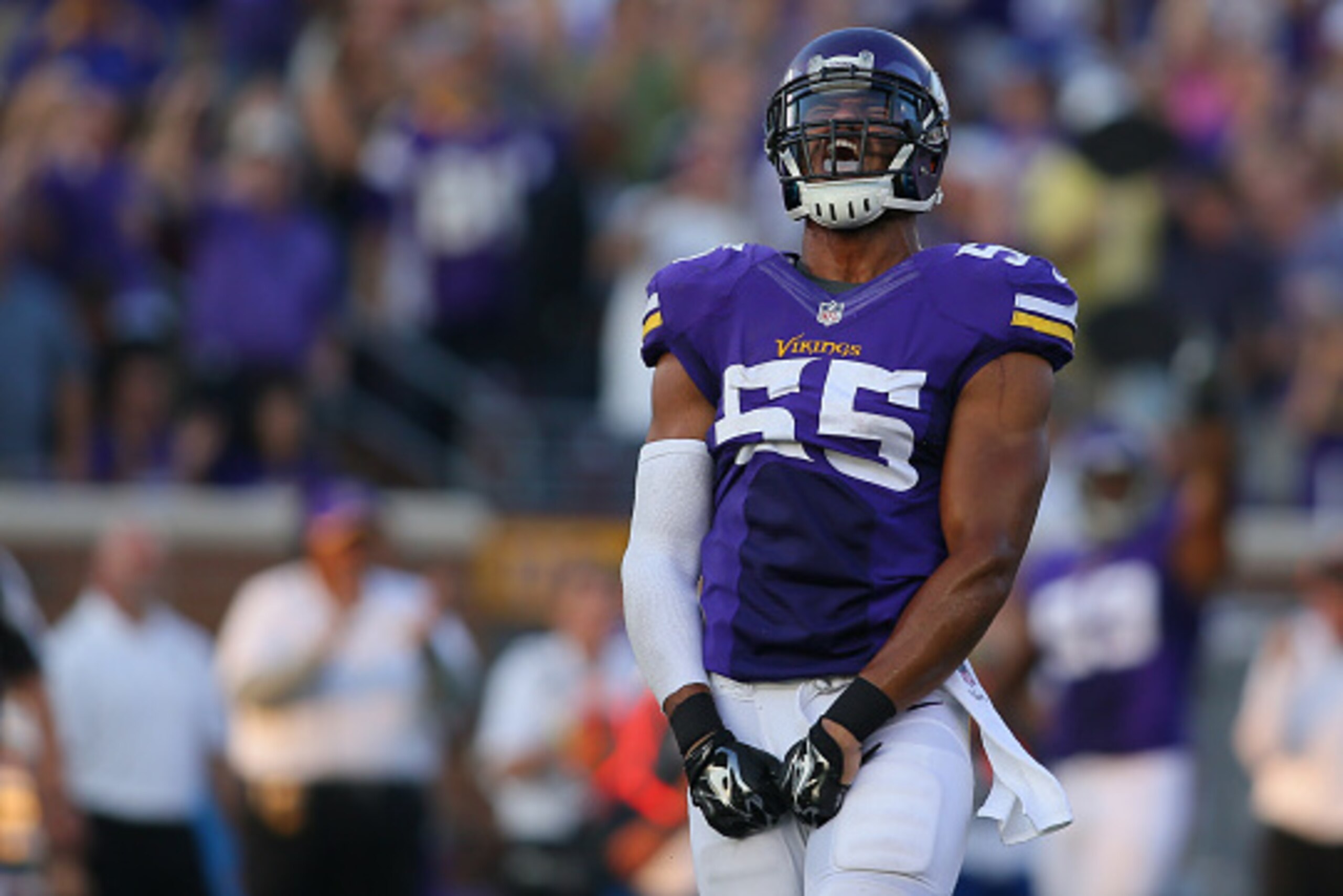
Zimmer is keeping the rookie off the line of scrimmage, using him as a pursuit player at the second level more often than not. Barr’s closing speed in space keeps offenses from turning small gains into big ones on the outside.
He chased down a swing pass for a stop against Detroit that put this concept on display. Barr has also been a destroyer of screen passes all season. When he rushes, the majority of time he is blitzing through the interior. Every part of Zimmer’s plan for him is paying off in a big way for the Vikings defense right now.
Reclamation projects at the cornerback position have become Zimmer’s specialty. The quick turnaround to Robinson’s play seemed almost impossible after a brutal 2013 campaign and must be credited to both the player’s fit in the new scheme and the way Zimmer has groomed him.
Robinson was especially effective in man coverage against Detroit, using his athletic talents to limit space for receivers. He also contested passes very well at the catch point, something he did very little of a season ago. Robinson is doing all of this without being a magnet for flags, something not many other Vikings defensive backs can say.
Johnson is the third player who has exceeded expectations and paid dividends for the Minnesota defense. At a listed 6’3”, 288 pounds, Johnson is considered undersized for a defensive tackle. That’s okay with Zimmer, who turned an undersized Geno Atkins into one of the league’s best defensive linemen in Cincinnati.
Zimmer has mostly used Johnson as a rotational player for Minnesota. That said, Johnson has been a much more productive rusher than starter Sharrif Floyd. Johnson continues to create disruption every game, making the most of his role.
The next hurdle for Zimmer seems to be finding a way to get his defense to start quicker. Arif Hasan of vikingsterritory.com provides some telling statistics on the slow starts that have plagued the Vikings:
"Vikings have allowed 3.0 points per drive (excluding XPs) on first two drives before this game. 1.6 PPD every other drive.
— Arif Hasan (@ArifHasanNFL) October 12, 2014"
This trend continued as Stafford and the Lions marched down the field and opened the game with a touchdown.
Further growth is still required for the defense to reach its potential. Realistically, it may be a year or two before Zimmer is able to fully groom players into his scheme and identify new players that fill out other roles.
In the meantime, Vikings fans can take solace in the way the unit is improving over the course of this season. Young players like Barr have taken hold of their roles and have been effective from the get-go. Other pleasant surprises like Robinson and Johnson have given Zimmer more depth to work with.
Most encouragingly, the issues that sprouted up in Minnesota’s defense earlier in the season are now being addressed. The unit’s thorough showing against Detroit proved that.
All statistics via ESPN.com unless noted otherwise.
.jpg?w=2560 "Titans Colts Football")