Are Marussia Wise to Run 1 Car at 2014 Russian GP in Tribute to Jules Bianchi?
Formula One cars rarely look mournful, but the sight of the No. 17 MR03 in the Marussia garage at the Sochi Autodrom on Friday painted the most tragic of pictures.
The car of Jules Bianchi, the team's lead driver who suffered life-threatening injuries at Suzuka last weekend, is, according to Marussia's official website, "ready to race"—but will not turn a wheel this weekend, with the outfit opting to run only one car, that of Max Chilton, in the Russian Grand Prix.
Instead, it sits in silence, patiently waiting for its driver to return to the cockpit while the noise that comes with a typical F1 event reverberates all around it as the sport, with great reluctance, tries its best to operate as normal just five days after the Japanese Grand Prix.
.jpg?w=2560 "NFL Paris Football")

.jpg?w=2560 "Seahawks Chiefs Football")
The Marussia garage, an environment of such frantic activity on a normal weekend, has this weekend become a shrine: Bianchi's full name, as usual, is positioned above the garage, while his forename adorns its paneled walls as well as the headrest of the car itself.
And for this weekend, the hashtag, #JB17, has been added to the Marussia machines in tribute to the Frenchman.
The lengths that the team have gone to to pay pay their respects to Bianchi, whose future continues to lie in the balance, is deeply admirable, with the remaining 21 drivers set to be offered a reminder of how brutal and cruel this sport can sometimes be on every single occasion they pass the idle MR03 in the pit lane in Russia.
Marussia, as Bianchi's colleagues, can choose to honour their stricken star however they like, but is the decision to just run a solitary car this weekend the wisest move?
The timing of the team's statement—just 30 minutes ahead of the opening free practice session—implies that, as you would expect, they pondered long and hard before deciding that running Chilton alone was "the appropriate course of action under the difficult circumstances of the weekend."
Although it was refreshing to see a sporting outfit break the norm of operating as usual after a serious injury under the rather crass assumption that it would have been "what he would have wanted," it is not immoral to argue that running two cars in Russia would have been the finest tribute to Bianchi.
It was the 25-year-old, after all, who achieved the greatest result in Marussia's history earlier this season, with an eighth place finish in the Monaco Grand Prix (he was later demoted to ninth, as per the official F1 website, for serving a five-second penalty under safety car conditions).
That result lifted the Banbury-based team into an unprecedented position, ninth, in the constructors' standings, with their season ever since geared toward maintaining that place and smothering the efforts of Sauber and Caterham, their fellow backmarkers, to score two or more points.
The presence of just Chilton—whose best finish in F1 remains 13th, a position achieved in this season's Australian and Bahrain grands prix—leaves Marussia much more vulnerable at the Russian street circuit, where the possibility of small teams stealing a couple of points, as they themselves discovered in Monaco, is not beyond the realms of possibility.
The prospect of losing their lofty status in the championship on their first weekend without Bianchi is just unthinkable, while the notion of adding another point or two to their name at the Sochi track—surely more likely with two cars on the circuit—would be the best-case scenario.
Marussia's decision, meanwhile, to run just one car—despite entering Alexander Rossi, their third driver, alongside Chilton for the event—raises questions over the position of reserve drivers in grand prix teams.
Reserve drivers are, by definition, set to fill in for teams' regular drivers when, for whatever reason—from injury to a race ban—they are unable to participate in a race weekend.
Despite Rossi missing out on his F1 debut for the second time in five races—the American initially replaced Chilton for the Belgian Grand Prix before the team performed a bizarre U-turn—the outfit have, rightly, protected the 22-year-old from the uneasy, almost guilty predicament of making his bow when the emotion and shock of Suzuka remains so intense.
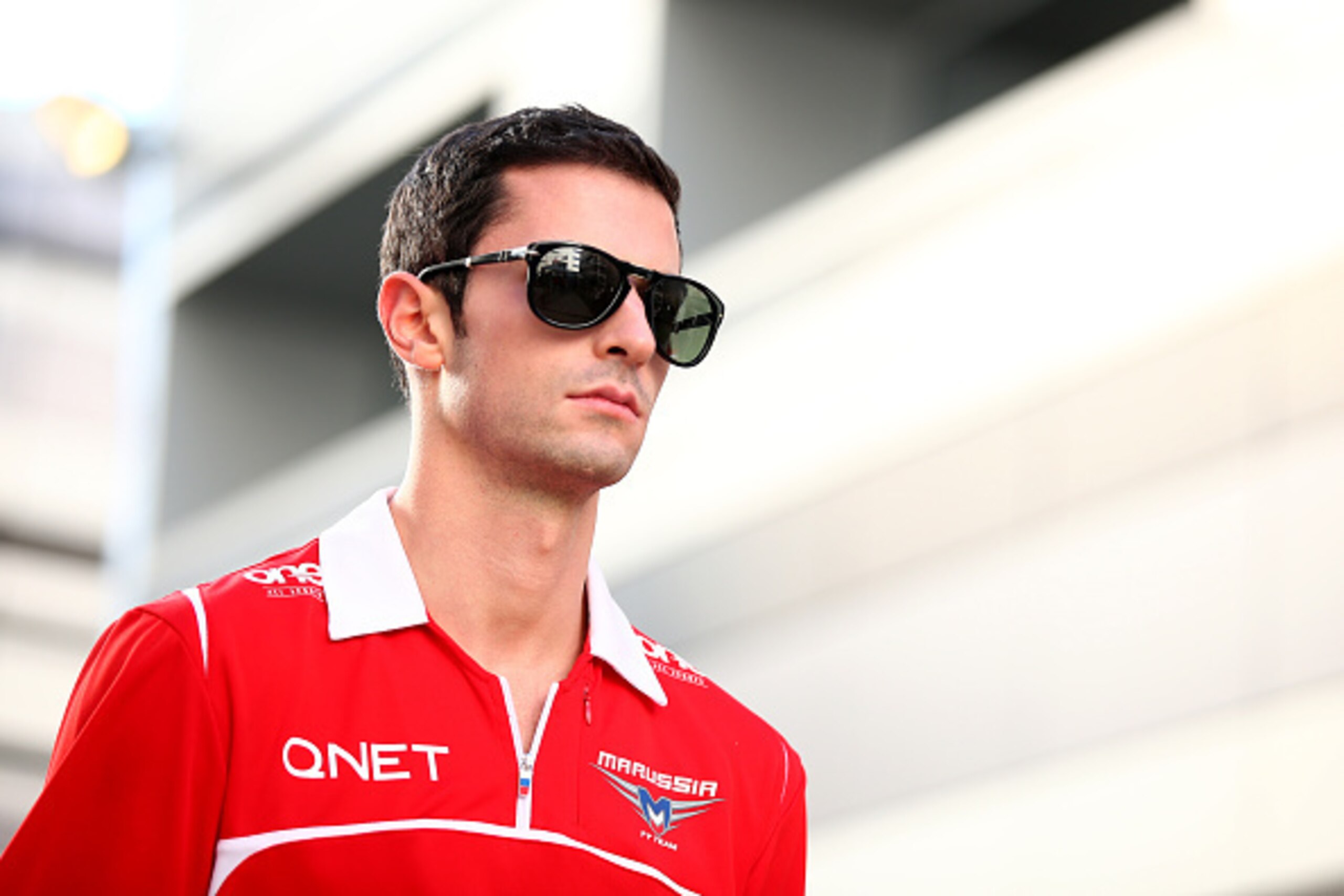
A debut in his home race, the United States Grand Prix, at the beginning of next month would certainly be a more comfortable situation for both Rossi and the team, with further developments on Bianchi's condition bound to come to light in the three weeks between the races at the Sochi Autodrom and the Circuit of the Americas.
In the short time between the Japanese and Russian grands prix, Marussia were left with precious little room for manoeuvre in terms of how they honoured Bianchi this weekend.
A significant change of livery, featuring a large get-well-soon message to the Frenchman in addition to the hashtag tribute, was probably beyond them, although the idea of running both cars and completing 17 race laps—the number Bianchi chose to race with for the remainder of his career at the beginning of the year—before returning them to the garage and closing the doors would arguably be the most touching way to pay tribute to their driver.
The Russian Grand Prix is, as the team's official website acknowledges, Marussia's home race and one that the modest outfit—led by the popular pairing of John Booth and Graeme Lowdon—stood to gain much from in terms of publicity.
Their willingness to sacrifice their own prospects, both on and off-track, to pay tribute to one man—a solitary cog in a machine of a couple of hundred people—should be applauded in a sport renowned for its often ghastly levels of selfishness.

It is often said that when something as horrendous as a serious accident occurs in Formula One, the act of competing suddenly pales into insignificance.
Marussia are putting that theory into practice at the Russian Grand Prix.