Ozil Injury Isn't a Blessing, It's a Blow to Arsenal's Depth and Training Ethos
It is easy to cast Mesut Ozil’s latest injury as a blessing in disguise.
After all, the 25-year-old had hardly impressed in the early days of his second Arsenal season before suffering what The Telegraph and Reuters reported as ligament damage in his left knee.


With the likes of Aaron Ramsey and Theo Walcott set to return from their own spells on the sideline within the next month, Ozil’s absence will only open a place in the line-up to more capable contributors.
Or so the thinking goes. Well-intentioned by frustrated Arsenal fans, no doubt, but flawed logic, nonetheless.
There is nothing good—nothing at all—in the playmaker’s injury.
"Still, at least this spares Ozil the torture of being dreadful on the wing against Man Utd and Dortmund.
— Tom Adams (@tomEurosport) October 8, 2014"
Yes, his convalescence will provide opportunities to other players in manager Arsene Wenger’s squad, but it should first and foremost ask some serious questions.
Are the Gunners deep enough to sustain Ozil’s lay-off, which will keep him out of the side until January?
On the face of it, perhaps.
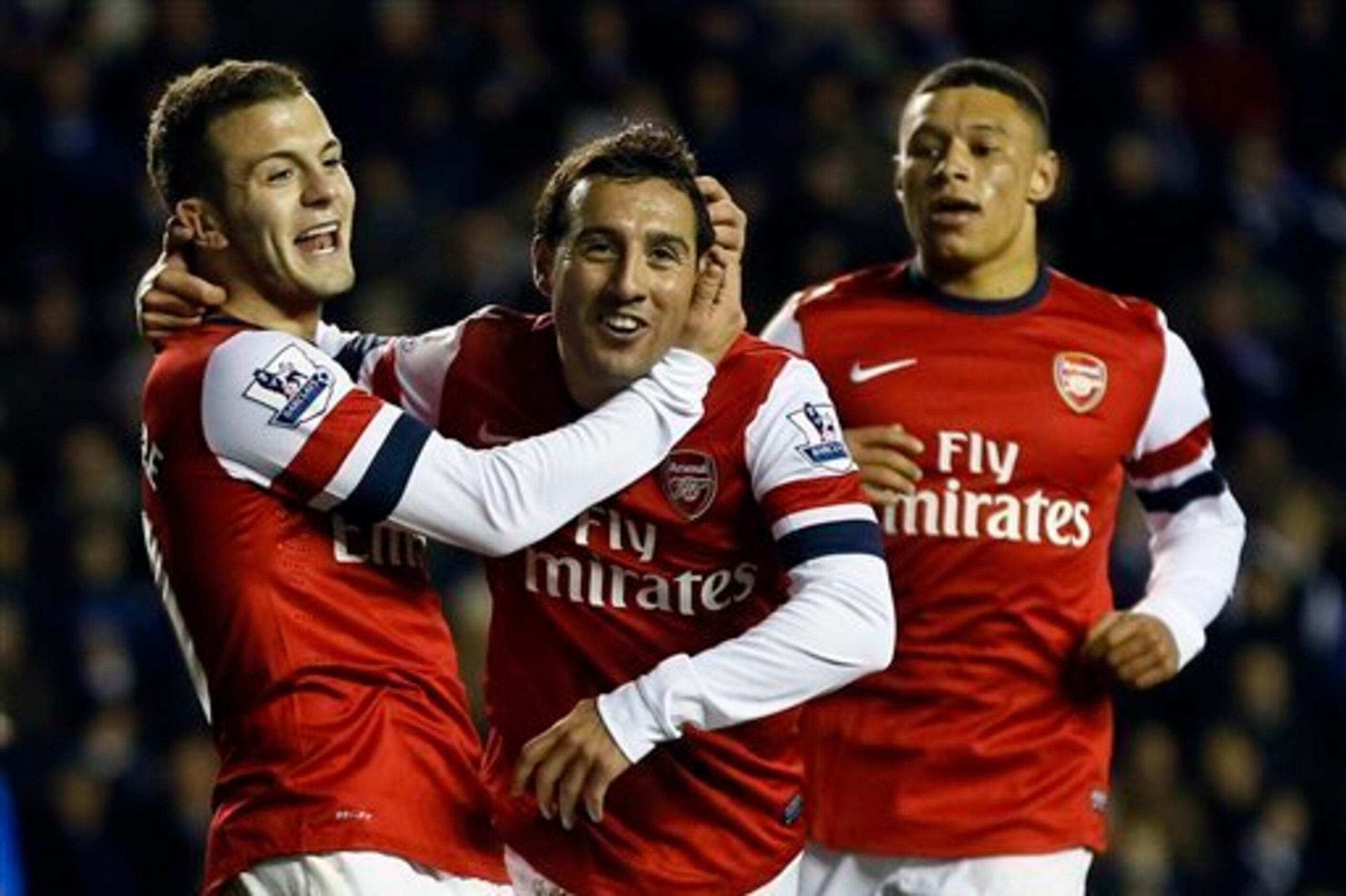
In Alexis Sanchez, Santi Cazorla, Jack Wilshere and Alex Oxlade-Chamberlain, and even Lukas Podolski and Tomas Rosicky, Wenger has enough attacking options to see him through a stretch that includes matches against Anderlecht, Manchester United, Borussia Dortmund, Galatasaray and Liverpool.
He’ll also be able to call on Walcott when Arsenal face Sunderland later this month. Ramsey should be fit for Burnley’s visit to Emirates Stadium on November 1, too.
But there is absolutely nothing to suggest the pair of them won’t suffer setbacks in their recoveries, or that the club’s stable of healthy attacking midfielders will remain so throughout the duration of Ozil’s unavailability.

These are hardly hypotheticals. They are the reality of Arsenal’s injury history—something Wenger was supposed to address during the summer when he hired Shad Forsythe, the trainer who helped turn Germany into a juggernaut at the 2014 World Cup.
And therein lies the second question. Why do serious injuries persist in being part of the Arsenal narrative?
As far as Ozil is concerned, part of the answer can be found in some very basic man-management decisions.
According to the BBC, the former Schalke, Werder Bremen and Real Madrid star joined up with his Germany teammates already complaining of discomfort in his left knee, which he initially felt after Sunday’s Premier League match against Chelsea.
The German Football Association provided subsequent scans, but why had the Arsenal physios not taken similar measures on Sunday or Monday?
And if Ozil had played at least part of the 90 minutes at Stamford Bridge in discomfort, it wouldn’t be the first time he had been allowed to stay on the pitch while already injured.
Last March, when Arsenal faced Bayern Munich in the Champions League, he remained in the match until the break despite a hamstring problem sustained after only two minutes, as per the Daily Mail.
That should never have been allowed to happen, and it’s not beyond the realm of possibility that the scenario was repeated on Sunday.
Incidentally, Ozil’s injury at Bayern came a week after Walcott suffered a torn ACL and Wilshere went down with a broken foot.
A healthy, available squad is not something to which Wenger is accustomed, and further questions will need to be asked by the Arsenal staff before they determine why that is.
Which they must do.
In the meantime, they’ll be crossing their fingers that Ozil isn’t followed to the therapist’s room by a parade of soon-to-be-injured teammates.
No, his absence is not a blessing in disguise. Anything but, actually.
.jpg?w=2560 "NFL Paris Football")
.jpg?w=2560 "Seahawks Chiefs Football")