Nico Rosberg Should Be Pleased with 2nd Place in 2014 Japanese Grand Prix
After his desperate retirement from the Singapore Grand Prix a fortnight ago, Nico Rosberg's title challenge could have gone one of two ways.
Having witnessed his 22-point lead turn into a three-point deficit in the space of one race, one evening, the German could have allowed himself to become shrouded in self-pity and surrender to Lewis Hamilton, his Mercedes teammate and championship rival.
He could have adopted The Mark Webber Role: accepting that his high-profile teammate possesses more natural talent and believing that he is in a battle he is never going to win, settling into the No. 2 driver position within the team accordingly.
.jpg?w=2560 "NFL Paris Football")

.jpg?w=2560 "Seahawks Chiefs Football")

Or he could have rebounded from the disappointment of Singapore—not to mention the errors which cost him two potential victories in the preceding rounds in Belgium and Italy—to return to the pace immediately, eradicate those silly mistakes and challenge Hamilton in a straight fight.
In Suzuka, Rosberg couldn't have picked a worse place to get his campaign back on track, with the home of the Japanese Grand Prix—as his teammate discovered with a trip to the crash barriers on Saturday morning—needing no invitation to spit cars off the circuit.
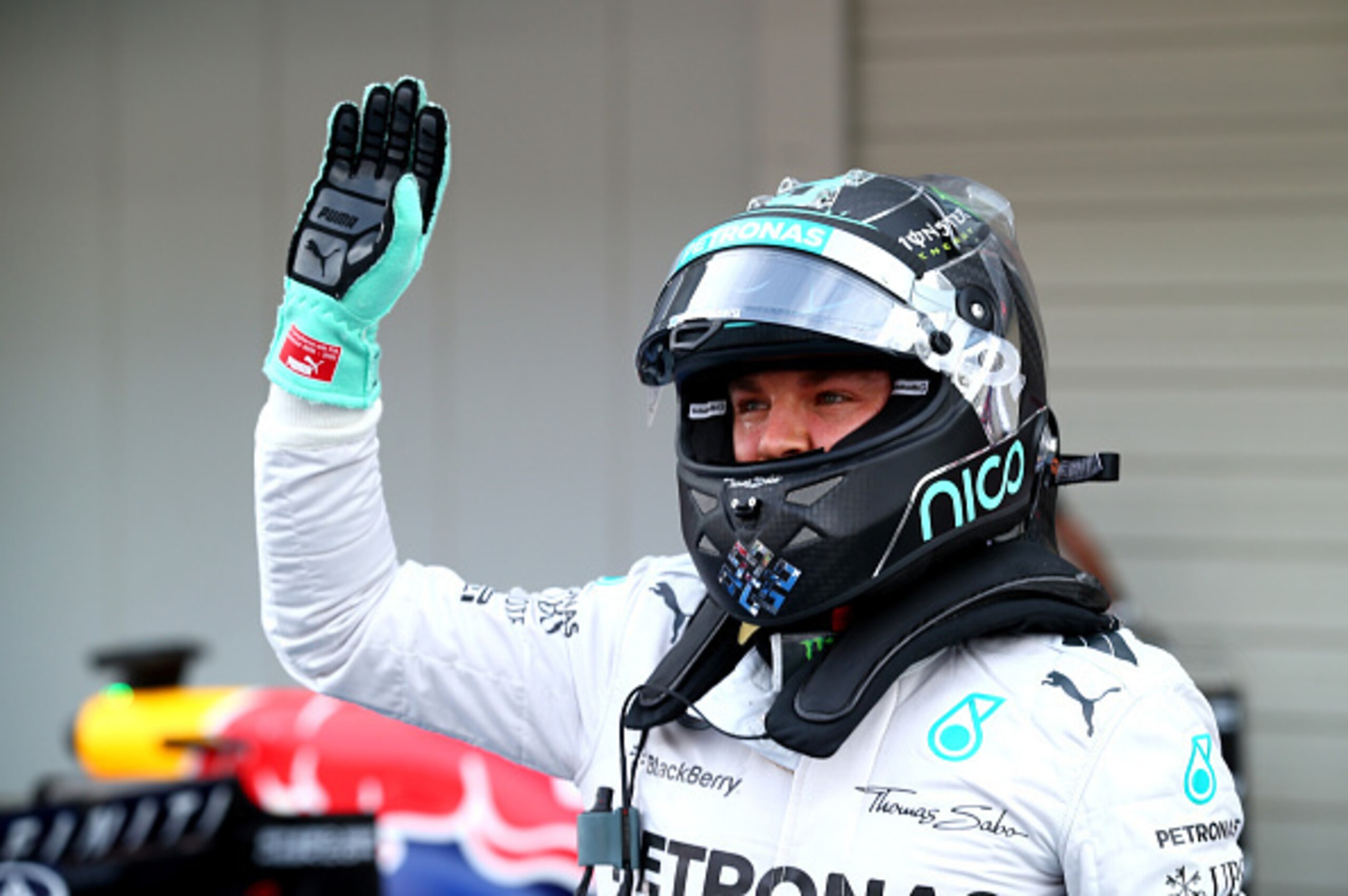
Those risks were only enhanced in the horrendously wet conditions of race day, yet—despite finishing second to Hamilton for the sixth time in 15 races this season—there is little doubt that Rosberg's weekend was a success.
The German—after missing out to Hamilton by just 0.007 seconds, as per the official Formula One website, in Singapore—returned to the pole position for the first time since August having strongly challenged the 2008 world champion throughout the hour-long session.
According to Formula1.com, Rosberg finished a mere six hundredths of a second adrift of Hamilton in Q1, before getting the better of his teammate by just over three hundredths in the second part of qualifying.
He then lived up to his growing reputation as a shrewd operator by extending the gap to two tenths—creating clear daylight between the Mercedes drivers—in the all-important final segment, with Hamilton later telling the post-qualifying FIA press conference that his rebuilt car after his practice accident "didn't get in the way of the result."
Returning to the front of the grid was one thing, but reaching the top step of the podium for the first time since July's German Grand Prix was always bound to be quite another, especially in the hazardous weather conditions produced by Typhoon Phanfone. Hamilton, a driver who often excels in the rain, sat alongside Rosberg on the front row.
The German, then, faced quite a dilemma as the grand prix—after several laps behind the safety car and a brief red flag stoppage—got fully underway on Lap 10.
Would he attempt to fight fire with fire for the race win, risking an accident to the one which, in hindsight, ended the 2010 title hopes of Webber, who crashed out of the Korean Grand Prix in his attempts to catch Sebastian Vettel?
Or would he let Hamilton scamper off into the distance, settling for second and gaining points for the team in a race which any handbags between the Mercedes drivers would soon leave the Silver Arrows vulnerable to the chasing Red Bulls?
In the event, he settled for a compromise.
Rosberg maintained his lead and, perhaps more significantly, kept his driving clean throughout the early stages of the race while Hamilton, close behind, found himself running wide at the first corner on Lap 27, one lap after—as per the FIA television feed—the German began to complain about his car's tendency to oversteer on intermediate tyres.
There was, like in Italy two races ago, a sense that a change of lead was inevitable, with Hamilton soon finding his way past at Turn 1 on Lap 29.
Although the fashion of Rosberg's relinquishing of first place could be interpreted as weak, the German's decision to position his car firmly on the inside of the medium-speed right-hander, therefore compromising his own entry to the corner, was—as Martin Brundle, the former grand prix driver, pointed out during Sky Sports' television coverage of the event—more likely due to a lack of visibility in the mist and rain.
This credibility of this theory, indeed, was enhanced with the view from Hamilton's onboard camera, with the No. 44 car engulfed in spray as the British driver sat in Rosberg's tow while he lined up the decisive pass.
Even if Rosberg had made the manoeuvre a little easier than it perhaps should have been for Hamilton, however, who could blame him?
The Japanese Grand Prix was, after his alarming drop in form and bad luck since Hockenheim, never about getting his fifth win of the season on the board—it was about getting back in the groove and rediscovering his confidence with an error-free, assured performance.
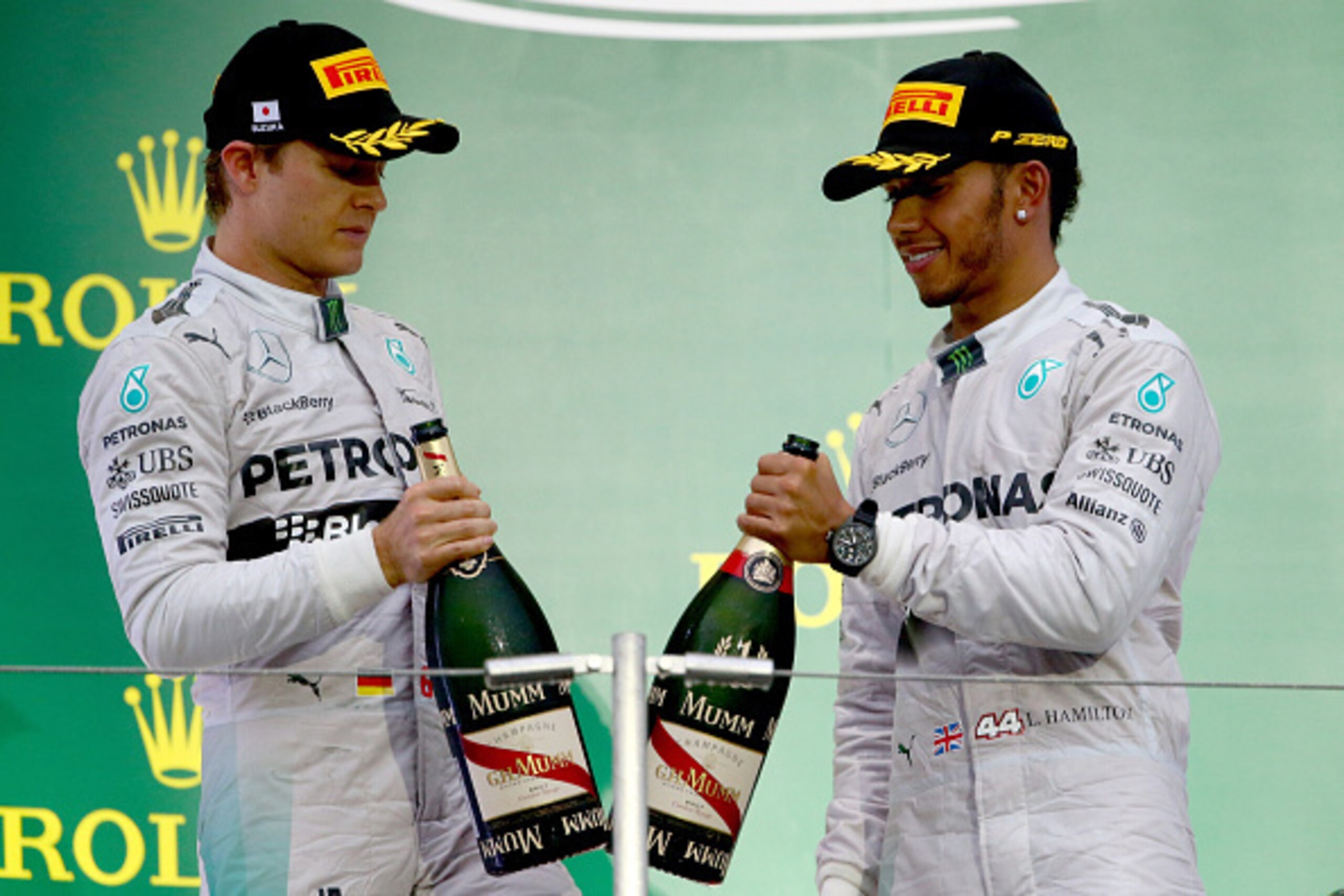
As F1 journalist Peter Windsor suggested on The Racer's Edge YouTube channel, there will be several opportunities in the the last four grands prix—in Russia, the United States, Brazil and the double points finale in Abu Dhabi—for the German to switch to attack mode as he attempts to secure his first world championship.
Rosberg may trail Hamilton in the drivers' standings by 10 points—three points more than the difference between first and second place in a given race—but the title battle has now been fully reset, with two drivers at the peak of their powers set to contest the run to the line.
Game on.