
Why It's Finally Time for Billy Beane to Be Thrown on the Hot Seat
"Every form of strength is also a form of weakness..."
- Michael Lewis, Moneyball, quoting Bill James
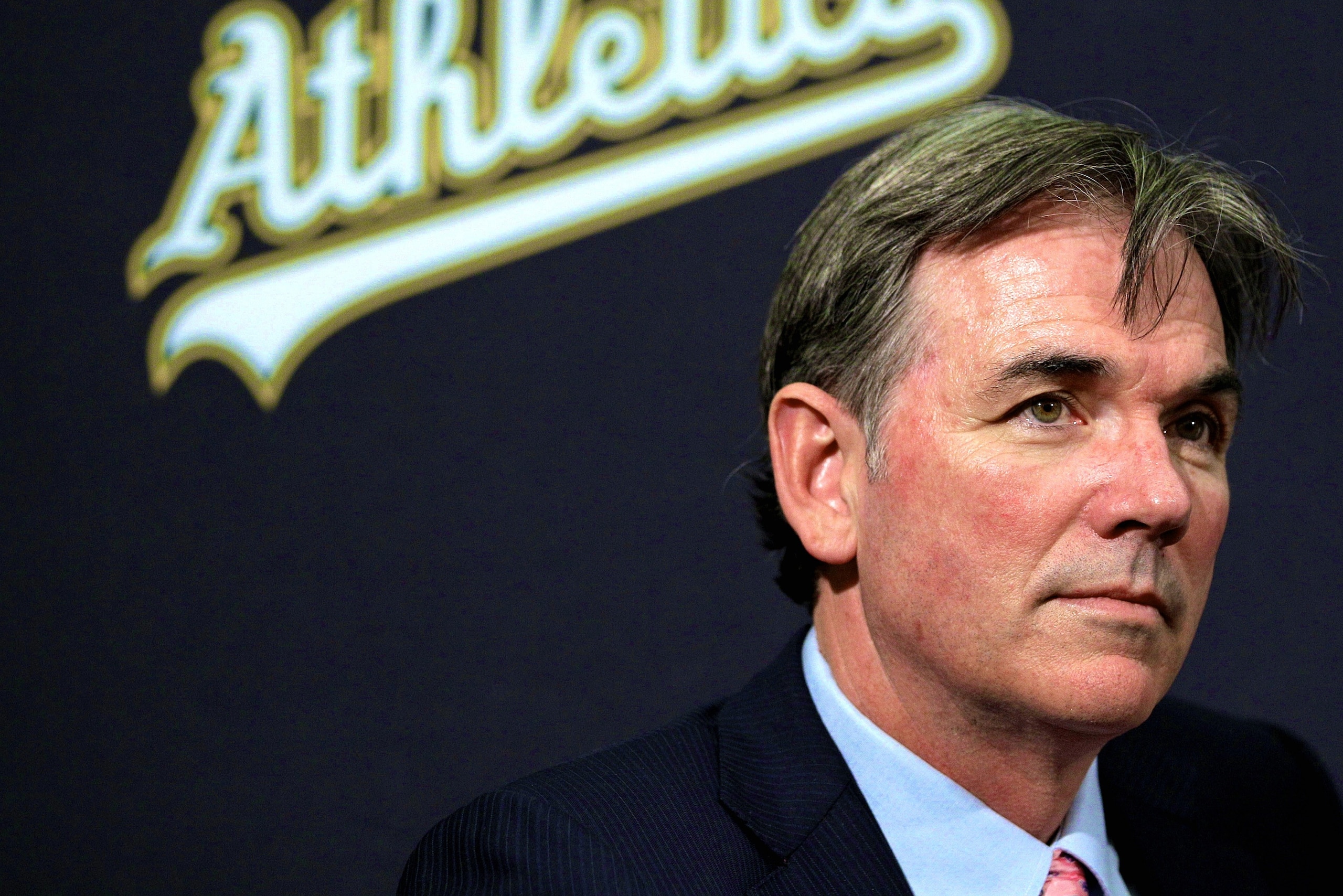
In baseball, there is no such thing as an untouchable general manager. Just like the players and coaches, a GM must stand behind his results—and pay the price when the results aren't there.
For years, Billy Beane of the Oakland A's has challenged that notion.
TOP NEWS

MLB Commissioner Defends Salary Cap
Miz Sets WS Record Already ⛽
Brewers Get 1st WS Win Since 1982 💪
It's not that Beane has never drawn criticism during his seventeen-year tenure in the East Bay. But as his "Moneyball" legend grew and the successful seasons piled up, Beane became, well, something close to untouchable.
When he landed the Athletics GM job, Beane was a 37-year-old wunderkind, a fresh-faced scout and once-touted prospect with zero front-office experience.
Nearly two decades later, he owns a sterling resume: 11 winning seasons and eight playoff appearances, all while working with a perennially undersized payroll.
In 2003, Michael Lewis wrote the book on Beane's innovative methods, spelling out how Beane and his team identified undervalued players through advanced statistical analysis and signed them on the cheap. Eight years later, Moneyball became an Oscar-nominated flick starring Brad Pitt.
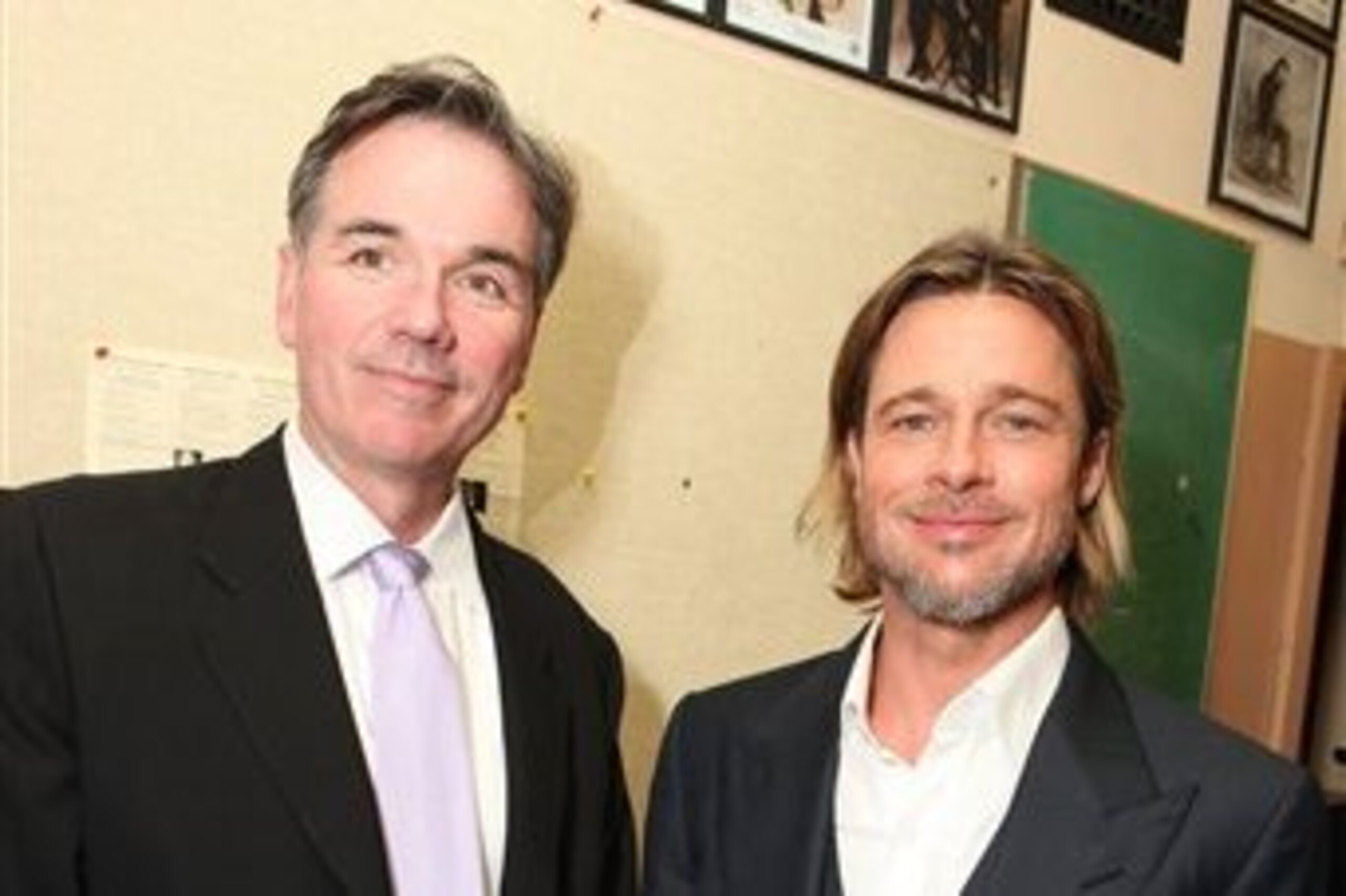
There are many measures of success; getting Brad Pitt to play you in a movie about how smart you are is pretty high on the list.
But there is one notable blemish on Beane's record. For all the noise they've made in the regular season, once the calendar turns to October, the A's go starkly quiet.
Oakland has never advanced past the ALCS on Beane's watch, and it has been dropped in the division series six times.
This year, the A's didn't even make it that far, losing in the wild-card playoff to the upstart Kansas City Royals.
That one may sting worse than all the others. This was the year Beane declared, unequivocally, that it was time to "go for it," per Richard Justice of MLB.com. "It" was the ultimate prize, the brass ring that has eluded Beane: a Commissioner's Trophy.
Beane did more than talk. He acted, moving aggressively at the trade deadline to bring in postseason stud Jon Lester from the Boston Red Sox. The price was steep. To hook Lester, Beane dangled Cuban slugger Yoenis Cespedes, a key cog in an Oakland offense that led MLB in scoring at the time.
And Beane seemingly didn't need Lester; he already had a stacked rotation, augmented by another 2014 acquisition, Jeff Samardzija, who came over from the Chicago Cubs for a bushel of top prospects.
Clearly, Beane was betting the farm (quite literally) on the "you can never have too much pitching" axiom.
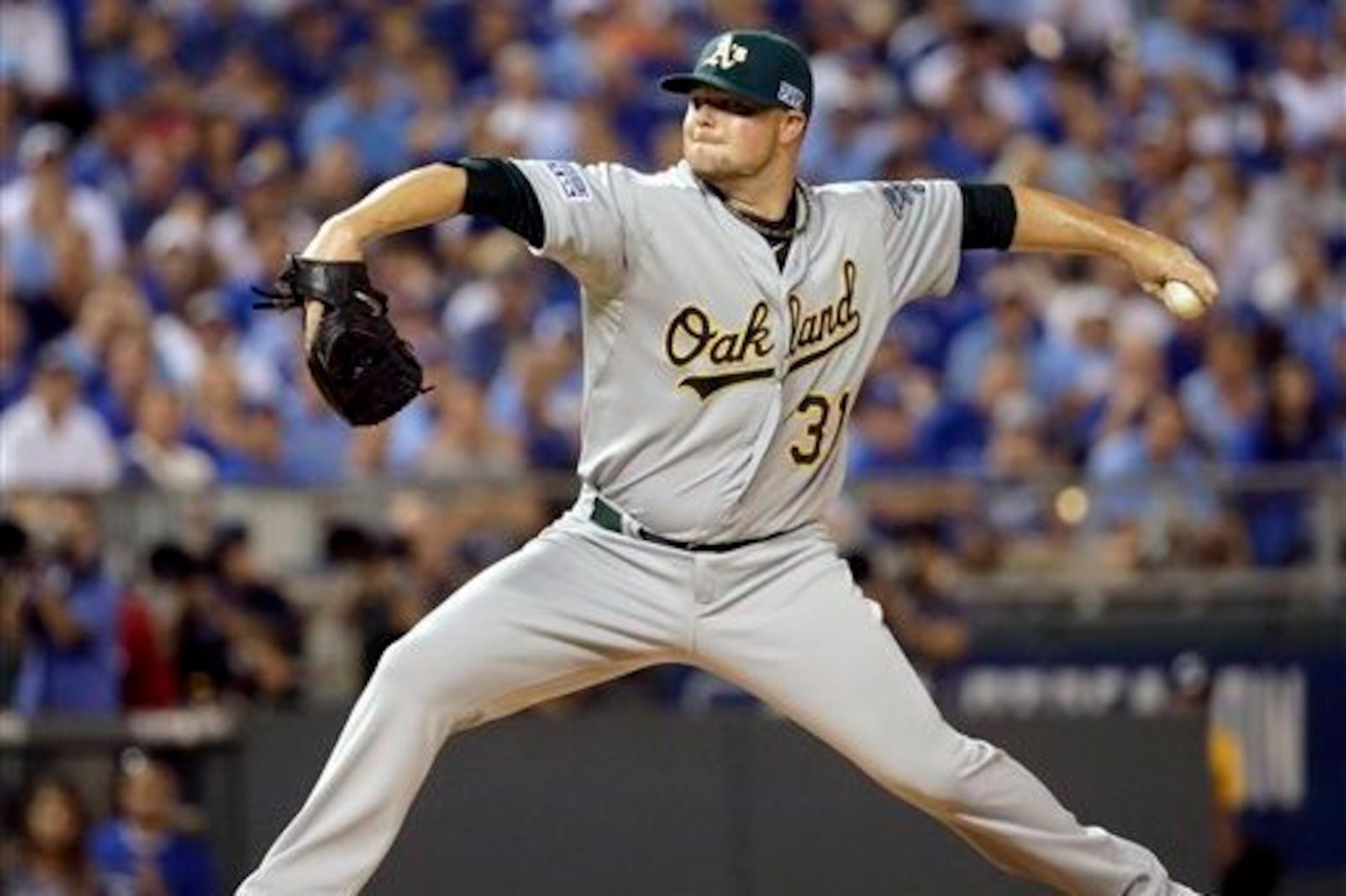
Then, Oakland started losing. To be fair, the losing started before the Lester deal. After going 59-36 in the first half, the A's limped to a 29-38 finish.
They watched the Los Angeles Angels fly past them in the AL West and didn't secure a wild-card spot until game 162.
Still, the Athletics headed to Kansas City with Lester, their ace in the hole, set to pitch. Here was the moment for Beane's all-in strategy to pay off, for all the second-half slumping and subsequent second-guessing to go up in a puff of playoff magic.
Or not. Lester failed to deliver on his big-game pedigree, surrendering six earned runs, and the A's lost a 12-inning heartbreaker, 9-8.
Now, as the dust settles and Oakland watches the rest of the 2014 postseason from home, it's time to ask: Is Billy Beane finally due for a spin in the hot seat?
This isn't a question of whether he'll be fired. He won't be.
It's also not the first time Beane misfired on a midseason move. In 2008, he dealt closer Huston Street and a young outfielder named Carlos Gonzalez in a package that netted Matt Holliday from the Colorado Rockies. Holliday wound up playing a mediocre half-season in Oakland before the A's traded him to St. Louis.
But after years of being treated mostly as an unassailable genius, does Mr. Moneyball deserve more scrutiny going forward?
The answer to that question relies on another question: Was Beane primarily responsible for Oakland's second-half collapse?
Newsweek's John Walters thinks so:
"How could a man so smart, one who has been as publicly lauded for his baseball ken as any general manager could possibly be (or is there still a Moneyball musical in the offing?), be so oblivious to a maxim that Yogi Berra might have uttered: 'If it ain’t broke, don’t break it'?
"
Beane himself defended the Lester trade, even after Oakland's exit. "Simply put," he told The San Francisco Chronicle's John Shea, "if we don't have Jon Lester, I don't think we make the playoffs."
Maybe, maybe not. What's virtually certain is that the A's won't have Lester next year. The 30-year-old left-hander is set to hit the open market, and his price tag will almost surely be too rich for Oakland's small-market blood.
He was a rental. A gamble. And a gamble that ultimately didn't pay off.
It happens; no one bats 1.000, whether at the plate or behind a desk. Still, as the A's regroup from another once-promising, ultimately disappointing campaign, it's time to move their lauded GM out of "untouchable" territory.
All statistics courtesy of Baseball-Reference.com.
.png?w=2560)

.jpg?w=2560 "NFL House in Paris Closes for Protests")

.jpg?w=2560 "Trevon Diggs Cut by Seahawks")