Green Bay Packers vs Chicago Bears: Breaking Down Green Bay's Game Plan
Entering Week 4, the 1-2 Green Bay Packers face the 2-1 Chicago Bears, their bitter rivals. After losing Week 1 by three points at home against the Buffalo Bills, the Bears have won back-to-back eight-point victories in prime time against the San Francisco 49ers and New York Jets.
Can the Packers beat the team coming off two big wins on a short week? We'll break down what the keys to the game are on offense and defense.


.jpg?w=2560 "Commanders Eagles Football")
Offense key: Establish the run

You can run on Chicago. At this point in the season, they're seventh in most rushing yards allowed thus far in 2014. Green Bay, in contrast, hasn't been able to run the ball efficiently this year. Currently, the Packers ranks sixth in rushing yards offensively.
If they aren't going to gain yardage on the ground against the Bears, it's going to be difficult to do it against anyone. The issue, though, is created by the Packers.
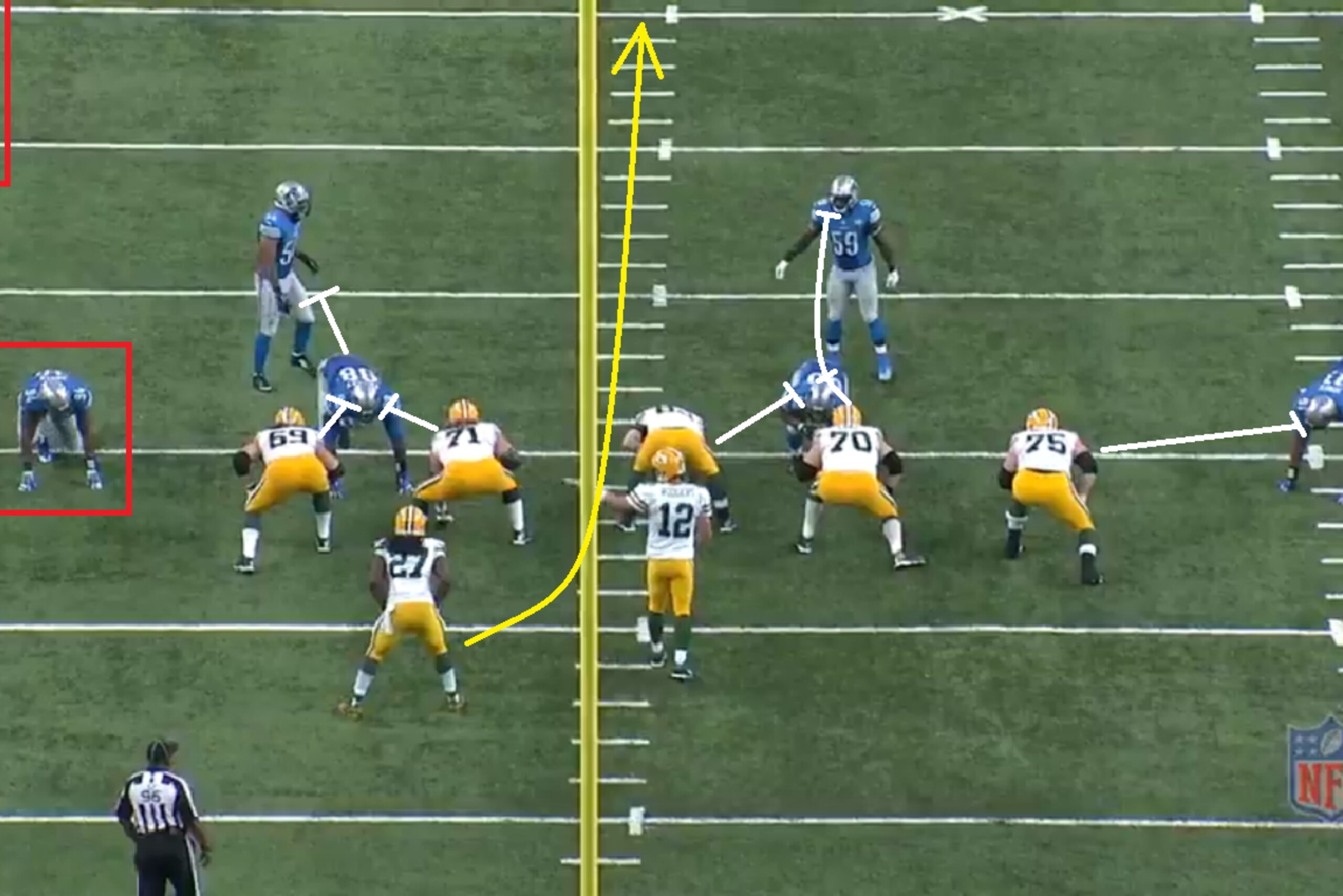
Above is the layout for Eddie Lacy's 17-yard gain, his longest of the season so far. It's a pretty typical zone-blocking play. The offensive line takes the front-line players into account before moving on to the linebackers. On the backside, the Packers let the right defensive end free (highlighted in red), assuming he can't make a play on the ball moving in the opposite direction.
The guards work on the defensive tackles, each with a double-team before one member of the double-team moves on to the second level. The right tackle, Bryan Bulaga, back from an injury, goes wide to take out his defensive end in a 9-technique.
Here, Lacy has three holes to choose from. There's the left A-gap, where the graphic has directed him to, and he'll eventually choose. The other options would be to take it outside to the right of the offensive line or in the right B-gap, on the front side of the double-team.
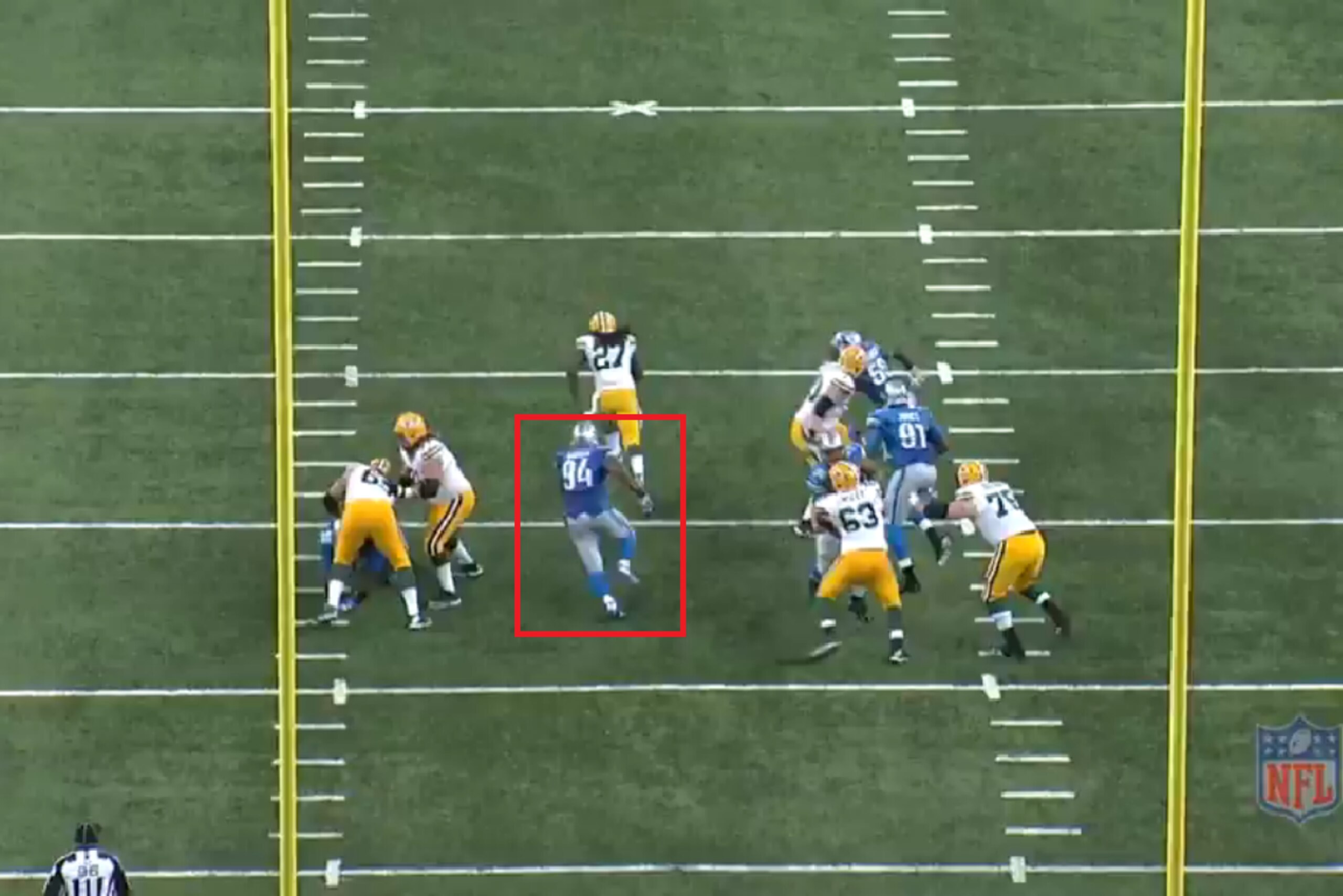
As the play progressed, the defense's assignments didn't go according to plan. Instead of playing the run, the left linebacker (highlighted in blue) shot out into coverage. This meant that the left tackle and guard didn't have to work off the double-team, which allowed them to put the left tackle on skate, opening the left A-gap up for Lacy.
The issue was that Lacy didn't see it at first. Instead, he continued to the right side of the play. Even as an NFL prospect, the now second-year player was tabbed with issues in the vision department. Playing behind an Alabama scheme that provided plenty of man-on-man blocking, he didn't need to read holes during an active play as much as he needed to hit holes based on pre-snap reads.
Bleacher Report's Ryan Lownes mentioned this a bit in his scouting report on Lacy in April 2013:
"It is important to note that he can be a bit inconsistent in this area. Despite those inconsistencies, however, Lacy shows the ability to navigate traffic and identify cutback lanes.
Additionally, I noticed several occasions in which Lacy displayed tremendous patience. While they are not exactly the same, vision can be a prerequisite for patience, as a running back must first see the defense to compute the appropriate decision.
"
On this play, Lacy didn't make the correct read. Instead of bursting through the A-gap, he ran into the back of his center, Corey Linsley. Linsley, a rookie in for injured projected starter JC Tretter, was having issues with driving a veteran defender.
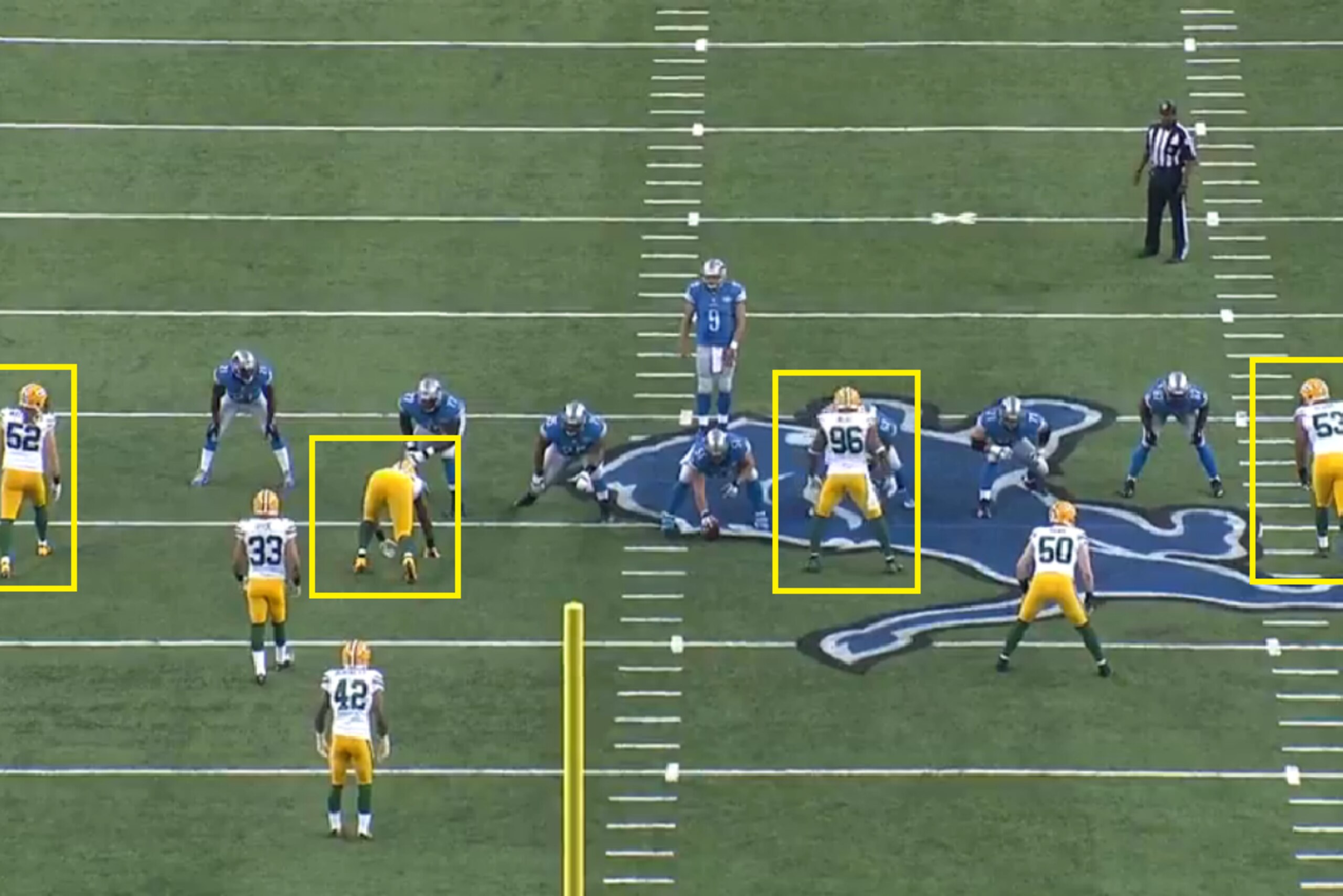
Lacy made the most of the play with his raw talent. After bouncing off the back of Linsley, he was in the A-gap and decided to run north instead of east-west. The backside defensive end never had a shot on the play, chasing him from behind before Lacy was brought down by a safety.
Though he had a 17-yard gain, Lacy could have had an even more explosive play with a correct and early cut. A majority of the time, winning the running game is about taking advantage of numbers.
When the linebacker shot out of the defensive front, the play was in the offense's hands. With Aaron Rodgers at quarterback, teams are willing to give the offense the numbers in the running game as opposed to the passing game.
Against Chicago, the Packers can't rely on Lacy bouncing off of teammates into a wide-open hole. He's going to need to put it on himself to make the correct play.
Defense key: Generate pressure with four
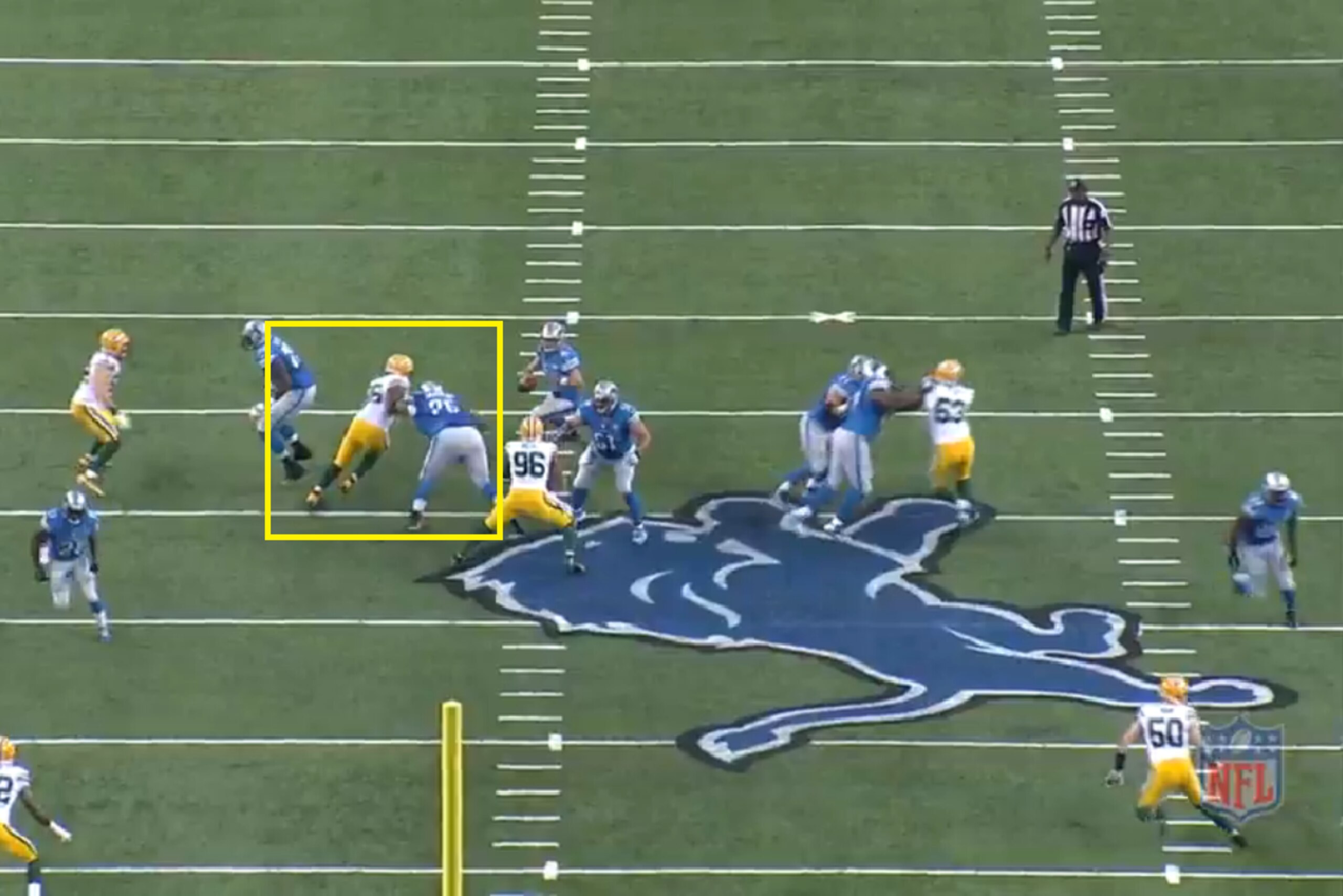
Pressure is an interesting phase of football. Teams sometimes send seven defenders, and sometimes they send three. Why would they send seven? To have a single free rusher, which can disrupt an entire passing attack.
That's the fascinating part. If there's one man who's able to create pressure on the quarterback, a play's outcome is completely different, even if the others are stonewalled at the line of scrimmage. This is especially true about interior pressure.
If an edge defender comes free, the offense at least still has hope that the quarterback can roll out toward the opposite sideline and find an open target in the process. If the quarterback sees a man coming free right in front of him, the play usually ends up being a sack or forced pass. There's just simply nowhere for him to move to where he's free.
On this play, Green Bay was able to create interior pressure with just four defenders. This is important because it allows seven men to still be in coverage. Against Jay Cutler, Brandon Marshall, Alshon Jeffery, and Martellus Bennett, that's a huge advantage. Chicago essentially has a basketball team playing skill positions for the squad, which allows them to win man coverage more times than not.
On the line, from left to right, are Clay Matthews, Datone Jones, Mike Neal, and Nick Perry. Of them, three of the Packers are homegrown first-round selections in the Dom Capers era. For as much as Capers loves his exotic blitzes, he's also able to throw pressure personnel out and bull-rush throwers.
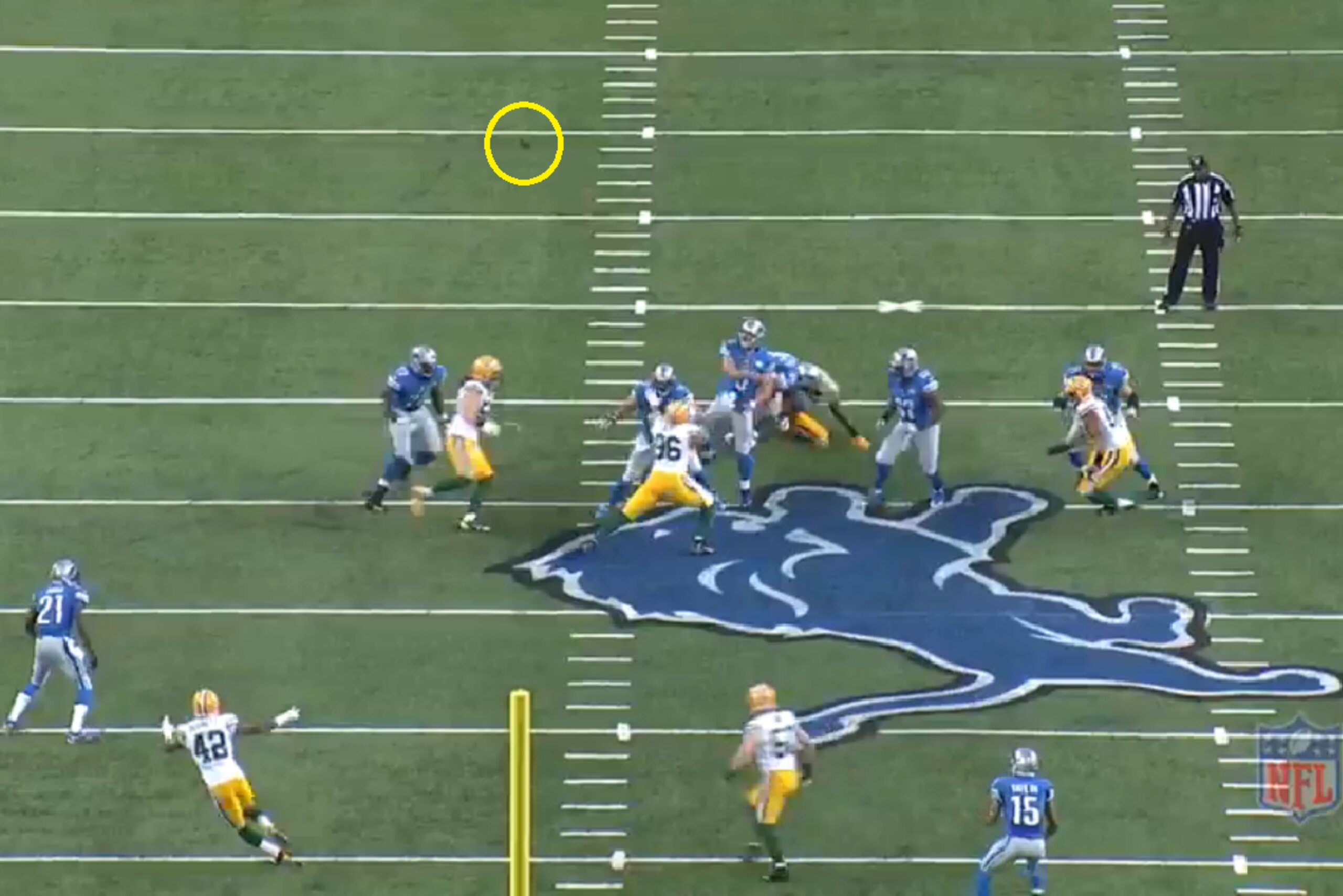
There only needs to be one. Matthews and Neal haven't even engaged with offensive linemen when Datone Jones (highlighted in yellow) first beats the offensive guard assigned to him, Larry Warford. Warford was Pro Football Focus' Rookie of the Year last season, allowing zero sacks and fewer than a pressure a game.

Jones crashed into where Detroit Lions quarterback Matthew Stafford was positioned, forcing the former No. 1 overall selection to move quickly to save the play. Stafford throws an ill-advised pass, sending it deep.
Chicago quarterback Jay Cutler is very similar to Stafford. His mechanics aren't great, but he's got a cannon, and he's not afraid to use it. Green Bay can use that to its advantage. If it's able to create pressure, Cutler "will throw [them] the ball," as longtime Green Bay Packer and current Oakland Raider Charles Woodson said to then-ESPN reporter Rachel Nichols in 2012 (via Josh Alper of Pro Football Talk).
The result of the play was an interception by Davon House on Calvin Johnson. While Jeffery, Marshall and Bennett are great players, they're not Johnson. With seven men in coverage, the Packers were able to bracket the target and force Stafford to make a tight throw.
When the throw wasn't absolutely on point, it gave a defensive back the opportunity to make a play on the ball. This is exactly what teams have to do to beat the Bears.
Final thoughts
Based on Chicago's personnel, Green Bay has to do a couple of things to come out of Soldier Field with a win on Sunday morning.
Offensively, the Packers need to finally get their running game going against the more-than-giving Bears defensive front. Defensively, slowing down the Bears' passing game is a must. By generating pressure with a limited amount of pass-rushers, it'll force Cutler to throw tight throws in non-ideal situations to bracketed targets.
If Green Bay's able to get those goals accomplished, it can avoid a dreaded 1-3 start to the season. With a win here, the Packers can kick-start their team through a midseason schedule and attempt a run toward the playoffs.
.jpg?w=2560 "Chiefs Dolphins Football")



.jpg?w=2560 "Love's Body Already 'Tired'")