

PGA of America Must Change the Ryder Cup Qualification and Selection Process
Prior to the 2008 Ryder Cup, the player selection process for the U.S. Team was as follows:
- Ten players qualified through the two-year rolling-point system, which closed after the PGA Championship.
- Non-playing captains were allowed two captain’s picks, which were made directly after the PGA Championship.
When Paul Azinger, who had compiled a 5-7-3 record in four Ryder Cup appearances as a player, was selected by the PGA of America to captain the 2008 team, he immediately made several changes to the qualification and selection system.
TOP NEWS
.jpg?w=2560 "Chiefs Giants Football")
Mahomes Told Teammate to Leave Meeting

Geno Explains Wilson Exchange

McCarthy Wins 1st Giants Start
Azinger changed the automatic qualification process to apply more weight to the majors and player’s performance during the year leading up to the Ryder Cup.
Players earned points from 2007 based solely on their performance at the majors.
Essentially, a win at the 2007 John Deere Classic was meaningless, whereas a win at the 2007 Masters was worth a boatload of points.
From January 1, 2008, players were awarded one point for every $1,000 earned at official PGA Tour events and two points for every $1,000 earned at the four majors.
In addition, Azinger reduced the number of players eligible to automatically qualify for the team based on points from 10 to eight.
Prior to Azinger captaining the 2008 team, captain’s picks were typically made immediately following the PGA Championship.
However, Azinger moved the timing of his captain’s picks back several weeks into the middle of the FedEx Cup playoffs.
The ultimate goal behind the sweeping changes Azinger made to the selection process was to allow Team USA the best possible opportunity to identify the hottest players heading into the Ryder Cup.
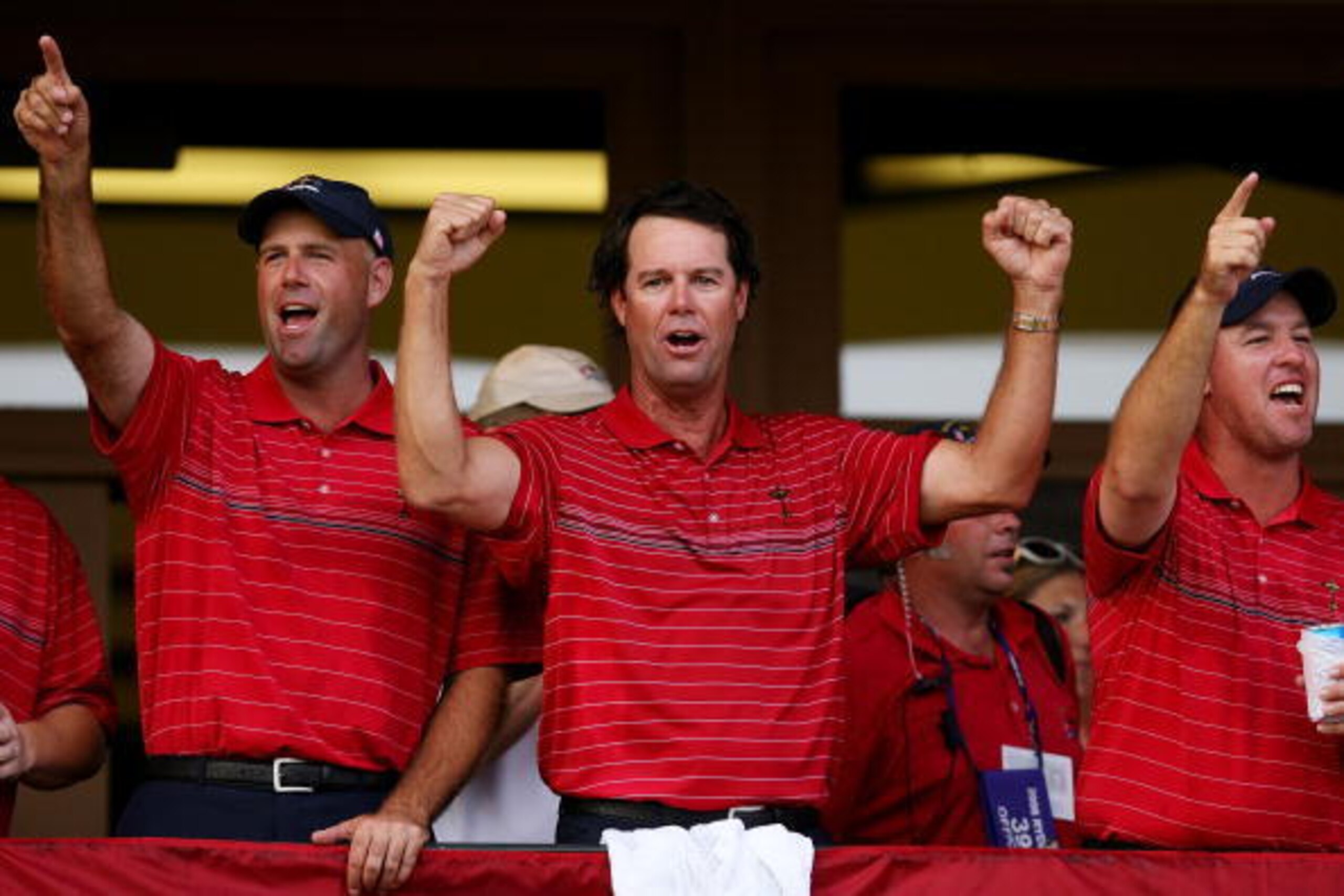
Azinger’s modifications to the qualifying and selection process appeared to pay off big time in 2008 when the U.S. team beat the European side 16.5 to 11.5 to capture the cup for the first time since the Miracle at Brookline back in 1999.
2010 U.S. Captain Corey Pavin and 2012 U.S. Captain Davis Love III left Azinger’s changes virtually untouched throughout the last two Ryder Cup matches, both of which were won by the Europeans.
Over the past couple of decades, the PGA of America had developed something of an unwritten set of criteria used to identify Ryder Cup captains.
Potential captains were typically in their late 40s-early 50s and had competed in at least one Ryder Cup.
Between 1987 and 2012, every captain selected had won at least one major. More than half of those 13 captains had won at least one PGA Championship, which is, of course, run by the PGA of America.
And since Jack Nicklaus captained the unsuccessful American team back in 1987, no man has captained more than one Ryder Cup team.
But during that period between 1987 and 2012, the U.S. Ryder Cup team managed to win just four of 13 matches, including just one of the past six matches.
So, despite insanity being defined as doing the same thing over and over again and expecting different results, it came as somewhat of a surprise when the PGA of America strayed from its cookie-cutter selection process for the first time in more than 25 years and named Tom Watson as the captain of the 2014 U.S. Ryder Cup team.
Watson is 65 years old, has never won a PGA Championship and was the captain of the 1993 U.S. Ryder Cup team that retained the cup with a 15-13 victory over the Europeans at The Belfry.
1993 also just so happens to be the last time that an American Ryder Cup team won on foreign soil, which one would like to think weighed heavily on the PGA of America’s decision to bring Watson back as captain a full 21 years after his first successful captaincy.
When Watson was selected by the PGA of America to captain the 2014 U.S. squad, he decided to stray ever so slightly from the qualification and selection process implemented by Azinger back in 2008.
Instead of having eight players qualifying for the team through the point system and four captain’s picks, Watson allowed nine players to qualify through the point system, which left him with three captain’s picks.
Watson explained this modification during a press conference back in March:
"I'm going to reduce the number of captain's picks from four to three.
"
There's not a lot of method to my madness, if you will, but I just truly think that the players themselves ought to have another shot at getting on the team because of their merit.
Watson’s decision to allow a larger number of players to control their own destiny through qualifying for the team based on the number of points accumulated over the past two years was all well and good.
In the grand scheme of things, this was quite a minimal change to the qualifying structure that had been in place since 2008.
However, where the PGA of America, along with every U.S. Ryder Cup captain going back to 2008 (which would also include Azinger), have fallen short is in the timing of qualification and selection process.
Prior to 2007, the PGA Tour’s FedEx Cup Playoffs did not exist, and the top players in the world pretty much shut it down after the PGA Championship.
So, during the pre-FedEx Cup era, it was quite prudent to cut off the qualifying window and allow Ryder Cup captains to make their picks immediately following the PGA Championship.
But the structure of the golf season has changed dramatically since the FedEx Cup Playoffs were launched in 2007.
Virtually every top American is now competing in the four-tournament FedEx Cup stretch (five tournaments if you include the Wyndham Championship, which players often attend to either qualify for the playoffs or better their position heading into The Barclays).
In recent years, many players have also played a lighter schedule prior to the PGA Championship in order to remain fresh for a run at the FedEx Cup title and a $10 million payday.
Based on the way in which most of the top American golfers are now creating their schedules, the timing of the Ryder Cup qualification and selection process has become antiquated.
By closing the point standings right after the conclusion of the PGA Championship, the United States is locking eight or nine players into Ryder Cup positions a full five-to-six weeks before the matches.
And even though the captain’s picks were moved back several weeks into the middle of the FedEx Cup Playoffs, this still means that captains are attempting to select “hot” players three or four weeks prior to the start of the matches.
Anyone who knows anything about the game of golf will know that the way in which a player is performing four to six weeks from now could be vastly different to the way in which a player is performing today.
And this was never more evident than during the 2014 qualification and selection process.
On July 31, Dustin Johnson, who was fifth in the U.S. Ryder Cup pointing standings, announced that he would be taking a “leave of absence” from the PGA Tour and would not be attending the Ryder Cup. Michael Bamberger and Mike Walker of Golf.com later reported that Johnson’s “leave of absence” was actually a six-month suspension handed down by the PGA Tour for a third failed drug test.
Johnson’s removal from the 2014 Ryder Cup team moved all players up one spot in the point standings.
This allowed Patrick Reed to move into the eighth spot and Zach Johnson to move up into the ninth and final position in the point standings on August 10, which was the final day that players could automatically qualify for the team based on points.
The issue with Reed and Johnson is that both players were still riding the coattails of early-season success that had tapered off during the second half of the season.
Reed had just two top-10s and six missed cuts in his last 18 events, while Johnson has had just one top-10 since the Humana Challenge back in January.
When Watson took the stage in New York on September 2 to make his captain’s picks in front of a live television audience, his potential choices ranged from bad to worse.
So, in an attempt to mitigate the damage that he may do to his squad by adding three additional players from a pool of terrible options, Watson decided to take the safe route and go with experience.
Watson chose Hunter Mahan, Webb Simpson and Keegan Bradley.
Mahan has played in three Ryder Cups and four Presidents Cups, and had just won The Barclays a week before Watson was to make his selections.
So, despite Mahan having had one of the worst years of his career during the 2014 season, at the time Watson felt as if he was selecting a hot player with Ryder Cup experience.
However, in the two weeks following his selection to the U.S. Ryder Cup team, Mahan proved that his win at The Barclays was more of an anomaly than the beginning of a hot streak. Mahan proceeded to post a T59 at the BMW Championship and T23 at the Tour Championship in his final two events of the year.
Bradley was chosen by Watson more for his past Ryder Cup success and his ability to pair well with Phil Mickelson rather than his five top 10s in 24 events during the 2014 season. This is one pick that would have likely remained the same for Watson no matter what transpired during the final two weeks of the season.
Watson's third captain's selection, Webb Simpson, had two top 10s in the six events prior to Watson selecting him for the team. However, since being selected to the U.S. Ryder Cup team, Simpson tied for 53rd in a 70-man field at the BMW Championship, and then tied for 23rd in a 30-man field at the Tour Championship.
While many may now be second-guessing Watson’s selections from September 2, let’s be clear here, Watson was faced with nothing but bad options and made the best possible decisions based on the information available to him at that time.
However, had both the date of the captain’s picks and the closing of the automatic qualification system been moved back to September 14, immediately following the Tour Championship, the United States would undoubtedly be bringing a much stronger team over to Gleneagles for the 2014 Ryder Cup.
With a win at the Deutsche Bank Championship and a T4 at the Tour Championship, Chris Kirk would have likely qualified for the Ryder Cup team based on points.
Kirk qualifying for the team would have replaced either Reed or Johnson with a very hot player and would have still left Watson with three captain’s picks.
Mahan and Simpson would have almost certainly been replaced by Billy Horschel, who won the FedEx Cup title, and Ryan Palmer, who finished the year off with a T4 at the BMW Championship and a seventh place finish at the Tour Championship.
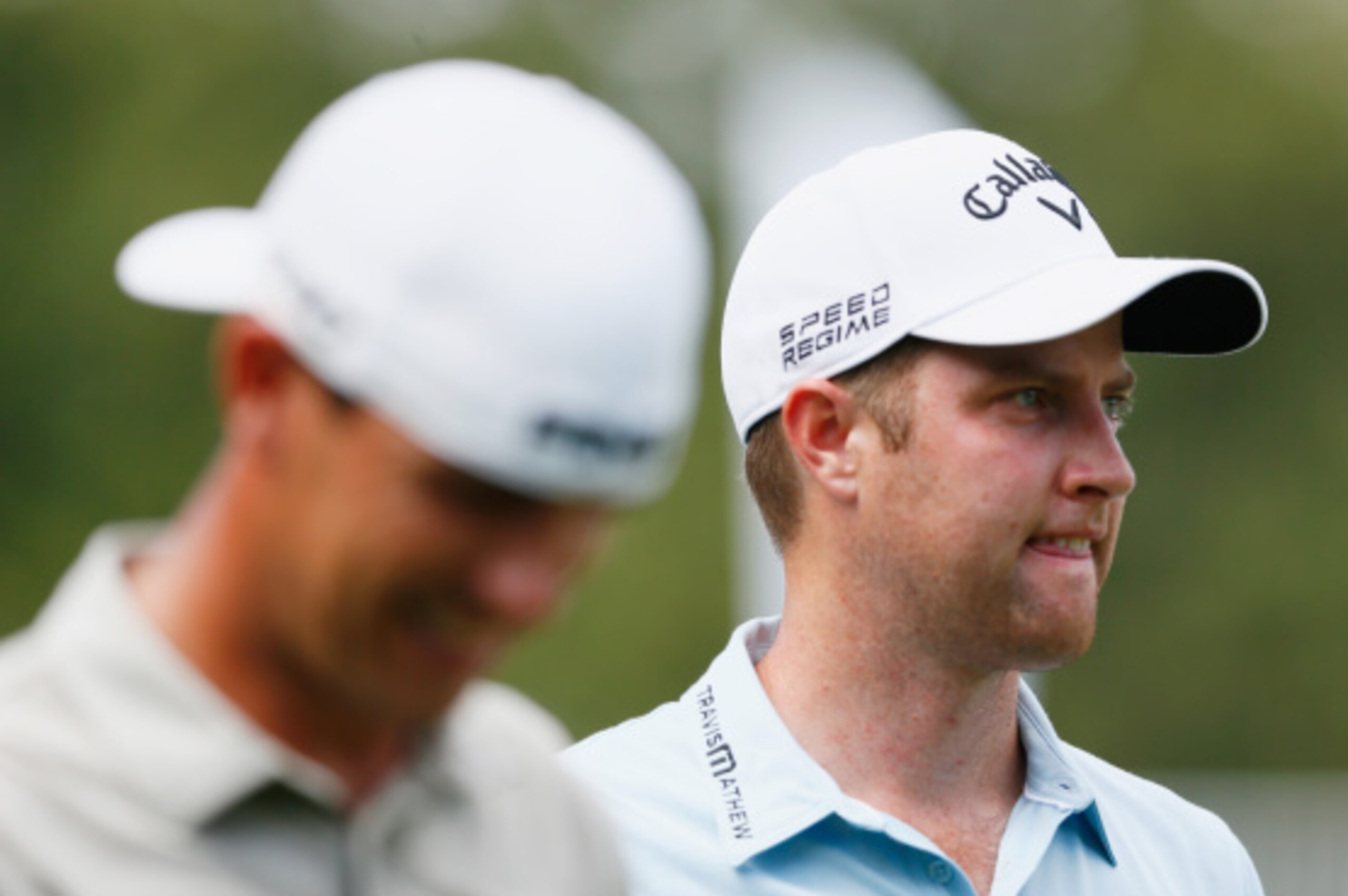
By simply moving the dates for automatic qualification and captain’s picks back several weeks, the U.S. team would have replaced at least three out-of-form players with three very hot golfers.
That is 25 percent of the U.S. Ryder Cup team that could have been comprised of players much more qualified and prepared to compete against a strong European side this week at Gleneagles.
The PGA Tour season has evolved since 2007, and the PGA of America is going to have to modify the timing of its qualification and selection process if it is to have any chance at putting the best possible Ryder Cup team out on the course moving forward.
Azinger started to address this issue back in 2008, but there is clearly still work to be done.
The PGA of America has shown a willingness to alter the way in which it selects both players and captains in recent years.
And for the sake of the U.S. Ryder Cup team, let’s hope that the PGA of America continues to be accepting of change as it relates to the dates in which players can either qualify or be selected for the team. Because between what transpired during the later stages of the 2014 PGA Tour season, combined with the fact the U.S. side has won just one of the last last six Ryder Cup matches, it is obvious that additional changes need to be made.
.jpg?w=2560 "AP Poll Top Five Week 9")

.jpg?w=2560 "Updates from EVERY NFL Game 🏈")
.jpg?w=2560 "Baker Gets Glove From Rays 🧤")