

Tom Watson, Paul McGinley Put Contrasting Styles to the Test at Ryder Cup 2014
GLENEAGLES, Scotland — "Irishmen are always welcome company with me."
That is how Tom Watson first greeted Paul McGinley back when the (Northern) Irishman was a fledgling PGA Tour pro in awe of his "boyhood hero," the American by then long since established as one of the game's true greats.
This week at Gleneagles, the two men face off as opposing Ryder Cup captains, although arguably that initial dynamic remains very much in place. It's a reversal of the respective team dynamics; Europe are said to have the heavyweight side this week in Scotland, but the United States have the decorated general plotting their course.


.jpg?w=2560 "Rams Eagles Football")
With eight major titles to his credit, few can match Watson's achievements in the game. He was a young McGinley's idol, the player McGinley followed around at every opportunity while a university student in San Diego in the late 1980s.
McGinley was still one year from his first Ryder Cup appearance when, in 2001, he finally played a round with Watson, sidling up to the American at Atlanta Athletic Country Club and asking to join him for a practice round ahead of that week's PGA Championship. McGinley would ultimately play in three Ryder Cups, just one fewer than Watson, but no one is under any illusions about where each man remains in golf's wider hierarchy.
The Ryder Cup famously disrupts golf's natural order, of course. At the biennial event, the hard-living Brian Barnes can beat Jack Nicklaus twice in a day, and for a three-day period, Ian Poulter can turn into the best player in the world. McGinley might not have the gravitas, but he is the one entering the event with a calm confidence in his chances of victory.
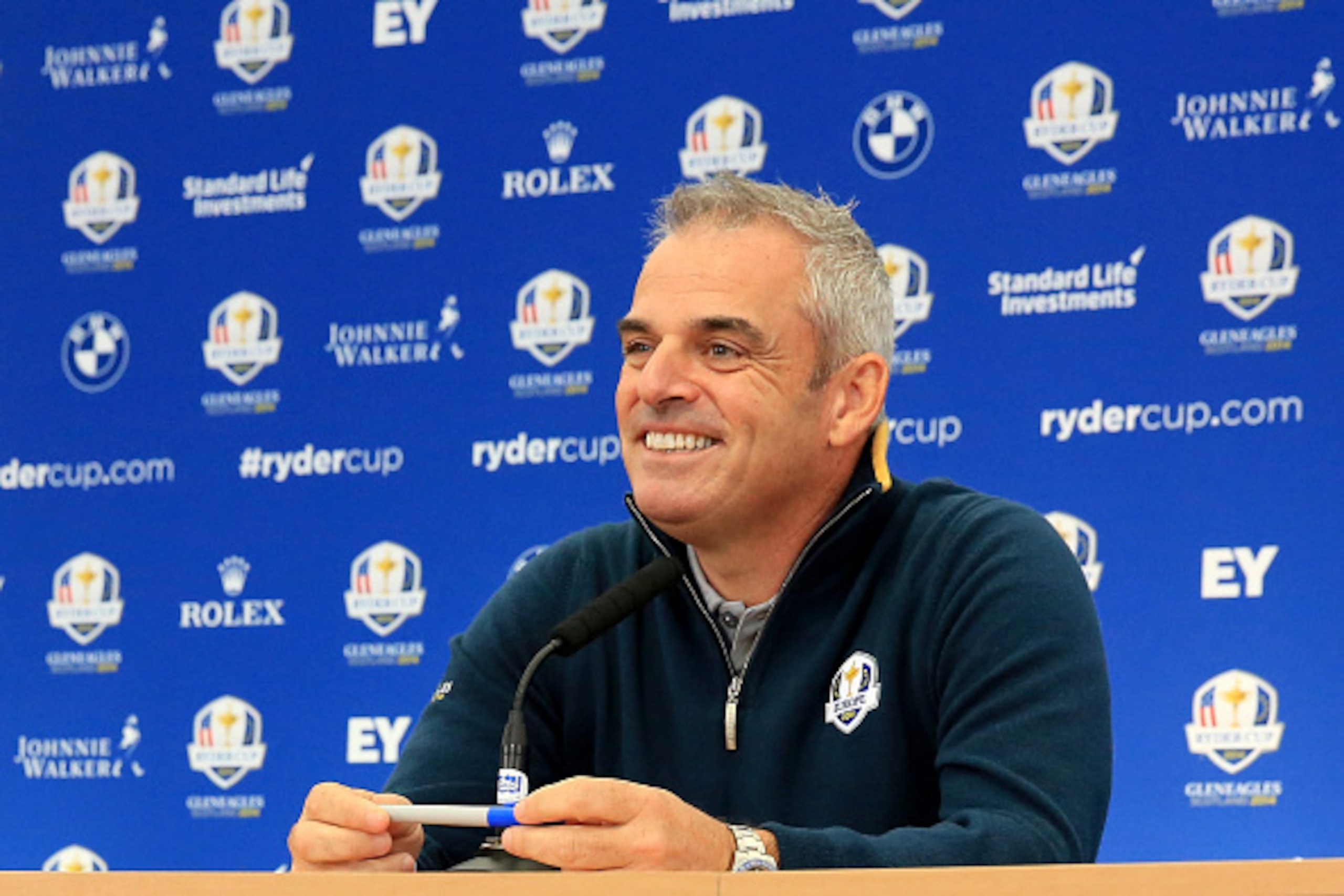
It is up to Watson, still the last U.S. captain to win on European soil with victory in his previous stab at the role at The Belfry in 1993, to find a way to turn the tide once again.
If history is written by the winners, as is often said, then it also imbues a certain confidence—some would say arrogance—in them and the methods they have employed. This week, McGinley has talked frequently about a captaincy "template," a way of doing things that has been passed down from each successive winning captain in recent times.
Beginning with Tony Jacklin, who brought professional attitudes to the Great Britain and Ireland team in the 1980s, McGinley says the likes of Seve Ballesteros, Sam Torrance and Colin Montgomerie have slowly perfected a leadership strategy for a famously unpredictable event.
It is a recipe that McGinley is now refining rather than revising.
"I've been very privy and lucky to be riding shotgun on this great ride of success we've had in Europe," McGinley, who has twice been a vice-captain at the competition, said. "I've learned so much from every one of those experiences. I see the template that's in place—there's reasons we've been winning these Ryder Cups."
The Americans, of course, eschew the notion of any sort of winning formula or, indeed, any sort of template for success. But in appointing Watson, the PGA seems to have at least acknowledged that there are good and bad ways of doing things—the veteran appointed specifically to achieve what no one has managed since 1993 and win back the trophy on European soil.

That means throwing out any old methods and allowing Watson to do it his way (the shift from four to three wild-card picks an obvious example of that). Then again, if you have lost seven of the last nine tournaments, you are probably going to throw out whatever formula you have developed.
You might think Watson's return—"I've been waiting for the call for 20 years," as hoardings around the course remind us he said—would lead him to proclaim the need for change, to acknowledge that Europe have been doing things better in recent times. Instead, he has dismissed the notion that the recent slate of European wins is down to anything other than a few more putts dropping at the right time.
"They have been able to pull it out a little better at the end than we have," Watson said. "I can't explain why. They have played better at the end."
That stance sets the captains at opposing ends of the spectrum once again. McGinley has been at every one of the Ryder Cups since 2002 in some capacity, being a vice-captain on the last two occasions. Watson has not been at the event in person since 1993—although he has watched all of them on television.
Does that give McGinley an advantage?
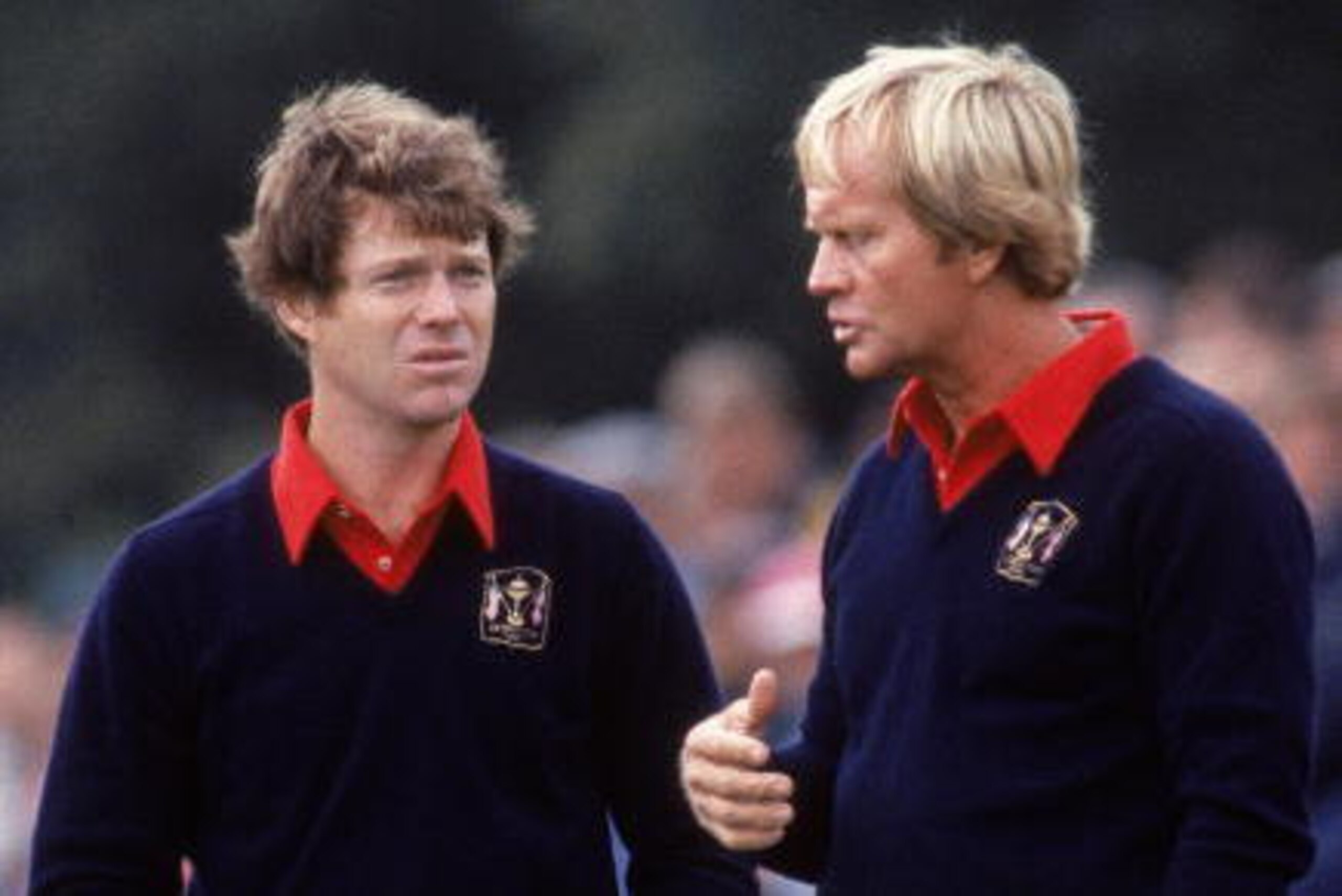
"No," Watson said simply before being asked to elaborate. "Because I've played in the Ryder Cup four times, and I've been captain once. That's experience."
McGinley, as is his wont, remains less convinced. His playing CV will never match up to Watson's, but almost nothing about this week will surprise him, having studied everyone from Torrance to Jose Maria Olazabal on a meticulous path to this week.
The contrasting leadership styles offer an interesting subplot to events even if you feel, as many do, that the captains' influence is one of the most overexaggerated aspects of the tournament. While McGinley seems to be leading very much by committee, constantly sourcing the opinions of players, caddies and his record five vice-captains, Watson appears to be carrying a lot of the burden himself—just as he did back in 1993.
At 65, however, and with the proliferation of media and corporate engagements the ever-more popular event now requires, perhaps all those additional responsibilities have begun to weigh heavily on Watson, who has become increasingly curt and reticent in his (daily) meetings with the press.
One wonders if McGinley's biggest advantage this week might be the 20-year age difference between him and his rival.
"The biggest difference [from 1993] is the amount of time I spend with the media and those types of responsibilities," Watson acknowledged in a rare moment of candour. "Right now, it doesn't seem like I have a single lull. I've got a list of about 12 things I have to do today and another 13 things tomorrow."
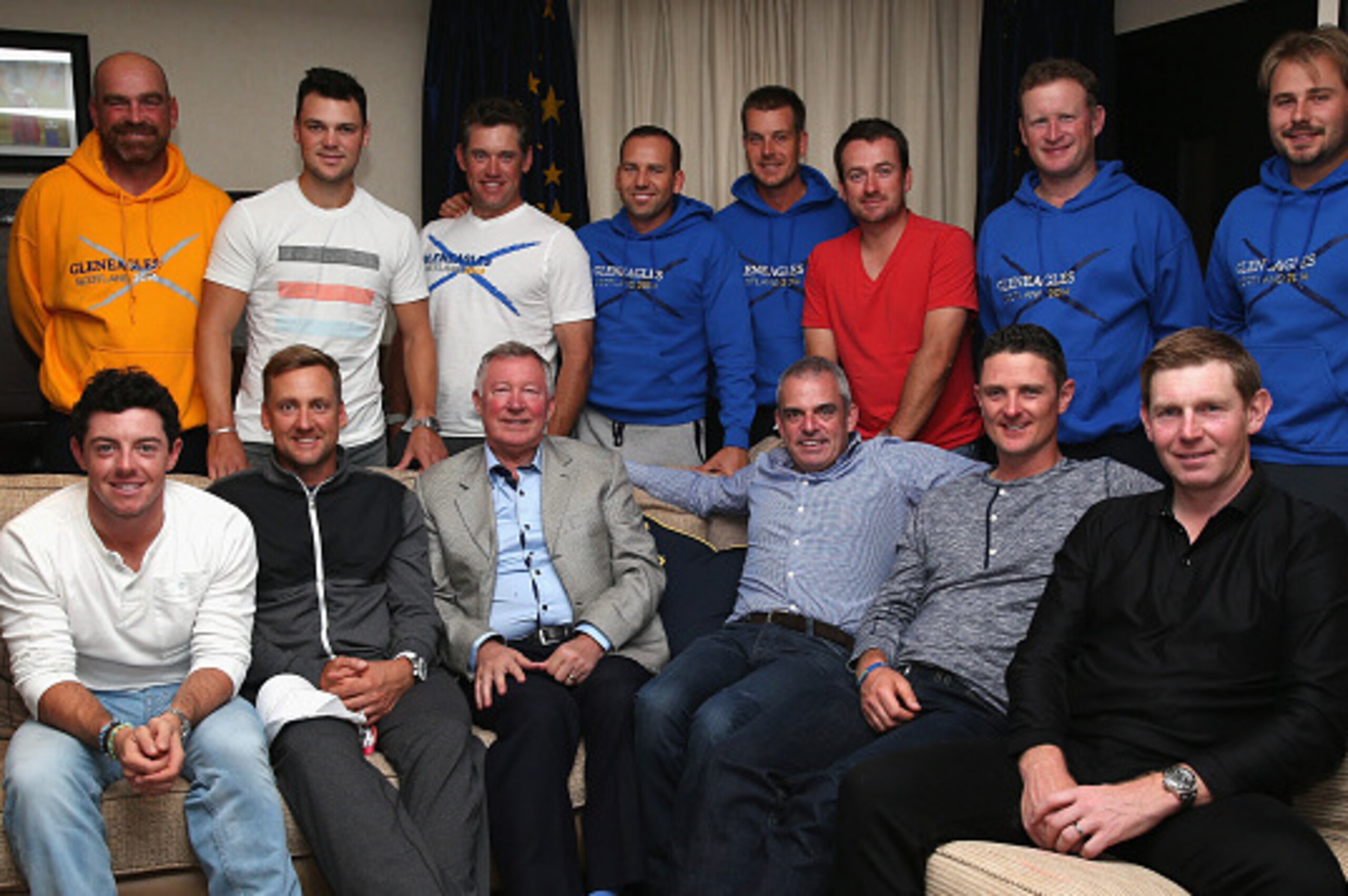
On Tuesday evening, both teams were visited by some special guest speakers, with further differences again on display. Europe enjoyed an audience with Sir Alex Ferguson, the former Manchester United manager, who spoke at length about leadership, teamwork and dealing with the pressure of being favourites, along with more general anecdotes about his career as English football's most successful manager.
"I was sort of in this trance just listening to everything that he was saying," Rory McIlroy recounted the next day. "He's an inspirational man when he talks."
That continued a running tradition, with McGinley's predecessors generally calling upon speakers from elsewhere in the sporting fraternity to impart some wisdom. Watson, meanwhile, followed the recent blueprint of other American captains—inviting two Wounded Warriors, Noah and Josh, to address the team as a reminder of where the stakes are really highest.
"It's two of the best speeches we've had," Phil Mickelson reflected. "These two gentleman have overcome two of the biggest challenges anyone can ever face in life."
"The players, I think, enjoyed the sobriety of the conversation," Watson added, "that we are just playing a game and that there are people out there doing work that very few other people will do. That was the message."
It is an insight into the two mentalities the captains are trying to create. McGinley is looking at ways his team can embrace the pressure. Watson is seeking experiences and speakers that put this sport in its proper perspective.
McGinley's talk of a "template," of course, also works as a convenient pre-emptive blame deflector; if Europe loses, then it was nothing he did wrong—he was only following a plan that had worked in the past. After so many close defeats, perhaps the Americans were due a win. For Watson, however, the overall verdict on his leadership will be defined by the final scoreline.
It is an aspect of this that might yet influence the only significant decisions they now have to make—the pairings over the first two days and then the final singles order. McGinley says he already has a strong idea of his partnerships for the opening day while Watson says he is still contemplating his options. From afar, however, it appears the U.S. lineup is relatively settled, while Europe's remain slightly more in flux.
"They have somewhat evolved," Watson tentatively revealed. "We kind of have an idea of who is going to play with whom at the beginning, but after that, you are coaching by the seat of your pants."
"I have an idea in my head, but I will not be making any decisions without the consultation of the vice-captains," McGinley said. "Like all good plans, it must have flexibility."
Come Sunday evening, Watson will hope the dynamic with his opposite number has not changed—he still the golfing legend, McGinley a man in his shadow.
In 1993, Watson sent his players out on Sunday with a simple thought: "What they invented, we perfected." Europe think they have now perfected the leadership model required for a Ryder Cup, but Watson is hoping to prove he has invented—or reinvented—something even better.
"That was a motivating thought back then," Watson concluded, the question raising a rare smile. "I'm using different thoughts this time."
All quotes obtained firsthand.
.jpg?w=2560 "Texans-Mixon Released Football")
.jpg?w=2560 "Commanders Eagles Football")

.jpg?w=2560 "Grading WWE Raw 🔠")
.jpg?w=2560 "Mahomes' Wife Trolls Kubiak 💀")

