
Ranking the Best Moments in Ryder Cup History
With an event as history-rich as the Ryder Cup, trying to come up with the 10 most memorable moments could be as daunting as actually trying to win the Cup.
Seve Ballesteros, no doubt the most flamboyant player in the history of the event, made a couple of appearances in my list.
And there's no way that Ryder Cup maniac Ian Poulter could have missed being on this list, and he didn't.
It's a great event with so many spectacular times that there was plenty to choose from.
Here's my top 10; check it out.
10. McGinley Unlikely Hero in 2002
1 of 10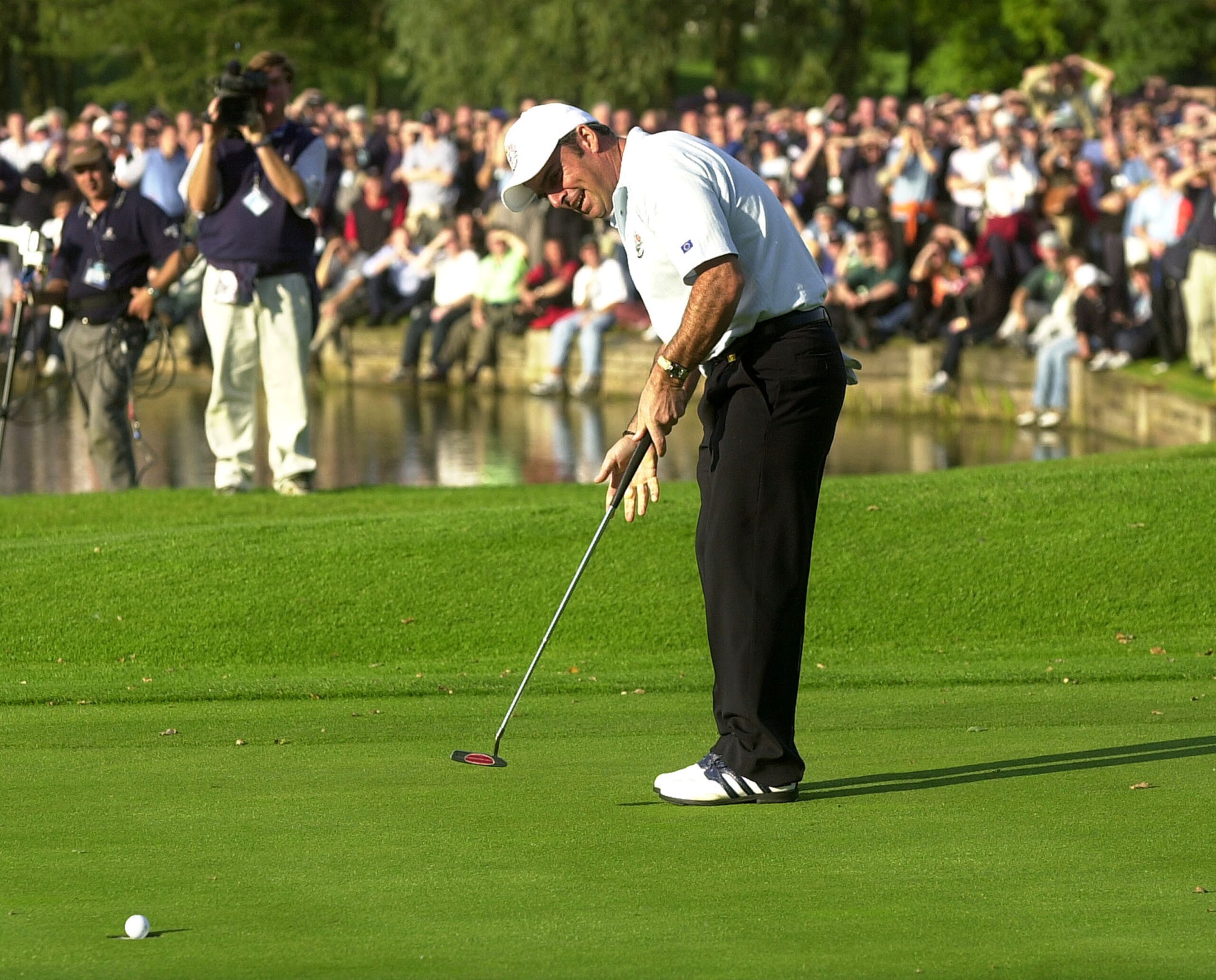
Who knows what kind of impact European captain Paul McGinley is going to have on the 2014 Ryder Cup, but he certainly played a big part in his team winning back the cup after the United States won at Brookline in 1999.
That was the Ryder Cup where players' wives and players stormed the 17th green after Justin Leonard drained a 40-foot putt, upsetting the Europeans immensely.
Because of the tragedies of September 11, 2001, the matches were moved back a year to 2002 and were played at the Belfry.
The Europeans were very determined and battled the USA to an 8-8 tie as the Sunday singles matches unfolded. After unheralded Phillip Price pulled off a shocking 3-and-2 upset of Phil Mickelson, Ryder Cup rookie McGinley made a 10-foot putt on the 18 that would halve his match with Jim Furyk and seal the Ryder Cup for Europe.
He was quoted in a BBC.com story last week as being bewildered when none of his teammates seemed to charge the green to congratulate him.
"As it went in the hole, I put my arms in the air and wondered 'why isn't anyone jumping on top of me?' I thought 'maybe it's lipped out?' I saw Sergio Garcia jumping up and down, then they came on. But, in real time, it was only one second. For me, time stood still," he told the BBC.
9. Torrance Keys Historic Win for Europe
2 of 10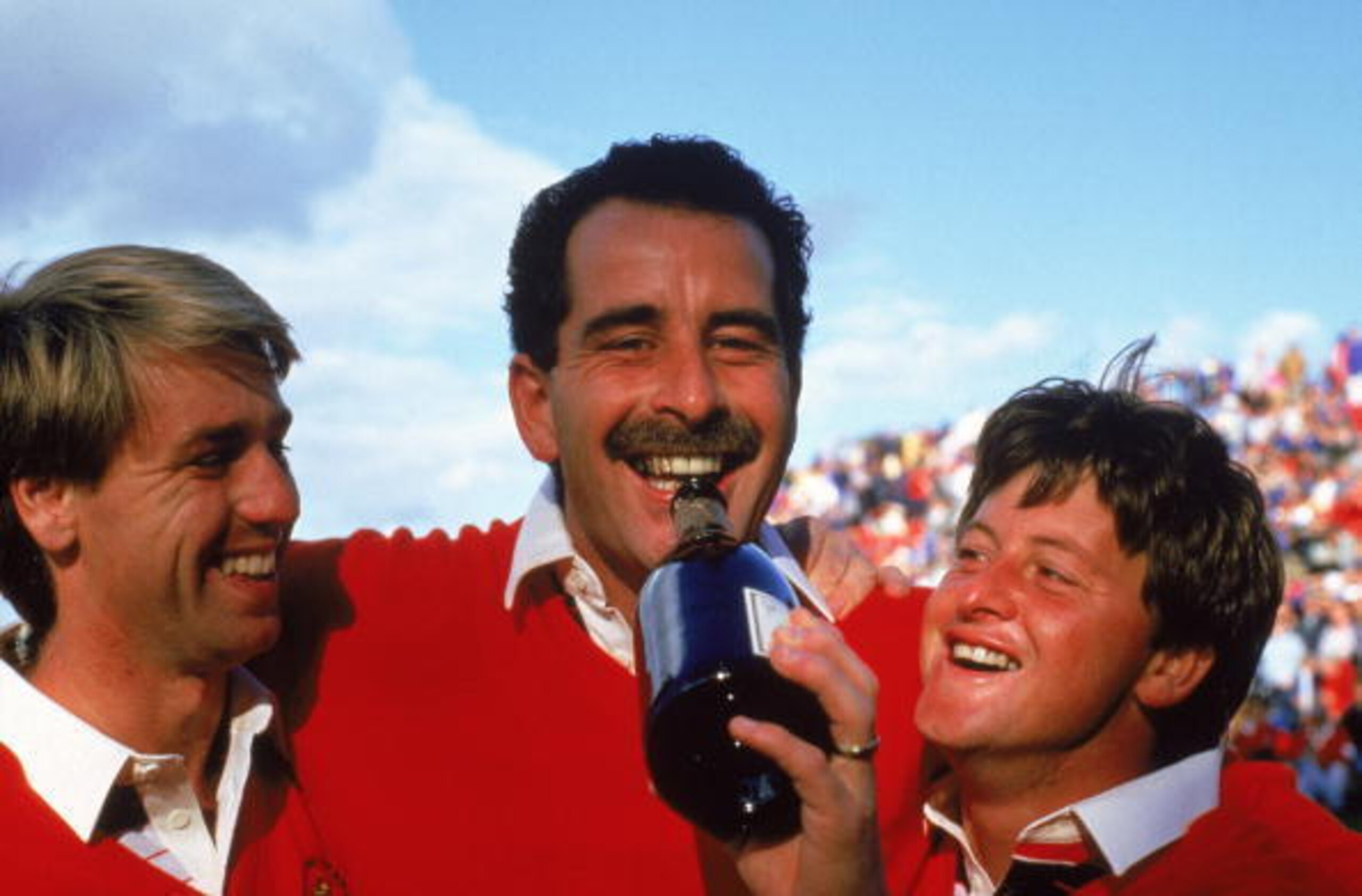
Ending a losing streak is always a wonderful thing, but can you imagine how wonderful that would be if the streak were 28 years long?
That's what happened when the U.S. team showed up at the Belfry in 1985. The players no doubt assumed it was just obligatory walk around one of England's great courses to rack up No. 29, but it didn't turn out quite that way.
When the Great Britain and Ireland team was expanded in 1979, it was expected that would help the Europeans immensely. But they took two more one-sided defeats in 1979 and 1981. But in 1983, captain Tony Jacklin's team scratched and clawed to lose by a single point.
Europe took a 9-7 lead into the final day, and by the time Sam Torrance and Andy North reached the 18th green in their match, a win by Torrance would clinch the match and end the streak.
Torrance had three putts to seal the deal, but he only needed one from 18 feet, and the home team finally got to put its hands on the beloved Ryder Cup again.
According to the BBC, "Jacklin drank Champagne on the green and was lifted on to Torrance's shoulders on the clubhouse roof to the delight of the singing crowd."
8. Europe Feeds off Clarke's Emotional Play in 2006
3 of 10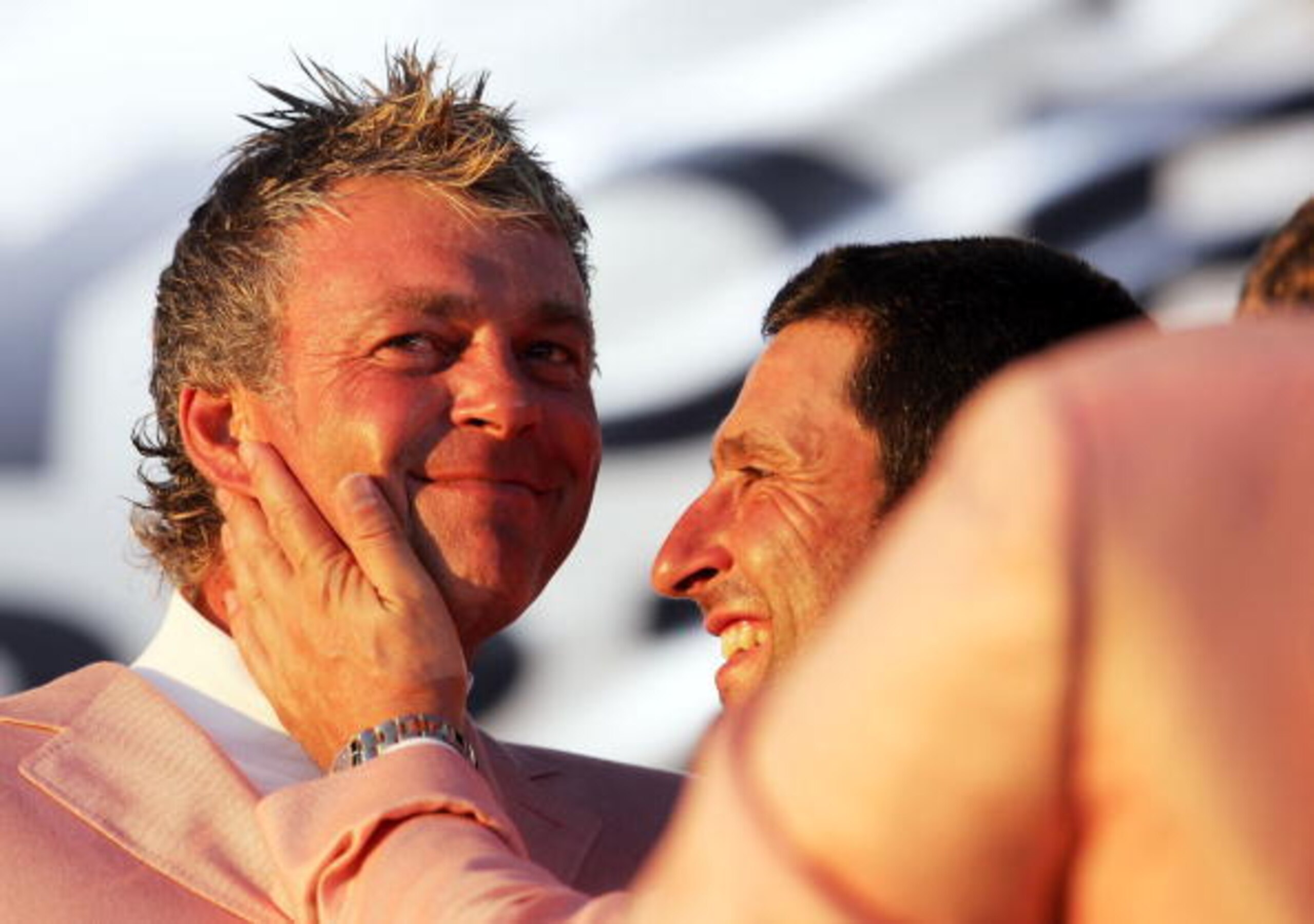
The European team was able to play off the United States' premature celebration, led by Justin Leonard's sprint across the 17th green, for several years. It ran off three straight wins, including a pair of blowouts.
Included in those was an 18.5 to 9.5 thrashing in 2006 at The K Club in Ireland. But that one will always be remembered for something other than a blowout.
Darren Clarke, one of the perennial favorites of Ryder Cup fans, had lost his wife, Heather, to cancer just after the Open Championship. He didn't play after that and didn't qualify for the team, but he was offered a wild-card spot by captain Ian Woosnam, and he accepted.
In the best Hollywood movie style, the emotional Clarke won all three of his matches after he and partner Lee Westwood were overwhelmed by the welcome they received at the first tee on Friday morning. He reacted to the wonderful ovation by knocking his tee shot 300 yards down the middle and making birdie on the first hole.
Woosnam had dedicated the Ryder Cup to Heather, and as you can imagine, Clarke and everyone else was affected immensely by that.
"When Woosie dedicated the Ryder Cup to Heather, I doubt there was a dry eye in the house," Clarke told the BBC last week. "Heather had wanted me to play, and I'd done my bit. I knew she would have been proud."

.jpg?w=2560 "Texans-Mixon Released Football")
.jpg?w=2560 "Commanders Eagles Football")
7. Changing from GB&I to Europe Changes Ryder Cup Forever
4 of 10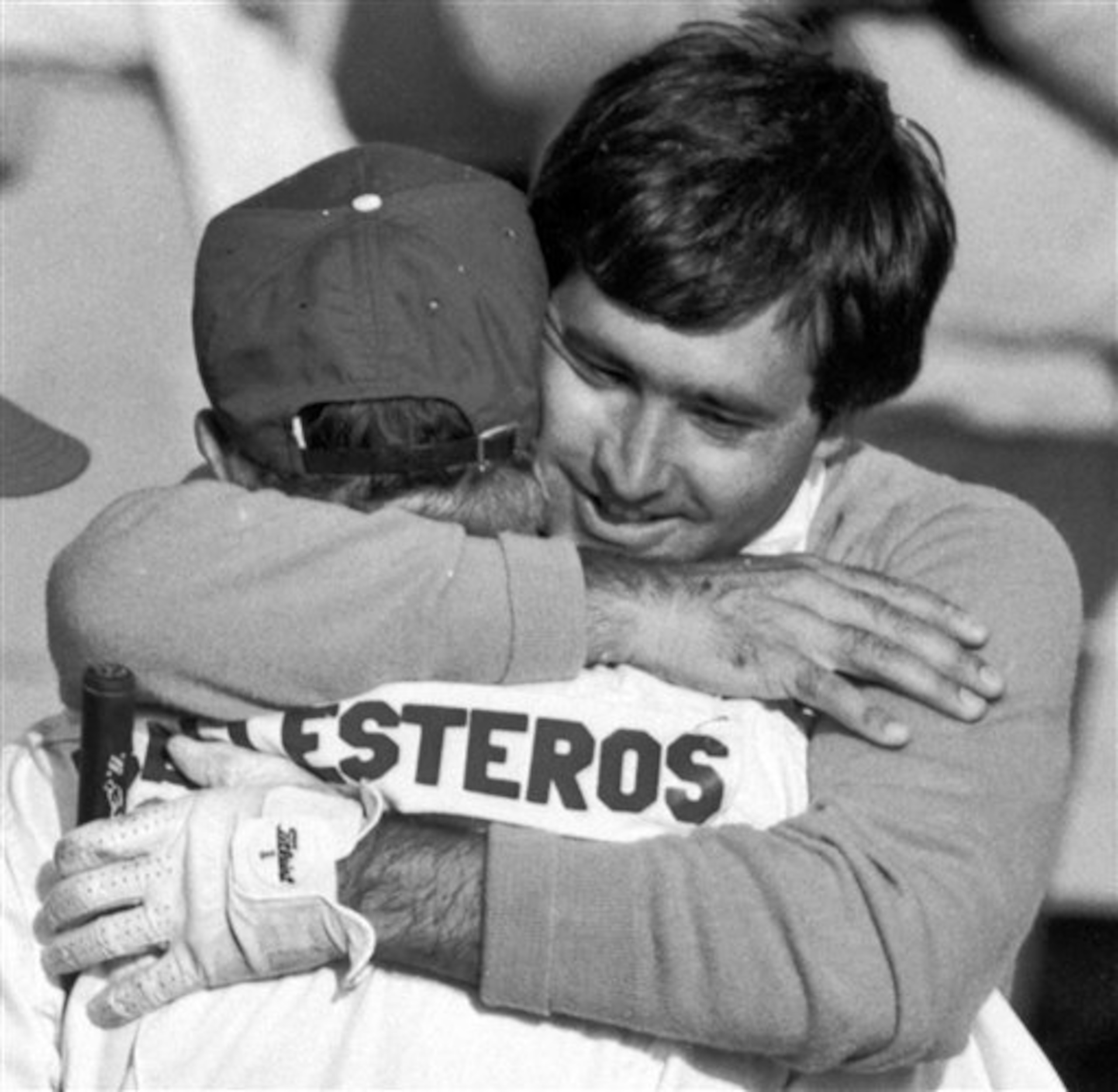
Great Britain and Ireland have long and glorious histories with the game of golf.
Through the centuries, these two small countries have had great courses and great players.
But when it came time to go up against the United States in the Ryder Cup, that greatness wasn't quite enough. The United States won every Ryder Cup from 1957 through 1983, which works out to 28 straight. It was Jack Nicklaus who made the suggestion, and the change was put into place in 1979.
Seve Ballesteros came into the picture in 1979, and in 1981 Bernhard Langer made the team. In 1983, both Ballesteros and Langer were on the team.
Ballersteros turned out to be one of the all-time great Ryder Cup players. He finished with a record of 20 wins, 12 losses and five halves. He also earned 22.5 points in 37 Ryder Cup matches.
6. The Concession
5 of 10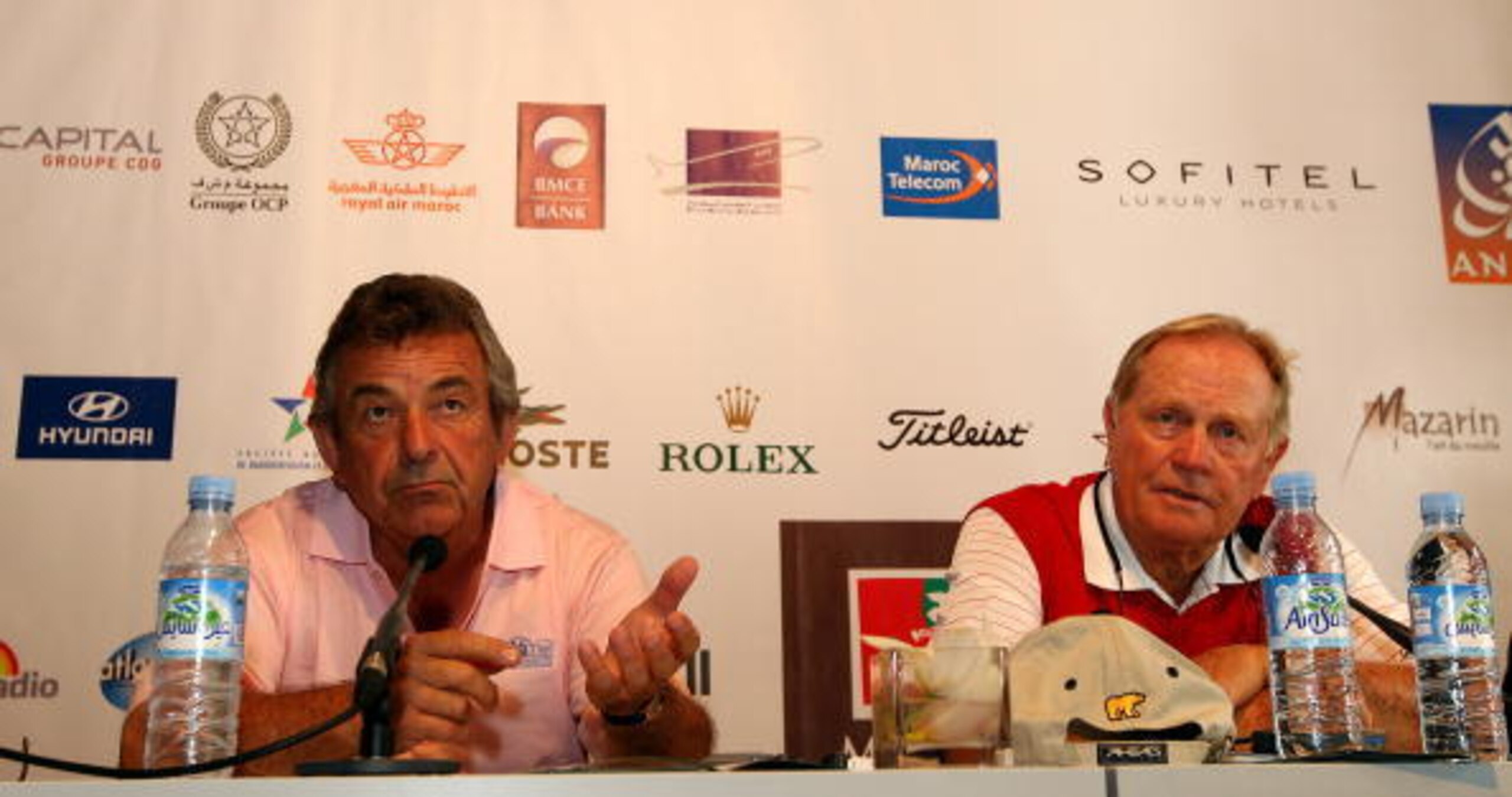
Jack Nicklaus has been known as a sportsman from his very early years in the game.
On the 18th hole of his singles match against Tony Jacklin, Nicklaus made a four-foot par, leaving Jacklin to make a two-footer to win the match.
But the Golden Bear knew the USA had enough points to retain the Cup, and thus he conceded the putt, and the match ended 16-16.
That didn't sit well with USA captain Sam Snead, but Nicklaus was quoted by espn.co.uk as telling Jacklin, "I don't think you would have missed that putt, but in these circumstances, I would never give you the opportunity."
Just another reason why he's Jack Nicklaus.
5. Europe Wins at Muirfield Village
6 of 10
Having broken a 28-match streak in 1985, the European Ryder Cup team came across the pond to Jack Nicklaus' Muirfield Village Golf Club for the 1987 event.
Until then, Europe had never won a Ryder Cup in the United States.
But the visitors took care of that, sweeping the Friday afternoon by four balls to jump out to a considerable lead. It wasn't going to be easy for Europe, however. The Americans clawed their way back and made it close down the stretch in the Sunday singles.
But Ben Crenshaw, one of the best putters in the game, broke his flat stick in frustration and had to use his 1-iron and sand wedge on the greens. He eventually lost his match to Ireland's Eamonn Darcy on the 18th hole.
Perhaps as a bit of a payback for the 1999 USA celebration at Brookline, Jose Maria Olazabal did a bit of a victory dance on the 18th green, infuriating the American fans and really setting into motion the increased and intense emotions surrounding the Ryder Cup.
The other bit of irony in 1987? The man who was the beneficiary of Nicklaus' concession in 1969? Tony Jacklin; he was the captain of the Euro team in 1987.
4. Seve at His Best in the Clutch
7 of 10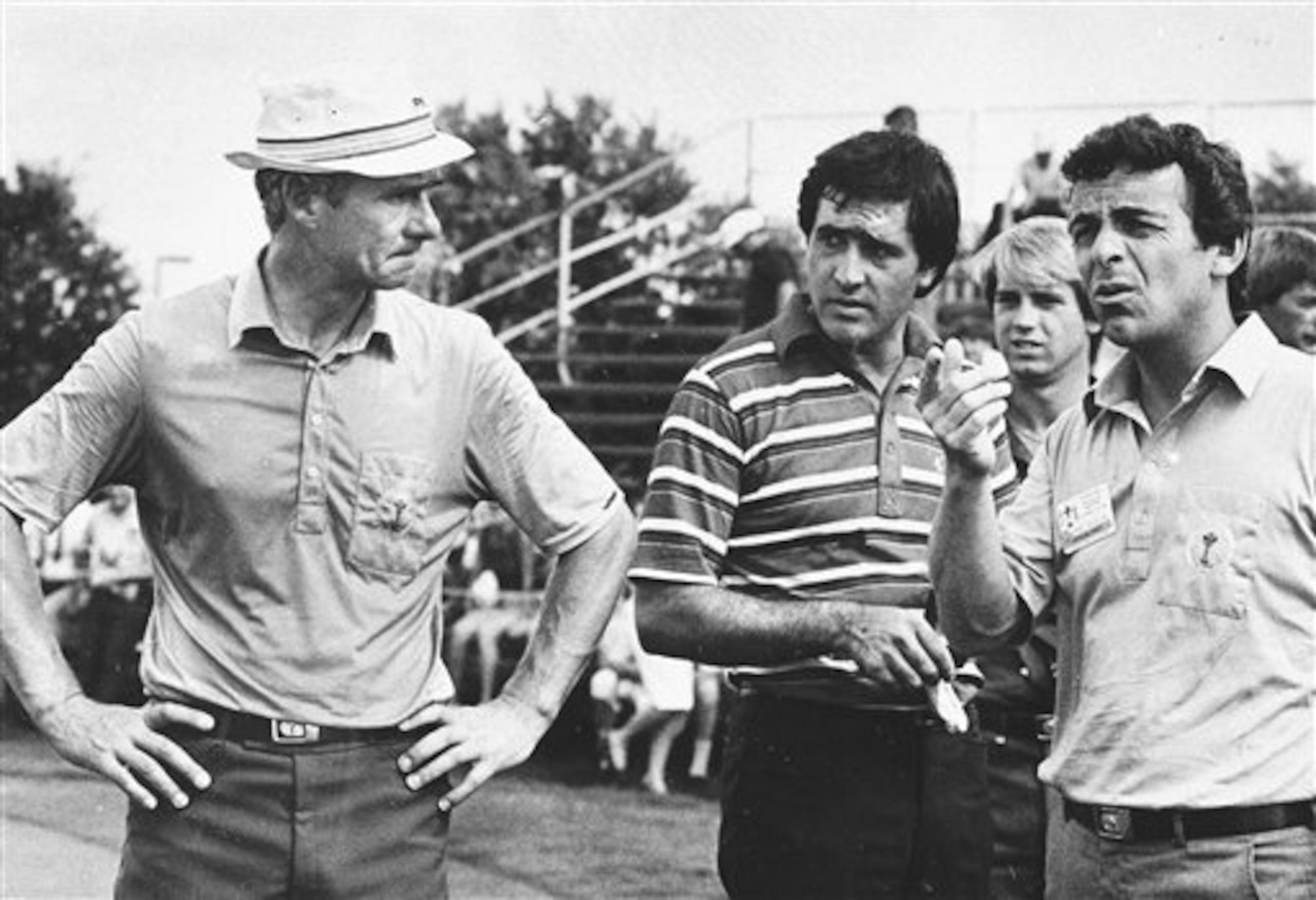
In the 1983 match at Palm Beach Gardens in Florida, Ballesteros was three up against Fuzzy Zoeller with five to go in their singles match.
By the time they reached the 18th tee, however, the two were tied. Ballesteros' tee shot landed in the deep rough, and all he could do was hack it into the bunker.
This left him 245 yards to the hole on a green that was bordered by water on the right and back.
But Ballesteros was never one to back away from a challenge.
He picked the ball cleanly from the sand and sliced it nearly 50 yards, just short of the putting surface.
Predictably, Ballesteros chipped and putted for par to halve the hole and the match.
3. USA Comes Back at Brookline
8 of 10
Ben Crenshaw was nicknamed Gentle Ben for his quiet demeanor as well as his feathery touch on the greens.
As captain of the 1999 USA team, he was faced with a tough task. Going into Sunday's single matches, Crenshaw's team was down 10-6. As he was grilled by the media Saturday night, he ended his press conference by famously saying, "I'm going to leave y'all with one, thought. I'm a big believer in fate. I have a good feeling about this."
And that feeling turned out correct.
The American made a big charge, especially Justin Leonard. Jose Maria Olazabal led him by four with seven holes remaining, but Leonard went on to win four straight to tie the match. He then made a bomb on the 17th green and clinched the great last-day comeback.
And of course, there was the rush to the middle of the 17th green after that putt, a rush that stuck in the craw of the Europeans for several years.
2. Poulter Goes Birdie-Crazy at Medinah
9 of 10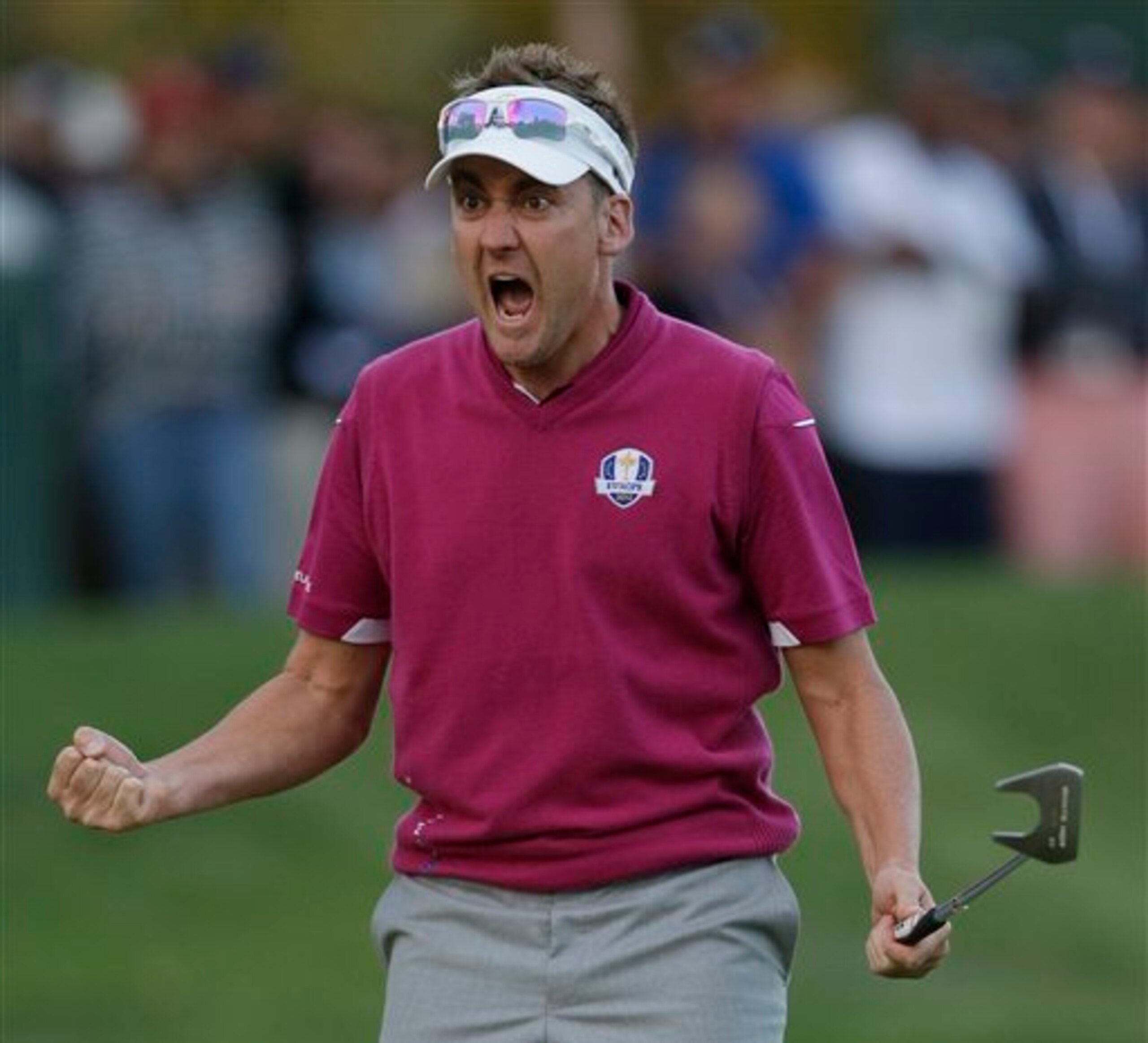
There may have never have been a more intense Ryder Cup player than Ian Poulter.
And he may have never been more intense than in the 2012 Ryder Cup at Medinah.
Things were a little rocky for the Europeans on Saturday after as they trailed 10-4 to the home team.
That lead was cut by one when Sergio Garcia and Luke Donald knocked off Tiger Woods and Steve Stricker.
But the European duo of Poulter and Rory McIlroy "were two down to Jason Dufner and Dustin Johnson with six holes to play" according to the BBC.
No problem if you're Poulter. He proceeded to birdie each of the five final holes, wrapping up the 1-up win with daylight falling.
That win gave the Europeans a big boost and was a precursor to their taking 8.5 points from Team USA the next day in singles and winning the Ryder Cup.
1. War by the Shore
10 of 10
In the first year of first Gulf War, patriotism was at an all-time high and the Ryder Cup at Pete Dye's Ocean Course on Kiawah Island was being called the War by the Shore.
The competition was fierce, the matches were intense and close and the fans were rowdy. It was great theatre among the dunes on the South Carolina island. How close was it?
The entire competition came down to the final match on the final hole. Bernhard Langer and Hale Irwin, who were to on to become World Golf Hall of Famers. Langer had a six-foot putt for par and if he made it to win the hole, Europe would get a tie and retain the Ryder Cup.
Miss it and it's a 14.5 to 13.5 Team USA win.
Langer missed it and didn't touch the hole in the process.
"Everybody remembers the six-foot putt I missed on the last, and rightly so, but I was also two down with four to go. If I'd missed any of the earlier putts, I wouldn't even have played 18," he told the BBC last week. "There's a lot more to it. Every point, every half-point, counts equally, whether it's in the morning or the afternoon."


.jpg?w=2560 "Mahomes' Wife Trolls Kubiak 💀")

.jpg?w=2560 "Viral Rams Coach Vid 🖕")