
Biggest Takeaways from Sunday's FIBA World Cup of Basketball Round of 16 Play

Sixteen FIBA World Cup hopefuls clashed this past weekend, narrowing the field by half and ratcheting up the international hoops intensity by, oh, let's say double.
After four games Saturday, the quartet of contests Sunday filled out the quarterfinal bracket. There were a couple of major surprises, highlights galore and some narratives that will bear watching as the World Cup field shrinks going forward.
A former powerhouse showed that age can bring down even the heartiest competitors, Australia got what some might call its comeuppance and Jonas Valanciunas delighted Canadians and Lithuanians alike.
The competition is getting serious now, as one more win means a shot at a medal.
Here's where things stand after a Sunday of single-elimination hoops.
His Name Is Jonas
1 of 6
New Zealand will now be known for more than eliciting confused responses from Team USA with its pregame ceremonial haka; Corey Webster made sure of that. His 26 points led a New Zealand comeback that turned a 15-point deficit into a one-point advantage in the fourth quarter against Lithuania on Sunday.
But Jonas Valanciunas assured New Zealand wouldn't be known for pulling off a major upset.
The Toronto Raptors big man took over in the final period, scoring eight of his team-high 22 points to lead Lithuania into the quarterfinals with a 76-71 victory. After averaging just 11.2 points per game in the group phase, Valanciunas picked a good time to double down on his scoring average, tossing in 13 boards for good measure.
At just 22, Valanciunas' ascent into an on-court leadership role is terrific news for the Raptors. More immediately, it makes Lithuania an increasingly formidable foe—one that should be heavily favored against Turkey.
Kalinic and Bogdanovic Keep Serbia Rolling
2 of 6
I'm pretty sure we can shut down the competition for "Best FIBA Photo." We're not topping this one.
You're forgiven if the name Nikola Kalinic doesn't ring a bell. Outside of deeply passionate followers of Serbian basketball, he hasn't been on the radar during this tournament. During group play, the rangy wing averaged just 4.4 points per game.
That's all changed now, though, as Kalinic provided a pair of posterizing jams in Serbia's impressive 90-72 upset of Greece on Sunday.
The first came early in the contest, as he took a pass in transition and crammed home a right-handed slam over seven-footer Ioannis Bourousis. Unsatisfied with one highlight, Kalinic closed out the first half with a baseline two-hander, which he celebrated by doing a full chin-up on the rim.
Billy Hoyle would have been proud.
Bogdan Bogdanovic remained Serbia's star, scoring a team-high 21 on just 11 shots to push his team into the quarters. As Serbia readies itself for a tough test against Brazil, he'll be the one with the biggest impact on whether this somewhat unforeseen run continues.
Giannis, Bringer of Hope
3 of 6
Greece dropped out of the World Cup sooner than it probably hoped, but there's still reason for optimism going forward. The reason: Giannis Antetokounmpo.
As was the case for the Milwaukee Bucks this year, Antetokounmpo didn't pile up monstrous stats or produce consistently for Greece. Instead he offered flashes—big, bright, don't-stare-too-long-or-you'll-go-blind flashes.
In the loss to Serbia, Giannis palmed a close-range attempt by Miroslav Raduljica and slammed it onto the deck, stunning the assembled fans and providing one of just a few high points for Greek supporters. He also threw down a contested two-handed flush in the second quarter.
If he'd chinned himself on the rim like Kalinic, you probably would have heard more about it.
At any rate, Greece, one of the fringe contenders in the tournament, is finished. But thanks to Antetokounmpo, there's plenty of hope for the future.
.jpg?w=2560 "Steelers Saints Football")


Karma Is Real
4 of 6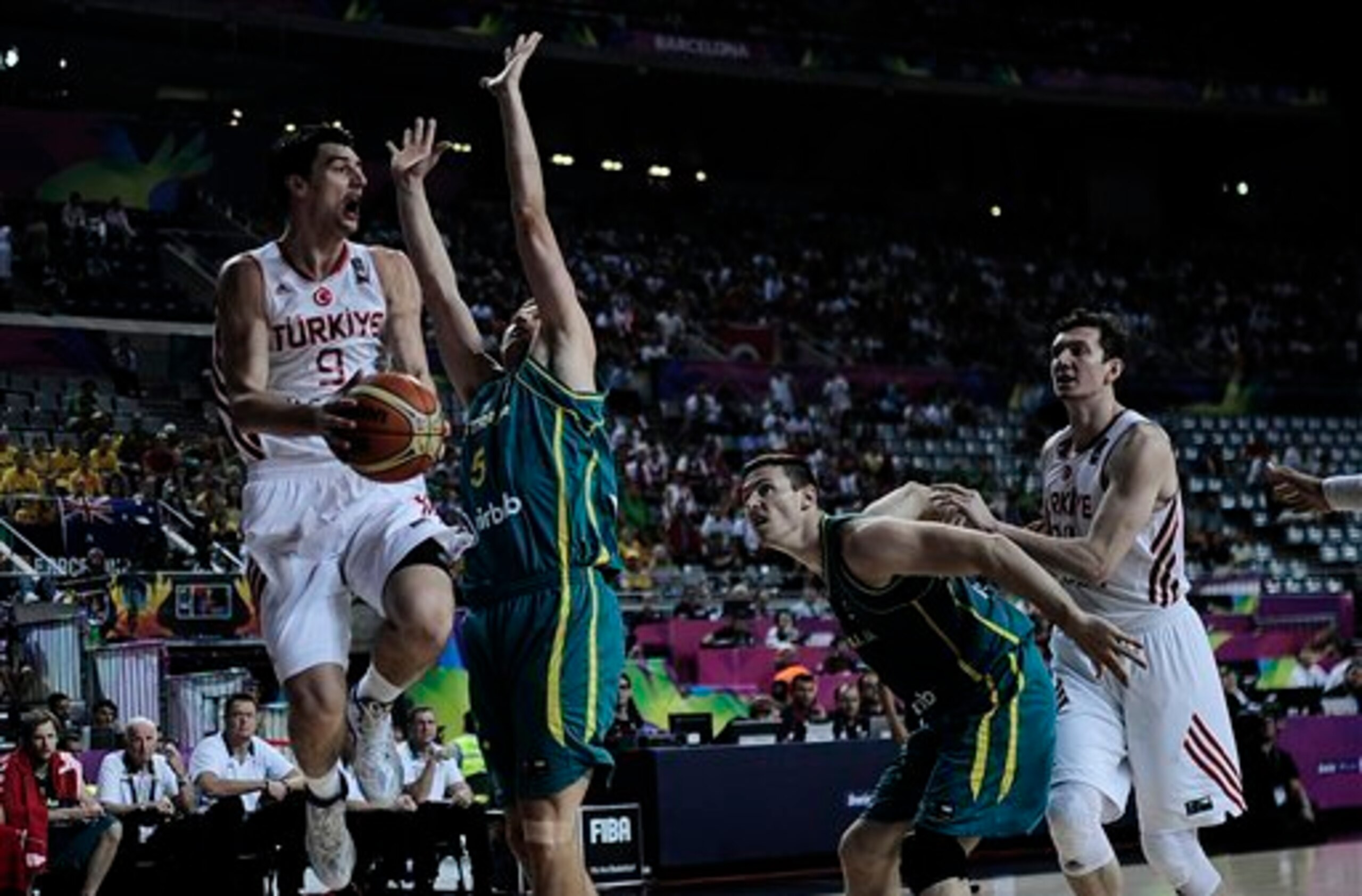
Look, we all get it; the very nature of group play in FIBA—in which teams can glance ahead and figure out how to avoid top competition in later rounds—makes it very, very tempting to throw in the towel in certain circumstances. Slovenia's Goran Dragic had some suspicions about the way Australia set itself up to avoid Team USA until the semifinals.
"Basketball is a beautiful sport, there is no room for fixing the game like today Australia vs Angola!!," Dragic tweeted.
It doesn't make deliberate losing (if that's what happened when Australia apparently dumped its final group play game against Angola) feel any less icky.
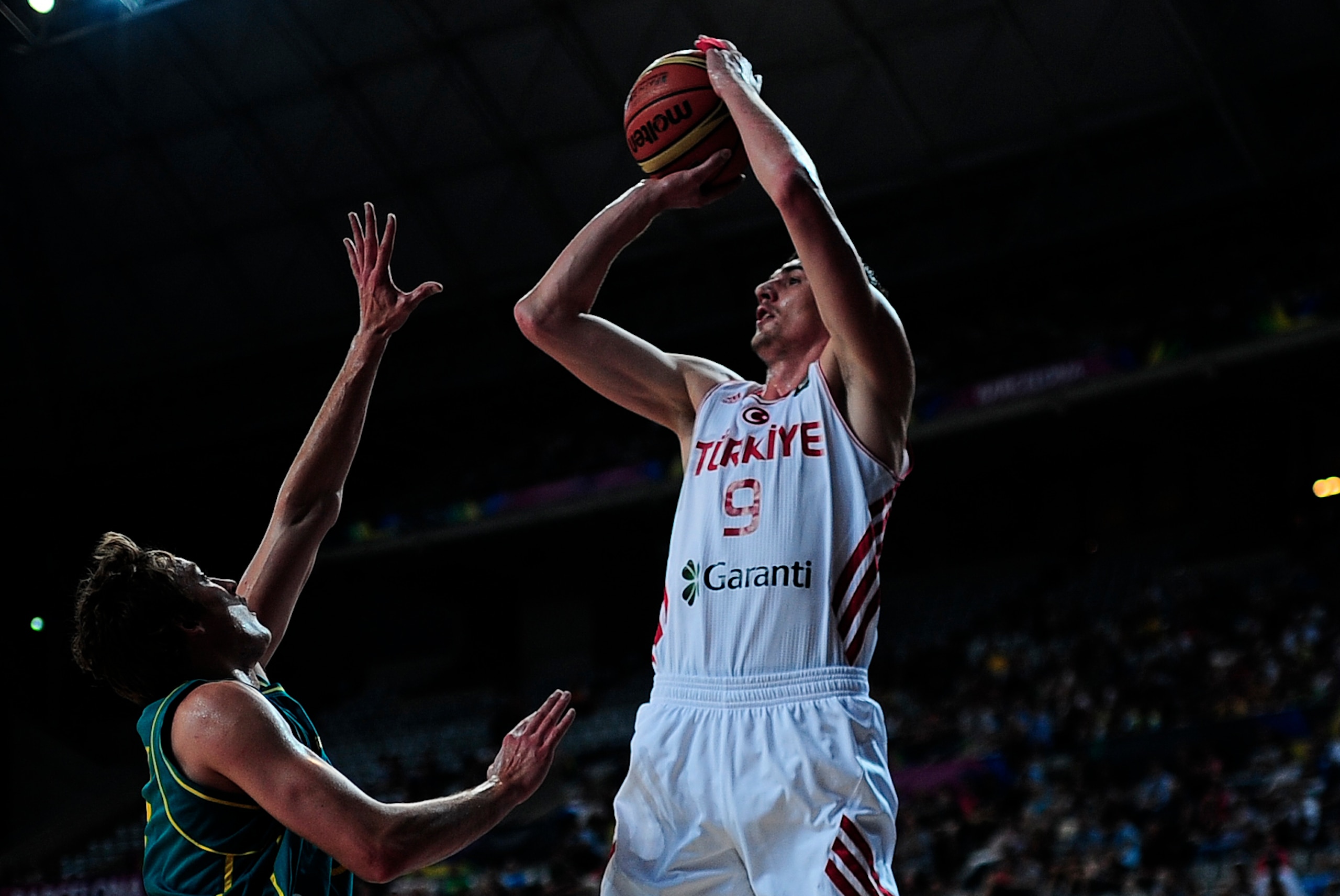
Karmic order has been restored, though, as a game-winning triple by Emir Preldzic completed a stirring comeback and gave Turkey a one-point victory. Feel free to break out your "Maybe Australia should have tried to avoid Turkey" jokes, and don't expect to be alone.
Turkey will advance to face Lithuania in the quarterfinals, while Australia heads home stinging after a plan gone awry.
Even worse, Dante Exum's FIBA tournament ended with predictable disappointment. He looked overmatched again, logging a scoreless 10 minutes to complete an awful tournament.
End of an Era?
5 of 6
Argentina missed Manu Ginobili in this year's World Cup, but the explanation for its elimination (at the hands of rival Brazil, 85-65) may have had more to do with the aging roster than the absence of a single iconic star.
Luis Scola looked flat and Andres Nocioni offered his typically physical play. But the production just wasn't there.
The truth is, Argentina may be at a crossroads in terms of its international basketball future.
"Argentina about to lose to Brazil in the 1/8 finals of the World Cup. Could be a long time till they compete for medals again," HoopsHype tweeted.
Facundo Campazzo is as feisty and competitive as anyone, but he's still just 23 and probably isn't the kind of dominant leader that can keep Argentina afloat during the impending transition period. One of this team's great strengths was its experience, which owed to a veteran core that had been together for a decade.
Looking ahead, Ginobili is unlikely to compete internationally again. Scola, at 34, had been brilliant until Sunday. It's unlikely he'll be the same player in another two years. Go down the roster and you'll continue to see that Argentina's best players (if only now in name) are old.
Walter Herrmann is 35. Pablo Prigioni is 37. Nocioni turns 35 in November.
There will be some significant turnover by the time the 2016 Olympics in Rio roll around, and it'll be interesting to see if Campazzo matures and the supporting talent benefits from some added youth. In this tournament, at least, Argentina showed its age.
When the team comes together again in two years, don't be surprised if it looks a whole lot younger.
Brazil Goes Deep
6 of 6
Brazil is the fifth-largest country in the world. Given the size and population of the South American superpower, it shouldn't have been surprising that depth showed up as a real strength against Argentina.
The big names led the way, with Tiago Splitter scoring 10 points and grabbing eight boards in just under 20 minutes. And Anderson Varejao chipped in eight points and nine rebounds.
Four Brazilians cracked double figures, led by Raul Neto's 21, and nine players registered at least four points in the contest. Marcelinho Huertas, who started on the wing for Brazil, finished the game without scoring a single point, but Brazil didn't even need him to contribute.
Such was its depth.
Consider, too, that Nene came off the bench and posted an ultra-efficient seven points, four rebounds and four assists in just under 20 minutes. When you can take a conservative approach with the minutes of a player as good as Nene and advance to the quarterfinals, it's a good sign the roster has plenty of talent.
Serbia is waiting for Brazil in the next round, and as well as Bogdanovic and company have played to this point, Brazil's bench figures to be the deciding factor.
.jpg?w=2560 "Rams Raiders Football")
.jpg?w=2560 "Cowboys Packers Football")
.jpg?w=2560 "🚨 Week 8 AP Top 25 Poll")