With all due respect to the likes of Fedor Emelianenko, Anderson Silva, Brock Lesnar, Frank Mir, and Lyoto Machida, none of them represents a sincere danger to your average individual. In the real world, they pose almost no threat to anyone who isn't already a substantial danger to him- or herself.
Step in the octagon with one of these brutes? It's a different ball o' wax altogether—you better know what you're doing or you definitely will get hurt.
But, say you ran across one of 'em in a bar—possibly the most precarious place your average person finds him- or herself on a regular basis.
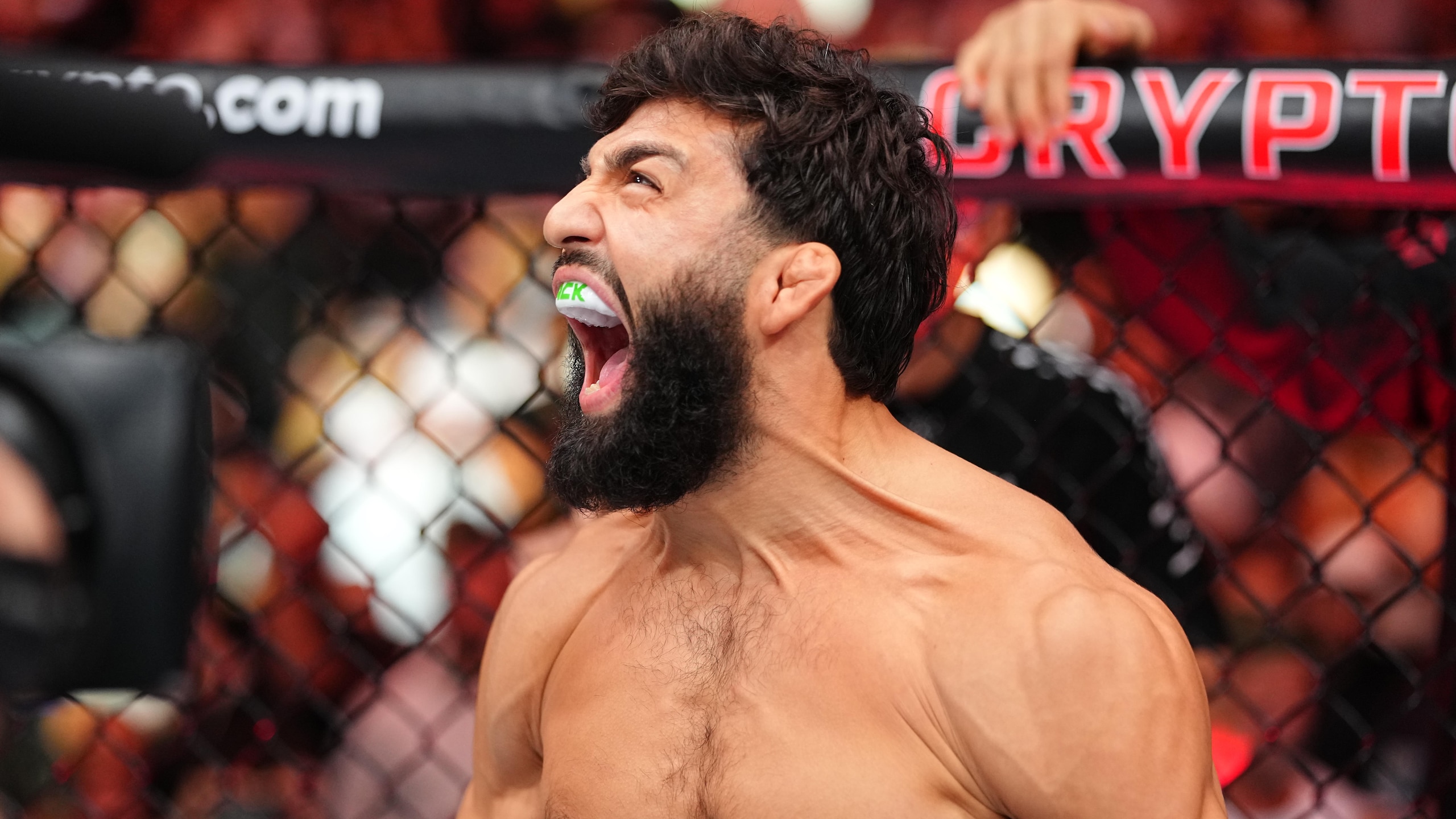
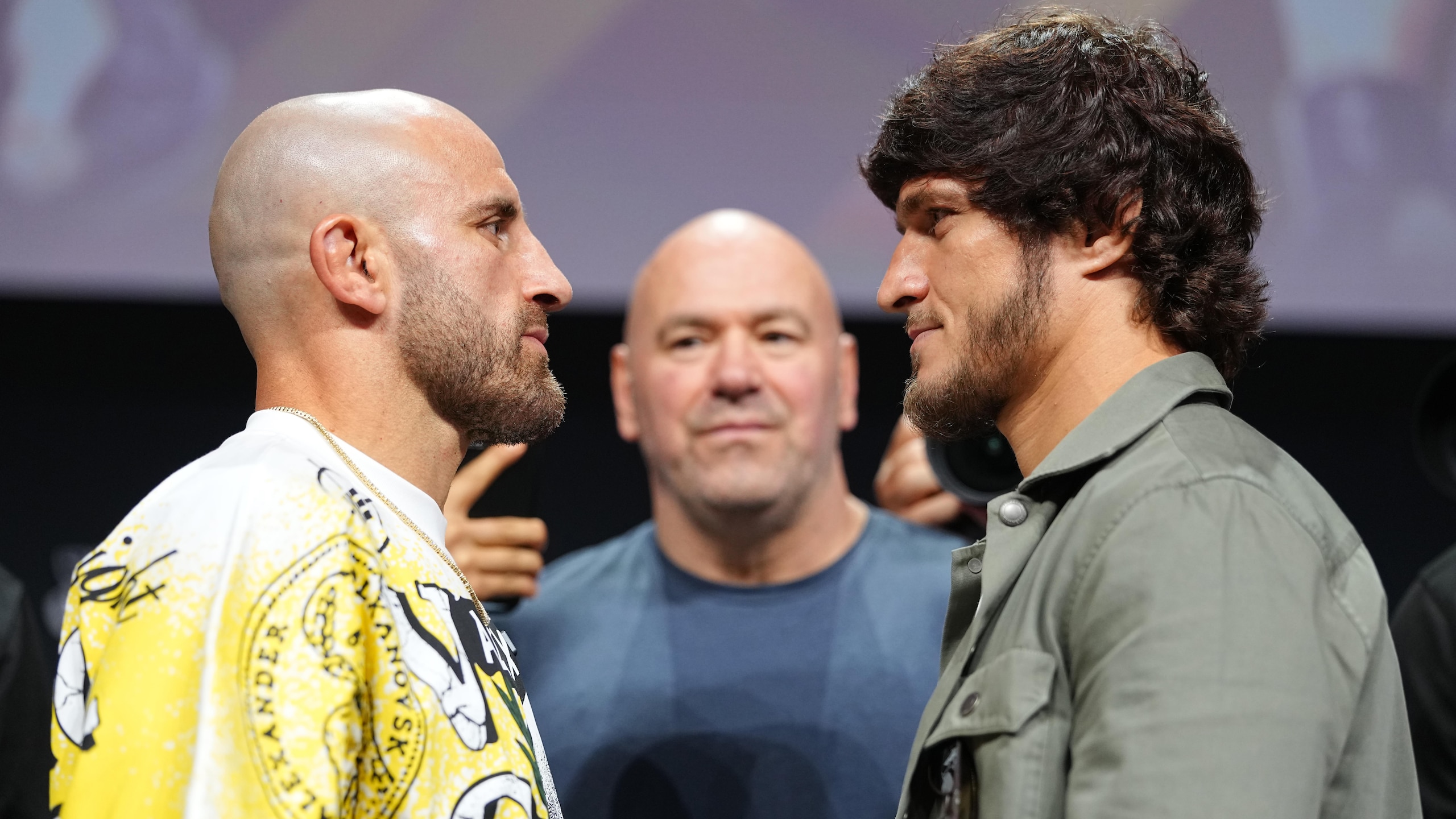
I'm betting, in any state including extreme intoxication, you're giving even the least superficially terrifying of that group (probably the Spider or Dragon) a wide berth. Really wide—I'm talking crazy-bum-muttering-to-himself-wearing-no-pants wide.
It's true that each one gives off a perilous vibe—as do most roughnecks who get paid to hurt their fellow man—but they're also big. Enormous, in fact.
Silva is the "smallest" and he's 6'2" while walking around north of 200 pounds. And it's a two-bills-plus that will stand out from your normal crowd because pro athletes are rocking more muscle than us couch jockeys.
And it's a different, denser kind of muscle—the result of intense workouts beyond the purposes of the most maniacal-yet-recreational exercise buffs.
The fighter's aura combined with their size might as well be a siren and a neon "CAUTION." They're like those fluorescent frogs in the rain forest that are so poisonous, you die on the spot if one so much as breathes on you.
But you get fair warning since they're bright orange, blue, and yellow against eons of green.
Royce Gracie, on the other hand, is a stonefish—a potential killer disguised as a harmless nothing, delivering a potentially fatal neurotoxin before you even know you've disturbed its peace.
And that's why Gracie was the most dangerous man on the planet for years. He probably still is in a fight sans the glove handicap. If Fedor is the Last Emperor, Royce Gracie was the First.
Here's a guy who fought at 6'1", 175 pounds and he meant it. There's a decent chance he was even smaller.
There was no ostentatious show of tremendous strength because the father of modern mixed martial arts didn't have a gym body. He never wowed you with a chiseled physique and he didn't carry his arsenal heavily.
Make no mistake, though, this is the kind of guy you should be most scared of. The monster you just might be fool enough to f*** with.
Recent fans of MMA and the UFC might have the wrong impression because Gracie's only UFC fight since 1995 saw Matt Hughes overwhelm him.
Even in that loss (due to referee stoppage regardless of what Sherdog or the record books might say), the submission-specialist showed one element of what made him so singularly troublesome.
Hughes essentially twisted the older fighter's arm completely around in the wrong direction, and Gracie barely even flinched (starting at the 1:39 mark). He certainly didn't tap or verbally uncle.
As far as I can tell, the UFC's first megastar is either made of rubber or impervious to pain. If you doubt me, ask Hughes. Or Joe Rogan, who was yelping like a pre-teen valley girl as the American applied more and more torque to Gracie's joint.
We should also note that, while Gracie didn't face a tremendously youthful opponent in Hughes (almost seven years the junior at 32), the champion from UFC 1 was closing in on his 40th birthday. I don't know how many, but his age has to earn him some points.
Even in defeat.
However, to really understand the full extent of Royce Gracie's menace, you've got to go back to the Original UFC. The one with no rules other than prohibitions against biting and eye-gouging—the remaining no-nos were simply recommendations i.e. everything else was legal, though considered "dirty."
Those were days before standard attire, normalized training, weight classes, gloves, rounds, and time limits.
Back then, Royce Gracie was The Man. You know the saying, "if you can't beat 'em, join 'em?"
Gracie is a living testament to it and the evolution of the UFC is proof.
At UFC 1, the jiu-jitsu expert won three bouts in a total of 4:59 on his way to being crowned the inaugural tournament's champion—one second shy of a single, modern UFC round.
The trio of opponents dismantled by Gracie's blue rage included a 6'5", 215 pound savate champion as well as a 29-year-old and undefeated grappling stallion named Ken Shamrock.
Shamrock came in at 220 pounds of probably impure muscle, almost 50 lbs. heavier than Helio Gracie's kid.
The soft-spoken, sixth-degree black belt dispatched the self-styled "World's Most Dangerous Man in a confounding 57 seconds. Make that the World's Second Most Dangerous Man.
You can see another side of Gracie's animalistic savagery in his submission of Shamrock (at the 2:26 mark). The eventual pro wrestler, ever the paradigm of honor and integrity, clearly tapped out to indicate his surrender.
The Brazilian released his prey, but somehow the ref missed the tap-out and the shoot-fighting American tried to pretend the fight was still on.
Although it didn't work, Gracie learned his lesson with trademark speed and severity, unencumbered by human vices such as sympathy or mercy.
When the subsequently vanquished would complain because refs had to pry the now-wiser fighter off his beaten foe—regardless of how blatant and emphatic the wish to be set free—their complaints were misguided.
They should have griped at Ken Shamrock because Royce Gracie was simply applying the lesson the big fella taught him—only let go when the ref forces you to.
And if the arm breaks? Oh well...
At UFC 2, the competition got smarter and started to take this little guy with a strange affection for the mat seriously. So seriously that Gracie's four victories on the night (including one over a 6'2", 250 pound gorilla nicknamed the Grizzly) required a whopping 9:03.
Of course, it took 5:08 to dispatch his first challenger Minoki Ichihara, who, ironically, was never heard from again.
Two UFC tournaments, two championships, seven wins, and a grand total of 14:02
That did it—Royce Gracie emerged from the second UFC as an officially marked man.
Kimo Leopoldo came for him at UFC 3 (or was sent if you ask the cross-toting Hawaiian) and the gameplan was to rely on his sheer size differential—6'3" and 235 pounds to Gracie's 6'1" and 175 pounds. Leopoldo did, in fact, resist the constant barrage of submission attempts for a while and almost won.
Almost.
The much smaller fighter continued his streak, but the 4:40 would require every bit of energy from both combatants and neither winner nor loser could continue. Which explains why Harold Howard's two career wins includes one over arguably the greatest fighter the world of MMA has ever seen.
The rest of that world was starting to catch up to the Gracie clan's game by UFC 4.
Royce would win all three of his matches, but Ron van Clief lasted 3:59, Keith Hackney endured 5:32 of punishment, and Dan Severn pushed the jiu-jitsu magician even harder than Kimo. The Beast, a legendary wrestler and gladiator, would batter Gracie for 15:49 before finally getting trapped (not the full fight) in a triangle choke.
Most of us have no idea what kind of mental and physical resolve is required to withstand the strength and weight of an antagonist who is 75 pounds heavier, especially when he's lying on top of you for 15 minutes. Even fewer understand what it takes to do so and raise your arm in victory afterward.
Possibly only one person.
And the UFC powers-that-be seemed to know it.
Unfortunately for the Gracies, the suits decided the future was in strikers and knock-outs (never a family signature) so the changes came. Following an epic rematch under special rules with Ken Shamrock that went 36 minutes and ended in a draw, the spear of the Gracie family would seek his fighting fortunes elsewhere.
In PRIDE Fighting Championship, the legend would suffer his first real defeat at the hands and feet of Kazushi Sakuraba. After 90 minutes of fighting—yes, an hour and a half of combat—Royce's corner threw in the towel with his full consent.
The South American would avenge the loss in a unanimous decision victory over the Gracie Hunter that is tainted, according to some, by a positive steroid test shortly after the second date.
In between and simply to prove a point, the Gracie's chosen one defeated Akebono by voluntarily going to the ground. Granted, Chad Rowan could never be confused with a mixed martial artist, but the mammoth was still 6'8" and sniffing 500 pounds at the time.
Additionally, you don't rise to Yokozuna in the sport of sumo wrestling by luck. All that size clearly had some athleticism behind it.
Not enough. Of the size either.
Not many fighters did.
In today's era of mixed martial arts, every fighter trains across disciplines. Throw in the more sanitized fights (probably a good thing) and participants who look like the were sprung from a laboratory or Dali acid-trip, and maybe a primed Royce Gracie wouldn't be as dominant.
Fans who never saw the master in his moment can easily dismiss the grainy footage of him facing off against some softish Melvin with a dank haircut. Especially since most of the UFC Hall-of-Famer's enemies went on to do exactly squat.
But do so at your own risk.
Back in the early days when the competition was a no-holds-barred tournament to find the biggest badass on the planet, Royce Gracie answered the call. Over and over.
So easily, the sport had to become him to beat him.
.jpg?w=2560 "NFL Paris Football")

.jpg?w=2560 "Trevon Diggs Cut by Seahawks")