

The Case Against Naming a Starting Quarterback Before Fall Practice
If we've learned anything during the rise of advanced statistics in football—and every other major American sport—it's that few (if any) commodities are more valuable than data.
The more data you have, the better. The less data you have, the worse. Data makes otherwise ignorant decisions informed, and its lack makes otherwise informed decisions ignorant. And who about his or her wits would prefer to make ignorant decisions over informed ones?
This is a new-age model of thinking, and it rebels against antiquated notions such as the belief that one must name a starting quarterback before or during summer workouts. Why would that be the case?

If the battle at QB is truly close, a coach is better served waiting until late August to make his decision. The more reps each player gets to run—that the coach gets to observe—the more data he has collected, and the more time he has to formulate a conclusion.
The more informed of a decision he can make.
But the benefits of waiting extend far past data collection. There are psychological advantages to making two or more players compete.
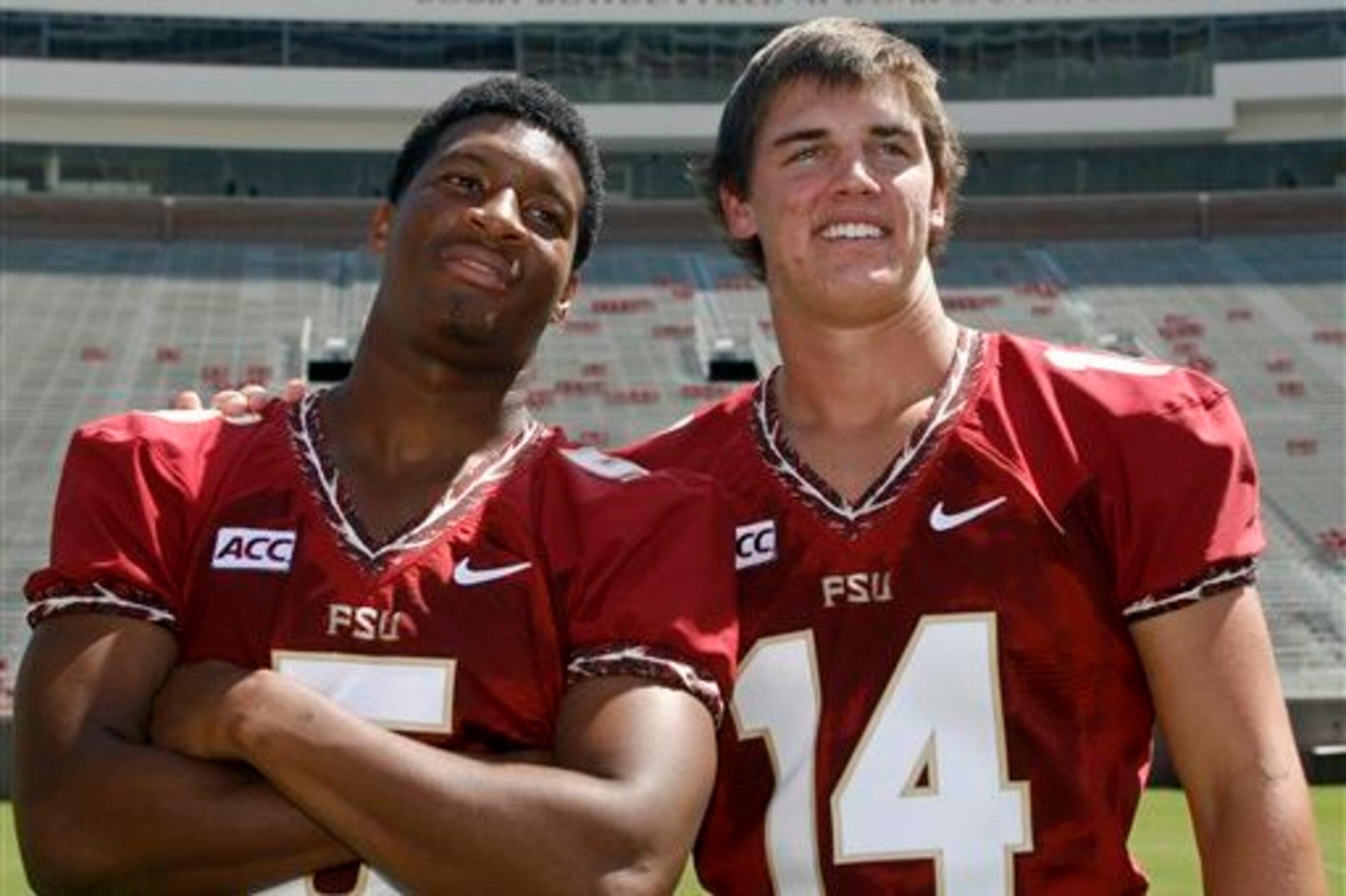
It would have been easy, for example, for Florida State head coach Jimbo Fisher to name Jameis Winston the starting QB after spring camp last season. It was that much of a slam dunk.
Even though Winston was just a redshirt freshman, his pedigree and performance in practice and the Garnet & Gold game made it clear, to most observers, that he would beat out Clint Trickett (who transferred that summer to West Virginia) and Jacob Coker (who transferred this winter to Alabama) and claim the starting gig.
But Fisher didn't give in, refusing to acknowledge the formality of Winston's position. He made Winston battle Coker throughout fall camp before eventually naming him the starter in late August, mere days before opening the season at Pittsburgh.
We all know what happened next. Winston lead the nation in passer rating and won the Heisman Trophy, leading Florida State to a 14-0 record and the BCS National Championship. His Heisman was the second in a row by a redshirt freshman and first-year starter, following the man who finished four spots behind him, Johnny Manziel.
One more thing Winston and Manziel had in common during their respective Heisman campaigns?
Neither was named the starter until fall camp.

No one can say for sure what the alternative—the world where Jameis and Johnny didn't have to claw for their jobs in fall camp—would have held. For all we know, they would have been even better had they been named starters after spring practice.
For all we know, it doesn't matter a lick either way.
What we do know is that those things happened. The overriding argument against waiting to name a starter is one of closure—that a team is better, or somehow more cohesive, if it goes into the summer knowing which guy will be the guy.
Florida State last year is a flawed counterexample (since most assumed Winston would win the job), but Texas A&M the year before is not. Neither is what happened at Auburn last season when Nick Marshall beat a field of four to win the job on the Plains.
In fact, the top three finishers in last year's AP rankings—FSU, Auburn and Michigan State—all had a quarterback battle in fall camp, and so did No. 5 Missouri and No. 6 Oklahoma. That is five of the top six, or, as some might call it, an overwhelming majority.

It seems like coaches are starting to take notice. For the most part, schools with the highest-profile quarterback battles—e.g. Alabama, Clemson, LSU, Michigan, Texas A&M, Tennessee—will keep the spirit of battle alive throughout the summer.
"The idea that you make the decision early is foolish," said LSU head coach Les Miles, per Jim Kleinpeter of The Times-Picayune. "There's always going to be that point in time a young guy gains speed late, or an injury makes the decision or the more-veteran guy shows he's worthwhile."
Miles is referring, of course, to the theory of data collection.
The more informed a coach's decision, the better its chances of being correct. There's a reason LSU stays competitive each season, why its QBs are rarely a flop.
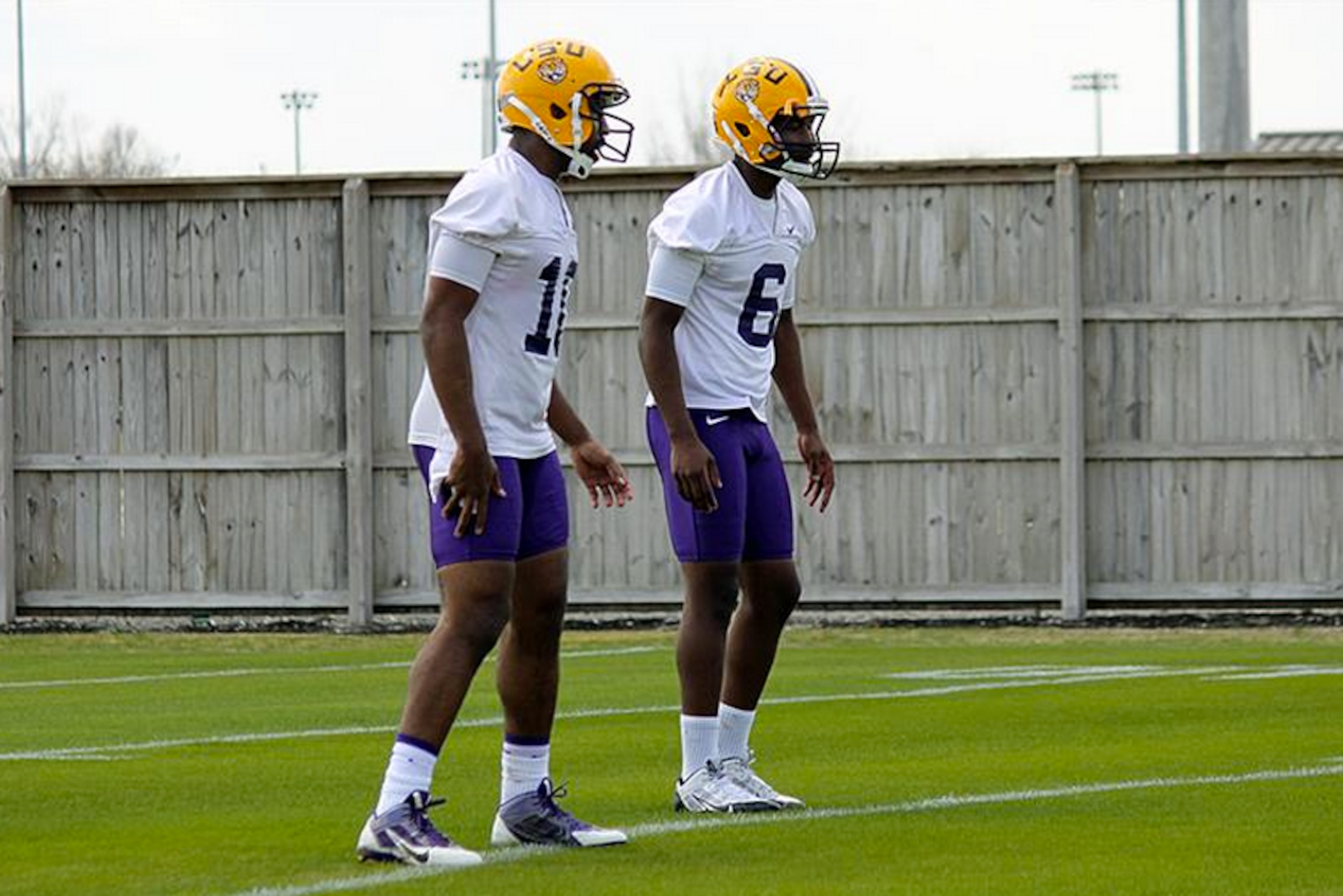
Sentiment seems to be in favor of freshman Brandon Harris after he outperformed Anthony Jennings in the spring game. Look at the poll on this article by B/R's Barrett Sallee—more than 87 percent think the job will be Harris' come fall. But why should Miles make that choice after the spring game, which is only one data point informing him?
Why not get as much information as possible?
In breaking down the four-way quarterback battle at Tennessee, which has now skewed toward a two-way battle between Justin Worley and Riley Ferguson, B/R's Dan Shepard brings up one final, important benefit of patience: It dissuades younger players from transferring.
Tennessee has two promising quarterbacks competing, primarily, for the job. Worley is a senior and Ferguson a redshirt freshman. Sophomore Josh Dobbs is in the mix and has some potential, too.
How catastrophic would it be if Worley was named the starter, then one or both of those guys transferred? That's the type of thing that can cripple a program—and given the momentum Butch Jones has UT moving forward with right now, it can ill afford to be crippled.

Take a perfunctory glance at what Rich Rodriguez is doing with his quarterbacks at Arizona, and it may seem utterly absurd.
According to Daniel Berk of the Arizona Daily Star, five players have a realistic shot at the job. Rodriguez said the quintet is "pretty bunched up" at the moment, which many might think is a bad thing. If you've got five quarterbacks, you ain't got any.
But Rodriguez disagrees with that platitude. Instead, he called the lack of a true No. 1 "a great problem" to have.
If you've got five quarterbacks...you've got five quarterbacks.
Follow Brian Leigh on Twitter: @BLeighDAT
.jpg?w=2560 "Cam Ward Says He's Not A Loser")
.jpg?w=2560 "Chargers Fall to 0-5 🤢")
.jpg?w=2560 "Grading MHJ Trade 📝")