
Exclusive Book Excerpt: Bitter, Dark Days of Pat Riley and the 'Showtime' Lakers
In the minds of many, the Los Angeles Lakers dynasty came to an unceremonious end when the team was swept in the 1989 NBA Finals by the Isiah Thomas-led Detroit Pistons. Suddenly, Showtime seemed to be a thing of the past. Kareem Abdul-Jabbar, the legendary center, retired. Point guard Magic Johnson was a step slower. The roster was changing over.
Then, the next season, something strange happened—the Lakers won. And won. And won. Los Angeles went a league-best 63-19, and entered the playoffs a prohibitive favorite to recapture its spot atop the league.
Behind the scenes, however, a franchise was crumbling. The reasons: Ego, arrogance and head coach Pat Riley, who would resign after the season.
TOP NEWS
LeBron Plays 1 Half in 76ers Debut 🔔
Dybantsa's Preseason Debut 🧙
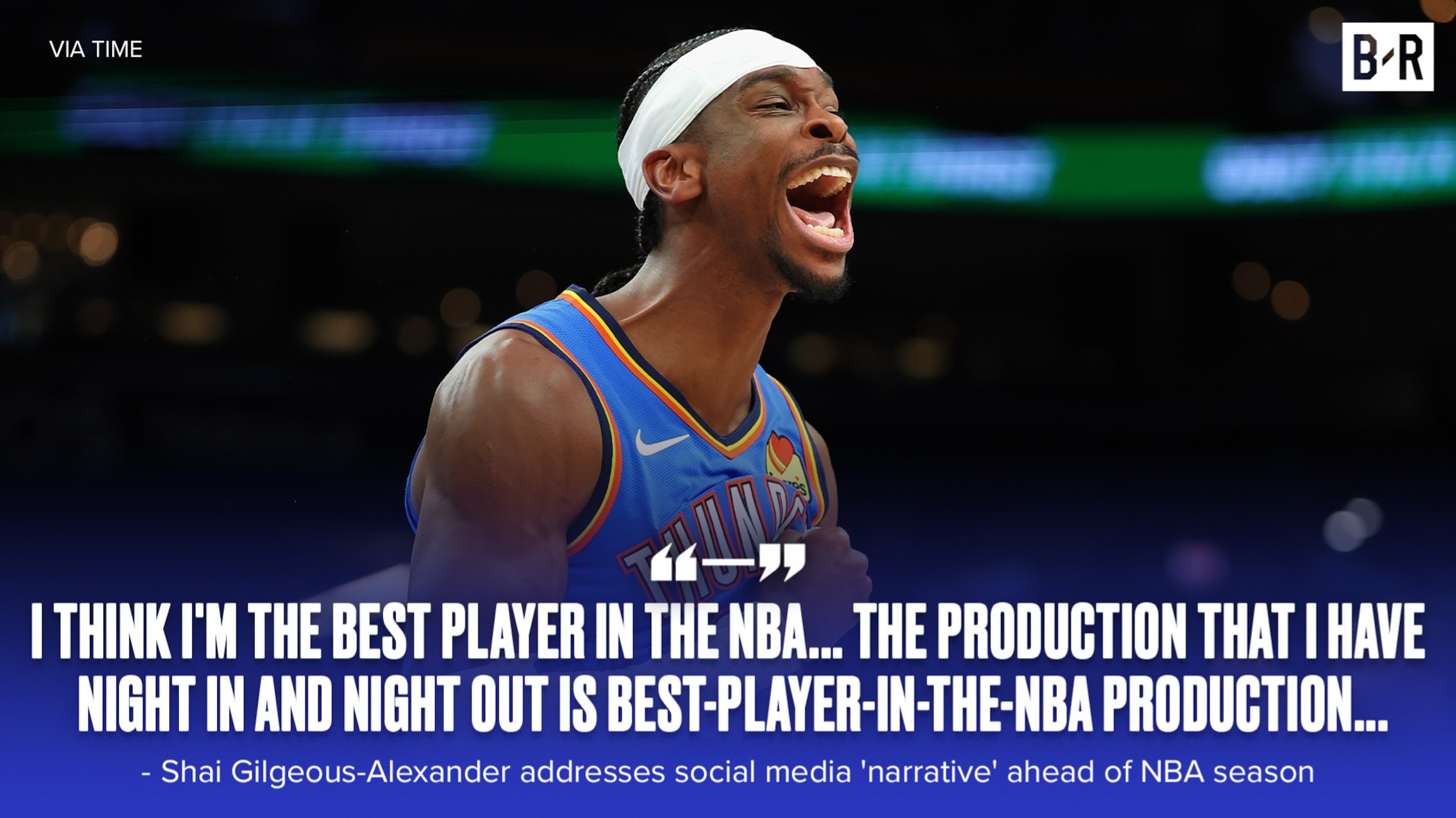
SGA: I'm NBA's Best Player ☝️
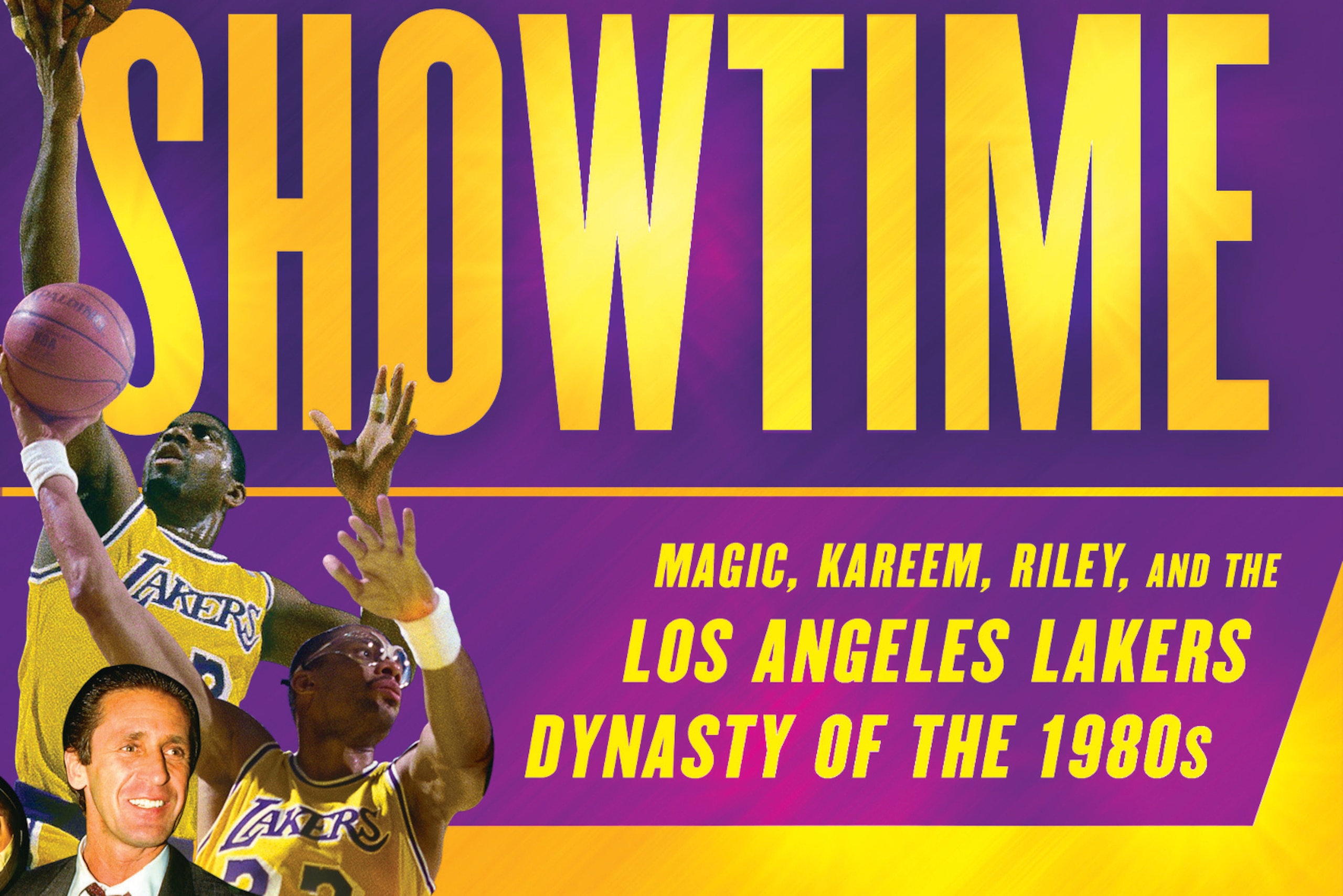
EDITOR'S NOTE: The following is an excerpt from Jeff Pearlman's new book, "Showtime," which can be ordered here. It was edited to comply with B/R standards regarding the use of profanity.
Coming off of the finals sweep at the hands of Detroit, and having lost center Kareem Abdul-Jabbar to retirement, the Lakers were supposed to take a few more steps back toward the rest of the NBA pack.
Instead, the opposite occurred. For the first time in franchise history, Los Angeles went undefeated in eight exhibition games, then opened the regular season by winning ten of eleven. Everything was going swimmingly—centers Mychal Thompson and Vlade Divac were teaming to average more than 18 points and 12 rebounds per night, Magic Johnson and James Worthy were (as always) playing at All-Star levels and A.C. Green had continued his emergence as one of the league’s three or four best power forwards. The bench—led by Divac, Larry Drew and Michael Cooper—was its deepest in years. “We were unbelievable,” said Drew, Johnson’s backup. “From the day I arrived, I felt a focus and determination I’d never seen before. I’ll never forget when I first got there, and Magic educated me on each player—where they liked the ball, how to use them most effectively, who was the first option, who was the fourth. The whole team worked so hard in practice and off the court, when the games started, it was a breeze.”
But, for too many Lakers, it was no longer fun. Save for Divac’s quirky antics and scattered moments of levity, Johnson and Pat Riley, the veteran coach, were sapping the joy from the franchise. The star point guard would win his third MVP award in four seasons, but devoted too much time to berating and screaming. Having played so long for Riley, he was now becoming Riley. His practice comments no longer included soothing touches. If you messed up, Johnson rode you hard. With Abdul-Jabbar’s departure came a certain behavioral liberation. Johnson’s inner-dictator was emerging. This was not a good thing. “He was really pushing us in practice, telling us, ‘Hey, you got to do this better, you got to do that better,’” said Cooper, his closest friend on the team.

Riley was no better. “Shootarounds turned from forty minutes to one and a half hours with a lot of video,” Cooper said. “It was mentally fatiguing more than anything else. Coach Riley had changed a little bit. He wasn’t as open as he used to be. If you had a suggestion, he didn’t take it wrong. He just didn’t take it. He heard you. Then it was like, ‘OK, you gave it to me, fine, but we’re going to do it this way.’ Where in the past, he really would listen to you and kind of compromise with you. Just the aura he started putting out that year. You felt, don’t invade his space today, not now, not the time. So ‘Not now, not the time’ turned into the whole season. We were kind of hesitant. We were looking at each other out on the court. It was the first time I can remember players making a mistake and glancing over at the bench for a second. We never had done that before.”
Unhappiness and discomfort replaced peace and tranquility. Riley behaved more like a schoolmaster than a coach. Little unimportant details now held tremendous importance. Riley didn’t like how, come the fourth quarter at the Forum, the crowds paid more attention to the Laker Girls than the game. Consequently, he forced the cheering squad to sit during the period. Thanks to the generosity of Jerry Buss, the team’s owner, the Lakers traveled on the luxurious MGM Grand plane, which featured individual staterooms. Riley, for a reason no player understood, insisted everyone be relegated to the seats he assigned. “He’s just like that,” Johnson told Mark Heisler of the Los Angeles Times. “What happened, he wanted to control everything. ...He tried to control the whole arena. He wanted to control the locker room, the band, the Laker Girls. He tried to control everything and he got away from what he was there to do.”
Cooper, a faded copy of the high flyer he’d once been, averaged twenty-three minutes per game and cursed Riley out beneath his breath. Scott, a stubbornly confident man, was shooting thirteen times per game—far too low for a player of his stature. Worthy was worn down by the negative vibes. Divac endured Johnson’s nonstop criticisms. In January, Cooper, Worthy and Johnson—the three captains—met with Jerry West to complain about Riley’s abusiveness and some of his on-court strategizing. There was, Johnson told the general manager, a gap in communication that needed to be resolved. Shortly thereafter, West held a team meeting for everyone to clear the air. He told the press it was a “small thing.” This was a lie.
Riley didn’t like what was he was seeing. He believed players were done listening to him and no longer sought out his approval. “He’d always say that,” said Bill Bertka, an assistant coach. “ ‘Bill, they’re tired of hearing what I have to say.’ ” Riley also seemed to cringe at the spoils of success lavished upon the franchise. Worthy spent $2.675 million on a gated mansion in Pacific Palisades. CBS hired a producer named Renée Valente to film a (painfully awful) made-for-TV movie, Laker Girls, starring Tina Yothers. Johnson agreed to a $1 million pay-per-view one-on-one game against Chicago’s Michael Jordan (it was canceled when the NBA refused to sanction the event). Divac drew interest from a surprising number of merchandisers. To a coach who bemoaned “peripheral distractions,” everything now seemed to be a peripheral distraction. Control was gone. There was even speculation that, come season’s end, NBC would make Riley an offer to jump to TV. “Guys tired of Pat,” said Gary Vitti, the Lakers trainer. “His style is such that you can get burned out on it. Because he keeps tightening that bolt tighter and tighter and tighter and tighter.”
Despite the turmoil, the Lakers wound up winning sixty-three games, the second most in Riley’s career. With four new expansion teams (Charlotte, Miami, Minnesota, Orlando) having been added over two seasons, the NBA wasn’t quite as deep as it had been. Regardless, Los Angeles compiled the league’s best record, and the feeling of accomplishment after wrapping up the top seed was real. “You had to be proud,” said Divac. “You reached a goal—a very hard goal.”

Los Angeles faced the Houston Rockets in the first round of the playoffs, a matchup that lacked the luster of the Kareem-versus-Moses and Kareem-versus-Ralph Sampson days. Houston was a nondescript .500 team, and the series was taken by the Lakers in a benign four games.
Yet while even the most diligent of Showtime fans probably recall little of the action from a forgettable battle, John Black, the media relations head, will never forget what transpired shortly after the team checked into the Stouffer Renaissance Hotel on Monday, April 30, for the third game.
“Everybody was coming back from dinner, and the elevator door opens,” Black said. “It was Earvin, Cooper, Byron, Orlando Woolridge and one other guy...”
Black looked over the crowded space and suggested he’d wait for the next ride. A long arm grabbed him by the shirt and yanked him inside. “John,” Johnson said, “we’re gonna fill you in.”
The men retreated to a suite, where the following hour was devoted to a verbal slaying of the prison guard known as Patrick James Riley. “They had a team meeting and they’re motherf------g him,” Black said. “M---------er this and m---------er that and all these m---------ers directed at Pat. I didn’t know it was to that extent. And I was like, ‘Holy f--k.’ It was all melting down.”
The Lakers were scheduled to play Phoenix in the next round, and nobody (literally, not a single newspaper prognosticator) predicted a Suns triumph. Coach Cotton Fitzsimmons’s team had been good enough to win fifty-four regular-season games, and the Kevin Johnson-Jeff Hornacek backcourt was one of the NBA’s elite. But Phoenix had lost three of four to Los Angeles in the regular season. Even after they shocked the Lakers in the opener with a 104–102 win at the Forum, few were anticipating much of a run. Los Angeles fought back to take Game 2, and order was rightly restored.
Or not.
The series shifted to Arizona, and the Suns grabbed Game 3 with an uncharacteristically simple 117–103 victory. If one were attending his first NBA game, he would have left convinced that Phoenix was the far superior team. Kevin Johnson repeatedly zipped through the lane, past Magic Johnson and Scott, to score 22, and Hornacek, the deadeye shooting guard, hit 10 of 16 for 29 points. The Suns were younger, stronger and more eager. “I do have faith,” Riley said afterward. “I do, because we’ve experienced this before.”

The Lakers had been in past holes. But they’d never been this divided; this angry; this intent on telling their coach to go to hell. They wanted to win. But did they need to? Did it consume them? No. Riley’s motivational speeches—delivered in high-pitched, desperate tones—fell upon tin ears. All the old themes (Family. Unity. Peripheral distractions.) had shriveled and died. Players like Johnson, Worthy, Scott and Thompson were no longer eager kids seeking out guidance. They were hardened and jaded. The rah-rah blatherings failed to take.
On the morning after Game 3, Black received a call from the league that Riley had been named the NBA Coach of the Year. It was his first time receiving the honor, and the repeated slight had gnawed at him like a subway rat. He knew he was the best coach in basketball. And yet, he was continuously snubbed.
Black found Riley lounging by the pool at the Ritz-Carlton, shirt off, taking in the sun. “Hey, Pat, congratulations,” he said, gritting his teeth. “I just found out you won Coach of the Year. We need to schedule a press conference.”
Black waited for a reply. There was none. Riley, once again, was ignoring him. Just because he could. “It’s so f----d up,” Black said. “I’m telling him he won Coach of the Year, we need to schedule it, and he’s giving me—at most—yes and no answers.” Finally, Black said, curtly, “Pat, when do you want to do it?”
“F--k it,” Riley said. “I’m not doing it.”
“What do you mean you’re not doing it?” Black said.
“I’m not doing it,” Riley replied. “Tell the league to go f--k themselves. I’m not gonna do it.”
“Pat, you’re not going to do a press conference?” Black said. His voice was raised. He was angry. “You just won the Coach of the Year...”
“That’s right,” Riley said.
Black marched away.
“Of course, he did it,” Black said. “But that’s what it was like all year long. Every day I’d go into him with interview requests, and he was just a miserable prick. There’s no way I would have stayed with the Lakers if it meant working with Pat for another year.”
Riley begrudgingly accepted the Red Auerbach Trophy in a press conference on the morning of Tuesday, May 15, two days after the Lakers had wasted Johnson’s 43 points in a 114–101 Game 4 setback. He said all the right things (“This is a residual award of winning and I’d like to thank the players for that...”), but by now words carried zero weight. Heading into Game 4, Riley had delivered a behind-closed-door sermon to his players that was, even by Hulkamania-meets-Jerry Falwell standards, downright crazy. Excluding Johnson, Riley went around the room and blamed everyone. Scott’s defense was invisible and his shots weren’t falling. Thompson was playing like an old woman. Worthy, averaging 23 points in the series, was forcing the action. Woolridge was a loser who belonged on loser teams. “He singled me out the other way and that kind of killed everything,” said Johnson. “ ‘Only one guy playing good in this whole group and that’s Buck!’ I was saying, ‘Oh, man.’ It was over. We were through after that meeting...no way we could beat them.”
Game 4 had been a mess. Scott, who demanded more shots, missed four early on, and Riley used a time-out to, specifically, humiliate him. “O.K., Buck, forget it!” Riley screamed. “If they’re not going to play, I’m going to run the same play every single time!” For most of the rest of the night, Riley called play after play for Johnson. Only he and Worthy took more than ten shots. “And I changed [a play] one time and he got mad at me!” an incredulous Johnson said. “ ‘I told you to shoot!’ ”
The series returned to Los Angeles for Game 5, with the Lakers on the brink of elimination. That morning, during shootaround, Johnson and Cooper—Showtime brothers for more than a decade—nearly came to blows. Cooper accused his pal of ripping the team to the press; his exact words to the Los Angeles Times were a seemingly inoffensive “More guys have to play better.”
“You went in the paper and said guys got to play well,” Cooper said. “You’re pointing the finger!”
Johnson was stunned. “Michael,” he said, “did I say that Michael Cooper has to play well? Did I say that Byron Scott has to play well? Did I say that Orlando Woolridge has to play well?”
That night, the most miserable 63-win season came to a merciful completion. The Suns won, 106–103, and nary a tear was shed in the locker room.
The Lakers were happy to be done with it all.
Reprinted from SHOWTIME: Magic, Kareem, Riley, and the Los Angeles Lakers Dynasty of the 1980s by arrangement with Gotham Books, a member of Penguin Group (USA) LLC, A Penguin Random House Company. Copyright Jeff Pearlman, 2014.