

Olympic Results 2014: Full Analysis of Day 5 Games and Medal Tally
Surprises, disappointments and domination by favorites made for a thrilling Day 5 at the 2014 Winter Olympics while keeping uncertainty par for the course in Sochi.
While a majority of team events remain in their infancy, more and more individual medals are being handed out by the day. Speedskating, skiing and snowboarding continue to make up a majority of the action, and figure skating gave out its first individual competition medal on Wednesday.
Also continuing in Day 5 was the domination of certain countries in events. After earning an easy win in the inaugural team figure skating competition, Tatiana Volosozhar and Maxim Trankov skated a beautiful program to earn gold while fellow Russians Fedor Klimov and Ksenia Stolbova fell just behind for silver.



Including short programs, Russia has won eight of 10 figure skating competitions thus far.
Equally dominant is the Netherlands on the speedskating ice. Dutch skaters Stefan Groothuis and Michel Mulder each captured medals in the 1,000-meter final, watching as favored American Shani Davis came up short in his bid for a third straight gold.
Norway continues to lead the overall medal count with 12, with Canada and the Netherlands (10 apiece) being the only other countries in double digits. Germany's six gold medals are two more than any other country, extending their lead in the nordic combined and double luge competitions.
With that in mind, let's check in on the day's results and highlight some of the most important finishes from Day 5.
| Women's Downhill Skiing | Tina Maze (Slovenia) | Dominique Gisin (Switzerland) (Also won gold) | Lara Gut (Switzerland) |
| Pairs Figure Skating | Maxim Trankov/Tatiana Volosozhar (Russia) | Fedor Klimov/Ksenia Stolbova (Russia) | Aliona Savchenko/Robin Szolkowy (Germany) |
| Men's Doubles Luge | Germany | Austria | Latvia |
| Nordic Combined | Eric Frenzel (Germany) | Akito Watabe (Japan) | Magnus Krog (Norway) |
| Ladies' Halfpipe | Kaitlyn Farrington (USA) | Torah Bright (Australia) | Kelly Clark (USA) |
| Men's 1,000m Speed Skating | Stefan Groothuis (Netherlands) | Denny Morrison (Canada) | Michel Mulder (Netherlands) |
Kaitlyn Farrington, Kelly Clark Get United States Back on Snowboarding Podium

For the second straight day, a favored American failed to win gold in the halfpipe competition. However, unlike Tuesday's competition on the men's side, Kaitlyn Farrington made sure the United States wouldn't go home empty-handed.
Farrington's second-run score of 91.75 was just enough for the 24-year-old American to score her first gold medal. She barely squeaked by an equally stellar run from 2010 Vancouver gold medalist Torah Bright, but the Australian was 0.25 short of a repeat gold medal. Kelly Clark, who had the best score of qualifying and was considered the favorite by most, managed a bronze to give the United States two medals on the evening.
Largely unheralded among prognosticators coming into Sochi, Farrington had a sterling performance on the difficult terrain. She scored a solid 85.75 on her first run, sitting behind only fellow American Hannah Teter's 90.50 in second place. (Teter would finish just outside the podium in fourth.) The first run saw Clark, Bright and Queralt Castellet of Spain each fail to finish their runs because of falls, with the frustrations of many snowboarders casting a bit of a shadow.
"I had less than ideal practice," Clark said, per the Associated Press (via ESPN). "Not just little falls, pretty epic falls. To come back, it was a huge accomplishment to get on the podium today."
But Farrington, who needed to qualify in the semifinals to even make it to Wednesday, persevered. Her nearly flawless second run concluded with the 91.75, and then she watched on as top performers one after another fell just shy of her score. Bright and Clark were especially tough to watch, as it looked like both would have prevailed had they been cleaner sticking their landings.
"I fought to get in finals," Farrington said. "I did all three rounds. To come out on top, I couldn't believe it."
Farrington's victory comes a day after Shaun White was unable to retain his gold medal from Vancouver in the halfpipe. White finished in fourth place, and the United States surprisingly went without a medal in one of its best events. ESPN's Jeremy Schaap seems ready to co-opt White's nickname and finagle the wording a bit to highlight Farrington's home state of Iowa:
Still young compared to most of her fiercest competition in the downhill, Farrington might be on the precipice of a special run. She will only be 28 for the 2018 Games in Pyeongchang, while Clark and Bright will have hit their 30th birthdays long before then—a relatively advanced age for snowboarding.
With few expecting her to even make it to the finals and even fewer expecting a medal, it's hard to count Farrington out. Unheralded before Sochi and a star now, it will be interesting to see how the youngster follows up her triumph.
Shani Davis Fails to Medal in 1,000-Meter Speedskating

Speaking of follow-ups, White and Shani Davis have proven over the last two days just how difficult that can be on the Olympic stage. Both men came into Sochi having won back-to-back golds in each of their respective best events, the halfpipe for White and 1,000-meter speedskate for Davis.
And, on Wednesday, Davis' struggles on the ice made the United States 0-for-2 in their three-peat hopes. Davis' overall time of 1:09.12 was 0.73 seconds worse than Stefan Groothuis' of the Netherlands, who picked up a shocking gold at age 32. Davis, 31, wound up eighth and far out of medal contention.
"There's no excuse," Davis said, per . "I just didn't have the speed I've always had. I felt fast in the open, but after that, I don't know. I have to look at the film and see. I'm not shocked; I'm very in tune with reality. But I'm disappointed."
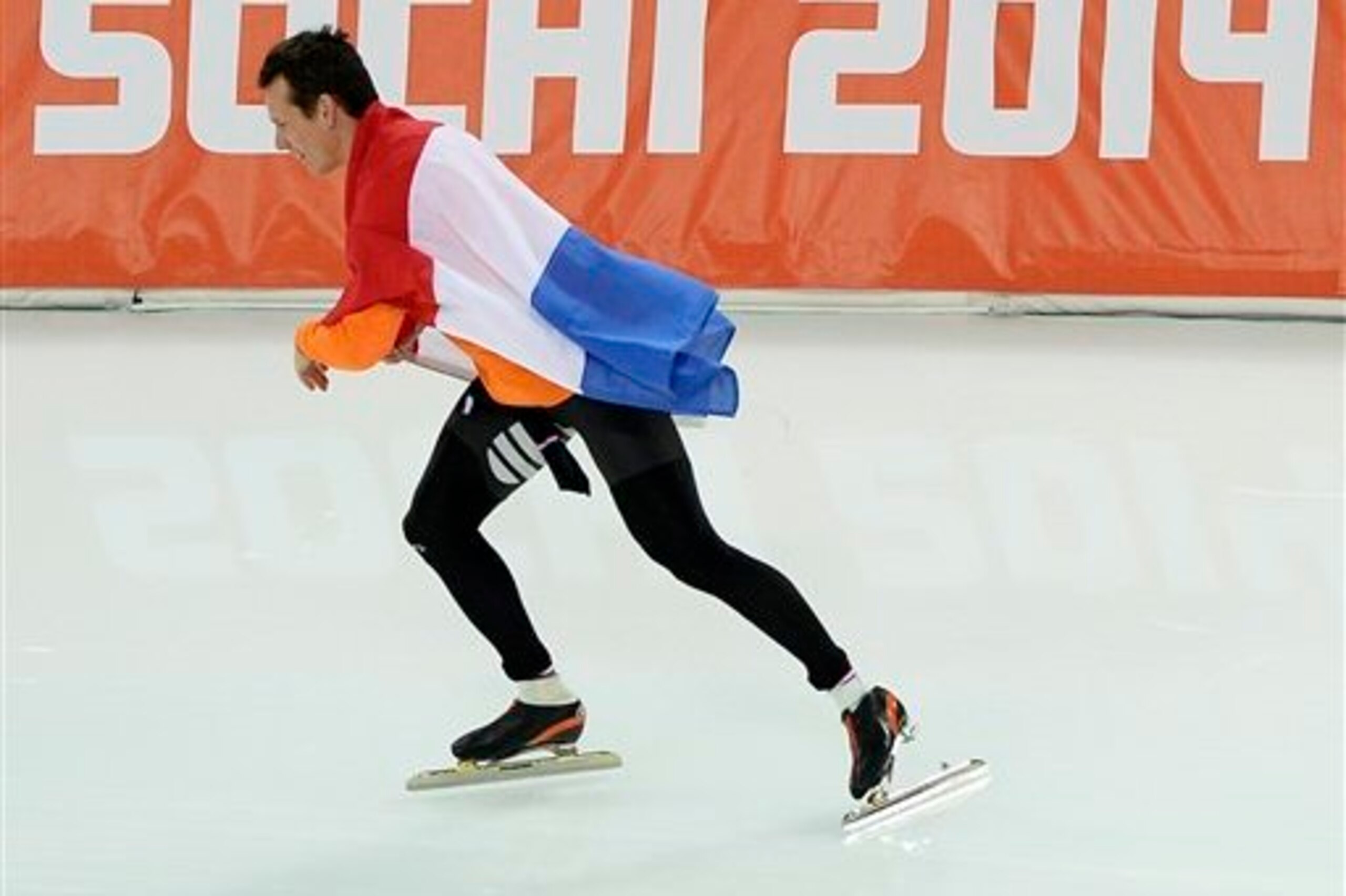
Davis was attempting to become the first male speedskater in history to take gold in the same event in three straight Olympics. To some, it felt like an insurmountable feat. But Davis, the world-record holder in both the 1,000-meters and 1,500-meters, has made a career out of smashing records and expectations. Frankly, it felt impossible to doubt an athlete who already became the first black competitor to win an individual gold in a Winter Games.
Yet Groothuis, who had never medaled previously in the Olympics, shot out of the opening gate and barely squeaked by for gold. As noted by Dejan Kovacevic of the Pittsburgh Tribune-Review, the Dutch fans (and some in the press box) roared after Davis came in with a time worse than their guy:
Denny Morrison of Canada earned a silver, finishing just .04 seconds behind Groothuis. Dutch Michel Mulder, who earned a surprise gold at the 500-meter sprint earlier this week, got his second medal with a bronze. The Netherlands has dominated speedskating thus far in Sochi, taking eight of a possible nine medals on the men's side and earning two more in the ladies' competition.
With five more individual medal events upcoming, skaters worldwide are left to crack the code of the Dutch dominance.
Davis' last remaining hope of individual gold comes in Saturday's 1,500-meter race. The 1,500-meters has long been Davis' most frustrating muse, finishing second in each of the last two Olympic Games. Should he finally get over the hump and find the right rhythm before the weekend, perhaps his trip to Sochi won't be seen as a disappointment.
But first, we'll have to see if anyone can catch the Dutch.
History Made in Women's Downhill

They say a tie is like kissing your sister. But when it awards two different competitors and countries gold medals, perhaps a tie isn't so bad after all.
That's exactly what happened in the women's downhill final, as Tina Maze of Slovenia and Dominique Gisin of Switzerland both posted exact times of 1:41.57. As noted by Bill Pennington of The New York Times, the tie was the first in alpine skiing history and came as a source of controversy from those wanting a hard and fast winner.
The times recorded in the booth for the event are measured down to the 10,000th of a second. In theory, it's possible to measure those times and come out with a concrete winner—and multiple people saw the firm result of the competition. But standard timing for Olympic events is down only to the hundredth of a second, and the organizers decided to report it as such and award the gold medal to both women.
“When you start getting into such small numbers you cannot guarantee the integrity of that number," Jenny Wiedeke, Swiss Timing's communications manager, told Pennington. "It’s an outdoor sport in a winter climate, a piece of flesh could be the difference.”

Maze, 30, is seen as a breakthrough for Slovenian skiing. She narrowly missed out on golds in the giant slalom and super-G events in Vancouver, earning silver both times. While it's inherently more fun to win on your own, Maze took the tie in good sport and even noted she has experience "winning" in a tie before.
"It's incredible in our sport how small the differences are and we are all aware of that,'' Maze said, per Jim Caple of ESPN. "We're all on a high level and skiing well, and at the end, it's just hundredths that count. Maybe it's just one finger or a hand can change the color of a medal.''
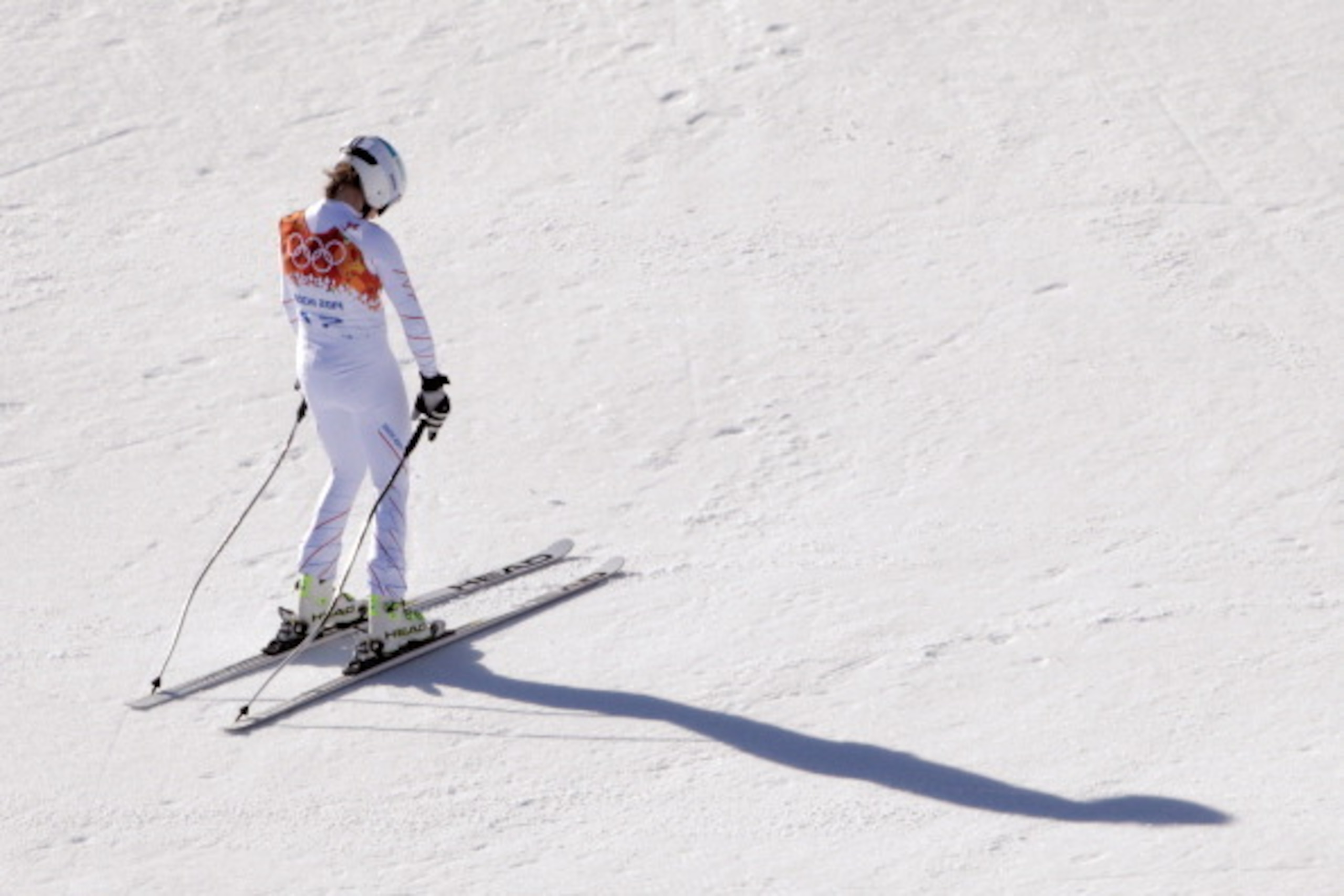
The hubbub at the top of the leaderboard obscured disappointment for American Julia Mancuso, who finished eighth. Mancuso led the super-combined after a stellar downhill run, but even though she bested that time Wednesday, it wasn't good enough to get close to a medal. Her 1:42.56 time was almost a full second off Gisin and Maze at the top.
Mancuso, who is the only four-time medalist in U.S. alpine skiing history, was disappointed but seemed eager to use it as motivation.
“I’m moving on,” Mancuso said, per Barry Svrluga of the Washington Post. “I don’t really have many emotions. I’m disappointed, but I can’t go back and do it again. I just want to remember it for the super-G."
Mancuso will compete again on Saturday in the super-G final. She has never medaled in the Olympics in that event, but most recently took a silver in last year's World Championships. The odds remain a bit stacked against her, but history tells us to never count Mancuso out in Olympic competition.
Follow Tyler Conway on Twitter:
.jpg?w=2560)
.jpg?w=2560 "Rams Eagles Football")
.jpg?w=2560 "Bijan's INSANE 1st Half 🤩")
.jpg?w=2560 "Injury-stricken Seahawks signing veteran RB")

.jpg?w=2560 "2 NFL Officials Suspended")

