

Dolphins vs. Patriots: Takeaways from Miami's Meltdown in New England
In a flash the Miami Dolphins were up 17-3 to the New England Patriots, seemingly ready to cruise to a win and within a half game of first place in the AFC East.
In an even quicker flash, all hope was gone, as the Dolphins would lose to New England 27-17 thanks to 24 unanswered points in the second half along with absolutely no execution, poor play-calling and a general feeling of malaise that is the most troubling part of this team.
So what did we learn about the Miami Dolphins during this spectacular meltdown? More than enough to know that a change might be in order with the coaching staff and front office come the end of the season.
1. Dolphins Have a Good Running Game, but Give Up on It Too Quickly
1 of 7
Lamar Miller had 18 carries for 89 yards against the Patriots, averaging 4.9 yards per carry.
So that should settle it: Miami has a No. 1 running back. Does that mean he's being used as a No. 1 running back? Absolutely not; he still splits series with Daniel Thomas, but Thomas wasn't terrible either as he ran for 47 yards on nine carries for an average of 5.2 yards per carry.
Overall, the Dolphins would run for 156 yards on 31 carries for an average of five yards per carry.
That should win the game, and it definitely would've had the Dolphins at least considered using the running game more in the second half.
Instead, Miami only ran the ball nine times in the entire second half after running it 22 times in the first half.
Usually when something is working, you stick to it. The Dolphins running game worked against Buffalo and New England.
But at the end of both games, the running game was abandoned. The most egregious abandoning of this in this game came on the first offensive drive of the second half, when after a poor Mike Wallace drop (more on him later), Miami decided to pass it again on 3rd-and-2 from the New England 19-yard line.
In a scene eerily reminiscent of just about anything in Miami Dolphins history post-2000, that would lead to a sack, followed by a missed 46-yard field goal (it's a 37-yard field goal if they run the ball for no gain).
Why the Dolphins didn't trust a successful running game to gain the two yards is a mystery to me, because they were averaging twice that amount per carry.
2. The Dolphins Can't Respond Well to Adversity
2 of 7
Part of the Dolphins' meltdown was the poor officiating, which was very one-sided toward New England.
In a game Miami lost by 10, horrendous calls led to 13 points on the board for New England. Six of those points came off of penalties that came after Miami had seemingly stopped a Patriots drive.
It's unfortunate when it happens; however, good teams overcome situations like that to find a way to win.
The Miami Dolphins are not a good team based off of that. They couldn't overcome the bad calls and seemed to lose their composure down the stretch.
I'm never one to say that bad calls lose teams games, for it is my belief that it's their play following said calls that loses the game.
Miami's play was horrible in the second half, bad calls or not.
3. Offensive Line Problems Are Schematic, Not Personnel
3 of 7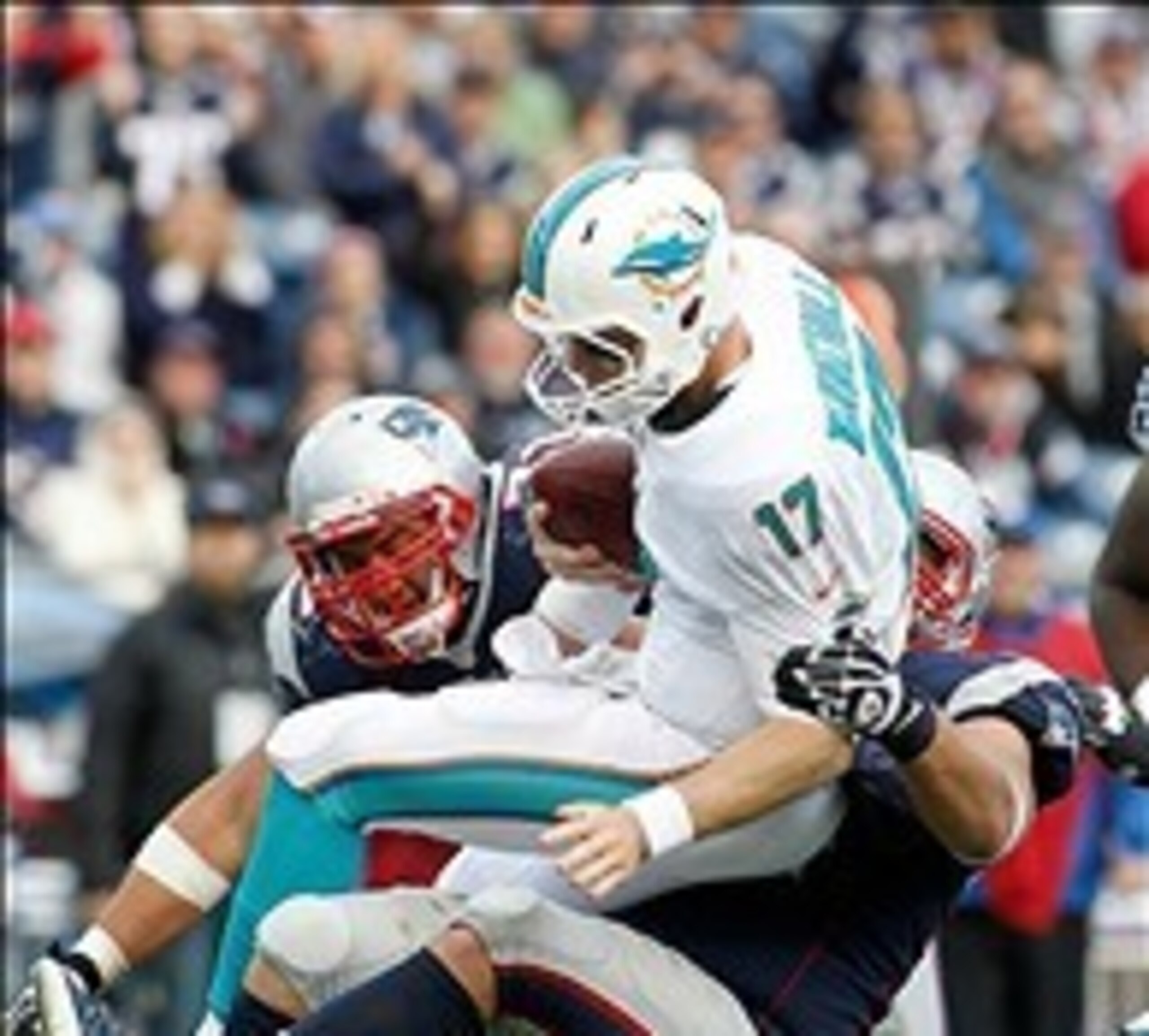
I'm not saying that a change in blocking schemes would turn this Dolphins offensive line into an elite unit.
I doubt anything would at this point.
What I am saying is this: The Dolphins have tried using different players in different lineups along the offensive line.
So far, nothing has worked.
Maybe, just maybe, it might be time to look at the schemes again, because they appear to be part of the sack problem.
Miami's run blocking has improved—now it's the pass protection that needs to step it up. Last season, it was a problem. This season, it has only gotten worse.
Coach Joe Philbin has said that every option has been looked at along the offensive line to help it improve. Either he only means when it comes to personnel (and not scheme), or he's lying because the only thing Miami's offensive line has had in common in the past two years has been the same schemes by the same coaches.
Maybe that's where the problem lies after all.
.jpg?w=2560 "Seahawks Chiefs Football")

4. Mike Wallace Makes Head Shake, and Not in the Good Way
4 of 7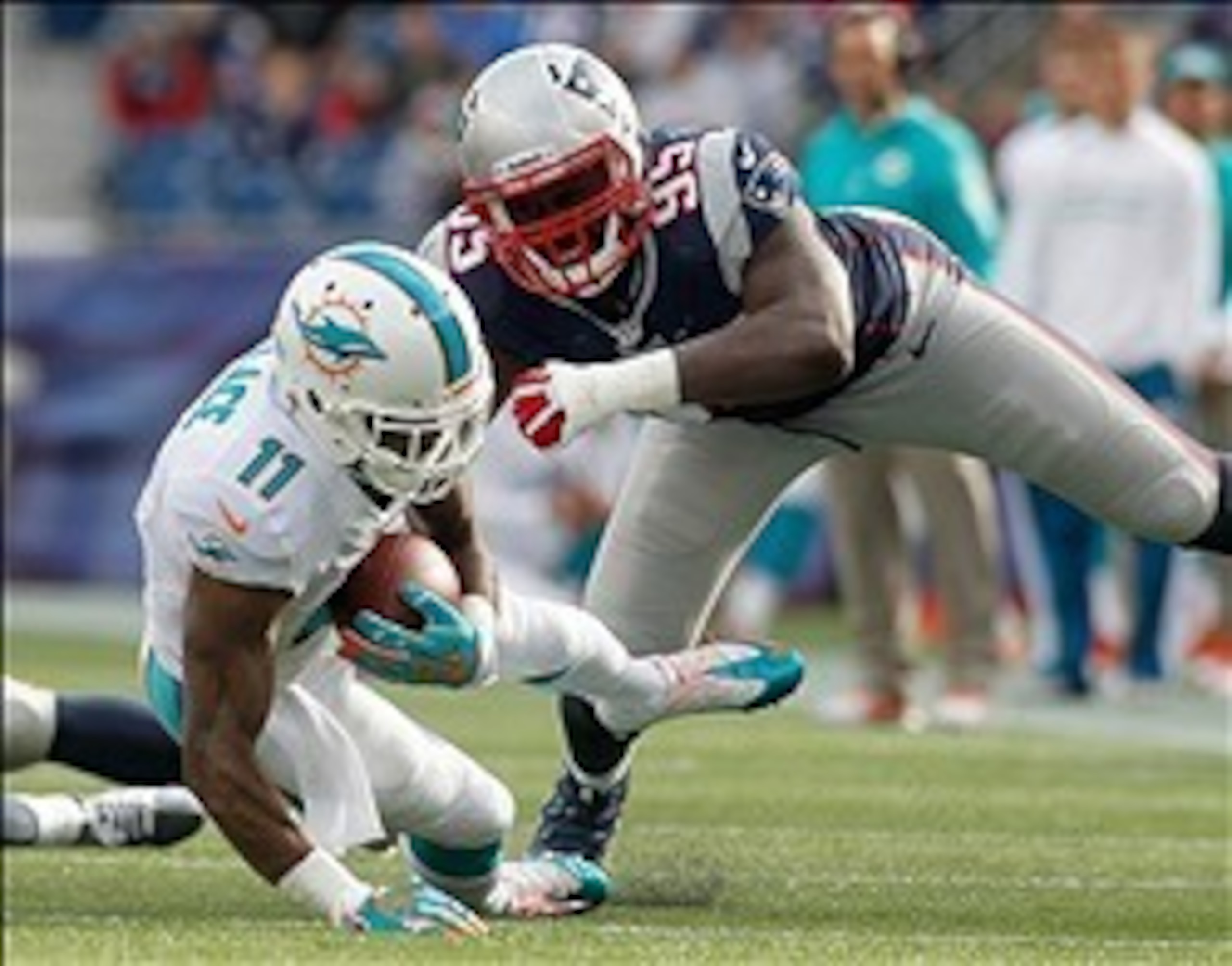
Once again, part of the reason why Mike Wallace hasn't been as productive as he should be lies on the coaches.
But for once I will defend the coaching staff by asking this: How do you expect any coaching staff to trust Wallace to be a bigger part of the offense when he can't hold onto the ball when it's thrown his way?
Wallace not only drops passes he should catch, but he seems to refuse to go for passes that he should be able to fight for, resulting in the offense getting stalled.
Not all of the blame is on Wallace, and not all of the blame is on the coaches (and most definitely not all of the blame is on those two), but Wallace's hands of stone do have a lot to do with how poor he has looked in his first seven games as a Miami Dolphin.
5. The Shattering Confidence of Ryan Tannehill
5 of 7
A lot of people just plain don't like Ryan Tannehill. That's fair.
But let me explain something: In the first three games of the season, Tannehill covered up a lot of Miami's flaws.
He'd get hit but then bounce right back up, he recorded two "kills" in his first three games and looked like he was on his way to the Pro Bowl.
After three games, I was confident in Tannehill and had every reason in the world to be.
Those halcyon days are gone, and there's plenty of reasons why.
The offensive line and the poor schemes is part of the reason why Tannehill has struggled, as it's messed up his timing in the pocket. Even in the first half when it was relatively clean, he still threw the ball away too early, including overthrowing Brandon Gibson on the play where he got hurt (no, this wasn't the reason Gibson got hurt).
The coaching is part of the reason as well. They did employ the poor schemes used by the offensive line, and they don't exactly call the best plays for Tannehill to be successful in.
Most importantly, the blame falls on Tannehill himself. The pocket presence is gone, and only he can really regain it and work on it. At times he'll throw the ball away too early, other times he won't throw it away at all and take the sack.
To make matters worse, though, he's become a turnover machine. He is responsible for making sure he holds onto the ball, yet he's always good for at least one fumble per game.
This is unacceptable, and ultimately falls on him.
6. Caleb Sturgis Seems to Be Pressing
6 of 7
One field goal missed, and one field goal blocked.
Blame the wind if you want for the miss, but that looked like Dolphins rookie kicker Caleb Sturgis was pressing a bit.
Sturgis seemed to out-think himself with the trajectory and aim of the kick. His goal appeared to be to sneak it into the upright as opposed to just attempting to make it down the middle.
Why did he kick it in that direction to begin with? This wasn't a bad snap, nor was it a bad hold. He aimed it where it went and expected the wind to do him a favor.
That's never a good idea. The kid has a leg. If he goes down the middle, he likely gets it in from that distance.
Then came the block at the end of the game that would've put Miami within a touchdown of the Patriots. That one I can't blame on Sturgis too much, as I saw the block happening as New England's line was lining up.
Either way, it was a terrible afternoon for Sturgis, who right now seems to be trying too hard and has been since missing that kick against the Ravens in Week 5.
7. The Dolphins Have Quit on Coach Philbin, and Coach Philbin Is Showing Us Why
7 of 7
Here's a quiet secret that I seemed to have picked up in the past two games.
The Dolphins have quit on Coach Philbin. How else can you explain how these past two games have ended?
Poor play-calling is one reason why, and I've already listed the instances where the play-calling was atrocious. Discipline is another thing, as the Dolphins seem to have lost that as well.
Sunday saw the Dolphins blow a 14-point lead, and before the lead was even blown, you could see that the Dolphins players had given up.
Why is that? Well, this play is indicative of it: This is a picture of the Rishard Matthews "incompletion" that Philbin refused to challenge. Looking at the picture, which came off of a screenshot on the same television you likely watched it on, you could see that Matthews had control of the ball with both feet in bounds.
The officials called it an incomplete pass, and before any decision was made, the replay was shown on television and was likely seen by Miami's coaches up in the boxes.
Despite the replay clearly showing both feet in bounds, Philbin didn't challenge the play and chose to punt. The good news is Philbin can still claim to be perfect on challenges. The bad news is that he would've been had he challenged this play, too.
What message does that send to the players when Philbin didn't go to bat for them? Not challenging that play threw Matthews and Tannehill under the bus, for it was as if Philbin had said "I didn't trust you guys to make that play, so I'm going to assume you didn't."
Philbin practically told the team that he didn't believe in them, and when a coach doesn't believe in his players, players tend to not believe in their coach.
Is that the message you want your head coach to send to your players? Of course not. But it's the norm for Philbin and the Miami Dolphins.
Philbin is not the right man for this job, just like Jeff Ireland isn't the right man for his job.
The whole coaching staff and front office should be evaluated and let go at the end of the season, regardless of any "extensions" that have been signed.

.jpg?w=2560 "Raiders Saints Football")



