

The XI: 11 Test Players Who Could or Should Have Had Better Records
Throughout the history of Test cricket, there have been players who were not able to fulfil their potential.
There can be any number of factors that contribute to this: injury, loss of form on the international stage or even the sheer depth at a country’s disposal that prevents some highly talented individuals from playing.
The 11 players listed here saw their international careers curtailed for a variety of reasons, having promised much but been unable to deliver.
They could have been dominant players in the Test arena but were not.
Read on for 11 players who could or should have made more impact in Test matches.
All stats courtesy of ESPNCricinfo
1. Barry Richards (South Africa)
1 of 11
One individual who promised much but was unable to deliver on the international stage was Barry Richards of South Africa, who saw his Test career sadly cut short by apartheid.
In his only four Tests against Australia in 1970, Richards averaged a staggering 72.57 and scored two centuries as an incredibly strong Proteas side won the series 4-0.
Unfortunately, South Africa’s sporting isolation prevented him from playing any more international cricket, although he was able to play in Kerry Packer’s World Series Cricket and also first-class cricket in England and Australia.
However, his demolition of the Australian bowling attack in 1970 leads many to bemoan the loss of one of the most talented batsmen the world has ever seen.
2. Mark Ramprakash (England)
2 of 11
Perhaps one of the greatest wasted talents in English cricket, Mark Ramprakash frustrated legions of England fans throughout the 1990s as he feasted on county attacks but could not translate that form into the international game.
When he made his international debut in 1991 against the West Indies with 27 in each innings against an attack of Malcolm Marshall, Curtly Ambrose, Patrick Patterson and Courtney Walsh, fans sat up and took notice of this special talent.
However, a return of just two centuries in his 52 Tests over the next 11 years speaks of a player who was clearly talented but found wanting at the top level of the game.
A final Test average of 27.32 could have been so much better, especially when you consider his final first-class average of 53.14 after a glittering career that only ended in 2012.
3. Stuart Law (Australia)
3 of 11
A prolific batsman in first-class cricket in Australia and England, Stuart Law made just one Test appearance for the Baggy Green as he found himself behind a number of high-quality batsmen.
Had he been born in any other era, Law would almost certainly have played 100 Tests and been a key part of the Australian batting lineup.
He was even overshadowed in his only game by another debutant, one Ricky Ponting who made 96 in his innings and was only denied a debut century by a shocking lbw decision.
Law did play 54 one-day internationals, showing that he was capable at the international level, but he could have given so much more in Tests.
Had he been born in an era without David Boon, Mark and Steve Waugh, Ponting, Damien Martyn and others, he almost certainly would have done.

.jpg?w=2560)
4. Vinod Kambli (India)
4 of 11
One of our next batsmen’s claims to fame is putting on 664 runs with Sachin Tendulkar while the pair were both still schoolboys.
Vinod Kambli was a superb talent and looked to be another Indian batting superstar as he scored two double centuries and two centuries in his first seven Tests.
However, after such an explosive start, he played just 10 more Test matches for his country as his indiscipline and inability to deal with the short ball became exposed.
His talent was obvious and the start to his career showed that Kambli was an extraordinary player, but unfortunately he was ultimately found wanting at the highest level.
5. Michael Bevan (Australia)
5 of 11
Generally regarded as the world’s best limited-overs batsman, Michael Bevan promised much at Test level and, based on his performances in one-day internationals, could have done so much more.
He promised much early in his Test career, scoring three half-centuries in his first four innings on tour in Pakistan.
However, he was another who appeared to struggle against the short ball and found himself out of the Test side permanently in 1998.
However, he remained in Australia’s one-day international side and was crucial to their success, especially in winning consecutive Cricket World Cups in 1999 and 2003.
Playing 232 ODIs but just 18 Tests shows a player who was enormously talented but unfulfilled at Test level before being pigeon-holed as a limited-overs specialist.
6. Saba Karim (w) (India)
6 of 11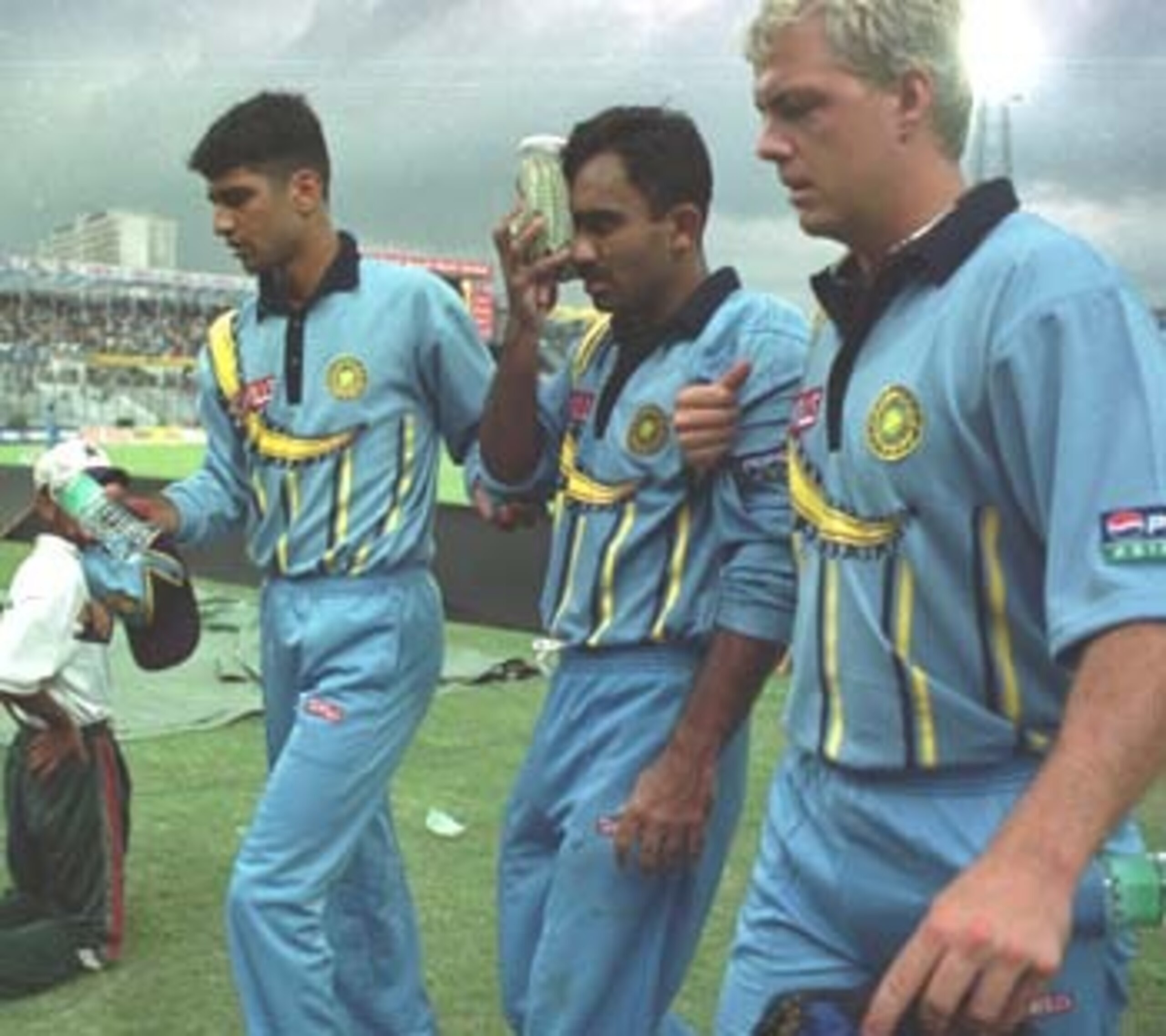
Keeping wicket for this XI is the supremely talented Saba Karim, who was around the Indian team for a number of years but only played one Test.
That came in 2000 against Bangladesh in their first-ever Test match, but then tragedy struck.
Karim suffered an eye injury when keeping to Anil Kumble in the Asia Cup that same year and he could not regain his place.
That injury would end his playing career and leave many people to mourn a batsman who was prolific in a long first-class career.
7. Ajit Agarkar (India)
7 of 11
Another supremely talented player who could not quite assert himself on Test cricket, Indian all-rounder Ajit Agarkar promised much but could not deliver.
Having become the fastest bowler to reach 50 ODI wickets in his first international season in 1998, much was expected of Agarkar as a successor to the legendary Kapil Dev.
However, with the bat, he scored just one century against England in 2002 and proved expensive with the ball.
He became a limited-overs specialist as injuries took their toll and while he impressed in the shorter forms of the game, he could have delivered so much more in Tests.
8. Shoaib Akhtar (Pakistan)
8 of 11
The world’s fastest bowler in the late 1990s, Pakistan’s Shoaib Akhtar could have taken many more Test wickets were it not for his off-field problems.
There were few better sights than Akhtar steaming in and bowling at nearly 100 mph, and his 178 wickets at Test level is an impressive haul in 46 games.
At various times, however, he was banned for breaching the ICC Code of Conduct, accused of feigning injury, banned for drug use and also for a dressing-room spat with Mohammad Asif.
His retirement was greeted with sadness, as his fitness and indiscipline prevented him from being the dominant bowler he promised to be.
9. Shane Bond (New Zealand)
9 of 11A return of 18 Tests in a career that spanned eight years was enormously disappointing for Shane Bond, regarded as the best New Zealand bowler since Sir Richard Hadlee.
However, his body just could not stand up to the rigours of international cricket, especially a five-day Test match, and he was left unfulfilled.
He does own the distinction of having the fourth-best strike rate of all time in Tests, which shows a player who was comfortable on the big stage.
Unfortunately, as he recognised himself, his body was too fragile and injuries were far too common.
10. Simon Jones (England)
10 of 11
England fans everywhere remember the 2005 Ashes, especially the role that Simon Jones played in the victory with his superb reverse-swing.
However, Jones’ career was another that was blighted by injuries, with every comeback seemingly stymied by another fitness worry.
He regularly took wickets in Test matches, but his brittle body meant he was rarely available.
His 18 wickets against Australia in 2005 appear to be a cruel reminder of what might have been.
11. Stuart MacGill (Australia)
11 of 11Any Australian leg-spinner not named Shane Warne was always going to have a tough time during the 1990s and early 2000s, and so it proved for Stuart MacGill.
A very talented spin bowler in his own right, MacGill played the role of understudy and often only played due to Warne’s absence.
When offered the chance, he was keen to take it, but the fact that he only played more than five games against the West Indies and England in his career shows Australia’s reluctance to use him in anything more than as a reserve.
Warne and MacGill played just 16 Tests together and perhaps if they had been spin partners on more occasions, the latter would have enjoyed more success at that level.
.jpg?w=2560 "Seahawks Chiefs Football")
.jpg?w=2560 "Colts Vikings Football")
.jpg?w=2560 "🚨Jay-Z Headlining Super Bowl")


.jpg?w=2560 "JT's Projected Trade Cost")