The Shadowy Face of Sports that Athletes Don't Want You To Know
"Performance enhancing drugs." Fans do not want to hear this word when it comes attached to big idols, but it has and it has destroyed the reputation of some sports.
Still, most of the commissioners or presidents of international boards do not want to embrace doping tests. Have sports hit rock bottom?
Probably.

.jpg?w=2560 "Seahawks Chiefs Football")

We, the fans, are now confronted with an underground market, that we never dreamt of. The doping market.
A deal that is worth millions...billions actually.
Underground labs, spies, barons, and world-class clients, a real story that looks like it came straight out of a fiction best-seller.
According to one of the market's leaders Angel Heredia:
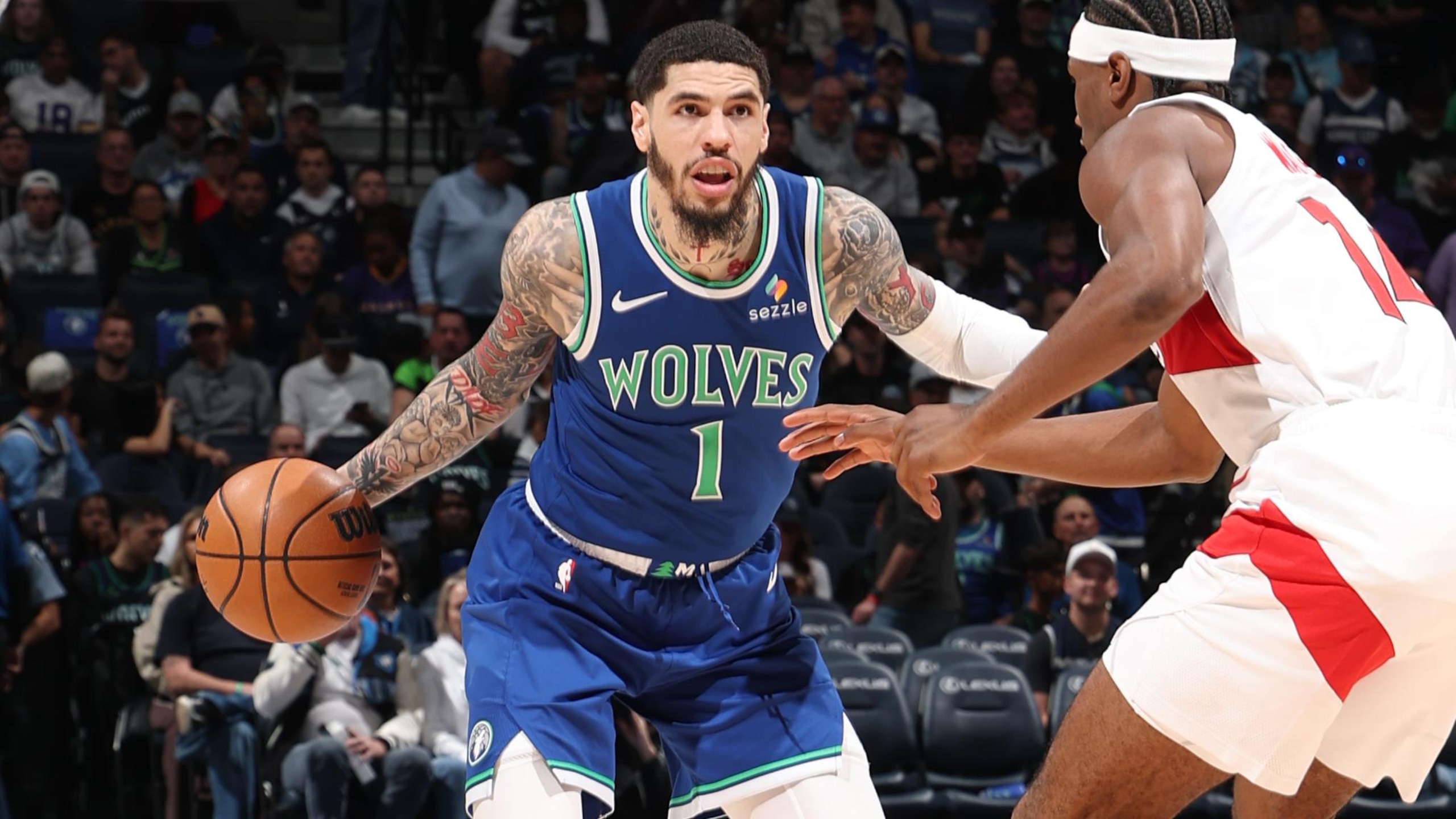
"Track & Field, Swimming, Cycling and Skiing are impossible to save. Golf? Also dirty. Soccer? Soccer players come over and say that they need to run up and down the line and play three times a week. Basketball? Basketballers take amphetamines, ephedrin...Baseball? Haha. Steroid during practice, amphetamines for the match."
Did you suspect that?
I sure did.
Heredia says to the German magazine Spiegel that the problem lies in the sports industry. Athletes live from their performances.
"In an international meeting, the athlete ranked at 8 gets 5,000, whereas the winner gets 100,000."
Spiegel's interviewer asked Heredia if he was going to see the 100-final of the Beijing Olympics. His answer: as clear as crystal water and as sad as the death of a legend:
"Of course. But we won't have a clean champion. Not even a clean participant."
Remember Usain Bolt's legendary 9.67?
Well, meet Richard Pound. The man who turned the Olympics into a million-dollar deal and led the Anti-doping agency from 1999 to 2007.
Spiegel also caught up with him and when asked about the fairness of Bolt's achievements, he wisely answered like this:
"I would rather not answer that question. Generally speaking everyone now has doubts when an athlete who has never stood out before suddenly excels himself."
Did you know that Jamaica runs its own doping tests? So if Bolt is doped, Jamaicans won't say that he is, of course.
Really makes you wonder.
What about Michael Phelps' golden run in '08?
Ask your biology teacher if it is possible for your body to regenerate that fast. Especially, when you're facing people that only focus on two or three events.
Ask Angel Heredia if it's possible to achieve such performances at a constant level - without doping:
"400m in 44s? Unthinkable. 71m with the discus? No way. It can occur, that with the wind blowing behind your back, one will reach 9.8s in the 100m. Nevertheless, 10 times under 10, with Rain and high temperatures? Only with doping."
Doping is serious business.
Heredia claims that he has to always keep an eye over his shoulder, nowadays, and with good reason. Just take a look at Pound's words on doping and organized crime:
"The doping system is organized along mafia-like lines. So what we need is close collaboration with the police and public prosecutors. Our weapons are too limited; we can only test urine and blood.
"Police investigators can read e-mails, tap telephones. Their arsenal is bigger than a bottle of pee. Getting the executive authorities onto our side is an arduous process, but we have recently started working with Interpol. Step by step we are moving ahead."
No wonder that it blossoms in Mexico City, hometown of one of the world's most corrupt countries due to drug dealing.
Doping is a real science - it's much more complex than simply stuffing something into your veins.
Heredia says that he had to evaluate the whole aspects of an athlete's body, step-by-step.
He made diagnoses for them, so that he could know what would fit better into one's needs.
Doses were carefully measured, so that the athlete was prepared right on time for the big event.
Each athlete had its own profile. From recovery-time to doses. All of this is in some folder, somewhere in an underground lab.
Still, don't think that doping makes the athlete. Doping makes the champion.
"The difference between 10s and 9.7s lies in the drugs" says Heredia.
According to him, every champion is a gifted human being. On Marion Jones, he says that she practiced like no other and was an incredibly talented athlete and when it came to it, she also had the drug-advantage.
The bigger problem is that no one wants to cooperate. The NHL got into a fierce fight with Pound, since he had said that the anti-doping control is non-existent in the NHL. Is that too far-fetched?
The problem is basically the money for Heredia, whereas Pound claims that it lies both in the dollars and in the human nature ("People want to be the best").
Why are there no tests in the major leagues? The NHL is a fiasco in this matter, the MLB is the calamity of pro sports and soon the NFL, and probably the NBA, will join that group.
The answer is simple: "Money, money, money...always money, it's a rich man's world"
In the end, it is all about profit in the major leagues. If you have players who can break records each season, than ratings will go over the roof. If you have mediocre athletes, than you might as well forget about it.
The problem is that the disease is spreading and it is now hitting college, high school and other levels for youngsters.
In college you want to leave a mark, in order to make it to the draft. What would you use? Doping, what else?
Even high school athletes are desperate for that scholarship.
Why are there so many flops in the HS-NCAA transition? I'd list doping relatively high in that ranking.
In Europe, rumours say that youngsters are now using drugs...given by their coaches.
In Portugal, it has been said that U-18 rugby players have been given performance enhancing drugs. Many former players that left the sport at this level, claim that they did not want to take drugs and consequently left the team.
Doping has already contaminated amateur sport.
A worrying number of people claim that they take drugs, so that they can have a better body. You may find it funny, but drugs like steroids, the famous amphetamines and many others can contribute for (let's be real) a shortened life expectancy.
Doping is so dangled with sports that there are many opinions on how to end with it.
For Angelo Heredia it's easy:
"We need to get back to the classic (read:ancient Greek) sports. No money, take Nike and Adidas out of the equation."
The dispute was huge even in the underground doping world: "Americans didn't like that I also worked with Jamaicans." He even says that athletes were trying to keep informed on the drugs that other athletes were taking, so that they could be sure, that they had the best available.
For Dick Pound, it's all about rules:
"When I got my driving license, cars with seatbelts didn’t exist. Then wearing a seatbelt was voluntary, and eventually it became mandatory. Now, you have to pay a fine if you don’t wear one.
"But I don’t put on my seatbelt nowadays to avoid being punished; I put on my seatbelt because I have understood that it is dangerous not to. And I attribute that much common sense to athletes too.
'It’s a question of changing their attitude. Perhaps we’ll be there in 15 years."
The biggest drama is that the problem is not even solved and there are new doping methods that are even better: genetic doping
Mr. Pound gave us again a slice of his awareness with the following statement:
"But there are already clinical trials, so we have to take this threat very seriously. Because one thing is clear: If genetic doping is possible, then cheating using anabolic steroids will be about as modern as prehistoric painting.
"There is a scientist in Pittsburgh, Lee Sweeney of the Pennsylvania School of Medicine, who has succeeded in increasing the muscle mass of mice by up to 35 percent using genetic engineering. Half of the e-mails he receives are from athletes, who write: “Try it out on me.”
When Sweeney answers that he works with animals and has no idea how a human body would respond to this kind of intervention, they write back and say: “That’s okay, do it on me anyway.” The world of people who dope is a sick world."
In the end, it's up to us the fans:
We need to stand up against this nonsense. If you have Facebook, join the group "I don't want doping with my sports!"