Kyle Busch: My Day At NASCAR Traffic Court
All rise, NASCAR traffic court is now in session. The Honorable U. Will B. Caught presiding.
"Thank you, please be seated."
"Before I call our most recent offender, Mr. Kyle Busch, I would like to explain how we determine if you were in fact speeding on pit road."
TOP NEWS
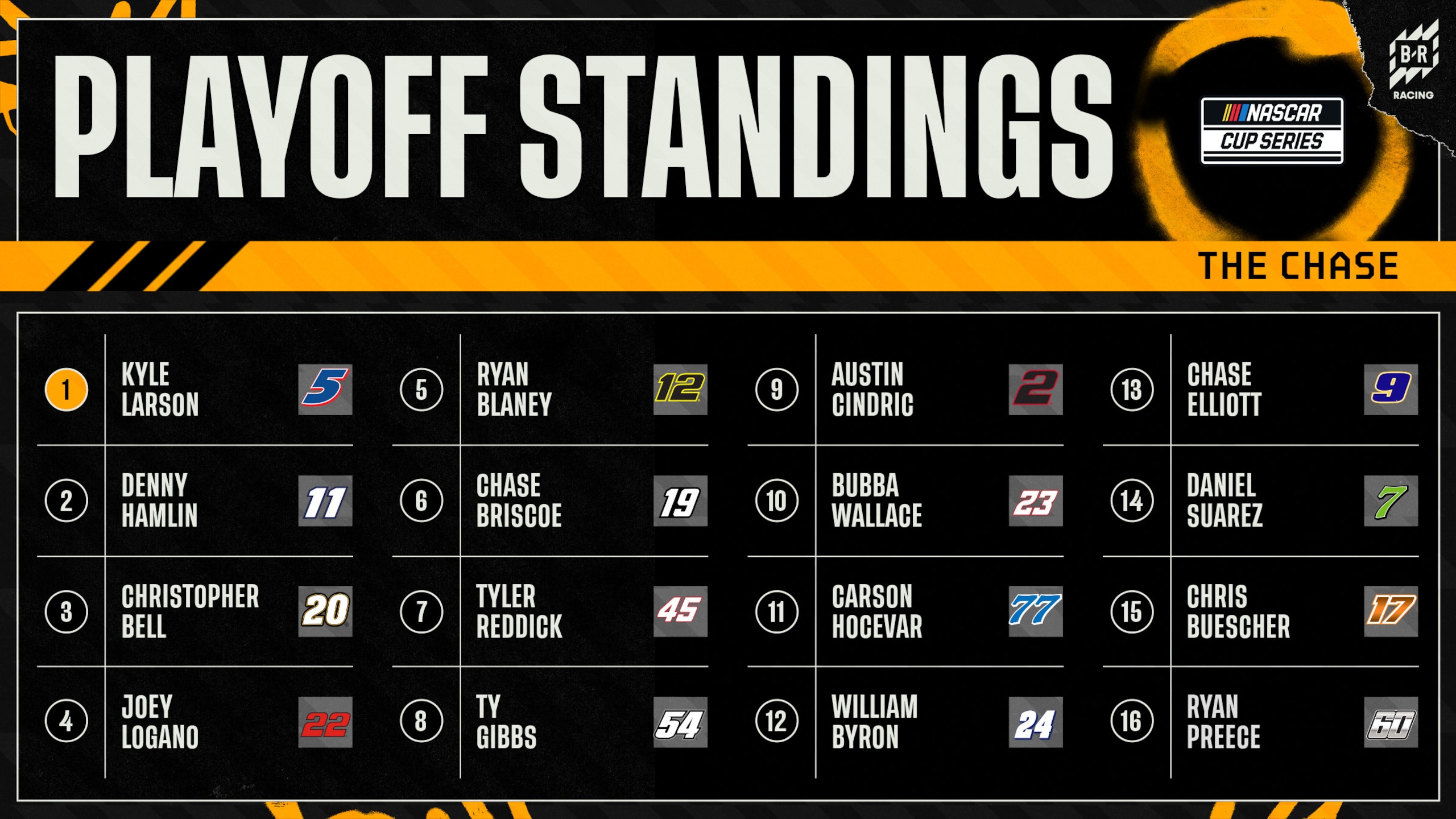
NASCAR Cup Playoffs Standings

New NFL contenders starting to emerge after Week 4
.jpg?w=2560 "Cardinals Giants Football")
NFL investigating 2 referees for separate viral exchanges
During my early years on the bench, pit road did not have a speed limit. Cars could enter and exit pit road as fast as they wanted.
As racing speeds became faster and faster, so did speeds on pit road. A few minor mishaps over the years didn't seem to make a difference.
Being a pit crew member was an understood danger in racing.
That all changed at Atlanta Motor Speedway in 1990.
Pit crews could control what they did to a car, and where they did it at. What they could not control were the other cars on pit road.
During the race, Bill Elliott come in for service. At the same time, Ricky Rudd lost control of his car and struck and killed Mike Rich, the right rear tire changer for Elliott.
It was a dark day for racing.
In 1991 a new rule was put into effect. A pit road speed limit.
This speed limit would vary slightly from track to track, depending on size, and would be mandated by NASCAR before each race.
At the start of the race, during the pace laps, the pace car would drive down pit road, at the mandated speed limit, giving each driver as much information as possible so they would know exactly how fast to travel while on the pit road.
Most teams would use a combination of gear position and tachometer reading to achieve this.
On the NASCAR side, an official was positioned on the pit lane with a stop watch and spread sheet.
Calculating the distance from the pit road entrance to the drivers pit box, and the time it took to arrive, the official could then determine if a speeding penalty was warranted.
When a driver exited pit road, the same combination of information, the distance from pit box to the end of pit road and the amount of time used to arrive, again, would determine if a speeding penalty was in the drivers future.
Now it's hard to watch every driver, and there were times the official may have been slightly off in his calculations.
The invention of the radar gun greatly improved accuracy of speeding penalties.
An official stood at each end of pit road with a radar gun, and checked a driver entering or exiting pit road.
This method, at first, actually increased the number of pit road speeding violations.
Now we come to our current, and most sophisticated method of checking speed on pit road.
At each race NASCAR issues a transponder to every car. This transponder has a digital signature unique to the car it is issued to.
Located around the track and on pit road are embedded sensors, called "scoring loops."
Talladega Superspeedway has 19 scoring loops around the racing surface, and another 20 on pit road—the most loops of any NASCAR track.
Each racing surface might have a different amount of scoring loops, depending on size of track, but most all of pit roads have the same amount, and are completely separate from the scoring loops in the racing surface.
Scoring loops are tied into the caution lights. If a caution is called, the second the lights are lit, all the scoring loops are frozen. They are then reviewed to see where each driver is on the track, and how they line up behind the pace car.
If a driver is caught "between loops," the last loop with information is used to determine his or her position on the race track.
Engine rpm's, breaking, speed, g-force, and a host of other data are is transmitted to NASCAR officials in real time via scoring loops. No, this information is not provided to the teams—unless requested—after the race.
Television outlets such as Fox Sports and NBC can also use this real time telemetry during broadcast to enhance the viewing of NASCAR fans.
Now, let's return to Mr. Busch.
You were charged with speeding while exiting pit road.
In your defense, you stated it was only five one hundredths of a second too fast. A nano second slice of time to incur such a costly penalty.
Mr. Busch, NASCAR does allow a tolerance of five MPH above the mandated speed limit.
Pit road speed at Phoenix was 35 MPH Mr. Busch, you were caught going in excess of 40 MPH, a huge advantage when split seconds can be the difference between winning and losing a race.
Mr. Busch, please rise. Given the facts presented in this case, how do you wish to plead?
"Guilty" your honor.
Source: NASCAR

.jpg?w=2560 "Hill Injury Update Football")
.jpg?w=2560 "OBJ Calls Out Giants 😳")
.jpg?w=2560 "Tyreek makes another cryptic post amid Chiefs rumors")