NCAA Brackets 2013: Every Seed's Most Likely Final Four Participant
The 2013 NCAA Tournament is less than 48 hours from commencing. Not only have we seen brackets take shape, but we've seen papers crumble and the world uncertain as to what will transpire.
In order to understand what could all go down, we must answer one very important question: Which team from every seed could win the Final Four?
History tells us that certain seeds will stand no chance at making a run to Atlanta. With that being said, we cannot discount any possibilities as we approach the craziest time of the year.
So which teams are most likely to bring the Madness?
No. 16 Southern University Jaguars, West Region
1 of 16W-L Record: 23-9, 15-3 SWAC
RPI: 182
SOS: 346
If we're to bet against any No. 1 seed, it's likely to be the team coming out of a mid-major conference. In this case, it's the Gonzaga Bulldogs of the WCC.
Who better to take them down than the 23-9 Southern University Jaguars?
Southern University is led by Malcolm Miller and Derick Beltran. Miller is a 6'6" guard that shoots at a 46 percent clip from beyond the arc and averages 15.8 points and six rebounds per game.
Beltran is a 6'4" guard that averages 15.9 points per contest and shoots a hair under 80 percent from the free-throw line.
If there is one thing that Gonzaga struggles against, it's big guards. Miller and Beltran fit that bill, which makes them the most likely No. 16 seed to pull off an upset—even if it is a slim chance, at best.
Considering you need to win one game in order to make the Final Four, we'll go with the most likely of the unlikely upsets.
No. 15 Florida Gulf Coast Eagles, South Region
2 of 16Overall Record: 24-10, 13-5 A-Sun
RPI: 96
SOS: 225
The Georgetown Hoyas are a growing favorite to make a run to the Final Four. They're led by Wooden Award finalist Otto Porter and have developed into one of the most complete teams in the nation.
If any No. 15 seed is going to pull off a legendary upset and make a run, however, it's Georgetown's opponent—Florida Gulf Coast.
The Eagles have already pulled off an upset this season, defeating Miami (FL) by a score of 63-51. They also have experience playing against Duke, VCU and Iowa State.
It may be unlikely, but this is March Madness—anything can happen.
FGC is led by A-Sun Player of the Year Sherwood Brown. They also have the A-Sun Defensive Player of the Year in Bernard Thompson.
If any No. 15 seed is going to pull off a shocker, it's Florida Gulf Coast and their talented roster.
No. 14 Davidson Wildcats, East Region
3 of 16W-L Record: 26-7, 17-1 Southern
RPI: 62
SOS: 203
If there is one thing that the Marquette Golden Eagles can't do, it's shoot the basketball. In fact, they're converting just 30.1 percent from beyond the arc.
That's music to Davidson's ears.
The Wildcats may not have Stephen Curry, but they can shoot the lights out. Five different players are shooting at least 37 percent from beyond the arc and two are hitting 40-plus percent.
One of their worst three-point shooters is De'Mon Brooks—their star.
Brooks is a physical player that can pound it inside with his back to the basket or attack off of the dribble. One way or another he's going to make his way to the rim and finish in traffic.
In other words, Davidson is going to score—can Marquette keep up?
If any No. 14 seed is going to do the improbable, it's Davidson. They have an ideal matchup in the Round of 64 and possess the veterans and three-point shooters to make a deep run.
If any No. 14 can, Davidson can.
.jpg?w=2560 "Kriisa Fraud Conviction")
No. 13 South Dakota State Jackrabbits, South Region
4 of 16W-L Record: 25-9, 13-3 Summit
RPI: 63
SOS: 202
If there's anything we've learned about the NCAA Tournament, it's that superstars can carry their teams to victory. In the case of South Dakota State, they just so happen to have a superstar point guard.
Nate Wolters.
Wolters is an elite scorer, an exquisite facilitator and one of the most dynamic all-around play makers in the country. Like it or not, that alone could be enough for the Jackrabbits to pull off the upset against the Michigan Wolverines.
If Wolters isn't enough, that's perfectly fine—the Jackrabbits will still shoot the lights out.
As a team, S.D. State is shooting 39.4 percent from beyond the arc. Four of their players have made at least 48 three-point field goals on the season.
Chad White and Jordan Dykstra—a 6'8" power forward—are both converting better than 43 percent from beyond the arc.
No. 12 Ole Miss Rebels, West Region
5 of 16W-L Record: 26-8, 12-6 SEC
RPI: 48
SOS: 136
You could make the case that the Ole Miss Rebels are not the best No. 12 seed in the NCAA Tournament. With that being said, they certainly have the most manageable road to the Final Four.
The reigning SEC tournament champions just so happen to have the star to get them there.
It won't be easy for Ole Miss, as they open up against the likes of Wisconsin and Kansas State. With that being said, that appears to be more favorable than facing a team such as Michigan, Syracuse or Saint Louis in the Round of 32.
Ole Miss can win both games.
Marshall Henderson is one of the most prolific scorers in the nation at 20.1 points per game. More importantly, he's a star when it comes to clutch situations.
It won't be easy, but Ole Miss appears to be the most capable No. 12 seed of making a run to the Final Four.
No. 11 Minnesota Golden Gophers, South Region
6 of 16W-L Record: 20-12, 8-10 Big Ten
RPI: 33
SOS: 3
The Minnesota Golden Gophers stumbled into the NCAA Tournament. With that being said, there should be no question that they have the quality team and bracket to get the job done.
It all starts with facing a UCLA squad that will be sans second-leading scorer Jordan Adams.
For the season, Minnesota has defeated Indiana, Michigan State, Wisconsin, Memphis and Illinois. That's about as impressive a resume as you'll find at any seed, let alone No. 11.
As long as the Golden Gophers get their heads on right and play with the sense of urgency that they displayed earlier this season, their dreams of reaching the Final Four are rather realistic.
Florida, their potential Round of 32 opponent, has displayed more ways to defeat themselves than any other power in the nation. Although a superior team to Minnesota, the Gophers have the interior presence to make noise.
From there, it's just a matter of answering one question: Can you keep this team off of the glass? Most will be unable to.
No. 10 Cincinnati Bearcats, Midwest Region
7 of 16W-L Record: 22-11, 9-9 Big East
RPI: 50
SOS: 24
The Cincinnati Bearcats are one of the worst offensive teams in the nation. They convert just 40.2 percent of their field goals and have seen Sean Kilpatrick's efficient scoring disappear, as he's become a volume shooter.
With that being said, the Bearcats are a dominant defensive unit that control the boards. That is a significant portion of the recipe for success in the NCAA Tournament.
If they can heat up from three, which their talent permits, Cincy could be a tough out.
The Bearcats own victories over five tournament participants. That includes Oregon, Iowa State, Pittsburgh, Villanova and Marquette.
If Kilpatrick and Cashmere Wright can get hot in the tournament, they'll add a few more names to that resume.
No. 9 Temple Owls, East Region
8 of 16W-L Record: 23-9, 11-5 A-10
RPI: 41
SOS: 63
The Temple Owls are a team with the upside to go far in the NCAA Tournament. They also have the draw to lose during the Round of 64.
When it comes to No. 9 seeds, however, no team has quite as strong of a chance to make the Final Four.
Temple is led by Atlantic 10 Player of the Year Khalif Wyatt. Wyatt is averaging 19.8 points and 4.1 assists per game, which are not numbers formed by playing weak competition.
Wyatt dropped 33 on Syracuse, 26 at Kansas, 24 against Saint Louis and 30 against VCU.
It won't be easy for Temple, as they have drawn North Carolina State during the Round of 64. Next up could be a matchup against Indiana.
With Wyatt leading a ball-hawking Owls team, Temple has a real chance at pulling off some upsets—more so than any other No. 9 seed.
No. 8 Pittsburgh Panthers, West Region
9 of 16W-L Record: 24-8, 12-6 Big East
RPI: 43
SOS: 82
The Pittsburgh Panthers are one of the best defensive teams in the nation. They're sixth in scoring defense, eighth in rebounding and hold opponents to 39.3 percent shooting from the floor.
If you don't think they can make it past Gonzaga in the Round of 32 and make a run to the Final Four, you've got another thing coming to you.
Pittsburgh struggles offensively, but they have a big-time finisher in point guard Tray Woodall. They're also one of the most balanced teams in the NBA, with a legitimate low-high attack.
Center Steven Adams is a major reason why they're such a threat to teams like Gonzaga.
Adams is averaging 7.0 points, 6.2 rebounds and 2.0 blocks in 23.3 minutes per game. With an increase in minutes, his production and quality of play will follow.
Pittsburgh is a legitimate threat to make the Final Four.
No. 7 Notre Dame Fighting Irish, West Region
10 of 16W-L Record: 25-9, 11-7 Big East
RPI: 36
SOS: 62
Notre Dame has a tough schedule early on, having to face a high-powered Iowa State offense in the Round of 64 and potentially the Ohio State Buckeyes in the Round of 32. With that being said, there's no reason the Fighting Irish can't win.
Especially not if they get past the Round of 32.
Notre Dame moves the ball as well as any team in the nation, ranking sixth in assists. This enables the Irish to pound it down low with Jack Cooley or drain it from three, where they convert 37.3 percent.
With six players averaging at least 7.1 points per game, the Irish could make a powerful statement come the NCAA Tournament. With an experience-laden roster, they could go as far as the Final Four.
Don't count out this Big East power.
No. 6 Butler Bulldogs, East Region
11 of 16W-L Record: 26-8, 11-5 A-10
RPI: 20
SOS: 31
They may not have the easiest draw, but is anyone actually writing the Butler Bulldogs off as a team that cannot make the Final Four? If you are, clearly you've already forgotten the magic head coach Brad Stevens worked in 2010 and 2011.
You've also missed out on how well Butler has played in 2012-13.
The Bulldogs own victories over Gonzaga, Indiana, Marquette, North Carolina, Temple and La Salle. They defeated the Zags without star guard Rotnei Clarke.
The same Clarke who has proven to be one of the most clutch performers in the NCAA.
No. 5 Wisconsin Badgers, West Region
12 of 16W-L Record: 23-11, 12-6 Big Ten
RPI: 31
SOS: 13
The Wisconsin Badgers are one of the most dominant defensive units in the nation. They rank 10th in scoring defense, 11th in three-point field goal percentage and hold opponents to 39.8 percent shooting from the floor.
They're also battle tested after working their way through the Big Ten.
The Badgers own two victories over Indiana and one over both Ohio State and Michigan. In other words, they can take on the elite and emerge victorious when it's a one-time deal.
A major reason why is the clutch heroics of guard Ben Brust.
When he's not hitting halfcourt buzzer-beaters, Brust is leading a defense that smothers opponents along the perimeter. That's how they thrive on offense, as they turn turnovers into points.
This is the type of team that could run through the tournament—more specifically, they are more than capable of beating No. 1 Gonzaga.
No. 4 Michigan Wolverines, South Region
13 of 16W-L Record: 26-7, 12-6 Big Ten
RPI: 17
SOS: 68
The Michigan Wolverines are one of the most intriguing teams in the nation. Had they defeated the Indiana Hoosiers during their season finale, they would have won the regular season Big Ten Title.
In turn, they would have been in the running for a No. 1 seed in the NCAA Tournament.
Instead, they lost that game and ended up being seeded fifth in the Big Ten tournament. After working the difficult path to a quarterfinals loss against Wisconsin, the Wolverines fell down tournament boards.
Now, they're one of the most dangerous No. 4 seeds you'll ever come across.
Michigan is led by Big Ten Player of the Year and Wooden award finalist Trey Burke. They also have veteran leadership with Tim Hardaway Jr. and powerful freshmen in Nik Stauskas and Mitch McGary.
If Burke heats up, Michigan can take down any opponent—including No. 1 Kansas.
No. 3 Michigan State Spartans, Midwest Region
14 of 16W-L Record: 25-8, 13-5 Big Ten
RPI: 8
SOS: 4
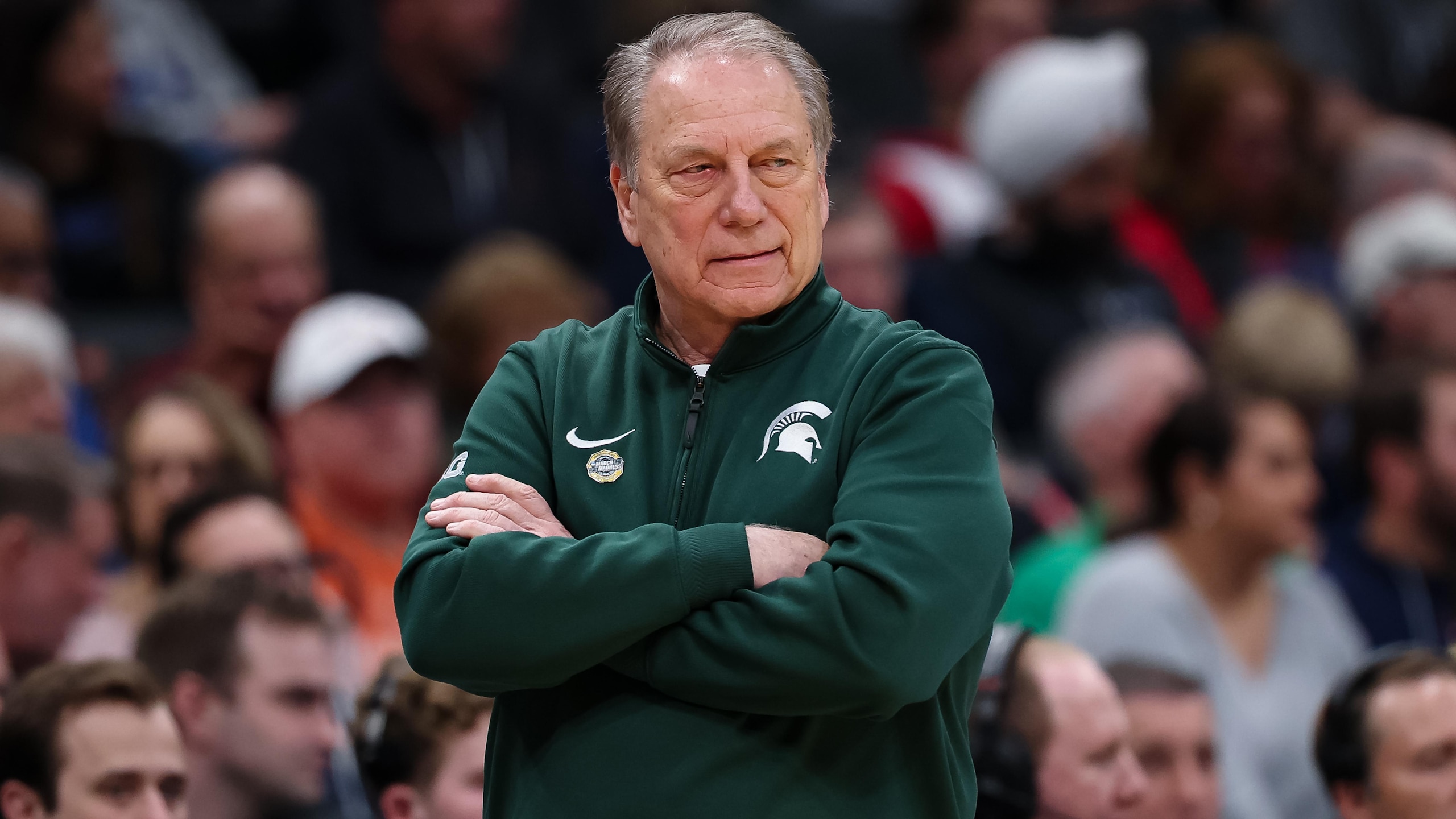
Michigan State has quietly become one of the most powerful teams in the nation. They've been consistently ranked within the Top 10 and are now the most likely No. 3 seed to make a run to the Final Four.
Head coach Tom Izzo is the reason why.
The Spartans made the Sweet Sixteen in 2012 and the Final Four in both 2009 and 2010. While this Michigan State team lacks a star, they've come together as a unit to make a significant impact on the Big Ten.
They've done so with quality defense, impressive work on the glass and opportunistic scoring from rising stars such as Adreian Payne and Gary Harris.
Harris is a star in the making, evidenced by his winning the Big Ten Freshman of the Year award. Payne, meanwhile, is a 6'10" bruising athlete with the range to step outside and knock down a three.
As long as Keith Appling comes to play, the Spartans may very well make a trip to the Final Four.
No. 2 Ohio State Buckeyes, West Region
15 of 16W-L Record: 26-7, 13-5 Big Ten
RPI: 11
SOS: 15
You could make a case that the Georgetown Hoyas are the best No. 2 seed in the NCAA Tournament. With that being said, the most manageable path for any No. 2 is in the West Region.
The bracket in which Big Ten conference tournament champion Ohio State resides.
You could make the case that OSU is the best team in their region. No. 1 Gonzaga and No. 3 New Mexico are both high-quality opponents, but neither come from a conference as decorated as the Big Ten.
Furthermore, neither of those teams are returning a roster that went to the Final Four in 2012.
Point guard Aaron Craft is one of the best defenders in the nation, while Shannon Scott has emerged as a high-quality defender in his own right. Lenzelle Smith Jr. is beginning to display those same traits.
With scoring machine Deshaun Thomas providing the offense and Sam Thompson heating up from three, OSU will be a tough out—one that should be able to make a run to the Final Four.
No. 1 Louisville Cardinals, Midwest Region
16 of 16W-L Record: 29-5, 14-4 Big East
RPI: 3
SOS: 6
The Midwest Region is filled with a significant amount of capable teams. The fact of the matter is, no team in the Midwest compares to the Louisville Cardinals.
The Duke Blue Devils and Michigan State Spartans are elite, but MSU lacks a go-to scorer and Duke doesn't play the quality defense to match Louisville. Saint Louis does match Louisville's defense, but they lack the offensive prowess to overcome the Cardinals.
This is all paper speculation, of course, but if things play out as the numbers suggest, Louisville should make their second consecutive Final Four appearance.
The Cardinals smother opponents on defense, pressing them from the inbound pass on. That's a major reason why they're holding the opposition to 58 points per game while playing the sixth toughest schedule.
Plain and simple, you're not going to score on Louisville—no matter who you are.