
Power Ranking the World's Top 10 National Rosters If MMA Became an Olympic Sport
The MMA world was frustrated earlier this week when the Olympics made a tough decision that may have a dramatic effect on the future of our beloved sport. The IOC's executive board voted Tuesday to remove wrestling from the Olympic games.
Although wrestling and mixed martial arts are not exactly equivalent, most experts would tell you that wrestling, which many start at a very young age, is unquestionably the best base for an aspiring MMA fighter.
Fighters such as Daniel Cormier, Mark Coleman and Ben Askren have all come to the defense of wrestling, hoping that their status as stars in the MMA world, as well as their history as high-profile wrestlers, would help shine light on the situation. Although the decision has been made, they are hoping that it still may be reconsidered.
The future might look bleak for wrestling in the Olympics, but while some are dwelling on the IOC's ruling, others see the bright side.
UFC President Dana White noted that while he is frustrated to see wrestling removed, it might actually lead to an interesting outcome.
“There's been a lot of people saying (to me) you gotta do something. But what this could be is the evolution of mixed martial arts becoming an Olympic sport,” White told Yahoo sports. “We bring spectators, eyeballs, whether it's on TV or whatever it is. This sport draws, wrestling doesn't.”
So what if MMA did become an Olympic sport? Which countries would benefit? What nation would have the best team?
We can only speculate on what the rules and weight classes would be and things could change dramatically between now and when MMA would be added, but here are the top 10 countries that could put together an MMA team for the Olympics if it were to happen today.
10. Sweden
1 of 10Men’s 125 lb
(none)
Men’s 135 lb
Sirwan Kakai
Men’s 145 lb
Niklas Backstrom
Men’s 155 lb
Reza Madadi
Men’s 170 lb
Assan Njie
Men’s 185 lb
Tor Troeng
Men’s 205 lb
Alexander Gustafsson
Men’s Heavyweight
Jorgen Kruth
Women’s 115 lb (and below)
Gabriella Lakoczky
Women’s 125 lb
(none)
Women’s 135 lb
(none)
Women’s 145 lb
Elina Nilsson
Biggest strength: One of the top 205-pounders in the world, Alexander Gustafsson is still very young and has plenty of room to grow in his overall fight game. His age is also a positive for Sweden as at 26 years old, he could realistically still be representing his team even if MMA wasn't added until 2020.
Biggest weakness: Like many countries, Sweden hasn't exactly embraced female mixed martial arts quite yet. There just aren't many top female fighters to choose from and it's unlikely that any of them would be in serious contention for a medal.
9. Poland
2 of 10Men’s 125 lb
(none)
Men’s 135 lb
Tymoteusz Swiatek
Men’s 145 lb
Krzysztof Klaczek
Men’s 155 lb
Marcin Held
Men’s 170 lb
Aslambek Saidov
Men’s 185 lb
Mamed Khalidov
Men’s 205 lb
Jan Blachowicz
Men’s Heavyweight
Damian Grabowski
Women’s 115 lb (and below)
Paulina Bońkowska
Women’s 125 lb
Karolina Kowalkiewicz
Women’s 135 lb
(none)
Women’s 145 lb
(none)
Biggest strength: Because he hasn't competed in the UFC, Mamed Khalidov doesn't have the name recognition that some of the others on this list do, but his dominance in the 185-pound division has been impressive nevertheless. He is currently on a six-fight win streak that includes numerous UFC veterans.
Adding to that impressive 185-pound stable is Michal Materia, another borderline top-25 middleweight who could easily step in for Khalidov and do a great job representing his country if need be.
Biggest weakness: Another victim of a limited history of female MMA within their country, Poland doesn't exactly have much depth within the women's divisions and may have trouble qualifying anyone in numerous divisions.
In addition, Poland would struggle to qualify fighters at the smaller weight classes on the men's side. Not until they reach the middleweight division does Poland really have much promise. However at that point, they have a very serious possibility of medaling at both 185 and 205 pounds.
8. France
3 of 10Men’s 125 lb
(none)
Men’s 135 lb
(none)
Men’s 145 lb
Oliver Pastor
Men’s 155 lb
Gor Harutunian
Men’s 170 lb
Karl Amoussou
Men’s 185 lb
Francis Carmont
Men’s 205 lb
Moise Rimbon
Men’s Heavyweight
Cheick Kongo
Women’s 115 lb (and below)
(none)
Women’s 125 lb
(none)
Women’s 135 lb
(none)
Women’s 145 lb
Romy Ruyssen
Biggest strength: One of the scariest-looking individuals in the sport, Cheick Kongo has remained one of the top heavyweight fighters in the sport for years. His dangerous striking and strength have put down many top fighters. He would likely be the top-ranked French fighter coming into the Olympics.
France is also strong in the 205-pound, 185-pound and 170-pound men's divisions and could enter a few dark horse medal candidates.
Biggest weakness: With MMA still somewhat slow in growth in the area, it should come as no surprise that the smaller men's divisions and most of the women's divisions would likely be without French representation.
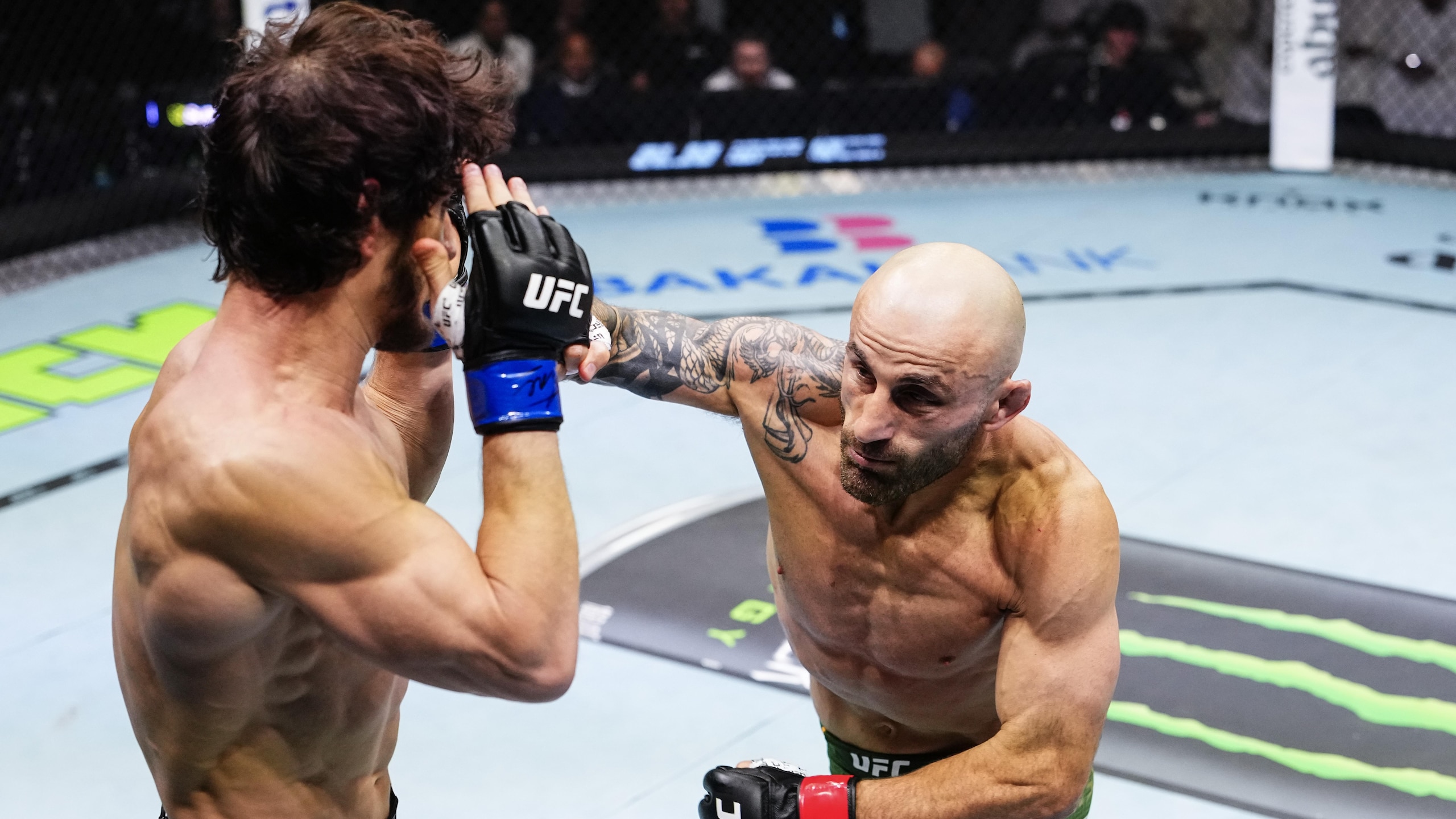

7. Australia
4 of 10Men’s 125 lb
Shabe Kafo
Men’s 135 lb
Gustavo Falciroli
Men’s 145 lb
Rob Lisita
Men’s 155 lb
George Sotiropoulos
Men’s 170 lb
Kyle Noke
Men’s 185 lb
Dylan Andrews
Men’s 205 lb
James Te Huna
Men’s Heavyweight
Peter Graham
Women’s 115 lb (and below)
Alex Chambers
Women’s 125 lb
(none)
Women’s 135 lb
(none)
Women’s 145 lb
Fiona Muxlow
Biggest strength: UFC light heavyweight James Te Huna has gone 4-1 in his UFC career thus far, with three brutal knockout wins. He'll have a tough competition upgrade if competing in the Olympics, but he does have the power to knock out just about anyone.
Biggest weakness: Once considered one of the top up-and-comers in the entire sport, George Sotiropoulos has fallen upon tough times in recent years. He has lost three straight fights in the Octagon and would need a serious career resurgence in order to be a serious contender for a medal at 155 pounds.
6. United Kingdom
5 of 10Men’s 125 lb
Phil Harris
Men’s 135 lb
Brad Pickett
Men’s 145 lb
Ronnie Mann
Men’s 155 lb
Ross Pearson
Men’s 170 lb
Paul Daley
Men’s 185 lb
Michael Bisping
Men’s 205 lb
Jimi Manuwa
Men’s Heavyweight
James Thompson
Women’s 115 lb (and below)
(none)
Women’s 125 lb
Rosi Sexton
Women’s 135 lb
(none)
Women’s 145 lb
(none)
Biggest strength: Having Michael Bisping on the roster gives the Brits a very good chance at a medal, but their best opportunity might actually be in the women's division in the form of 125-pound sensation Rosi Sexton. Sexton is 13-2 in her MMA career and has won eight of her past nine contests. Given that she is in a relatively thin 125-pound women's division, she could truly be a contender to win it all in the Olympics.
Biggest weakness: James Thompson has won some fights against jokes like Bobby Lashley, Bob Sapp and Mariusz Pudzianowski, but most fans likely remember him most as the guy who got his ear nearly knocked off by Kimbo Slice in EliteXC. At one point from 2007 to 2010, Thompson lost eight of nine fights and most believed he should be headed for retirement.
5. Russia
6 of 10Men’s 125 lb
Ali Bagautinov
Men’s 135 lb
Azamat Gashimov
Men’s 145 lb
Shahbulat Shamhalaev
Men’s 155 lb
Khabib Nurmagomedov
Men’s 170 lb
Andrey Koreshkov
Men’s 185 lb
Alexander Shlemenko
Men’s 205 lb
Mikhail Zayats
Men’s Heavyweight
Alexander Volkov
Women’s 115 lb (and below)
(none)
Women’s 125 lb
(none)
Women’s 135 lb
(none)
Women’s 145 lb
Milana Dudieva
Biggest strength: Despite the retirement of the legendary Fedor Emelianenko, MMA continues to grow in Russia and might be nearing its peak right now.
With borderline top-25 fighters in the 125-pound, 145-pound, 155-pound, 170-pound, 185-pound, 205-pound and heavyweight men's divisions, it's difficult to pick one "strength." The one who does stand out, however, is lightweight Khabib Nurmagomedov. At 19-0, Nurmagomedov is an absolute beast who has already gone 3-0 in the UFC and recently called out Nate Diaz.
Biggest weakness: Despite having some high-end top talent, the Russians would struggle to fill out the bantamweight division on the men's side as well as several women's divisions. Yes, Azamat Gashimov is in the UFC, but he didn't look good in his first Octagon appearance and would be a long shot to make the cut to even compete in the Olympics.
4. Canada
7 of 10Men’s 125 lb
(none)
Men’s 135 lb
Josh Hill
Men’s 145 lb
Antonio Carvalho
Men’s 155 lb
T.J. Grant
Men’s 170 lb
Georges St-Pierre
Men’s 185 lb
Nick Ring
Men’s 205 lb
Ryan Jimmo
Men’s Heavyweight
Mike Hackert
Women’s 115 lb (and below)
(none)
Women’s 125 lb
(none)
Women’s 135 lb
Sarah Kaufman
Women’s 145 lb
Julia Budd
Biggest strength: This one should be pretty obvious. As the No. 1 welterweight fighter in the history of the sport, Georges St-Pierre is the clear-cut favorite to walk out of an Olympic setting as a gold medalist. Even after his ACL surgery, GSP has reasserted his dominance on the world of MMA.
Canada also houses two top-five women's fighters in Sarah Kaufman and Julia Budd, who would both be favorites to medal. Also T.J. Grant could be a dark horse in a crowded 155-pound men's division.
Biggest weakness: 24-year-old heavyweight Mike Hackert still has a lot of room to grow, but for now, would likely be the weakest spot on a very good Canadian team.
3. Japan
8 of 10Men’s 125 lb
Yasuhiro Urishitani
Men’s 135 lb
Takeya Mizugaki
Men’s 145 lb
Tatsuya Kawajiri
Men’s 155 lb
Shinya Aoki
Men’s 170 lb
Kazuo Misaki (if convinced out of retirement)
Men’s 185 lb
Yushin Okami
Men’s 205 lb
Tatsuya Mizuno
Men’s Heavyweight
Satoshi Ishii
Women’s 115 lb (and below)
Ayaka Hamasaki
Women’s 125 lb
Takayo Hashi
Women’s 135 lb
Rin Nakai
Women’s 145 lb
Hiroko Yamanaka
Biggest strength: Because of the history of martial arts in the area, Japan would have little trouble qualifying a fighter in just about every weight class, including the ladies.
The Japanese would have numerous potential medalists, but the most likely would probably be consensus top-three women's 115-pounder Ayaka Hamasaki. She is undefeated at 9-0 and would be competing in what is probably the weakest division in the sport.
Biggest weakness: Tatsuya Mizuno could possibly qualify for the Olympics, but his chances of beating the top-level light heavyweight opponents from other countries don't appear to be very good on the surface.
2. Brazil
9 of 10Men’s 125 lb
Jussier da Silva
Men’s 135 lb
Renan Barao
Men’s 145 lb
Jose Aldo
Men’s 155 lb
Rafael dos Anjos
Men’s 170 lb
Demian Maia
Men’s 185 lb
Anderson Silva
Men’s 205 lb
Lyoto Machida
Men’s Heavyweight
Junior dos Santos
Women’s 115 lb (and below)
(none)
Women’s 125 lb
Vanessa Porto
Women’s 135 lb
Amanda Nunes
Women’s 145 lb
Cristiane “Cyborg” Santos
Biggest strength: Many would argue that Brazil should be ranked No. 1 on this list and it's hard to really debate that. Home of the UFC 185-pound, 135-pound and 145-pound champions, Brazil could potentially bring home gold medals in just about every single division they'd enter a fighter in, particularly on the men's side.
In addition, Cristiane "Cyborg" Santos would be a massive favorite in the women's 145-pound division.
Biggest weakness: It's hard to find a weak spot on this team, but the smaller women's weight classes would be tough for the Brazilians as well as the men's 125-pound division. Even still, though, it wouldn't be impossible for the Brazilians to medal in those divisions.
1. United States
10 of 10Men’s 125 lb
Demetrious Johnson
Men’s 135 lb
Dominick Cruz
Men’s 145 lb
Frankie Edgar
Men’s 155 lb
Benson Henderson
Men’s 170 lb
Johny Hendricks
Men’s 185 lb
Chris Weidman
Men’s 205 lb
Jon Jones
Men’s Heavyweight
Cain Velasquez
Women’s 115 lb (and below)
Jessica Penne
Women’s 125 lb
Jessica Eye
Women’s 135 lb
Ronda Rousey
Women’s 145 lb
Elaina Maxwell
Biggest strength: The United States houses world champions in the men's heavyweight, light heavyweight, lightweight, bantamweight and flyweight divsions. The Americans also practically sweep the women's divisions, with numerous top-five fighters in every weight class.
The most dominant divisions for the Americans would likely be the women's 135-pound, women's 115-pound, men's 205-pound and men's 155-pound divisions where they would be strong favorites to bring home the gold.
UFC women's 135-pound champion Ronda Rousey already has Olympic experience from her Judo days, which would only serve to increase her likelihood of being the first woman to medal in both Judo and MMA.
Biggest weakness: The depth of the United States' MMA stable would be nothing short of incredible. There is literally not a division that the is not represented by an American in the top three.
Because of their dominance, the "weak" spots for the Americans would simply be divisions that they're not the favorites to win a gold medal in. The least likely divisions for an American gold medal are probably the men's 145-pound, men's 185-pound and women's 145-pound divisions.
Even in those divisions, however, it would be surprising to not see the American representative finish with or near a medal.

.jpg?w=2560 "LA Premiere of \"Chad Powers\"")


.jpg?w=2560 "Landing Spots for Trade Candidates 📍")
.jpg?w=2560 "Ugly Jets Scoring Stat 😳")