10 Ways to Best Sell the NHL in America
The growth of the National Hockey League has been dramatic in the last 50 years.
Prior to 1967, the sport was basically seen as something of a private club, played in four U.S. cities and Canada. If you lived outside New York, Boston, Chicago or Detroit, chances are you didn't care about professional hockey and if you did, information was not readily available.
But after the NHL expanded in 1967-68 and a competitive new league called the World Hockey Association began play in 1972-73, professional hockey has gone into a form of hyper growth. There are now 30 NHL teams, and teams compete in non-traditional markets like Phoenix, Miami and Tampa Bay.
Yet there is much work to be done with the sport. The NHL stands fourth among the four major professional leagues (behind the NFL, MLB and NBA) in the United States, and while there have been moments where elite-level hockey has captured the public imagination, it often remains in the basement when it comes to media coverage.
A January, 2012 Harris Poll listed hockey as the sixth-most popular sport in the United States, behind college football and auto racing, as well as the three other sports listed.
The sport deserves much better. Hockey fans, players and coaches are a passionate breed and they would love to see their sport raise its status.
Here are 10 ways to best sell the NHL in America.
Embrace the Olympics
1 of 10The legendary triumph by the U.S. hockey team over the Soviet Union in 1980 is undoubtedly the greatest moment in the sport's history and perhaps the most memorable American sporting moment.
The 2010 triumph by the Canadian Olympic hockey team over the U.S. hockey team was also quite memorable and featured brilliant competition.
Olympic hockey is good for the sport and the NHL and it should be embraced. As the NHL and its players' association work on a new collective bargaining agreement, NHL participation in the Olympics is up for debate. The Calgary Sun reports the NHL may use player participation in the Olympics as a bargaining chip in the talks.
That's a mistake. International competition in general, and Olympic hockey in particular, raises the profile of the sport and often gives it a huge popularity boost.
Get Rid of Fighting
2 of 10Fighting has got to go.
It does not do anything positive for the sport and it sends a horrible message to society in general and young hockey players in particular.
Nobody is going to say that when a hockey fight breaks out and two combatants go at each other with their fists in a one-on-one battle that it is not exciting. However, most people stop their school-yard fighting by the time they get out of sixth grade. It should not be tolerated or embraced in hockey.
Mature individuals don't settle their differences by engaging in a punch out.
It's not tolerated at the amateur levels of the sport and it should no longer have a spot in the NHL.
Diehards and traditionalists may attack the manhood of those that call for an end to fighting, but so be it. The practice is silly, stupid and barbaric.
We loved Stan Jonathan back in the day, but fighting is no longer relevant. It also allows the sport's critics the opportunity to ridicule it without apology.
Grow Up and Take the Blinders off
3 of 10The leadership of the NHL does not have to blindly defend its sport to every criticism.
In some cases, criticism in any industry is warranted and it can be helpful if it is examined and valid changes are implemented.
In hockey, the first reaction to criticism is to mount a strong defense and attack those who are criticizing the sport. That shows a lack of maturity from the sport's leadership all the way through the fans. If basketball fans criticize hockey for a lack of scoring or some other aspect, there is no reason for hockey fans to attack that sport.
Attacking the critics gives the sport a childish characteristic that will keep the sport buried in the popularity polls.
.jpg?w=2560 "Simon Edvisson Landing Spots")
Consistent Discipline
4 of 10The NHL is properly concerned about the health of its players. The league is particularly worried about the damage done by head shots and concussive hits to the upper body.
Brendan Shanahan is the NHL's chief of supplemental discipline. He took over that position from Colin Campbell. Shanahan has to issue discipline (suspensions) to players who violate the rules and put themselves or other players at risks with their play.
Shanahan's job is to protect players from each other and to do his job well; he must be strong and consistent. One of the criticisms the NHL has faced is that Player A may get a two-game suspension for an elbow to the head while player B may get a 10-game suspension for the same blow.
Shanahan has attempted to do a fair job in assessing and then explaining penalties. However, he still has a long way to go before the consistency factor is met. He appears to be on the right track, but he must continue to assess illegal hits without prejudice.
Add Camera Angles
5 of 10Hockey has not usually enjoyed much success in its television ratings in the United States. Many of the criticisms of the sport were specious and lacked merit. Some did not.
One of the most valid criticisms was that it was tough for many fans to follow the action on the screen. However, the advent of high definition television provided a crisper and more defined video picture that allowed fans to follow the sport with greater ease. The Toronto Star predicted that more U.S. hockey fans would watch games on television than ever before.
Instead of the black puck looking like a piece of dirt moving along the ice, it looked like a puck. You could see the passes, shots and saves. Suddenly, average fans were getting the same thrills from watching the sport as diehards.
But it doesn't have to stop there. The picture may be clearer, but the camera angles remain the same. Add new cameras and give us angles that we don't usually see. Change the viewers' perspective to make the game even more thrilling.
Improve Media Relations
6 of 10The NHL has to improve its media relations.
Particularly, coaches have to meet the media, answer questions cordially and act in a professional manner.
This does not always happen. Coaches like John Tortorella of the New York Rangers often get fed up with the process of answering questions before and after games. In some cases, Tortorella has been known to ridicule the sporting media when he perceives a lack of knowledge about the sport.
Additionally, Tortorella has been known to take out his frustrations on the pen-and-mike club when his team has played poorly or the officials have had a rough night.
Tortorella is not alone. This type of attitude is unprofessional and socially inept. Hockey coaches need to bring their media-performance level up significantly.
Change the Playoff Set-Up
7 of 10The Stanley Cup playoffs are the NHL's shining jewel. The intensity of the best-of-7 series may exceed those seen in the NBA and Major League Baseball. The tension found in a sudden-death playoff game that extends to multiple overtimes often results in the most memorable moments in sports.
However, there is a certain sameness of the matchups in the playoffs that does not work in the NHL's favor. At the conclusion of the regular season, the top eight teams in the Eastern and Western Conferences are ranked based on their finish in the regular season. Division winners are the given the top three seeds and matchups are determined by No. 1 vs. No. 8, No. 2 vs. No. 7, No. 3 vs. No. 6 and No. 4 vs. No. 5.
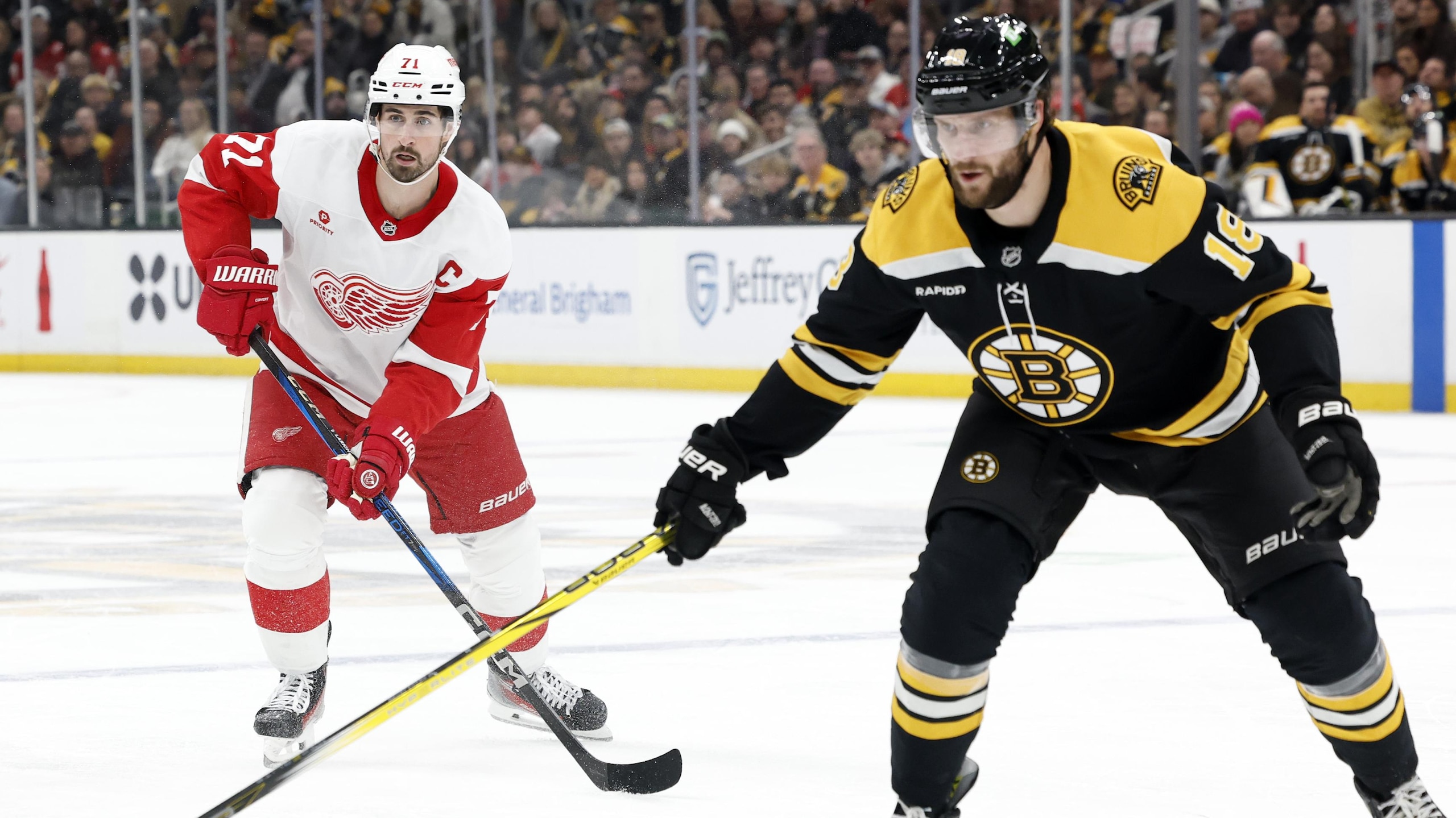
As a result, there are many matchups that tend to be repeated in many playoff seasons. That can lead to a degree of staleness in traditional matchups. It can be argued that the Boston Bruins and the Montreal Canadiens are the NHL's two greatest rivals. They have met in 33 playoff series, including nine straight series between 1984 and 1992. While there is a high degree of tension associated with the matchup, the sameness factor cannot be ignored.
It often means too much of a good thing. During the 1970s, the NHL seeded its postseason based on league-wide point totals and not conference rankings. It created quite a few new postseason matchups that have not been seen since.
For example, the Los Angeles Kings and Boston Bruins engaged in a seven-game series in 1976 and a six-game series in 1976. Both were thrilling and exciting. Boston emerged victorious in both series and those two teams have not had a chance to play in the postseason again.
Changing the playoff setup would bring more excitement to the playoffs and make traditional matchups even more meaningful.
Increase Non-Divisional Rivalries
8 of 10The NHL has done a good job of building divisional rivalries. The meetings between the Chicago Blackhawks and Detroit Red Wings are explosive. When the New York Rangers face off against the New Jersey Devils, fireworks almost always result (source: Sportsnet.Ca).
However, the NHL has ignored some of the great non-geographical rivalries that the game has known.
This has prevented teams from building or continuing a rivalry with opponents. The Detroit Red Wings and the Montreal Canadiens were the two dominant teams in the 1950s. They may meet one of two times per season in the current set-up. The Chicago Blackhawks and the Boston Bruins used to meet 14 times per season when the NHL was a six-team league. They often meet only one time per season.
The Philadelphia Flyers and St. Louis Blues were expansion brethren in 1967-68. They now meet infrequently. The same holds for the Pittsburgh Penguins and Los Angeles Kings.
The NHL should do more to build up the rivalries between non-traditional opponents.
Bring Back the Heroes
9 of 10The speed and excitement of the sport has helped the NHL thrive and grow. However, it's not just today's players that make the game the spectacle it has become.
The NHL has achieved success because of all the great work done by those that have come before the current group of players. Those players should be honored with frequency.
Hall of Fame players like Wayne Gretzky, Bobby Orr, Mario Lemieux and Gordie Howe are on the sport's Mount Rushmore and are mentioned frequently. However, there were many other great players who deserve to be brought back by their old teams and honored.
Fans love and remember their old heroes and they want to see stars Mark Messier, Eddie Giacomin, Brad Park, Darryl Sittler and Marcel Dionne. Bring them back, let them put on their old "sweaters" and allow the fans to cheer them on a regular basis.
Wait on Winter Classic
10 of 10In early February, the NHL held a press conference to announce that the Detroit Red Wings would host the 2013 Winter Classic (source: NHL.com) at Michigan Stadium and would face the Toronto Maple Leafs in the New Year's Day event.
It's a big event and one that has brought the NHL quite a bit of publicity. New Year's Day used to be owned by college football. Now it is the domain of the NHL.
Matchups between the Buffalo Sabres and Pittsburgh Penguins, the Chicago Blackhawks and Red Wings and the Boston Bruins and the Philadelphia Flyers set the tone for this spectacle. Hockey games played in Wrigley Field or Fenway Park create long-lasting memories.
But as big as the game has become, why announce it in early February? Why not wait until after the season to pick out the best matchup. A meeting of Original Six teams like Detroit and Toronto is solid, but why not let the Stanley Cup finalists hold a rematch on New Year's Day.
A meeting between the Blackhawks and Flyers in 2011 or the Bruins and Vancouver Canucks in 2012 might have been the most appealing matchups.
There's no reason to rush the decision. Wait until the end of the season before making the Winter Classic announcement.

.jpg?w=2560 "Terrell Owens Being Sued for Defamation")
.jpg?w=2560 "CJGJ Shares Cryptic Post 🤔")