Tampa Bay Rays: All-Time 25-Man Roster
In their short-lived history, the Tampa Bay Rays haven't had much success up until recent years, starting in 2008. From Fred McGriff to Carl Crawford to Evan Longoria, the Rays have always had a star shining bright in Tampa Bay.
The Rays haven't had any MVP or Cy Young award winners yet, but they have had their share of Gold Glovers, Silver Sluggers and league leaders.
I've decided to put together a 25-man roster—with the exact same structure of an active roster today—compiling all the greatest players in the franchise's history. Taking all the Rays' best players from the last 14 years, here is how I believe their all-time roster should look like.
Catcher: Toby Hall (2000-2006)
1 of 26Stat Line (seven years): .262/.298/.382, 44 HR, 4.6 WAR
Toby Hall started his big league with the Devil Rays in 2000, and was traded to the Dodgers in 2006 during his seventh season with the team.
Hall was the D-Rays' Opening Day catcher for five straight seasons, and is the franchise-leader in most offensive categories at the position. He was never any kind of star, but he consistently hit over .250 with some pop in his bat. He may have not be the ideal starting catcher for an MLB team, but the Rays would love to have somebody like him now with their backstop mess.
Defensively, Hall was pretty solid. Although his fielding percentage in those seven seasons were a tad below the league average, his caught-stealing percentage was above the league average every year he spent with the Rays. He also had a very good rSB (Stolen Base Runs Saved).
First Base: Carlos Pena (2007-2010, 2012)
2 of 26Stat Line (five-plus years): .233/.365/.496, 154 HR, 14.4 WAR
Slugger Carlos Pena has made himself a place in the Rays record books over his five seasons spent with the team. Pena is the franchise leader in slugging percentage, OPS and home runs.
Pena also has his share of accolades. He won a Silver Slugger in 2007, in the year that he finished runner-up to Alex Rodriguez for the American League home run crown. He also has a Gold Glove (2008), an All-Star Game selection (2009), a Comeback Player of the Year award (2007) and finished in the top 10 in the MVP voting for two straight seasons (2007-2008).
Pena—one of the greatest run-producers in Rays history—is also among the league's top defensive first basemen. His DRS and fielding percentage during his years with the Rays have been impressive.
Second Base: Ben Zobrist (2006-Present)
3 of 26Stat Line (seven-plus years): .256/.351/.436, 81 HR, 20.9 WAR
Probably the best and most versatile utility man in baseball, Zobrist has been one of the Rays [and baseball's] most valuable players since he bloomed back in 2009. "Zorilla", as he's called in Tampa Bay, can play pretty much every position besides pitcher, and he plays at least three of them (LF, RF and 2B) exceptionally well.
Zobrist is one of the Rays' five most valuable players ever, and set the club record for highest WAR in a single season (8.7). In that same season (2009), he was selected to the All-Star Game and finished eighth in the MVP voting.
Zobrist's career UZR (Ultimate Zone Rating) of 30.9 and DRS of 31 are two numbers that show his defensive excellence. He also owns a career dWAR (defensive WAR) of 6.1.


Shortstop: Julio Lugo (2003-2006)
4 of 26Stat Line (four years): .287/.350/.421, 88 SB, 13.8 WAR
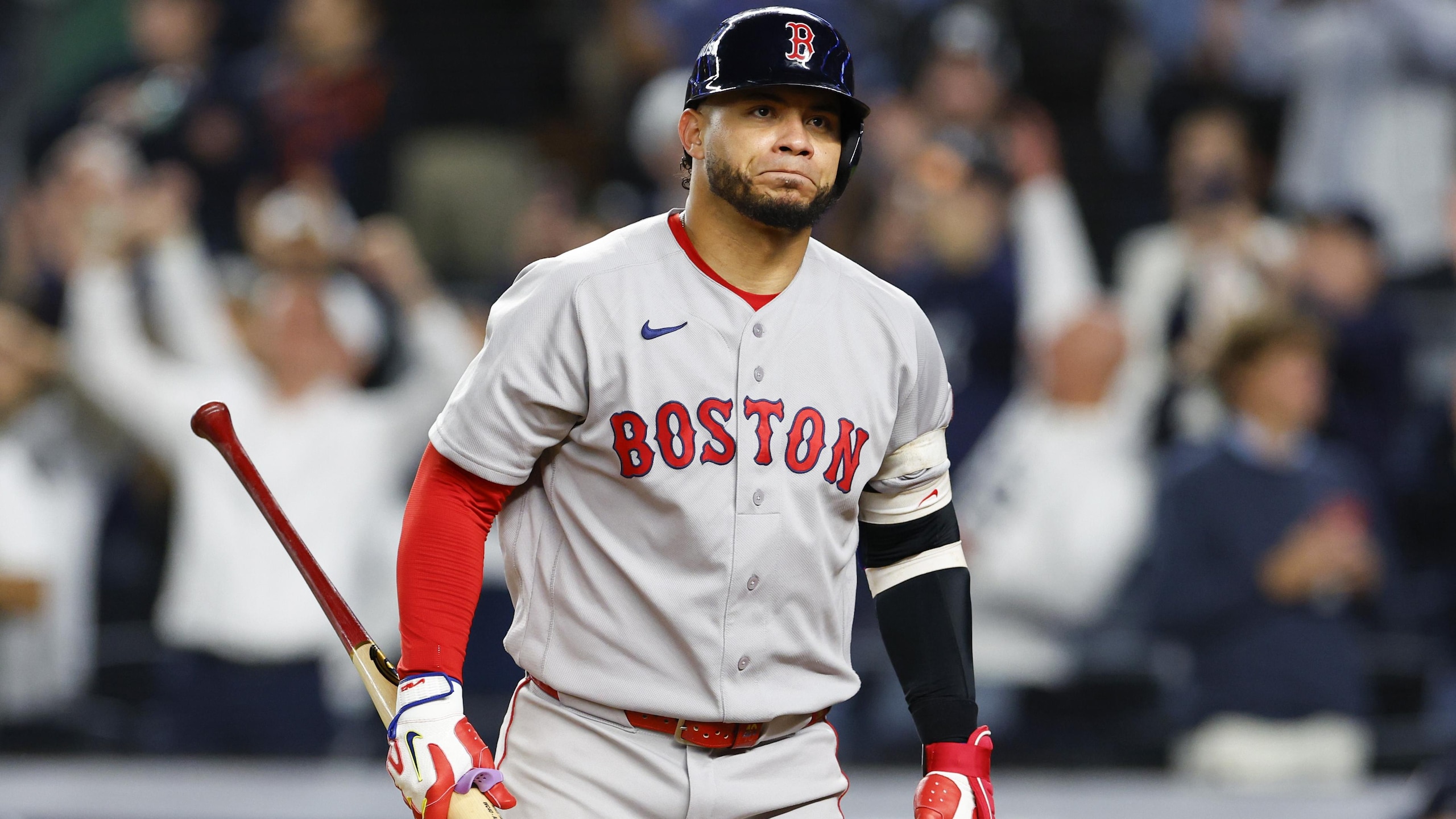
It's hard to decide who gets the starting job at short on this roster between Lugo and Jason Bartlett, but I think Lugo gets the edge because he played one more year than Bartlett with the Rays.
Lugo was a consistent contact hitter for the Devil Rays, and did a pretty good job of getting on base and swiping bags. He's third among the franchise's all-time leaders in steals, and averaged around 10 HR and 50 RBI per season with the D-Rays.
Third Base: Evan Longoria (2008-Present)
5 of 26Stat Line (four-plus years): .276/.362/.516, 117 HR, 27.8 WAR
In his his fifth year with the Rays, Evan Longoria has emerged as the newest face of the franchise. He's done some incredible things in his four-plus seasons spent with the Rays.
Longo lead the team in their amazing postseason run in 2008, blasting six homers and 11 RBI to help the Rays reach the World Series. And last year, in the final game of the regular season, Longoria had the game of his life and we all know what happened then.
Longoria is in the top-three among Rays franchise leaders in pretty much every statistical category. He's a three-time all-star, a Rookie of the Year award-winner, a two-time Gold Glover, a Silver Slugger and a two-time top-10 finisher in the MVP voting.
Defensively, Longoria is simply the best third baseman in baseball. His talent with the glove—and arm—is absolutely ridiculous. He owns an incredible career UZR of 50.8 and a DRS of 73.
He's clearly on pace to be the best Rays player of all time.
Left Field: Carl Crawford (2002-2010)
6 of 26Stat Line (nine years): .296/.337/.444, 409 SB, 104 HR, 36.8 WAR, 1480 H
It's simply unarguable: Carl Crawford still remains the best Tampa Bay Ray who ever lived. He is the franchise's all-time leader in every major stat, besides home runs, OBP and slugging percentage.
Crawford excelled in every part of the game; hitting, base-running, driving in runs and fielding.
He was arguably baseball's biggest threat on the bases for many years, leading the league four times in that category and even reaching 60 steals one year.
Defensively, I don't think any left fielder had the range that Crawford displayed through his nine seasons in Tampa. Although he did not have a very good arm, his unbelievable speed helped him snag fly balls that normal human beings could never reach. Crawford's DRS rating was great year-after-year, while his UZR was Gold Glove caliber.
His accolades include four all-star game selections, an All-Star Game MVP award (2009), a Silver Slugger (2010), a Gold Glove (2010) and a top-10 finish in the MVP voting (2010).
Crawford may of left Tampa on a bitter note, but no Rays fan should ever forget how amazing he was in those nine long years.
Center Field: B.J. Upton (2004-Present)
7 of 26Stat Line (eight-plus years): .256/.340/.413, 95 HR, 214 SB, 20.5 WAR
This one's another no-brainer, as B.J. Upton is indisputably the best center fielder in Rays history. He broke into the majors as a shortstop, but finally found his real home in center field in 2008.
He's amongst the most valuable Rays of all time, and is capable of providing 80-plus RBI and 40-plus stolen base type seasons. He's a 20/20 club-type player, and was one of a select few to collect 20-plus homers and 30-plus stolen bases last season.
Upton's speed not only gives him a big boost on the base paths, but it also makes him a pretty good center fielder. He covers a lot of ground with ease in the outfield, and has a cannon for an arm as well.
Upton has maybe failed to reach his high expectations over the past few years, but nobody should forget his incredible playoff run in 2008, when he hit seven home runs and 15 RBI.
Right Field: Aubrey Huff (2000-2006)
8 of 26Stat Line (six years): .287/.343/.477, 128 HR, 10.7 WAR
Aubrey Huff was one of the franchise's best hitters during the Devil Ray era, supplying the team with a big portion of their runs during his six seasons spent in Tampa Bay. Hitting was the name of the game for Huff, who provided the D-Rays with 20-plus homer and 90-plus RBI power.
With a WAR of 10.7, Huff—who played four positions (corner outfield and corner infield)—is the second-most valuable utility player in team history (behind Zobrist).
DH: Fred McGriff (1998-2001, 2004)
9 of 26Stat Line (five years): .291/.380/.484, 99 HR, 7.8 WAR
As you can see from his stats, the "Crime Dog" was clearly one of the best offensive players in the Devil Ray era.
McGriff spent five years playing for his hometown team in Tampa Bay, starting from the '98 inaugural year. He closed out his great career strong as a Devil Ray, hitting 99 homers and batting over .290 through those five years.
He owns the franchise record for OBP with a impressive .380, and is his batting average ranks third in team history.
Starting Pitcher No. 1: James Shields (2006-Present)
10 of 26Stat Line (seven-plus years): 79-68, 3.97 ERA, 7.6 K/9, 22.7 WAR
Statistics don't show how much "Big Game James" has meant to the Rays. More than any other Rays starter in history, Shields wins games. Especially the the big games (hence the nickname). Shields has played six seasons for the Rays, and has been a big part of the rotation for most of his short career.
After a disappointing 2010 season, Shields came back with a career year last season. He led the terrific young Rays pitching staff, posting a 2.82 ERA with 16 wins and 11 complete games. He also finished third in the Cy Young voting and was elected to his first All-Star Game in 2011.
Shields remains the most valuable Rays pitcher of all time, and the franchise leader in two of the three major pitching categories (wins, ERA, strikeouts). He owns the team record for wins (79), strikeouts (1,026), BB/K (2.12) and innings pitched (1331.2).
Starting Pitcher No. 2: David Price (2008-Present)
11 of 26Stat Line (five-plus years): 51-30, 3.32 ERA, 8.2 K/9, 12.2 WAR
David Price has done so much in his short time in the big leagues.
In just a little over three seasons, Price has been selected to two all-star games, finished second in the 2009 Cy Young voting and closed out Game 7 of the ALCS to win the pennant.
At just 26 years old, it looks like it's just the beginning of a great career for Price.
Starting Pitcher No. 3: Scott Kazmir (2004-2009)
12 of 26Stat Line (six years): 55-44, 3.92 ERA, 9.4 K/9, 16.5 WAR
Scott Kazmir was the ace of the Rays' rotation in four out of his six years on the team. He was among the franchise's three original farm-grown stars, which included his Texas-native teammates Aubrey Huff and Carl Crawford.
Kazmir was really the only solid starting pitcher the Rays had until 2008, when the team went worst to first.
Considering the Devil Rays' lack of arms in the rotation, the two-time all-star was one of baseball most valuable pitchers for a while. Kazmir's years are probably behind him, but he had a heck of a run with the Rays.
Starting Pitcher No. 4: Matt Garza (2008-2010)
13 of 26Stat Line (three years): 34-31, 3.86 ERA, 7.1 K/9, 7.6 WAR
Matt Garza did great things for the Rays in his three seasons spent with the team.
He was a huge part of the Rays' pennant-winning run in '08, going 2-0 with a 1.38 ERA against the Boston Red Sox in the ALCS, and earning him the ALCS MVP award. His masterful Game 7 performance when his team needed him more than ever is how Garza should be remembered.
That Game 7 was not the only unforgettable moment, however, Garza also tossed the franchise's first [and only] no-htter.
The Rays eventually traded Garza to the Cubs after the 2010 season, in a deal that ended up being one of the greatest trades in Rays history.
Starting Pitcher No. 5: Jeff Niemann (2008-Present)
14 of 26Stat Line (five-plus years): 40-26, 4.11 ERA, 6.7 K/9, 6.1 WAR
Simply put, the only thing that has gotten in the way of stardom for Jeff Niemann is injuries. It seems like right when the big right-hander starts to heat up, he lands on the DL.
As you can see from his win-loss record and decent ERA, Niemann has been a big part of the Rays' rotation. He's been arguably baseball's best back-end starter in the past few years, and he is definitely the best No. 5 starter in the league right now.
Niemann has never really received the credit he deserves, especially considering he cuts the top-three in many teams' rotations.
Long Reliever: Andy Sonnanstine (2007-2011)
15 of 26Stat Line (five years): 28-31, 5.26 ERA, 5.7 K/9, 4.6 WAR
As a starter, Sonnanstine's only good year was 2008, when he posted a 13-9 record and a 4.38 ERA.
As a reliever, it hasn't been too much of a success story either, but Sonnanstine did prove he could be an effected long reliever at one point. His stats as a reliever through 52 appearances (86 IP) include a 2-0 record and a 4.40 ERA.
In one department, however, Sonnanstine was the best amongst all the Rays' pitchers: Hitting. Sonny was once inserted into the lineup as a hitter in an American League game, and did not disappoint, hitting an RBI double to help his team to a win. He owns a .292 batting average and is tied for the franchise record with seven hits.
Middle Reliever: Esteban Yan (1998-2002)
16 of 26Stat Line (five years): 26-30, 5.01 ERA, 18 Hld, 7.5 K/9, 3.2 WAR
Esteban Yan was best known as starter for the Devil Rays, but he actually pitched more innings as a reliever in his career than a starter.
He only started 21 games with the D-Rays (20 of them in 2000), as he had 245 appearances as a reliever during his five seasons spent in Tampa Bay.
Middle Reliever: Grant Balfour (2007-2010)
17 of 26Stat Line (four years): 14-7, 3.33 ERA, 49 Hld, 8 SV, 10.4 K/9, 4.3 WAR
Grant Balfour was a huge piece to the Rays '08 bullpen, which was outstanding all-year round. Balfour blossomed that year, ending the regular season 6-2 with a 1.54 ERA.
He was just as terrific in the ALDS, when he threw 3.1 huge scoreless innings against the White Sox.
Balfour's numbers with the Rays—especially in the 2008 and 2010 seasons (the two years they made the playoffs)—pretty much tell the story for him.
Middle Reliever (7th-Inning Man): Danys Baez (2004-2005)
18 of 26Stat Line (two years): 9-8, 3.21 ERA, 71 SV, 6.6 K/9, 1.2 WAR
Danys Baez enjoyed the two best years of his career with Tampa Bay, racking up a total of 71 saves through 2004 and 2005.
He only served as a closer for the D-Rays' bullpen, but he's probably a better fit at middle relief on this 25-man roster.
Lefty Specialist: Trever Miller (2004-2005, 2008)
19 of 26Stat Line (three years): 5-3, 3.75 ERA, 32 Hld, 8.0 K/9, 1.4 WAR
You're probably surprised to see Trever Miller as the lefty specialist on this roster rather than J.P. Howell. But when you look at the main job of a 'lefty specialist', and then compare the two's numbers, Miller seems like the better guy for the role.
Against Howell, left-handed batters and right-handed batters are both hitting .248 and the lefties own a .328 OBP against him in his career. Against Miller, lefties are hitting .225 with a .316 OBP, which is much better than his splits against righties.
Howell wasn't a lefty specialist in the years that he thrived (2008-2009) anyway, while Trever Miller was in his three years with the Rays.
Setup Man: Dan Wheeler (1999-2001, 2007-2010)
20 of 26Stat Line (seven years): 13-25, 4.32 ERA, 64 Hld, 7.7 K/9, 1.2 WAR
As I mentioned before, the Rays put together an excellent bullpen in 2008. It included big contributions from J.P. Howell, Chad Bradford, Trever Miller, Grant Balfour, closer Troy Percival and more. Dan Wheeler was the rock of that 'pen, and really was the team's most dependable reliever all-year long.
He's the best setup man in the franchise's history, and owns the team record for holds (64).
Don't let the numbers fool you, as most of Wheeler's struggles came in his first three seasons ('99-'01) with the Devil Rays.
Closer: Roberto Hernandez (1998-2000)
21 of 26Stat Line (three years): 8-16, 3.43 ERA, 101 SV, 7.6 K/9, 4.0 WAR
Roberto Hernandez was really the Devil Rays' only defensive bright spot in their early years. The starting pitching, fielding and the rest of the the bullpen were all pretty awful in the franchise's first few seasons.
The Rays have had some good closers in their short-lived history, but none have matched Hernandez's team record of 101 saves.
In 1999, Hernandez collected 43 saves (out of 47 opportunities) and was selected to the All-Star Game. He also finished in the top 10 in the Cy Young voting that season.
Backup Catcher: Dioner Navarro (2006-2010)
22 of 26Stat Line (five years): .243/.300/.352, 29 HR, 2.0 WAR
This was a very, very tough choice for me between Dioner Navarro and John Flaherty.
Flaherty posted better offensive numbers in all the major categories (besides OBP) through his five seasons, but there are three things that give Navarro the tiny edge here.
One reason is a standout season, something that Flaherty never had with the Devil Rays. Navarro had a career year in 2008, and was a big part of the team's magical run that season. He batted .295/.349/.407, and was selected to his first ever all-star game.
Navarro also hit well in the postseason, finishing with a combined .293/.339/.362 line and five RBI.
Another small advantage Navarro has over Flaherty is defense—at least in the throwing department. Navarro's caught-stealing percentages were flat-out consistently better than Flaherty's. Navarro posted a percentage 10 percent higher than the league average twice in his five years with Tampa.
Backup Infielder: Wade Boggs (1998-1999)
23 of 26Stat Line (two years): .289/.360/.391, 9 HR, 81 RBI, 1.3 WAR
Boggs would of made the starting lineup on a handful of teams' all-time 25-man roster. However, the corner infielder is blocked out by Evan Longoria at third (his primary position) and probably shouldn't be put at first, considering the fact he only played four games at the position during his two seasons with the Rays.
He's the only [current] Hall of Famer to ever play in a Rays uniform, and the only Ray ever to have his number retired at Tropicana Field.
Nobody can ever forget his magical moment at the Trop in '99, when Boggs blasted a home run into the right field seats for his milestone 3,000th career hit.
Backup Infielder: Jason Bartlett (2008-2010)
24 of 26Stat Line (three years): .288/.349/.403, 61 SB, 19 HR, 150 RBI, 8.6 WAR
This roster needs a backup middle-infielder, and Jason Bartlett's just the guy for the job. Bartlett was very valuable to the Rays as their starting shortstop for three seasons, as his 8.6 WAR that he posted in just 400 games suggests.
He hit well for average and did pretty well getting on base, as you can see from the numbers above. He was also a solid and consistent defender at short.
Bartlett had one standout year in Tampa Bay, when he hit .320/.389/.490 with 5.5 WAR and 140 wRC+ in 2009. He was also selected to the 2009 All-Star Game.
Backup Outfielder/Right-Handed Pinch-Hitter: Rocco Baldelli (2003-2008, 2010)
25 of 26Stat Line (six years): .280/.324/.444, 53 HR, 7.7 WAR
A rare muscle disease was probably the only reason Baldelli never rose as an MLB star. He was still a fan favorite and a hometown hero in Tampa Bay throughout his injury-riddled career, though.
Rocco enjoyed early success in his first two seasons ('03-'04), and in his third season ('06) after returning from a season-long injury. It would only go downhill from there, however, as the injuries got worse.
Baldelli played at the end of the 2008 season, and also bolstered the Rays' offense in the postseason. After playing one year in Boston after that, he retired at the age of 29, playing his last season with the Rays in 2010.
Just Missed the Cut
26 of 26Infielders:
Ty Wiggington:
Stat Line (two years): .275/.329/.479, 40 HR, 128 RBI, 1.8 WAR
Utility man Ty Wiggington's versatility and power was almost enough to put him on this roster.
Akinori Iwamura:
Stat Line (three years): .281/.354/.393, 104 RBI, 29 SB, 6.6 WAR
Aki was a big part of the Rays' championship team in '08, serving as their leadoff hitter while hitting pretty well for average during his three seasons in Tampa Bay.
Outfielders:
Jonny Gomes:
Stat Line (six years): .235/.329/.455, 66 HR, 1.5 WAR
Gomes was just edged out by Baldelli on the roster as the backup outfielder/right-handed pinch hitter. He was one of the Rays best home-run hitters during the six seasons he played with them, but Baldelli is simply the better all-around player.
Randy Winn:
Stat Line (five years): .279/.342/.400, 24 HR, 80 SB, 6.0 WAR
Winn's ability to play all three outfield positions, hit for average and steal bases put him in the conversation to make this roster.
Catchers:
John Flaherty:
Stat Line (five years): .252/.289/.365, 35 HR, 2.1 WAR
As stated in the article, Dioner Navarro just beats out Flaherty as the backup catcher on this roster.
Starting Pitchers:
Jeremy Hellickson:
Stat Line (two-plus years): 21-13, 3.14 ERA, 5.99 K/9, 1.7 WAR
Hellickson just hasn't pitched long enough to make the roster, but he still deserves an honorable mention.
Relievers:
Rafael Soriano:
Stat Line (one year): 3-2, 1.73 ERA, 45 SV, 1.5 WAR
Soriano was amazing and had a career year in his 2010 season with the Rays, when he helped the team win their second division title. But just one season—even as good as Soriano's—is not enough for me to put a player on this roster.


.jpg?w=2560 "2 NFL Officials Suspended")

.jpg?w=2560 "Mahomes' Wife Trolls Kubiak 💀")

.jpg?w=2560 "Love's Body Already 'Tired'")