
Six Aspects of MMA That Prevent Full Mainstream Acceptance
Back in 1993, fans of the newly created American MMA scene were happy to be different. They were thrilled to be in the minority. It was as if they were privy to some special secret that traditional sports fans just weren't cool enough to be in on. It was hip to be an MMA fan back then.
Fast forward two decades and things have really changed. It's still cool to be an MMA fan, but only in certain circles. It's no longer some grand secret that only a select few are in on. It's actually become sort of a social detriment.
We've spent so many years trying to draw our friends and family in with our passion and knowledge that we've pushed them away.
It's not just us and our overbearing ways though; it's a systemic crisis. All the way from the almighty UFC down to the lowly hardcore fan, we've—as a society founded upon common ground and mutual passion—allowed that sacred bond to fracture our evangelical commitment to spreading the gospel of MMA in a gentle and welcoming manner.
Here are six reasons why.
Pay-Per-View
1 of 6Every Sunday during football season, fans simply flick on the tube and watch their teams go to battle. In baseball season, it's difficult to find a time when a game isn't on. For MMA fans, it requires a tad more logistical planning.
We have to fork over $50 for pay-per-view. If we want to watch all the big fights, and really, what red-blooded fight fan doesn't, then that means we have to fork over that $50 about every three weeks.
It's not cheap being an MMA fan, but we deal with it for the sport we love. Basically, we're an easy sell.
Casual fans, the ones the UFC is desperately trying to pull in, aren't so easy to sell.
They pick and choose which events to buy, and they want big names before they part with their money. They want GSP and Anderson Silva. And they aren't all too concerned if they miss most of the fights.
Because most fights aren't easily accessible to them, they have not developed a personal stake in the sport. They have no idea why Silva hasn't fought in almost a year, or what injury has kept GSP out for even longer. All they know is they're not handing over their money until a big fight comes along.
The UFC must figure out a way to put bigger events on FOX to draw in these new fans. Then they can begin to veer away from the pay-per-view format.
It's an uphill battle, but it's one that's worth the effort. When the day comes that most big fights are on free television, or a much cheaper alternative to pay-per-view, then mainstream status will follow.
A lack of fan interest isn't keeping the UFC from achieving mainstream status, economics is.
Blood
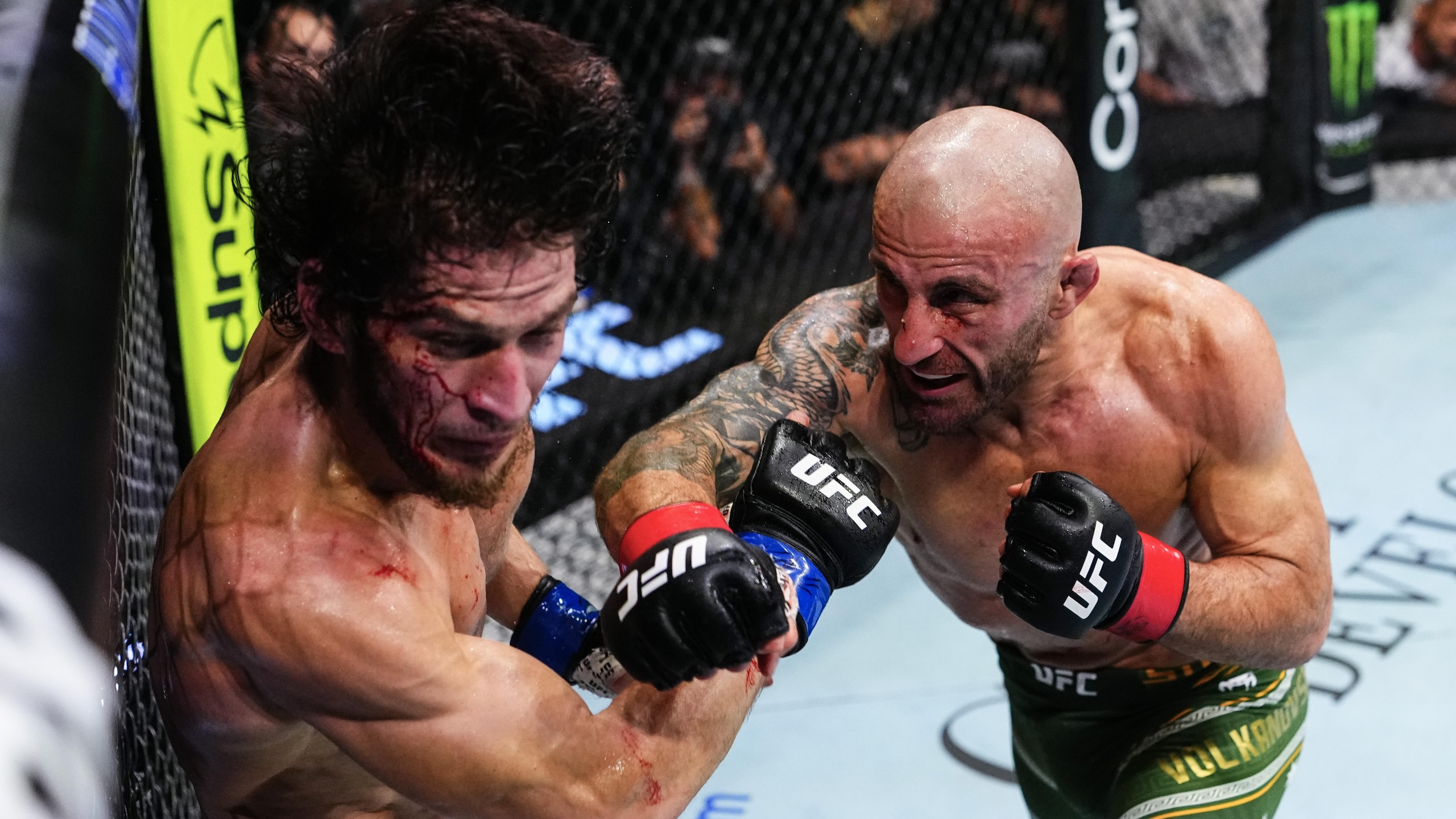
2 of 6Just because us hardcore fans have an ostensibly disturbed enjoyment when a cut makes the Octagon look like a scene from "Saw" doesn't mean the masses share that sentiment.
To many people, a bloody fight represents the brutal spectacle we've been trying to convince them MMA is not.
Even though virtually all cuts that occur in MMA are minor injuries, and the sport is regulated to the point where doctors sit cage-side ready to check on a cut athlete in a moment's notice, still they do have a visual effect on many people.
Blood has a natural association to violence, and the illusion of violence is the main factor that turns people off to MMA.
It doesn't matter that high-level MMA has a great safety record. When Dana White says that MMA is safer than cheerleading (via Yahoo! Sports), he's not just talking out of his you-know-what.
It's the visual that counts, though, and seeing Joe Stevenson on his hands and knees crying, his face a bloody mess, gives the critics all the firepower they need to continue their misguided crusade that MMA is a blood sport.
Unfortunately, there isn't much that can be done about this one. Elbows are sharp, and the thin skin that covers the human head is susceptible to tear.
This is a problem that will hopefully be rectified through continued education. As more fans are drawn in, they'll read more MMA-associated content online, and come to realize that cuts, while visually bothersome, do not constitute a medical emergency.
The Growing Prominence of Women's MMA
3 of 6America is still a very puritanical country compared to the rest of the Western world.
Women entering a locked cage and punching each other in the face is something that a lot of people just cannot get behind.
And that's understandable. It's a longstanding societal norm that will take time to overcome.
In recent years there's been a debate about women in combat. The U.S. military now allows women to serve in field artillery, but not in the infantry. That in itself is a major step, though. As a former Marine, I can tell you that field artillery is no joke.
This is a deeply personal view to most people, and while cage fighting certainly isn't war, it's the role of women in combative situations in general that makes many people uncomfortable.
It's unclear what role women's MMA will play in the near future. Dana White has been historically insistent that he has no interest in a women's division for the UFC (per TMZ).
But that was in 2011, and the UFC boss has been known to change his mind, especially when someone like Ronda Rousey comes along—a female fighter White himself describes as a "rockstar."
Female fighters deserve the same regard as their male counterparts. They're skilled, tenacious, and professional. When all but the top few become marketable, then we'll see attitudes change.
Jumbled Leagues
4 of 6UFC, Strikeforce, Bellator—what the heck does it all mean?
That seems like a ridiculous question to MMA fans. The UFC is the major leagues and everyone else is vying for second place. That's a simple fact. But think outside the box for a moment.
Some MMA fans—the very casual sort—still don't even know that the sport is called MMA. They call it 'Ultimate Fighting.'
These fledgling fans are the ones the UFC wants, and they don't even understand the league hierarchy. A friend from work recently told me he caught the 'UFC' on MTV. After about ten minutes of trying, I gave up on explaining that it wasn't the UFC he was watching, but Bellator.
To him it was cage fighting, which is all 'Ultimate Fighting.'
Because MMA doesn't have a traditional high school-to-college-to-pros system, the levels are unclear to casual fans.
It may sound wrong to say, but sports is a different sort of business. In most businesses, competition only benefits the consumer, but in sports, monopolies are an unfortunate necessity.
The UFC is not quite a monopoly just yet, but once they liquidate Strikeforce, and either buy up Bellator or let it eventually go out of business by forcing up costs, they soon will be.
Then there will be no doubt that when someone is watching MMA they will be watching 'Ultimate Fighting.'
Fighter Attitudes with Homophobia and Sexism
5 of 6The incidents are as numerous as they are disturbing.
From UFC fighters tweeting rape jokes (via ESPN), to Joe Rogan making homophobic remarks (via SB Nation), to Dana White calling a respected female journalist a "b***h" (via Yahoo! Sports), the widespread acceptance of MMA is being held up by this sort of sophomoric behavior.
Note the rank of the previous paragraph. UFC fighters, Joe Rogan, Dana White—clearly this is a systemic issue that poisons the entire organization.
In the military, when a private gets in trouble, the first person to get his rear chewed out is the corporal in charge of him. The thinking is that the corporal should be instilling in the private what was taught to him by the Sergeant, who learned from the Gunny, who learned from the Sergeant Major, and so on and so forth.
It's a very basic system of discipline, but an effective one.
The UFC needs to change their culture, and that starts at the top.
No one is saying that Dana White should put on a shirt and tie and do scripted press conferences with weasel words straight out of the public relations handbook. UFC fans do not want that.
We like a little edge in our president, but if the UFC is to reach the next level, they cannot have their boss and their most famous color commentator making homophobic and misogynistic remarks as if it's a routine kind of thing.
This is a leadership issue that filters down through the ranks, and it needs to be handled immediately.
Overbearing Hardcore Fans
6 of 6Everybody knows one of these fans.
He's the loud one at the UFC party. He's obnoxious, overbearing, and arrogant. He wants you to know how much he knows about MMA, and more than that he wants you to feel inferior because of it.
He'll wax poetic about how Brock Lesnar was bad for the sport; how 'TUF newbs' don't know squat; and how the glory days of MMA was during the 'Dark Ages.'
But by far his most furious argument is that Pride ruled. There is no acceptable rebuttal to this, and any attempt at such will elicit, at the very least forceful debate, and quite possibly, physical violence.
This particularly noxious breed of fan also happens to be the most passionate and knowledgeable. And if he would only use his powers for good rather than evil, he would draw fans in with that enthusiasm. But instead, he only pushes them away.
With every passing year since the fall of Pride in 2007, fortunately these fans become fewer and fewer. Eventually they'll become such a minority that their detrimental approach will not even register as a concern.
Then casual fans will be able to embrace the sport without someone constantly telling them how stupid they are for caring about the latest TUF winner.





.jpg?w=2560 "Jonathan Taylor Landing Spots 📍")
.jpg?w=2560 "Mahomes Asked OT to Leave Meeting")



