Raymond Parks: A NASCAR Pioneer
Like any other sport NASCAR has it's beginnings. Throughout the years the sport has changed and been formed by the athletes that race and the fans that come to races or watch on TV.
But this sport's history is much more diverse and goes back to a point in history where are country was reeling with a economic disaster, men lost their jobs and couldn't feed their families, much less themselves.
Men and women working all day and night, the American dream was becoming a nightmare and with no escape ahead.
TOP NEWS
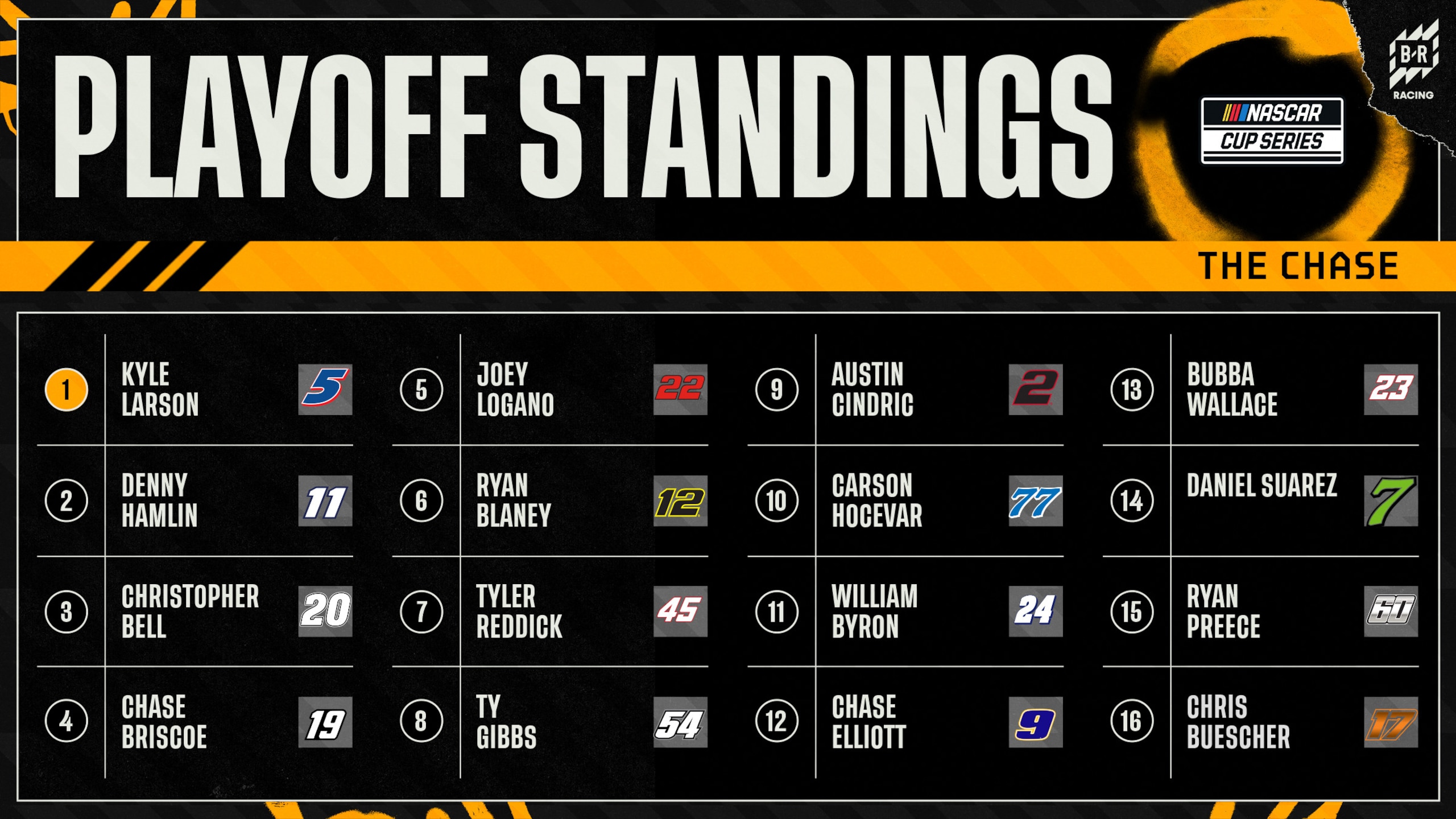
NASCAR Cup Playoffs Point Standings and Updated Schedule After 2026 Talladega Results

Geno Explains Wilson Exchange
.jpg?w=2560 "Steelers Saints Football")
Rodgers Iced Out on Plane 💎
In the rural south, men and women made their livelihood in the fields—working long days in the hot southern sun.
On the weekends, men would travel to farm fields where the farmer would turn an empty pasture into a dirt track allowing men to come and race each other—an early form of escapism for a society that could barely afford food.
During the week they worked for someone else, but on Sunday afternoon these men were their own bosses and only answered to God.
In the mid 1930's Raymond Parks, a man you can compare to Rick Hendrick in racing smarts and business savvy, found there was money to be made racing. Parks who owned his own business, Parks Novelty Co., was able to fund his cars.
Two of Parks cousins encouraged him into racing. Lloyd Seay and Roy Hall ran moonshine on back country roads, teaching them how to handle a car at high speeds and quick turns.
Parks carried the philosophy that every driver today beleives—good equipment, a good driver, and you will and should win races. So Parks insured that his cousins had just that.
He found Red Voight and Buckshot Morris in Georgia. Two very good mechanics who could find a little something extra to make Parks' cars have an edge. With two of the best mechanics, whenever Parks needed something he could turn to Voight and Morris.
Parks won at Lakewood Speedway in Georgia in 1938. Seay was his driver in a Ford. In a few years tragedy and World War II would put a halt to Parks' racing plans.
Seay was shot and killed in September of 1941 over a moonshine deal, and the attack on Pearl Harbor in December—Parks' racing dreams took a back burner to the war effort.
In 1946, after serving in the army, he returned to the South and to racing. As a successful business man, funding racing wasn't as difficult for Parks as it was for other aspiring racers.
His drivers included NASCAR's first champion Red Byron, Bob Flock, Frank Mundy and Curtis Turner.
In 1947 his car won the Modified Championship with Fonty Flock and repeated as Modified champion in 1948 with Byron. This would be a relationship that would be very successful. In 1949 Byron would become NASCAR's first Champion.
In 1951 Parks ended his racing career. Drivers didn't make enough money to support their families. He still needed to work and run his business.
But Parks' legacy had already been written he would always be remebered as the first owner to win a NASCAR championship.
Parks' business model has been copied by dozens of drivers and owners. Drivers without the support of major sponsors and big money.
Teams that owners and drivers sell everything they have to race each week and hope to find their car in victory lane.
NASCAR has always tried to distance themselves away from the bootleggers that raced before NASCAR was a sanctioning body. But these men needed to make a living and racing was more of a passion then a livelihood for these men.
It was these bootleggers that raced and the farmers that made the dirt tracks that fueled stock car racing in the south.
“At the time, I didn’t know what I was getting into,” said Parks. “I might have had a vision, but I certainly never saw where NASCAR was going. It surpassed anything I imagined. I’m just glad to have been in it at the beginning."
NASCAR's body and its fans can't forget that before Bill France Sr.'s fateful meeting in Daytona Beach, Florida. Raymond Parks was one of NASCAR's real pioneers.
Background infomation from www.legendsofnascar.com
.jpg?w=2560 "Chiefs Giants Football")
.jpg?w=2560 "AP Poll Top Five Week 9")
.jpg?w=2560 "Raiders Could Start Mendoza")


.jpg?w=2560 "Lamar Being Out Shocked Ravens")