1 Trade Idea for Every Team Not in the 2024 NBA Finals
Fans of the Boston Celtics and Dallas Mavericks will be laser-focused on the NBA Finals. If you think that means supporters of 28 other teams are sitting idle as they wait for the offseason to start, you've ignored virtually every trend in NBA coverage of the last decade.
The transactional side of the league draws as much attention as the games themselves, which means free agency, the draft and hypothetical trades have been dominating the discourse throughout the playoffs.
Now that all but two teams are officially in offseason mode, interest in roster construction is peaking.
Bleacher Report's Dan Favale and Grant Hughes are ready to meet that demand with a trade idea for every team that isn't squaring off in the Finals.
We can't cook up deals that will elevate everyone to the same contender tier occupied by the Mavericks and Celtics, but hopefully these fresh trades will nudge teams a little closer to that goal.
Atlanta Hawks
1 of 28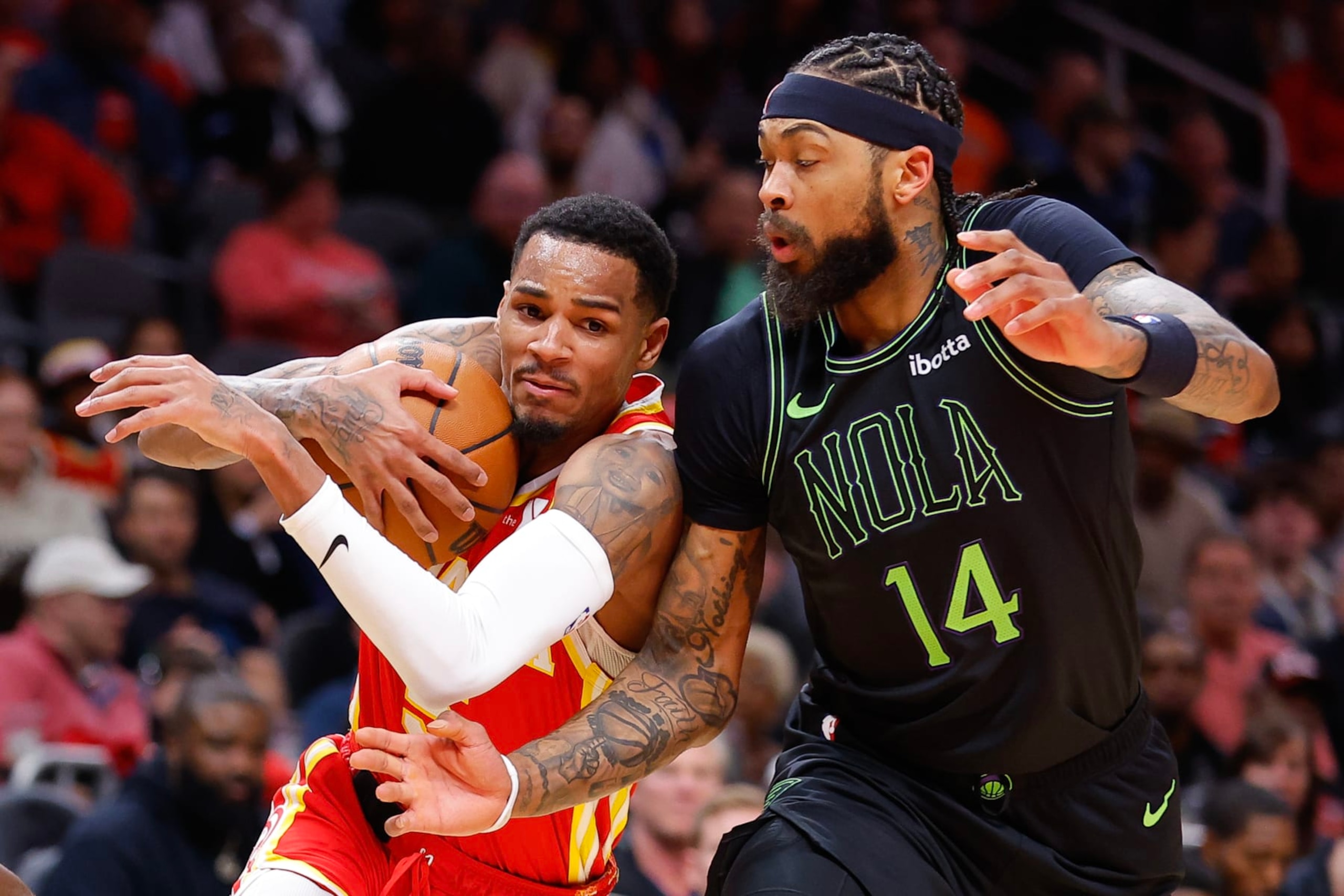
Atlanta Hawks Receive: Dyson Daniels, Brandon Ingram, No. 21 pick, 2025 first-round pick (most favorable from New Orleans or Los Angeles, with top-five protection)
New Orleans Pelicans Receive: Bogdan Bogdanović, Dejounte Murray
At least one of Murray and Trae Young will be shipped out this offseason—or so it seems. The smarter money is on the former. Young has more of a superstar peak, and Murray's lower salary makes it easier to cobble together a wider variety of packages.
Restocking and reorienting the wing rotation should register as Atlanta's primary objective in any deal—unless, of course, it's warming up to a full-tilt rebuild instead. This framework offers a bit of both worlds.
Ingram is headed toward his next payday, at the start of 2025-26, which complicates matters. But the Hawks clear two longer-term salaries here, and Clint Capela comes off the books after next season. Fitting Ingram and a more expensive Jalen Johnson into the team's salary structure, alongside Young, should not prove untenable.
Though Ingram is an overall defensive downgrade from Murray, he has more range on his head-to-head assignments. His playmaking doesn't completely supplant Murray's game management, but he can defer enough going downhill and off ball screens to be a secondary option. His self-creation should go a long way in non-Young minutes and will be welcomed with Murray out the door.
Daniels has two years left on his rookie-scale contract and infuses even more defensive skill and malleability into the rotation. Shooting continues to be his swing skill, but he's displayed stellar, connective vision in space.
Adding two first-round picks allows Atlanta to fill out its big-picture rotation on the cheap. That 2025 selection is particularly useful. The Hawks' own first is headed to San Antonio.
Coughing up Bogdanović might be the toughest part of this for them to stomach. They'll miss his outside touch and the pressure he puts on defenses off the dribble. But this deal is more about balancing out the depth chart over the longer haul.
New Orleans might flinch at including so much first-round equity. It can easily argue that Ingram is the most valuable player in this deal. But his looming free agency warps his value, and too many offensive question marks persist around Daniels for him to be considered a blue-chip prospect.
Bringing in a floor general who can play both beside and independent of Zion Williamson is a big deal. And speaking of deals: Murray's four-year, $114 million extension is beyond team-friendly and absurdly valuable to a team that will soon need to shell out marquee money for Trey Murphy.
Bogdanović's fit is unimpeachable. He promises much-needed outside volume off the pine. This trade also increases the Pelicans' wiggle room beneath the first tax apron—a not-insignificant side benefit if they're looking to keep Jonas Valančiūnas or use the mid-level exception to sign (or trade for) a different center.
–Favale
Brooklyn Nets
2 of 28
Brooklyn Nets Receive: Dejounte Murray
Atlanta Hawks Receive: Dorian Finney-Smith, Dennis Schröder, Phoenix's 2025 first-round pick (top-eight protection; turns into 2028 and 2029 seconds if not conveyed); 2027 first-round pick (second most favorable from Brooklyn, Houston, Philadelphia or Phoenix)
There's a chance the Nets are itching to take a bigger swing than acquiring Dejounte Murray. They don't control their own first-round pick until 2028, and general manager Sean Marks doesn't sound like someone who wants to shepherd the franchise through another rebuild.
Then again, there's also the chance Brooklyn has zero designs on unloading first-round equity. Team governor Joe Tsai recently talked about the organization's intent to follow a "longer-term approach."
Consolidating some, but not all, of the team's assets into Murray strikes a nice middle ground.
The Nets need a primary ball-handler and playmaker. Murray isn't elite in either category, but he's an upgrade over everyone they have and immediately makes life easier, at both ends, on Mikal Bridges.
Pairing these two fringe-stars doesn't automatically vault Brooklyn into contention, but the balance on their contracts will preserve future flexibility. Bridges remains a steal with two years and $48.2 million left on his deal. Murray's four-year, $114 million extension kicks in next season and is set to age like a fine wine.
Jettisoning two first-rounders isn't nothing. But the Nets get to keep most of their ultra-distant goodies from other teams, and this deal gets easier to embrace knowing they'd retain their access to over $60 million in cap space next summer (depending on various other roster decisions).
Atlanta's side ends up being the tougher sell. This amounts to less than it paid to land Murray. But it gets a plug-and-play combo forward in Finney-Smith, who could remain on the books at a reasonable cost through 2025-26 ($15.4 million player option) and a serviceable backup point guard on top of draft equity.
Nabbing two first-rounders during years when the Hawks will send their own pick outright to San Antonio is also a shrewd bit of asset management and mapping. Especially when both selections have upside, thanks to their previous owners' downside.
—Favale
Charlotte Hornets
3 of 28
Charlotte Hornets Receive: Zeke Nnaji, No. 28, No. 56
Denver Nuggets Receive: Vasilije Micić, No. 42
Blockbuster fireworks are unlikely to go off in Charlotte as the Hornets navigate the early phases of their latest rebuild. The bulk of the teardown is done, which almost entirely shifts the focus to up-and-coming talent acquisition and draft-pick procurement.
Scooping up an additional first-rounder satisfies the latter aim. The No. 28 pick isn't a world-beating asset, but it's yet another bite at the prospect apple, and Charlotte's rotation has room for developmental swings and experiments.
Swallowing Nnaji's deal is a slight nuisance. He makes just a small fraction of the salary cap, but the four-year length (totaling $32 million) is relatively steep for someone who's delivered minimal impact through his first four seasons.
Still, Nnaji won't turn 24 until January. He can hold his own guarding on the perimeter, and there's time for him to regain his floor-spacing appeal. Salaries comfortably north of the minimum will also always have filler utility in future trades.
Denver could balk at the thought of using a first-rounder to wipe off Nnaji's money. It shouldn't. The Nuggets have enough of their competitive livelihood beyond the starting lineup tethered to inexperience, and Micić will be a live-dribble upgrade over the Reggie Jackson minutes.
Tax savings are a factor as well. Denver shaves around $3.7 million in player salary from next year's bottom line—in addition to getting out from under the final three years of Nnaji's pact—without hard-capping itself to first-apron territory.
This sounds like a minor thing on its face, but every penny matters when reconciling the short- and long-term costs of a core bound to enter second-apron waters if the Nuggets re-sign Kentavious Caldwell-Pope (player option) and don't make any nuclear trades.
—Favale


Chicago Bulls
4 of 28
Chicago Bulls Receive: Cole Anthony, Jett Howard, 2025 second-round pick, 2026 second-round pick (second most favorable from Detroit, Milwaukee or Orlando)
Orlando Magic Receive: Zach LaVine
Could the Bulls maybe, potentially, quite possibly, be evolving as an organization? In all honesty, probably not. We don't yet have concrete evidence or any reason to believe they'll finally cater to the bigger picture.
But they are willing to move LaVine for less than before.
"I don't think the Bulls will take an awful deal if little materializes, but I do get the sense they're open to more possibilities than before," NBC Sports' K.C. Johnson wrote. "More to the point: I've reported before what their asking price was-—All-Star level talent, first-round picks or both—and my sense is that it has dropped significantly."
Failing to secure a first-round pick for LaVine will qualify as an "awful deal" in the eyes of many, but Jett Howard remains a motion-shooting curiosity and is a reasonable substitute for a protected first-round pick.
Cole Anthony doesn't have a ton of value to the Bulls with Coby White, Alex Caruso and Ayo Dosunmu on the books. His inessentiality increases tenfold if Chicago ponies up for DeMar DeRozan in free agency.
But Anthony has some shake going downhill, scraps on the glass and is owed just $39.1 million over the next three years, with a 2026-27 team option. At worst, he's useful filler in another trade. He could also soak up reserve backcourt minutes if the Bulls start shipping out others like Caruso or Dosunmu.
Chicago can push for more. The Magic have all their own first-rounders as well as Denver's 2025 selection (top-five protection through 2027). But while perception of LaVine's on-court value has veered too far away from reality, he's coming off yet another season-ending injury and owed $138 million over the next three years.
That money alone is enough to scare away prospective suitors. It might even frighten Orlando out of adding him.
Counterpoint: It shouldn't. Not when he's coming so cheap.
LaVine's shooting and off-the-dribble creation are perfect for a half-court offense lacking both. He doesn't check the floor-general box, but the Magic will have the flexibility and assets necessary to continue the playmaker hunt.
The 29-year-old's price point is also slightly less prohibitive when he'll be in the final year of his contract by the time Paolo Banchero's inevitable max extension kicks into effect.
Saving the Bulls a boatload of money is part of this package's appeal, but the framework can assume different permutations depending on Orlando's side quests.
This structure eats up most of the Magic's cap space while accounting for the returns of Gary Harris and Mo Wagner (team option). They can manipulate the outbound salary if they want to operate over the cap by including some combination of Isaac, Wagner and Joe Ingles (team option).
—Favale
Cleveland Cavaliers
5 of 28
Cleveland Cavaliers Receive: Dorian Finney-Smith
Brooklyn Nets Receive: Ty Jerome, Georges Niang, No. 20
Full disclosure: The Cavs have bigger fish to fry before moving on to the "Is Dorian Finney-Smith a good fit?" portion of their offseason.
Donovan Mitchell's extension looms largest. He becomes a trade candidate if he doesn't put pen to paper. Darius Garland, apparently, becomes a trade candidate if Mitchell does. Jarrett Allen is a trade candidate no matter what.
Once those matters are settled (or ignored), though, Cleveland could stand to fortify its wing options without torpedoing its access to four-out lineups.
Finney-Smith has lost a step or two defensively, but the breadth of his primary assignments is super-valuable, spanning star wings and combo forwards. His catch-and-shoot stroke is the larger, albeit not actually massive, concern. He's dipped below 35 percent on spot-up triples in each of the two previous seasons.
And yet, the volume Finney-Smith provides from beyond the arc is superior to that of Isaac Okoro (restricted). He also banged in over 40 percent of his standstill treys during the 2021-22 campaign, his last full season in Dallas, alongside a megastar playmaker whose name you might know. Launching off passes from Mitchell and/or Garland is functionally different from what he's working with in Brooklyn.
Cleveland has the runway beneath the first apron to sub in Craig Porter Jr. for Niang. Whether it should capitalize on that is debatable. Niang's stretch becomes more important if the Cavs move off a big, but keeping his salary on the books after getting DFS restricts what they can feasibly pay Okoro.
This package is cleaner. Finney-Smith can sponge up plenty of reps at the 4 himself, and while he's semi-insurance against Okoro leaving, the duo's defense is more complementary than not. DFS is better suited against wings and combo forwards. Okoro is most dangerous when deployed against guards.
Brooklyn could want more for Finney-Smith. I'd be shocked if it gets much more. He could be entering the final year of his deal (2025-26 player option), and his recently ebbing three-point efficiency diminishes part of his appeal.
Gaining entry into a first round for which they currently have no picks is reasonable compensation for a middle-of-the-rotation wing with limited on-ball skills and just turned 31.
—Favale
Denver Nuggets
6 of 28
Denver Nuggets Receive: Lauri Markkanen from the Utah Jazz
Utah Jazz Receive: Michael Porter Jr., the No. 28 pick in 2024, first-round swaps in 2026, 2028 and 2030; second-round picks in 2025, 2026 and 2029
The Jazz's stated preference to go big-game hunting might make a deal like this a non-starter, as could the Nuggets' inability to send back the draft equity typically required to land a player of Markkanen's caliber.
However, with Denver's inflexibility, this is as close as we can get to a big-time move for the recently dethroned champs.
Markkanen is effectively a better version of Porter, but he's also about to get more expensive.
Porter is on the hook for $35.9 million, $38.3 million and $40.8 million over the next three seasons, but it wouldn't be surprising to see Markkanen's next deal start at a rate above the one in the last year of Porter's current contract.
Injury concerns are inescapable with MPJ, but he's over a year younger than the Finn and logged 143 games (plus another 33 in the playoffs) across the last two seasons. Markkanen only appeared in 111 contests during that span.
If Utah isn't sure it wants to max out Markkanen, and if teams that could beat this offer fall asleep at the wheel (looking at you, Thunder), you can squint and imagine this deal getting done.
—Hughes
Detroit Pistons
7 of 28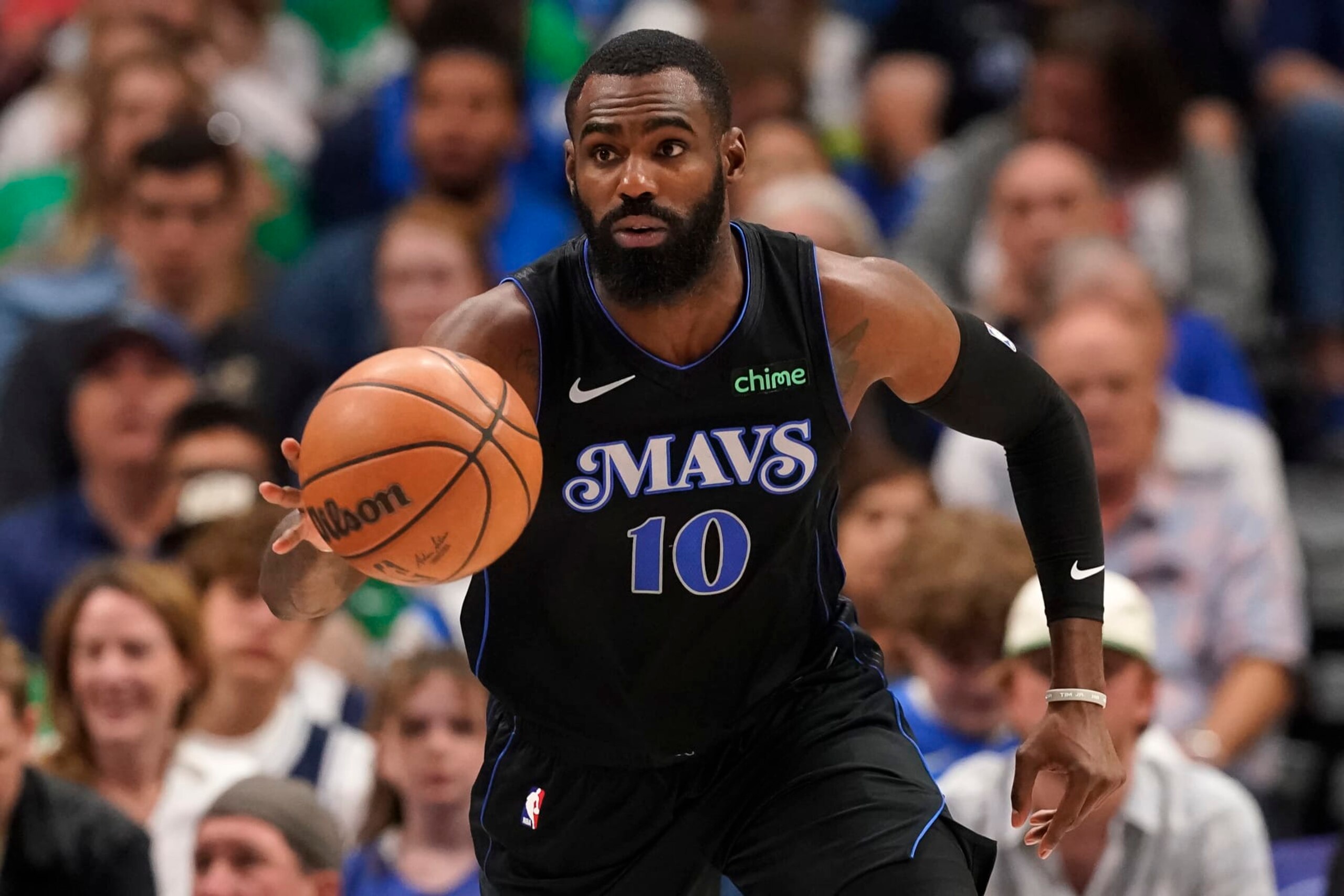
Detroit Pistons Receive: Tim Hardaway Jr., No. 58 pick, Toronto's 2025 second-round pick, Miami's 2028 second-round pick
Dallas Mavericks Receive: No. 53 pick
Former lead executive Troy Weaver likely had grander plans for what could be comfortably more than $60 million in cap space. His successor, Trajan Langdon, will most likely take a more measured approach.
The proof is in the agency he negotiated. Weaver is gone, and Langdon apparently has the license to "evaluate" head coach Monty Williams' fit with the organization moving forward, according to NBA reporter Marc Stein.
Absorbing the final year and $16.2 million of Hardaway's contract won't excite Pistons fans in a vacuum, but it should comfort them. Throwing big money at Free Agent X or burning consequential assets on Trade Target Y can be appreciably more damaging, if not mutate into an outright short-circuiting of an (admittedly never-ending) rebuild.
Detroit needs shooting anyway. Hardaway is streaky and has fallen out of the Dallas Mavericks' playoff rotation, but he still checks the floor-spacing box—particularly relative to what the Pistons have in place. Getting him and a couple of (could-be-good) seconds is a rational use of cap space for an organization that has yet to really chart a long-term course.
Dallas shouldn't need much convincing to sign off on this deal. It might hesitate at forking over two seconds, but completely lopping off Hardaway's salary ensures the team will have the full non-taxpayer mid-level exception at its disposal.
That's a useful angle to work for any contender, let alone an NBA Finals participant. It's especially massive for the Mavericks, who may need all of the MLE to retain Derrick Jones Jr.'s services.
—Favale
Golden State Warriors
8 of 28
Golden State Warriors Receive: Alex Caruso
Chicago Bulls Receive: Moses Moody, Gary Payton II and a 2026 lottery-protected first-round pick
From 2013-14 to 2021-22, the Warriors finished outside the top nine in defensive efficiency just once, and that was during a 2019-20 gap year when Klay Thompson was injured, Andre Iguodala had been traded, Kevin Durant had just left, D'Angelo Russell was suddenly on the roster, and Stephen Curry and Draymond Green combined to play 48 games.
As much as long-range shooting and small-ball lineups defined the Dubs dynasty, defense was also an integral component.
Caruso could help the Warriors return to form on D. He graded out last year as the best backcourt defender in the league (among those who played at least 20 games) by Defensive Estimated Plus/Minus and has been an All-Defensive honoree in each of the past two seasons.
One could argue Gary Payton II is close to Caruso's level when healthy, but his 44 appearances last season were the second most of his career. For him, "when healthy" has been, well...basically, never.
The Bulls land Moody and a protected pick in this deal swapping defense-first guards, with the 2021 No. 14 pick profiling as the most intriguing piece.
He hasn't gotten a real chance to prove himself with the Warriors, but the 22-year-old wing has two-way starter upside and is still on his rookie-scale contract.
—Hughes
Houston Rockets
9 of 28
Houston Rockets Receive: Jimmy Butler and the No. 15 pick in the 2024 draft
Miami Heat Receive: Jalen Green, Dillon Brooks and the No. 3 pick in the 2024 draft
The fake trade industrial complex has been getting a lot of mileage out of the late-March comments from ESPN's Tim MacMahon (h/t NBACentral), which conveyed his belief that the Houston Rockets "want to take a big, big swing in the trade market."
The money quote for our purposes: "I don't know if both Şengün and Green are going to be here long-term. My guess—and I emphasize guess—is that one or the other would end up getting moved at some point when they take their big swing."
A guess is all it takes to get the trade machine humming, and here it spits out a blockbuster that lands the Rockets a star in Butler.
Those anchored to the idea of teams spending four or five first-rounders to land a superstar might balk at Houston's outgoing package here. But Butler is only available because he's angling for an extension the Heat aren't keen to offer, and that has to lower the price for the acquiring team in any trade.
Add to that uncertainty about Butler holding up for a full season, likely decline as he gets deeper into his 30s and his general irascibility, and you've got enough drawbacks for the Rockets to get away with an offer like this.
Green averaged 27.7 points per game as Houston went 13-2 in March, but he's also extension-eligible and won't be cheap much longer. One imagines the Heat would be more comfortable giving long-term cash to an early-20s player on the rise, though.
Add in Brooks, who would fit perfectly into #HeatCulture, a 12-spot jump to No. 3 in the draft, and Miami comes out of this looking pretty good—particularly if it's itching to put a period on the Butler era.
Meanwhile, the Rockets take their big swing.
—Hughes
Indiana Pacers
10 of 28
Indiana Pacers Receive: Mikal Bridges
Brooklyn Nets Receive: T.J. McConnell, Bennedict Mathurin, Jarace Walker, Utah's 2027 second-round pick, 2028 first-round pick (top-seven protection; turns into 2028 second-rounder if not conveyed), Dallas' 2028 second-round pick, Portland's 2029 second-round pick, 2030 first-round pick (top-10 protection; turns into 2030 and 2031 second-rounders if not conveyed)
Plenty of Pacers fans may view this as an overpay for Bridges. And it just might be. But the Nets reportedly turned down a midseason offer from the Houston Rockets that would have net Jalen Green and some of their own first-rounders.
Indeed, the merits of that package are up for discussion. Green wasn't setting the world on fire at the time, and we don't know how many firsts, exactly, were being dangled by the Rockets. The overarching takeaway nevertheless doesn't change: It will take an ultra-aggressive, if not overaggressive, package to poach Bridges.
Indiana shouldn't have a problem surrendering this much. Mathurin (right shoulder injury) and Walker were not integral cogs in the team's conference finals run, and both have seen their big-picture fits thrown into question.
Even without McConnell, Mathurin's playing time will be capped if the Pacers are invested in the defense they get from Andrew Nembhard and Ben Sheppard. Walker will struggle to carve out minutes if both Pascal Siakam and Obi Toppin (restricted) stick around.
Including two first-rounders and seconds on top of both, not to mention McConnell, is steep. But the absence of any swaps ensures Indiana can take stabs at first-round depth in alternating years.
Oh yeah, and then there's the whole "You suddenly have a core of Bridges, Nembhard, Siakam, Sheppard, probably Toppin, Tyrese Haliburton and Myles Turner" thing. Aside from the Boston Celtics, show me a team you're absolutely certain would be better off than that version of the Pacers.
Forthcoming windfalls for Siakam (2024), Toppin (2024), Turner (2025) and Nembhard (2025-26 team option) could prompt Indy to worry. That's fair. But Bridges won't be due his own raise for another two years. That's a window long enough in which to figure things out. And who knows, maybe Bridges pulls a Dejounte Murray and extends off his current contract.
Reconciling this for Brooklyn is, quite predictably, much tougher. Make no mistake, it is a real offer. It's also beatable. Other teams have more draft equity to unload. But unless the Nets are talking shop with the Rockets, they won't control their own firsts until 2028. Any long-term leanings will still gravitate toward actual players when they don't have the incentive to tank.
—Favale
Los Angeles Clippers
11 of 28
LA Clippers Receive: Kelly Olynyk
Toronto Raptors Receive: Norman Powell
Every center on the Clippers rosters not named Ivica Zubac is a free agent this summer, Paul George still hasn't inked a new deal, and the second-apron restrictions are only getting more restrictive.
This small one-for-one exchange with the Raptors might be the only way L.A. can address a key need while also cutting costs.
Powell was a Sixth Man finalist this past season, and his scoring will be as missed as it'll be coveted by the Raptors, who stand to lose Gary Trent Jr. in free agency. Toronto's cap sheet, which has it sitting nearly $40 million below the tax (with 10 players under contract) can accommodate Powell's $19.2 million for next season.
The Clippers trim $6.4 million from next year's payroll by exchanging Powell for Olynyk, while also adding a floor-spacer and facilitator to a depleted big-man rotation.
Though Powell's scoring and recent award-worthy season may suggest L.A. is losing out in the overall talent department with this deal, Olynyk has been the more productive player in recent seasons. He's had positive EPMs in three of the last four years, while Powell only graded out above replacement level once (2021-22) in that span.
If the Clippers ultimately need to give Paul George his full four-year max to keep the Philadelphia 76ers from poaching him, the savings here could go a long way. Remember, it's not just the $6.4 million difference between Powell's and Olynyk's salaries they're trimming; it's also the tax penalties that, depending on how far over the tax L.A. winds up being, can add an extra $4-5 per dollar spent.
Steve Ballmer cares less about costs than most, but the team's reluctance to pay George more than Leonard got on his three-year extension suggests even the Clippers owner has limits.
—Hughes
Los Angeles Lakers
12 of 28
Los Angeles Lakers Receive: Donovan Mitchell
Cleveland Cavaliers Receive: Austin Reaves, Rui Hachimura, Jalen Hood-Schifino, first-round picks in 2029 and 2031, swap rights on 2026 first-round pick
If this seems like too modest of a trade package to land Donovan Mitchell, consider the five-time All-Star's leverage.
With the ability to become a free agent in 2025, he can steer his way to a preferred destination by declining an extension and threatening to leave Cleveland for nothing next summer.
The Cavs might not find many better offers if they shop around, as potential acquiring teams wouldn't have any assurances of keeping Mitchell beyond the 2024-25 season. Framed that way, a pair of future firsts, swap rights on another and useful young players might be the best they can hope for.
Obviously, the Lakers aren't in this for a rental, either. The deal hinges on L.A. having a very strong belief in Mitchell re-signing for the long haul.
With LeBron James entering his age-40 season next year, it wouldn't be hard to sell Mitchell on a very near future in which he and Anthony Davis lead the celebrated franchise to glory after James retires.
Top billing on a marquee franchise with an ideal running mate in Davis? That's a sales pitch few of Mitchell's suitors can top.
—Hughes
Memphis Grizzlies
13 of 28
Memphis Grizzlies Receive: Isaiah Jackson
Indiana Pacers Receive: Santi Aldama and Ziaire Williams
GG Jackson showed enough during his rookie season to leapfrog Williams in the Grizzlies' young-prospect hierarchy, while Aldama failed to prove he was an ideal fit alongside entrenched starter Jaren Jackson Jr.
Lineups featuring those two produced a minus-7.4 net rating across 1,818 possessions last year.
If the Pacers would prefer not to pay market rates for Obi Toppin in restricted free agency, Aldama's shooting and playmaking at the 4 would make him a credible replacement.
Meanwhile, Williams would slot in as the only rangy combo forward on the roster not named Pascal Siakam. If he could ever get healthy, the former No. 10 overall pick could be a steal.
Though a lack of name recognition might make Isaiah Jackson seem like an insignificant return for Aldama and Williams, the 22-year-old center has been a reliable backup throughout his three-year career.
Per-36-minute averages of 17.4 points, 10.2 rebounds and 3.2 blocks across 158 games mark Jackson as someone who could probably slot into a starting role on the right team.
Memphis needs a paint-patrolling counterpart who can allow Jackson to roam as a free safety, and the Pacers are likely to have Jalen Smith back on a $5.4 million player option.
I-Jax is simply more valuable to Memphis than he is to Indy, and the two players heading back to the Pacers in the exchange could fill needs while preserving financial flexibility.
—Hughes
Miami Heat
14 of 28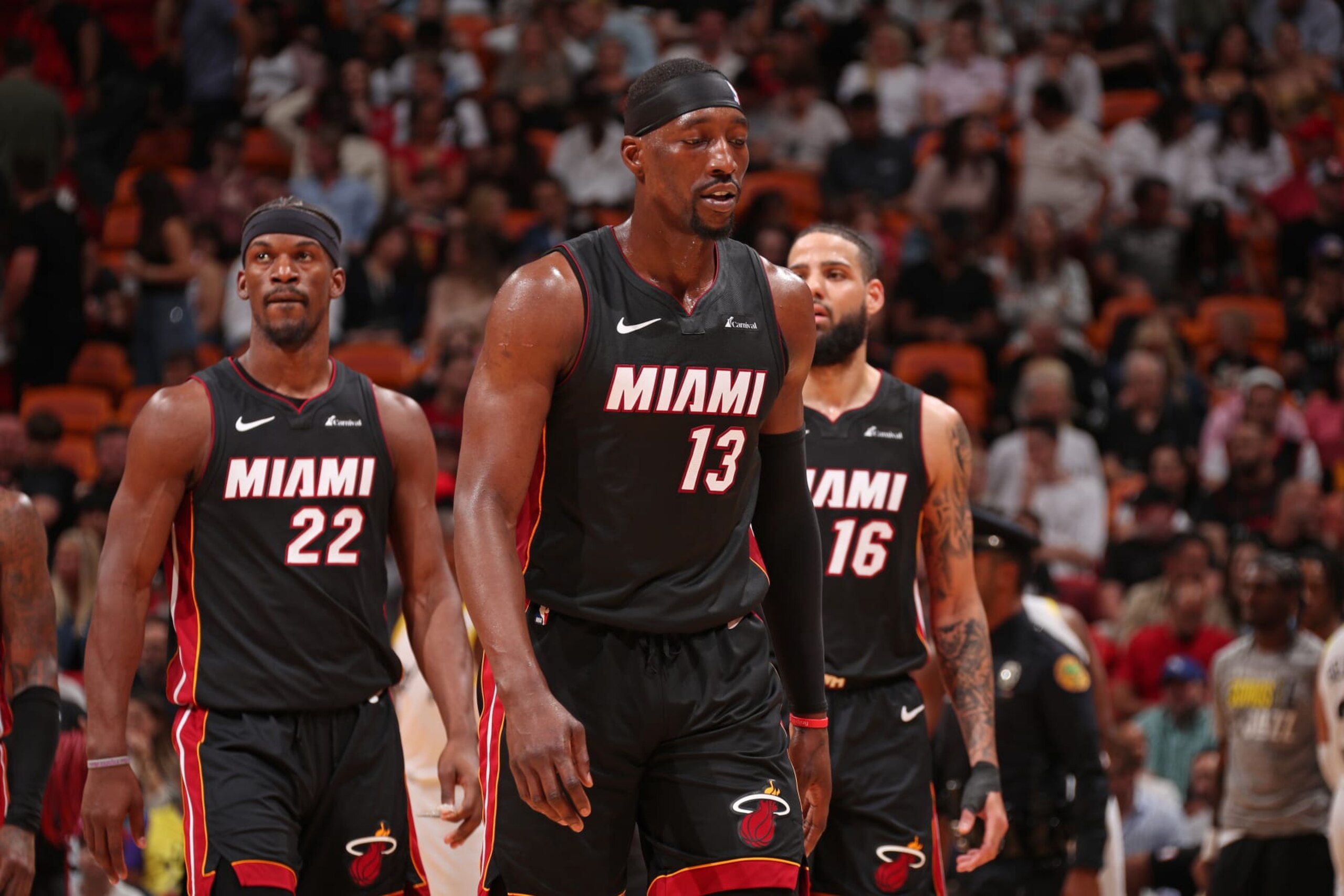
Miami Heat Receive: No. 24 pick, No. 25 pick
New York Knicks Receive: No. 15 pick, Los Angeles Lakers' 2026 second-round pick
Miami's collection of contracts is built for blockbuster-salary matching. Its draft-pick armory, on the other hand, has winnowed. Entering the offseason, it's also one Caleb Martin (player option) raise away from belly-flopping into the uber-restrictive second apron.
Bake in the potential awkwardness, perhaps contentiousness, of Jimmy Butler extension negotiations (or lack thereof), and imagineering impactful trades is all sorts of messy.
So, here we are.
Parlaying the No. 15 pick into a pair of first-rounders gives Miami two shots at fleshing out the rotation with cost-controlled contributors. That doesn't technically fit the timeline of soon-to-be 35-year-old Butler, but the Heat have seldom shied from leaning on prospects and fliers despite immediate expectations. Martin, Jaime Jaquez Jr., Nikola Jović, Haywood Highsmith and Duncan Robinson are all living, breathing, still-on-the-roster proof.
This scenario loses serious appeal if Miami is married to a fringe-lottery prospect. But the 2024 draft class is engendering all sorts of lackluster projections. Is there that much of a difference dropping down nine spots? The additional first seems worth the risk.
The Knicks may need to be smitten with a fringe-lottery prospect to push the "Let's do it!" button. Then again, with Isaiah Hartenstein (Early Bird) and OG Anunoby (player option) heading for free agency, they will have various tax implications of their own to navigate. (Bojan Bogdanović's partially guaranteed deal is a defining offseason factor for them.) Consolidating Nos. 24 and 25 into No. 15 saves them a bit of money while conceptually increasing the quality of the rookie they house.
Perhaps New York prefers the ability to peddle two prospects in other trade talks. But draft picks lose mystique (and thus value) the moment they turn into actual players. And once more, the tepid impressions of this class likely curbs the appeal of the "Two prospects!" angle.
—Favale
Milwaukee Bucks
15 of 28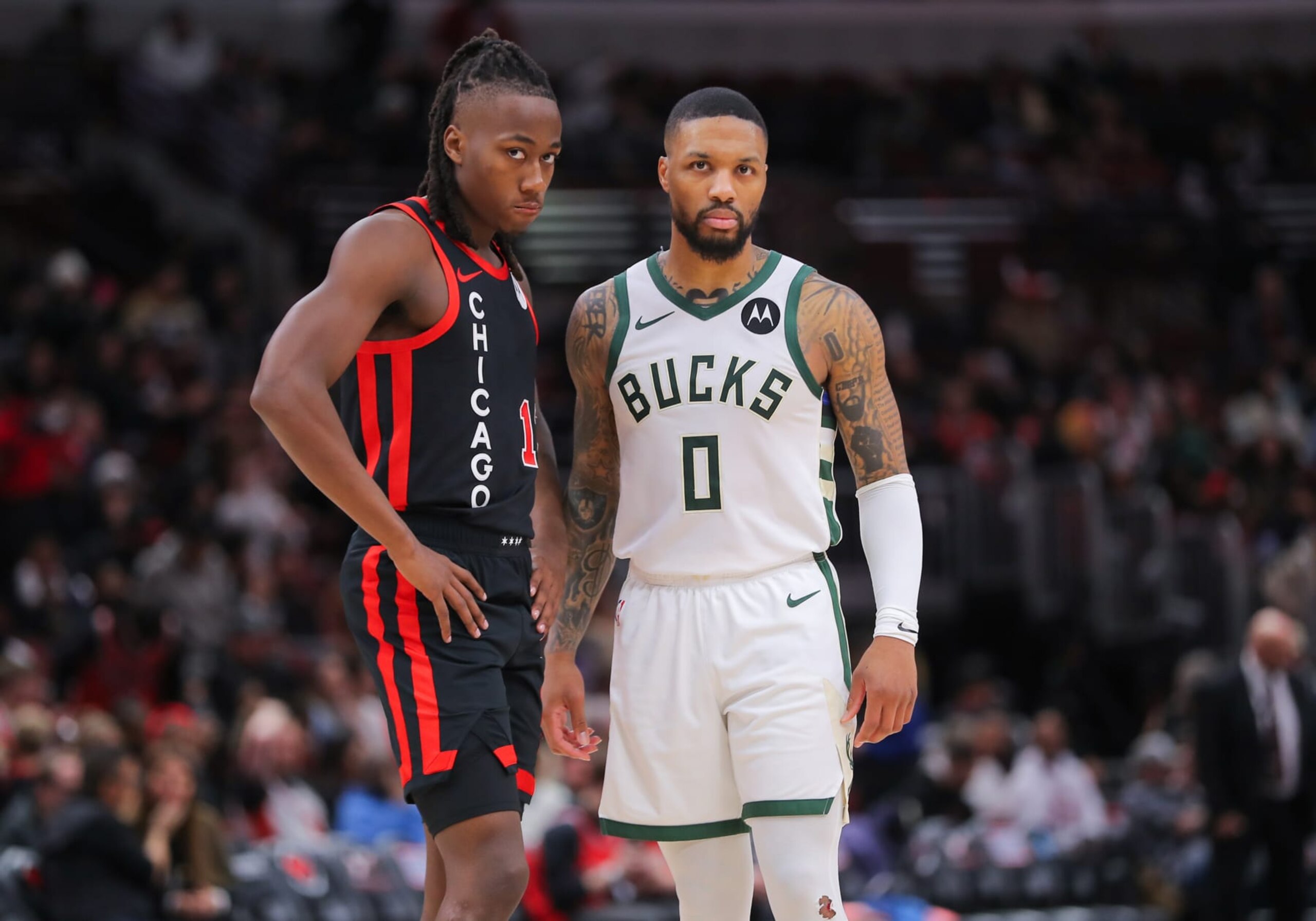
Milwaukee Bucks Receive: Ayo Dosunmu
Chicago Bulls Receive: Pat Connaughton, No. 23 pick
Second-apron restrictions severely limit what the Bucks can do on the trade market without busting up their Core Four or shedding vast amounts of salary. But they will have a sweet spot in which they can attach No. 23 to another player before the first-round pick counts as actual payroll.
Connaughton ($9.4 million) and Bobby Portis Jr. ($12.6 million) earn enough on their own for this to open meaningful possibilities. Milwaukee can be even more ambitious if it's willing to put a 2031 first-rounder on the table.
Dosunmu feels like a happy medium. He made real strides as a shooter and driver this past season, but the Bucks will be most attracted to his defense—not to mention the two team-controlled years at a total of $14.5 million left on his contract.
Milwaukee's rotation needs a jolt of versatility and verve on the perimeter. Dosunmu brings it in spades. At 6'5" in shoes, with a wingspan north of 6'10", he can defend both guard spots and scale up to certain wings. Tackling star covers isn't out of the question, either.
Four other players this past season split at least 20 percent of their defensive possessions against 1s, 2s and 3s and spent about as much time on first and second options as Dosunmu while clearing 2,000 minutes, according to BBall Index: Malik Beasley (who the Bucks are about to lose in free agency), Mikal Bridges, Jaylen Brown and Jaden McDaniels.
Chicago might want more at this juncture than a late first-rounder to punt on Dosunmu and take on the $18.8 million Connaughton is owed over the next two years (2025-26 player option).
For its part, Milwaukee also has the No. 33 pick. And if it means landing Dosunmu, the Bucks shouldn't be afraid to include it.
—Favale
Minnesota Timberwolves
16 of 28
Minnesota Timberwolves Receive: Aaron Nesmith, Jarace Walker and the No. 36 pick in the 2024 draft (via TOR)
Indiana Pacers Receive: Jaden McDaniels
The Minnesota Timberwolves can't realistically duck the second apron without dumping significant cash for nothing in return.
As it stands, they're set to enter next season with a payroll just over $196 million, a figure well above the $190 million second-apron cutoff—and that estimate only includes 11 filled roster spots.
So, if we dispense with the far-fetched idea of getting the Wolves below the second apron this summer and assume they'll complete the process by the end of next season (which is when it really matters anyway), we can take the first step of diversifying their assets and adding flexibility.
Here, the Wolves trim about $5 million in 2024-25 salary by taking on Nesmith and Walker for McDaniels while also hopefully offsetting the hypothetical departure of Kyle Anderson in free agency.
Walker barely played for Indiana as a rookie, but he came into the league billed as a versatile combo forward who could facilitate and defend multiple positions. He showed flashes of those skills last season, which is probably why the Pacers were reluctant to discuss him as part of the package for Pascal Siakam.
Maybe Indy's run to the conference finals will shift it into more of a win-now posture, which could include dealing Walker in a package for one of the best defensive forwards in the league.
Nesmith makes half as much as McDaniels, is a better shooter and might not hurt the defense's bottom line too badly with Rudy Gobert behind him and Anthony Edwards capable of guarding the opponent's top wing.
Minnesota can slot him into the first unit, develop Walker and enjoy the modest savings of landing two players and a high second-rounder for McDaniels.
—Hughes
New Orleans Pelicans
17 of 28
New Orleans Pelicans Receive: Darius Garland
Cleveland Cavaliers Receive: Brandon Ingram and a 2025 first-round pick (via LAL)
Pelicans executive vice president David Griffin is promising change, and NBA Insider Marc Stein listed the Cavs among Ingram's potential landing spots if New Orleans opts to trade the former All-Star.
That's more than enough information to cook up an intriguing one-for-one (well, almost one-for-one) challenge trade between a pair of teams that need to refresh their first units.
The Pels include the first-rounder they have coming from the Los Angeles Lakers because Ingram is heading into the final year of his deal and may not be a lock to extend ahead of 2025 free agency. He's also two years older than Garland, who's locked into a rookie-scale extension that will take him through the 2027-28 season. A first-rounder seems like a good way to close the long-term security gap between these two high-end starters.
Ingram would give the Cavs a player type they've long sought, a rangy combo forward who can create his own offense. Garland could slot in as the pure point guard and three-point shooting threat New Orleans needs alongside Zion Williamson.
This deal comes with some potential sticking points for the Pelicans. It doesn't address their lack of a rim-protecting center unless you want to expand it to include Jarrett Allen, and CJ McCollum would almost certainly have to be rerouted in a separate trade.
A McCollum-Garland backcourt would present more severe versions of the issues that attended the latter's pairing with Donovan Mitchell in Cleveland: duplicative skill sets and a dangerous lack of size and defensive impact.
In the end, New Orleans gets a substantial upgrade at the 1 in exchange for Ingram, who makes more sense for the Cavs and whose departure would allow the Pelicans to settle on Trey Murphy III and Herb Jones as their no-questions-asked wing starters.
—Hughes
New York Knicks
18 of 28
New York Knicks Receive: Mikal Bridges
Brooklyn Nets Receive: Deuce McBride, Mitchell Robinson, No. 24 pick, Milwaukee's 2025 first-round pick (top-four protection), 2025 second-round pick (Brooklyn's own), 2026 first-round pick, 2027 second-round pick, 2028 first-round pick (top-seven protection)
This goes beyond the Knicks' affinity for collecting Villanova Wildcats.
They may be staring at their last best chance at acquiring a big name before grappling with second-apron strictures. (Yours truly goes into more detail about this here.) Now is the time to strike if they want to bag a better second-best player without taking a stick of dynamite to the core.
Whether Bridges qualifies is arguable. Julius Randle is a better shot creator. Bridges is the cleaner fit. Whatever. New York isn't choosing between the two in this scenario. It's effectively leaning further into its depth-you-to-death model while nudging up its competitive ceiling.
Isaiah Hartenstein's tricky free agency in mind, the Knicks would exit this deal with a core of him, Bridges, Randle, Jalen Brunson, OG Anunoby (player option), Josh Hart and Donte DiVincenzo. Good luck rivaling that nucleus if you play outside Boston.
New York could even try increasing the first-round equity of this package and subbing in Bojan Bogdanović ($2 million guarantee) for Robinson—though it would need to get lucky in Hartenstein and Anunoby negotiations to finish far enough beneath the second apron to do so.
Pitching the Nets on this deal could be futile. And not just because they haven't struck a deal with the Knicks since 1983. Brooklyn reportedly remains steadfast in its refusal to flip Bridges, a stance that seemingly goes beyond its draft obligations to Houston, since the Rockets have been a focal point of multiple overtures, both hypothetical and genuine.
Any offer built around four first-round picks and Robinson still warrants consideration—even more so if the Nets lose Nic Claxton in free agency. The Knicks also have the draft stash to go up from here. Whether they should, of course, is a different story.
—Favale
Oklahoma City Thunder
19 of 28
Oklahoma City Thunder Receive: Deni Avdija
Washington Wizards Receive: Josh Giddey, the No. 12 pick in the 2024 draft and a 2025 first-round pick (via MIA; top-14 protected)
Giddey's spot in the Oklahoma City Thunder's first unit is the one most in need of an upgrade, even if that's largely by default. Shai Gilgeous-Alexander, Lu Dort, Jalen Williams and Chet Holmgren are deservedly entrenched there.
Avdija is two years older than Giddey at 23, which suggests he has slightly less room for growth, and much of his play prior to last season featured some of the same shortcomings that have dogged Giddey—namely errant outside shooting and minimal self-created offense.
Last season saw Avdija change in key ways, as he upped his three-point hit rate to a tantalizing 37.4 percent while assuming a larger share of playmaking duties. His averages of 14.7 points, 7.2 rebounds and 3.8 assists were all career highs, and the burly 6'9" forward was even better than that after the All-Star break.
Giddey has made steady strides as a shooter, hitting a career-best 33.7 percent from deep last year. But he's nowhere near Avdija's level on defense, and despite similar size on the wing, fails to play with any noticeable downhill force.
The Thunder have the picks to spare, and the rebuilding Wizards should be in the market for as many lottery tickets as possible. Avdija is a better player than Giddey today, but he's already on his second contract, and Giddey's youth gives him two extra years of upside ahead.
—Hughes
Orlando Magic
20 of 28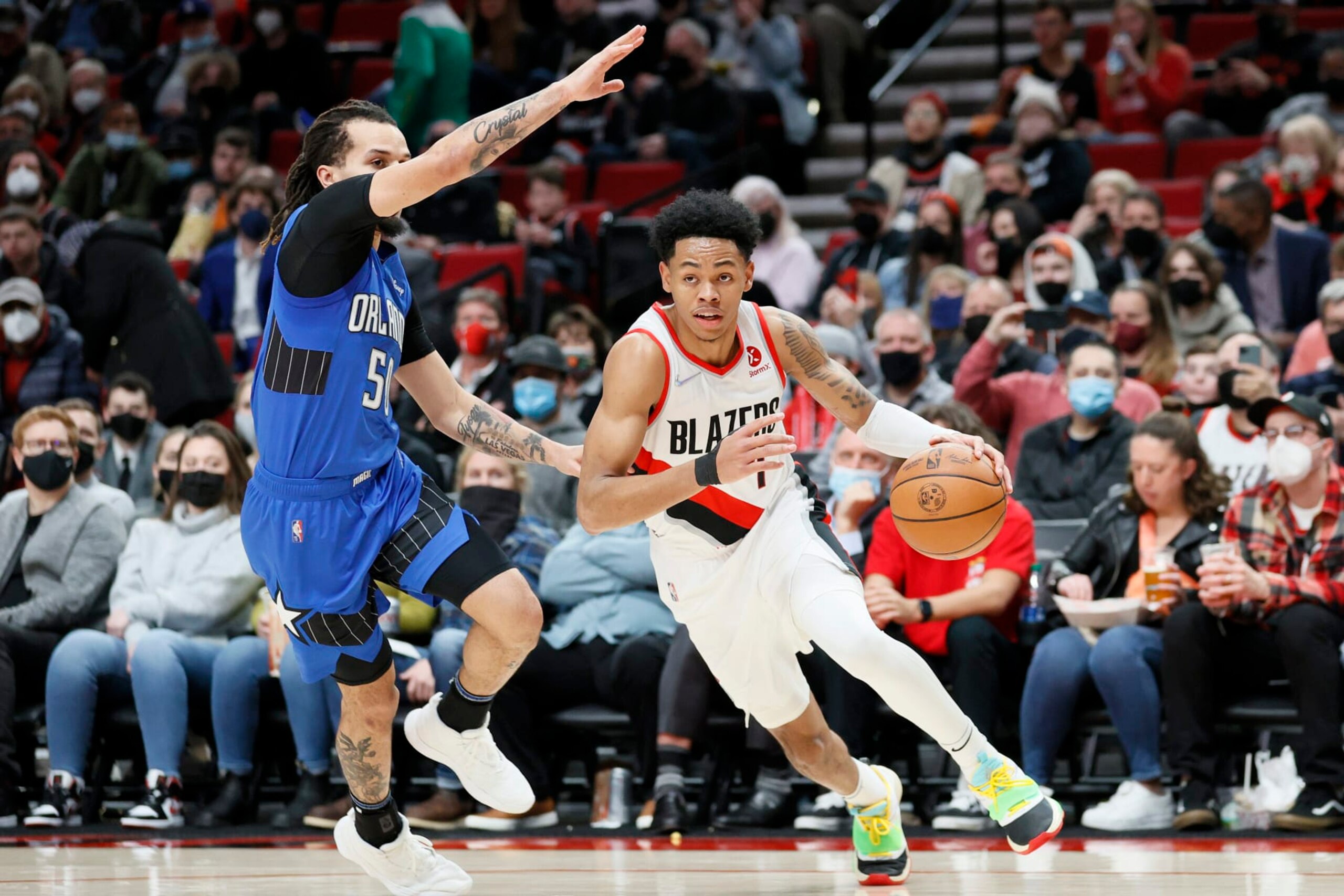
Orlando Magic Receive: Anfernee Simons
Portland Trail Blazers Receive: Cole Anthony, No. 18 pick, Denver's 2025 first-round pick (top-five protection through 2027)
Half-court shot-making and facilitation top the Magic's offseason wish list, and they have the assets to address both.
Going after Simons comes close to doing so in one player. He isn't a bold-text game manager, but he has improved his live-dribble reads over the past few years. Secondary orchestration also goes a long way when Paolo Banchero is already in place.
Granted, Simons' scoring ability represents the meat and potatoes and ice-cream sundae of his appeal. He just downed nearly 43 percent of his catch-and-fire triples and continues to nail his off-the-dribble treys at a satisfactory clip, and the 8.8 three-pointers he jacked per game this season would have led Orlando by a colossal margin.
Attaching two firsts to Anthony will come across as lofty to more than a few people. It isn't. Neither of those firsts has top-shelf value, and at 25, with two guaranteed years left on his deal, Simons perfectly jibes with the Magic's timeline. Orlando would also retain access to cap space, if it chooses, that can be allocated toward a more conventional floor general (a la Tyus Jones).
Portland could ask for more, but this package serves a multitude of purposes: It nets two additional first-rounders, lands a reasonably paid and capable backup guard and nudges the payroll (comfortably) outside tax territory.
The Blazers can ask for Anthony Black instead of Anthony or one of the firsts, and the Magic would probably listen. But his developmental arc in Portland profiles a finicky given his shaky jumper, and he's unlikely to ever graduate to closing lineups with Scoot Henderson and Shaedon Sharpe in the mix.
–Favale
Phoenix Suns
21 of 28
Phoenix Suns Receive: Dyson Daniels and Larry Nance Jr.
New Orleans Pelicans Receive: Jusuf Nurkić and the No. 22 pick in the 2024 draft
The Phoenix Suns need a point guard, whatever flexibility they can find and some way to build out their depth using more than minimum salaries as they blow past the second apron.
This deal addresses those concerns while trimming a couple million bucks from the payroll, plus additional tax penalties.
It is, however, a risk.
Nurkić performed well for the Suns last season, averaging 10.9 points, 11.0 rebounds and a career-best 4.0 assists. His ability to move the ball as a roll man was key to Phoenix's attack. A team this thin can't just start trimming away starters.
Nance, however, boasts a career assist rate of 12.7 percent that comes awfully close to Nurkić's 15.7 percent figure, and both bigs averaged roughly the same amount of fourth-quarter playing time (5.5 minutes for Nance; 6.1 for Nurkić). Superior defensive switchability and a higher three-point hit rate even give Nance a couple of edges.
Daniels is the real prize here, and he's the main reason New Orleans might cut off these talks quickly. A defense-first facilitator, he makes loads of sense as a supporting piece for the Suns' trio of scoring stars.
That said, the Pels need to address the potential loss of free-agent center Jonas Valančiūnas, and Daniels' career 31.2 percent shooting from deep makes him a tough fit alongside non-spacing superstar Zion Williamson.
—Hughes
Philadelphia 76ers
22 of 28
Philadelphia 76ers Receive: Bogdan Bogdanović
Atlanta Hawks Receive: No. 16 pick, Milwaukee's 2027 second-round pick
Any trade idea for the Sixers is beyond fluid until we see how much cap space they carve out and then how they go about deploying said spending power. Chances are, though, they will be left with enough wiggle room to flat-out absorb a sizable salary or two in a trade that meaningfully beefs up their rotation.
Identifying those scenarios is at once easy and difficult. Potentially chiseling out more than $60 million in space renders the Sixers ridiculously flexible, and they will have up to five first-round picks to use as sweeteners. But they won't have actual players to dangle, a possible deal-breaker for teams sending out quality names who aren't overly concerned with their payroll.
Fortunately for Philadelphia, the Hawks will almost assuredly be mindful of their operating costs. After winning the draft lottery, they will enter the offseason (just barely) inside the luxury tax. The combination of Atlanta's track record and the quality of its roster suggests that won't stand.
Ducking the tax is simpler than dealing a pivotal player like Bogdanović. The Hawks could skirt the line in a Dejounte Murray trade or unload a smaller standalone salary. But landing the No. 1 pick and the inevitability of dealing Murray or Trae Young lends itself to more wholesale recalibrations.
Even if this doesn't trigger a rebuild (and it probably won't), Atlanta could look to spruce up its cap sheet as it prepares for Jalen Johnson's next deal to kick in during the 2025-26 campaign. Picking up an additional first-rounder for someone who turns 32 in August is a reasonable return. Atlanta can push for a later pick, in a year it doesn't control its own, if this framework doesn't whet its whistle.
This exact construction should be a no-brainer for the Sixers (cap space-pending). Bogdanović is a career 38.4 percent shooter from distance on over eight attempts per 36 minutes and brings more on-ball scoring pizzazz than Buddy Hield and more playmaking than Kelly Oubre Jr.
—Favale
Portland Trail Blazers
23 of 28
Portland Trail Blazers Receive: Anthony Black and a 2025 first-round pick (via DEN)
Orlando Magic Receive: Anfernee Simons
If Scoot Henderson and Shaedon Sharpe are the Blazers' backcourt of the future, it doesn't necessarily mean Anfernee Simons has to go. But allocating significant resources to three guards who aren't currently—and don't project to be—good defenders might not be the best path forward.
This deal gives the Blazers a real change of pace, inserting Black—a defensively oriented, high-IQ facilitator with great size—into the mix.
Simons and Sharpe will ideally do most of scoring over the next half-decade or so in Portland, but why force them to shoulder heavy facilitation loads at the same time? Black seems wired to set up teammates before looking for his own buckets, and that preference would play well with the Blazers' incumbent guards.
Meanwhile, the Magic get the backcourt scoring boost they badly need from Simons, whose career three-point hit rate of 38.6 percent would make him an ideal spacer and complementary offensive piece next to Paolo Banchero and Franz Wagner.
Black is a big, rangy guard who flashed good hands, energy and connective passing during his rookie season. Those are valuable traits, but Simons' quick-trigger shooting off the dribble is in shorter supply on Orlando's roster.
Simons' shaky defense wouldn't be as damaging with Jalen Suggs handling the toughest matchup every night—not to mention more back-line help than the Blazers can boast.
This could be a one-for-one exchange because Orlando can take Simons' $25.8 million into cap space, but Black's shorter track record means the Blazers need to get a protected first-rounder as a sweetener.
—Hughes
Sacramento Kings
24 of 28
Sacramento Kings Receive: Dorian Finney-Smith
Brooklyn Nets Receive: Davion Mitchell, Chris Duarte and a top-10 protected 2027 first-round pick (converts to two seconds if not conveyed)
By now, the Brooklyn Nets should know they're never getting multiple first-rounders for Dorian Finney-Smith. That should embolden the Kings to come in with a relatively modest offer, headlined by a future first-rounder and a couple of former lottery picks whose careers aren't trending in the right direction.
It's possible Brooklyn would view Mitchell as a candidate to improve with a change of scenery, and Dennis Smith Jr.'s free agency could leave a backcourt defensive void that Mitchell would ably fill.
The Kings are in desperate need of versatile wing defense, particularly with Harrison Barnes slowing down. Keegan Murray keeps getting better on that end, but he can't handle the whole operation on his own, and Domantas Sabonis' limitations mean Sacramento needs forwards who can cover all areas of the court.
Finney-Smith shot just 34.8 percent from deep this past season but isn't so far removed from canning 39.4 and 39.5 percent of his triples in 2020-21 and 2021-22. Maybe he'd heat up again with better facilitation coming from De'Aaron Fox and Sabonis. And it's not like DFS' run as resident stopper for the Mavericks in the 2022 Western Conference Finals was that long ago.
Finney-Smith isn't a game-changing get, but he addresses the Kings' needs and brings plenty of postseason experience.
—Hughes
San Antonio Spurs
25 of 28
San Antonio Spurs Receive: Malcolm Brogdon, Robert Williams III and the No. 34 pick in 2024 (via CHA)
Portland Trail Blazers Receive: Keldon Johnson and Zach Collins
Brogdon would be a massive upgrade over anyone who started at the point for San Antonio last year.
A 39.0 percent three-point shooter for his career, the 31-year-old veteran made 41.2 percent of his treys this past season. The 2022-23 Sixth Man of the Year also put up 15.7 points, 5.5 assists and 3.8 rebounds in 28.7 minutes per game.
Though he's more of a combo guard than a true facilitator, Brogdon could play alongside Tre Jones or whomever San Antonio adds in free agency to run the point while also serving as a backup 1 when necessary.
Williams is a wild card with a troubling health record, but he was a Defensive Player of the Year candidate during his last/only healthy season. Victor Wembanyama should play as much center as possible, but he's not going to man the position for 48 minutes. Williams can spell Wemby off the bench or play next to him in super-big lineups.
Johnson is the biggest name involved here, a 24-year-old forward who averaged 22.0 points per game in 2022-23 before moving to a bench role last year. He doesn't seem long for San Antonio, but the Blazers should be happy to add a younger and cheaper alternative to Jerami Grant, a likely trade candidate in his own right. The price of acquiring Johnson is former Blazer Zach Collins' onerous contract, which still has two years and $35 million left.
Most importantly for the Spurs, Brogdon tends to make positive impacts on his team's offense and bottom line.
Among Blazers who played at least 1,000 minutes in 2023-24, he had the highest on-court net rating at minus-3.7. That may not seem like much, but Portland was outscored by 9.0 points per 100 possessions overall and was a ghastly minus-11.1 per 100 possessions whenever Brogdon was on the bench.
—Hughes
Toronto Raptors
26 of 28
Toronto Raptors Receive: Moses Moody
Golden State Warriors Receive: Ochai Agbaji, No. 31 pick
Moody's status within the Warriors rotation has existed in a perpetual state of flux. That could change leading into next year if they move on from Klay Thompson or Andrew Wiggins. His playing-time limbo could also just as easily persist.
Moving him in advance of his next deal is the smart play if Golden State doesn't view him as a contributor on a reimagined contender or as part of its long-term plan. And it just so happens the Raptors could use a plug-and-play wing who holds his own defensively and doesn't monopolize possessions or shrink the floor on offense.
Is this offer enough? Too much? You could argue both.
On the one hand, Agbaji's stock has plummeted. Getting him and a second-rounder for a lottery prospect won't incite victory laps inside the Warriors' front office or fanbase.
On the other hand, Agbaji has two more years left on his rookie scale, 31st overall is a fringe first-rounder, and Moody will be due for a raise in one year's time. The Raptors may prefer rolling the dice on the mystery-box shine emanating off No. 31 and, to a lesser extent, Agbaji.
Toronto should feel better about this deal than Golden State in the end. It isn't exactly operating with the utmost urgency, but moving OG Anunoby and Pascal Siakam didn't fire up the rebuilding machine, either.
RJ Barrett and Jakob Poeltl have already been paid. Immanuel Quickley is about to get a big-time raise in restricted free agency. Scottie Barnes will (presumably) be on a max deal in 2025-26. Moody's eventual pay increase is a concern, but the Raptors have the incentive to traffic in youngsters with more proven track records than anonymous draft fliers and distressed prospects.
For the cap dorks like myself: Toronto can complete this deal even if it opts against cap space this summer. Moody's $5.8 salary fits neatly into the $10.1 million traded player exception it created as part of Siakam's exit.
—Favale
Utah Jazz
27 of 28
Utah Jazz Receive: Cade Cunningham
Detroit Pistons Receive: Keyonte George, Taylor Hendricks, the No. 10 pick in 2024 draft, a 2025 first-round pick (via CLE), 2027 first-round pick (via LAL; top-4 protected) and a 2027 first-round pick (via MIN)
Per Michael Scotto of HoopsHype, the Jazz will consider trading the No. 10 pick in the 2024 NBA draft, along with additional first-round picks for "star talent."
Any such star would have to skew toward the younger end of the spectrum to make sense in Utah's timeline, even if the deal would send out some of the youth already on board.
This is a massive offer from Utah, but that might be what it takes to get Detroit to listen for more than five seconds on a trade inquiry for Cunningham.
Though the top pick in the 2021 draft hasn't driven a whole lot of team success so far, it's hard to pin the Pistons' struggles on him. Last season, he became one of only eight players in league history aged 22 or younger to average at least 22.0 points, 7.0 assists and 4.0 rebounds per game.
Trajan Langdon is taking over the front office in Detroit, and he could look to reorient the roster around players he prefers rather than the ones selected by the previous regime. He wouldn't be the first newly appointed executive to put his stamp on a team right away.
The Pistons wind up with four first-rounders and two players taken inside the top 16 picks in 2023, all in exchange for Cunningham, who's likely to ink a max extension this summer.
It would be unusual to see a player with Cunningham's draft pedigree and production traded before his second contract, but the Jazz's offer here is no joke.
—Hughes
Washington Wizards
28 of 28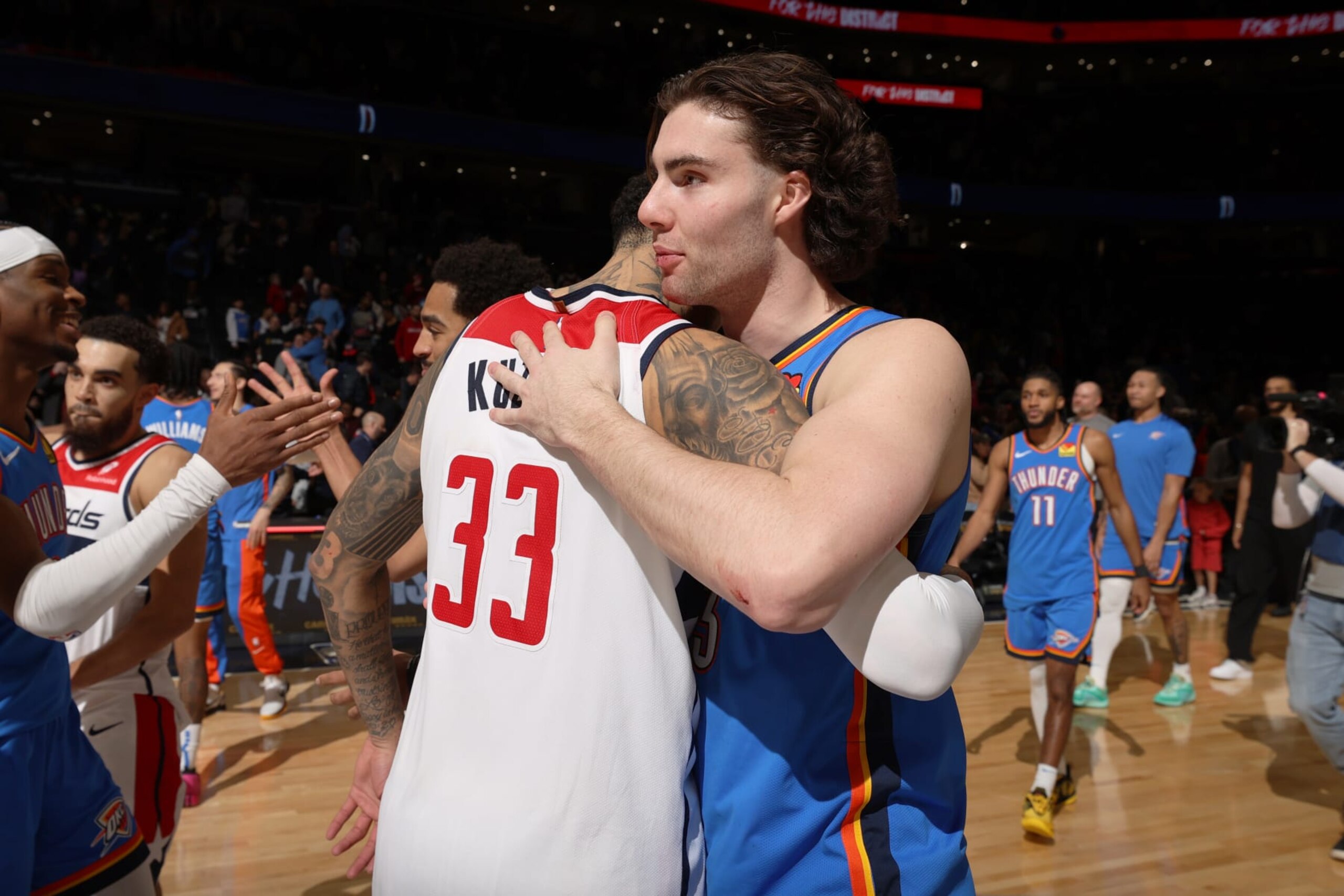
Washington Wizards Receive: Josh Giddey, 2025 first-round pick (least favorable from Houston, Los Angeles Clippers, Miami, Oklahoma City or Philadelphia)
Oklahoma City Thunder Receive: Kyle Kuzma
Indiscriminate talent acquisition should top the Wizards' list of offseason objectives. They're that early into their rebuild. But special attention should be paid to the point guard spot, where they don't currently have anyone who qualifies as more than a placeholder, let alone a building block.
Getting an extensive look at Giddey solves that. He'll turn just 22 in October, can be a majestic passer and has put together semi-convincing stretches in which he knocks down open threes and keeps defenses on tilt with his floater.
Flipping Kuzma for Giddey straight up might make sense if this was a year or two ago, but the latter has just one season left on his rookie scale. The prospect of his next contract dulls some of his appeal.
Rumor has it, though, that the Thunder might have an extra first-round draft pick or two. Washington remains short on those. Scooping up a first-rounder in a draft class considered much deeper than this year's crop adds a coveted tool to their rebuilding belt.
The Wizards might want a better version of the included pick. That's fine. The two sides can haggle over the finer details or any additional draft equity later. This outline should at least get the discussion started—unless Oklahoma City isn't having it.
Kuzma won't be the Thunder's preferred acquisition. That would be Deni Avdija, who the Wizards absolutely should not trade. Kuzma is a worthwhile alternative.
Pretty much everyone wants OKC to go after more glittery and expensive names. Forthcoming paydays for Shai Gilgeous-Alexander, Chet Holmgren and Jalen Williams complicate those pursuits. The Thunder need someone more cost-controlled who doesn't completely disrupt their five-out model.
Kuzma isn't a lights-out shooter, but he's respectable enough to preserve their offensive principles, and he's turned into a solid defender and rebounder when deployed as a bigger wing.
Bake in a salary that declines through each of the next three years, and he's a workable fit—functionally and financially—who doesn't tether Oklahoma City to any one approach over the longer haul.
—Favale
Stats courtesy of NBA.com, Basketball Reference and Cleaning the Glass. Salary info via Spotrac.
Subscribe to Dan and Grant's NBA podcast, Hardwood Knocks.
.jpg?w=2560 "Commanders OL HEATED After Tie ▶️")
.jpg?w=2560 "49ers LB Suspended for Headbutt")