

30 NBA Offseason Storylines You Need to Know
We are so close to crowning a 2024 NBA champion that you can basically smell the overpriced champagne. And, by extension, we are also so very, very, very close to the official start of the offseason that, if you listen closely enough, you can practically hear the tampering (that totally doesn't take place, wink-wink) in real time.
With the Association's annual summertime chaos-fest fast approaching, and with the overwhelming majority of squads already in offseason mode, now feels like a pretty good time to tackle the biggest storyline, development, question, issue, narrative, whatever you want to call it, facing each NBA team.
Bleacher Report's Grant Hughes and Dan Favale have dutifully accepted the mission of guiding you through the preemptive slop. And they would like you to know that no matter what you read here, we really don't hate your team. Low-hanging fruit is merely our preferred macro-nutritional source.
Spotlighted storylines will be selected relative to each franchise's current direction and the decisions, crossroads or goals that figure to shape, if not entirely define, their forthcoming summer.
And with that, let us now take our inquiring minds to a place where curiosity roams free.
Atlanta Hawks: Which Guard Do They Trade?
1 of 30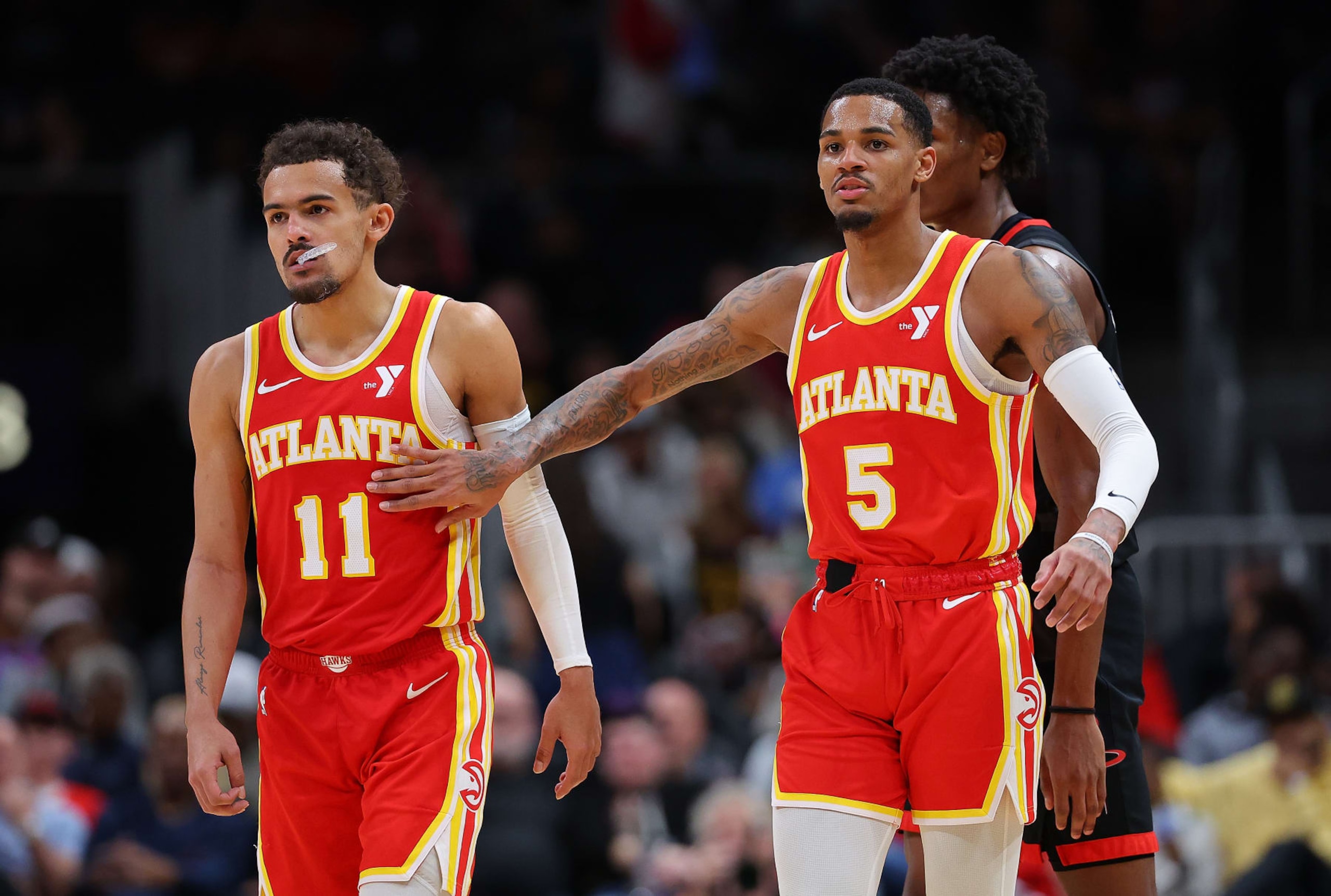
Busting up the backcourt pairing of Dejounte Murray and Trae Young has mutated into an inevitability for the Atlanta Hawks. They were outscored by over six points per 100 possessions this season when the duo shared the floor and don't currently have the requisite wings or defensive versatility to hold out hope for better results next year.
Tripling down on the Murray-Young twosome with a splashy acquisition or three mostly feels out of the question. Landing the No. 1 pick does arm the Hawks with a primo asset, but it's not clear what that can land on its own. People in the know aren't exactly smitten with this year's draft class, and Atlanta is limited in how much it can sweeten packages when San Antonio controls its next three first-rounders.
So, which guard will the Hawks trade?
Conventional wisdom suggests they should and will move Murray. Despite all of his flaws, Young is the more dominant player. But Atlanta could be overly worried about assembling a top-notch-ish defense around him. Both sides could also be ready for a change, or the front office may recognize the 25-year-old with an All-NBA selection under his belt will garner a heftier return.
Beyond that, there's no telling how bagging the first-overall selection impacts Atlanta's thinking. Netting Alex Sarr or Zaccharie Risacher likely isn't enough to fire up the total-rebuild machine and flip both Murray and Young. Then again, is that really off the table?
Proximity to the luxury tax looms over everything. The Hawks will enter the offseason over the line—without even accounting for Saddiq Bey's restricted-free-agent hold. Chances are the C-Suiters won't allow that to stand. And if shedding salary is the mandate, it will no doubt factor into the calculus of who they trade as well as what they prioritize in return.
—Favale
Boston Celtics: Will Derrick White Sign an Extension?
2 of 30
The Boston Celtics are on the precipice of a pretty low-stakes offseason. That might change depending on how they fare during the 2024 NBA Finals, but they have made it far enough and played convincingly enough to avoid any existential inquiries.
Figuring out how to navigate life inside the second apron will top the to-do list. For the time being, though, that's more about potentially inflating salaries of incumbent free agents (like Luka Kornet and Xavier Tillman Sr.) to increase trade flexibility. Cost-cutting maneuvers will be more topical in 2025-26—at the absolute earliest.
Jayson Tatum's supermax eligibility is worth monitoring. At the same time, it's another non-issue. He will put pen to paper on a five-year deal worth an estimated $314.9 million that kicks in for the 2025-26 campaign.
Derrick White's extension eligibility is a different beast altogether. He can sign a four-year, $122.8 million pact that keeps him on the books through 2028-29. Boston will assuredly offer him the deal. Will he take it?
I genuinely don't have an answer.
White's extension would pay him $27.4 million in 2025-26—roughly 17.6 percent of the projected $155.1 million salary cap. His Year 1 max if he hits free agency checks in around $46.5 million.
That's, er, a massive difference.
Sure, White isn't a traditional star. But he's at times looked like the Celtics' second most valuable player. Combine that with his scalability at both ends of the floor and the age at which his next deal begins (31), and the idea that he can land a four-year max in 2025 worth $208.5 million (or something close to it) is hardly farfetched.
—Favale
Brooklyn Nets: What Timeline Is This Team Operating On?
3 of 30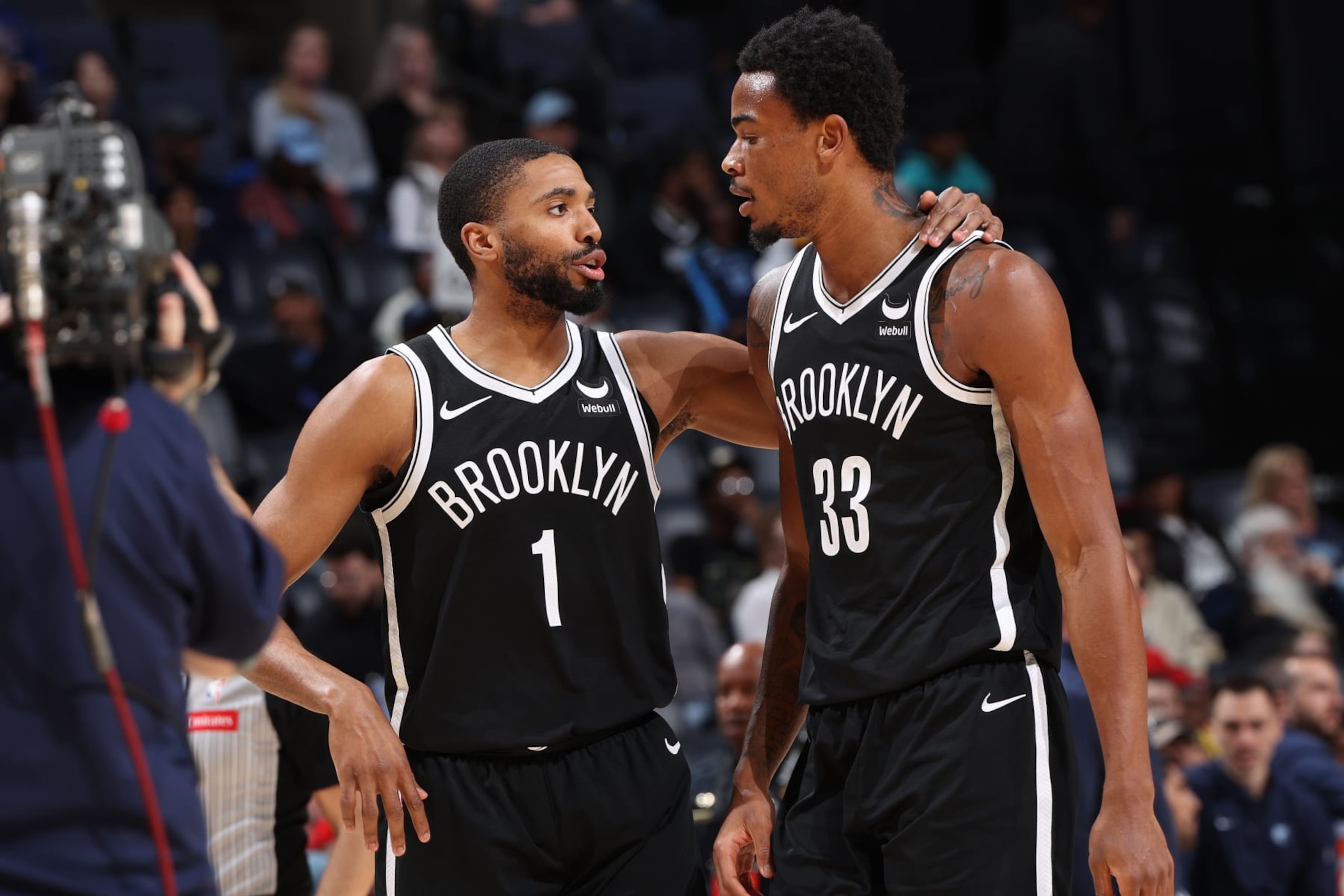
[Assumes the tone of someone six months into a new romantic relationship that has seldom included talks about the future.]
So, uh, where is this thing going, Brooklyn Nets?
Into the blockbuster-trade market is the default answer. The Nets don't control their own first-rounder until 2028, and general manager Sean Marks doesn't sound like someone who's preparing to shepherd the organization through another rebuild.
Armed with future draft equity from the Dallas Mavericks, Philadelphia 76ers and Phoenix Suns, Brooklyn is better positioned to go bigger-name hunting. To that end, they are among the teams watching how Donovan Mitchell's extension eligibility unfolds this summer, as alluded to by ESPN's Brian Windhorst during an appearance on Get Up.
And yet, aggressively buying on the trade market runs counter to team governor Joe Tsai's apparent aims.
"I want to build a winning mentality and culture that's sustainable," he recently said (h/t CBS Sports' Sam Quinn). "Those two are very different things. If you just want to be win-now you could ruin your future by trading away all of your assets but I think what I want to do with the Brooklyn Nets is take a longer-term approach and build a sustainable, winning culture."
Are Marks and Tsai on the same page? What, exactly, is written on that page?
Will the Nets re-sign Nicolas Claxton, shut down Mikal Bridges trade inquiries and run it back? Do they look to poach a star via trade? Or will they find there's no clear, plausible path to contention or semi-contention and warm up, fully, to the "longer-term approach?"
We'll find out soon enough.
—Favale


Charlotte Hornets: How Do They Approach Their First Rebuilding Summer?
4 of 30
Warming up to a more gradual rebuild at the 2024 trade deadline was the right move by the Charlotte Hornets. But tearing it down, sort of, is the easy part. The harder part is...everything else.
How will the Hornets, with a newly-minted front office figurehead (Jeff Peterson) and head coach (Charles Lee), approach the first summer of their rebuild? This is an abstract question that lends itself to a plethora of others.
"Who will they draft at No. 6?" is the most obvious one—and something that's largely up to the five teams selecting in front of them. "Will they select the best player available, even if it means creating redundancies in the backcourt or, more likely, up front next to Mark Williams?" is the better question (for now).
Equally pressing issues more within their control include: Will they elect to eke out over $30 million in cap space? How will they spend it if they do? On impact free agents and trade targets? On unwanted contracts attached to draft equity and young fliers, opportunities that could be available in semi-abundance as the most expensive rosters prepare to incur the full wrath of the second apron?
If the Hornets don't go all-out for cap space, does this mean they're re-signing Miles Bridges? Are they able to finagle a sign-and-trade deal with a team that can't afford him outright and compensates them accordingly? Would he return on a contract that's ready-made to move at the 2025 deadline? Do they actually view him as a core piece for the future?
Less likely, but still potentially relevant: Is LaMelo Ball the face of this rebuild? He's certainly young enough, going on 23, to be. And there is no detrimental overlap between himself and Brandon Miller. But with his max extension starting next season, ankle issues galore and a front office that didn't draft or pay him in place, could he be a surprise sell-high trade candidate?
Who else do the Hornets view as keepers and worthwhile developmental projects? Tre Mann (non-guaranteed)? Aleksej Pokuševski (non-guaranteed)? JT Thor (team option)? Nick Smith Jr.? Bryce McGowens (non-guaranteed)? Are Nick Richards, Cody Martin, Vasilije Micić and Grant Williams trade candidates or part of the immediate plan?
This list can go on. And on. And on. It's going to be both a busy and telltale summer in Charlotte.
—Favale
Chicago Bulls: DeMar DeRozan's Future
5 of 30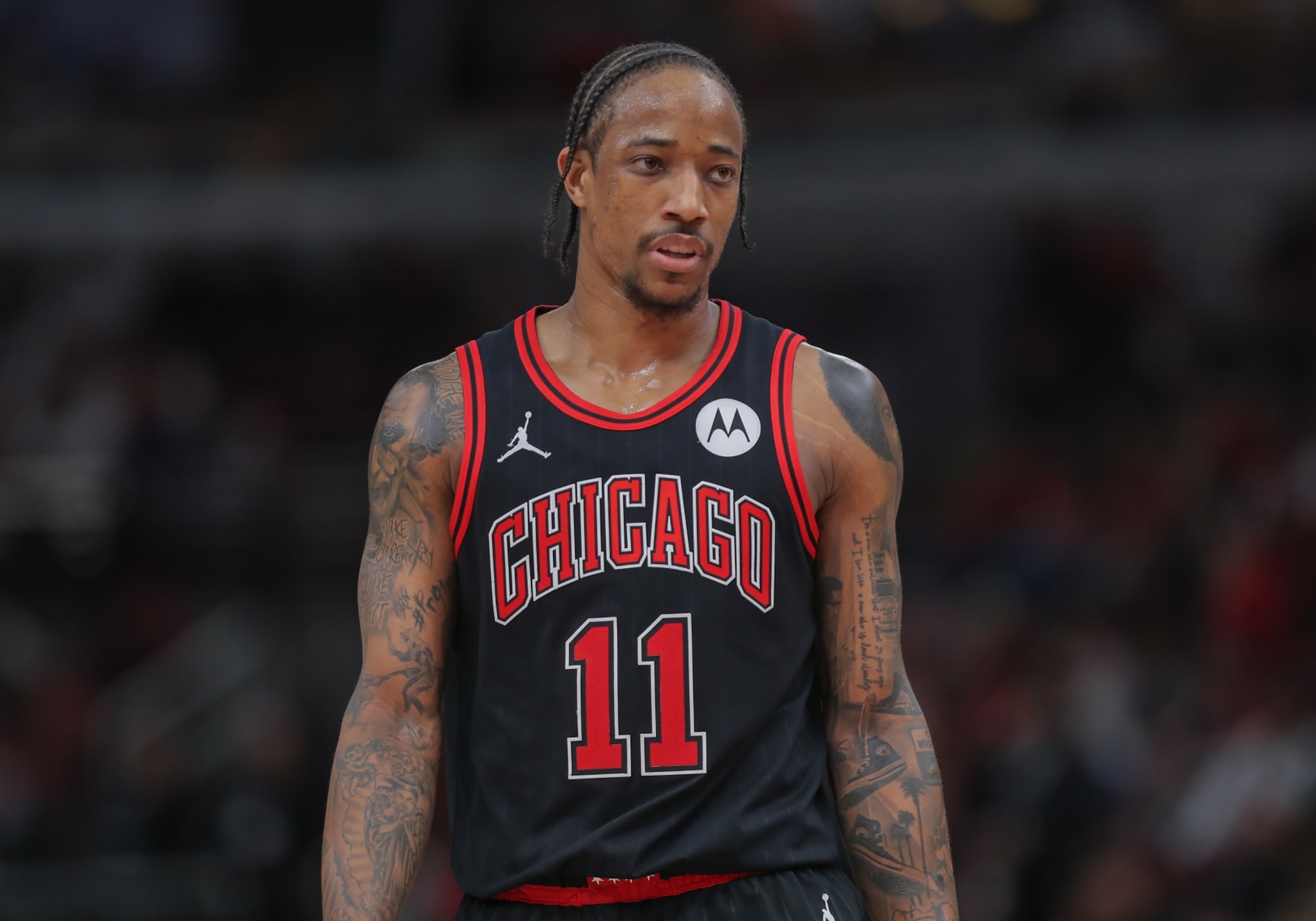
Zooming out and taking a gander as the Chicago Bulls' macro existence would be my preferred focus. But this organization seldom operates in big-picture terms. Everything they do, forever and ever until the end of time, seems geared toward keeping their necks just above water one maddeningly mediocre season at a time.
Narrowing down their agenda to DeMar DeRozan's free agency is more in line with the Bulls Way™. His future also happens to be the litmus test for Chicago's longer-term course.
Re-signing a soon-to-be 35-year-old to a multiseason deal that tops $30 million per year is not something the Bulls will consider, let alone execute, if they're (finally) embracing a more gradual timeline. It instead signals a commitment to the same old, pop-champagne-and-hang-a-banner-for-play-in-appearances sh*t.
And in the event a hypothetical DeRozan agreement comes anywhere near his max ($49.4 million in Year 1), I'm not exactly sure what it suggests. But the implication will be worse than we all think.
On the flip side, the Bulls could let DeRozan walk. Or they could facilitate a sign-and-trade to somewhere else. Either of those outcomes would prove Chicago is exiting its bottom-of-the-middle obsession and, in turn, lend itself to overdue Alex Caruso and Zach LaVine shopping sprees.
Which way will the Bulls lean? Frankly, we (likely) know the answer. Especially when you have DeRozan waxing poetic about Chicago's unfinished business.
For now, though, the Bulls' overarching direction remains in flux. And it won't be cemented until DeRozan's future plays out.
–Favale
Cleveland Cavaliers: Donovan Mitchell Extension Talks
6 of 30
Head coach J.B. Bickerstaff's exit was the first major domino to fall in the Cleveland Cavaliers' offseason. Donovan Mitchell's extension talks are next up.
And they will, both literally and perhaps immediately, determine the fate of this team's nucleus.
Mitchell is eligible to sign a four-year, $208.5 million extension. Cleveland must (and will) offer it. If he turns it down, general manager Koby Altman has no choice other than to gauge his market value. Such is life when your best player is noncommittal and one year out from free agency (2025-26 player option).
Fortunately for the Cavs, it sounds like Mitchell doesn't plan to force their hand. On the heels of the team's second-round exit, The Athletic's Shams Charania, Jason Lloyd and Joe Vardon reported that the 27-year-old seems likely to sign the extension.
Cleveland can take a moment to exhale if and when Mitchell puts pen to paper. But only a moment. Because its job will remain far from done.
Sources told Charania, Lloyd and Vardon that Darius Garland and his reps at Klutch Sports Group will consider requesting a trade if Mitchell sticks around. On top of that, the frontcourt makeup is ostensibly reaching a crossroads.
The Cavs' offense looked much better playing with one big this past season. Given Evan Mobley's long-term ceiling, this always figured to foist Jarrett Allen's name into the rumor mill. Tack on the (cheap, lazy, anonymously sourced) character-assassination aimed at Allen in that postmortem from The Athletic, and um, yeah...Cleveland has some core organizational wrinkles to iron out.
–Favale
Dallas Mavericks: Derrick Jones Jr.'s Free Agency
7 of 30
A few weeks ago, the Dallas Mavericks could have been more confident about their chances of retaining Derrick Jones Jr. in unrestricted free agency. Prior to the playoffs, a 120 percent raise on Jones' $2.0 million 2023-24 salary, the most Dallas can offer with non-Bird rights, might have been enough to keep him.
With Jones figuring so prominently in the Mavericks' postseason run, it's now hard to imagine a meager starting salary of $2.4 million will come anywhere close to being the best offer.
Dallas can tap into one of the mid-level exceptions to pay Jones, more likely the taxpayer version that starts a potential multiyear deal at $5.1 million in 2024-25. But with the 27-year-old showing everyone how valuable he is as a lob-catcher, just-good-enough three-point shooter and indispensable defensive havoc-wreaker, one wonders whether something closer to the full MLE of $12.4 million is coming his way from a team that can offer it.
Dallas could theoretically get itself in position to also use the full MLE, but not without some significant tinkering. It might want to look into that option.
Jones' playoff performance proved he can occupy a critical role on a big-time winner. Any squad with defensive deficiencies could solve them by inking the rangy lefty whose most frequent postseason defensive matchups, in descending order, have been: Shai Gilgeous-Alexander, Paul George, Anthony Edwards, Chet Holmgren, James Harden and Jalen Williams.
It's as if Dallas won't even consider wasting Jones' talent on non-stars.
The Mavs need Jones, but they may find it hard to be the market leaders for his ultra-valuable services.
-Hughes
Denver Nuggets: The Bill Coming Due
8 of 30
Even amid a title defense, the Denver Nuggets had an eye on the future of their roster. They knew a salary structure that exceeded the tax in 2023-24 was poised to blow well past the dreaded second apron next season if the roster's core pieces returned.
That's partly why they stockpiled Christian Braun, Peyton Watson, Julian Strawther, Jalen Pickett and Hunter Tyson—25-and-under guards and wings set to earn no more than $3 million apiece in 2024-25. Those young players are fallback options, insurance for the possibility of, say, Kentavious Caldwell-Pope getting a prohibitively large offer in unrestricted free agency.
KCP, who's hit at least 39.0 percent of his triples in each of the last four years and still rates as one of the top backcourt defenders around, has a $15.4 million player option for 2024-25 that he's almost certain to decline. At 31 and still a proven starter on a champion (two champions, actually, but who's counting?), this could be his last shot to cash in on a long-term deal.
Denver has full Bird rights on Caldwell-Pope and can pay him anything up to the max to keep him. But even in the unlikely event KCP picks up his option, the Nuggets will be in second-apron territory. A market-rate raise combined with the returns of Reggie Jackson and Vlatko Čančar would intensify the financial sting while also limiting Denver's options in trade.
It may not seem like it now, in the immediate wake of the Nuggets' second-round ouster. But this group, if intact, will be right back in the mix for a title next season. Caldwell-Pope is a critical part of that picture, and his free agency stands as the first real test of Denver's willingness to spend what it takes to keep a champion together.
-Hughes
Detroit Pistons: How will the Front Office Handle Cap Space & Roster Construction?
9 of 30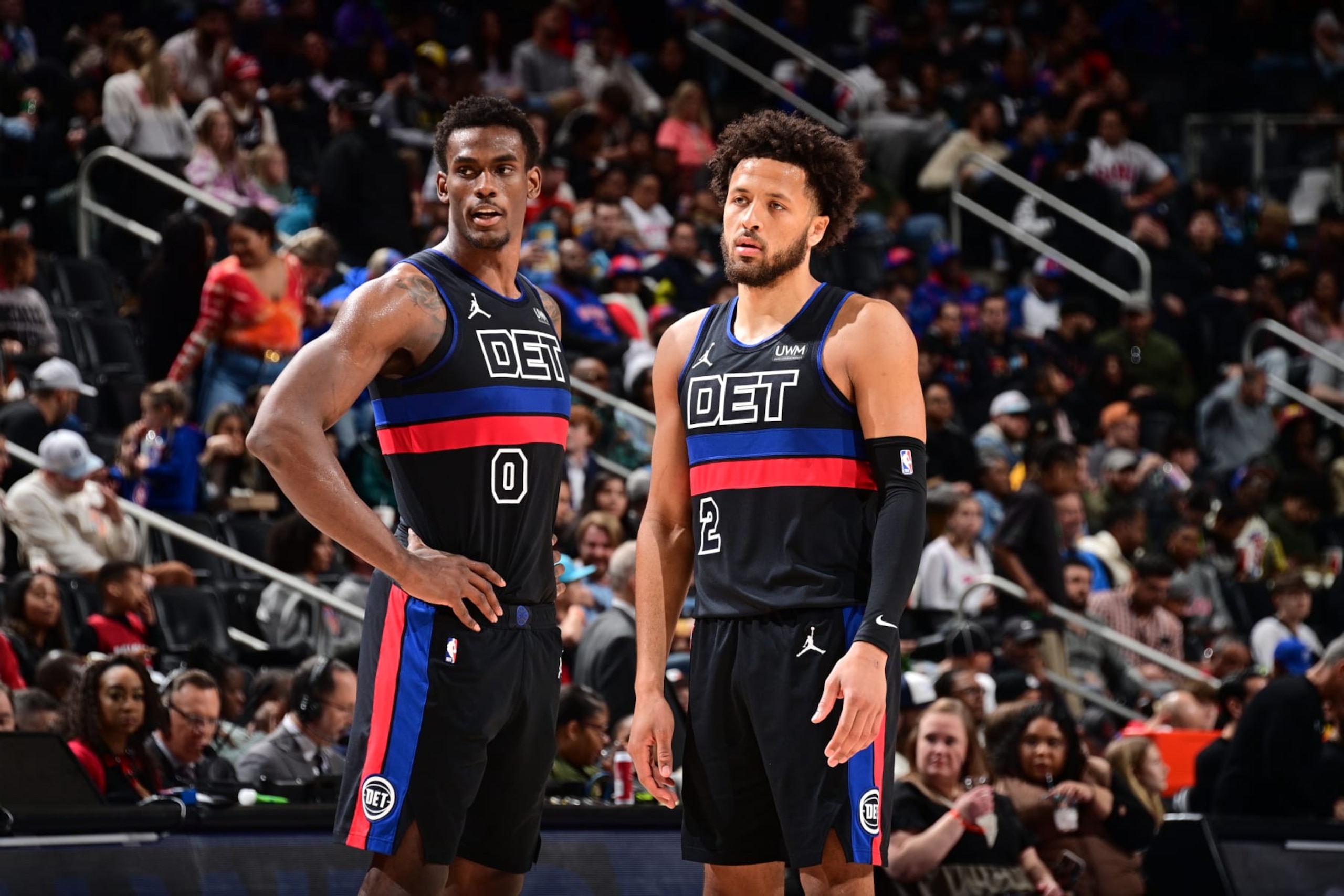
Trajan Langdon will begin his tenure as the Detroit Pistons' lead basketball decision-maker with over $64 million in cap space—assuming the team renounces all of its holds aside from slots for the No. 5 pick and Simone Fontecchio. How does he plan on spending that coin? The answer will say a great deal, if not everything, about Motor City's long-term trajectory.
It initially looked like the Pistons would use their flexibility under former lead decision-maker Troy Weaver to target impact veterans who could rescue the organization from worst-in-the-league territory. That's still on the table, both via free agency and trades.
But new front office regimes often mark a shift toward graduality, if not outright rebuilds. So while Detroit is itching for a return to relevance (or something close to it), Langdon could view the cap space as the vehicle through which the franchise takes on money attached to draft and prospect equity.
In all likelihood, the Pistons will end up favoring a more balanced approach. There's no way Langdon took this position without the freedom to start over. It's also equally unlikely that he's preparing to lean fully into another rock-bottom showing.
Even if Langdon favors the ultra-long haul, there's value in getting proven talent to optimize the development of younger building blocks and question marks.
The Pistons remain hard up for spacing basically everywhere. Infusing the rotation with as many capable, high-volume marksmen as possible—particularly at the wing and frontline spots—should be the primary objective. And going that route should feature both the additions of veterans and developmental swings.
Is that how the offseason will actually play out? And how married will Langdon remain to Detroit's youngsters not named Cade Cunningham when scouring the trade market? We'll have to wait and see.
—Favale
Golden State Warriors: Klay Thompson's Departure?
10 of 30
The Golden State Warriors cannot assume Klay Thompson will take a significant discount to return to the only team he's ever known. Sentiment is powerful, and both Thompson and the Warriors should be motivated to work out a new deal. But in an appearance on FanDuel TV's Run It Back, Shams Charania of Stadium and The Athletic reported "there is mutual interest between the Magic" and Thompson.
Orlando won't be the only team on the hunt for the shooting upgrades Thompson can provide.
The Dubs have Stephen Curry and head coach Steve Kerr under contract through 2025-26, which makes a two-year deal for Thompson seem likely. But after turning down a two-year $48 million extension prior to last season and then submitting his worst full year in over a decade, the five-time All-Star may have to swallow his pride and accept an even lower offer from Golden State.
Nothing's stopping another team from coming over the top of whatever the Warriors, who'd like to duck the tax, are willing to pay. Don't be surprised to see outside offers in the range of two years and $50 million, or even three years and $80 million.
Thompson's departure wouldn't necessarily close the book on this era of Warriors basketball. As long as Curry, Kerr and Draymond Green are around, the dynastic vibes will persist—even if the days of dynastic winning are over. Still, the Thompson-less void would be unmistakeable. Even if Golden State could replace Thompson's production by leaning harder on Moses Moody and Brandin Podziemski, the entire operation would feel different without him involved.
-Hughes
Houston Rockets: Here Come the Extensions
11 of 30
The Houston Rockets improved on 2022-23's total by 19 wins this past season, but now the hard work and tough decisions begin.
Alperen Sengün and Jalen Green are both eligible for five-year, $225 million extensions this summer. The former didn't earn an official nod but put up All-Star-caliber numbers in setting career highs with 21.1 points, 9.3 rebounds and 5.0 assists. Meanwhile, the latter surged late, producing 27.7 points and 6.3 assists on 61.3 percent true shooting in March, as Houston reeled off 13 wins in 15 tries during the month.
Neither is a lock to get the full max, and the Rockets can wait until restricted free agency in 2025 if they want to kick the can down the road. Procrastination might only make things harder, as Jabari Smith Jr. will be eligible for his own extension in a year. Amen Thompson and Cam Whitmore will be in line for new money as soon as 2026.
That's all to say the Rockets, though seemingly still in the early stages of establishing their core, are already facing seismic choices. Realistically, Houston can't lock down all of its young players to long-term deals.
While inking Sengün and Green to extensions this offseason seems simple in a vacuum, it's also part of a much more complicated set of big-picture decisions that feel like they've arrived ahead of schedule.
Indiana Pacers: How Aggressively will They Chase Upgrades?
12 of 30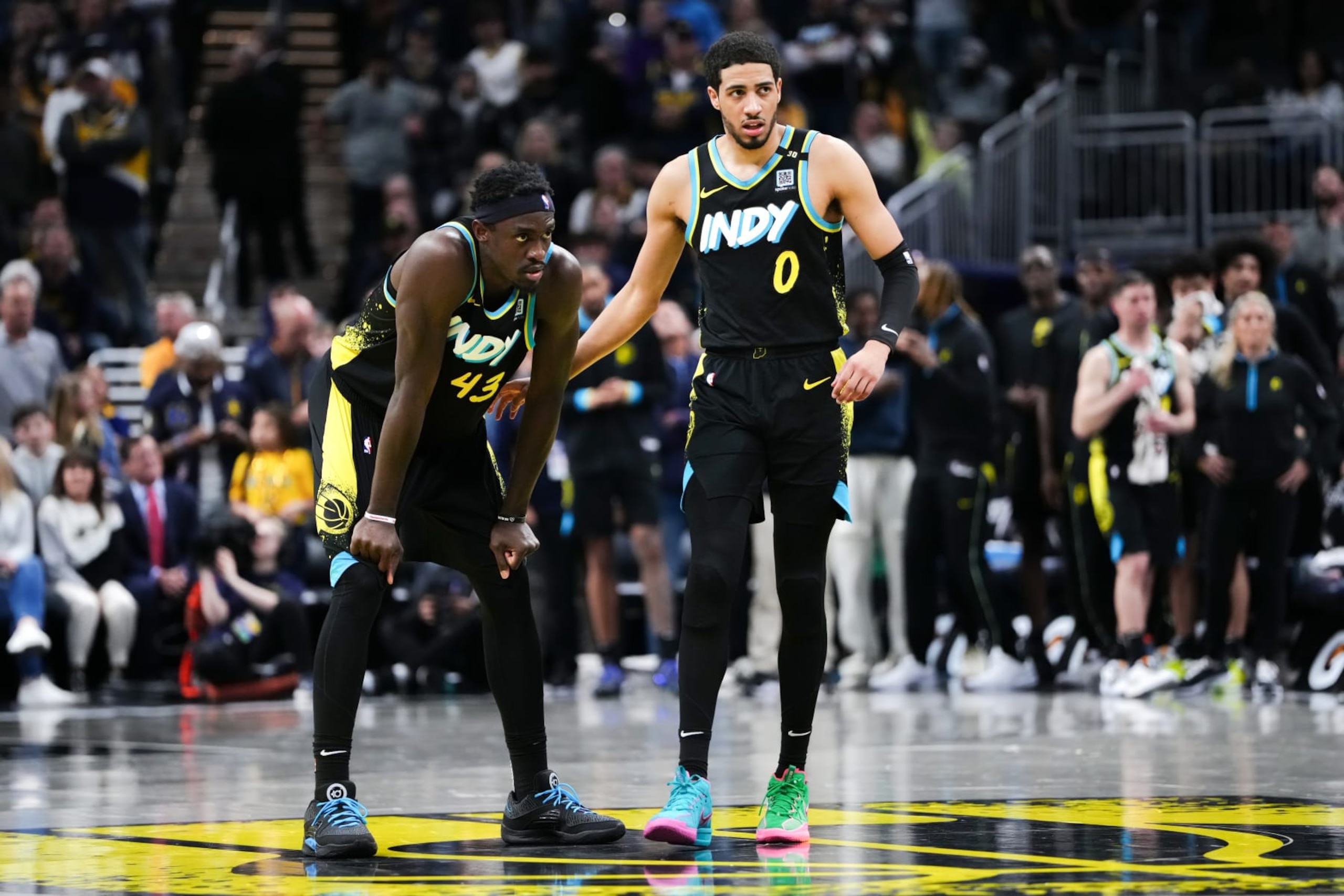
Pascal Siakam's free agency is its own storyline. But it's not the storyline of the Indiana Pacers offseason—mostly because they can't afford it to be. You don't fork over three first-rounders and Bruce Brown for Siakam unless you're prepared to dole out at least a four-year, $189.5 million max and entertain a five-season pact that could be worth as much as $245.3 million.
How the Pacers go about talent acquisition following their Eastern Conference Finals cameo is both more compelling and critical.
Will they look to urgently upgrade, say, the wing and combo-forward minutes? Do they assume a more delayed approach, knowing full well the playoff bracket through Rounds 1 and 2 tilted in their favor, mostly thanks to injuries, opting instead to bank on internal development from Bennedict Mathurin, Ben Sheppard and Jarace Walker? Can they strike an in-between mindset that sees them improve the defense, rebounding and/or supplant Buddy Hield's functional spacing without significantly dipping into their remaining assets?
Cap-sheet logistics will play a huge role in determining the answer. Indiana will find itself inside the luxury tax if it maxes out Siakam and re-signs restricted free agent Obi Toppin to a deal worth materially more than $12 million per year. (The latter's cap hold sits north of $20 million). Skirting the tax while retaining both gets even harder if Jalen Smith picks up his $5.4 million player option.
Could Toppin become collateral damage of a reluctance to bankroll a contender's payroll. Will the Pacers look to cut costs if and when they're up against the tax line to keep both Siakam and Toppin? And in that case, should teams already be calling them about T.J. McConnell's $9.3 million expiring contract (which is currently non-guaranteed)?
Equally, if not more, paramount: How does all of this impact the Pacers' appetite for noticeable upgrades? Would they consider using the full mid-level if it puts them in the tax (while staying below the first apron)? Are they open to dangling some combination of two future first-rounders, four swaps, Mathurin, Sheppard and Walker to swing for a high-impact wing? (Hello, Mikal Bridges.)
What does the middle ground look like? A Dorian Finney-Smith trade? A Derrick Jones Jr. signing? Does this all simply end with the Pacers reassuming their usual character and running it back while counting on what's already in place to grow organically?
Indy has optionality. Tyrese Haliburton's max extension is about to kick in, but he's just 24. Time is not the Pacers' enemy. But when they're about to have a second max player, who's also on the wrong side of 30, it's not necessarily their friend, either.
—Favale
LA Clippers: Will Kawhi Wind Up Alone in LA?
13 of 30
Kawhi Leonard got his three-year, $152 million extension in January, which clearly signaled Paul George was next in line for a similar—if not identical—deal.
Cue the crickets.
It's now been months since Leonard signed up for three more years, and George remains without an extension, poised to decline his player option and enter free agency. The Philadelhpia 76ers, toting max cap space and one of the more star-hungry top executives we've ever seen in Daryl Morey, are practically drooling.
As the extension-less months rolled by, the only logical (if speculative) explanation was that George wanted a bigger deal than Leonard got. That seems to be the case, with a report from Kevin O'Connor of The Ringer indicating the Clippers "haven't offered George a dollar more than what they paid Leonard."
Someone will almost certainly offer George a four-year max worth up to $212 million if he enters free agency, which could result in LA losing a star for nothing. Toss in James Harden's own free agency, which we must now assume will not conclude with a contract anywhere close to the one Leonard got and George has so far refused to sign, and the potential for combustion only grows.
This is a localized Clippers storyline, but it's also one of the first indications of how the restrictions that come with exceeding the second apron will change the behavior of even the biggest-spending teams.
-Hughes
Los Angeles Lakers: LeBron James' Organizational Control
14 of 30
The Los Angeles Lakers aren't exactly short on offseason intrigue, but as is often the case, their story begins and ends with LeBron James.
The league's all-time leading scorer can hit free agency by declining his player option, at which point the Lakers can pay him as much as $162 million over three years. ESPN's Brian Windhorst said on Get Up: "I think the Lakers are going to give LeBron whatever contract he wants," which saps some of the drama from that part of the offseason. But the organization's obeisance to James might extend beyond years and dollars, and that's where things get interesting.
Bronny James impressed at the NBA combine, and the Lakers are among the select teams for whom he'll work out ahead of the draft.
Would Los Angeles really reach for Bronny at No. 17? Would a trade down in the first round be on the table? Odds are Bronny won't be available when the Lakers pick at No. 55 overall. So if the team is intent on appeasing James by helping him realize the dream of playing with his son, it's going to take a legitimate first-round investment.
Beyond that, James is bound to have at least some influence over the Lakers' coaching search. Though he's distanced himself from the process, it's just not realistic to believe he'll stay out of it entirely. As Dan Woike of the Los Angeles Times reported: "A person with knowledge of the situation not authorized to speak on the record said James and Davis eventually will need to sign off on the coaching hire."
That's probably good news for J.J. Redick, a serious candidate for the position and James' recent podcast partner.
Superstars always hold sway over their organizations to some extent. James has perfected the art of exerting control like almost no one else in league history. Let's see what he does with all that power this summer.
-Hughes
Memphis Grizzlies: Reset or Retool?
15 of 30
The Memphis Grizzlies are short on flexibility this summer. Lucky for them, they don't need much.
Last year's 25-55 record was the product of an injury-ravaged season that saw the Grizz trot out a league-high 51 different starting lineups while utilizing a whopping 12 hardship-exception signings. Assuming better health next year, Memphis should again find itself cresting the 50-win plateau like it did in 2021-22 and 2022-23.
The temptation to tinker may still be there in July, as the Grizzlies watched new powers in Minnesota and Dallas emerge during their hibernation. Luke Kennard's $14.7 million team option and the No. 9 pick in the draft are among the trade tools at Memphis' disposal. Marcus Smart ($20.2 million), Ziaire Williams ($6.1 million), John Konchar ($6.1 million) and others could work well as salary ballast in a roster-reshaping deal, especially with the emergence of potential replacements GG Jackson and Vince Williams Jr.
Memphis could use a center upgrade to support Jaren Jackson Jr. up front, and seeing Derrick Rose as the primary backup point guard behind Ja Morant shouldn't inspire confidence.
The Grizzlies could add the No. 9 pick to a roster that already has 14 players under contract, cut Kennard loose and look for minimum signings to address their second-unit needs. Or they could swing a little bigger on the trade market, risk triggering the hard cap and hope those costlier upgrades help them keep up with the other powers ascending in the West.
This offseason really comes down to whether the Grizzlies believe the team they assembled last year would have been good enough to contend if not for bad injury luck.
Miami Heat: Does Jimmy Butler Get an Extension?
16 of 30
Managing and improving the roster at large is going to be a challenge for the Miami Heat. They are roughly one Caleb Martin (player option) raise away from brushing right up against to cannonballing into second-apron territory.
That's an uncomfortable spot for any team to be in relative to the asphyxiating restrictions they must now navigate. It's especially unsettling for a franchise with a core that just failed to survive the play-in tournament—barrage of injuries be damned.
Still, the Heat's offseason (and future) really begins with Jimmy Butler. He is eligible to sign a two-year, $112.9 million extension that keeps him on the books through 2026-27. Though this functionally only adds one season to his current contract (he has a 2025-26 player option right now), a new deal takes him through his age-37 campaign.
Shelling out max money for Butler at that age isn't a no-brainer. He has plenty of injuries in his rear view, including from this past season, and again, Miami's current nucleus hardly set the world on fire.
Team president Pat Riley seems to be thinking along the same cautionary lines. As he told reporters during his end-of-season availability:
"We have not discussed that internally right now. We have to look at making that kind of commitment and when do we do it. We don't have to do it until 2025, actually. But we'll see. We haven't made a decision on it, and we haven't really in earnest discussed it...That's a big decision on our part to commit those kinds of resources unless you have somebody who's going to be there and available every single night. That's the truth."
This could all blow over without much ado—extension or no extension. But if the Heat don't want to give Butler the max, he could request a trade to a team that will. And according to Keith Pompey of the Philadelphia Inquirer and Anthony Chiang of the Miami Herald, there are at least three trade suitors willing to offer him what would, in their case, be a two-year, $111.2 million extension—a list that includes an old friend in the Philadelphia 76ers.
—Favale
Milwaukee Bucks: Can They Deepen the Rotation without Upending the Core?
17 of 30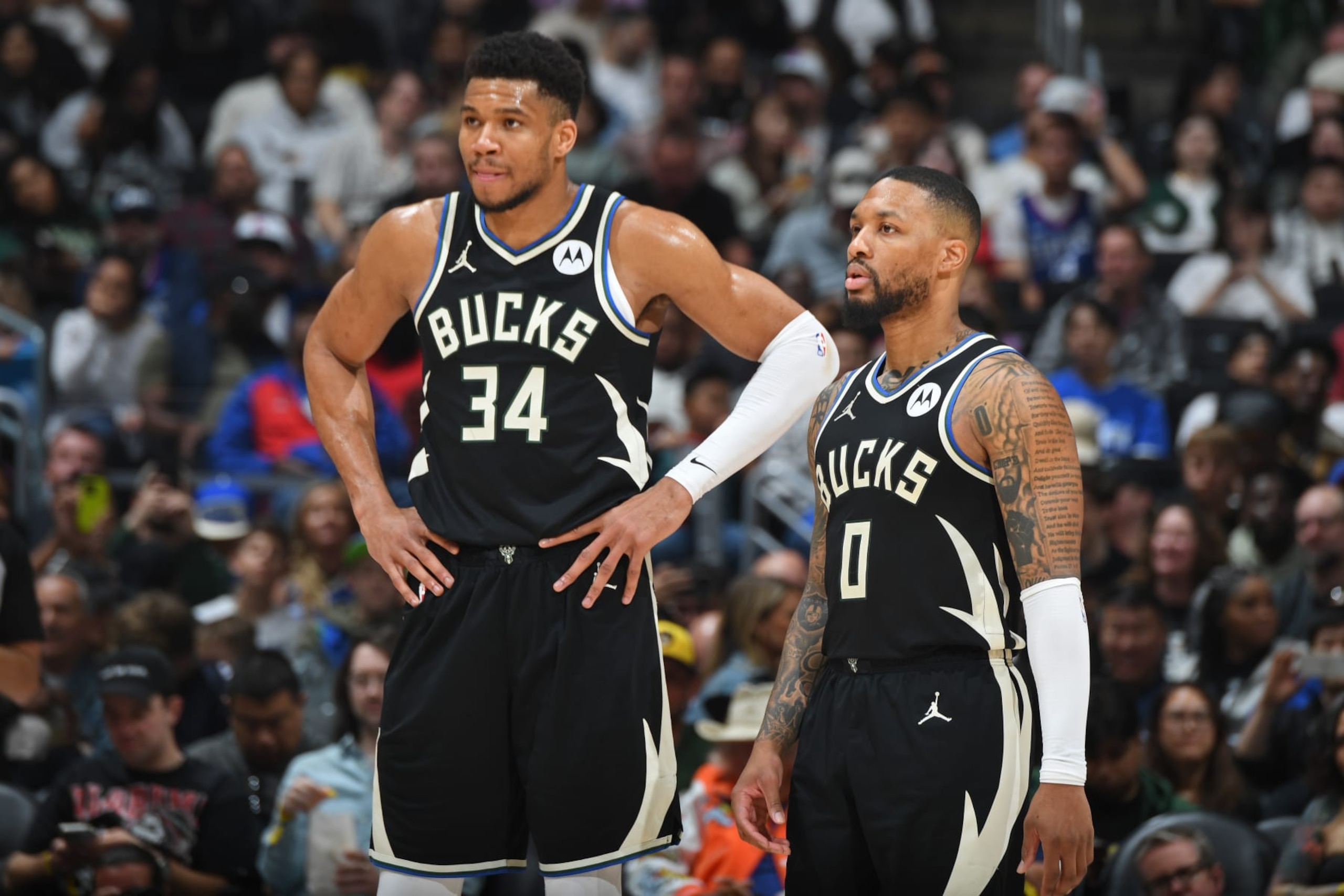
Athleticism at both ends of the floor as well as complementary shooting should top the Milwaukee Bucks' offseason wish list. And so long as they're wishing for things, they should hope to address those needs at the guard and wing spots specifically.
Too bad free agents and trade partners don't accept wishes as a form of currency.
Limited resources hamstring the Bucks' capacity to make worth-a-damn additions without knifing into their core. They will exceed the second apron after fleshing out their roster, which means, among other things, they cannot aggregate contracts or take back more money than they send out in any trades.
Singular salary-matching can yield value. But Milwaukee is short on mid-rung deals with standalone appeal. Remove Giannis Antetokounmpo, Damian Lillard, Brook Lopez and Khris Middleton from consideration, and it's left with Bobby Portis Jr.'s $12.6 million expiring salary. If the Bucks decide he's too valuable (he's extension eligible), then it's on to Pat Connaughton, who makes $9.4 million next season and has a 2025-26 player option for the same amount.
Neither Portis nor Connaughton is bringing back a fortunes-turner on his own. But Milwaukee can attach its 2031 first-rounder to offers if it's that invested in the here and now. There will also be a sweet spot in which the Bucks can trade the No. 23 pick when it's no longer considered a future selection yet also doesn't count as an aggregated salary.
Who's the best player No. 23, a 2031 first-rounder and Connaughton or Portis gets you? What if you only include one draft pick? Is the prospective return worth the risk? Do the Bucks have the stomach to roll the dice if it does? Will they even explore it?
The answer to the latter question better be "yes." Heck, with Malik Beasley likely on his way out (non-Bird free agent) and the rotation about to get even shallower as a result, the answer needs to be yes.
—Favale
Minnesota Timberwolves: The Ownership Fight
18 of 30
The Minnesota Timberwolves' ownership dispute seems like a big deal at the moment, but most fans will only care about who emerges from mediation with control of the team if it impacts the product on the floor.
From that perspective, Wolves fans who don't want Karl-Anthony Towns or Jaden McDaniels traded to cut salary should simply be rooting for whichever prospective ownership group is less likely to kneecap a contending team by engaging in cost-cutting maneuvers.
ESPN's Adrian Wojnarowski reported in April that payroll projections from the Alex Rodriguez-Marc Lore group included a $171 million estimate for 2024-25, a number basically unreachable without the elimination of at least one major salary currently on the books. Pardon Wolves fans if they're not exactly comfortable taking that information and concluding that Glen Taylor, the man who presided over two decades of futility, is the preferable option.
Minnesota doesn't have to trim salary until at least the 2025 trade deadline because tax payments aren't calculated until the end of the season. Yes, the second-apron penalties will apply when the Wolves are building out their roster this summer. But the big financial hit, in the form of tax payments, won't arrive unless Minnesota finds itself with what's projected to be a second-apron-clearing payroll a year from now.
Here's hoping that however the ownership question resolves itself, the Wolves at least give next year's team a chance to contend again before taking drastic measures to bring that tax bill down.
-Hughes
New Orleans Pelicans: The Promised Urgency
19 of 30
After the 49-win New Orleans Pelicans exited the playoffs in a four-game sweep at the hands of the Oklahoma City Thunder, who rocketed past the Pels in the unofficial "this young team is on the rise" hierarchy, executive vice president of basketball operations David Griffin made his plans clear.
The money quotes during his exit interview included: "I think in the past we've always erred on the side of continuity ... I think we've seen this group enough," and "I want to be really, really clear: This is not going to be a summer of complacency."
Change is coming, but we have yet to see how substantial it'll be.
NBA Insider Marc Stein reported the Pels are expected to "aggressively explore" trading one-time All-Star Brandon Ingram, a move that seemed more and more logical as he struggled to make an impact in the postseason. With Trey Murphy III and Herb Jones both profiling as more sensible fits alongside Zion Williamson, and with Ingram heading into the last year of his deal, New Orleans has more than enough reasons to flip its second star for help at other positions.
As it stands, New Orleans won't be able to add its two first-rounders and retain key free agents Jonas Valanciunas and Naji Marshall without going into the tax. An Ingram trade that also reduces payroll could change that analysis, but cost-cutting moves don't exactly square with the implied promise of bold change.
We'll just have to wait and see how serious the front office and ownership are about putting action behind Griffin's words.
-Hughes
New York Knicks: Is This the Summer They Trade for a Caps-Lock STAR?
20 of 30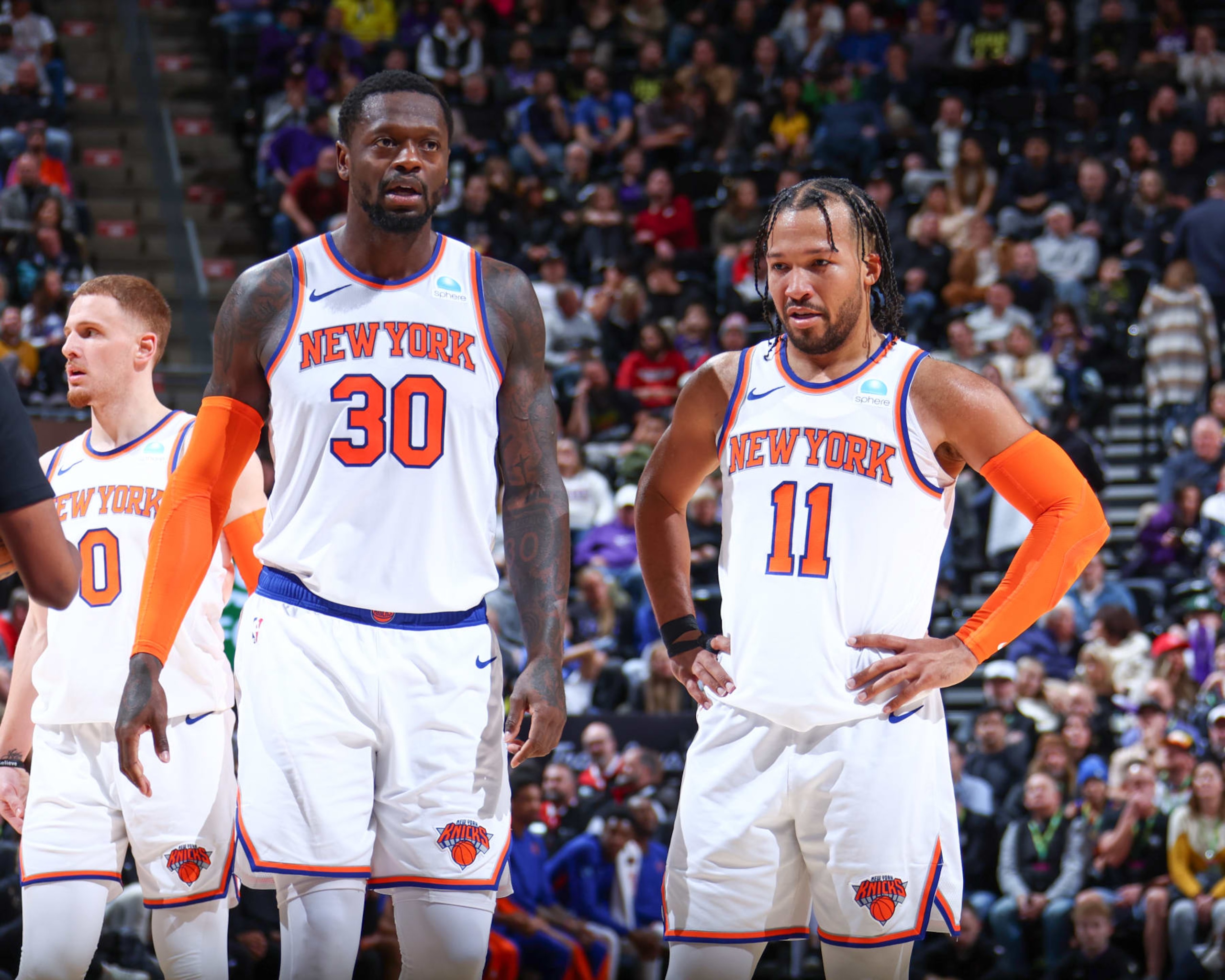
Holding serve is a tempting course for the New York Knicks. Their postseason exit was akin to death by a trillion injuries. After finishing with the East's second-best record and one win shy of a conference finals bid, they're free to run it back and hope that better health from (mainly) OG Anunoby, Julius Randle and Mitchell Robinson positions them for inner-circle title contention.
Whether that's the smartest course is debatable. The harder truth? It's probably not.
Inner-circle title contention requires rivaling, at minimum, the Boston Celtics, Denver Nuggets, Minnesota Timberwolves, Dallas Mavericks, Oklahoma City Thunder, probably the Milwaukee Bucks and any close-proximity teams with a big move or two in them. (Think: Philadelphia, Indiana, Memphis and Cleveland, just to start.) The return of Randle's shot creation, specifically, is not enough to guarantee the Knicks belong ahead of more than half of these candidates. They don't need a best player anymore. This version of Jalen Brunson is good enough. But they probably need a better second-best player.
Identifying the ideal upgrade is a matter of course. The rumor mill will inevitably churn out concrete options. Timing is the more critical topic, because as of now, this could be New York's last chance to make a blockbuster upgrade.
Anunoby and Isaiah Hartenstein (Early Bird rights) are entering free agency. The Knicks may need to pony up the max they're allowed to offer just to keep them. That adds up to a combined $58.5 million in salary for next season.
Apply that to the rest of New York's (likely) guaranteed money and draft-pick holds, and it's looking at a payroll north of $170 million—just shy of the $172 million luxury-tax line. This, meanwhile, is before factoring in whether the Knicks want to bring back Alec Burks, Precious Achiuwa (restricted) or, most notably, Bojan Bogdanović. They can waive the latter for $2 million, but the entire point of acquiring him was to roll over an expiring salary slot for—you guessed it—a consequential trade.
Keeping Bogdanović's full salary on the books, in this scenario, takes New York well into the luxury tax and a heartbeat away from the second apron. They can avoid the Supertax this season, but it'll get much harder to do so in 2025-26, when Jalen Brunson and Julius Randle, who both hold player options, will be up for or about to start extensions that give them raises.
Basically, if the Knicks want to go star-hunting without having to work around zero-aggregation and dollar-for-dollar-matching rules, this is the summer to do it. Will they, though? That depends not only on the trade market, but New York's stomach for significantly shaking up a rotation it never got to see at full strength.
–Favale
Oklahoma City Thunder: Is The Bold Move Finally Coming?
21 of 30
The Oklahoma City Thunder's 2024 trade deadline inactivity (Gordon Hayward's zero-impact acquisition notwithstanding) was a hot topic after the league's darling upstarts came out on the wrong end of their second-round series against the Mavericks.
While it's reasonable to point out the Thunder had clear shortcomings in the size, rebounding and secondary-creation departments, that doesn't mean it was some grave error to let the deadline pass without addressing them. Better to accept the idea that this postseason run was more of a fact-finding mission.
Now equipped with clear evidence of what it needs, OKC can approach the summer with purpose...and the means to improve the roster to an almost unlimited degree.
Start with what could be as much as $38 million in cap space, add 15 first-round picks in the next seven drafts and Oklahoma City is poised to be a true offseason power player. Don't forget the security and leverage that comes from knowing another deep postseason run is likely if the Thunder do absolutely nothing. Chet Holmgren is 22, and Jalen Williams is 23. Cason Wallace, who could be a first-unit upgrade hiding in plain sight, is just 20. All three should improve naturally, which might be all it takes to get this group over the hump.
Lauri Markkanen is my personal dream trade target, as his length and shooting would make him a colossal upgrade over Josh Giddey in the starting lineup. But he's far from the only option for a Thunder squad that has every resource imaginable.
-Hughes
Orlando Magic: Will They Land a Big Fish or Two?
22 of 30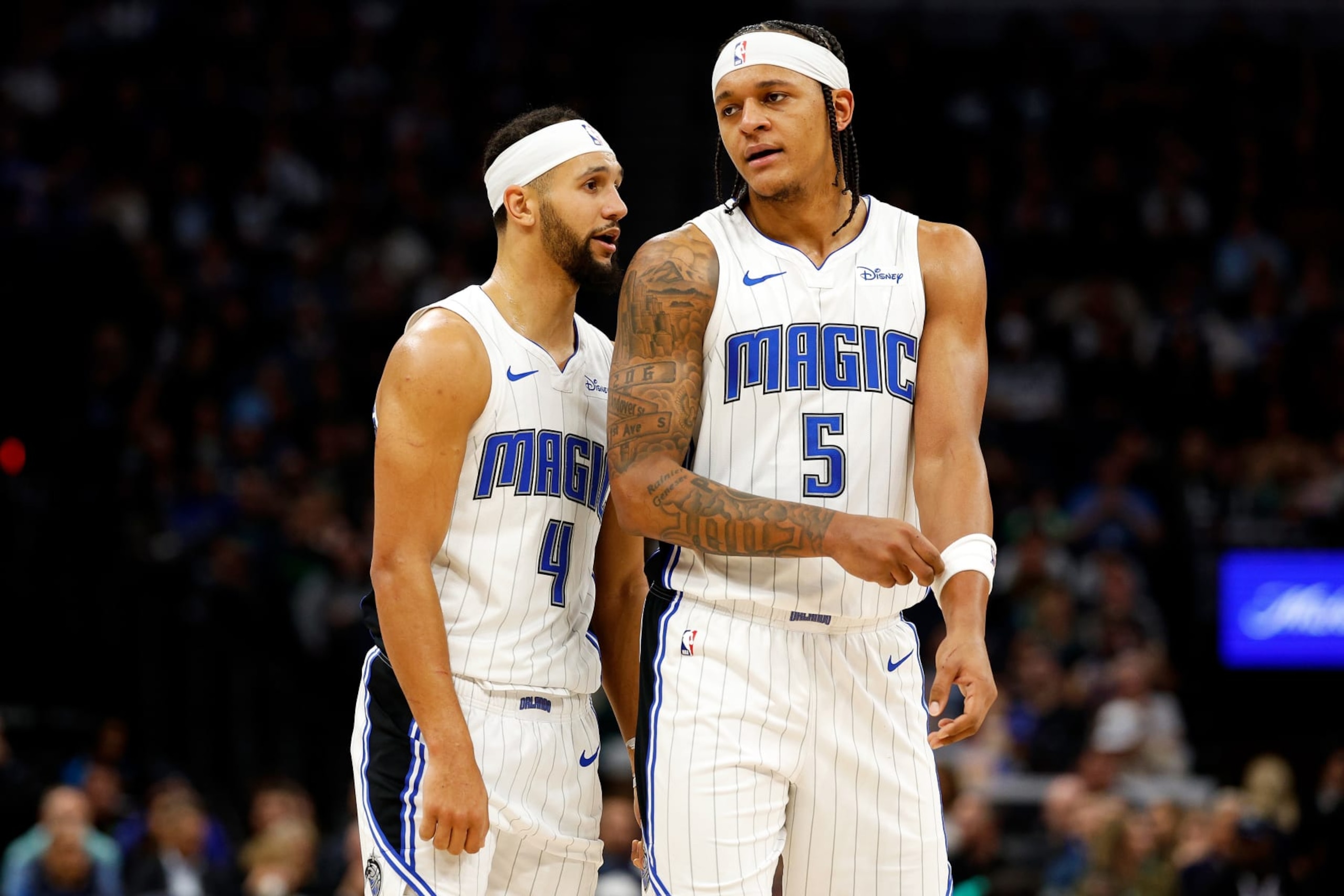
This season saw real, sustainable growth from the Orlando Magic, culminating in a postseason push in which they played entirely with house money.
That just-happy-to-be-here honeymoon ends now.
Do not interpret this as an insult. It is a testament to what the Magic are building—to what they've already built. They're good enough to shoulder higher-stakes expectations. And that begins with the offseason.
Orlando enters the summer with a clear path to boatloads of spending power, which can be dredged up in any number of ways. Its cap sheet is, in so many ways, a choose-your-own-adventure proposition.
Guaranteeing salaries for Caleb Houstan and Jonathan Isaac, picking up Mo Wagner's team option, keeping the No. 18 pick and re-signing Gary Harris for identical money ($13 million) would leave the Magic with a hair over $30 million to burn. This number climbs if they're cool with losing Harris, Houstan, Isaac or Wagner. It will shrink if they want to run it all back with Joe Ingles ($11 million team option) and Markelle Fultz.
Maxing out their cap space is probably pointless. The free-agent market isn't talented enough to warrant it. But staying above the $20 to $25 million threshold feels wise. It positions Orlando to give meaningful chase to functional shooters and floor generals—its two biggest needs. That money gets the team into the conversation for a Malik Monk, Buddy Hield, Tyus Jones, Kentavious Caldwell-Pope (player option), etc.
Of course, the Magic have the trade resources to think bigger. They control all of their own first-rounders as well as Denver's 2025 selection (top-five protection) and can sugarcoat packages even further with digestible salaries, Anthony Black and Jett Howard.
Entering the Trae Young sweepstakes would be out of character. But circling names like Darius Garland, Dejounte Murray, Anfernee Simons, LaMelo Ball, et al. is right in line with their personnel, asset armory and timeline.
Will the Magic operate with the urgency required to indulge these pursuits? That much should be a given. Really, though, it remains to be seen.
—Favale
Philadelphia 76ers: How much Cap Space will They Carve Out, and How will they Use it?
23 of 30
Cap-space projections for the Philadelphia 76ers are fluid. That tends to happen when you have only one player (Joel Embiid) under guaranteed contract.
Common sense can get us to a spending-power ballpark. Something like $61 million in cap space feels reasonable. This accounts for Embiid's money, Tyrese Maxey's restricted-free-agent hold, guaranteeing Ricky Council IV's salary and the No. 16 pick, and it's more than enough to go thermonuclear on the trade and free-agency markets.
Awkward-question time: What does going thermonuclear on the trade and free-agency markets even look like?
This year's crop of free agents isn't particularly glamorous. After the Paul George-to-Philly scenario (which could happen via trade as well), the Sixers are looking at a lot of role-player contingencies. And while ridiculous amounts of cap space can serve you well in blockbuster trades, the sellers in those deals tend to prioritize both future draft picks and actual players. Philly does not have any of the latter to offer.
To what degree that matters is debatable. The Sixers will have five movable firsts and the ability to promise gobs of bottom-line relief. That's enough to wedge their way into many of the glittery sweepstakes bound to unfold.
Still, the likelihood that Philly needs all of its cap space is slim, verging on zilch-zero-zip. They could be in line for one big acquisition, or two medium-sized ones, or a combination of other scenarios.
There's also the possibility this summer's market doesn't yield the right big-time possibilities. In that case, the Sixers must decide which of their own free agents and which non-star free agents and trade candidates to target. And in doing so, they must figure out whether they're willing to dole out or absorb multiyear deals, or if they're strictly in the placeholder business until the right opportunity or two presents itself.
As if that's not complicated enough, they must also determine whether Embiid's window (i.e. long-term health) even permits them to remain in wait-and-see mode until the 2025 trade deadline...or beyond.
The stakes are high in Philly. So is the level of uncertainty. Mashed together, the two make for a pivotal summer—perhaps the most critical in Sixers history.
—Favale
Phoenix Suns: Canaries in the Coal Mine
24 of 30
A half-dozen teams appear ticketed for second-apron territory in 2024-25, but the Phoenix Suns are the one that'll serve as the best test case for how effective the CBA's newest set of roster-building penalties truly are.
Phoenix operated last summer knowing it had one last chance to make big moves before it lost virtually all flexibility. After a gradual phasing-in of the new rules last season, the league will hit teams like the Suns with the full weight of available restrictions. That means the Suns cannot aggregate salaries in trades, take back more money than they send out, use trade exceptions from a prior year, use cash in trades, utilize the taxpayer's mid-level exception or blink without permission from Adam Silver.
Only one of those is actually fake.
These are different times in an NBA seemingly hellbent on preventing big-spending owners from assembling $400 million superteams, so we really don't know what a team like Phoenix is in for. Owner Mat Ishbia's first year on the job suggested he'd push up to and beyond every limit to build a win-now team, but it doesn't really matter how much he's willing to spend or how many assets he's got the guts to trade away.
The new CBA sets the limits, and they're firmer and less negotiable then they've ever been.
It's been exciting to theorize about how the second-apron restrictions will change the way teams are built. This summer, the Suns will give us our first real glimpse in practice.
-Hughes
Portland Trail Blazers: Does the Rebuild Actually Start Now?
25 of 30
The Portland Trail Blazers looked like a rebuilding team in a couple of typical ways last season, as they lost loads of games and gave significant time to young players. In another sense, the Blazers' 2023-24 season didn't have a ground-floor vibe at all.
Jerami Grant turned 30 in March, toward the end of the first season in his five-year, $160 million contract. Deandre Ayton has another two years and nearly $70 million left on his deal. Malcolm Brogdon, a 32-year-old caretaker vet, is still on the roster and set to make $22.5 million in 2024-25.
Clearly, the Blazers will begin the offseason with a handful of players who don't typically appear on rebuilding, asset-obsessed teams. Their summer should focus on turning those players into picks or young pieces that make more sense for the young roster's timeline.
That could even include moving Anfernee Simons, who might now project as a sixth man behind the theoretical starting backcourt of Scoot Henderson and Shaedon Sharpe. Simons is only 25 himself, but a bevy of teams would be interested in trading for him and his reasonable $25 million salary. Portland might want to swing a deal before it becomes clearer to suitors that Simons isn't truly part of its core.
Believe it or not, the Blazers will be a taxpayer and could even exceed the first apron if they don't streamline things via trade. That level of spending is totally untenable for a team that should be expected to finish in the West's cellar next season.
Portland trafficked in half-measures last offseason. The real rebuild has to start this summer.
-Hughes
Sacramento Kings: Is the Peak in the Past?
26 of 30
Pessimists felt a knowing tingle when ESPN's Adrian Wojnarowski reported the Sacramento Kings and head coach Mike Brown were far apart in contract negotiations. The possibility of Brown heading into next season as a lame-duck coach felt like a signal that, yes, this plucky Kings team that broke the league's longest playoff drought last year might have already peaked.
Sacramento didn't escape the Play-In round this past season and appears poised to lose Malik Monk in free agency. With the West only looking tougher next year, it's difficult to imagine Sacramento climbing the ranks—particularly if the Brown situation features the kind of unrest that typically accompanies head coaches on expiring deals.
That's not to say the Kings have no way to improve. Keegan Murray could take another step forward, Keon Ellis could solidify himself as a rotation piece and the defense might get even better after making progress last year.
Sacramento can also trade its No. 13 pick in the 2024 draft along with future first-rounders in 2027, 2029 and 2031. But if the organization isn't ready to commit to the 2022-23 Coach of the Year on a market-rate extension, who's to say how ownership and management will feel about shipping out future assets in a win-now trade?
The Kings' moves last summer—using cap space to extend Harrison Barnes and renegotiating a max extension for Domantas Sabonis—seemed to signal a belief that the core of the roster was good enough to at least replicate what it achieved in 2022-23. Now, those decisions somehow look both shortsighted and too conservative.
Unless some uncharacteristically bold action is in the offing, we may have already seen the best days of this iteration of the Kings.
-Hughes
San Antonio Spurs: Where's Wemby's Point Guard?
27 of 30
It doesn't really matter where he comes from, but the San Antonio Spurs need to find the man who'll make the next few years of Victor Wembanyama's offensive development run smoothly.
The trial-by-fire crowd might prefer to see Wemby struggle through another year without a credible organizer by his side. There's probably something to be said for keeping the training wheels as far away as possible from a truly ceiling-less prospect because, who knows, maybe Wembanyama could develop into a primary facilitator if he has no other choice.
It still feels most sensible to spend the summer searching for a setup artist, ideally one with a bright enough individual future to rate as something more than a stopgap...unless Tyus Jones is gettable at a reasonable rate in free agency. That's as high-end as place-holding point guards get.
Outside of mid-tier starters like Jones, the Spurs should take long looks at draft prospects like Serbian Nikola Topic and UConn's Stephon Castle. Either might be gone before the Spurs pick at No. 4, but it seems like it'll be easier for motivated teams to trade up in this draft than most in recent memory.
San Antonio might not want to stop at just one, either. The best course might be pairing a tried-and-true vet like Jones alongside a prospect who'll eventually take over the position.
Wemby is going to make an All-NBA team next year regardless. But there's no reason to make things harder on him than necessary.
-Hughes
Toronto Raptors: The Cost of Retaining Immanuel Quickley
28 of 30
Spicier storylines than talent retention are floating around the periphery of the Toronto Raptors' summer. They can chisel out nearly $30 million in cap space while retaining Immanuel Quickley's hold ($12.5 million) if they decline Bruce Brown's team option and renounce the rights to all of their other free agents, including Gary Trent Jr.
Yet, focusing on cap space presupposes the Raptors are on the prowl for major moves. Though team president Masai Ujiri sounds like someone open to a number of different possibilities, it's tough to envision Toronto going all-out on the free-agency or trade market before gaining a better understanding of what it has in the current core.
Quickley's next contract is muuuch more fascinating. He exists in that weird space between role player and stardom, making it virtually impossible to discern his market.
A four-year max from the Raptors would run $157.9 million while a five-year max goes up to $204.5 million. Toronto isn't offering that out of the gate—and may not have to go that high at all. But cap-space squads can try coercing them into a tough decision.
Prospective suitors like Detroit, Orlando and maybe even Utah can rather easily talk themselves into aggressively pursuing a potential lead guard with plop-and-play shooting and try-hard defense who has the bandwidth to log time in tandem with another backcourt mate. Does that mean any of them will throw out a four-year, $181.9 million max offer sheet? Not at all. Is it possible? Absolutely.
It doesn't matter if Quickley's outside admirers aren't peddling max overtures. He should still have a lucrative market. The threat of offer sheets is his leverage. So even if he doesn't secure near-max money, he's not going to come cheap. And after valuing him as a co-centerpiece, if not the centerpiece, in the OG Anunoby trade, the Raptors are in no position to stubbornly haggle over dollars and cents.
None of which is to declare that Quickley is a Defcon 1 flight risk. Toronto can match any offer he receives. And immediately, there's no price point that makes for an untenable cap sheet next season.
Skip ahead to 2025-26, when Scottie Barnes' should-be max extension goes live, and it's a different story. The price paid for Quickley now will invariably impact—and potentially limit—what the Raptors can (and decide) to do moving forward.
—Favale
Utah Jazz: Establishing a Timeline
29 of 30
You can't keep sabotaging seasons at the mid-way point forever, so the Utah Jazz are eventually going to need to decide if they're trying to win in the present or the future.
After two straight years in which better-than-expected starts gave way to late-season tanking, the Jazz have to avoid a similar fate in 2024-25. That effort should include decisions on the team's three highest-paid players: Jordan Clarkson, John Collins and Collin Sexton. Each has rotation-level value to a team trying to win games in the short term, but only Sexton, 25, seems likely to figure in Utah's down-the-road plans. All three should be the subject of trade discussions if the Jazz intend to scale back and build around the eight players under contract who are 23 or younger.
Trading Lauri Markkanen would also be on the table in any pivot toward a total rebuild.
Of course, it's possible that Markkanen's trade value would increase if the Jazz used cap space to renegotiate and extend his current deal, which expires after 2024-25.
We spent the better part of two years shouting at the Raptors to pick a direction, and it feels like we may need to redirect that energy toward the Jazz this summer. Though loaded with future first-rounders from the Rudy Gobert and Donovan Mitchell trades and under virtually no pressure to win with a mostly young roster, Utah should still use this summer to settle on a plan—win now or win later—and stick to it.
-Hughes
Washington Wizards: Can They Find a *Potential* Floor General of the Future?
30 of 30
Indiscriminate talent acquisition remains the Washington Wizards' sole concern as they enter the second offseason of their rebuild. But if they have options at their disposal, they should prioritize the arrival of someone who can maybe, possibly, potentially be their floor general of the future.
Incumbent options are nonexistent at the moment. The roster doesn't even have a ton of stopgap utility. (And no, more Jordan Poole is not the answer.) Tyus Jones is a worthwhile placeholder, but he's headed for unrestricted free agency. He could leave. Even if he doesn't, you're getting only so much runway from a rock-solid 28-year-old game manager.
Bagging a young primary-playmaking prospect gets incredibly easy if the Wizards are smitten with Nikola Topić of the Adriatic League's KK Crvena Zvezda or Kentucky's Reed Sheppard. Both should still be available when Washington is on the clock at No. 2 (assuming Atlanta doesn't want to bring in another guard).
Sussing out alternative opportunities is more complicated. The Wizards don't have a ready-made pathway to significant cap space—and just as well, because the free-agency pool isn't teeming with poachable young floor generals. That leaves the trade market.
Does dangling Kyle Kuzma's team-friendly contract net a tantalizing playmaker? Would the Wiz be willing to move Deni Avdija's even friendlier deal if it means getting someone like Jaden Ivey or Josh Giddey (and other stuff)? Would they consider going after an expensive-but-young option like Darius Garland? Can they get their hands on a somewhat distressed asset (like Giddey or Ivey) without having to fork over core value?
These questions may be moot depending on Washington's big board. They transform into potentially course-altering if the front office doesn't use No. 2 or No. 26 to land a playmaking engine.
—Favale
Stats courtesy of NBA.com, Basketball Reference and Cleaning the Glass. Salary info via Spotrac.
Subscribe to Dan and Grant's NBA podcast, Hardwood Knocks.
.jpg?w=2560 "WWE Raw Live Grades 🔠")
.png?w=2560 "Allen's BRUTAL 1H Stats 🫤")
.jpg?w=2560 "Monday Night Raw Blog 🔴")
.jpg?w=2560 "Commanders OL HEATED After Tie ▶️")