
Troy Vincent Backs NFL's Proposed Hip-Drop Tackle Rule Change amid Player Pushback
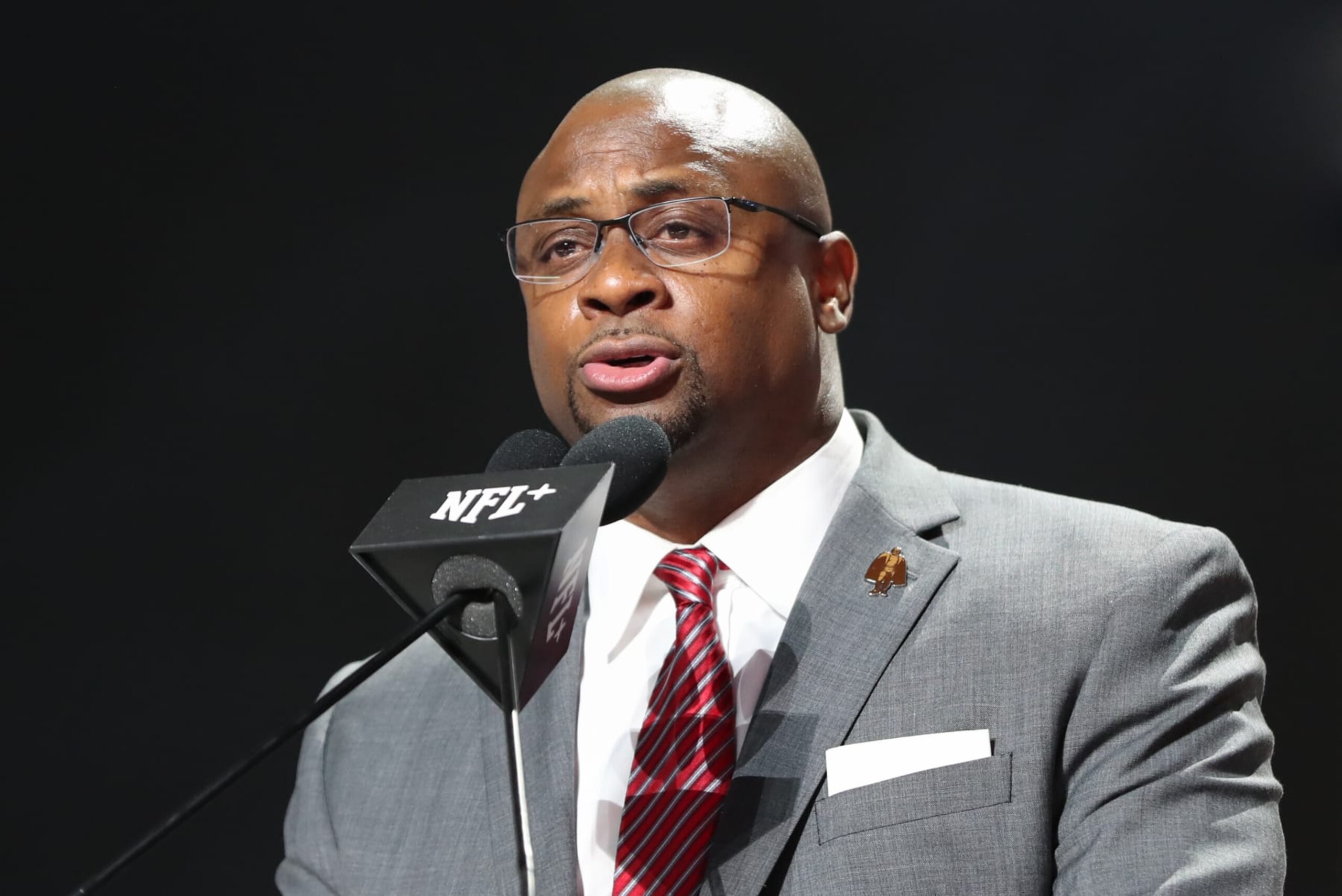
The NFL executive vice president of football operations, Troy Vincent, told reporters on Thursday that the hip-drop tackle is "something we want to get out the game" despite recent protestations from defensive players.
"When you have a play that has a 20-25x injury rate, it doesn't allow you to fulfill your dreams," he added.
The NFL's executive vice president overseeing player health and safety later clarified that hip-drop tackles allegedly have a 20-25x higher injury likelihood than other forms of tackling specifically, while competition committee chairman Rich McKay offered further clarity on the specific form of hip-drop tackling that would be banned:
TOP NEWS

New NFL contenders starting to emerge after Week 4
.jpg?w=2560 "Cardinals Giants Football")
NFL investigating 2 referees for separate viral exchanges
.jpg?w=2560 "Hill Injury Update Football")
Report: Chiefs Contact Hill's Agent
The NFL and the competition committee proposed banning the hip-drop tackle on Wednesday, moving that it would become a 15-yard penalty and an automatic first down.
The NFL Players' Association released the following statement in opposition:
Defensive players around the league also reacted adversely to the news:
A hip-drop tackle injured Baltimore Ravens star tight end Mark Andrews and caused him miss the final six games of the regular season, but his own teammate at the time, Patrick Queen, said he didn't believe it was a dirty play or the sort of tackle that needed to be banned.
"I hate that Mark is hurt. Prayers for him. But at the end of the day, we play football. We play a tackling sport. I don't think a hip-drop tackle is that bad of a thing," he told reporters. "How else do you want us to tackle? Just let the guy run past you?"
The argument against banning the hip-drop tackle is twofold. One, it's hard for defensive players—moving at full speed while reacting in split seconds to a ballcarrier attempting to run past or through them—to always use precise technique. Two, the league is adding a steep penalty for what will ultimately be a judgement call from the referees and may be difficult to distinguish from legal tackling techniques.
The argument in favor of banning the hip-drop tackle is simpler: It's an effort to prevent tackles that land on an offensive player's ankles or knees, vulnerable areas that can lead to severe injuries.
NFL defenders had to make the adjustment to rules put in place to limit head-to-head collisions or impacts on defenseless receivers. It appears they'll need to take the hip-drop tackle out of their repertoire as well.
.jpg?w=2560 "Titans Giants Football")
.jpg?w=2560 "Dolphins Bills Football")



.jpg?w=2560 "Greenlaw Talks Payton Exchange")
