
It takes a good three to four years to truly evaluate an NFL draft class, but things start to come into focus after the rookie year.
The 2023 draft class made an undeniable impact in the league this season. C.J. Stroud emerged as a franchise quarterback, Puka Nacua broke out as a fifth-round pick turned star receiver and the Lions found two offensive weapons in Sam LaPorta and Jahmyr Gibbs who propelled them to the NFC Championship Game.
As the 2024 draft class prepares to go under the harsh microscope of the pre-draft process, it's actually a good time to re-assess the 2023 class. With a year for prospects to prove themselves, we have a better idea what these classes are going to look like with the advantage of time.
Pro Football Reference's approximate value was used as a factor in the ranking criteria. It is an attempt to quantify a player's value to a team across all positions in a single season. The total AV of the entire class for 2023 is noted on each slide.
However, rookie performance isn't the only measure that matters. Flashes of potential and positional value were also factored into the rankings. Progression isn't always linear, and there are prospects who might not have had a huge impact but showed they could still live up to the hype.
Here's a rundown of where every class ranks one year in.
32. Dallas Cowboys
1 of 32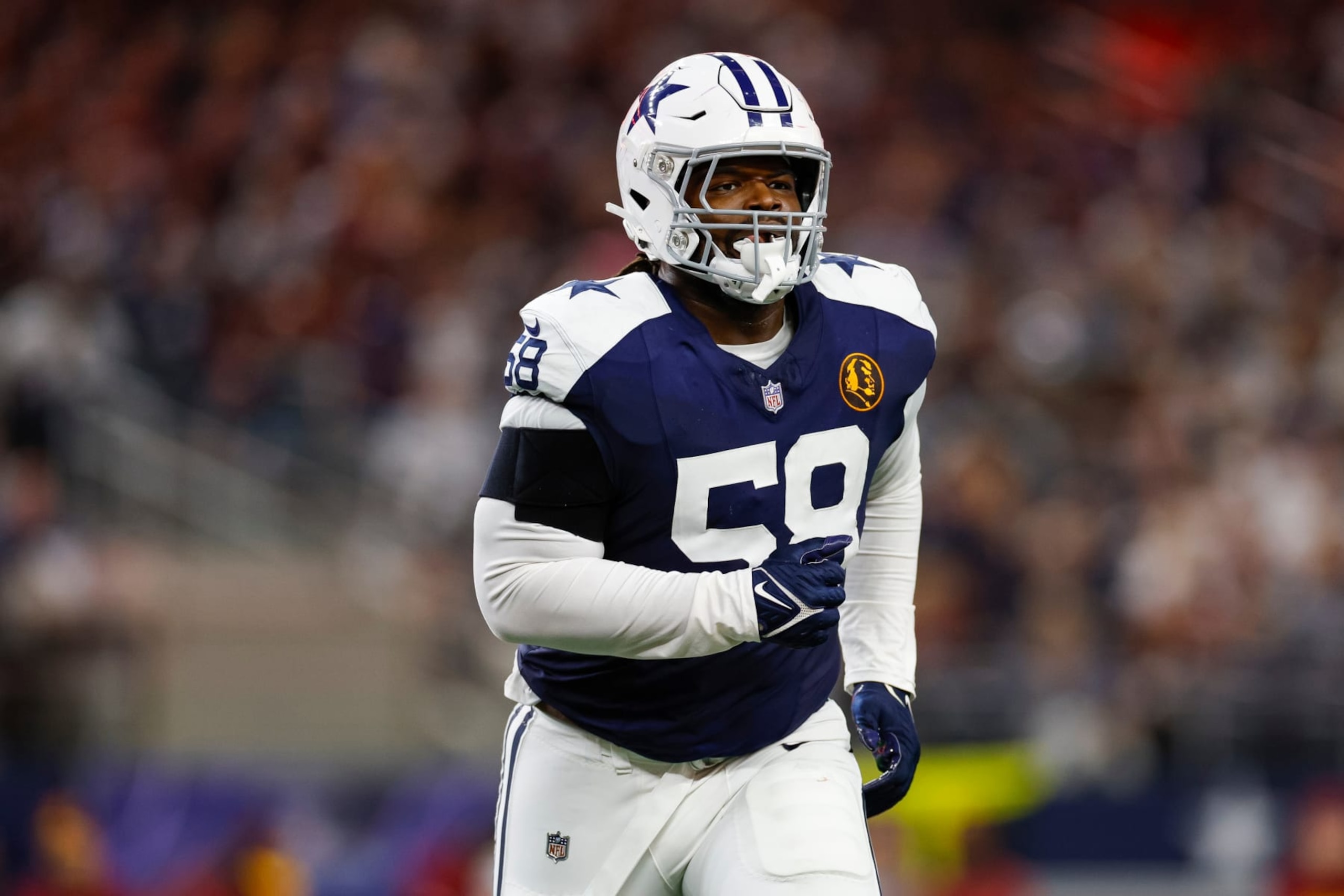
- Round 1 (No. 26): Mazi Smith, DL, Michigan
- Round 2 (No. 58): Luke Schoonmaker, TE, Michigan
- Round 3 (No. 90): DeMarvion Overshown, LB, Texas
- Round 4 (No. 129): Viliami Fehoko Jr., Edge, San Jose State
- Round 5 (No. 169): Asim Richards, OT, North Carolina
- Round 6 (No. 178): Eric Scott Jr., CB, Southern Mississippi
- Round 6 (No. 212): Deuce Vaughn, RB, Kansas State
- Round 7 (No. 244): Jalen Brooks, WR, South Carolina
The Cowboys draft was generally panned by analysts last season. One year in, and the Dallas rookies didn't do a lot to dissuade the doubters.
Mazi Smith was a questionable value in the first round. He's a phenomenal athlete, but the pass-rushing element of his game is mostly hypothetical at this point. He didn't even live up to expectations as a run-stuffer, playing just 28 percent of the defensive snaps.
He wound up with just eight tackles, a 49.8 grade from PFF and one sack.
The Luke Schoonmaker pick makes less sense a year in. Jake Ferguson broke out and looks like the tight end of the future, while the Michigan alum had just eight catches for 65 yards.
The class would have looked better if DeMarvion Overshown was able to help out the linebacker corps. Unfortunately, he suffered a torn ACL in the preseason and missed the entire season.
Deuce Vaughn was also a disappointment. The sixth-rounder had some hype as a potential return specialist and gadget player but ended up with just four punt returns and 80 yards on 30 touches.
This class has a lot of work to do to avoid being considered a bust.
31. Denver Broncos
2 of 32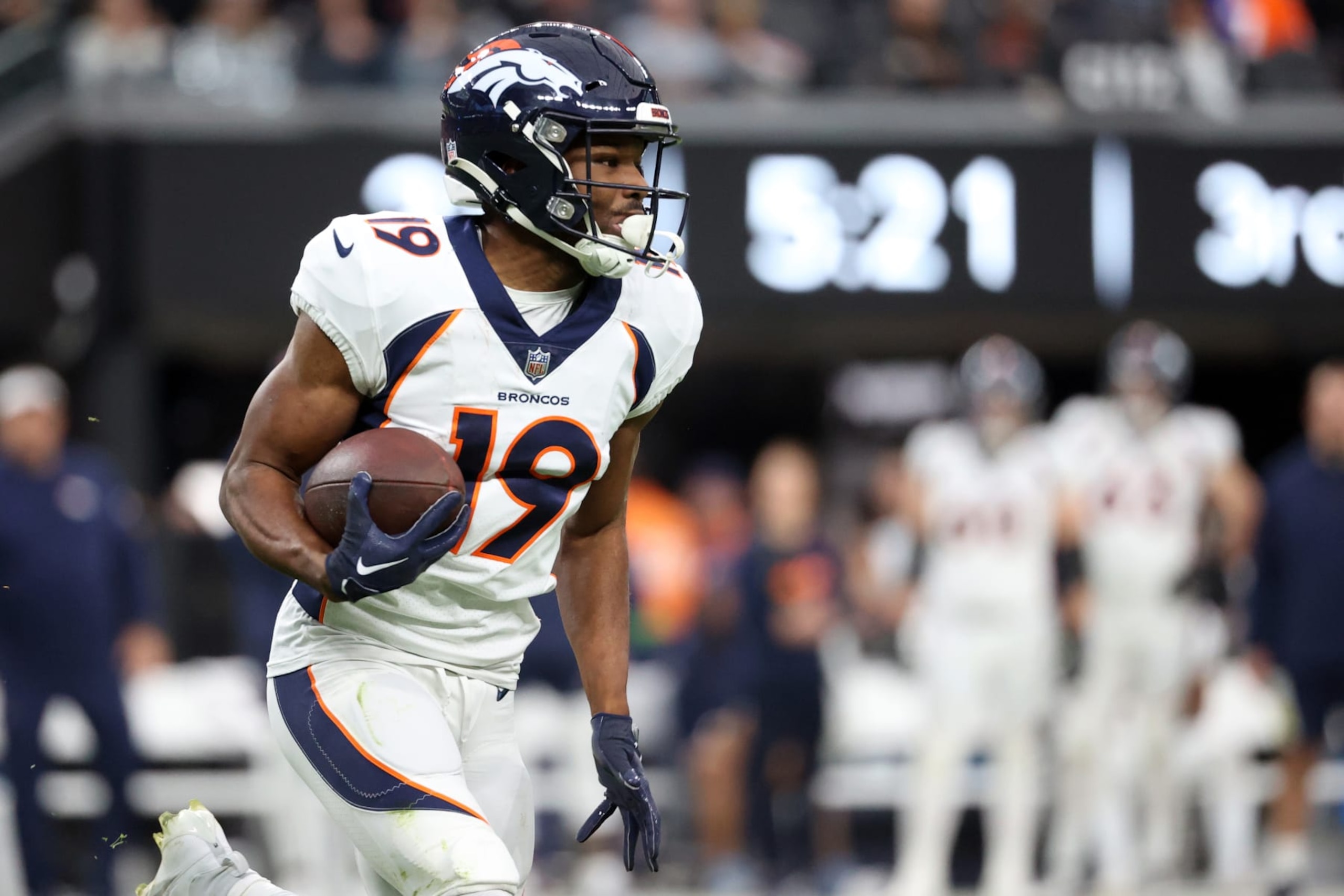
- Round 2 (No. 63): Marvin Mims Jr., WR, Oklahoma
- Round 3 (No. 67): Drew Sanders, LB, Arkansas
- Round 3 (No. 83): Riley Moss, CB, Iowa
- Round 6 (No. 183): JL Skinner, S, Boise State
- Round 7 (No. 257): Alex Forsyth, C, Oregon
This draft class is a reminder of just how costly the Russell Wilson trade was for the Broncos franchise. They came into the draft without a first- and second-round pick because of their trade with the Seahawks.
They traded up into Round 2 to grab Marvin Mims Jr. and wound up with a five-man draft class. It was always going to be hard for the Broncos to put together an impactful class with so little draft capital.
Mims did the heavy lifting for their total approximate value. He had 22 receptions for 377 yards, including the longest reception of anyone on the team (60 yards). He flashed some big-play potential, including a 99-yard kickoff return for a touchdown. If/when one of Jerry Jeudy or Courtland Sutton moves on, he should get a bigger role in the offense.
Sanders was the only defensive draft pick that saw significant playing time. He was on the field for 23 percent of the snaps but didn't make a ton of plays—no sacks, one tackle for loss and no passes defended.
The best rookie might have been undrafted free agent Jaleel McLaughlin, who played in all 17 games and had 570 total yards as a complementary back to Javonte Williams.
This class isn't going to be one to reverse the Broncos' fortunes, but there's still time for these players to become part of the plan moving forward.
30. Miami Dolphins
3 of 32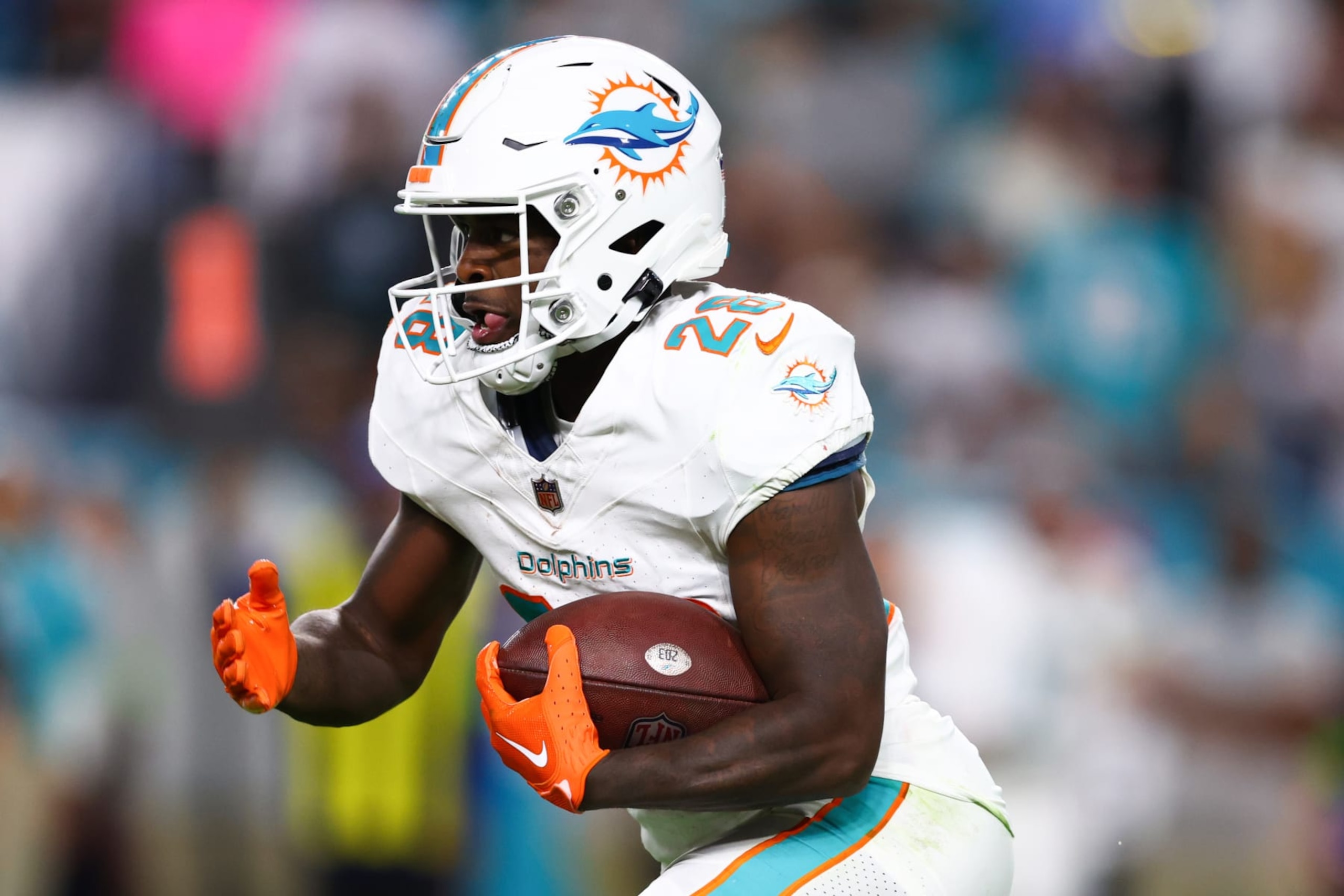
- Round 2 (No. 51): Cam Smith, CB, South Carolina
- Round 3 (No. 84): De'Von Achane, RB, Texas A&M
- Round 6 (No. 197): Elijah Higgins, WR, Stanford
- Round 7 (No. 238): Ryan Hayes, IOL, Michigan
It's pretty tough to get a ton of value out of a draft class with just four picks, especially when two of those four picks are Day 3 selections. They traded their first- and third-round picks away for Bradley Chubb and Jalen Ramsey in separate transactions, but we are only focusing on the rookies here.
Still, the Dolphins managed to add yet another explosive playmaker to their offense in third-round pick De'Von Achane. The Texas A&M burner had 800 rushing yards with eight touchdowns and added 197 receiving yards on 27 receptions in just 11 games.
If Achane can prove the shoulder and knee injuries that cost him time in 2023 were aberrations, he should be an integral part of an explosive Dolphins offense for a while.
Achane was about the only positive that came out of this class, though. Cam Smith rarely saw the field other than special teams despite injuries to Xavien Howard and Ramsey.
Neither Higgins nor Hayes even ended up on the roster.
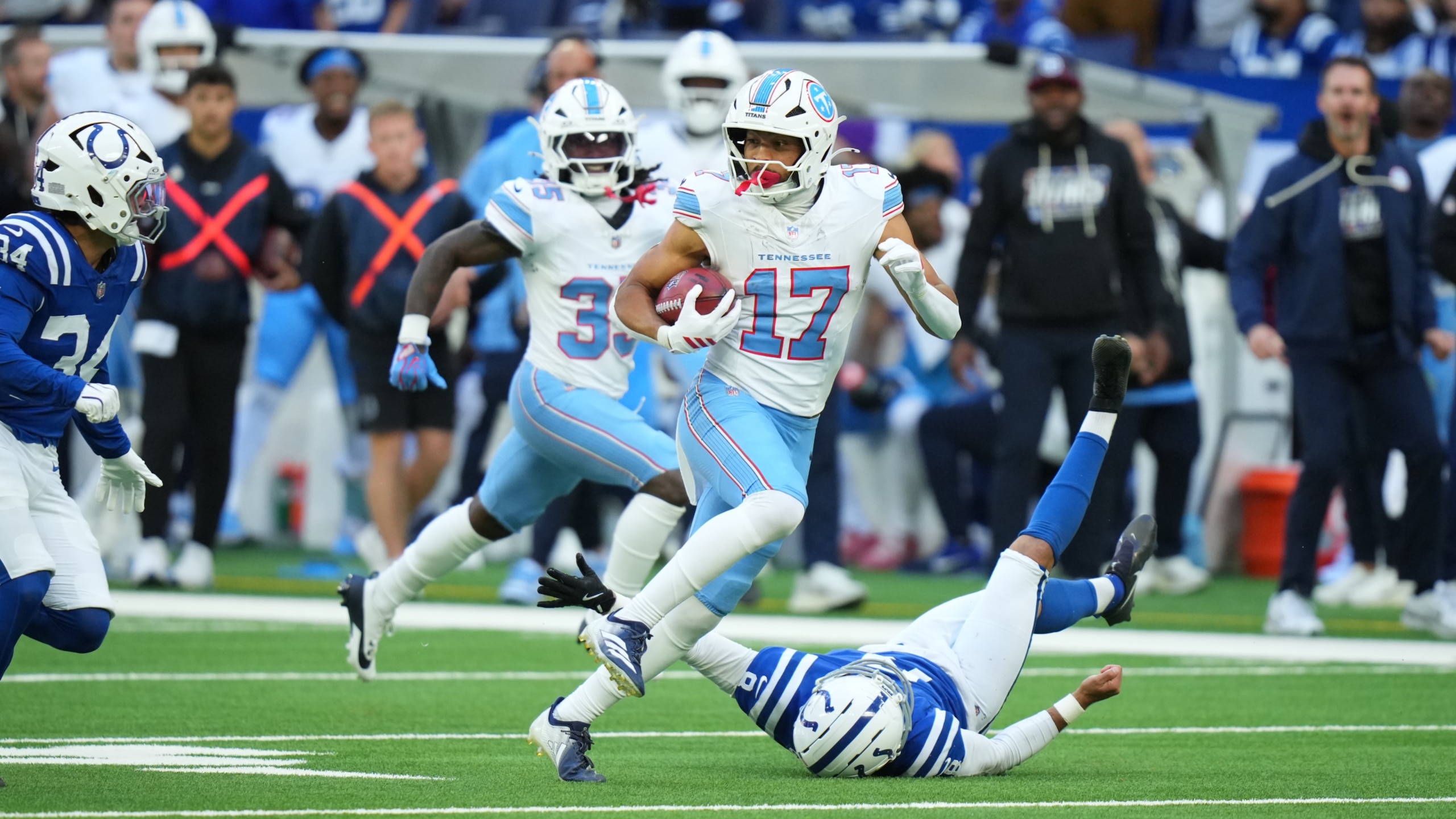
.jpg?w=2560 "Ravens Titans Football")
29. San Fransisco 49ers
4 of 32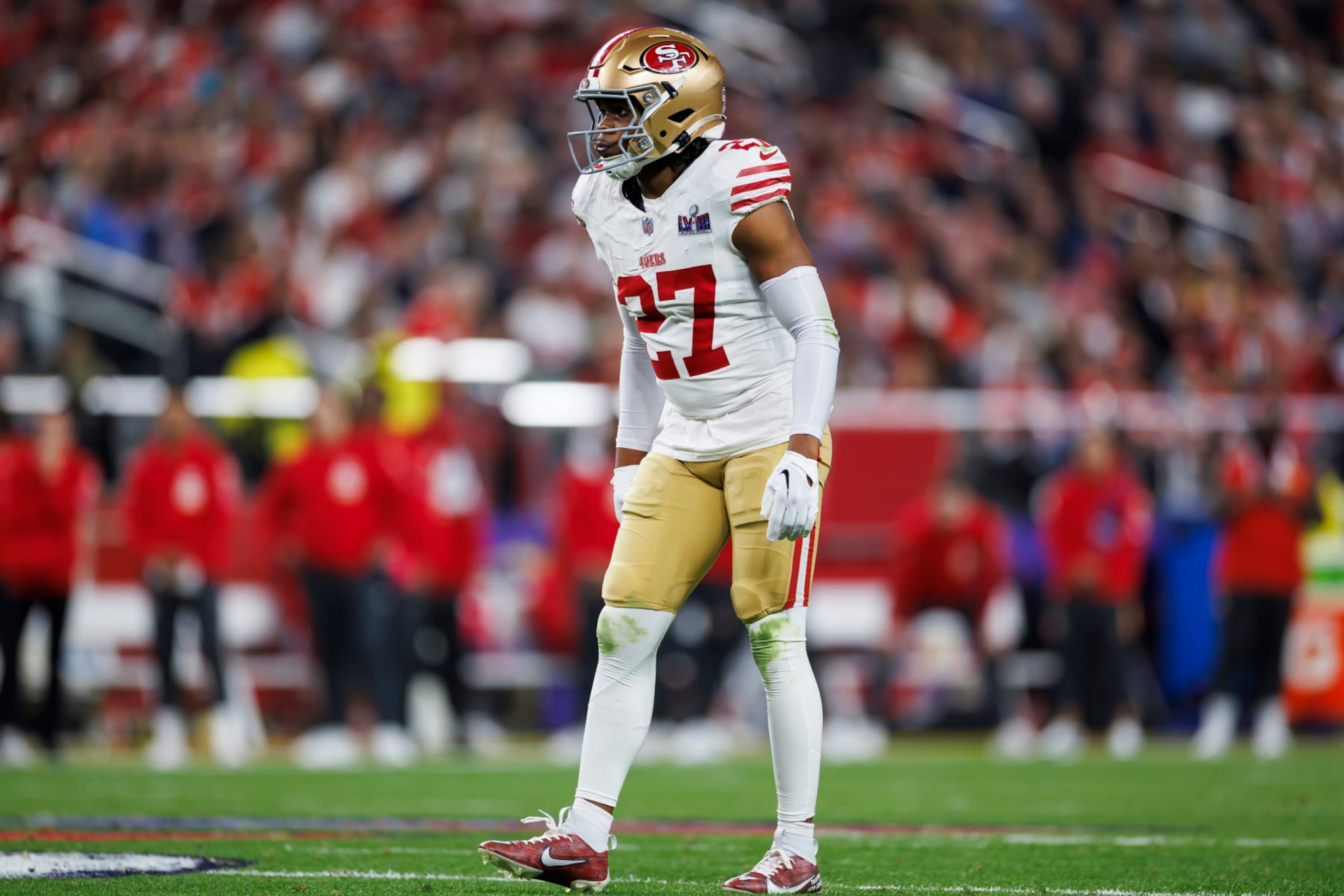
- Round 3 (No. 87): Ji'Ayir Brown, S, Penn State
- Round 3 (No. 99): Jake Moody, K, Michigan
- Round 3 (No. 101): Cameron Latu, TE, Alabama
- Round 5 (No. 155): Darrell Luter Jr., CB, South Alabama
- Round 5 (No. 173): Robert Beal Jr., Edge, Georgia
- Round 6 (No. 216): Dee Winters, LB, TCU
- Round 7 (No. 247): Brayden Willis, TE, Oklahoma
- Round 7 (No. 253): Ronnie Bell, WR, Michigan
- Round 7 (No. 255): Jalen Graham, LB, Purdue
The 49ers should have had low expectations for this class coming in. They only had Day 2 picks because of the compensatory pick rules and traded up to get Ji'Ayir Brown with the 87th pick.
That move ended up paying dividends. Brown took over as a starter when Talanoa Hufanga suffered a torn ACL that ended his season in Week 11. The Penn State safety logged two interceptions to close out the regular season before snagging another one in the postseason.
He gives them a young starting option moving forward and solid value in the third round.
That's about where the significant news ends, though. Kicker Jake Moody led the whole clasee in Approximate Value as the starting kicker. He made 21-of-25 field goal attempts and handled kickoff duties as well.
The only other ones who registered some value were Dee Winters and Ronnie Bell. The TCU linebacker was a steady special teamer, while Bell had three touchdowns on just six receptions for the season.
Brown might be the only full-time starter that comes out of this class. That's not too bad considering there wasn't much draft capital to work with.
28. Washington Commanders
5 of 32
- Round 1 (No. 16): Emmanuel Forbes, CB, Mississippi State
- Round 2 (No. 47): Quan Martin, S, Illinois
- Round 3 (No. 97): Ricky Stromberg, IOL, Arkansas
- Round 4 (No. 118): Braeden Daniels, IOL, Utah
- Round 5 (No. 137): KJ Henry, Edge, Clemson
- Round 6 (No. 193): Chris Rodriguez Jr., RB, Kentucky
- Round 7 (No. 233): Andre Jones Jr., Edge, Louisiana
The Commanders' rookie class isn't a lost cause, but it was certainly a bumpy ride for some in Year 1.
Emmanuel Forbes was a ball hawk in college, but he only had one interception in his rookie season. He was a starter at the beginning of the season but lost the role and was in and out of the starting lineup. He surrendered a passer rating of 103.0 and will need to prove himself to Dan Quinn and his new coaching staff.
Quan Martin didn't play much at the beginning of the season but worked his way into the lineup as a slot defender and safety. He could wind up being the best player in Washington's class.
Neither offensive linemen wound up making an impact, and KJ Henry did little with his opportunity once Chase Young and Montez Sweat were traded away at the deadline.
The best bet for an offensive impact player is Chris Rodriguez Jr. He averaged 4.8 yards per carry and should have a bigger role if Antonio Gibson is allowed to hit free agency in the spring.
27. Carolina Panthers
6 of 32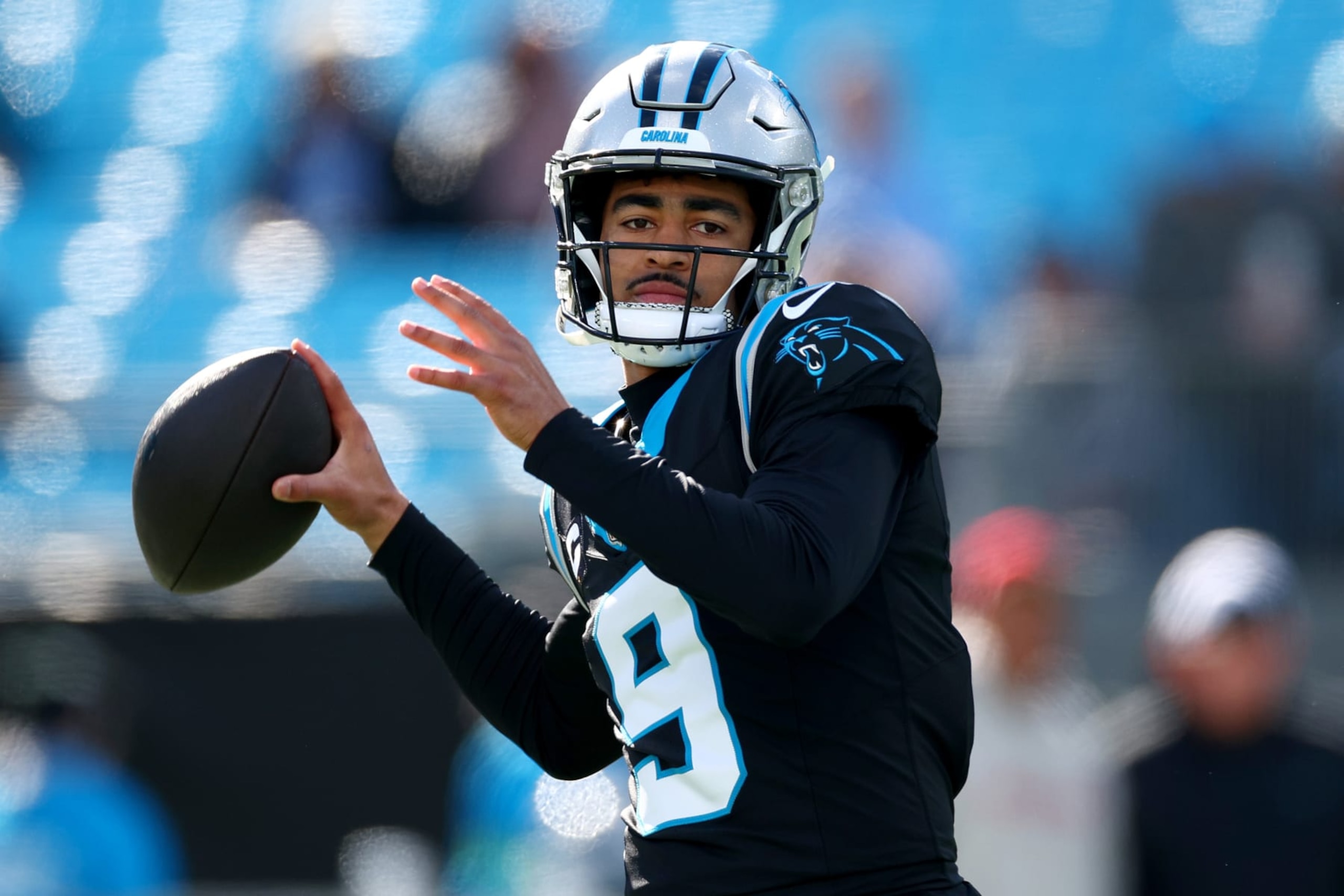
- Round 1 (No. 1): Bryce Young, QB, Alabama
- Round 2 (No. 39): Jonathan Mingo, WR, Mississippi
- Round 3 (No. 80): DJ Johnson, Edge, Oregon
- Round 4 (No. 114): Chandler Zavala, IOL, North Carolina State
- Round 5 (No. 145): Jammie Robinson, S, Florida State
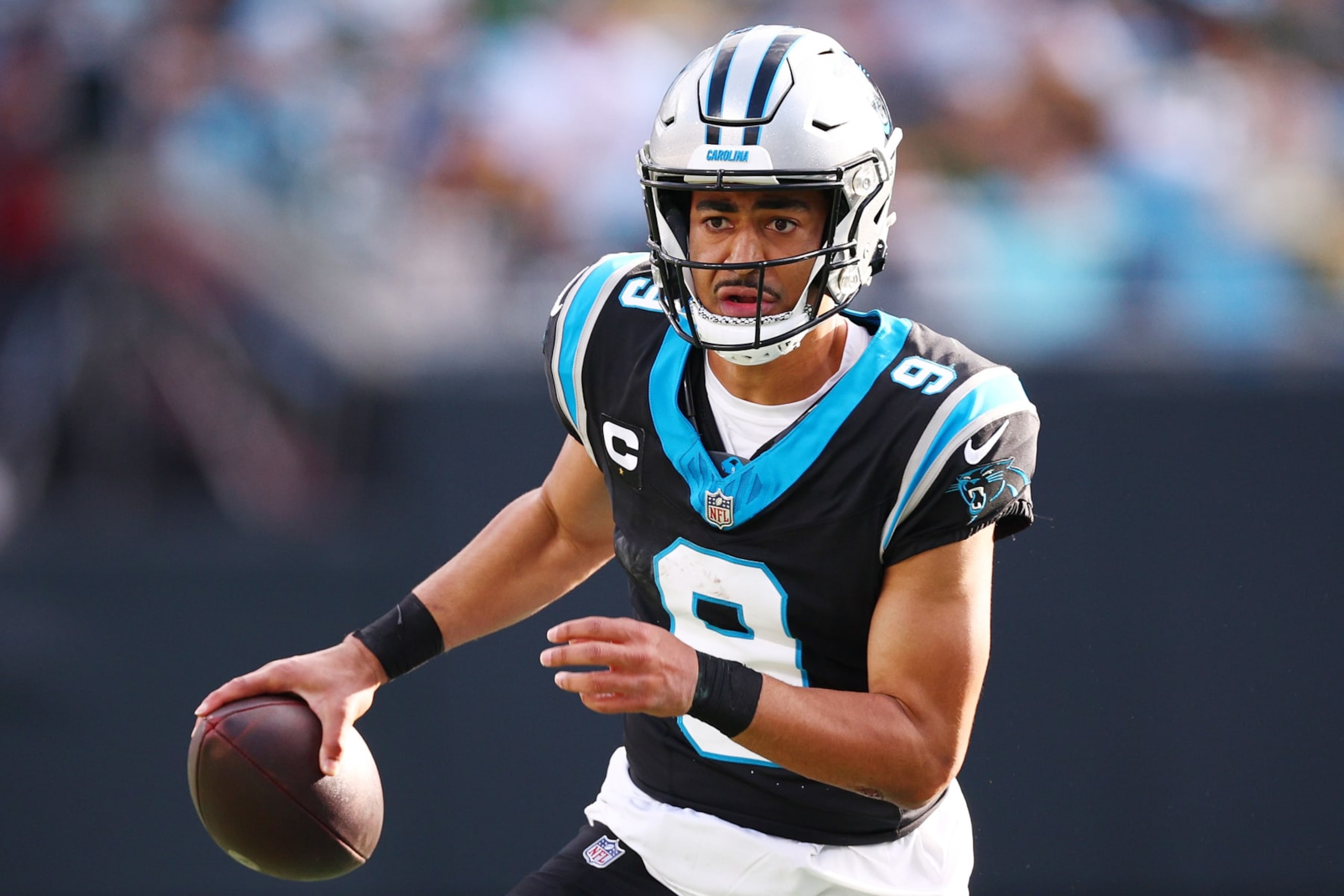
This is the most difficult class to rank, because so much rides on how good Bryce Young will become. Considering how much the Panthers gave up to move up and draft him, he was a disappointment.
But he was also set up for failure from the jump. Sending out D.J. Moore, who would have given Young a legitimate No. 1 receiver, left Young with a receiving corps led by 33-year-old Adam Thielen. Add in a coaching staff in flux and a porous offensive line, and it would have been hard for anyone to have success there.
Still, Young threw just 11 touchdowns to 10 interceptions, and his 33.4 QBR was only better than Zach Wilson's on ESPN's leaderboard.
Jonathan Mingo saw a big role, but that doesn't mean as much on a receiving corps like Carolina's. He finished 153rd out of 153 receivers ranked on ESPN Analytics' receiver ratings.
Chandler Zavala started seven games on the offensive line but had an abysmal 26.2 grade from PFF and gave up six sacks despite playing just 374 snaps.
DJ Johnson and Jammie Robinson both played minimally.
If Young doesn't show real signs of growth in 2024, this is going to go down as a colossally bad draft class.
26. Cleveland Browns
7 of 32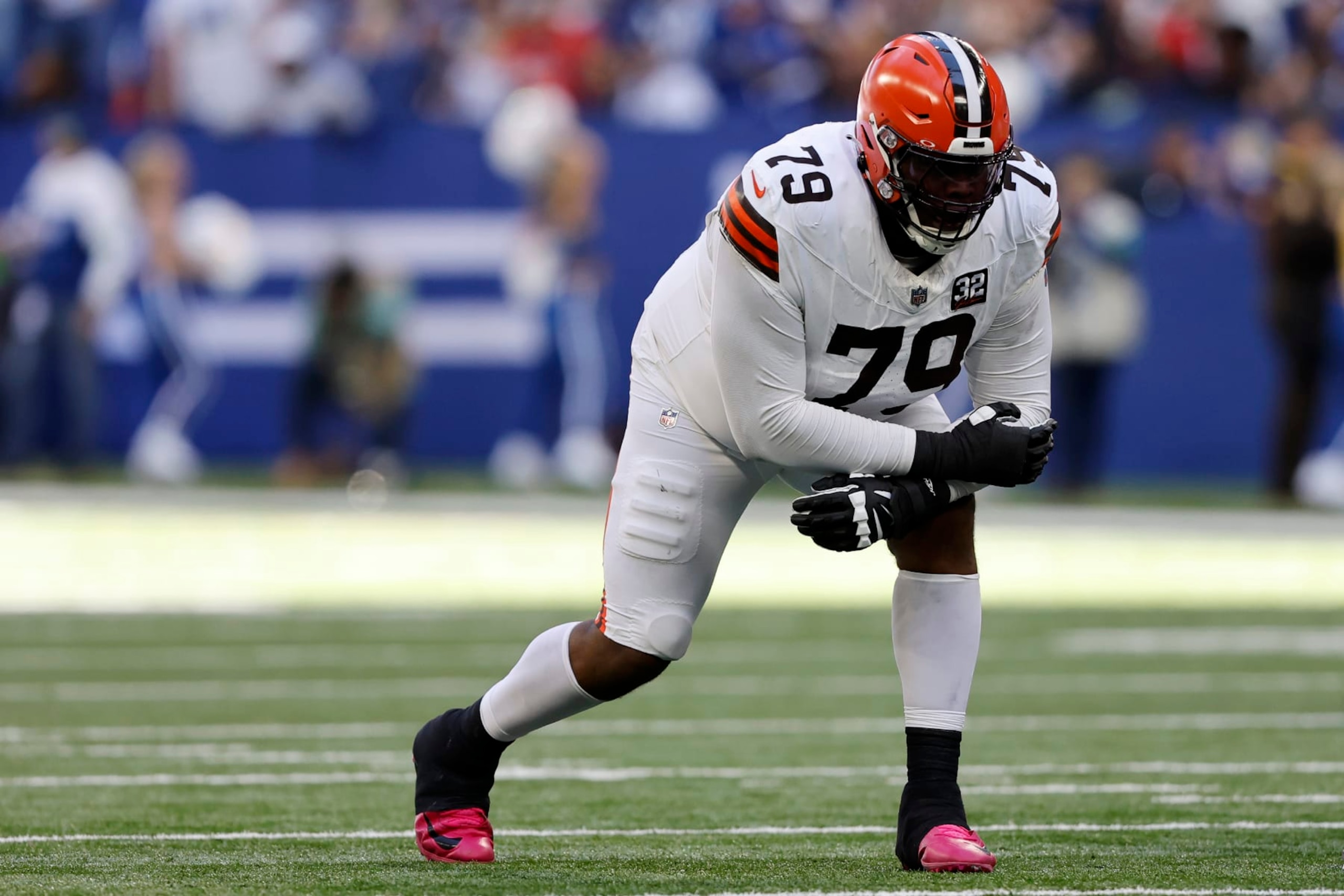
- Round 3 (No. 74): Cedric Tillman, WR, Tennessee
- Round 3 (No. 98): Siaki Ika, DL, Baylor
- Round 4 (No. 111): Dawand Jones, OT, Ohio State
- Round 4 (No. 126): Isaiah McGuire, DL, Missouri
- Round 5 (No. 140): Dorian Thompson-Robinson, QB, UCLA
- Round 5 (No. 142): Cameron Mitchell, CB, Northwestern
- Round 6 (No. 190): Luke Wypler, IOL, Ohio State
Finding starting caliber tackles is not an easy task in this league. So finding one who is capable of starting in his rookie season as a fourth-round pick is a minor miracle.
That's exactly what the Browns pulled off when they drafted Dawand Jones with the 11th pick in the fourth round. Cleveland overachieved for a team that not only lost its starting quarterback, but also both starting tackles. Fortunately for them, Jones was able to give them nine starts before suffering his own season-ending knee injury.
He's given them flexibility moving forward, too. He was named to the PFWA All-Rookie Team and earned a 64.7 grade from PFF.
It also makes it a little easier to look past the fact that the Browns only had two picks in the top 100 and neither was a difference-maker. Cedric Tillman came on toward the end of the season and had multiple catches in six of the last seven games, but he finished with 21 catches for 224 yards.
Cameron Mitchell provided some depth in the defensive backfield and made three starts. Dorian Thompson-Robinson looked like he might be on to something in the preseason but showed he wasn't ready in three starts, going 1-2 with one touchdown to four interceptions.
This class might only produce one starter and a few more role players, but its at least a starter at a premium position.
25. Los Angeles Chargers
8 of 32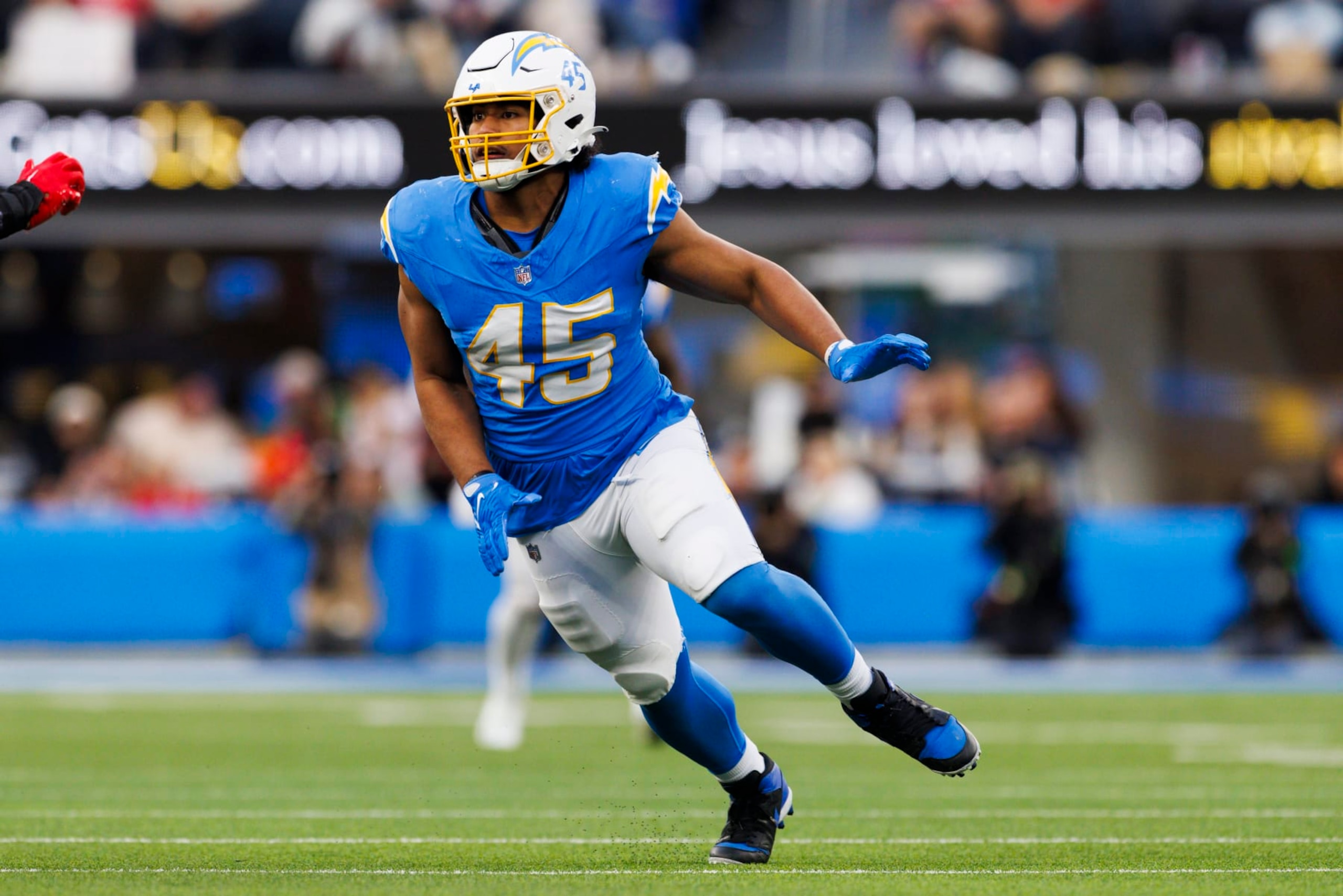
- Round 1 (No. 21): Quentin Johnston, WR, TCU
- Round 2 (No. 54): Tuli Tuipulotu, Edge, USC
- Round 3 (No. 85): Daiyan Henley, LB, Washington State
- Round 4 (No. 125): Derius Davis, WR, TCU
- Round 5 (No. 156): Jordan McFadden, IOL, Clemson
- Round 6 (No. 200): Scott Matlock, DL, Boise State
- Round 7 (No. 239): Max Duggan, QB, TCU
The Chargers' draft class showed some promise, but not enough for a team that went 5-12 and struggled with injuries.
Both Keenan Allen and Mike Williams missed significant time with injuries, but Quentin Johnston never really took over either of their roles. He wound up with 38 receptions for 431 yards. That was just enough to avoid any early "bust" labels, but he will have to have a great second season to catch up with his fellow first-round receivers.
Second-round pick Tuli Tuipulotu was the most promising of the Chargers rookies. With Joey Bosa going down for much of the season, he had the opportunity to rise to the occasion and responded well with 11 starts, 53 combined tackles and 4.5 sacks.
It's much too early to tell what they have in Daiyan Henley. He was primarily a special-teamer caught behind a group of veteran linebackers.
Derius Davis did a fine job as the team's kick and punt returner. He could see an expanded role as a receiver after catching 15 of his 17 targets, so there's some value there as a fourth-round pick.
In general, the Chargers seem to have found a few decent players but none who are capable of turning the franchise around.
24. New Orleans Saints
9 of 32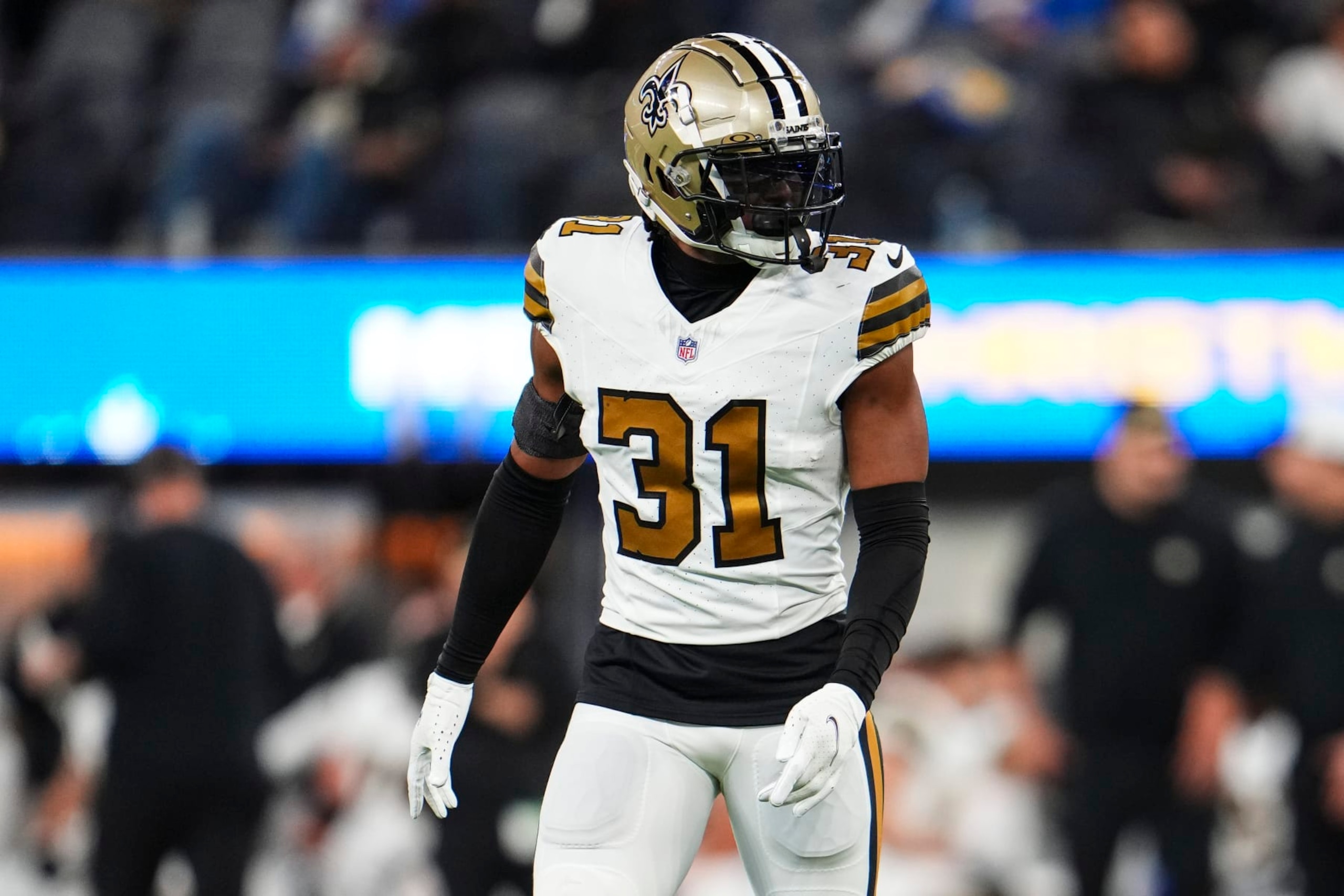
- Round 1 (No. 29): Bryan Bresee, DL, Clemson
- Round 2 (No. 40): Isaiah Foskey, Edge, Notre Dame
- Round 3 (No. 71): Kendre Miller, RB, TCU
- Round 4 (No. 103): Nick Saldiveri, OT, Old Dominion
- Round 4 (No. 127): Jake Haener, QB, Fresno State
- Round 5 (No. 146): Jordan Howden, S, Minnesota
- Round 6 (No. 195): A.T. Perry, WR, Wake Forest
None of the Saints' Day 1 or 2 picks started a game in 2023. The only two to pick up any starts in their debut season were actually the last two taken.
Jordan Howden was the biggest surprise of the bunch. He was an unheralded safety coming out of Minnesota, but he ended up starting seven games and gave up only one touchdown on the year.
A.T. Perry also provided a nice return for a late-round pick. He got three starts and flashed the potential to be a legitimate red-zone threat, snatching four touchdown passes.
The Saints' first-round pick wasn't exactly a bust, either. Bryan Bresee played in all 17 games and showed a knack for disrupting opposing passers. He had 4.5 sacks but also batted six passes. He should continue to grow in his role and become a mainstay on the interior for a long time.
The same can't be said for second-round pick Isaiah Foskey. He put in a disappointing rookie campaign. He had nine total tackles in 10 games and mostly played special teams.
Kendre Miller will need to show more in 2024 as well. There was some expectation that he would be able to take some volume from Alvin Kamara's load, but he only ended up with 51 total touches on the season.
There's still hope for this class, but the Saints need a lot more out of their Day 1 and 2 picks.
23. Minnesota Vikings
10 of 32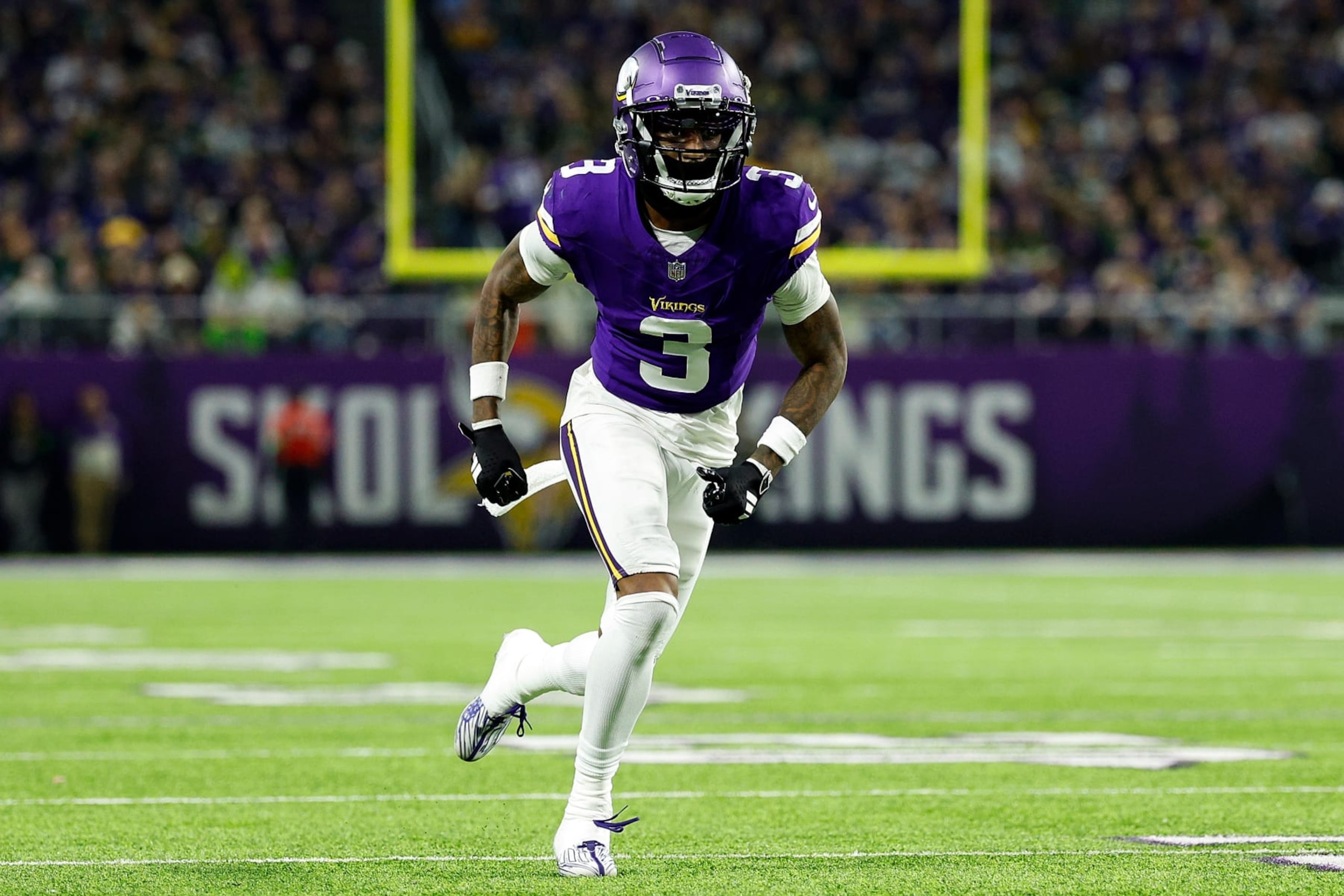
- Round 1 (23): Jordan Addison, WR, USC
- Round 3 (No. 102): Mekhi Blackmon, CB, USC
- Round 4 (No. 134): Jay Ward, S, LSU
- Round 5 (No. 141): Jaquelin Roy, DL, LSU
- Round 5 (No. 164): Jaren Hall, QB, BYU
- Round 7 (No. 222): DeWayne McBride, RB, UAB
Similar to the Ravens' haul, the Vikings' standing is largely helped out by an outstanding rookie season from their first-round receiver. Jordan Addison showcased the quickness and explosive route-running that made him an exciting prospect and parlayed it into a 911-yard debut season with 10 touchdowns.
He should serve as a high-end sidekick to Justin Jefferson for the life of his rookie contract.
The defensive trio that was selected after Addison provided a mixed bag of results. Blackmon is the most promising. He started three games, appeared in 15 and only gave up a passer rating of 81.8 when targeted.
As long as he can remain healthy, he should have a shot at winning a larger role in the secondary next season.
Ward and Roy were mostly special-teamers and combined for 16 total tackles. That's not terrible for Day 3 picks but they didn't show enough to boost the class ranking.
The Vikings' rookie class also got a boost from undrafted free agent Ivan Pace Jr. The linebacker, who was ranked 149th on our final 2023 big board, proved he should have been drafted with 11 starts, 102 combined tackles and 2.5 sacks.
22. New York Giants
11 of 32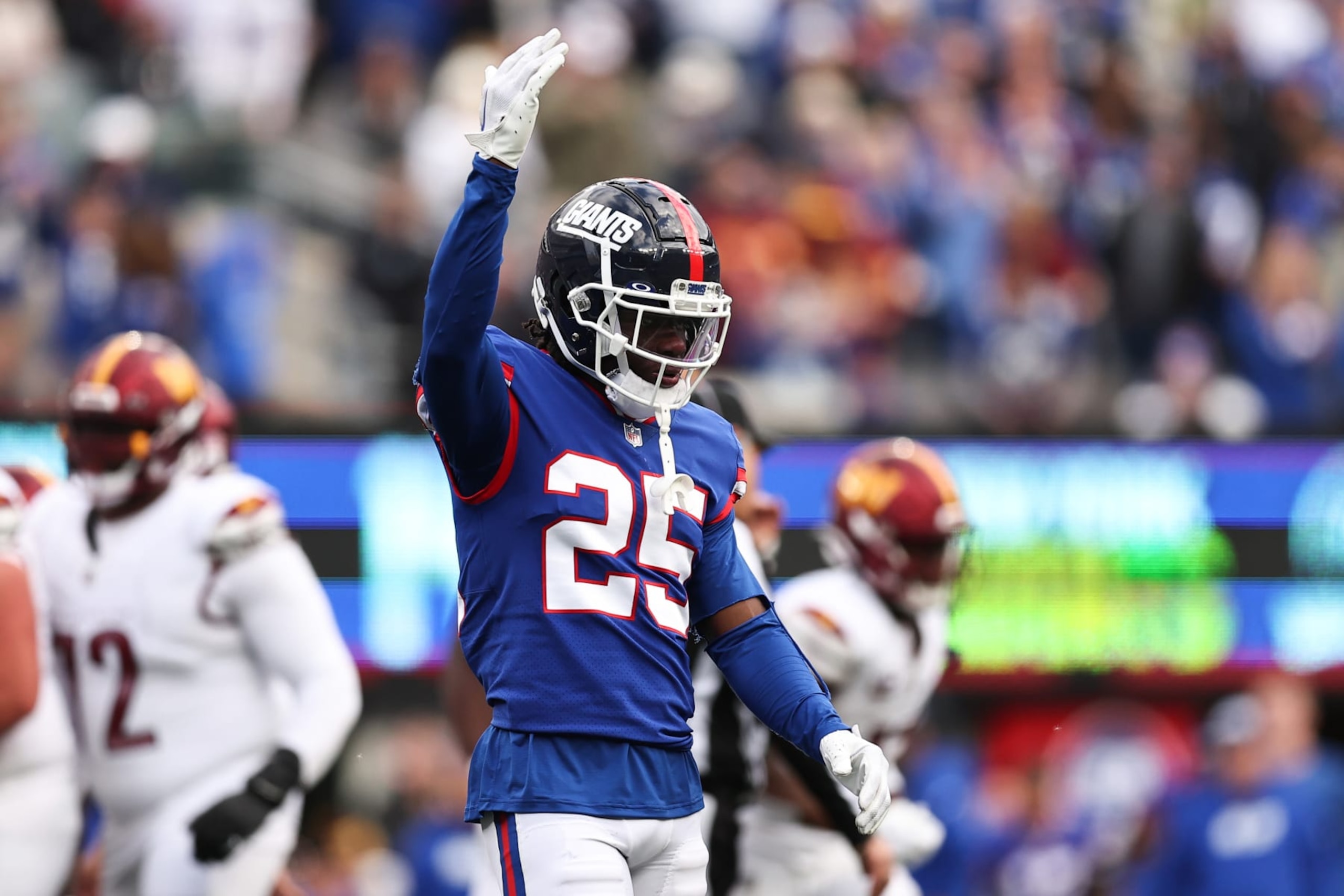
- Round 1 (No. 24): Deonte Banks, CB, Maryland
- Round 2 (No. 57): John Michael Schmitz, IOL, Minnesota
- Round 3 (No. 73): Jalin Hyatt, WR, Tennessee
- Round 5 (No. 172): Eric Gray, RB, Oklahoma
- Round 6 (No. 209): Tre Hawkins III, CB, Old Dominion
- Round 7 (No. 243): Jordon Riley, DL, Oregon
- Round 7 (No. 254): Gervarrius Owens, S, Houston
The Giants' 2023 draft class doesn't look bad through one season, but it also didn't light the world on fire.
Deonte Banks performed admirably in his first year. Playing corner in Wink Martindale's system can leave a player exposed, but Banks acquitted himself quite nicely. He had two interceptions, 11 passes defended and 64 combined tackles. He should be considered one of the most exciting young players in the Giants secondary.
John Michael Schmitz put in 13 starts at center with some concerning results. He ranked 36th out of the 36 qualifying centers graded by PFF. It's always wise to grade rookie linemen on a curve, but that's not an encouraging sign. Then again, the Giants' offensive line as a whole was not good.
Those offensive line issues could also play a part in Jalin Hyatt's relative lack of production. He was on the field for 51 percent of the team's offensive snaps, but he still only had 23 receptions for 373 yards. His 16.2 yards per catch show a glimpse of his big-play potential but he'll have to step up in an offense that is (hopefully) more functional next season.
Eric Gray was a complete afterthought with Saquon Barkley in the backfield. He could become important if Barkley does not return this offseason, while Tre Hawkins gave up four touchdowns in three starts.
21. New York Jets
12 of 32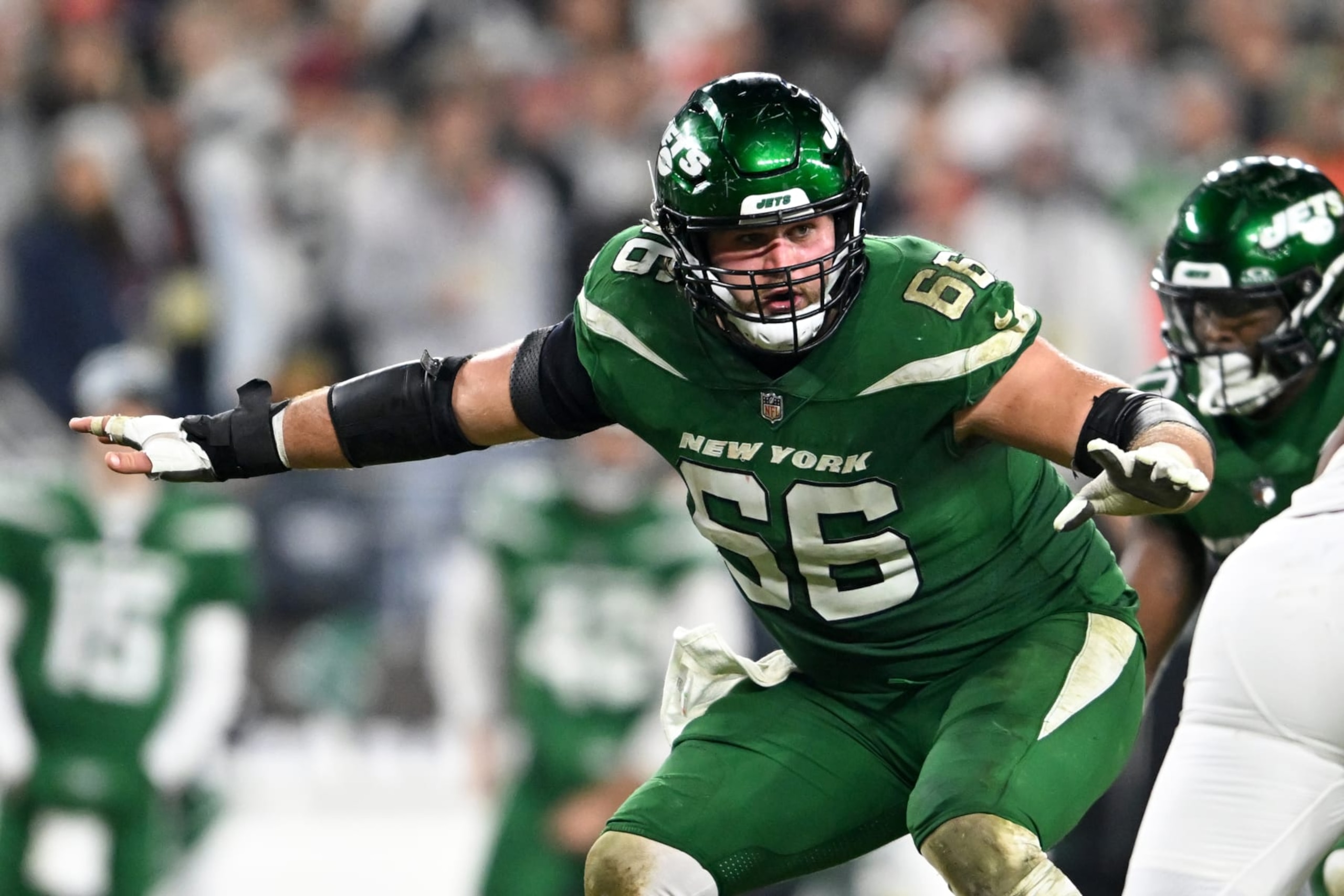
- Round 1 (No. 15): Will McDonald IV, Edge, Iowa State
- Round 2 (No. 43): Joe Tippmann, IOL, Wisconsin
- Round 4 (No. 120): Carter Warren, OT, Pittsburgh
- Round 5 (No. 143): Israel Abanikanda, RB, Pittsburgh
- Round 6 (No. 184): Zaire Barnes, LB, Western Michigan
- Round 6 (No. 204): Jarrick Bernard-Converse, CB, LSU
- Round 7 (No. 220): Zack Kuntz, TE, Old Dominion
This class ranks in the bottom third of these rankings but definitely has some upward mobility. Much of it depends on what Will McDonald IV will look like in an expanded role.
The Jets drafted him with the 15th overall pick, but they were adding to a crowded pass-rush group. He was a rotational pass-rush specialist this season and showed off some of the traits that made him a good fit. He only had three sacks, but he posted an impressive 14.5 percent pressure rate.
With Bryce Huff, Solomon Thomas and Carl Lawson set to hit free agency, McDonald should have a chance to break out in 2024.
Joe Tippmann was the most important piece of the rookie class in 2023. He offered vital versatility for a struggling offensive line, playing both right guard and center while earning an All-Rookie team selection from the PFWA.
Unfortunately, Carter Warren was not ready to contribute in that way. The fourth-round pick gave up five sacks on 401 snaps and earned a 46.9 grade from PFF.
Israel Abanikanda worked his way to the active roster and played in six games. He just didn't have much opportunity to show what he can do with the ball in his hands. He finished with just 113 total yards on 29 touches.
If Tippmann and McDonald can build on the impressive flashes in their first year, this class will end up looking better by this time next year.
20. Philadelphia Eagles
13 of 32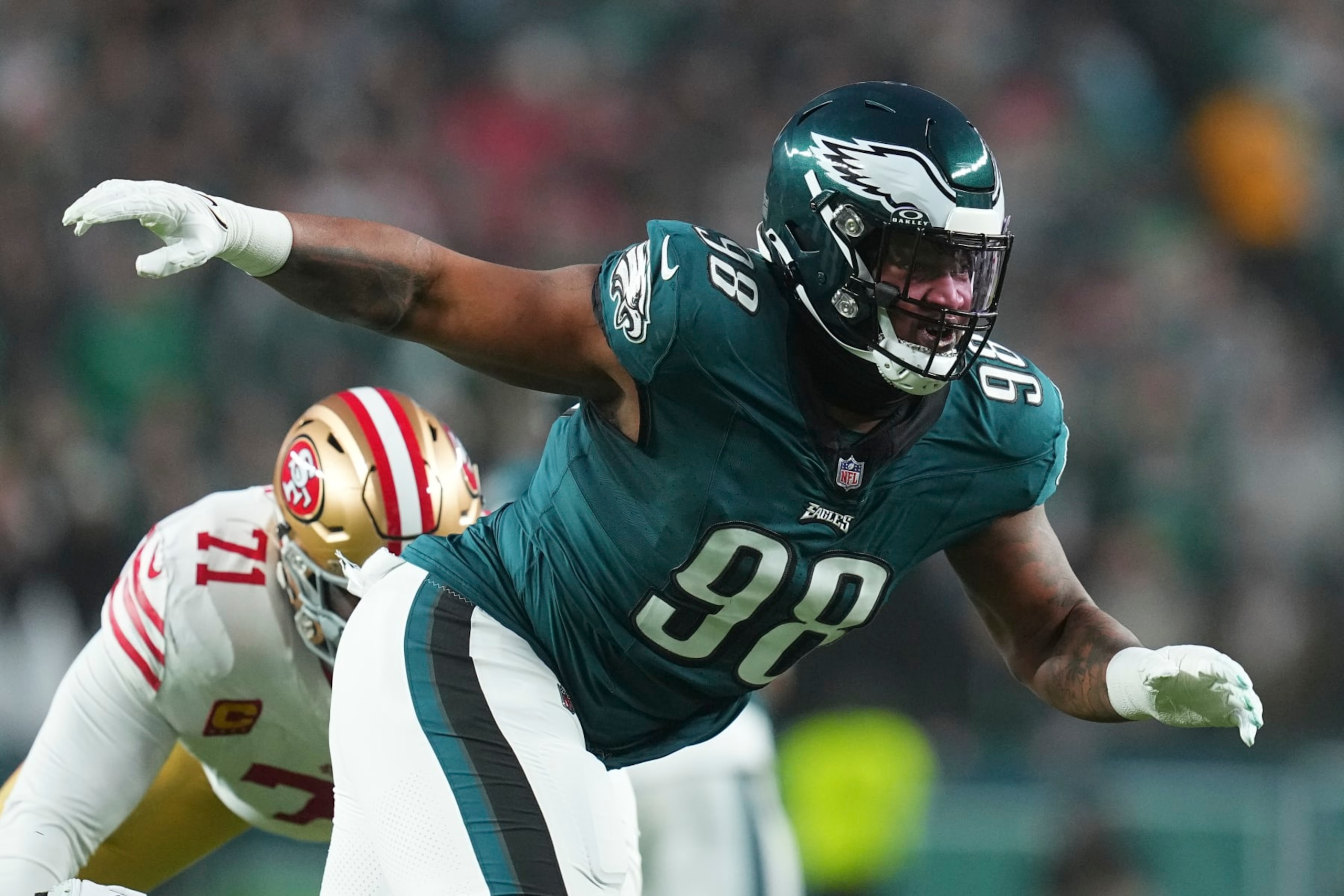
- Round 1 (No. 9): Jalen Carter, DL, Georgia
- Round 1 (No. 30): Nolan Smith, Edge, Georgia
- Round 3 (No. 65): Tyler Steen, OL, Alabama
- Round 3 (No. 66): Sydney Brown, S, Illinois
- Round 4 (No. 105): Kelee Ringo, CB, Georgia
- Round 6 (No. 188): Tanner McKee, QB, Stanford
- Round 7 (No. 249: Moro Ojomo, DL, Texas
The Eagles might have collapsed down the stretch, but that shouldn't be pinned on this rookie class. It still projects to be a solid group of players even if they didn't dominate in Year 1.
They have a relatively low cumulative approximate value, but that's in large part due to being placed on a competitive roster.
Jalen Carter, for instance, finished second in Defensive Player of the Year voting despite starting just one game. He only played 51 percent of the snaps, but he notched six sacks and 39 total pressures. He showed all the skills that made him at top-10 pick.
Nolan Smith experienced similar success on a smaller scale. With Haason Reddick and Josh Sweat on the roster he was relegated to a reserve role, but he still posted an 11.1 pressure percentage on 85 pass-rush reps.
Tyler Steen was always going to have a hard time cracking a talented Eagles offensive line, but he got one start at right guard and didn't look out of place.
Sydney Brown made six starts across the season. That experience should come in handy as Vic Fangio tries to improve the defense.
Kelee Ringo saw action in all 17 games, including four starts at corner. With James Bradberry and Darius Slay both struggling and aging, he could be a part of the secondary plan moving forward.
All in all, this class did what it was expected to do and has maintained a high ceiling.
19. Baltimore Ravens
14 of 32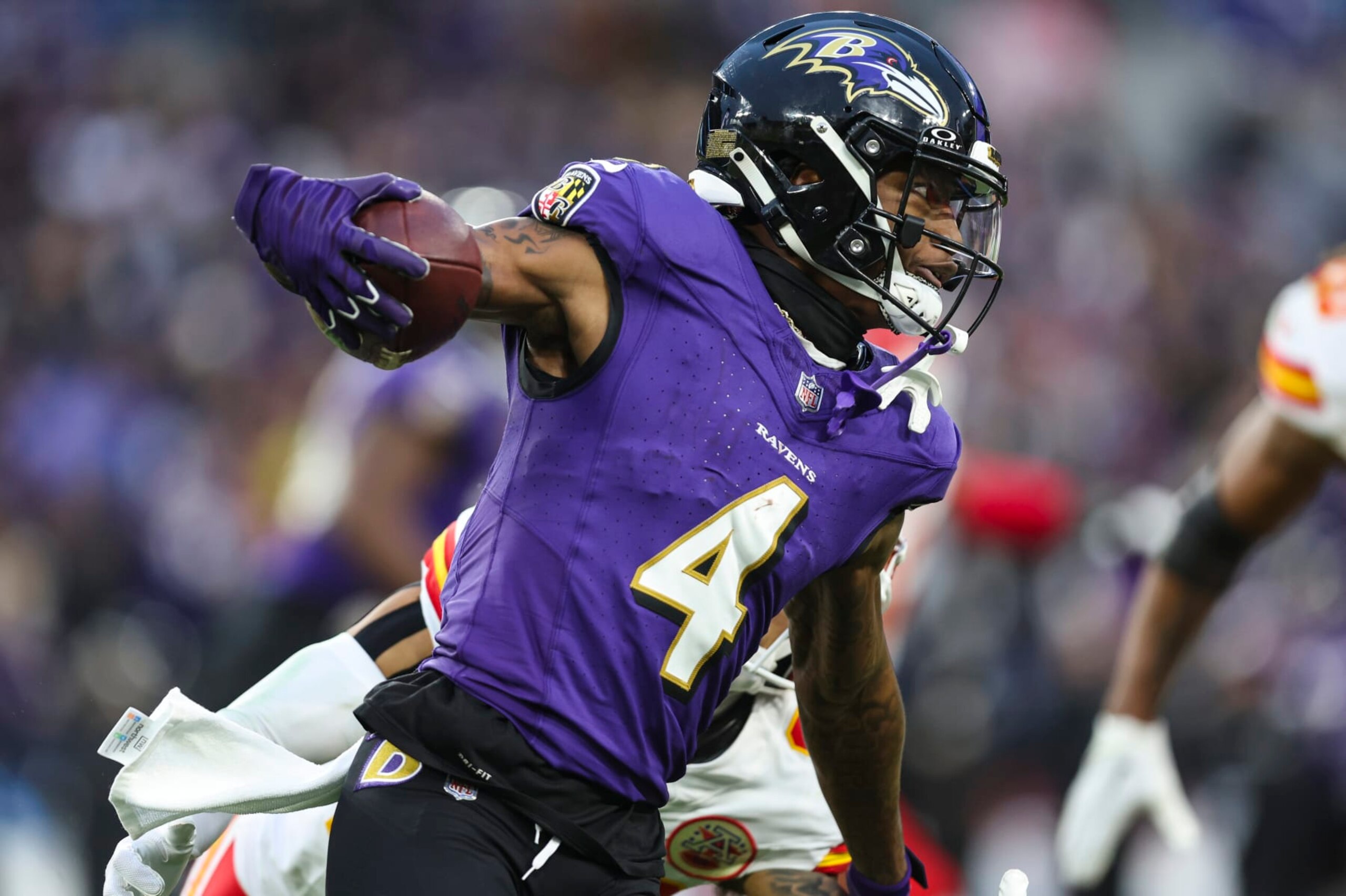
- Round 1 (No. 22): Zay Flowers, WR, Boston College
- Round 3 (No. 86): Trenton Simpson, LB, Clemson
- Round 4 (No. 124): Tavius Robinson, Edge, Mississippi
- Round 5 (No. 157): Kyu Blu Kelly, CB, Stanford
- Round 6 (No. 199): Malaesala Aumavae-Laulu, IOL, Oregon
- Round 7 (No. 229): Andrew Vorhees, IOL, USC
The Ravens had to find weapons for Lamar Jackson last offseason, and Zay Flowers was a big part of the answer. The Boston College receiver turned out to be an electric playmaker and a natural fit in Todd Monken's offense.
Flowers was the top receiver on the team with 77 catches for 858 yards.
The rest of the class has a lot to prove in 2024, though. The Ravens didn't have a second-round pick, so Trenton Simpson was their next selection in the third round. The Clemson linebacker only played 46 defensive snaps all season. He should be competing for a starting role if Patrick Queen leaves in free agency.
Tavius Robinson ended up playing more (335 snaps) but had minimal production with 26 total tackles and a sack. He was the only Day 3 pick who registered a single game with the Ravens. Kyu Blu Kelly ended up playing for three separate teams.
Fortunately, the Ravens struck some gold with undrafted free agent Keaton Mitchell. He showed big-play potential in averaging nearly six yards per carry while rushing for 396 yards in eight games.
He might be able to help this class have a bigger long-term impact, especially when paired with Flowers.
18. New England Patriots
15 of 32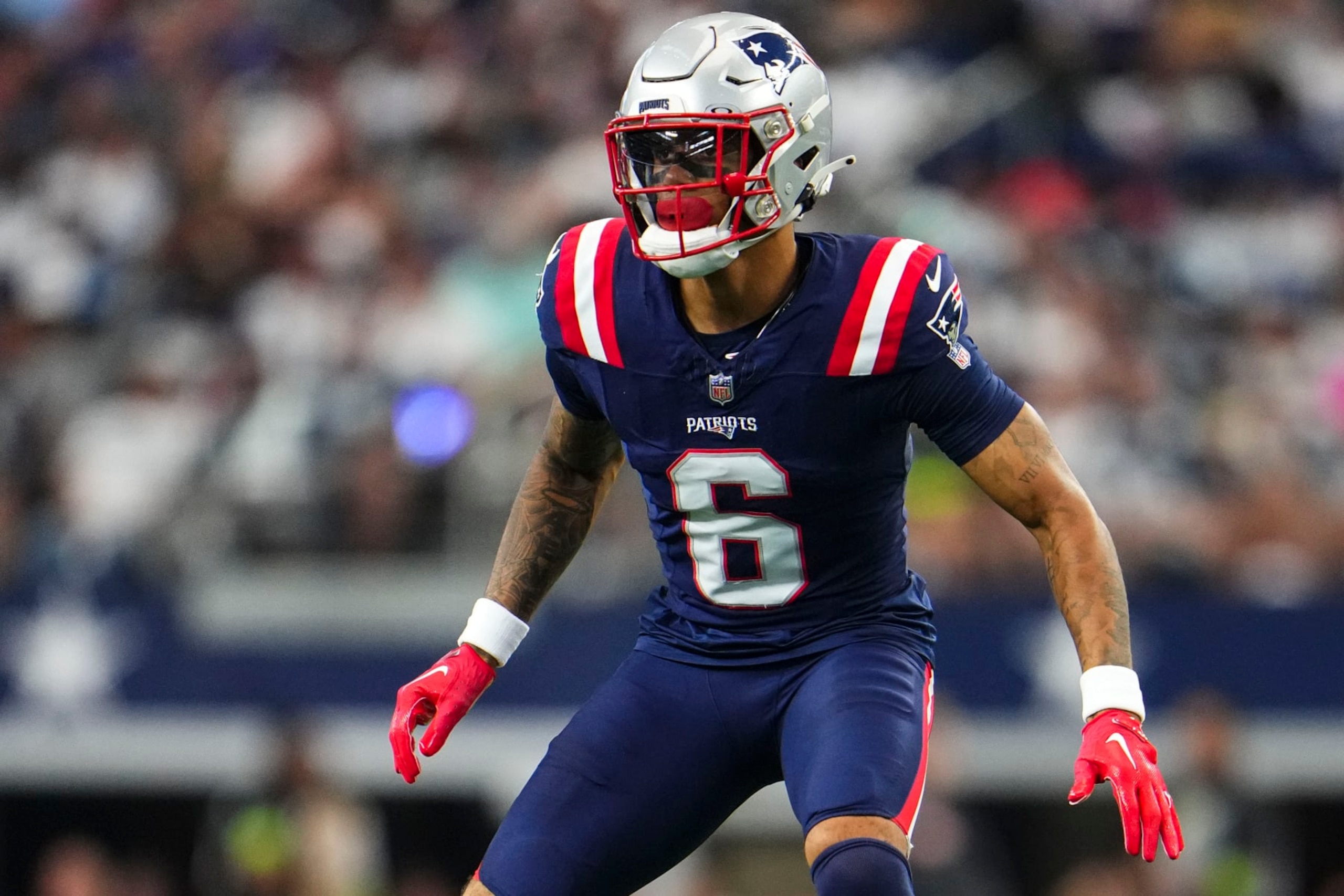
- Round 1 (No. 17): Christian Gonzalez, CB, Oregon
- Round 2 (No. 46): Keion White, Edge, Georgia Tech
- Round 3 (No. 76): Marte Mapu, LB, Sacramento State
- Round 4 (No. 107): Jake Andrews, IOL, Troy
- Round 4 (No. 112): Chad Ryland, K, Maryland
- Round 4 (No. 117): Sidy Sow, IOL, Eastern Michigan
- Round 5 (No. 144): Atonio Mafi, IOL, UCLA
- Round 6 (No. 187): Kayshon Boutte, WR, LSU
- Round 6 (No. 192): Bryce Baringer, P, Michigan State
- Round 6 (No. 210): Demario Douglas, WR, Liberty
- Round 6 (No. 214): Ameer Speed, CB, Michigan State
- Round 7 (No. 245): Isaiah Bolden, CB, Jackson State
The Patriots only got to see their first pick in four games this season. Christian Gonzalez looked like he has the makings of a No. 1 cornerback, giving up a passer rating of just 86.1 on 32 targets before suffering a shoulder injury that ended his season.
Keion White might not become a superstar, but he showed the potential to become a long-term starter. He got four starts with one sack, three passes defended and three tackles for a loss.
Chad Ryland handled kicking duties, but it's unclear that he warranted the fourth-round selection. He connected on 16 of his 25 field goal attempts.
The best value selection for the Pats came when they took Sidy Sow with the 117th pick. The right guard started 13 games and proved to be a strong run blocker who just needs some refinement in pass protection.
Jake Andrews and Atonio Mafi each made spot starts on the interior and could eventually become starters or high-end backups. That's a nice box to check with a draft class even if it's not the most pressing need on the Patriots roster.
Overall, this is a class with at least three starters and a potential star at a premium position in Gonzalez.
17. Jacksonville Jaguars
16 of 32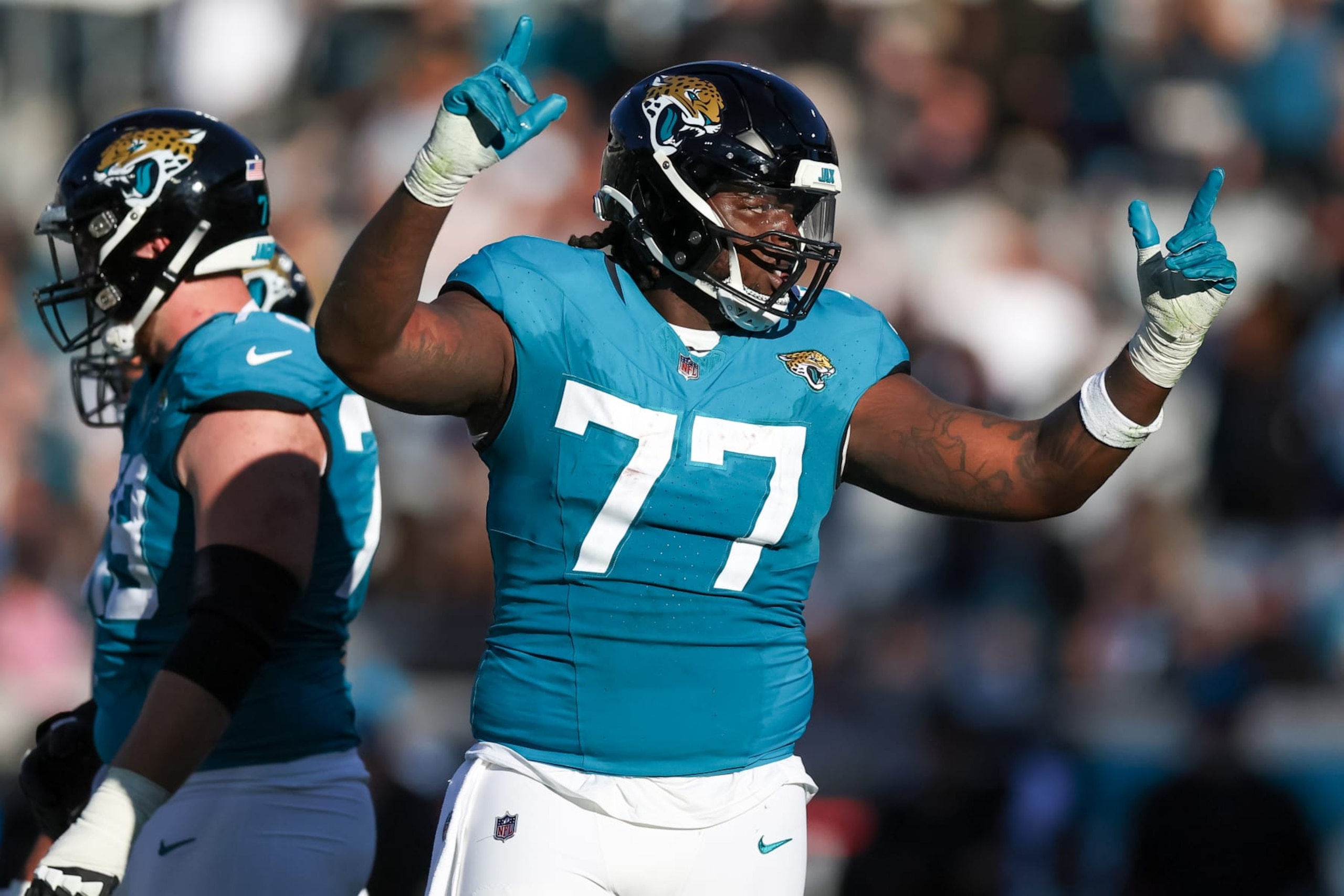
- Round 1 (No. 27): Anton Harrison, OT, Oklahoma
- Round 2 (No. 61): Brenton Strange, TE, Penn State
- Round 3 (No. 88): Tank Bigsby, RB, Auburn
- Round 4 (No. 121): Ventrell Miller, LB, Florida
- Round 4 (No. 130): Tyler Lacy, DL, Oklahoma State
- Round 5 (No. 136): Yasir Abdullah, Edge, Louisville
- Round 5 (No. 160): Antonio Johnson, S, Texas A&M
- Round 6 (No. 185): Parker Washington, WR, Penn State
- Round 6 (No. 202): Christian Braswell, CB, Rutgers
- Round 6 (No. 208): Erick Hallett, DB, Pittsburgh
- Round 7 (No. 226): Cooper Hodges, OT, Appalachian State
- Round 7 (No. 227): Raymond Vohasek, DT, North Carolina
- Round 7 (No. 240): Derek Parish, Edge, Houston
The Jaguars brought in a big class of 14 draft picks, but they didn't make an outsized impact in Year 1.
Anton Harrison was the best of the bunch. He started all 17 games and established himself as a starting-caliber tackle. Coming away from the draft with a strong addition to the offensive line was an important goal, and Harrison checks that box. He only graded out at 53.0 with PFF, but he also only surrendered five sacks.
Brenton Strange, Tank Bigsby and Parker Washington were all fringe contributors on offense. Strange had just five receptions for 35 yards. He served as the secondary tight end with Evan Engram getting the lion's share of the targets and snaps.
Bigsby was unable to force Travis Etienne into a committee. He only had 50 carries for 132 yards with a touchdown. Parker Washington showed flashes of being a capable slot receiver with two touchdowns on the year.
Antonio Johnson was probably the best value of the class. The versatile defensive back could wind up manning the slot. He only played 20 percent of the defensive snaps but he had two interceptions, three passes defended, a forced fumble and a sack. That's a lot of splash plays for such a small sample size.
Harrison is an exciting piece for the offensive line, but the other offensive picks need to earn larger roles to move this class up the rankings.
16. Kansas City Chiefs
17 of 32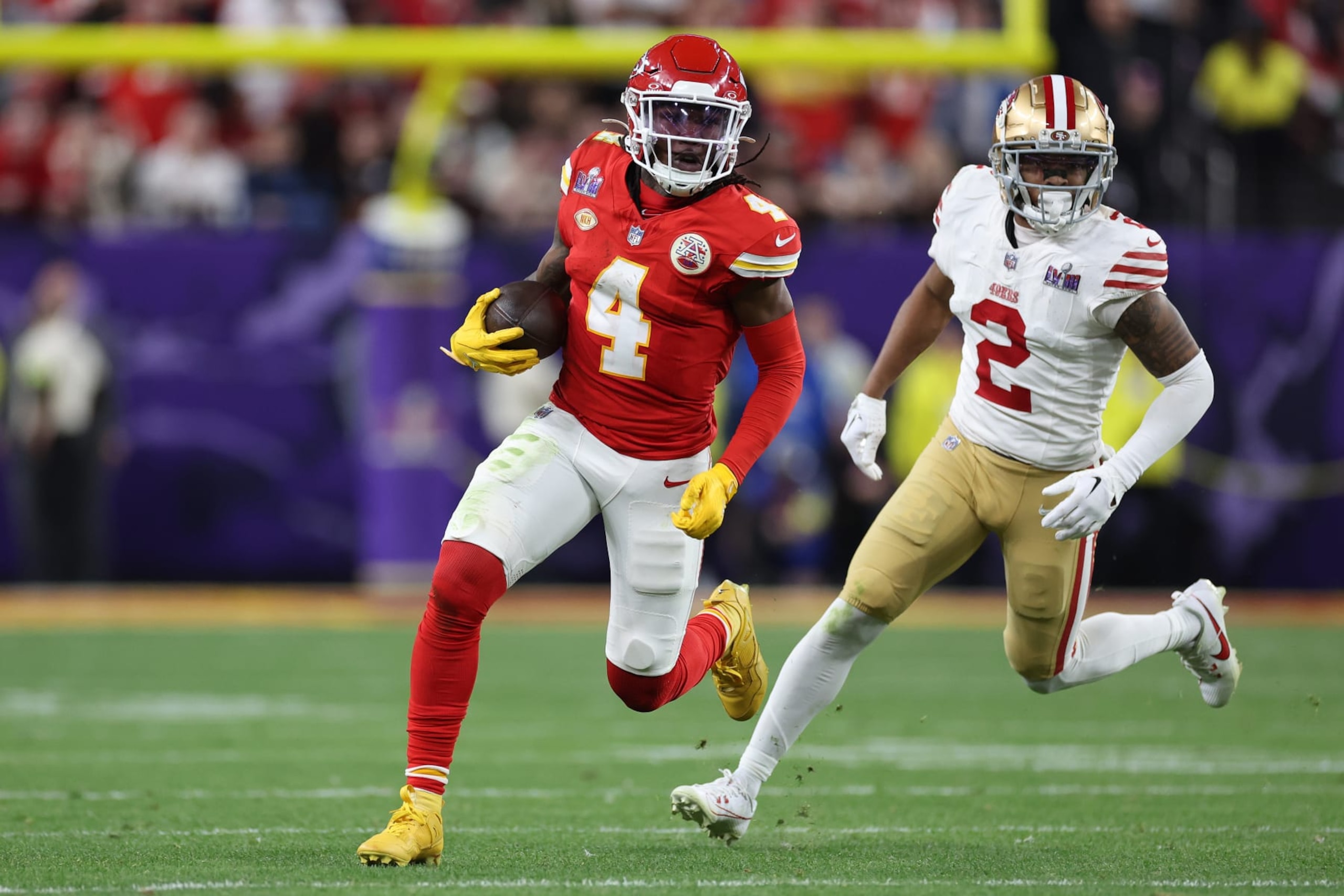
- Round 1 (No. 31): Felix Anudike-Uzomah, Edge, Kansas State
- Round 2 (No. 55): Rashee Rice, WR, SMU
- Round 3 (No. 92): Wanya Morris, OT, Oklahoma
- Round 4 (No. 119): Chamarri Conner, DB, Virginia Tech
- Round 5 (No. 166): BJ Thompson, Edge, Stephen F. Austin
- Round 6 (No. 194): Keondre Coburn, DL, Texas
- Round 7 (No. 250): Nic Jones, CB, Ball State
The Kansas City Chiefs have built a back-to-back Super Bowl winner, in part, because they've had a lot of success drafting and developing on the defensive side of the ball. However, their best selection this season came on offense.
Rashee Rice emerged as the receiver the Chiefs desperately needed. His 938 receiving yards are the most ever for a rookie on a Super Bowl-winning team. He was also third in the league in yards after the catch, giving Patrick Mahomes a receiver who he can depend on to make plays aside from Travis Kelce.
The rest of the class had a hard time making an impact on an obviously talented roster. Felix Anudike-Uzomah appeared in all 17 games but only played 20 percent of the snaps and had half a sack.
Wanya Morris was forced to play some left tackle when Donovan Smith went down with an injury, but it's inconclusive if he can take over the spot next season. He had 21 blown pass blocks despite playing just 222 pass-blocking snaps, per Sports Info Solutions.
Chamarri Conner was a bright spot for the class. The Chiefs seem to have found another Day 3 pick who can contribute in the secondary. He started seven games and allowed a passer rating of 81.9 when targeted.
Rice and Conner alone make this class good enough to sneak into the upper half of the league's draft classes. The upside is higher if Anudike-Uzomah takes the next step next season.
15. Las Vegas Raiders
18 of 32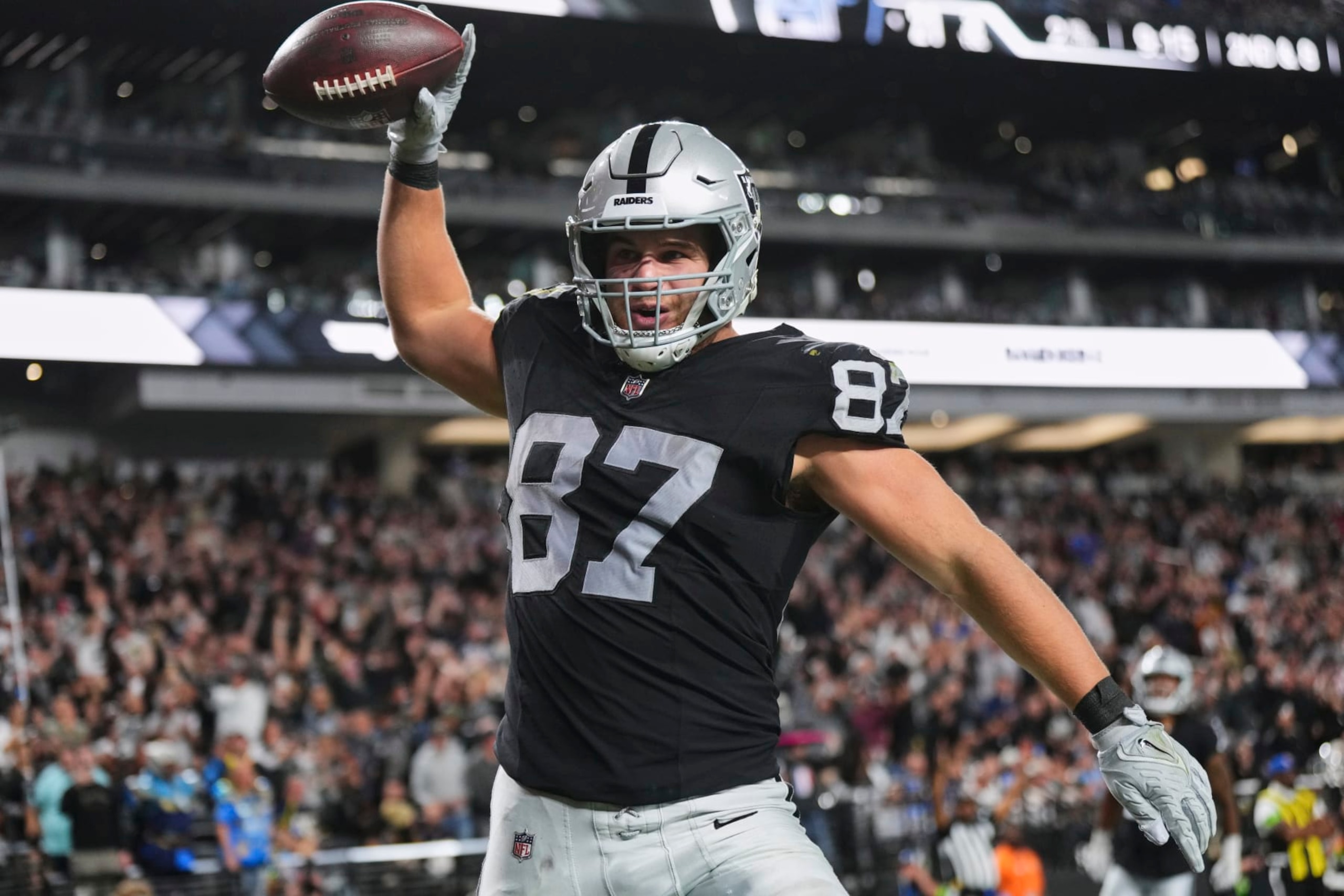
- Round 1 (No. 7): Tyree Wilson, DL, Texas Tech
- Round 2 (No. 35): Michael Mayer, TE, Notre Dame
- Round 3 (No. 70): Byron Young, DL, Alabama
- Round 3 (No. 100): Tre Tucker, WR, Cincinnati
- Round 4 (No. 104): Jakorian Bennett, CB, Maryland
- Round 4 (No. 135): Aidan O'Connell, QB, Purdue
- Round 5 (No. 170): Christopher Smith, S, Georgia
- Round 6 (No. 203): Amari Burney, LB, Florida
- Round 7 (No. 231): Nesta Jade Silvera, DL, Arizona State
The Raiders' draft class looked strong coming out of the draft if Tyree Wilson could get healthy enough to make an impact. One year later, and the class is still defined a bit more by potential than production.
Wilson saw inconsistent snap counts throughout the season but remained in the rotation throughout the year. He played all 17 games but didn't make huge waves from a production standpoint. He had 3.5 sacks, 22 pressures and an 8.1 percent pressure rate.
Michael Mayer was considered by many to be the top tight end in the draft class. He didn't live up to that billing, but he proved to be a consistent target when called upon with 27 receptions for 304 yards and two touchdowns. Tre Tucker chipped in as a slot receiver with 19 receptions, 331 and two touchdowns.
Byron Young and Jakorian Bennett had similar rookie seasons on defense. Both had larger roles early in the season when the Raiders were struggling on defense but saw a decrease in their role by the time Antonio Pierce took over the defense, and the unit improved.
Aidan O'Connell performed admirably for a fourth-round quarterback who was pressed into a starting role. He finished ahead of Desmond Ridder, Kenny Pickett, Mac Jones and Bryce Young in QBR, so the Raiders could have done worse.
This class still has a lot of potential, they just haven't come close to the ceiling yet.
14. Atlanta Falcons
19 of 32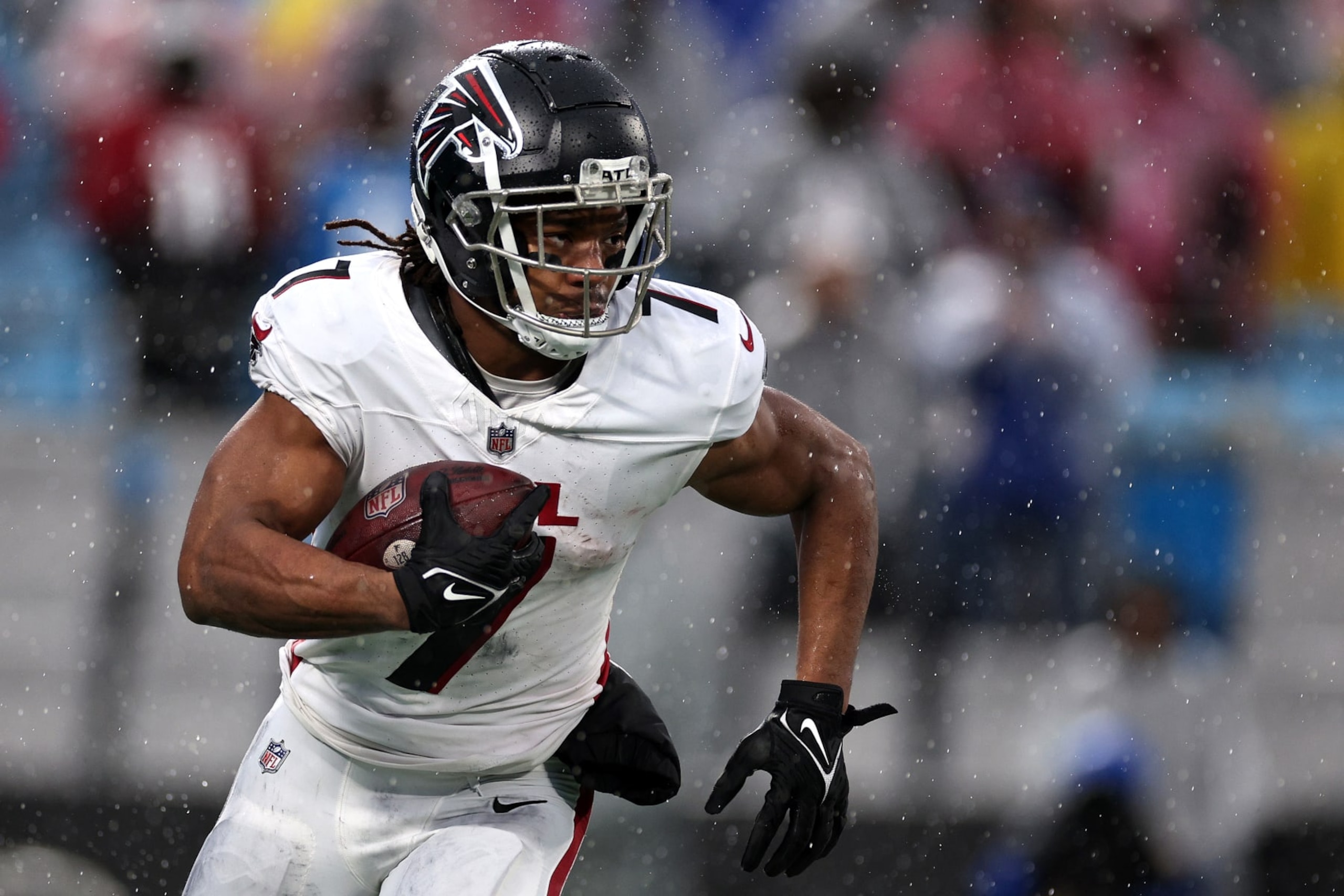
- Round 1 (No. 8): Bijan Robinson, RB, Texas
- Round 2 (No. 38): Matthew Bergeron, OL, Syracuse
- Round 3 (No. 75): Zach Harrison, DL, Ohio State
- Round 4 (No. 113): Clark Phillips III, CB, Utah
- Round 7 (No. 224): DeMarcco Hellams, S, Alabama
- Round 7 (No. 225): Jovaughn Gwyn, IOL, South Carolina
We can debate the wisdom behind taking a running back with a top-10 pick. What can't be debated is that Bijan Robinson looks like he's going to live up to the hype.
Even as a rookie, he ranked fifth among all running backs in yards created, ninth in yards per touch and 15th in breakaway runs, per Player Profiler. Robinson was the engine of the Falcons offense with 1,463 total yards and eight touchdowns. That's 500 more total yards than anyone else on the Falcons roster.
The Falcons didn't do badly with their second-round pick, either. Matthew Bergeron wound up starting all 17 games at left guard. He struggled in pass protection sometimes, giving up six sacks, but he was a mauler in the run game and should continue to develop.
Zach Harrison played 32 percent of the defensive snaps. It took a while for him to make an impact, but he scored three sacks came in his final three games of the season.
Phillips and Hellams both came on late in the season to be contributing members of the secondary. Phillips could compete for a starting position next season, and Hellams put in a few good performances that showed he could be a rotational player.
That's a pretty good hit rate for a six-man draft class.
13. Indianapolis Colts
20 of 32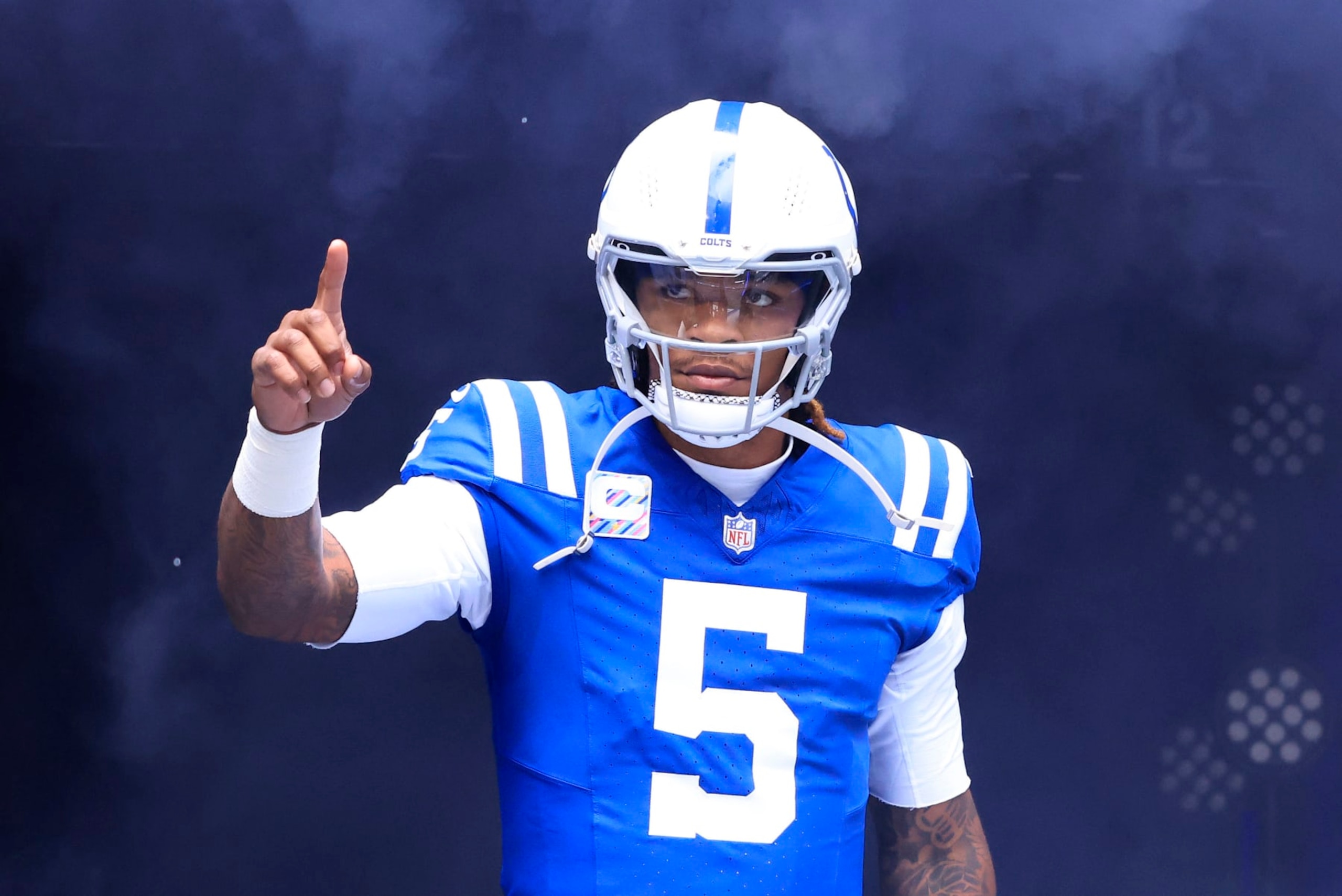
- Round 1 (No. 4): Anthony Richardson, QB, Florida
- Round 2 (No. 44): Julius Brents, CB, Kansas State
- Round 3 (No. 79): Josh Downs, WR, North Carolina
- Round 4 (No. 106): Blake Freeland, OT, BYU
- Round 4 (No. 110): Adetomiwa Adebawore, DL, Northwestern
- Round 5 (No. 138): Darius Rush, CB, South Carolina
- Round 5 (No. 158): Daniel Scott, S, California
- Round 5 (No. 162): Will Mallory, TE, Miami
- Round 5 (No. 176): Evan Hull, RB, Northwestern
- Round 6 (No. 211): Titus Leo, Edge, Wagner
- Round 7 (No. 221): Jaylon Jones, CB, Texas A&M
- Round 7 (No. 236): Jake Witt, OT, Northern Michigan
When we look back on this draft class in two or three more years, this ranking is likely to be wrong, and it all hinges on Anthony Richardson.
The Colts put it all on the young quarterback when they took him with the fourth overall pick, and his rookie season did little to quiet doubters or prove his supporters wrong. When Richardson was on the field, he looked the part. He had seven total touchdowns to just one interception, and the Colts went 2-2 in the four games that he started.
That's the positive. The bad news is that Gardner Minshew played in every game but one, because Richardson came out of all but one game with an injury. Richardson's athleticism is off the charts and he has a ton of upside, but he has to learn to protect himself better to reach his potential.
The jury is still out on a few other picks in the class. However, there shouldn't be a question that Josh Downs was a great value in the third round. He was easily the team's second-best receiver and should help Richardson when the duo is healthy.
Julius Brents and Jaylon Jones were both contributors at cornerback. Brents made eight starts but battled various injuries throughout the season. He still ended up ranking 66th out of 127 cornerbacks ranked by PFF. Jones played in all 17 games, made 10 starts and ranked 87th.
Blake Freeland and Adetomiwa Adebawore added depth on the offensive and defensive lines.
12. Cincinnati Bengals
21 of 32
- Round 1 (No. 28): Myles Murphy, Edge, Clemson
- Round 2 (No. 60): DJ Turner II, CB, Michigan
- Round 3 (No. 95): Jordan Battle, S, Alabama
- Round 4 (No. 131): Charlie Jones, WR, Purdue
- Round 5 (No. 163): Chase Brown, RB, Illinois
- Round 6 (No. 206): Andrei Iosivas, WR, Princeton
- Round 6 (No. 217): Brad Robbins, P, Michigan
- Round 7 (No. 246): D.J. Ivey, DB, Miami
The Cincinnati Bengals know how to draft and develop defensive backs. They've enjoyed a good secondary under Lou Anarumo, and the development of DJ Turner II and Jordan Battle appear to have set them up for another good run.
Turner was forced into the starting lineup for 12 games this season because of injuries. He struggled at times, but he showed he has the raw athleticism to play in the league. Battle was also pressed into action in the secondary and was the 11th-highest-graded rookie in the entire class by PFF.
Myles Murphy did not have the production you'd hope to see from a first-round pick (three sacks, three tackles for loss), but he's also just 21 years old and was drafted to play behind Sam Hubbard and Trey Hendrickson for at least a year.
The offense got a boost from a pair of Day 3 picks in Chase Brown and Andrei Iosivas. Brown only had 44 carries all season, but four of them were breakaway runs, which are runs of 15 yards or more. He also had 156 yards receiving. He should command a bigger role in 2024.
Iosivas got involved at the very end of the season, catching nine passes over the final three games. Charlie Jones gave the class some special teams prowess, serving as the team's punt returner.
Overall, Murphy is going to have to come a long way while Turner and Battle become full-time starters to take this class to the next level.
11. Buffalo Bills
22 of 32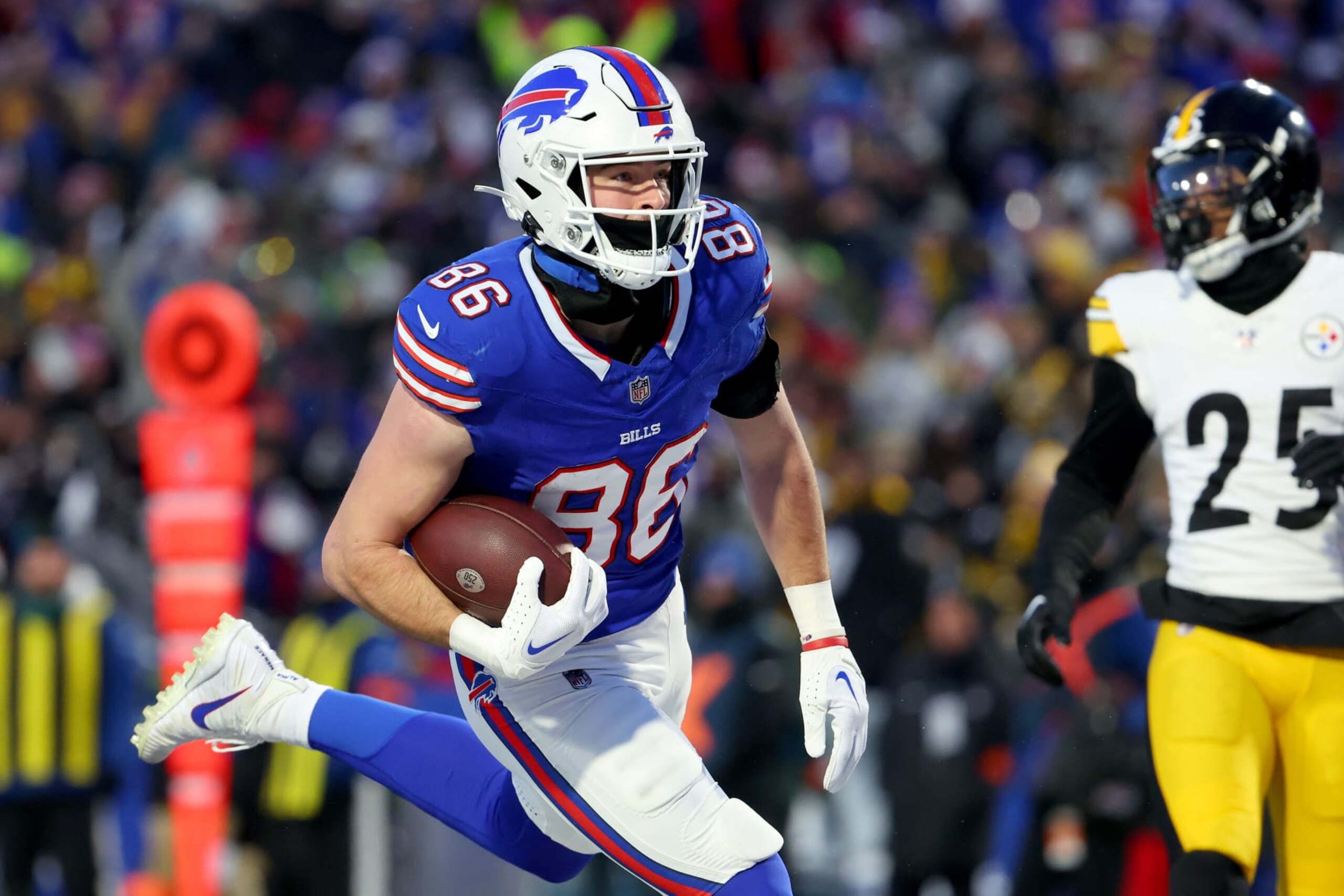
- Round 1 (No. 25): Dalton Kincaid, TE, Utah
- Round 2 (No. 59): O'Cyrus Torrence, IOL, Florida
- Round 3 (No. 91): Dorian Williams, LB, Tulane
- Round 5 (No. 150): Justin Shorter, WR, Florida
- Round 7 (No. 230): Nick Broeker, IOL, Mississippi
- Round 7 (No. 252): Alex Austin, CB, Oregon State
The Bills used their first two picks on offense, and both rookies had an impact in their first season. Dalton Kincaid brought some versatility to the unit and played the second-highest rate of snaps in the slot among tight ends, per Player Profiler.
He proved to be a trusted target, catching 73 passes and ranking eighth in true catch rate at 93.6 percent.
O'Cyrus Torrence also exceeded expectations. The second-round pick was a Day 1 starter at right guard and only surrendered three sacks while paving run lanes for an offense that was third in EPA per rush.
After those two, the contributions diminished, but there are a few potential role players who emerged from the class.
Dorian Williams started two games and was an active special teamer. He could take a few years to come into his own, but laid the groundwork to be involved.
Justin Shorter went on injured reserve in August for a hamstring injury and didn't come back. He gets an incomplete grade for his rookie campaign with a chance to prove himself next season.
The Bills hit on their first two picks and have a potential future starter with their third, but the Day 3 picks might not pan out.
10. Tampa Bay Buccaneers
23 of 32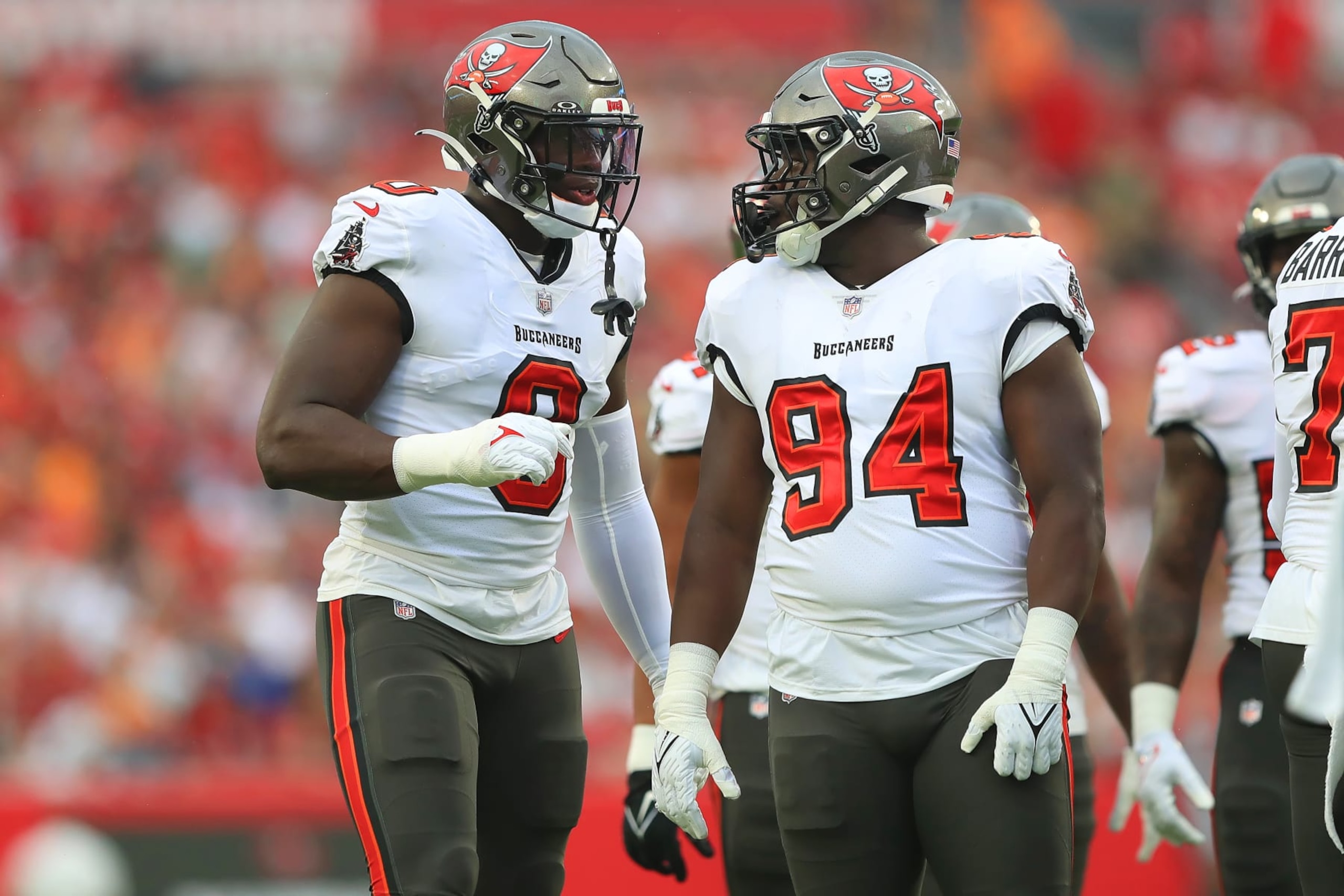
- Round 1 (No. 19): Calijah Kancey, DL, Pittsburgh
- Round 2 (No. 48): Cody Mauch, IOL, North Dakota State
- Round 3 (No. 82): YaYa Diaby, Edge, Louisville
- Round 5 (No. 153): SirVocea Dennis, LB, Pittsburgh
- Round 5 (No. 171): Payne Durham, TE, Purdue
- Round 6 (No. 181): Josh Hayes, DB, Kansas State
- Round 6 (No. 191): Trey Palmer, WR, Nebraska
- Round 6 (No. 196): Jose Ramirez, Edge, Eastern Michigan
The Buccaneers set out to get better in the trenches, and they appear to have succeeded successful with this draft class.
They used two of their first three picks to find contributors on the defensive line. Calijah Kancey finished with a paltry 49.7 grade from PFF, but he proved to be a good situational pass-rusher on the interior. According to Sports Info Solutions, he generated four sacks, 29 pressures and 10 tackles for loss. Those are good havoc numbers for a rookie interior defender.
Yaya Diaby also made an impact getting after the passer. He finished third among all rookies in sacks (7.5) and hit a double-digit pressure percentage (10 percent). Both bode well for his future as an active member of their pass-rush.
On offense, they seem to have found a starter on the interior in Cody Mauch, and Trey Palmer out-performed his sixth-round draft slot, tracking down 39 receptions for 385 yards and three touchdowns. His deep speed should make him a role player for the long term.
Mauch had his fair share of struggles, but that's to be expected for a lineman jumping from FCS to the NFL level. He was a Week 1 starter and got better throughout the season.
Two high-upside pass-rushers, a deep threat and a starting offensive lineman isn't a bad draft haul.
9. Arizona Cardinals
24 of 32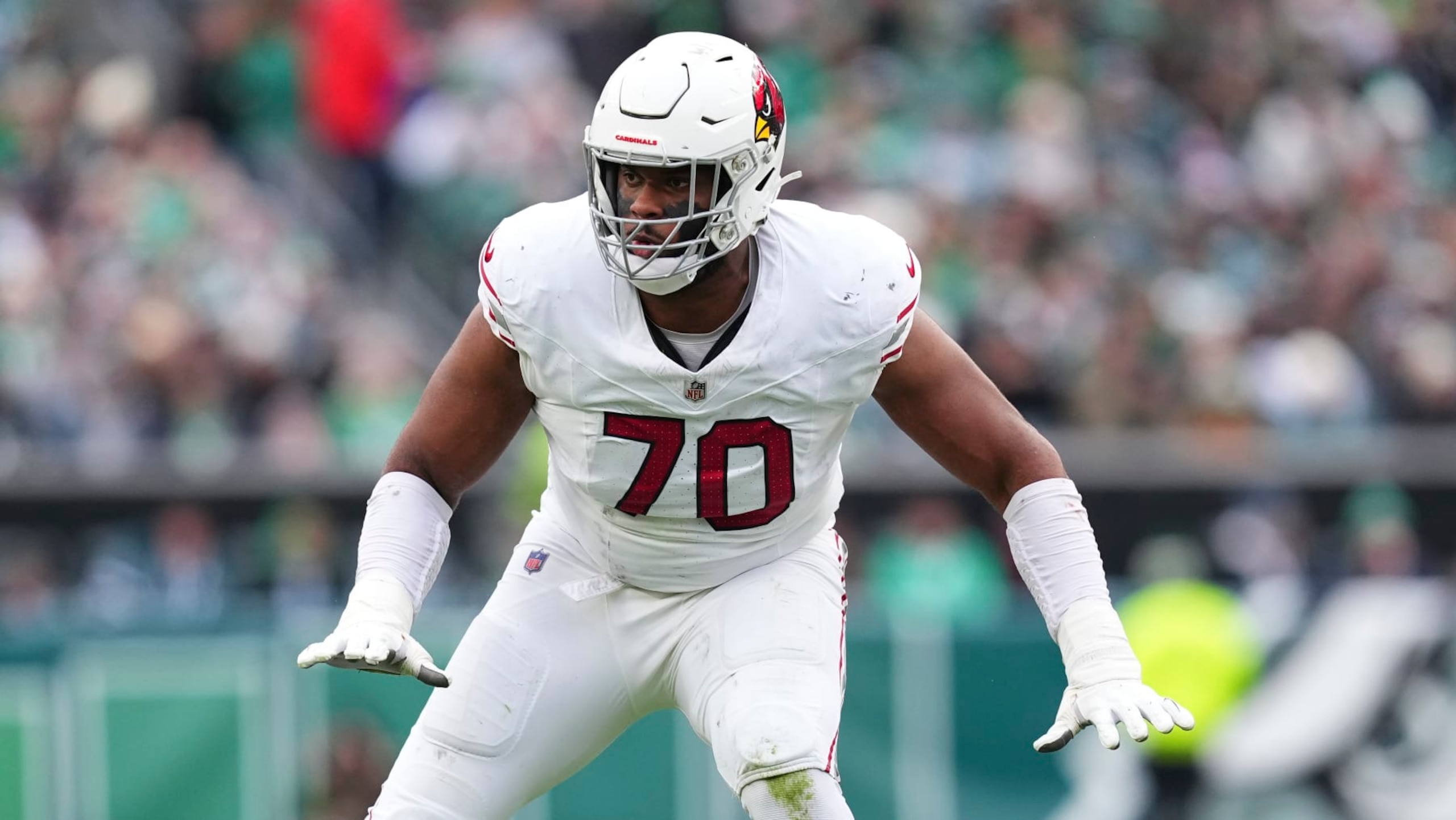
- Round 1 (No. 6): Paris Johnson Jr., Ohio State
- Round 2 (No. 41): BJ Ojulari, Edge, LSU
- Round 3 (No. 72): Garrett Williams, CB, Syracuse
- Round 3 (No. 94): Michael Wilson, WR, Stanford
- Round 4 (No. 122): Jon Gaines II, IOL, UCLA
- Round 5 (No. 139): Clayton Tune, QB, Houston
- Round 5 (No. 168): Owen Pappoe, LB, Auburn
- Round 6 (No. 180): Kei'Trel Clark, CB, Louisville
- Round 6 (No. 213): Dante Stills, DL, West Virginia
No team leaned more heavily on its rookie class than the Arizona Cardinals. Eleven rookies combined for 64 starts—the most in the league by nine.
They started their draft by taking Paris Johnson Jr. in hopes that he could anchor the offensive line for years to come. He responded by playing every snap of the campaign. It wasn't always pretty. He had 12 penalties and gave up eight sacks, but the learning curve for offensive linemen can be steep.
Michael Wilson did a lot of the lifting to land the Cardinals a top-10 spot in these rankings. The third-round pick was third on the team in receiving yards, racking up 565 on 38 receptions. His ability to make plays downfield should make him part of the offense for a while.
Dante Stills was a pleasant surprise. He was their final draft pick, but he started eight games, had 3.5 sacks with five tackles for loss. The Cardinals should be able to count on him as a rotational interior defender in the coming years.
BJ Ojulari didn't have a stellar season for a second-round pick, but he flashed the pass-rushing chops to become a good starter. He had a 12.4 pressure percentage and racked up four sacks, 18 total pressures and five tackles for loss.
This class played a lot and had the opportunity to develop. There might not be a star in the group, but they appear to have multiple starters and role players.
8. Tennessee Titans
25 of 32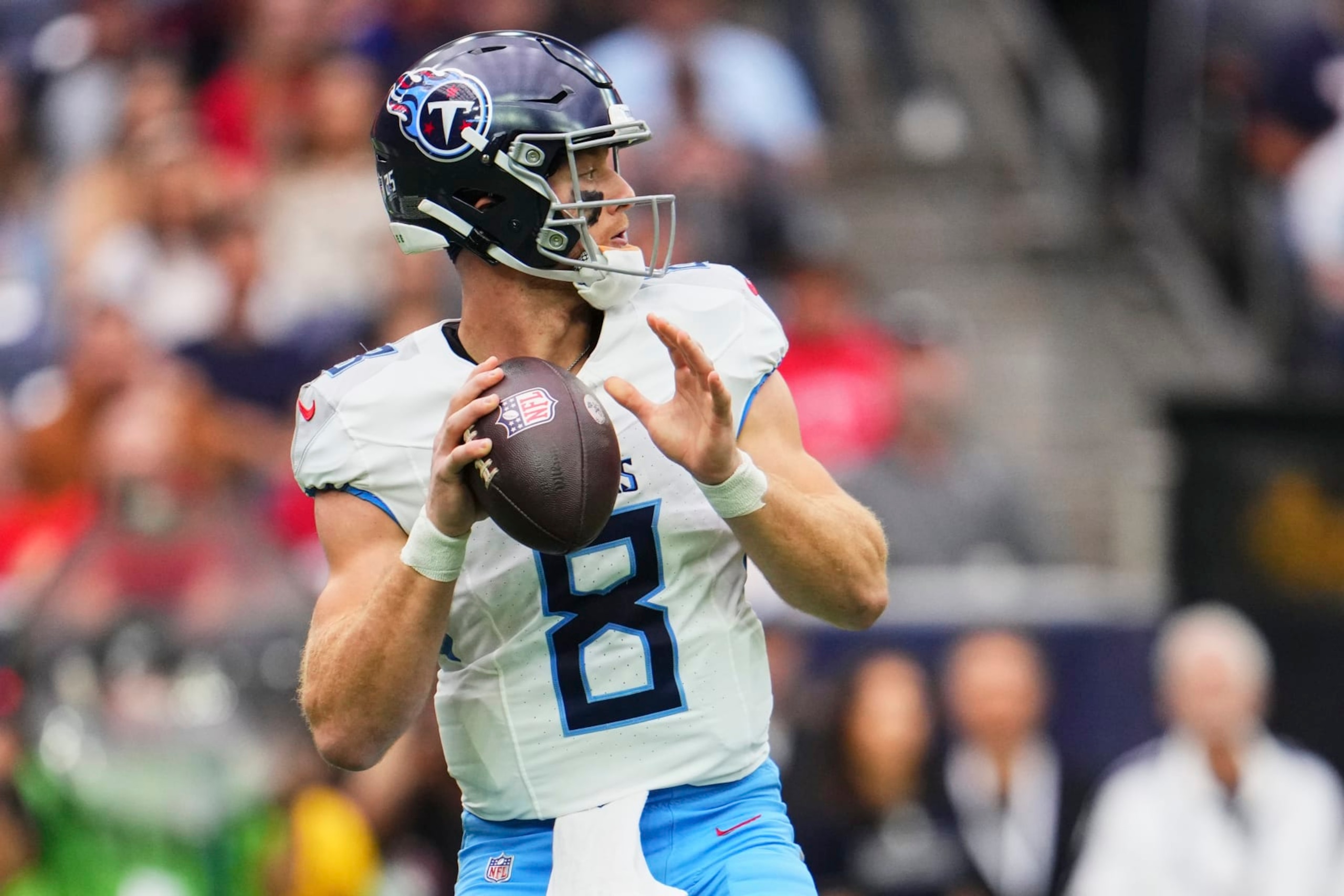
- Round 1 (No. 11): Peter Skoronski, IOL, Northwestern
- Round 2 (No. 33): Will Levis, QB, Kentucky
- Round 3 (No. 81): Tyjae Spears, RB, Tulane
- Round 5 (No. 147): Josh Whyle, TE, Cincinnati
- Round 6 (No. 186): Jaelyn Duncan, OT, Maryland
- Round 7 (No. 228): Colton Dowell, WR, Tennessee-Martin
The Titans' draft class isn't very big, but they might have started the important work of building a new offensive core with their first three picks.
Peter Skoronski could become an All-Pro-caliber guard. There was a notable difference in the Titans running game when they ran to his side. He went through a few weeks of rough pass protection which led to him giving up five sacks on the season, per PFF, but he showed all the tools that made him the 11th selection in the draft.
The X-factor that gets the Titans in the top 10 is Will Levis. Finding a franchise quarterback is the biggest challenge every organization faces if they don't have one. Potentially finding one in the second round can be a massive win.
Levis had an uneven rookie year. He started on fire with four touchdowns in his first 29 career pass attempts before throwing only four more in his next 226.
However, the Titans might have had the worst combination of offensive line and receiving weapons in the league. They were 3-5 with Ryan Tannehill as the starter, and he threw four touchdowns to seven interceptions with a passer rating of 78.5. Levis threw eight touchdowns to four interceptions with a passer rating of 84.2 in the same offense.
The Titans also found their next feature back if/when Derrick Henry leaves in free agency. Tyjae Spears averaged 4.5 yards per carry on his way to 838 total yards.
There isn't a lot of depth here, but the trio of Skoronski, Levis and Spears will have a big impact.
7. Pittsburgh Steelers
26 of 32
- Round 1 (No. 14): Broderick Jones, OT, Georgia
- Round 2 (No. 32): Joey Porter Jr., CB, Penn State
- Round 2 (No. 49): Keeanu Benton, DL, Wisconsin
- Round 3 (No. 93): Darnell Washington, TE, Georgia
- Round 4 (No. 132): Nick Herbig, LB, Wisconsin
- Round 7 (No. 241): Cory Trice Jr., CB, Purdue
- Round 7 (No. 251): Spencer Anderson, C, Maryland
The Steelers' 2023 class doesn't have a ton of players, but it is off to an exciting start.
Broderick Jones didn't start at the beginning of the season, but it didn't take long for him to break into the lineup. After filling in for an injured Dan Moore Jr. at left tackle, he found a home at right tackle where he replaced Chukwuma Okorafor.
Jones was up-and-down throughout the season which is normal for a rookie offensive lineman. Ultimately, he looks like a long-term answer at an important position.
Joey Porter Jr. followed a similar arc. He didn't get his first start until Week 7, but once he did he didn't let go. As predicted in his scouting report, he had his fair share of penalties but he also limited passers to a 70.1 passer rating when targeted.
Keeanu Benton is going to go largely unnoticed as a run-stuffing nose tackle. However, his rookie season should be considered a success starting nine games and playing 43 percent of the defensive snaps is a good sign.
Darnell Washington didn't make a huge box-score impact. He only had seven catches for 61 yards and 10 targets. But he still carved out a role as a blocker and was on the field for 48 percent of the offensive snaps.
Nick Herbig was disruptive in a small sample size as the only Day 3 pick who saw notable action on offense or defense.
In total, the Steelers found two starters at key positions, another defensive starter and an important role player in Washington.
6. Chicago Bears
27 of 32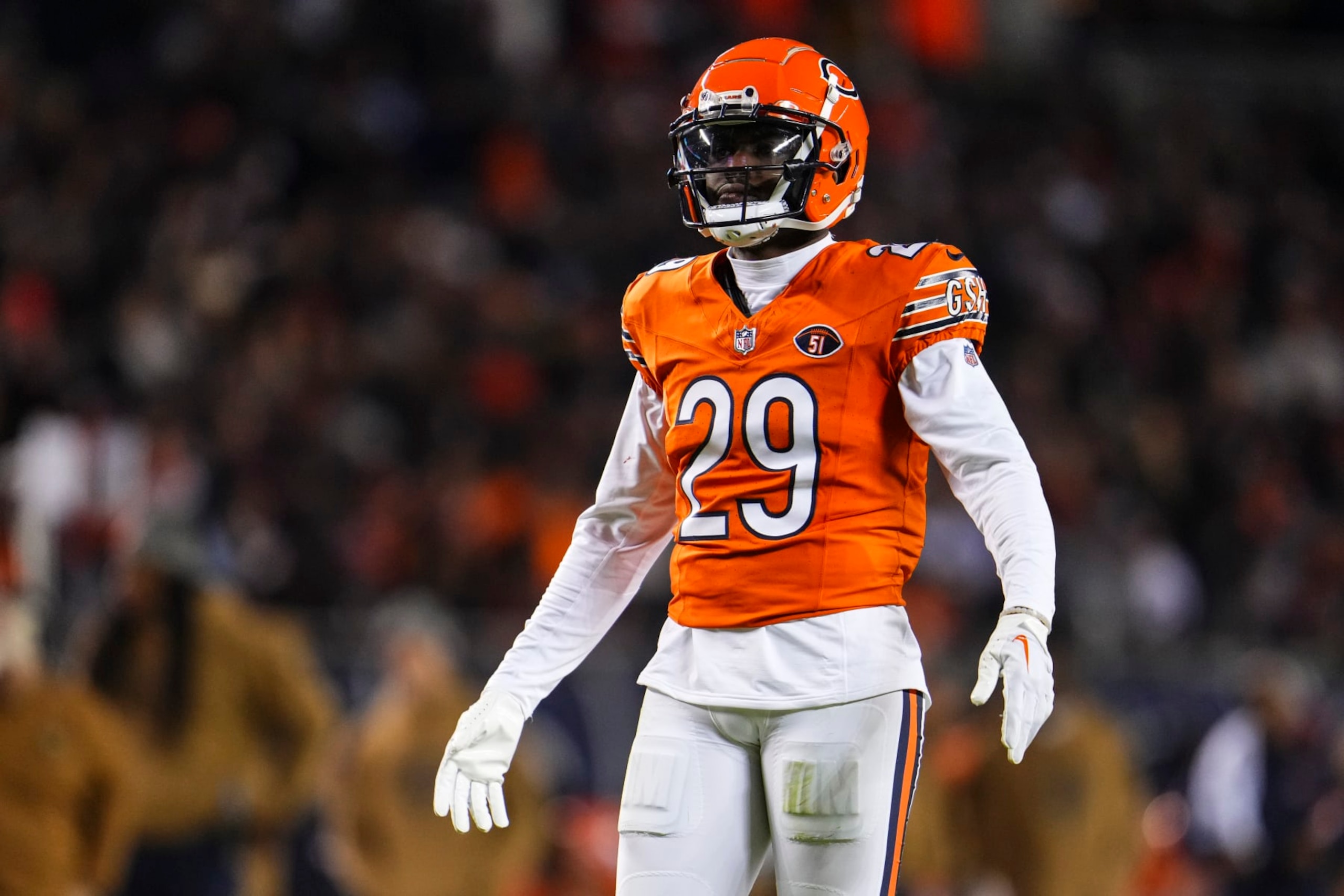
- Round 1 (No. 10): Darnell Wright, OT, Tennessee
- Round 2 (No. 53): Gervon Dexter Sr., DT, Florida
- Round 2 (No. 56): Tyrique Stevenson, CB, Miami
- Round 3 (No. 64): Zacch Pickens, DL, South Carolina
- Round 4 (No. 115): Roschon Johnson, RB, Texas
- Round 4 (No. 133): Tyler Scott, WR, Cincinnati
- Round 5 (No. 148): Noah Sewell, LB, Oregon
- Round 5 (No. 165): Terell Smith, CB, Minnesota
- Round 7 (No. 218): Travis Ball, DT, Kennesaw State
- Round 7 (No. 258): Kendall Williamson, DB, Stanford
Taking Darnell Wright with the 10th pick overall felt like a reach on draft day, but the pick has aged well thus far. Wright played every snap of his rookie season at right tackle, earning a PFF grade of 62.4 and giving up seven sacks. He should improve and become the long-term starter at a pivotal position.
The best value in the class came from Tyrique Stevenson. The second-rounder started in 16 games this season. He proved to be sticky in coverage and had four interceptions with 16 passes defended.
Roschon Johnson ended up being a valuable piece of the offense. He had over 500 scrimmage yards and proved to be a reliable receiver out of the backfield with 34 receptions for 209 yards.
Terell Smith stepped up in a big way when Jaylon Johnson went down with an injury. The fifth-round pick made four starts at outside cornerback and he played well, giving up a passer rating of 93.9.
The disappointments in the class have to be the two defensive linemen, Gervon Dexter Sr. and Zacch Pickens. Both ended up playing rotational roles, but there wasn't much production. Dexter and Pickens each had just half a sack and one tackle for loss.
The fact that they were on the field is promising, though. More experience might see those numbers rise in 2024.
5. Seattle Seahawks
28 of 32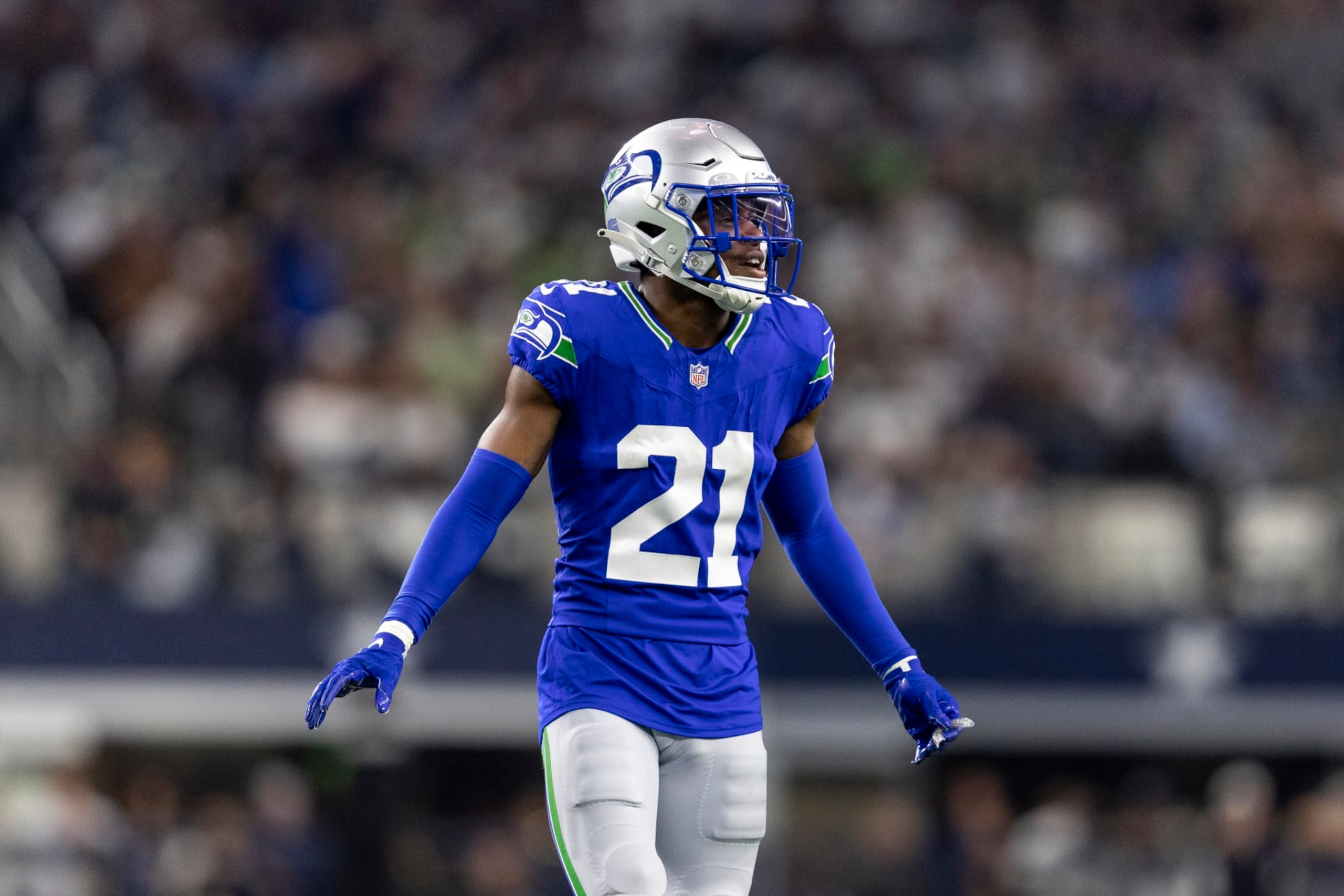
- Round 1 (No. 5): Devon Witherspoon, CB, Illinois
- Round 1 (No. 20): Jaxon Smith-Njigba, WR, Ohio State
- Round 2 (No. 37): Derick Hall, Edge, Auburn
- Round 2 (No. 52): Zach Charbonnet, RB, UCLA
- Round 4 (No. 108): Anthony Bradford, IOL, LSU
- Round 4 (No. 123): Cameron Young, DL, Mississippi State
- Round 5 (No. 151): Mike Morris, DL, Michigan
- Round 5 (No. 154): Olu Oluwatimi, IOL, Michigan
- Round 6 (No. 198): Jerrick Reed II, S, New Mexico
- Round 7 (No. 237): Kenny McIntosh, RB, Georgia
Only three rookies made the Pro Bowl this year, and Devon Witherspoon was one of them. The fifth overall pick racked up 16 passes defended, a pick-six and three sacks while giving up just 5.4 yards per target.
The Seahawks didn't just nail their first pick, though.
Jaxon Smith-Njigba carved out a significant role on a team that already has DK Metcalf and Tyler Lockett. He had 63 receptions for 628 yards and four touchdowns. Given his clear role as the third receiver, that's a promising stat line.
The pair of second-round picks didn't quite look as promising for the Seahawks. Derick Hall was on the field for 26 percent of the defensive snaps but didn't register a single sack and had just three tackles for a loss.
Zach Charbonnet didn't unseat Kenneth Walker III in the backfield and was the clear No. 2 with 108 carries for 462 yards and one touchdown. He did chip in 33 receptions on 40 targets, but it's going to be hard for him to return value on his draft investment.
4. Detroit Lions
29 of 32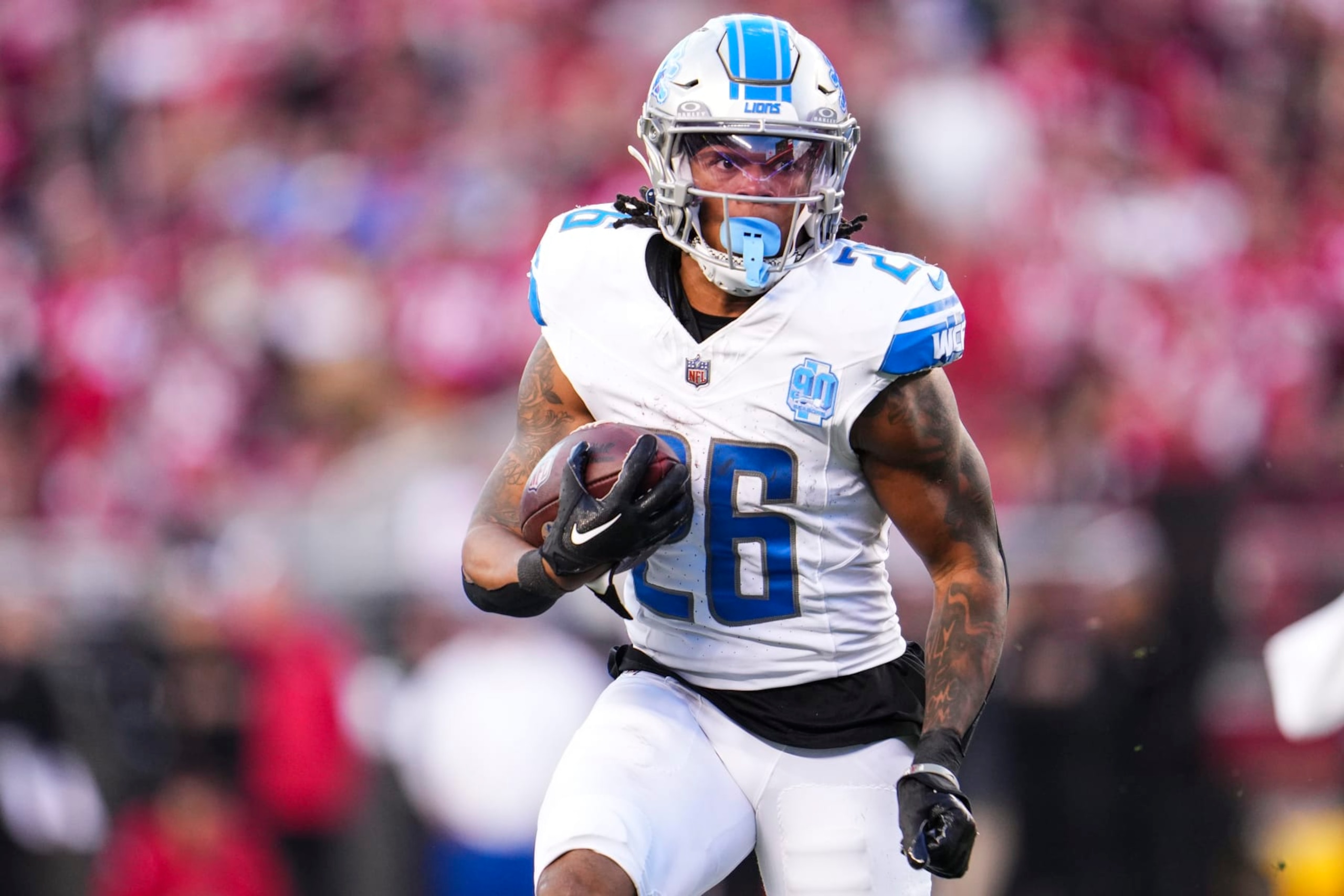
- Round 1 (No. 12): Jahmyr Gibbs, RB, Alabama
- Round 1 (No. 18): Jack Campbell, LB, Iowa
- Round 2 (No. 34): Sam LaPorta, TE, Iowa
- Round 2 (No. 45): Brian Branch, S, Alabama
- Round 3 (No. 68): Hendon Hooker, QB, Tennessee
- Round 3 (No. 96): Brodric Martin, DL, Western Kentucky
- Round 5 (No. 152): Colby Sorsdal, IOL, William & Mary
- Round 7 (No. 219): Antoine Green, WR, North Carolina
The Lions raised eyebrows with their lack of care for positional value when they drafted last April. They made those concerns look overblown with what the rookie class accomplished.
The first four picks in this draft class each played an important role in the Lions making a run to the NFC Championship Game. On offense, Jahmyr Gibbs lived up to the hype with 1,261 total yards and 11 touchdowns. He was the big play threat in the run game with the third-highest breakaway run rate in the league.
Sam LaPorta became a critical element of the passing game with 889 yards (fifth among all tight ends) and 10 touchdowns (first among all tight ends).
Brian Branch gave the Lions secondary a weapon to deploy in multiple ways. His versatility shone through with 74 combined tackles, seven tackles for loss, 13 passes defended and three interceptions.
Jack Campbell was less impactful but provided reasons to believe in him moving forward. Campbell started 12 games and played in all 17 with 95 total tackles, two sacks and five tackles for loss.
The only issue with the class is that it is top-heavy at this juncture. The first four picks all hit to some degree as rookies, but the back half of the class has work to do to help lift this class ahead of the final ones.
3. Green Bay Packers
30 of 32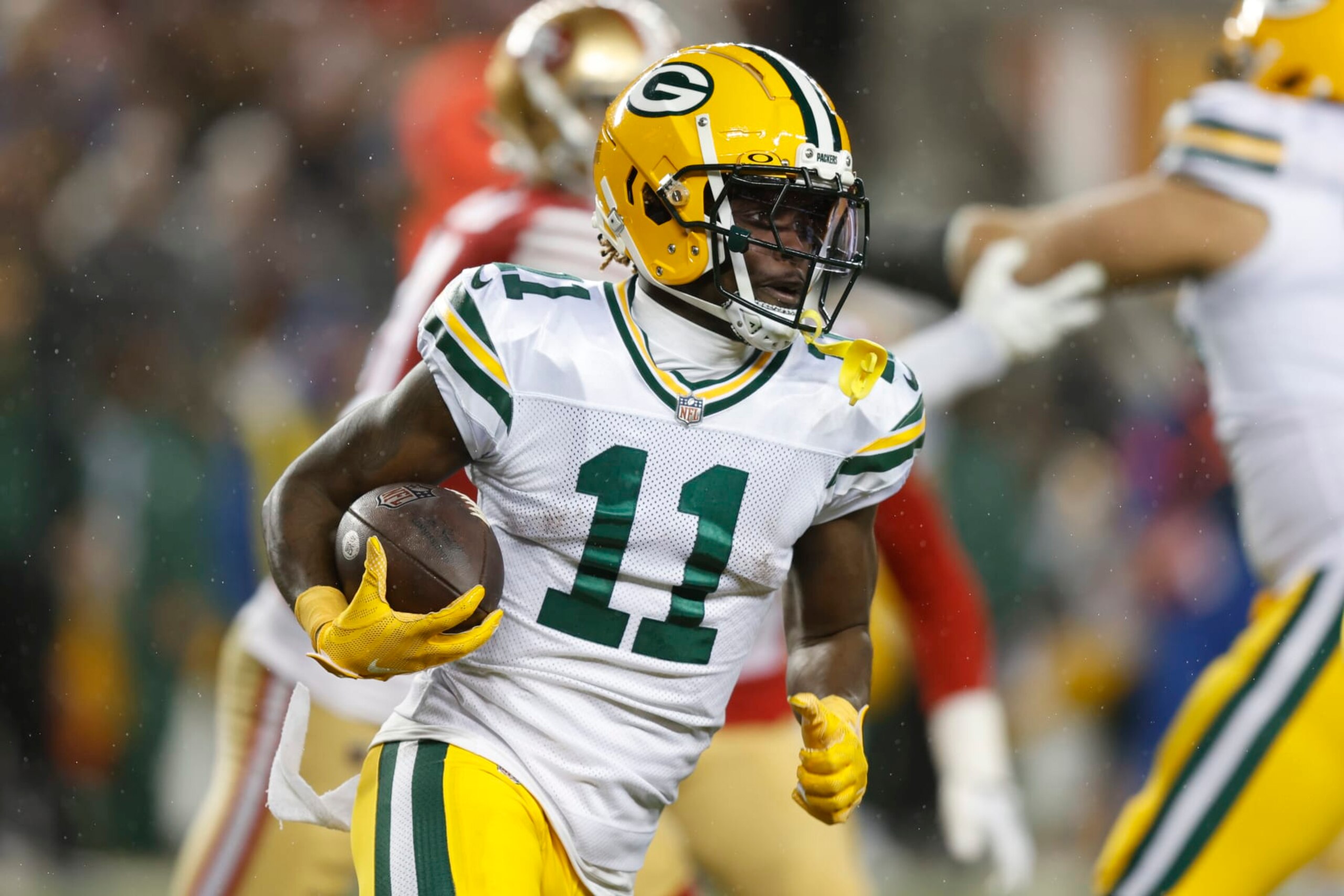
- Round 1 (No. 13): Lukas Van Ness, Edge, Iowa
- Round 2 (No. 42): Luke Musgrave, TE, Oregon State
- Round 2 (No. 50): Jayden Reed, WR, Michigan State
- Round 3 (No. 78): Tucker Kraft, TE, South Dakota State
- Round 4 (No. 116): Colby Wooden, DL, Auburn
- Round 5 (No. 149): Sean Clifford, QB, Penn State
- Round 5 (No. 159): Dontayvion Wicks, WR, Virginia
- Round 6 (No. 179): Karl Brooks, DL, Bowling Green
- Round 6 (No. 207): Anders Carlson, K, Auburn
- Round 7 (No. 232): Carrington Valentine, CB, Kentucky
- Round 7 (No. 235): Lew Nichols III, RB, Central Michigan
- Round 7 (No. 242): Anthony Johnson Jr., S, Iowa State
- Round 7 (No. 256) Grant DuBose, WR, Charlotte
The Packers have prided themselves on being a franchise that drafts and develops well. That trend continued in 2023 with a class that delivered good results in Year 1, even if their first-round pick was a bit disappointing.
The Packers came into the season with serious questions about who would catch passes for Jordan Love. As it turns out, all four pass-catchers they drafted ended up playing significant roles.
Jayden Reed led the whole team in receiving yards (64/793/8). He proved to be a master separator with the 12th-best win rate against man coverage, per Player Profiler.
Luke Musgrave was on his way to putting up a big season statistically before a lacerated kidney forced him to miss six games. However, that hiatus allowed fellow rookie tight end Tucker Kraft to shine. He hauled in 31 passes for 355 yards and two touchdowns.
To top it all off, Dontayvion Wicks emerged as a real threat over the last half of the season, finishing 10th in route win rate.
The Packers got some help on the defensive front, too. Lukas Van Ness didn't have flashy numbers, but his 11.2 pressure rate is an encouraging sign that growth will come. Perhaps even more exciting is that Karl Brooks had four sacks, 18 total pressures and seven tackles for a loss while only playing 34 percent of the snaps.
Overall, the Packers got a ton of mileage out of this group in their debut and have a bright future ahead.
2. Los Angeles Rams
31 of 32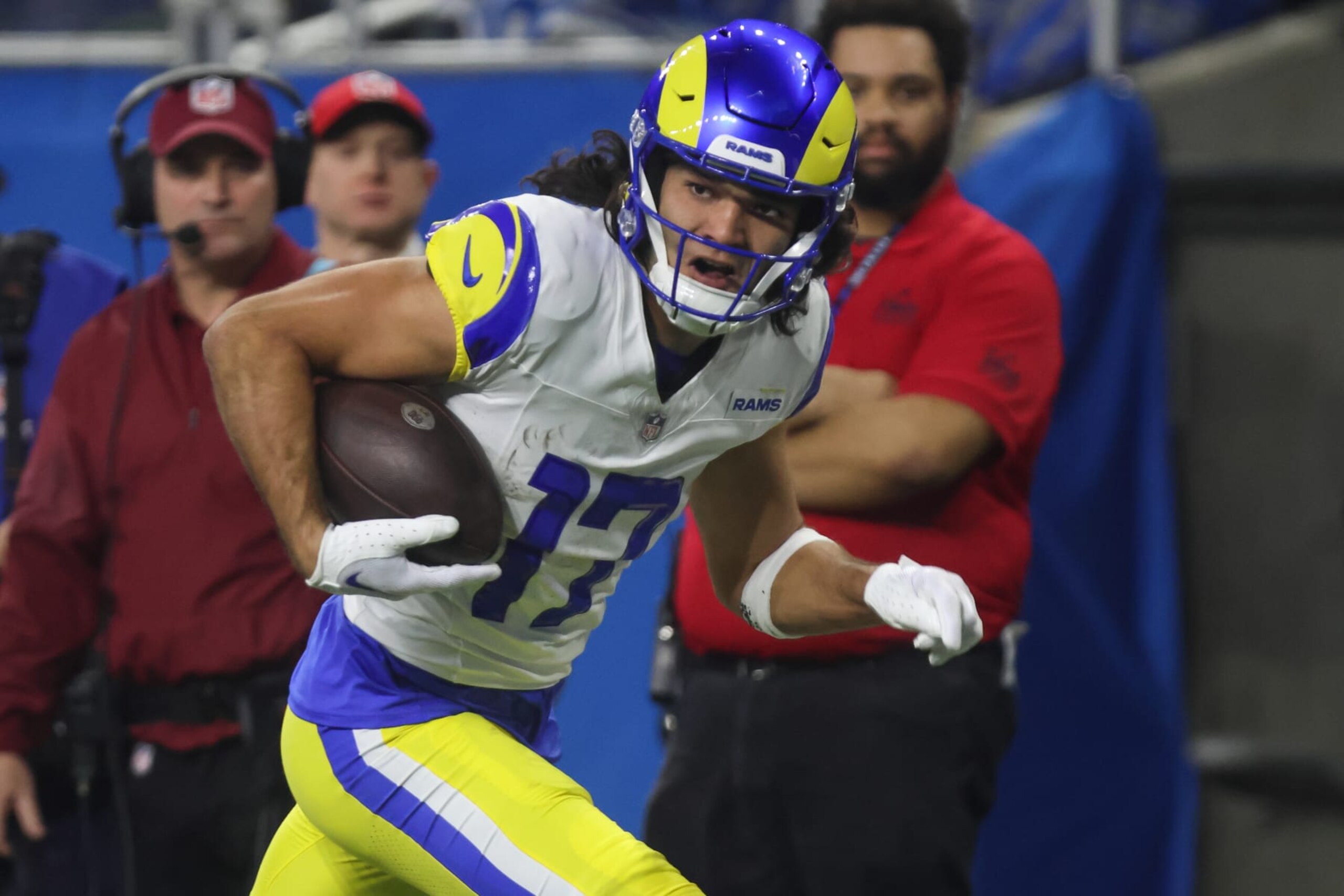
- Round 2 (No. 36): Steve Avila, IOL, TCU
- Round 3 (No. 77): Byron Young, Edge, Tennessee
- Round 3 (No. 89): Kobie Turner, DL, Wake Forest
- Round 4 (No. 128): Stetson Bennett, QB, Georgia
- Round 5 (No. 161): Nick Hampton, Edge, Appalachian State
- Round 5 (No. 174): Warren McClendon Jr., OT, Georgia
- Round 5 (No. 175): Davis Allen, TE, Clemson
- Round 5 (No. 177): Puka Nacua, WR, BYU
- Round 6 (No. 182): Tre'Vius Hodges-Tomlinson, CB, TCU
- Round 6 (No. 189): Ochaun Mathis, Edge, Nebraska
- Round 6 (No. 215): Zach Evans, RB, Mississippi
- Round 7 (No. 223): Ethan Evans, P, Wingate
- Round 7 (No. 234): Jason Taylor II, S, Oklahoma State
- Round 7 (No. 259): Desjuan Johnson, DL, Toledo
After years of a "forget them picks" philosophy from the Rams, they took in one of the biggest rookie classes in the league in 2023. It paid off big time, as the rookies played an instrumental role in getting the Rams a surprise playoff berth.
The headliner of the class is Puka Nacua. Bleacher Report's Derrik Klassen turned out to be prescient when he wrote that, "Nacua's size, YAC skills and blocking prowess could make him a difference-maker sooner rather than later," in his scouting report last offseason.
Nacua ended up putting together a phenomenal rookie season (105 receptions, 1,486 yards and six touchdowns) as a fifth-round pick.
He wasn't the only high-impact player, though. Kobie Turner led all rookies with nine sacks, and Byron Young was right behind him with eight. Steve Avila, the team's first pick, acquitted himself nicely as the starter in every game at left guard.
To summarize, the Rams wound up with a potential star at receiver, a capable starting guard and two foundational pieces to their pass-rush for the foreseeable future—and they didn't even have a first-round pick.
This draft class is going to help make the Rams a threat for a while, and it bolsters general manager Les Snead's eventual Hall of Fame case.
1. Houston Texans
32 of 32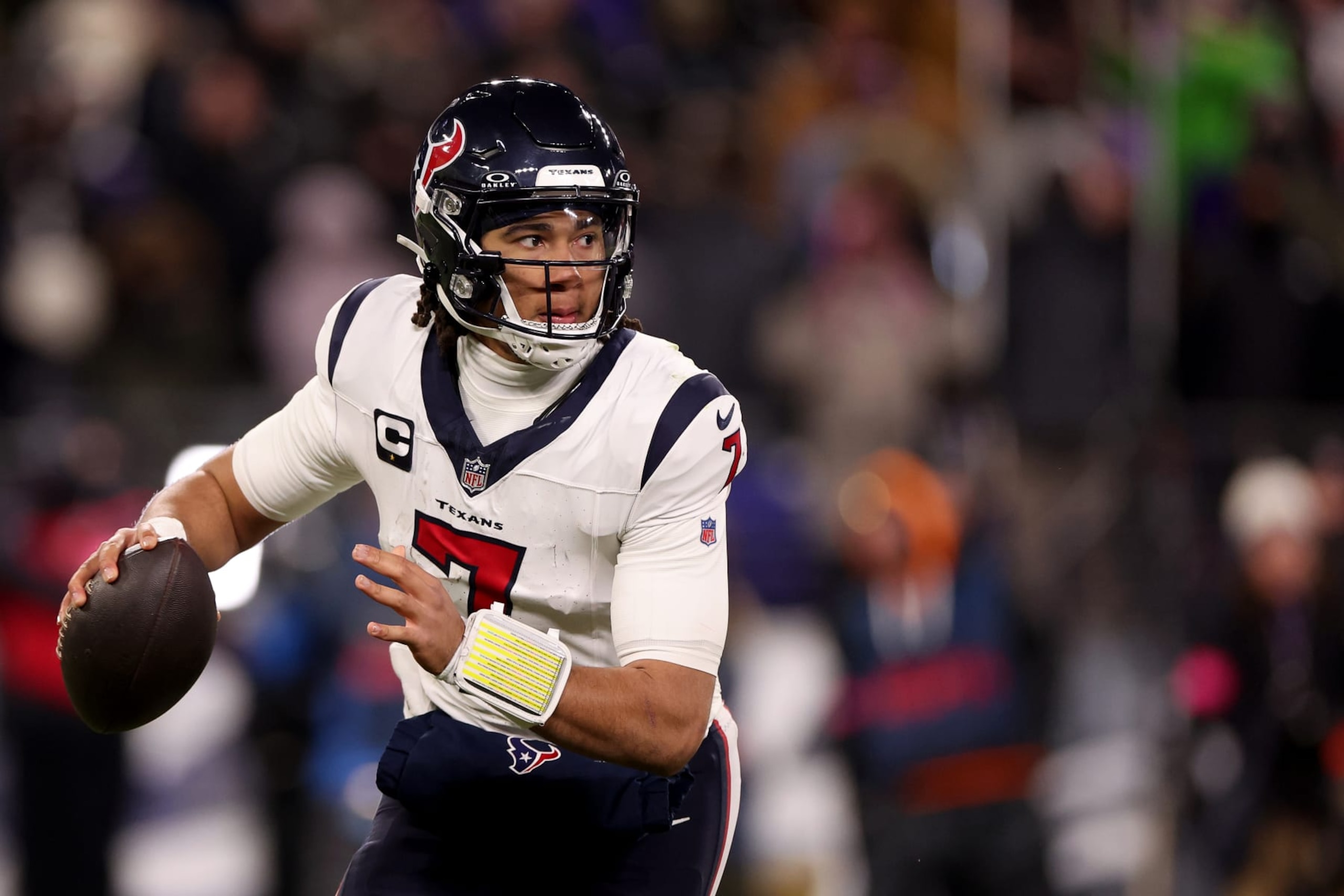
- Round 1 (No. 2): C.J. Stroud, QB, Ohio State
- Round 1 (No. 3): Will Anderson Jr., Edge, Alabama
- Round 2 (No. 62): Juice Scruggs, IOL, Penn State
- Round 3 (No. 69): Tank Dell, WR, Houston
- Round 4 (No. 109): Dylan Horton, Edge, TCU
- Round 5 (No. 167): Henry To'oTo'o, LB, Alabama
- Round 6 (No. 201): Jarrett Patterson, IOL, Notre Dame
- Round 6 (No. 205): Xavier Hutchinson, WR, Iowa State
- Round 7 (No. 248): Brandon Hall, S, Pittsburgh
Simply put, the Houston Texans changed the trajectory of their franchise with this draft class.
C.J. Stroud proved to be a game-changer at quarterback, finishing with over 4,000 passing yards, a passer rating of 100.8 and a 10-7 record as the starter, which included a wild-card playoff win against the Browns. It gives the Texans an exciting answer to the game's most important question, which is whether a team has a quarterback.
Stroud alone would give the Texans one of the best classes, but there are multiple gems in this class.
The Texans made an aggressive move to go back up to No. 3 in the draft and take Will Anderson Jr. He established himself as a cornerstone worth building the defense around in his rookie campaign. He only had seven sacks, but he also boasted the third-highest pass-rush win rate in the league, trailing only Micah Parsons and Myles Garrett.
Much larger sack totals are on the horizon for Anderson. The Texans checked another huge box with an elite pass-rusher now on the payroll for years to come.
Supporting a young quarterback with weapons is essential, and the Texans were able to do that with their third-round selection of Tank Dell. He went for 709 yards and seven touchdowns in 11 games before suffering a broken leg.
Juice Scruggs was a starting lineman by the end of the season, and Jarrett Patterson started seven games at center. Henry Too'oToo'o was a contributing linebacker with six starts.
From stars to starters to potential rotational players, Houston found plenty of players who will define Texans football in the coming years.