Men's College Basketball Stars Who Are Getting Snubbed in 2024 NBA Mock Drafts

There was a time when a 7'2" center with legitimate three-point range, a 6'6" point-forward putting up better numbers than Ben Simmons did in college and a shooting guard averaging better than 21 points per game at one of the greatest programs in college basketball history would be no-brainer lottery picks for the NBA draft.
That time has apparently come and gone, though, as Hunter Dickinson, Vonterius Woolbright and R.J. Davis rank among the top men's college basketball players inexplicably getting no love from the mock draft community.
Listen, I am not an NBA draft scout. Far from it, in fact. I hardly ever watch the NBA, and in most years, I don't even bother to watch a second of the NBA draft.
But I do watch a metric ton of college basketball and know there are a lot of outstanding players who don't even make an appearance in our Jonathan Wasserman's most recent full two-round mock draft.
To be clear, in no way is my intent here to be critical of Wasserman's latest projection. There are plenty of other, much-less-well-written mocks out there snubbing these exact same players. I'm simply using Wasserman's latest mock as the barometer for which NCAA stars are being overlooked by the entire NBA draft community.
Players are presented in alphabetical order.
Johni Broome, Auburn
1 of 7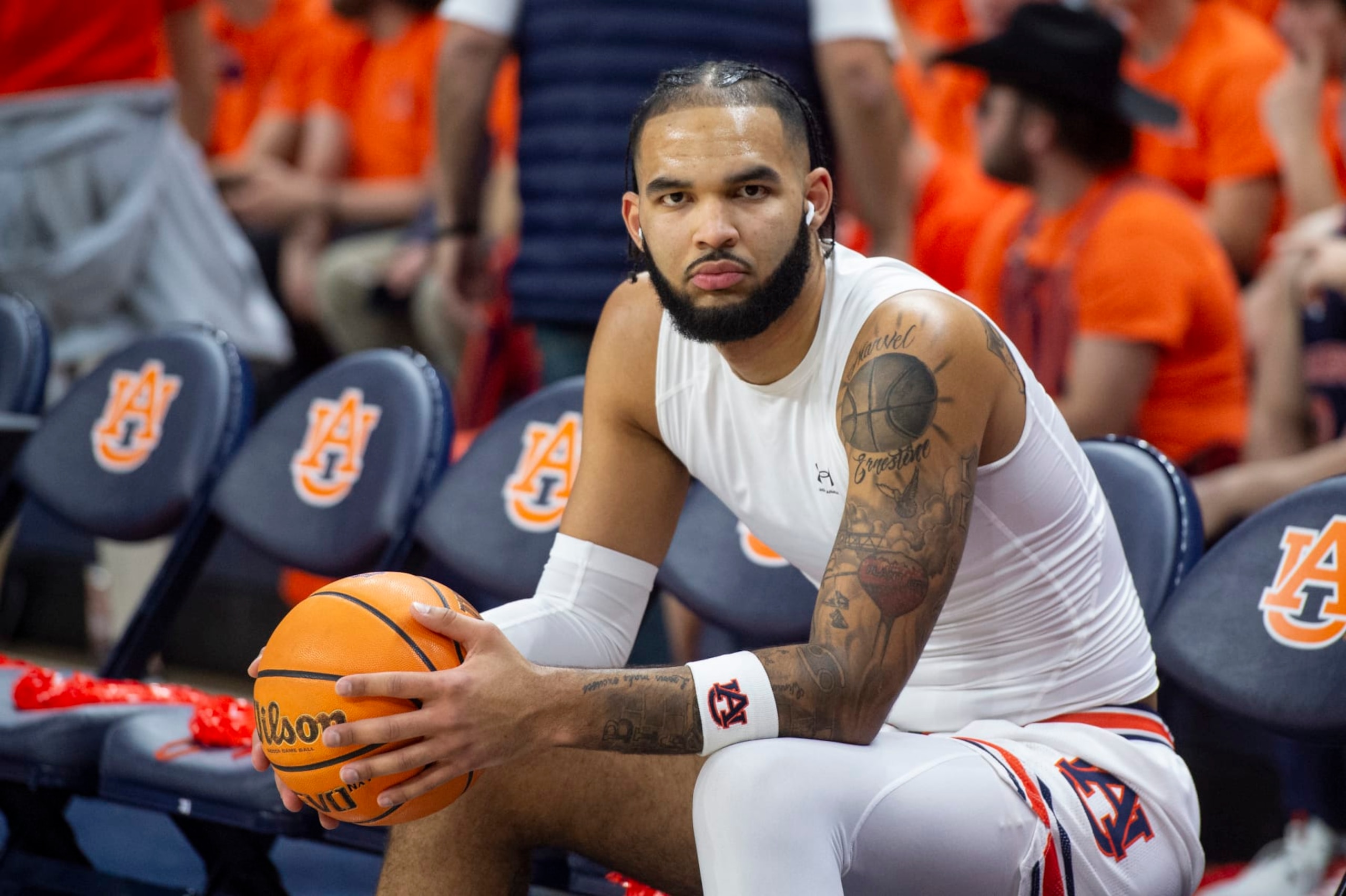
Season Stats: 16.1 PPG, 8.5 RPG, 2.4 BPG, 1.9 APG, 1.0 SPG, 36.4% 3PT
For several of the players on this list, age is likely a factor in why the NBA isn't particularly interested. But Johni Broome won't turn 22 until about a month after the draft, even though this is his fourth season of college hoops. Age shouldn't be much of a deterrent here.
Maybe it's a durability/fatigue concern? Broome has never been a minutes eater, and he has only logged more than 28 minutes in a game twice this season. But you're not going to find any two-way big men (with viable three-point range, to boot) making more of an impact on a per-minute basis. For his four-year career, Broome has averaged 23.0 points, 13.9 rebounds and 4.0 blocks per 40 minutes.
Perhaps the free-throw stroke is the major drawback? Broome has developed more of a perimeter game this season, but he is still just a 60 percent career shooter from the charity stripe. However, Auburn's do-it-all big man before Broome, Walker Kessler, was an even worse free-throw shooter, and he still got drafted in the first round.
Broome did test the draft waters last spring before opting for another year at Auburn. Maybe the draft community is just reserving judgment here until seeing how he fares at his next Draft Combine.
But with all due respect to Arkansas' Trevon Brazile (Wasserman's projected No. 55 pick), I'm having a very hard time processing why that 6'10" SEC power forward is more desirable to the NBA than this one.
R.J. Davis, North Carolina
2 of 7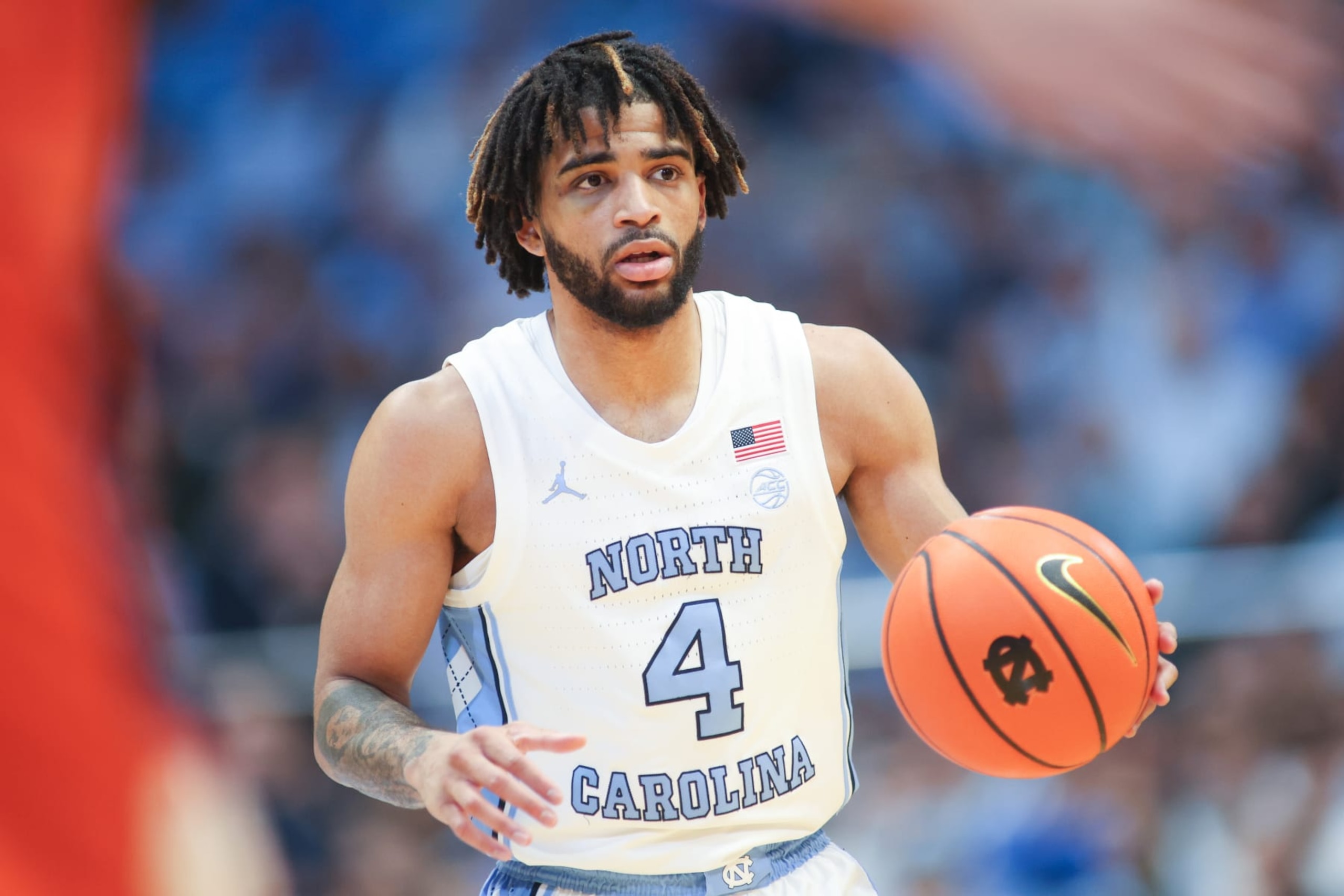
Season Stats: 21.3 PPG, 3.6 RPG, 3.6 APG, 1.2 SPG, 41.0% 3PT
Buddy Hield's college trajectory:
- Freshman Year: 7.8 PPG, 23.8% 3PT
- Sophomore Year: 16.5 PPG, 38.6% 3PT
- Junior Year: 17.4 PPG, 35.9% 3PT
- Senior Year: 25.0 PPG, 45.7% 3PT, Wooden Award winner, No. 6 overall draft pick
R.J. Davis' college trajectory:
- Freshman Year: 8.4 PPG, 32.3% 3PT
- Sophomore Year: 13.5 PPG, 36.7% 3PT
- Junior Year: 16.1 PPG, 36.2% 3PT
- Senior Year: 21.3 PPG, 41.0% 3PT, possible first runner-up for Wooden Award...undrafted???
The reason for this is obvious: Davis is a good four inches shorter than Hield and would be one of the shortest players in the NBA if he manages to make a roster.
But being 6'0" didn't stop Aaron Holiday from becoming a first-round draft pick. And at just one inch taller than Davis, Terry Rozier has blossomed into quite the combo guard in the NBA.
Why couldn't Davis do the same?
There's no questioning the shooting stroke. Davis is a career 37 percent three-point shooter and an 86 percent free-throw shooter. He definitely has NBA range on his jumper. And with better than three assists per game in each of the past three seasons, he's more than just a shooter.
As long as he at least gets an invite to the NBA Draft Combine, Davis should have a good shot at becoming a second-round pick.
Hunter Dickinson, Kansas
3 of 7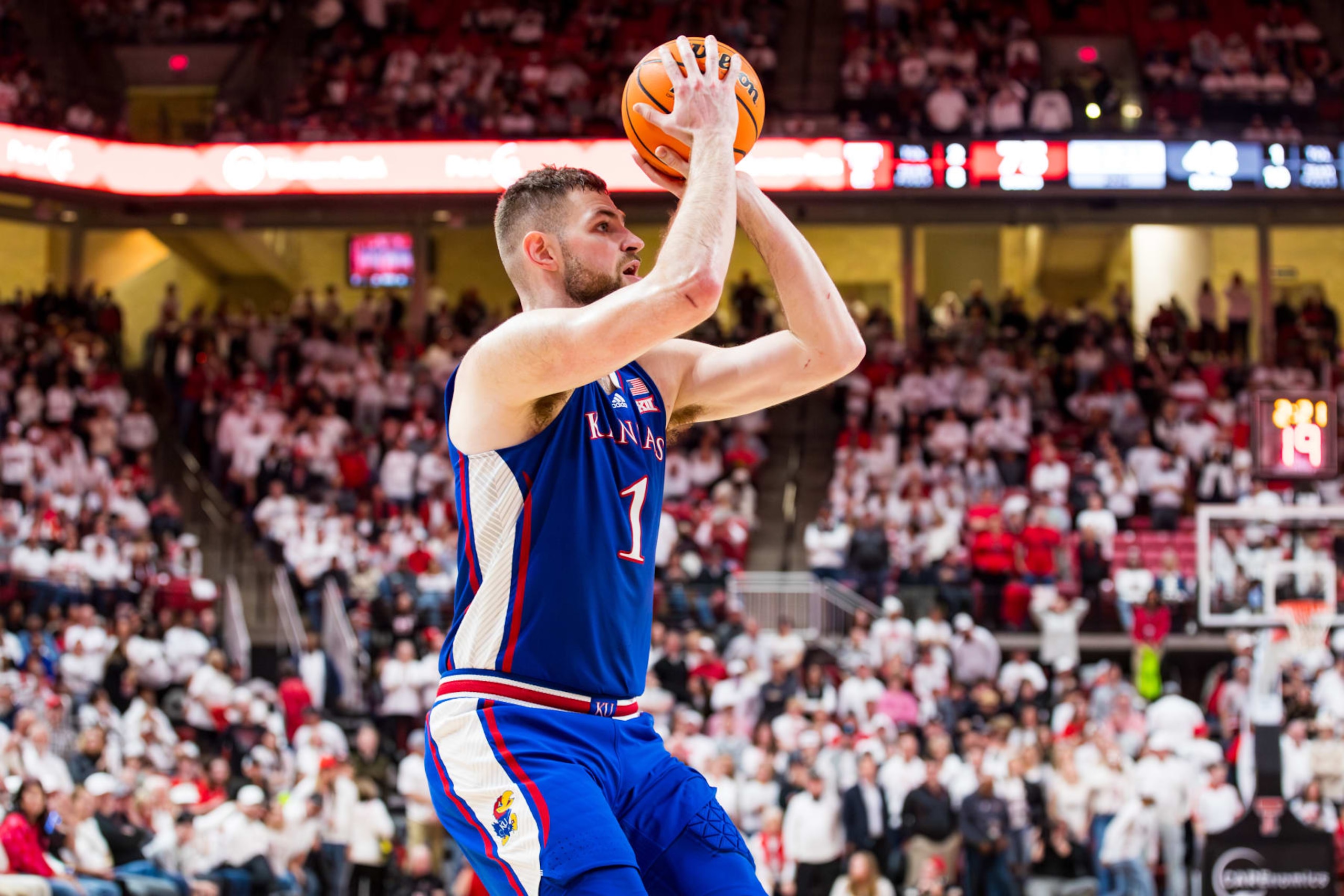
Season Stats: 18.2 PPG, 11.0 RPG, 2.2 APG, 1.2 BPG, 1.1 SPG, 33.3% 3PT
Could you imagine trying to explain Hunter Dickinson's (complete lack of) draft stock to an NBA scout who just woke up from 10-15 years in a coma?
- You: Yeah, so Kansas has this 7'2" center who is averaging a double-double, is a respectable shot-blocker and has shot 63-for-175 from three-point range over the past three seasons.
- Coma Scout: Holy shnikes! Has the NBA put any rules in place to combat all the tanking that is surely happening to take him No. 1 overall?
- You: Well, uh, it's looking like he might not even get drafted. But he might have a future in the AEW.
- Coma Scout: What the hell is the AEW?
It hasn't even been a decade since Frank Kaminsky went ninth overall in the 2015 NBA draft, despite standing two inches shorter and making less of an impact both on the glass and on defense than Dickinson.
Granted, Kaminsky was about 18 months younger on his draft night than Dickinson will be this June. And it's perhaps partially because Kaminsky didn't pan out that teams seem to have no interest in Dickinson.
But, I mean, really?
Not even a second-round grade for a guy we would've been calling a unicorn a little over a decade ago?
I can appreciate that Dickinson isn't as athletic as some of the 7-footers who have been going at or near the top of the lottery in recent years. But if a 7'2" bruiser with legitimate three-point range can't even get a flyer in the NBA, what exactly is the future of basketball?
It'd be one thing if the NBA is just out on big dudes who have conditioning concerns. However, Donovan Clingan is a projected lottery pick and Zach Edey is a borderline first-rounder, so I am thoroughly confused here.

Tyler Kolek, Marquette
4 of 7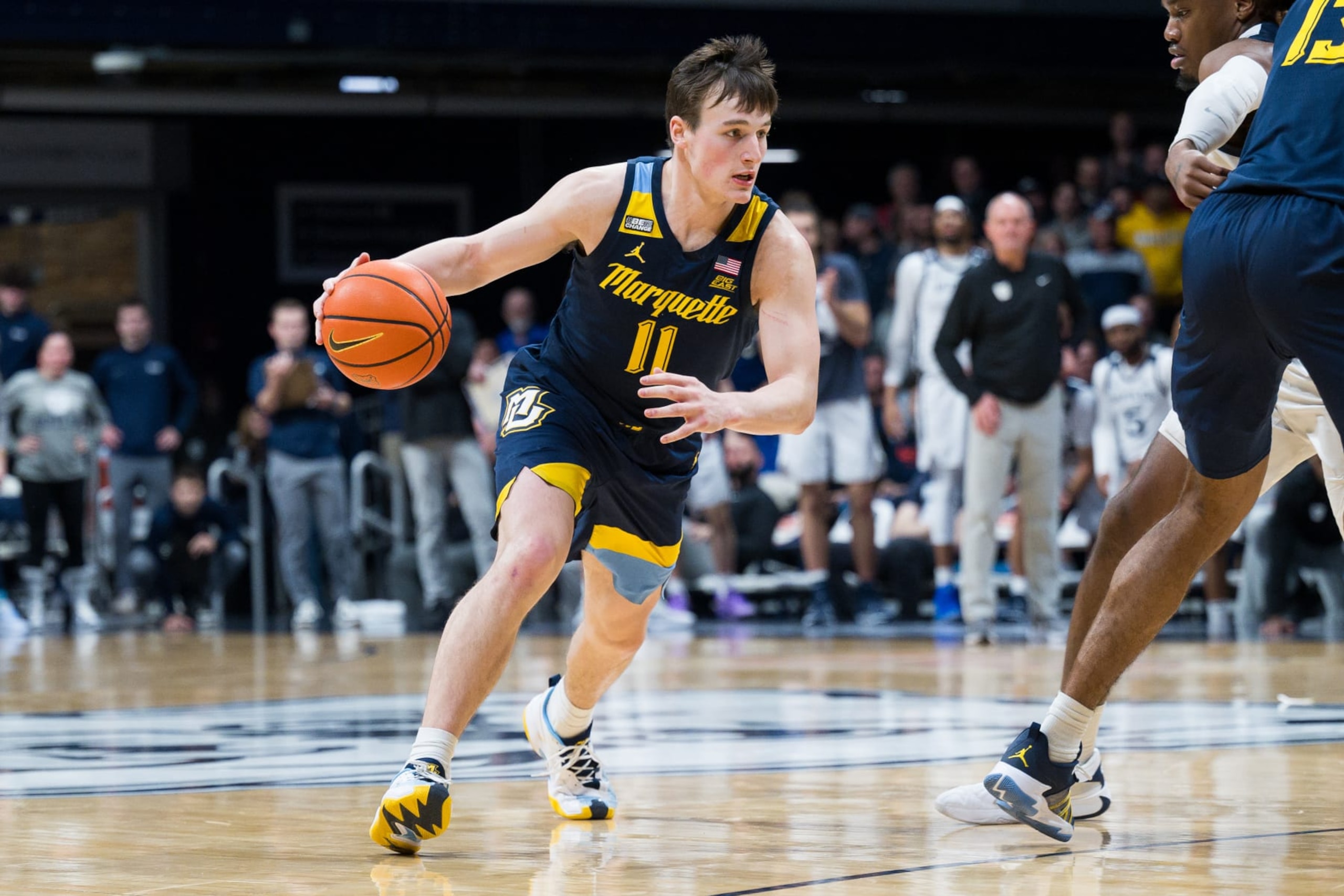
Season Stats: 15.7 PPG, 7.2 APG, 4.9 RPG, 1.7 SPG, 40.4% 3PT
So here's what I really don't get about Tyler Kolek's draft stock.
Wasserman had Kolek going 49th overall in November.
Since then, Kolek has all but cemented himself as the best point guard in the country, particularly with his play over the past month...
And now he's not projected to be drafted?
Yes, other draft prospects have also played well since November, but what more does Kolek need to do to prove he belongs in the Association?
Heck, the only players out-producing Kolek in each of PPG, APG and RPG in the NBA right now are LeBron James, James Harden, Luka Dončić, Nikola Jokić and Domantas Sabonis.
Not saying he is destined to become Jason Kidd 2.0, but Kolek has the court vision, the basketball IQ and more than enough toughness to have a nice long run as an NBA point guard.
Jaedon LeDee, San Diego State
5 of 7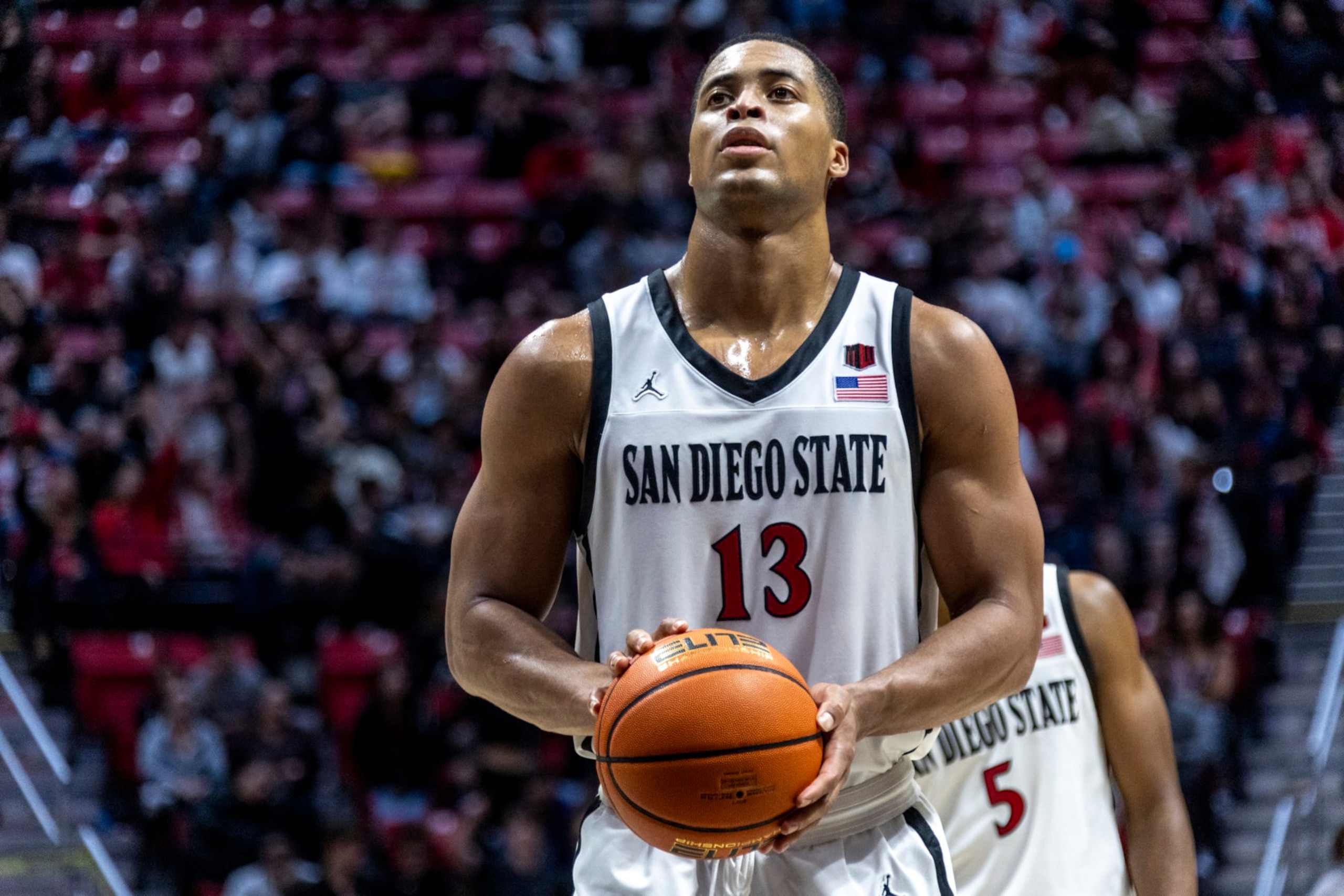
Season Stats: 20.4 PPG, 8.2 RPG, 1.5 APG, 1.3 SPG, 39.4% 3PT
This one at least makes sense from an age perspective. Jaedon LeDee was in the same recruiting class as Zion Williamson, and he was old for his class to begin with. LeDee turns 25 this summer and would have to be one of the oldest players drafted in at least a decade if he did get drafted.
It's understandably difficult to justify using a first-round pick on a guy who will be 30 by the time his rookie contract ends.
But LeDee has nearly tripled his scoring average from last season, showcasing a viable perimeter game that did not exist in his first four years of college ball. And we know he can play some defense after two years at TCU and two years at San Diego State.
Nobody wants this 6'9", 240 lbs. breakout sensation just because he's almost old enough to rent a car?
Not one team looking to spend a second-round pick on a grown man who could be an immediate factor in the frontcourt rotation?
Even if he doesn't get drafted, LeDee should be one of those undrafted free agents who gets scooped up an hour after the draft and might get some legitimate NBA playing time as early as next season.
Tamin Lipsey, Iowa State
6 of 7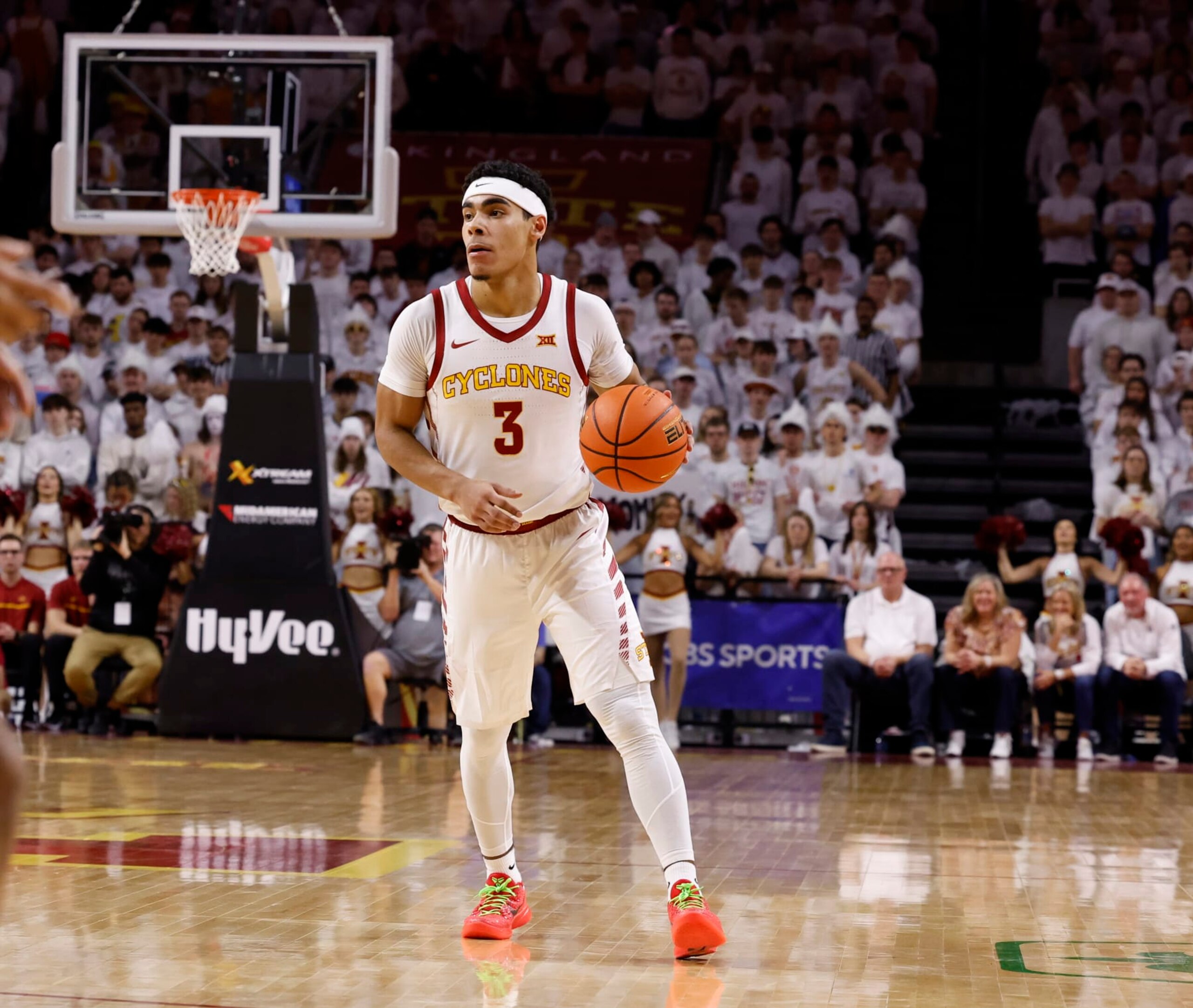
Season Stats: 13.2 PPG, 5.5 APG, 4.9 RPG, 2.9 SPG, 36.3% 3PT
Iowa State has produced more than its fair share of NBA guards in recent years. Monte Morris (drafted in 2017), Talen Horton-Tucker (2019) and Tyrese Haliburton (2020) have worked out pretty well.
But apparently that's not enough for players in Ames to be on the NBA's radar, because Tamin Lipsey is getting seriously snubbed in mock drafts.
It was understandable when he was nowhere to be found in the draft picture a year ago. He shot just 5-for-25 from three-point range and averaged 7.3 points per game as a freshman. He was a pass-first point guard who wasn't even averaging two assists per turnover.
Now he's a legitimate scorer/shooter, whose three-point attempt rate has more than quadrupled. Lipsey has also been a better distributor as a sophomore at 2.5 dimes per giveaway. And he is one of the best on-ball / ball-hawking defenders in the nation, averaging three steals per contest.
At this point, Lipsey's play isn't markedly different from Kris Dunn's final season at Providence (16.4 PPG, 6.2 APG, 5.3 RPG, 2.5 SPG, 37.2% 3PT). Dunn is a little bit taller than Lipsey, but was also two years older when he was taken fifth overall in the 2016 draft.
Vonterius Woolbright, Western Carolina
7 of 7
Season Stats: 22.3 PPG, 12.2 RPG, 5.3 APG
By no means is 6'6" Vonterius Woolbright the second coming of 6'10" Ben Simmons.
But his stats sure are.
Simmons averaged 19.2 PPG, 11.8 RPG and 4.8 APG during his lone season at LSU, becoming the first player since at least 1992-93 to average at least 16.0, 10.2 and 4.1, respectively. And Woolbright has Simmons bested across the board.
Playing on one of the shortest rosters in the country is a major factor with this statistical dominance. Three of Woolbright's teammates in the starting lineup at Western Carolina stand 5'8, 6'1" and 6'2", making him the de facto power forward.
Regardless of who else is on the court, though, it is preposterous that Woolbright has nearly three times as many rebounds and nearly three times as many assists as his closest teammate in either category.
Woolbright ranks fourth in the nation in points per game and second in rebounds per game. His assist rate isn't quite that high, but he does rank second in the SoCon in assists per game.
At the very least, he deserves an invitation to the combine to show what he can do against real competition.
.jpg?w=2560 "Chiefs, Steelers Eye WR Trades")