
Rule Changes We'd Love to See Implemented in Men's College Basketball
I love college basketball. If you're reading this, you probably do, too.
But we could make it even better with some rule changes, right?
If you're here for hot takes about transfers or anything related to NIL, I regret to inform you that none of our proposed rule changes pertain to roster building, but rather to the game itself.
These are things that theoretically would improve the viewing experience by creating better games with fewer pointless stoppages/delays and less painful game-end sequences.
They aren't all fully baked ideas. There might be some unintended consequences I'm not seeing yet. But they could be good tweaks to a great game.
These rule changes are presented in no particular order, though we'll get this discussion started with one we all surely can agree on.
A 'Shot Clock' on Monitor Reviews
1 of 8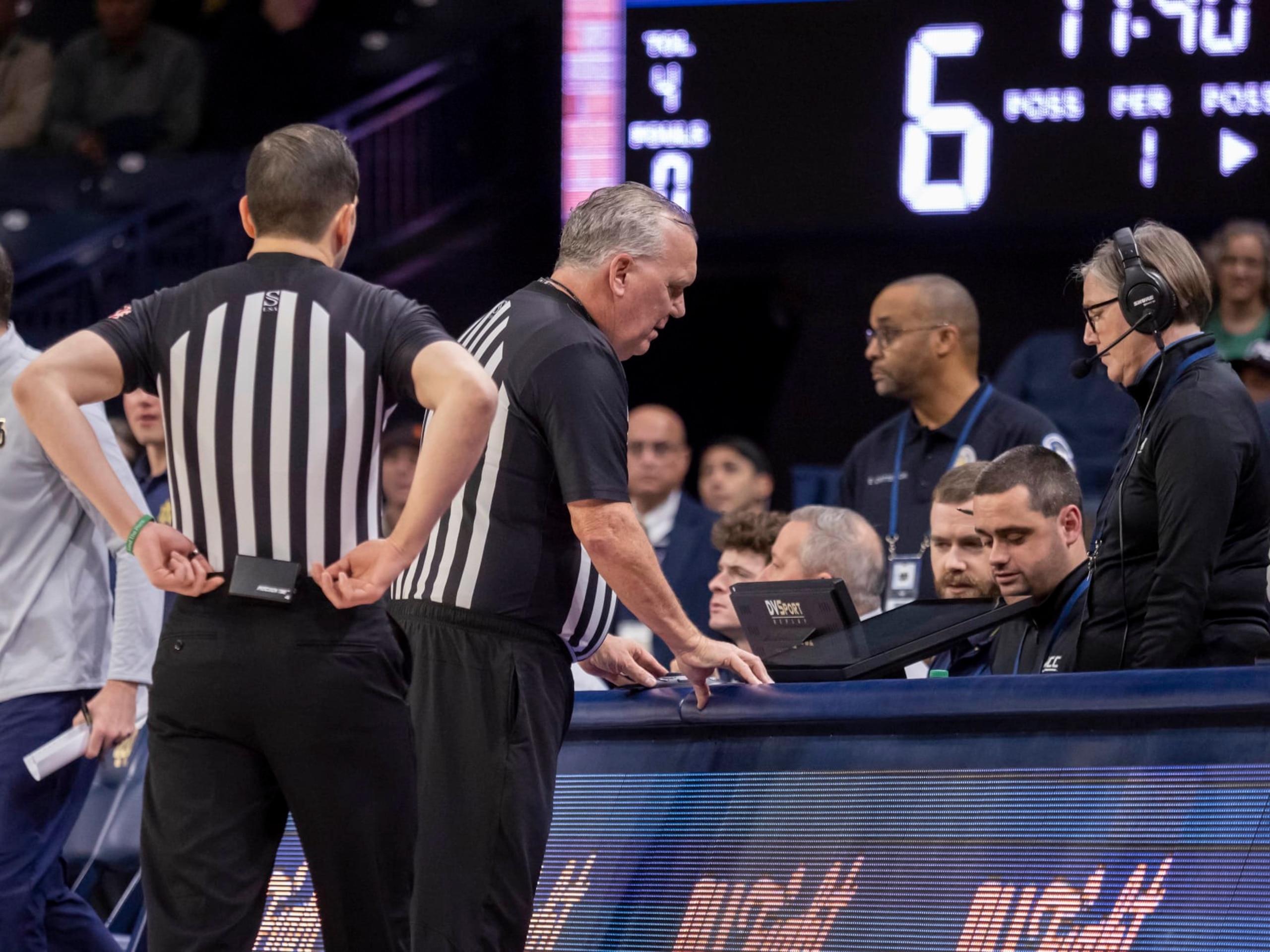
Let's get things started with a suggested rule change guaranteed to get you on my side, because it's something that everyone who watches college basketball has been requesting for years.
Please...for the love of all that is holy...no more five-minute-long monitor reviews.
There are a lot of things about the replay process that could be changed.
We could go to a system where reviews are only initiated by a coach's challenges. That would be fantastic, if only so players would stop swirling an index finger in an official's face every time there's a remotely questionable call in the final two minutes.
We could also allow those challenges to be used at any point in the game as opposed to just in the final 120 seconds.
We could even add a dedicated replay official who unilaterally decides whether to overturn the call. That would be a nice upgrade on the current "let's zoom in on the referees' backsides while they huddle around the monitor" routine.
But, really, just put a timer on the review process and we're kind of OK with the rest of its shortcomings.
We can argue about how long the replay clock should be, but I say just go with 30 seconds and use the shot clocks already in the arena. That way, even the fans can stay engaged by counting it down. And if you need to watch the replay more than two or three times to decide if there's indisputable evidence to overturn the call, it's not indisputable evidence, call stands, play on.
Erase One Personal Foul at Halftime
2 of 8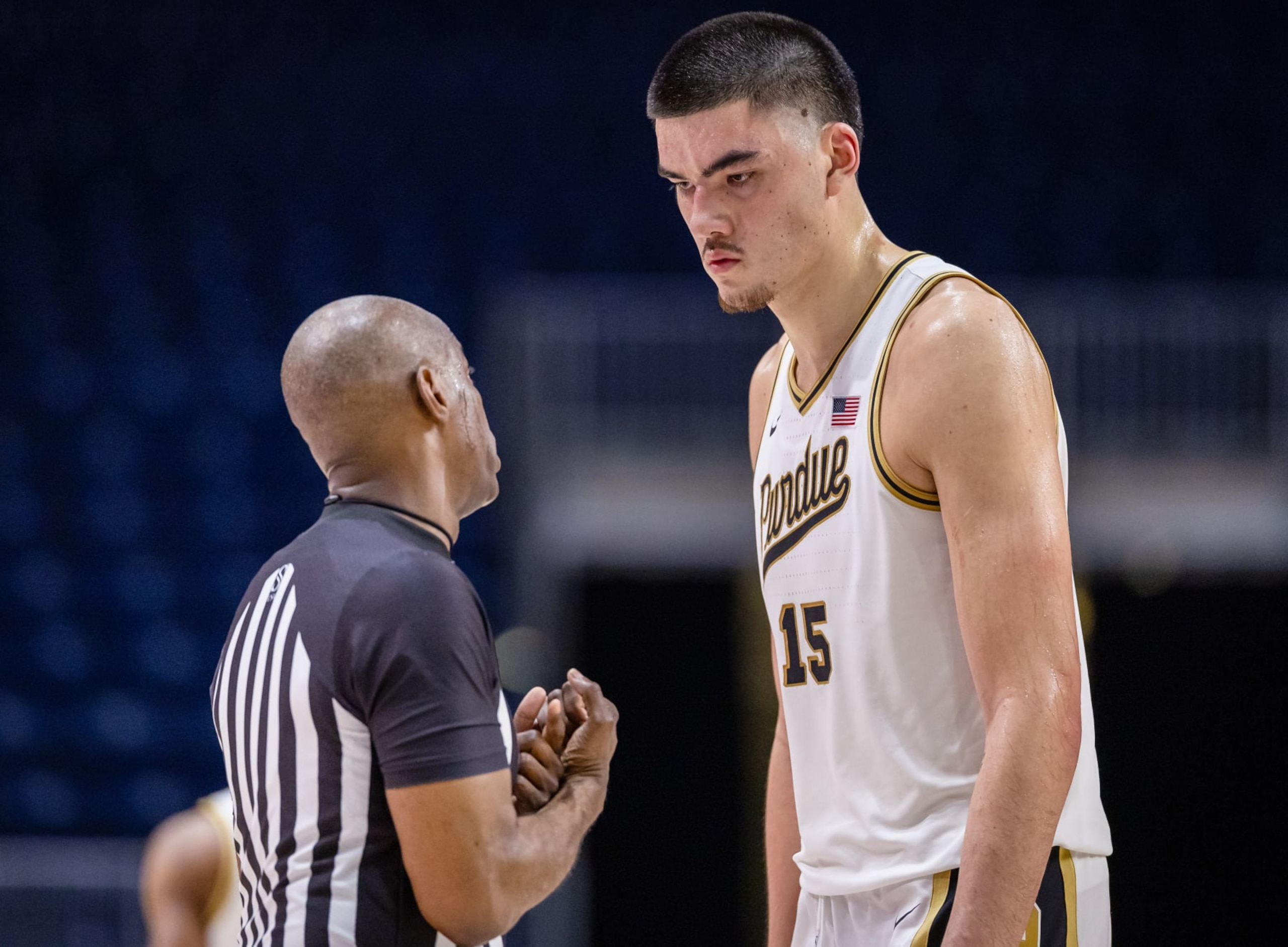
Hands down, one of the most frustrating things about college basketball is when a star player picks up two early fouls and spends the final 15 minutes of the first half on the bench.
Would it be great if those stars played with a little more self-control for the first couple of TV timeouts to keep themselves (and their teams) out of those predicaments? Sure.
Would it be fantastic if officiating was better / more consistent so those stars had a better idea what will actually be called a foul on any given night? Absolutely. But we all know that'll never happen.
Increasing the foul-out limit from five to six is probably never going to happen, either. As it is, games already too often devolve into physical slogs. The last thing we need is everyone defending with like 30 percent more reckless abandon. (Could you imagine a Houston-TCU game with a six-foul limit and more team-wide freedom to try to force turnovers? It'd be a rugby match.)
But what if we gave coaches the opportunity to erase one personal foul (per team, not per player) at halftime of each game?
That would make it much less likely that one ticky-tack first-half whistle drastically alters the trajectory of the game, and it would thus be much more likely we'd see coaches allowing guys to stay on the floor in spite of two early fouls.
Get Rid of the Possession Arrow
3 of 8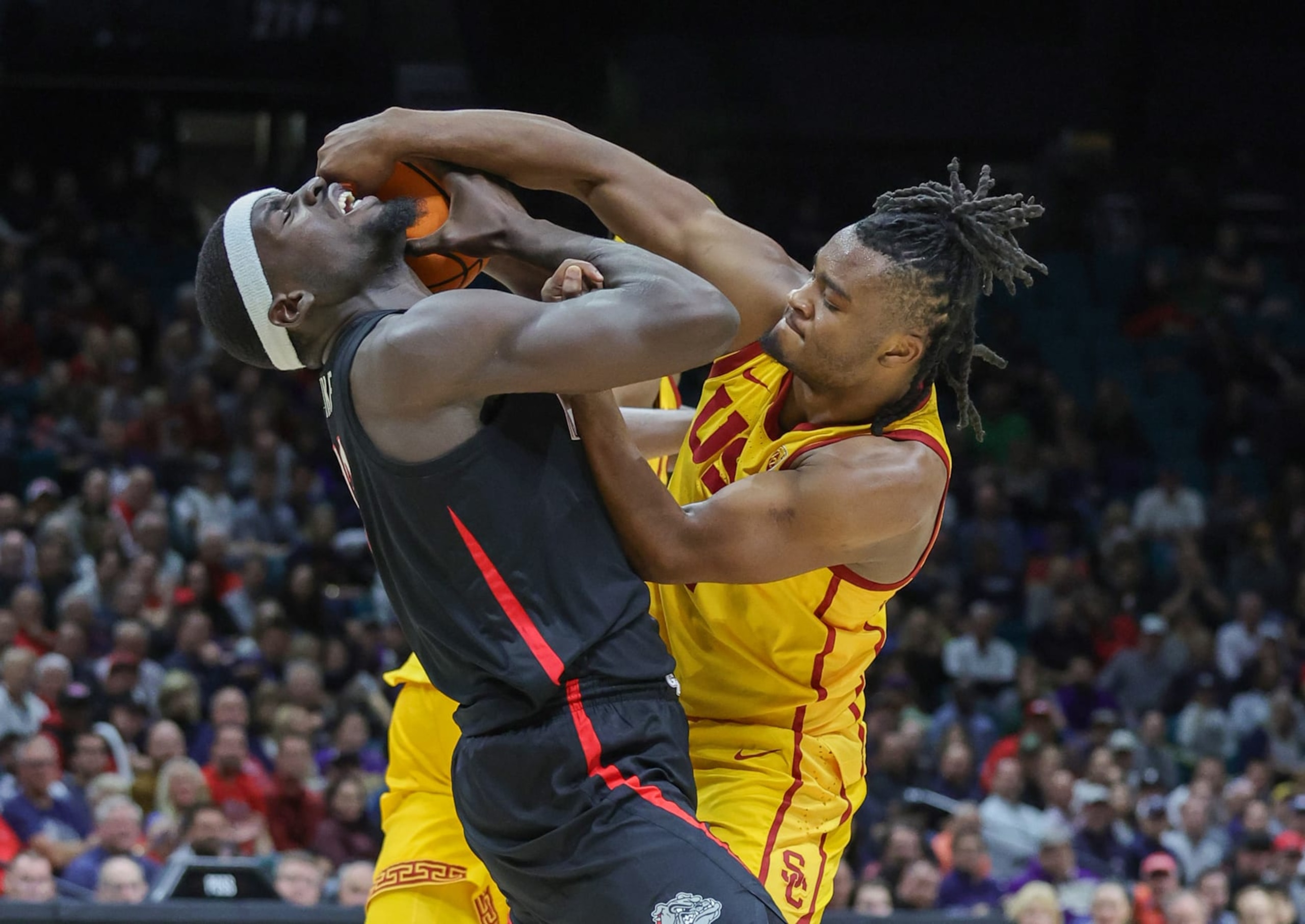
Eliminating the use of the possession arrow for jump-ball situations isn't exactly a novel idea. Both Dick Vitale and Jay Bilas have been banging that drum for decades.
And yet, here we still are, only rewarding good defense with the ball 50 percent of the time it causes a tie up.
More than 40 years ago, jump balls resulted in just that: jump balls. But in 1981, college basketball adopted the alternating possession policy in order to quit always rewarding the taller player in a scramble for a loose ball.
In fairness, the possession arrow is a better system than jump balls—which the NBA incredibly still uses—but it's definitely not the best possible solution.
Just award the defense the ball for causing a tie-up.
Two players simultaneously grab a rebound? Ball goes to the team that didn't shoot it.
Loose ball that bounces around for five seconds, seemingly changing possession four times before the refs finally blow it dead amid a scrum? Ball goes to whichever team was on defense the last time the shot clock was reset.
It's not hard. Make the change.

.jpg?w=2560 "Texans-Mixon Released Football")
Mandatory True Road Games in Nonconference Play
4 of 8
This year's Maui Invitational was an all-time-great eight-team field. We've also had some incredible Battle 4 Atlantis, Phil Knight Invitational and, once upon a time, Great Alaska Shootout tournaments over the years.
The occasional one-off game at Madison Square Garden can be incredible, too.
I'm not campaigning to get rid of those neutral-site events.
But nothing beats a college basketball game played in front of a raucous home crowd, and drumming up November and December interest in our beloved sport would be less of a herculean annual challenge if there were more big nonconference games featuring that environment.
As things currently stand, though, there are a lot of programs that don't see the benefit in risking taking early losses on the road.
The team everyone points to in this regard: Duke has played three true road games in nonconference play (losing two of them) over the past six seasons combined, and those only came when it happened to be the Blue Devils' turn to hit the road in the ACC/B1G Challenge or ACC/SEC Challenge.
The fact that Duke agreed to a home-and-home series with Arizona last summer was stunning, because during that same six-year window Duke played 32 nonconference home games against teams outside the KenPom top 100, winning all 32 of those games that could not have been less appealing to a national audience.
What if we could force more true road games, though, by instituting a rule that you are not eligible for an at-large bid to the NCAA tournament unless you have played at least two true road nonconference games?
Would Duke try to beat the system by playing those road games somewhat locally against the likes of Queens and Elon? Maybe.
But it sure would be something if Duke lost one of those games, like when Virginia lost at James Madison a couple years ago.
Switch from Halves to Quarters
5 of 8
A lot of people want this change to happen for uniformity reasons. High school, NBA, FIBA and even women's college basketball all use quarters, leaving men's college hoops as the lone weirdo starting a game with 20 minutes on the clock.
And while having something unique about one particular level of a sport can be endearing, I suppose that's a fine rationale for wanting the change.
My reasoning, though, is simply to combat the fouls/free throws situation.
How many times have you seen a team in the bonus—if not the double bonus—with at least 12 minutes still remaining in regulation?
Too many times to count, right?
It turns the end of games into interminable marches to the free-throw line.
And it doesn't have to be this way.
Using nationwide D1 year-to-date data as of Monday morning, men's college basketball teams were committing an average of 16.97 personal fouls per game and attempting 19.49 free-throw attempts per game.
Meanwhile, in women's college basketball, it's a nearly identical number of fouls per game (16.86), but with around 14 percent fewer free-throw attempts per game (16.73).
That's not because (or at least not entirely because) the men are more prone to foolishly foul three-point shooters, but rather because there are so darn many double-bonus free-throw situations in the halves format than there are with quarters.
Eliminate the Back-to-Back Media Timeouts
6 of 8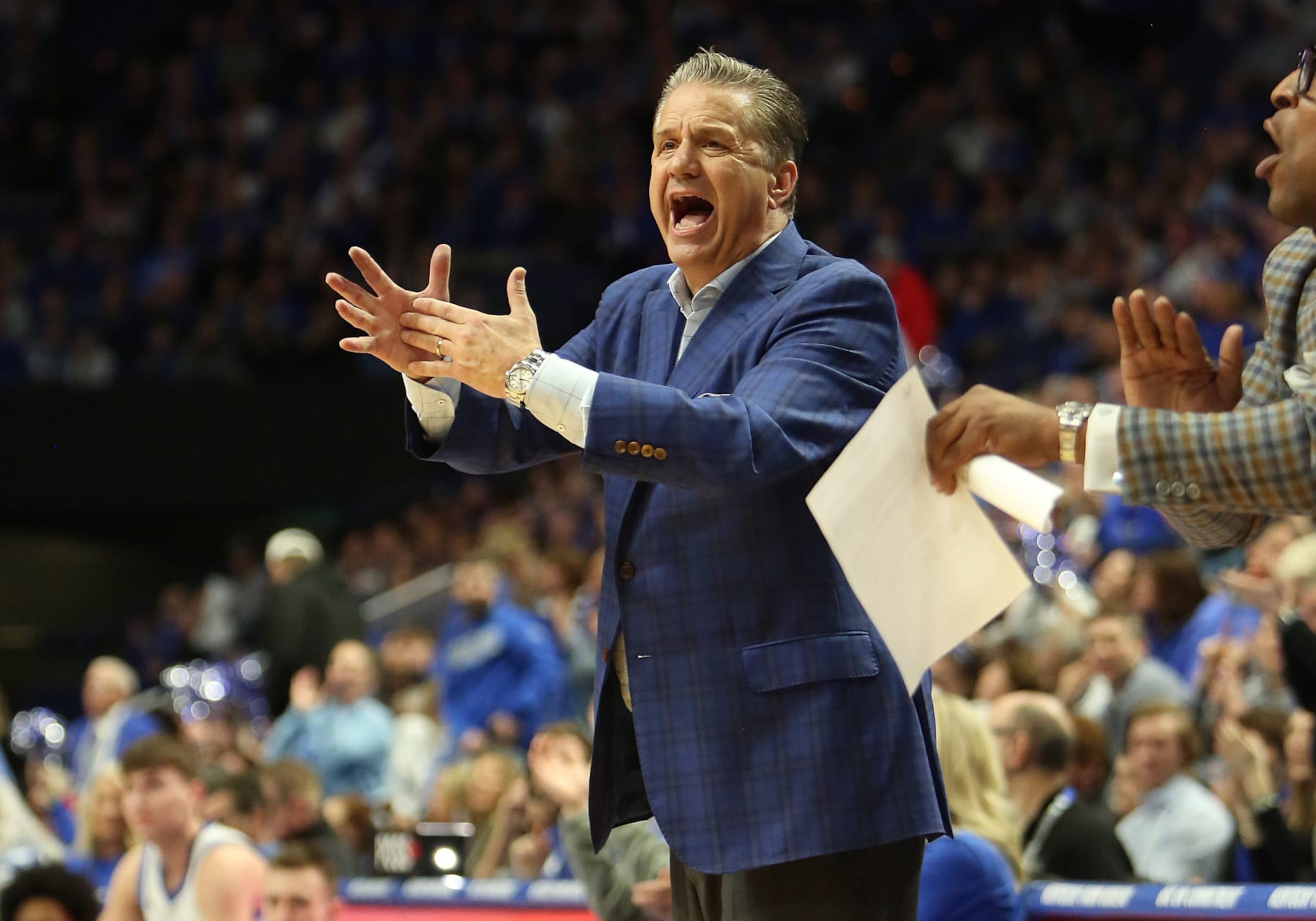
I understand that media timeouts are a necessary evil to be able to watch college basketball. ESPN pays the conferences for the right to televise some 4,000 games per year, and ad revenue from commercials puts that money back into ESPN's pocket (and then some).
But can we please add some sort of common-sense rule that at least one minute of game time must elapse between every media timeout?
Or, like, ANY game time at least?
With exactly eight minutes left in the second half of Friday night's UConn-Butler game, Posh Alexander committed a foul, triggering the under-8:00 media timeout.
After that lengthy pause in the action, the broadcast went back to Hinkle Fieldhouse for all of five seconds to show Connecticut unable to get the ball in-bounds, calling a timeout which led to another commercial break.
(And after all that, UConn threw the ball away when play finally resumed.)
It's usually not that painful of a sequence, but getting a pair of 150-second breaks in the action in quick succession is all too commonplace, caused primarily by the rarely acknowledged "floater" media timeout that occurs the first time either team calls a timeout in the second half, regardless of when that team timeout occurs.
(Last year, the Ohio Valley started using an under-17/14/11/8/4 format for the five second-half media timeouts as opposed to the standard under-16/12/8/4 + floater arrangement used everywhere else. Prior to that, I was blissfully unaware that the floater was actually by design as opposed to just a seemingly random extra cash grab.)
Again, I get it. Advertising pays the bills. But, man, take a page from the NFL and sneak some 30-second ads into the stoppages that already naturally occur during free-throw attempts or monitor reviews and spare us one of the additional breaks.
Advance the Ball on a Timeout
7 of 8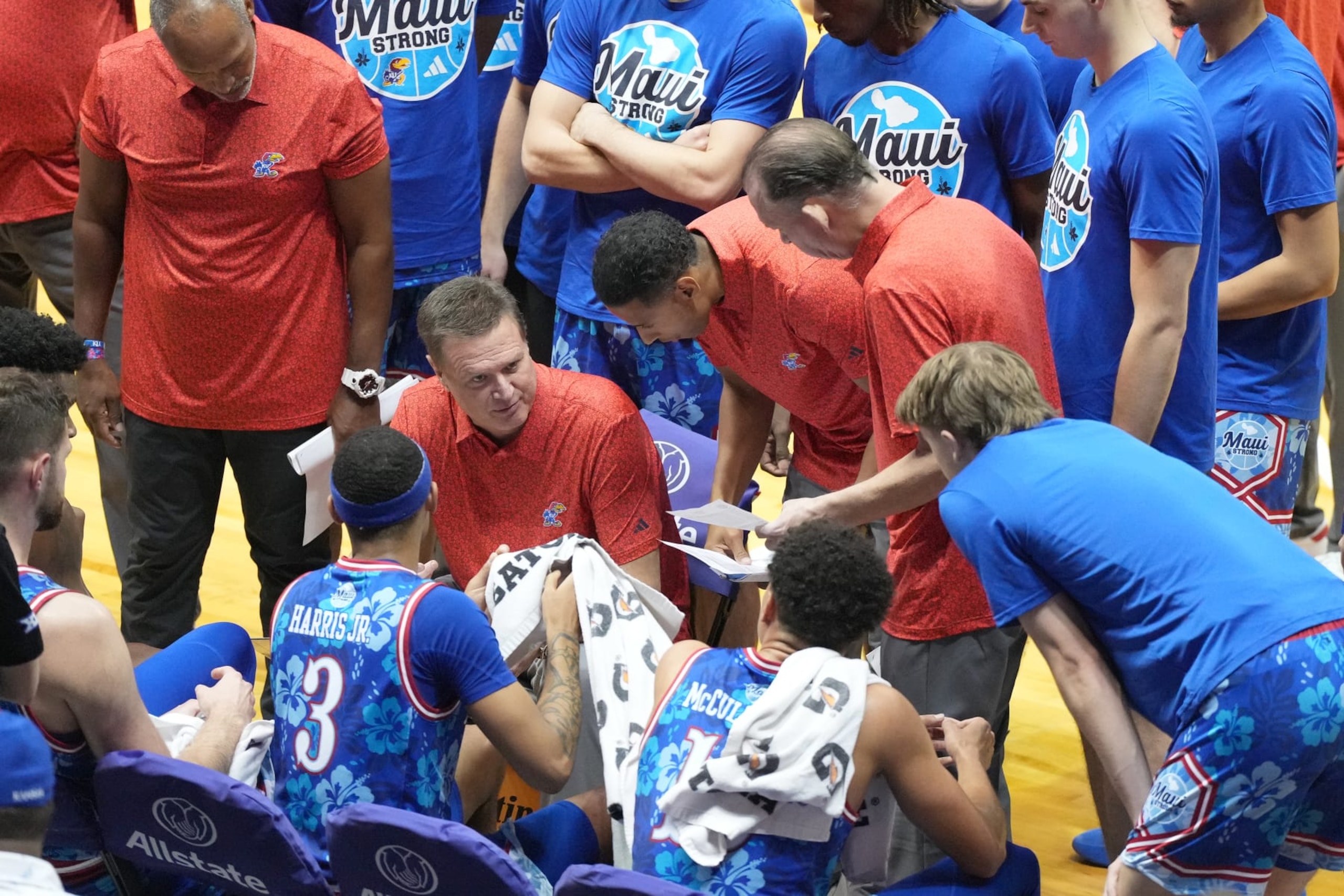
I don't actually love this idea, as I feel that trying to score on an in-bounds pass from 94 feet away with less than five seconds left on the clock is college basketball's version of football's desperation hook-and-ladder situation. The conversion rate is extremely low, but the payoff when it does happen is simply unforgettable.
That said, a well-executed sideline out-of-bounds play is one of the most beautiful things that can transpire during a basketball game, is the mark of great coaching and would result in more legitimate buzzer-beater opportunities on a more regular basis.
One counter-argument is that coaches/teams should just work on how to—without using a timeout to set it up—in-bound the ball from under the basket and into the frontcourt to immediately call a timeout and set up said sideline out-of-bounds play. That way, we get the thrill of the ol' baseball/football pass, the coach gets to work his SLOB magic and we don't need to change any rules. Win-win-win.
However, that only applies after a made basket or from an otherwise dead-ball situation. If we're talking about a team grabbing the rebound from a missed shot, now you need one timeout to stop the clock, a good play to then get it into the frontcourt for another timeout and yet another good play to get a bucket. And that almost never happens.
So if you want the option to advance the ball from a team timeout in the final minute of a game, that's fine. But if I could only pick one of these rules to be implemented, this wouldn't be my top choice.
The Elam Ending
8 of 8
Might as well end this thing with a game-ending amendment.
For anyone who has managed to miss all of the Elam Ending discourse over the past decade, the long and short of it is that after the dead ball which causes the second half's under-4:00 media timeout, the clock is turned off and a target score is set—typically seven or eight points greater than the leading team's total at that point—and it simply becomes a race to that total.
The idea behind it is that teams simply continue to play basketball instead of engaging in the end of game stall-ball or frantic-fouling strategies which completely destroy whatever flow the game had up until that point.
With no game clock running, there's zero incentive for the leading team to dribble around for 20 seconds before running offense. And with the leading team just a few points away from ending the game, defending without fouling becomes the name of the game for the trailing team.
The best part?
The game always ends on a made bucket.
Sure, sometimes that made bucket is a free throw, which a lot of people feel is anticlimactic. To them, I say: You try stepping to the line for a "make this and you advance to the next round of the NCAA tournament" free-throw attempt and let me know how boring it is.
They've been using the Elam Ending for 'The Basketball Tournament' for a while now, and it's always great theatre.
It would get rid of overtimes and buzzer-beaters, which is the biggest reason most are resistant to the idea. But I'd love to at least see one of the mid-major leagues use it for a season.
.jpg?w=2560 "Commanders Eagles Football")
.jpg?w=2560 "Rams Eagles Football")



.jpg?w=2560 "Mahomes' Wife Trolls Kubiak 💀")