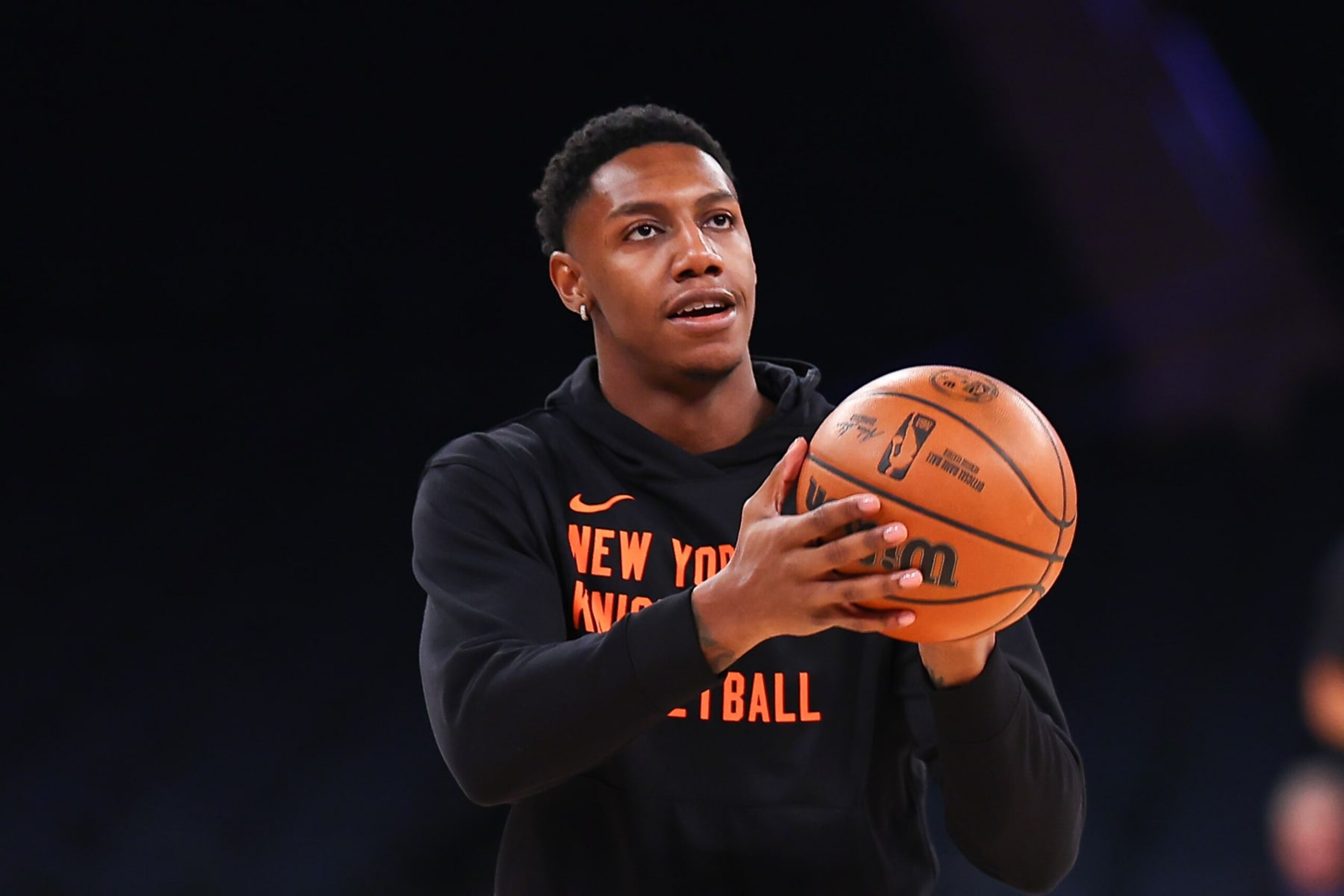


If it didn't feel like trade season already—December 15, when several players became trade-eligible, has come and gone, and James Harden was already moved in November—it certainly does now.
On Saturday, ESPN's Adrian Wojnarowski broke the news that the Toronto Raptors would be sending OG Anunoby to the New York Knicks in a deal involving RJ Barrett.
Now that most of the dust has settled, let's dive into how each team did on the tried-and-true A-F grading scale.
The Trade
1 of 3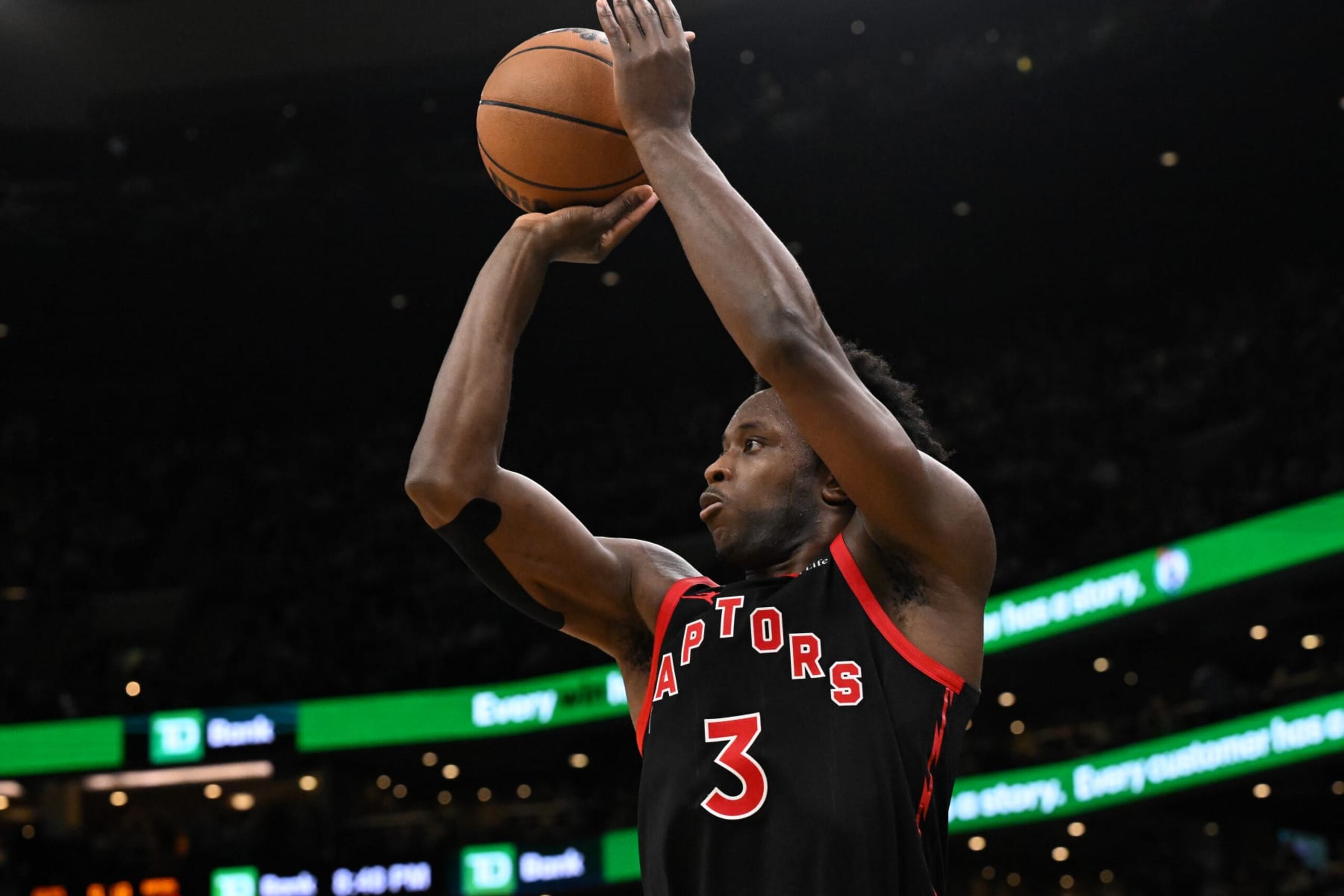
But first, The Athletic's Shams Charania shared the full details of the trade.
New York is landing Anunoby, Precious Achiuwa and Malachi Flynn, while Barrett, Immanuel Quickley and a second-round pick are headed to Toronto.
There are potential pitfalls for both teams, but this trade has very real win-win potential.
Immediate reactions for both teams are below.
New York Knicks: B+
2 of 3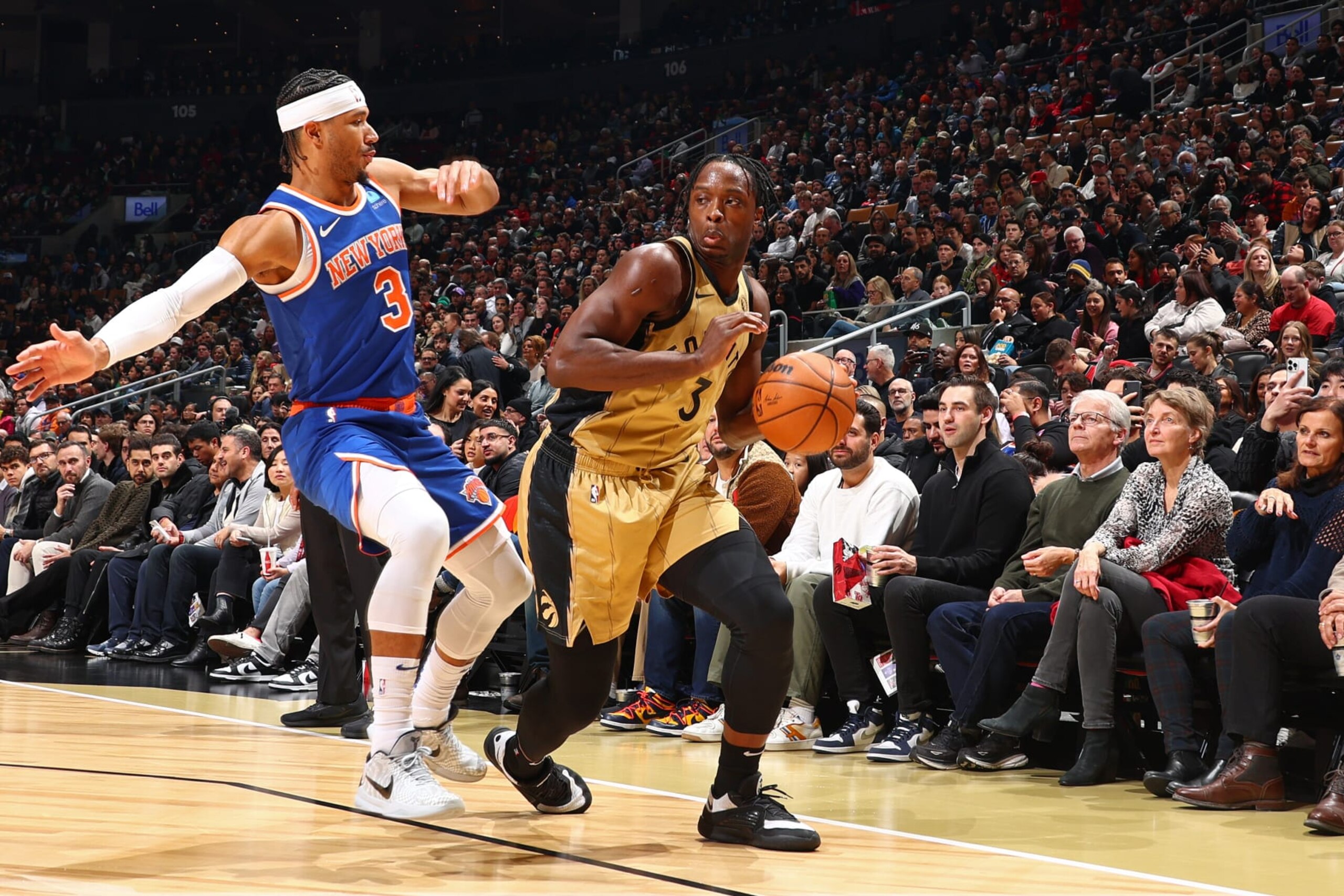
The obvious knock against the deal from New York's perspective comes from the fact that Immanuel Quickley was involved.
There's at least an argument that he's the best individual player headed either direction, and he's two years younger than OG Anunoby.
Three or four years from now, Quickley could be competing for an All-Star appearance, while Anunoby's still sitting at zero.
Playing time-adjusted production doesn't always translate perfectly to a bigger role, but Quickley has averaged 20.1 points, 4.3 assists and 2.8 threes per 75 possessions since the start of last season. He's also top 70 in the league in box plus/minus over that span.
But he was a 6'3" guard approaching restricted free agency on a team that already has 6'2" Jalen Brunson. Playing them together is tough from a practical standpoint. Undersized backcourts can struggle in today's NBA packed with wing-sized playmakers.
Having both would've been tough from a resources perspective, too. Having two of your highest-paid players (which is probably what Quickley would've been next season) under 6'4" could've been a problem.
So, even if Anunoby's raw production might not measure up to Quickley's, he's almost certainly a better fit than either Quickley or RJ Barrett.
Last season, Anunoby averaged 16.8 points and a league-leading 1.9 steals per game. His 17.2 career usage percentage is way lower than Barrett's 25.5, and suggests he'll take fewer possessions away from Brunson and Julius Randle.
He's also a more reliable catch-and-shoot option, with a 37.5 career three-point percentage (compared to Barrett's below-average 34.2).
This move simplifies the Knicks rotation a bit (Josh Hart and Donte DiVincenzo are still around for the guard/wing rotation), gives them one of the game's best perimeter defenders (when engaged) in Anunoby and gives them a couple potential rotation players in Precious Achiuwa and Malachi Flynn.
In the short term, it's almost certainly a win, especially when you consider all the reports over the past couple years that suggested Toronto wanted multiple first-round picks for Anunoby.
Toronto Raptors: B
3 of 3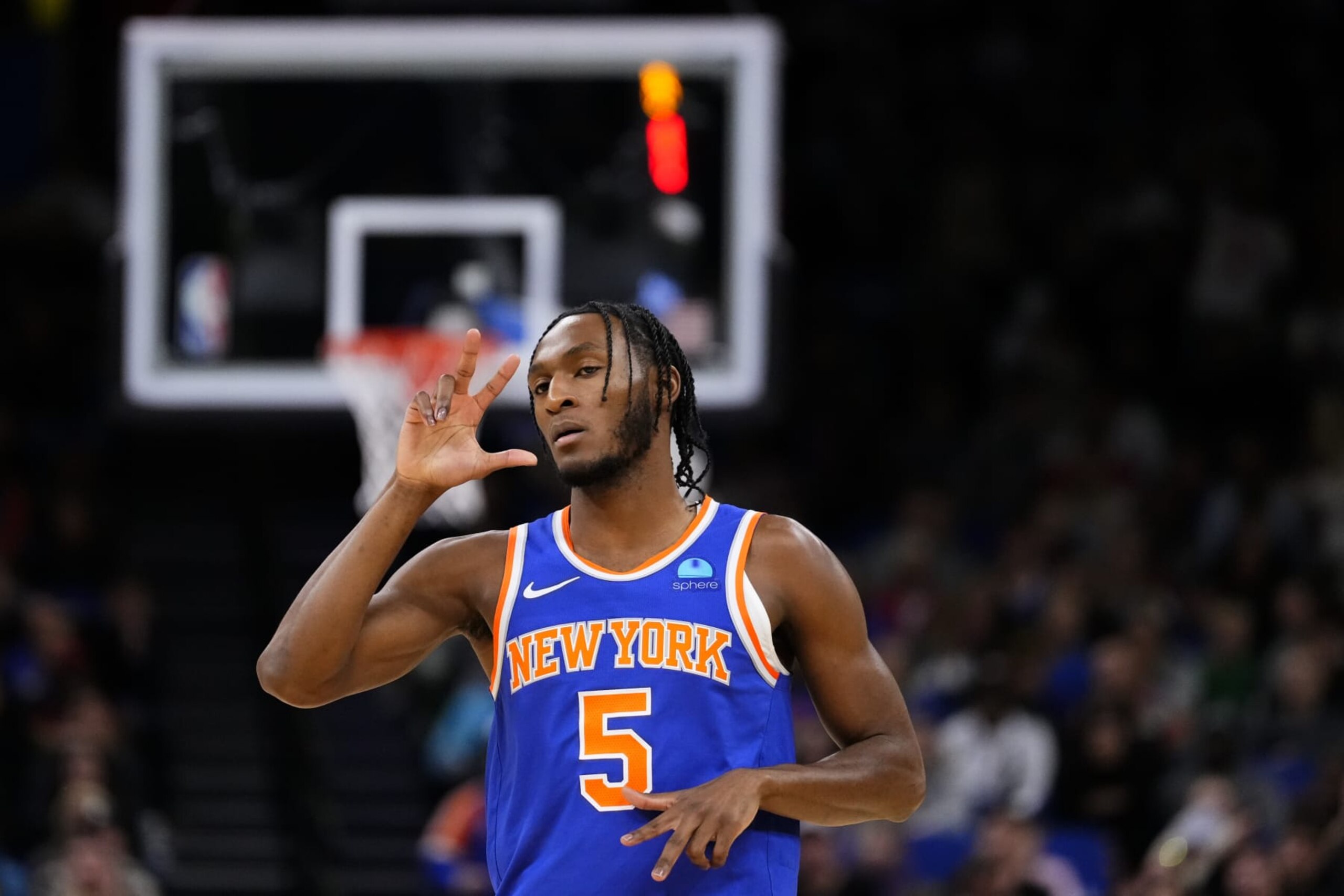
Again, there's a very real chance Quickley emerges from this deal as its best player.
His heat-check scoring ability has made him a Sixth Man of the Year candidate in each of the past two seasons, and there could be some untapped playmaking there, too.
Spending all of his career with Julius Randle (and much of it with Jalen Brunson) also gave Quickley the opportunity to prove his usefulness off the ball.
He can effortlessly slide back and forth between "on-the-ball creator" and "closeout attacker," which makes him a nice theoretical fit alongside point forward Scottie Barnes.
Yes, it may be expensive to keep Quickley after restricted free agency, but team control could be exactly what Toronto is after here. If the front office views him as the point guard of the future (a reasonable view, for sure), matching whatever offer sheet he signs will give the Raptors a solid foundation with he and Barnes.
The potential downsides of the trade (and the reason it's not in the A range) are clear.
Anunoby's never made an All-Star Game and has a career average of 11.8 points, but losing him almost certainly softens the team's defense.
RJ Barrett's contract has problem potential, too. He's had a profoundly negative impact on New York's point differential over the course of his career. His inefficiency as a scorer could make him a tricky fit alongside Barnes. That and the fact that he makes $29.6 million in 2026-27 have to be considered.
At 23, though, there's still plenty of time for Barrett to develop.
Finally, after posturing for years that Anunoby might be worth multiple first-rounders, getting zero is far from ideal—even if Anunoby's real value was probably never that high.



.jpg?w=2560 "Raiders Could Start Mendoza")

.jpg?w=2560 "Rodgers Iced Out on Plane 💎")

.jpg?w=2560 "🚨 Week 8 AP Top 25 Poll")