It takes more than free-agent signings to build out a quality NBA roster, but there's a reason why fans and organizations treat July 1 like a national holiday. The opportunity to acquire players without giving up anything but cash remains the purest form of team improvement.
With the 2023-24 season approaching the one-quarter mark, now's a good time to evaluate how each team's outside signings have fared. Value, as always is key here. Some clubs had virtually no money to spend, while others hoarded over $30 million to throw at free agents.
We have to treat teams in different circumstances fairly, so there will be instances where a minimum signing performing adequately earns his squad a higher grade than a bigger, costlier name with better raw numbers (but much higher expectations).
We're focusing specifically on new signings, which means ignoring extensions, trades, re-signings and draft picks inking their first NBA deals. This is all about judging how well each team used its resources to bring in outside talent.
Let's get to the grades.
Atlanta Hawks
1 of 30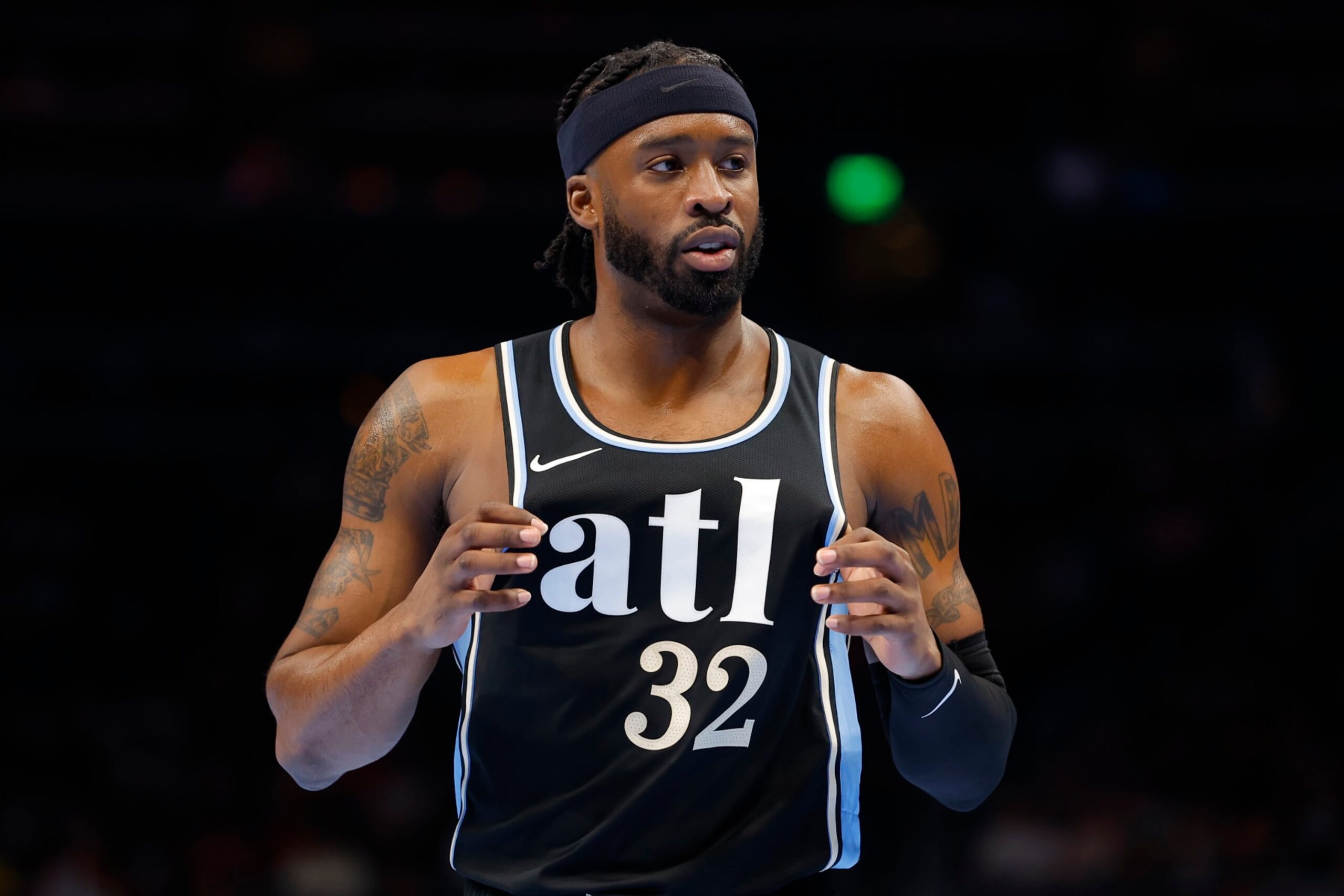
Grade: C-
Free-Agent Additions: Wesley Matthews (one-year minimum)
The Atlanta Hawks did well to bring back Dejounte Murray on a four-year, $117 million extension, defying expectations that he'd even consider inking a deal before hitting free agency. They also signed backup center Onyeka Okongwu to a four-year, $62 million extension, paving the way for a possible Clint Capela trade.
Unfortunately, Murray and Okongwu don't count as additions because they were already under contract. So the Hawks get no credit here for those moves.
Matthews' minimum deal gave the Hawks an experienced professional (who probably can't be part of a rotation anymore) on the cheap. He's played sparingly, appearing in just nine games and averaging only 10.6 minutes. The 37-year-old vet hasn't averaged double-figures in scoring since 2018-19 and is 5-of-16 from three on the season.
Any production at all from a culture-setting, adult-in-the-room signing is a plus, but teams across the league made loads of better additions on minimum deals.
Boston Celtics
2 of 30
Grade: B-
Free-Agent Additions: Dalano Banton (two years, $4.2 million; team option 2024-25), Oshae Brissett (two years, $4.6 million; player option 2024-25), Svi Mykhailiuk (one-year minimum), Lamar Stevens (one-year minimum), Neemias Queta (two-way)
The Boston Celtics did more than their share of transacting over the summer, but the most consequential moves were in the trade and extension departments. Of the new players whom Boston signed, Oshae Brissett currently comes closest to being a rotation piece. But he only appeared in eight of the Celtics' first 20 games.
Kristaps Porzingis' calf injury could open up some minutes in the frontcourt, but Brissett might not be the one to benefit. He's 1-of-9 from three and has three times as many fouls as field goals on the season. With that said, it was still a nice piece of business by Boston to land a 25-year-old combo forward for $4.6 million over two years.
Banton and Mykhailiuk are firmly set as the Celtics' 11th and 12th men. Neither seems likely to climb over Payton Pritchard, Luke Kornet, Sam Hauser or even Brissett in the pecking order, which should be the expectation for guys on dirt-cheap deals.
The Celtics' offseason trades left them thinner behind their elite top six, but it's hard to argue any of their free-agent pickups has earned a shot at serious court time.
Brooklyn Nets
3 of 30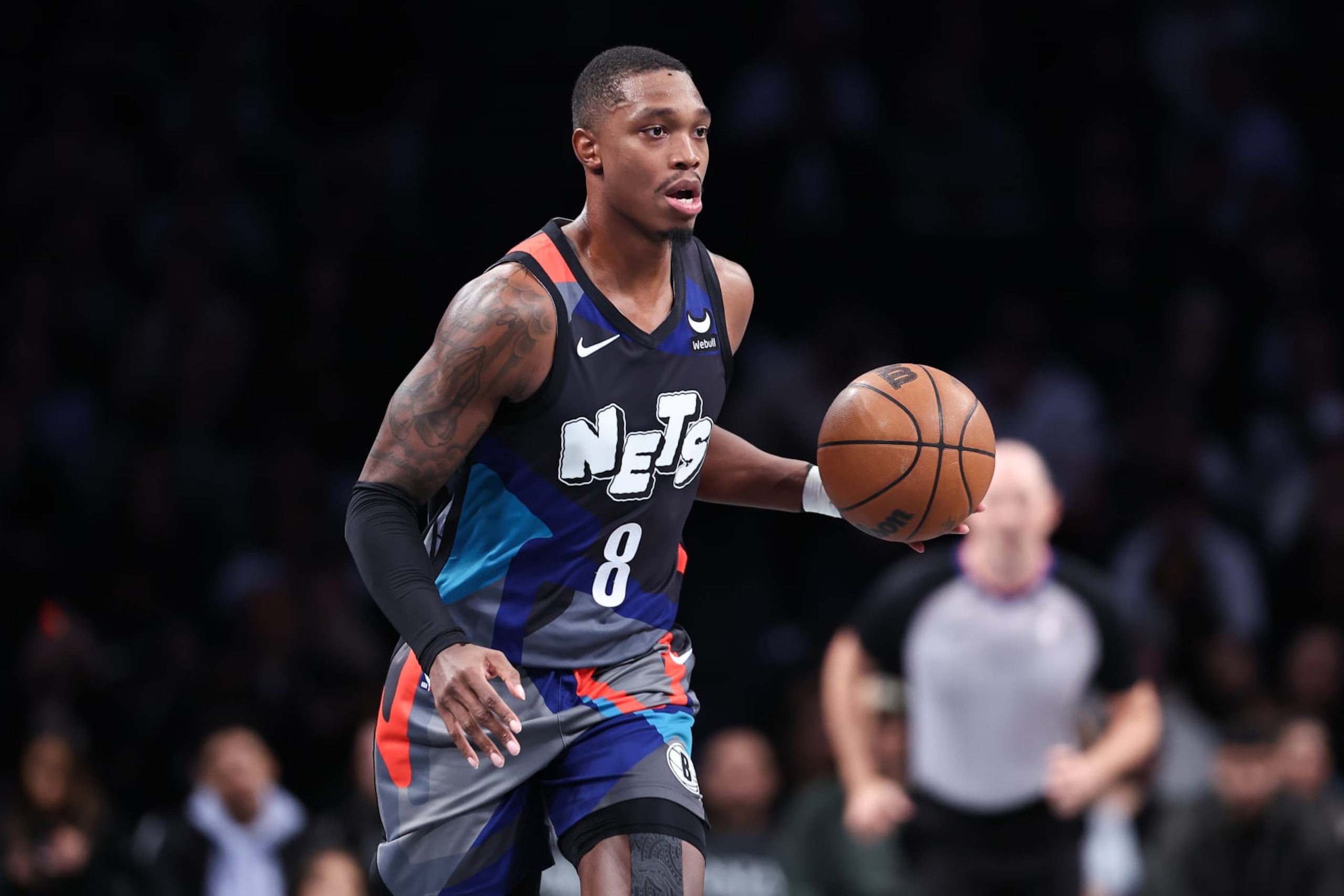
Grade: A-
Free-Agent Additions: Dennis Smith Jr. (one-year minimum), Lonnie Walker IV (one-year minimum), Harry Giles III (one-year minimum), Trendon Watford (one-year minimum), Armoni Brooks (two-way), Jalen Wilson (two-way)
The Brooklyn Nets' big offseason expenditure kept Cam Johnson in house for $94.5 million over four years—a market-rate signing that has paid off just fine so far. Though a calf injury sidelined Johnson for seven of the Nets' first eight games, he's shot 37.7 percent on good volume from deep and defended both forward positions adequately while ramping up to full speed. Again, though, we aren't awarding credit for retentions.
Fortunately for the Nets, a few of the new faces they brought aboard on bargain deals have impressed.
Lonnie Walker IV is in the running for Sixth Man of the Year and has been absolutely incendiary in a rotation role. He's all the way up to 14.6 points in just 21.3 minutes per game. Cam Thomas, perhaps the hottest microwave scorer in the league, is the only Nets player averaging more points per 36 minutes—and Walker's 48.9/46.3/76.3 shooting split easily tops Thomas'.
Dennis Smith Jr. has also delivered the elite on-ball defense that helped salvage his career with the Charlotte Hornets. He's further down the depth chart than Walker and is only shooting 41.1 percent from the field. But Smith's athleticism and defensive disruption have been real assets, especially with Ben Simmons and Nic Claxton missing time.



Charlotte Hornets
4 of 30
Grade: B
Free-Agent Additions: Frank Ntilikina (one-year minimum), Ish Smith (one-year minimum), P.J. Washington re-signed (three years, $46.5 million)
Ish Smith is playing more lately than the Charlotte Hornets probably hoped when they inked the league's ultimate journeyman guard to a one-year minimum deal. Injuries to LaMelo Ball and Terry Rozier, plus the general unplayability of Theo Maledon, have Smith regularly logging 15-minute nights since early November.
A low-usage game-manager, the 35-year-old has been uncharacteristically efficient, hitting a career-high 58.8 percent of his shots from the field. Charlotte's offense is still 6.1 points per 100 possessions worse with Smith on the floor.
Frank Ntilikina has yet to play following a fractured left tibia, and it's hard to truly call P.J. Washington a pickup. He was a restricted free agent whom Charlotte brought back after a prolonged stay on the open market that almost made him feel like a new signing.
Washington's deal was extremely team-friendly, though, and very little has gone well for the Hornets so far this season. So we'll throw them a bone and count him toward their grade.
Chicago Bulls
5 of 30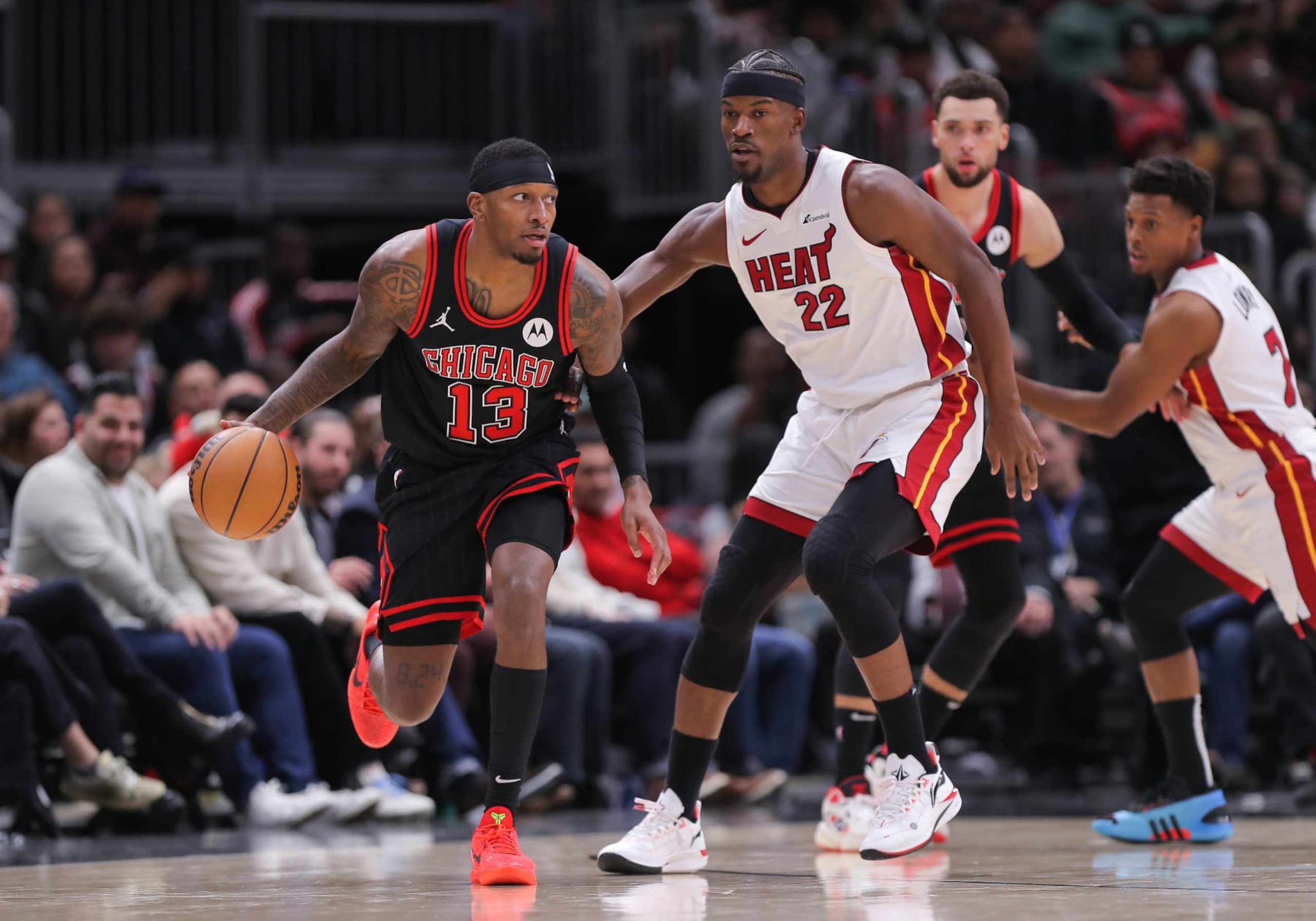
Grade: C+
Free-Agent Additions: Jevon Carter (three years, $19.5 million; player option), Torrey Craig (two years, $5.4 million; player option)
Torrey Craig has started seven games but seemingly hasn't made a shot all year. He's at 42.0 percent from the field with significantly negative plus-minus figures in seven of his last 10 appearances.
Jevon Carter is an excellent on-ball defender against guards, but Alex Caruso is even better and comes with the added bonus of not shooting under 40.0 percent from the field. Caruso profiles as a hugely valuable trade chip, however, and his eventual departure could thrust Carter into a more significant role. The 39 games he started for the Milwaukee Bucks last year suggest he'll be ready for it...assuming he's not traded right along with Caruso and others if Chicago tears it down.
No credit forthcoming, but the Bulls also re-signed Nikola Vucević (three years, $60 million), Coby White (three years, $36 million) and Ayo Dosunmu (three years, $21 million) to deals that grade out as market rate or better. Of course, the zoomed-out criticism that Chicago kept a mediocre core together when it should have blown things up still stands.
Cleveland Cavaliers
6 of 30
Grade: A
Free-Agent Additions: Max Strus (four years, $62.3 million), Ty Jerome (two years, $5 million), Georges Niang (three years, $25.5 million), Tristan Thompson (one-year minimum), Craig Porter Jr. (two-way)
The Strus signing seemed perfect from the moment it happened, giving the Cleveland Cavaliers a dangerous three-point marksman who could get his shot off on the move. Nothing we've seen diminishes that assessment. Strus is averaging 14.4 points per game, hitting 39.1 percent of his catch-and-shoot treys, 50.0 percent of his wide-open attempts and regularly defending the opponent's toughest wing.
Niang has yet to heat up, but he is still a rotation staple who's hitting an almost respectable 34.8 percent of his threes. Ty Jerome has hardly played, but two-way acquisition Craig Porter Jr. is one of the season's early feel-good stories.
The 23-year-old undrafted rookie put together a streak of five-straight double-figure scoring efforts from Nov. 17 to Nov. 25 that included three games with at least five assists. Though he's not known as a shooter, Porter has the strength and craft to finish effectively at the rim and has a knack for getting the ball where it needs to go. He's been a real find and shores up the guard rotation behind Donovan Mitchell, Darius Garland and Caris LeVert.
Dallas Mavericks
7 of 30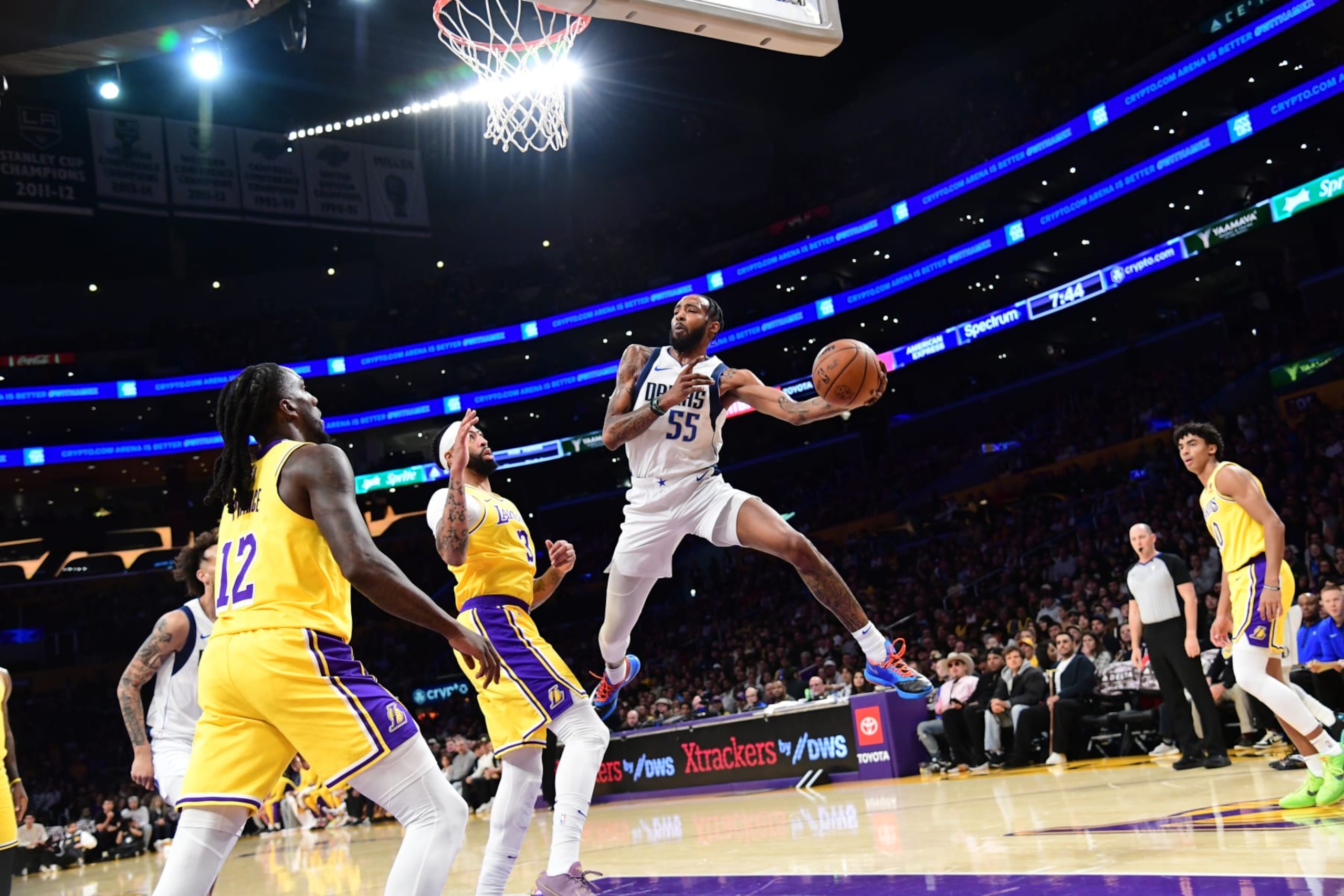
Grade: A-
Free-Agent Additions: Seth Curry (two years, $8 million; non-guaranteed 2024-25), Dante Exum (two years, $6.2 million; non-guaranteed 2024-25), Derrick Jones Jr. (one-year minimum), Grant Williams (four years, $53.3 million)
Derrick Jones Jr. has started all but one game for the Dallas Mavericks this season and is playing the best ball of his career. Not bad for a minimum signing.
The rangy combo forward typically covers the other team's most threatening matchup, and at 41.5 percent, he's on pace to smash his previous career high in three-point accuracy. For a team that desperately needs wing defense and supplementary shooting, Jones fills two critical niches.
Seth Curry is averaging under 11.0 minutes per game and has yet to find his shooting stroke, while Dante Exum is just 4-of-17 from deep on the season. Both could still play significant roles as the year progresses, and it's heartening to see Exum back in the league at all, but neither signing has contributed much so far.
Lastly, Grant Williams (acquired via sign-and-trade with the Boston Celtics) is second on the team in minutes and is so far providing exactly what Dallas hoped for. Williams' 58.2 true shooting percentage is right on pace with his career rate of 58.8 percent, while his versatile frontcourt defense and extremely high volume shooting from the corners figure to be assets all year.
Denver Nuggets
8 of 30
Grade: C+
Free-Agent Additions: Justin Holiday (one-year minimum), Jay Huff (two-way), Braxton Key (two-way)
The Denver Nuggets added talent mainly through the draft this past offseason, leaving Justin Holiday as their only non-two-way outside signing. Though the 34-year-old wing has only entered the rotation recently due to Jamal Murray and Aaron Gordon missing time simultaneously, he's provided a welcome boost in his limited role.
Holiday is hitting an unsustainable 51.9 percent of his triples, which is part of the reason he's had a break-even or better individual plus/minus figure in all but two of his appearances.
Even if Holiday contributes little else the rest of the way, he's been a helpful end-of-bench contributor through roughly the first quarter of the season. That's more than enough from a minimum signing to earn the Nuggets an above-average mark here.
Detroit Pistons
9 of 30
Grade: D
Free-Agent Additions: Kevin Knox II (one-year minimum), Stanley Umude (two-way)
This is the first time we'll bring up the notion of opportunity cost. The Detroit Pistons used much of the cap space they could have allocated for free-agent signings to take on salary via trade. They also extended Isaiah Stewart, which made sense, as Stewart is now locked into a team-friendly deal that'll pay him an average of $15 million per year with a team option on the final season.
The deals that brought Joe Harris and Monte Morris aboard are a different story. Though both acquisitions were logical on paper, Harris hasn't been the shooter Detroit wanted in practice, and Morris has been sidelined all year with a quad injury.
Two-way signing Stanley Umude has performed when given the chance, scoring in double figures five of the six times he's played at least 15 minutes, and Kevin Knox II is hitting his threes so far in limited action.
Still, the Pistons vaporized their spending power on a pair of veterans who haven't added any value to this point in the season. If they had preserved their cap space and used it to sign almost literally anyone else, they'd be in a better position today.
Their grade has to reflect that missed opportunity.
Golden State Warriors
10 of 30
Grade: B+
Free-Agent Additions: Dario Šarić (one-year minimum), Cory Joseph (one-year minimum), Usman Garuba (two-way), Jerome Robinson (two-way)
Dario Šarić has appeared in every game for the Golden State Warriors, starting four and finishing several others. He's second on the team at 5.9 rebounds per game, and the only Dubs with more made threes this season are Klay Thompson and Stephen Curry.
Though his nonexistent lift makes finishing around the rim difficult, Šarić has settled into a vital role as a pick-and-pop partner for Chris Paul on the Warriors' second unit. Critics of Golden State's offense could correctly note that Šarić is a little too important to the team's attack, but it's also true that the Warriors would be much worse off without Šarić spacing the floor, flinging bounce passes to backdoor cutters and willingly scrapping on the interior against bigger matchups.
Šarić is Golden State's most important big off the bench and has provided perhaps the most bang-for-the-buck return of any minimum signing we've covered so far.
Head coach Steve Kerr is among those who recognizes the value that Šarić brings to the table. He told reporters that Sarić "slipped through the cracks" and is in line for a major raise when he hits free agency in 2024.
Houston Rockets
11 of 30
Grade: A
Free-Agent Additions: Fred VanVleet (three years, $128.5 million), Dillon Brooks (four years, $86 million), Jock Landale (four years, $32 million), Jeff Green (two years, $16 million), Reggie Bullock (one-year minimum), Aaron Holiday (one-year minimum)
Much was made of the free agent whom the Houston Rockets failed to sign, but Brook Lopez would have only been in the way of Alperen Şengün. The Rockets should view their close call with Lopez as a bullet dodged since Şengün is already their best player and is on the fast track to stardom.
Fred VanVleet and Dillon Brooks have performed at least as well as expected, with the exception of Brooks' scorching start from the perimeter. He won't shoot 44.1 percent on threes all year, but it's worth noting that his shooting form, particularly his wrist action upon release, is much cleaner than it was last season. If Brooks can hit threes at a merely league-average clip all year, his deal will only look better.
Jeff Green and Jock Landale haven't contributed much, but Houston wisely insulated itself from downside risk by getting a team option on the second year of Green's deal and securing total non-guarantees on each of Landale's next three seasons.
One of the offseason's biggest spenders, the Rockets did almost everything right.
Indiana Pacers
12 of 30
Grade: A
Free-Agent Additions: Bruce Brown Jr. (two years, $45 million)
Bruce Brown Jr. is the only new face via free agency on the Indiana Pacers roster. He isn't the sole reason why they've vaulted to the top of the league in offense and have generally been one of the most entertaining teams around, but he's at least partly responsible.
The Pacers may have been worried that Brown's effectiveness would dip once he was separated from Nikola Jokić, but Tyrese Haliburton is coming remarkably close to replicating Jokić's teammate-boosting offensive genius. Brown's scoring average and shooting efficiency are almost exactly in line with what he produced last year, which means Indy is getting what it paid for.
Brown's plus-12.5 on-off differential is the second-best on the team, trailing only Haliburton's, and he continues to lead the league in cowboy hats.
Perhaps there was some sticker shock when Brown inked a two-year deal for $45 million, but he's only making 16.2 percent of the cap this year, and Indiana has the massive benefit of a team option for 2024-25. It doesn't look like this'll be necessary, but the Pacers can cut bait if things go sideways with Brown at any point this season.
Better still, the flexibility baked into Brown's deal also makes him a palatable trade asset.
Los Angeles Clippers
13 of 30
Grade: D+
Free-Agent Additions: Joshua Primo (two years, $3.9 million)
Maybe Joshua Primo's deal shouldn't even count as a free-agent acquisition since it wasn't done until September, but the Los Angeles Clippers don't have anything else up for consideration. So let's go with it to avoid an N/A designation.
Primo was suspended for the first four games of the season after an NBA investigation found he "engaged in inappropriate and offensive behavior by exposing himself to women" while he was a member of the San Antonio Spurs, per ESPN's Adrian Wojnarowski. The Spurs waived Primo, whom they drafted 12th overall in 2021, after the allegations emerged.
After initially signing him to a two-way deal, the Clips converted Primo to a standard minimum contract with a partial guarantee for 2024-25. Though he has yet to suit up in Los Angeles, Primo averaged 17.7 points and shot 46.2 percent from deep across three games with the Ontario Clippers in November.
We haven't had a chance to judge Primo yet since he hasn't played an NBA game this year. But from a purely on-court perspective, he's a high-upside play at a low cost.
Los Angeles Lakers
14 of 30
Grade: C-
Free-Agent Additions: Gabe Vincent (three years, $33 million) Taurean Prince (one-year, $4.5 million), Cam Reddish (two years, $4.6 million), Christian Wood (two years, $5.8 million), Jaxson Hayes (two years, $4.6 million)
None of the Los Angeles Lakers' offseason additions has seen more time than Taurean Prince, who's started 19 games and is averaging 29.9 minutes per contest. He's only averaging 8.7 points and is shooting 34.1 percent from long range, mostly to some jarringly poor shooting at home. Cam Reddish and Rui Hachimura (whom Los Angeles retained in restricted free agency) have generally been better when healthy.
Christian Wood is on pace to post his lowest per-36 scoring average since 2016-17, but he's been surprisingly helpful on defense. Never noted for his stopping power, Wood is suppressing opponent rim attempts better than Jaxson Hayes.
Gabe Vincent was the marquee signing of the Lakers' offseason, but he's appeared in only four games because of a knee issue.
Los Angeles' free-agent pickups have mostly disappointed, and the player options it gave Wood, Hayes and Reddish for 2024-25 look ill-advised. If those guys overperform their contracts, they'll opt out and leave. If they continue to underperform, they'll stay put and take up roster spots next season.
None of these salaries is big enough to cause real damage, and the Lakers did well in other areas—re-signing or extending Anthony Davis, D'Angelo Russell, Austin Reaves, Jarred Vanderbilt and Hachimura—but the early returns have been worse than expected.
Memphis Grizzlies
15 of 30
Grade: B
Free-Agent Additions: Derrick Rose (two years, $6.6 million), Bismack Biyombo (one year, $5 million)
You'll never believe this, but a 35-year-old Derrick Rose hasn't been good enough to offset the absence of suspended starting point guard Ja Morant. We kid, of course, as the Memphis Grizzlies' early-season implosion owes to several factors more serious than Rose's solid-but-unspectacular play.
The MVP version of Rose would have struggled to offset the litany of injured Grizzlies and the substandard performances of so many healthy ones.
For his part, Rose has actually performed better than expected. Though he's appeared in only 10 of a possible 19 games, the 16-year vet is averaging 18.4 points, 5.9 assists and 3.8 rebounds per 36 minutes with a 54.7 true shooting percentage that, while below average, is his best since 2020-21.
Memphis has loads of problems, but "insufficient end-of-bench point-guard play by a low-cost veteran" isn't one of them.
The Grizzlies get bonus points for guaranteeing only $1 million of Bismack Biyombo's $5 million deal. If Biyombo is on the roster past his guarantee date of Jan. 10, he'll get the full boat, which might even be worth it to the injury-plagued Grizz.
Miami Heat
16 of 30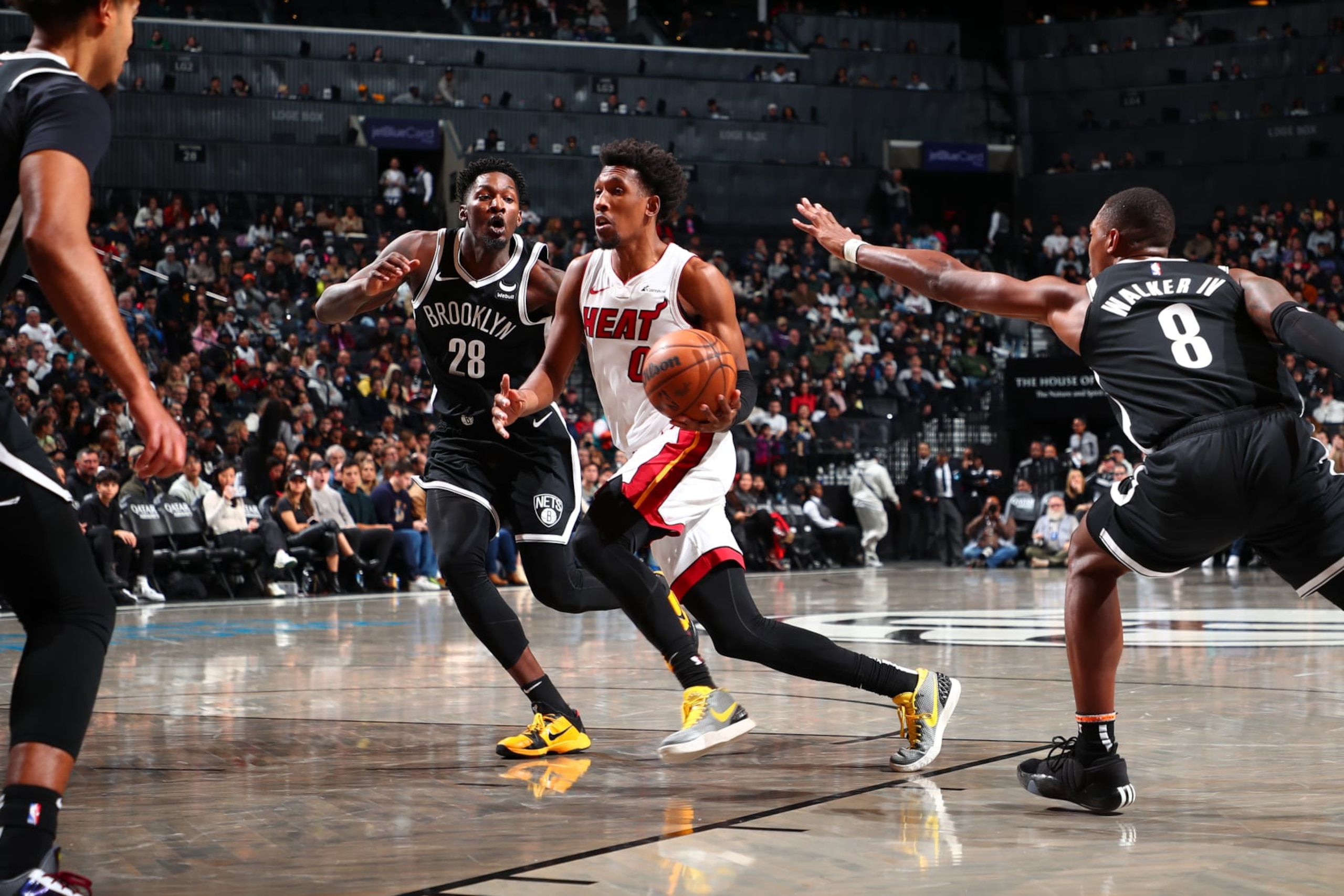
Grade: C+
Free-Agent Additions: Thomas Bryant (two years, $5.4 million), Josh Richardson (two years, $5.9 million), Dru Smith (two years, $3.9 million), RJ Hampton (two-way), Cole Swider (two-way), Jamal Cain (two-way)
Josh Richardson isn't playing at the career-best levels we saw last time he sported a Miami Heat jersey, but he's giving his current (and former) team 27.6 minutes of rotation-caliber wing play for the minimum. He's been even better of late, averaging 15.3 points and 4.7 assists per game in three starts from Nov. 24 to Nov. 28.
Two-way additions Jamal Cain, Cole Swider and R.J. Hampton have hardly played, while theoretical floor-spacer Thomas Bryant has yet to hit a three in 13 appearances.
On an even sourer note, reserve guard Dru Smith, whom the Heat gave at least 20 minutes four times in their first 10 games, is out for the season after tearing his ACL on a play that should bring about the end of the Cleveland Cavaliers' raised floor.
Miami tends to get the most out of its signings, particularly developmental projects who start out on two-way deals (think Duncan Robinson and Caleb Martin), so we can't rule out better play going forward. So far, though, Richardson is the only signee getting regular burn and the only reason why the Heat get out of here with an above-average grade.
Milwaukee Bucks
17 of 30
Grade: A-
Free-Agent Additions: Malik Beasley (one-year minimum), Marques Bolden (two-way), Robin Lopez (one-year minimum), Cameron Payne (one-year minimum), TyTy Washington (two-way)
Malik Beasley is part of the reason why the Milwaukee Bucks haven't met last year's standard defensively, but his well-known deficiencies on that end come with established offensive strengths. As expected, the 27-year-old has been an absolute sniper in Milwaukee, drilling 45.0 percent of his triples.
Though his volume is down (8.0 three-point attempts per 36 minutes is his lowest since 2018-19), Beasley deserves credit for being less trigger-happy than usual. Playing alongside Damian Lillard, Giannis Antetokounmpo, Khris Middleton and Brook Lopez, he should operate as a fifth option.
The results: Beasley is on pace to post the lowest usage rate and highest points-per-shot-attempt figure of his career. That's ideal from a minimum signing, particularly one who's good enough to start every game for a contender.
Cameron Payne is also shooting the cover off the ball and is among the more effective offensive reserves in the league. You have to take it with a grain of salt because Payne's minutes tend to come against backups, but the Bucks actually average more points per possession with him on the floor than Lillard.
Minnesota Timberwolves
18 of 30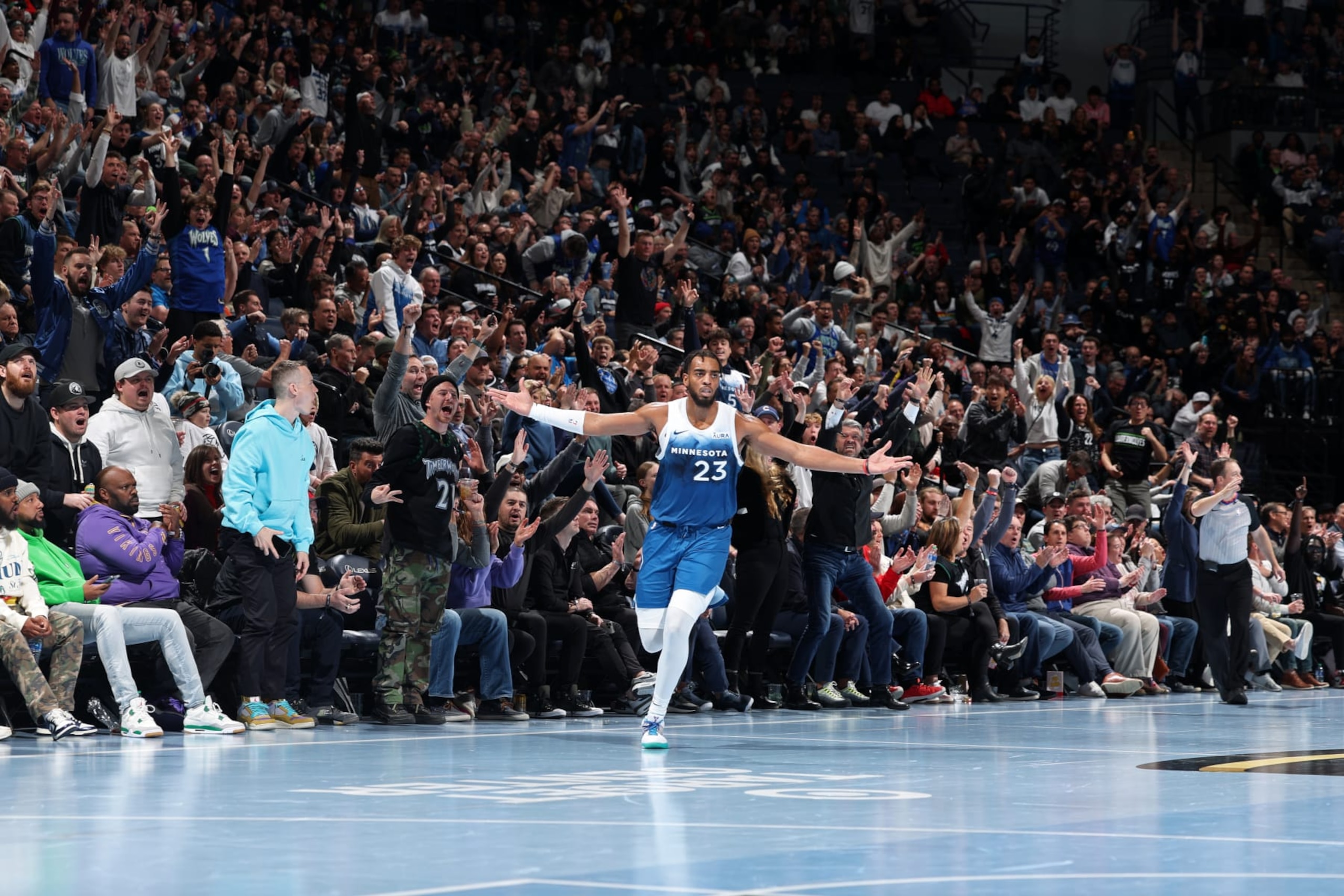
Grade: B
Free-Agent Additions: Shake Milton (two years, $10 million), Troy Brown Jr. (two years, $8 million), Daishen Nix (two-way)
The Minnesota Timberwolves spent big on their own players, maxing out Anthony Edwards, handing Jaden McDaniels his own nine-figure deal and retaining key reserves Naz Reid and Nickeil Alexander-Walker on below-market contracts. If we were expanding this exercise to include those types of signings, we'd cover most of it in a positive light.
Don't let that take away from two shrewd agreements with rotation newcomers Troy Brown Jr. and Shake Milton, though.
Milton and Brown are ninth and 10th on the Wolves in minutes per game, respectively. Though neither has shot the lights out to start the season, both have had moments.
Brown has excelled as a "little things" contributor all year, seemingly winning every 50/50 ball, rebounding well for his position and always competing. But he also shone offensively in a key Nov. 28 win over the Oklahoma City Thunder, scoring 12 of his 17 points in the fourth quarter and likely putting an end to the DNPs he collected early in the year.
Milton is shooting under 30.0 percent from deep and hasn't had a breakthrough like Brown yet, but it's safe to assume he'll trend closer to his career 55.2 true shooting percentage than the ugly 47.2 percent he's managed so far.
Both Brown and Milton come with non-guarantees on their 2024-25 deals, a critical bit of flexibility for what's becoming a wildly expensive roster.
New Orleans Pelicans
19 of 30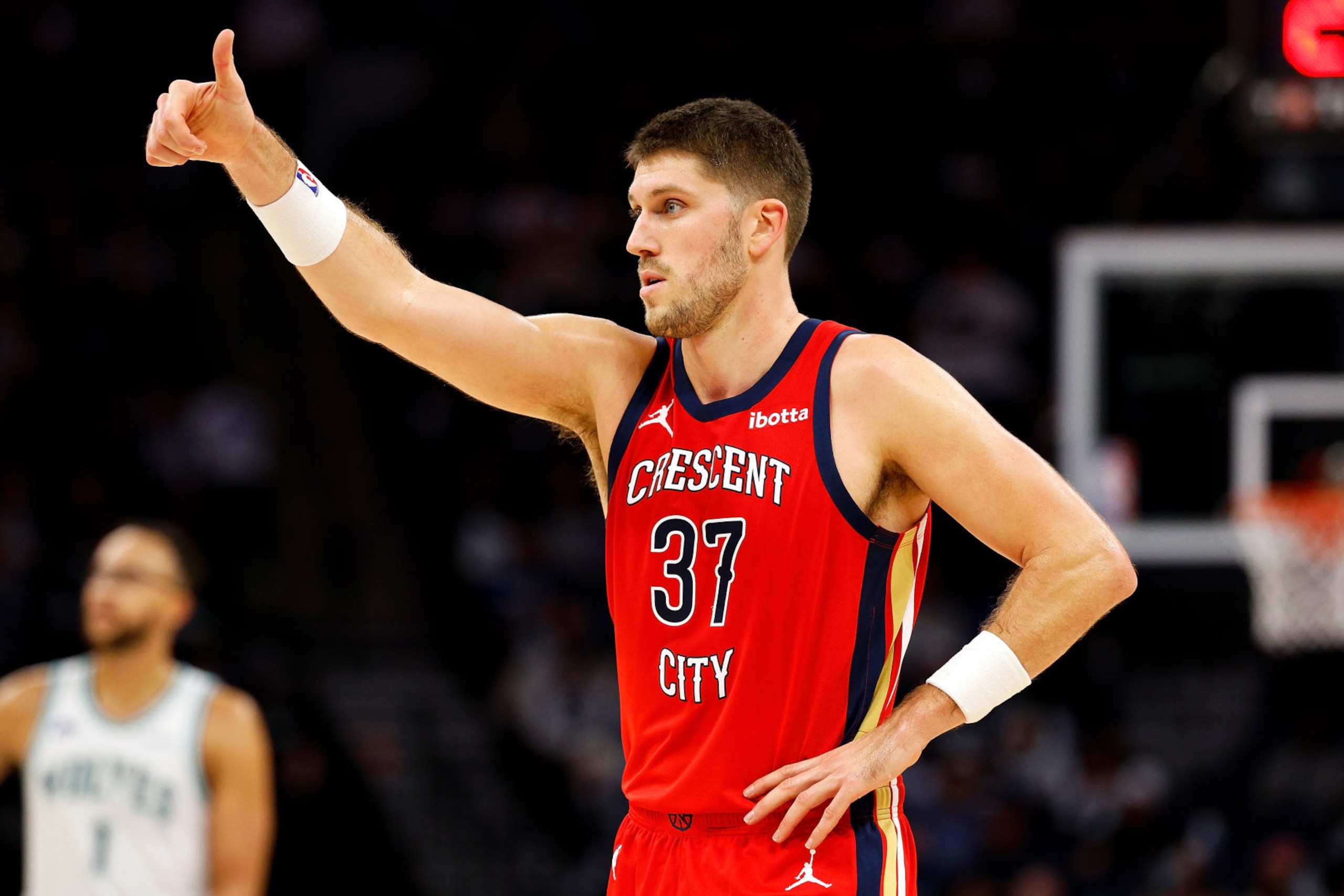
Grade: B-
Free-Agent Additions: Cody Zeller (one-year minimum), Matt Ryan (two-way)
Cody Zeller has appeared in more games than any New Orleans Pelicans center not named Jonas Valanciunas, but he's averaging only 1.7 points and 3.1 rebounds in 9.6 minutes per game. Signed for the minimum and never in line for more than third-string duties, Zeller, who's still somehow only 31 years old, is shooting just 31.3 percent from the field.
Zeller's per-minute rebound rate is nice, but it's not a great sign that he's hitting less than a third of his shots, over 65 percent of which come from inside three feet.
Fortunately for the Pels, two-way signee Matt Ryan is striping it from deep at a 47.1 percent clip. A calf issue has cost the frontcourt gunner time, but he was averaging 9.3 points and providing critical spacing in 22.9 minutes per game prior to his injury.
It may be difficult to keep Ryan in the rotation due to defensive concerns, but his career long-range hit rate of 41.4 percent suggests he'll be a valuable deep threat whenever he's out there.
New York Knicks
20 of 30
Grade: B
Free-Agent Additions: Donte DiVincenzo (four years, $46.9 million), Ryan Arcidiacono (one-year minimum), Charlie Brown Jr. (two-way), Jacob Toppin (two-way), Dylan Windler (one-year, non-guaranteed)
Donte DiVincenzo may have become a bit more of a shooting specialist this season, but that's exactly what the perimeter-challenged New York Knicks needed. After ranking 21st in three-point accuracy a year ago, the Knicks are up to ninth in 2023-24. DiVincenzo's 43.4 percent hit rate from deep is helping to fuel that.
Currently on pace for a career-high 16.1 points per 36 minutes, DiVincenzo has lost some on-ball creation opportunities. But facilitating was never among his strengths, and the Knicks get playmaking from enough other sources to justify slotting their big free-agent pickup into more of a niche offensive role.
On the other end, DiVincenzo is still disruptive off the ball. His steal rate is right in line with last season's, ranking in the top 10 percent at his position.
Though he isn't a starter, the veteran guard is giving the Knicks solid value for the non-taxpayer mid-level exception.
Oklahoma City Thunder
21 of 30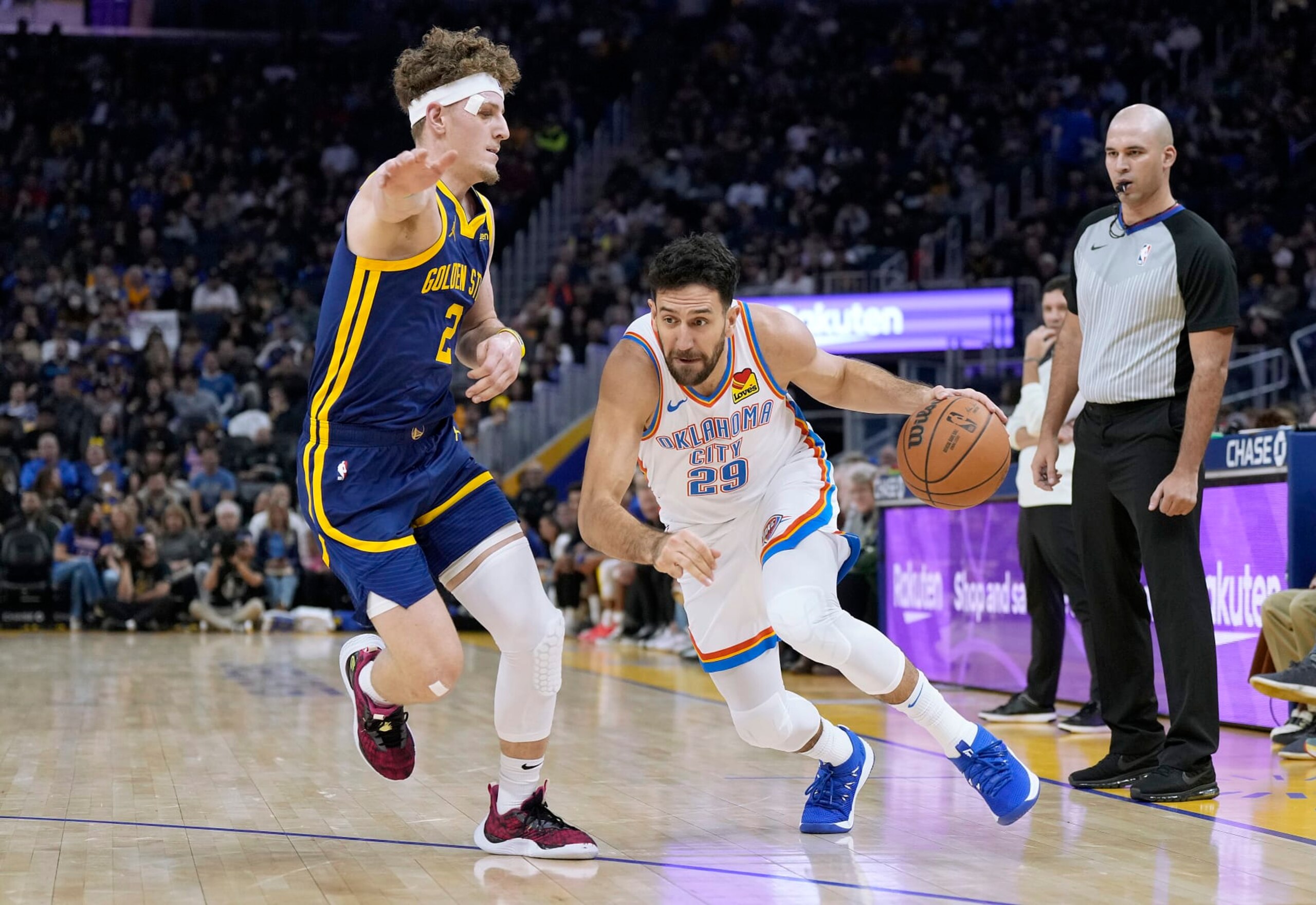
Grade: D+
Free-Agent Additions: Vasilije Micić (three years, $23.6 million)
With just under 100 minutes played on the season, 29-year-old rookie Vasilije Micić is the Oklahoma City Thunder's fifth-highest-paid player. That's as much a statement on an OKC balance sheet that's long on rookie-scale and bargain-bin deals as anything else, but it's still not ideal to be paying a virtual non-contributor more than three players—Josh Giddey, Jalen Williams and Cason Wallace—who regularly play ahead of him.
Micić probably isn't in the ideal spot to shine. A crafty facilitator and scorer, the Serbian import simply isn't deserving of minutes over Shai Gilgeous-Alexander, Williams, Giddey, Wallace and anyone else to whom the Thunder have given playmaking duties.
A subpar athlete compared to NBA competition, Micić doesn't really have the game to contribute as a role player. If he's not on the ball, his value dips considerably...and he's not going to be on the ball much for OKC barring injury.
There's still time for Micić to prove himself as a rotation piece, but most 29-year-olds are out of upside. It was worth the gamble to finally bring over one of the more decorated players in Europe, but the Thunder are probably feeling pretty good about the team option they secured on Micić's third year.
Orlando Magic
22 of 30
Grade: B+
Free-Agent Additions: Joe Ingles (two years, $22 million), Trevelin Queen (two-way)
The Orlando Magic have plenty going for them in what looks like a breakthrough season: one of the league's top defenses, cornerstones at the forward spots in Paolo Banchero and Franz Wagner, and a downhill offensive style that generates loads of free throws.
What they lack—playmaking and reliable shooting from the backcourt spots—Joe Ingles provides.
Though the 36-year-old is averaging only 5.0 points per game and has a top speed that maxes out at "trot," his crafty passing and still-dangerous three-point shot create the offensive breathing room this group needs. Yes, Jalen Suggs and Cole Anthony have improved as shooters, but neither panics defenses like Ingles still can. His patience, probing slow-paced drives and staccato rhythm gain him access to the lane when defenses close out too hard. And Ingles is always a threat to fling tricky passes in the pick-and-roll.
No Orlando player adds more juice to the attack than Ingles, who boosts the Magic's offensive rating by a ridiculous 17.6 points per 100 possessions when he's on the floor.
That's well worth $11 million this season, especially with the flexibility of a team option for 2024-25.
Philadelphia 76ers
23 of 30
Grade: A-
Free-Agent Additions: Kelly Oubre Jr. (one-year minimum), Mo Bamba (one-year minimum), Patrick Beverley (one-year minimum), Danny Green (non-guaranteed; waived), Javonte Smart (two-way)
Kelly Oubre Jr. is set to make his return to the Sixers on Wednesday after missing 11 games with a rib injury. That means it won't be long until he reclaims his spot as one of the better minimum signings any team made over the summer.
Oubre averaged 16.3 points and hit 50.0 percent of his shot attempts across the eight games he played (five starts) prior to his injury. Even if his career-best rates from the field and from three-point range slip, he'll still bring energy on defense and give speedster Tyrese Maxey a fleet-footed running mate in transition.
Veteran point guard Patrick Beverley has been a rotation mainstay over the first quarter of the season, bringing his typical intensity on the defensive end. Now a relative non-threat on offense, Beverley doesn't come close to matching Oubre's value. Still, any minutes at all out of a minimum signing counts as a win.
Phoenix Suns
24 of 30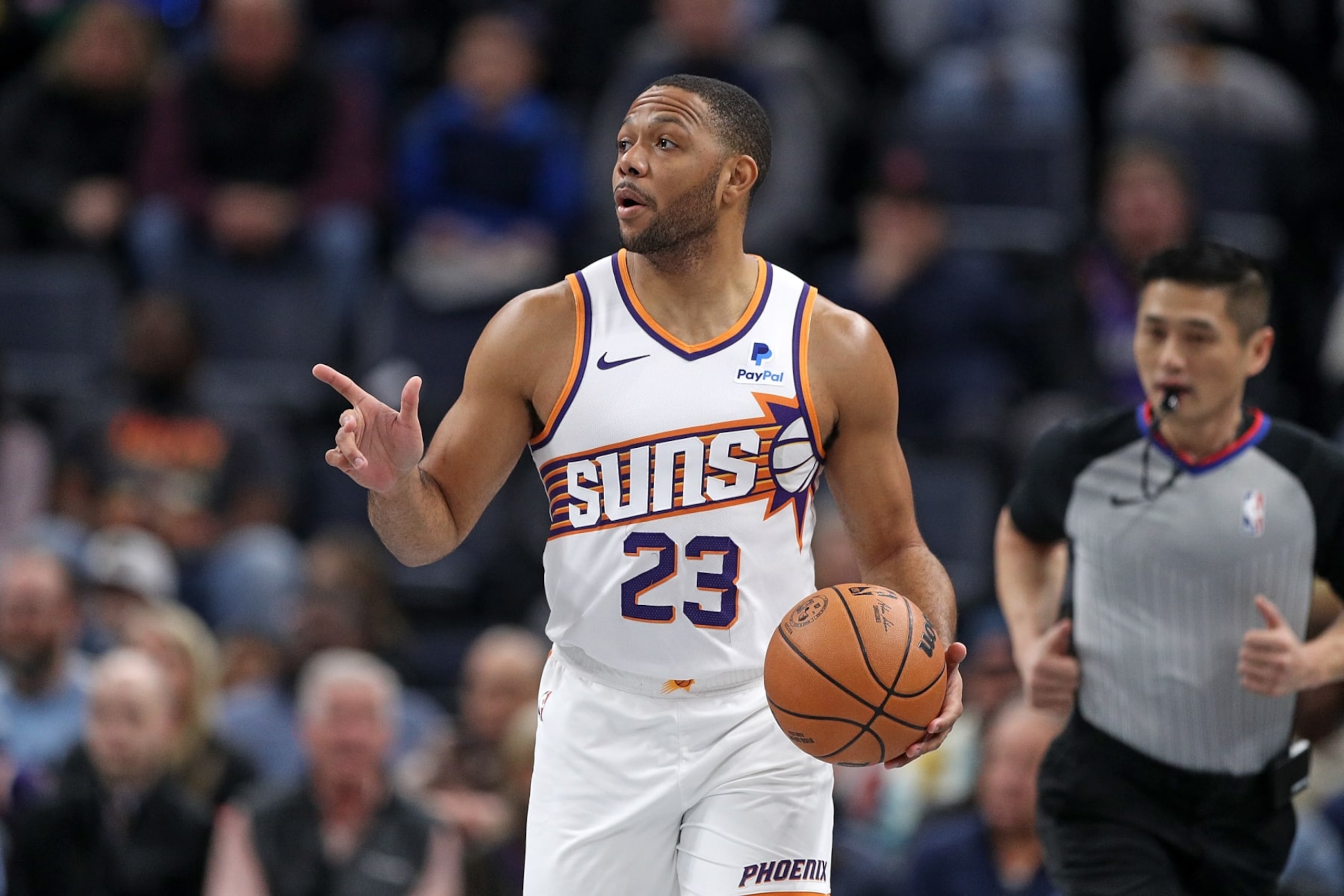
Grade: A+
Free-Agent Additions: Keita Bates-Diop (two years, $5 million), Drew Eubanks (two years, $5 million), Eric Gordon (two years, $6.5 million), Yuta Watanabe (two years, $5 million), Chimezie Metu (one-year minimum), Bol Bol (one-year minimum), Udoka Azubuike (two-way)
The Phoenix Suns' success in the minimum-salary game was one of the offseason's big storylines. The only way one of the league's most top-heavy rosters could support three bank-breaking stars was to secure multiple rotation-caliber pieces in free agency. The tricky part was figuring out how to do that with virtually no financial resources thanks to the league's new collective bargaining agreement.
Cut to now, and Eric Gordon leads a corps of four newly inked, minimum-salaried Suns averaging at least 17.0 minutes per game. Gordon tops the list at 31.6 minutes and 14.7 points per game as a regular starter, but Watanabe, Bates-Diop and Eubanks have all seen plenty of action and produced as expected—with the exception of KBD's missing three-point shot.
Phoenix handed out second-year player options like they were going out of style, which was key to securing the services of so many useful players. Gordon, Eubanks, Bates-Diop and Watanabe will all likely return to free agency in 2024 with good odds of landing pay raises. That's a problem for next year.
For now, the Suns deserve the best free-agent marks we can give.
Portland Trail Blazers
25 of 30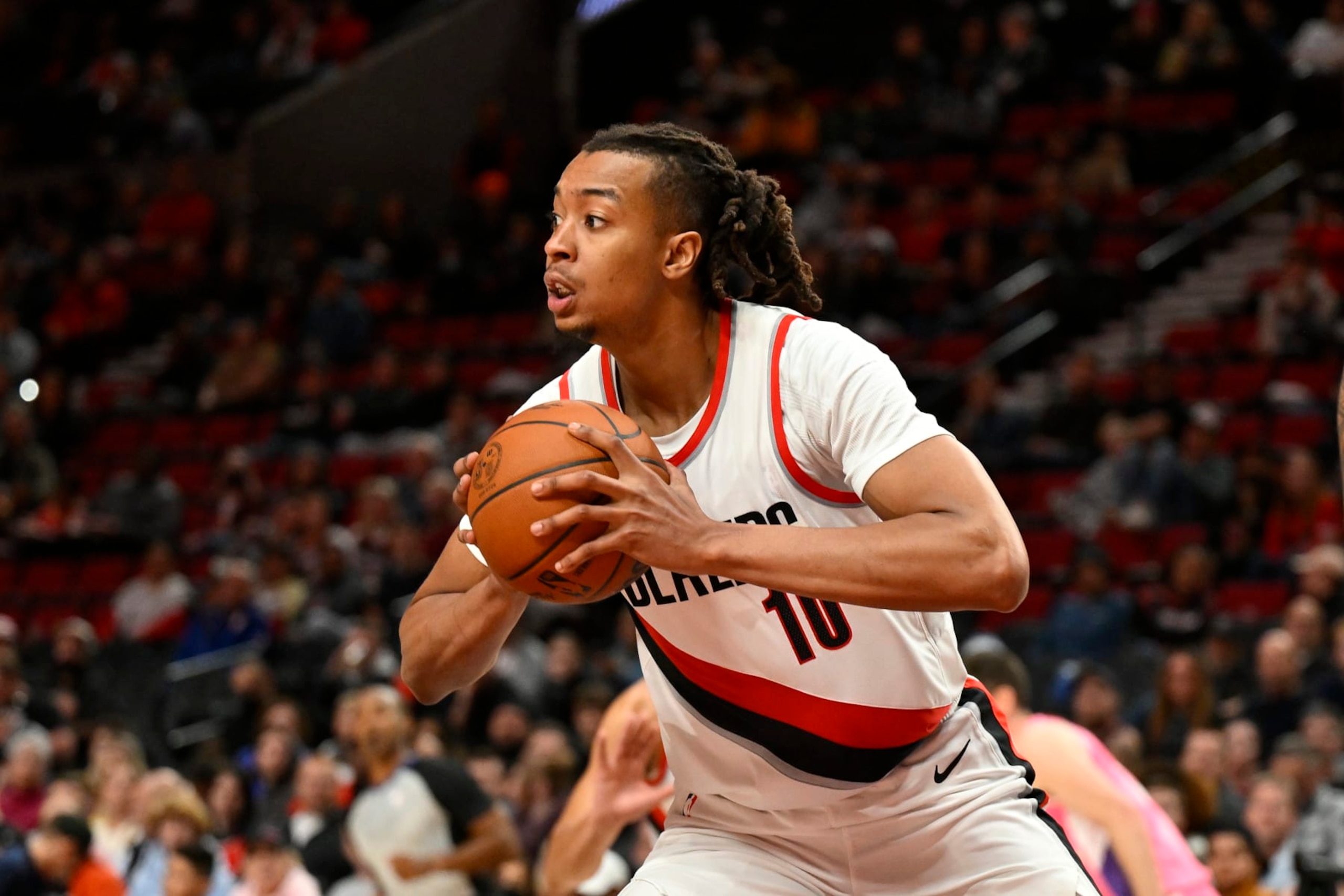
Grade: C-
Free-Agent Additions: Moses Brown (one-year minimum; non-guaranteed)
We'll forgive the Portland Trail Blazers for their free-agent inactivity. They were a little busy swinging franchise-altering trades and figuring out how to reorient the roster around No. 3 overall pick Scoot Henderson.
Plus, open spots for free agents were scarce with Portland's trades bringing back quantity in exchange for quality. The three-team deal that sent Damian Lillard to the Milwaukee Bucks and Jusuf Nurkić to the Phoenix Suns netted the Blazers Jrue Holiday, Deandre Ayton, Toumani Camara and multiple future picks. By re-routing Holiday to the Boston Celtics, Portland onboarded Malcolm Brogdon, Robert Williams III and two more future firsts.
Moses Brown is Portland's only outside signing of any consequence, and even that description might be a stretch. The 24-year-old reserve center has appeared in only three games this season, the last of which came on Nov. 21.
Portland also re-signed Jerami Grant to a $160 million deal and matched the Dallas Mavericks' offer sheet for Matisse Thybulle. Free agency was a clear afterthought for the Blazers, especially with respect to bringing in new pieces.
Sacramento Kings
26 of 30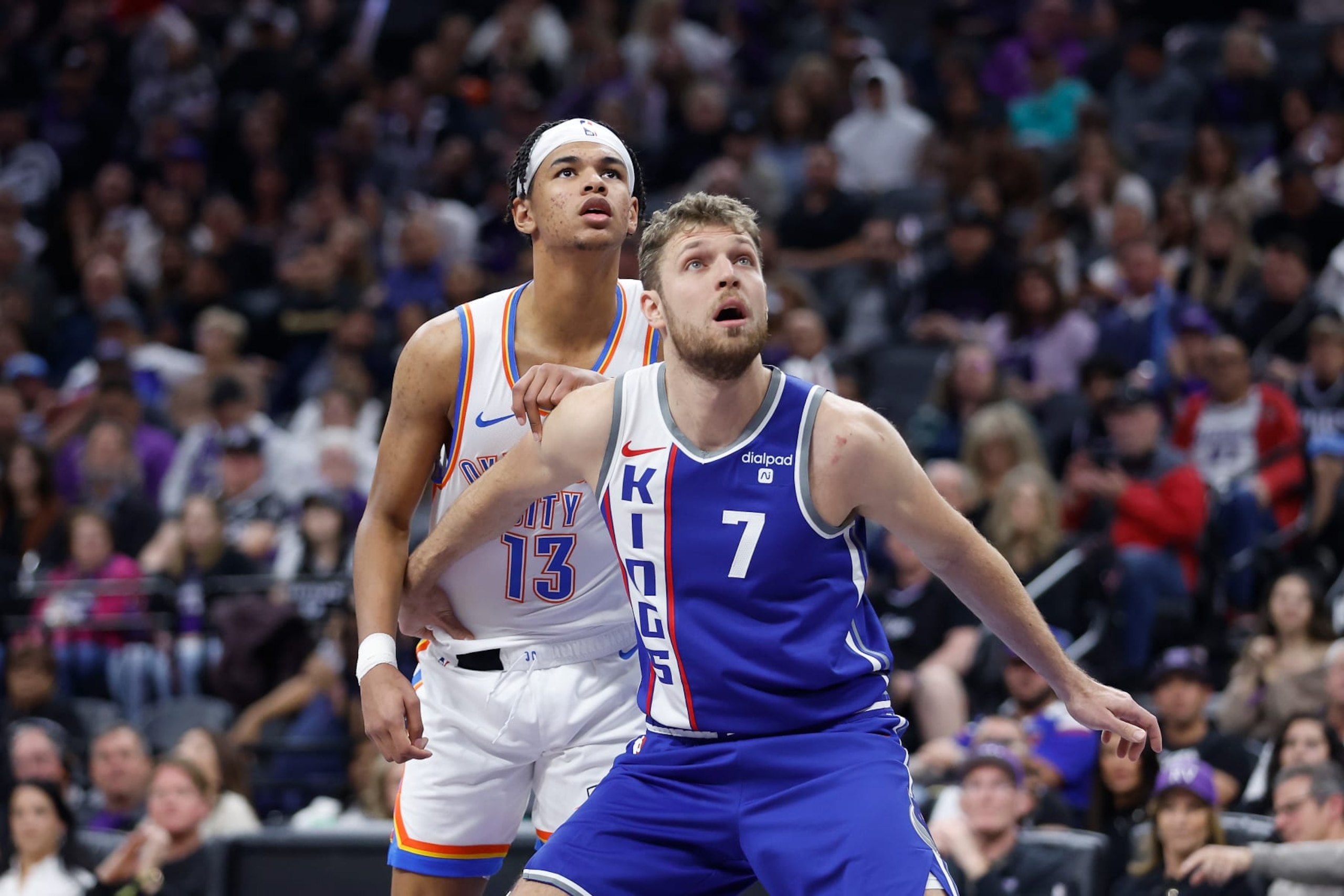
Grade: C+
Free-Agent Additions: JaVale McGee (one-year minimum), Sasha Vezenkov (three years, $20 million)
Any criticism about the Sacramento Kings' summer signings should focus more on fit than value. JaVale McGee is a solid deep-bench backup at center who can still throw down a lob and deter shots around the basket. With Trey Lyles back from injury, McGee will only see spot minutes at the 5 going forward.
Sasha Vezenkov is no ordinary rookie at age 28. The former draft-and-stash prospect was one of the world's best non-NBA shooters during his career in Europe and has already shown he's more than a spot-up sniper in a rotation role with the Kings. Though he lacks mobility and bounce, Vezenkov is clever, defends to the best of his abilities and generally knows where he should be on both ends. His sneaky off-ball cutting stands out as well.
With that said, neither McGee nor Vezenkov has the tools to meaningfully help Sacramento's defense. One would have expected the Kings to focus their free-agent efforts on supporting what was the NBA's No. 1 offense in 2022-23 by bringing in at least one capable stopper.
McGee and Vezenkov are more than worth their salaries in a vacuum. But for this specific roster, they aren't the most logical fits.
San Antonio Spurs
27 of 30
Grade: C
Free-Agent Additions: N/A
The closest thing the San Antonio Spurs did to signing a free agent was snagging former Cavs wing Cedi Osman. To acquire the 28-year-old, who's averaging 8.2 points on 59.0 percent true shooting this season, they nosed their way into the sign-and-trade deal that sent Max Strus from Miami to Cleveland.
Although San Antonio entered the offseason with more cap space than any other team, it somewhat predictably played things cool. That cash went to deals like Osman's which also returned picks, and extensions/re-ups with in-house talent.
Given the relative dearth of impact options on the market and the Spurs' focus on cost-controlled youth to pair with No. 1 overall pick Victor Wembanyama, the team's decision to sit out of free agency made sense. The Spurs aren't gunning for a quick turnaround, so there was no reason to throw cash at the likes of Dillon Brooks, Fred VanVleet or any of the other high-dollar choices.
Toronto Raptors
28 of 30
Grade: B+
Free-Agent Additions: Jalen McDaniels (two years, $9.3 million), Dennis Schröder (two years, $25.4 million), Garrett Temple (one year, $3.2 million)
It's tempting to use this space to knock the Toronto Raptors' lack of an overall plan. They failed to secure value for departed free agent Fred VanVleet, traded a protected first-rounder for Jakob Poeltl last season and face the possibility of losing both Pascal Siakam and OG Anunoby this July.
Those issues are at least tangentially related to the team's free-agent work this past summer, but it still seems unfair to let Toronto's inscrutable long-term vision affect our judgment on three objectively sensible signings.
Let's begin with Dennis Schröder, who has started every game at point guard for the Raptors and provided immense value on a $12.4 million salary. One of just 11 players averaging over 15.0 points and 7.0 assists per game, Schroder is earning far less than the other players on that list who aren't on rookie-scale deals—which includes projected MVP candidates Nikoka Jokić, Devin Booker and Luka Dončić.
The Raptors' half-court offense still underwhelms, but Schroder's minutes coincide with a net-rating gain of 4.0 points per 100 possessions. He isn't the answer to the team's scoring issues, but Schroder is certainly helpful—and at a notably cheap rate.
McDaniels hasn't impressed, but he's young and plays a coveted wing spot. And Temple on a min deal is a smart adult-in-the-room signing for a team that may not have had the most harmonious locker room in 2022-23.
Utah Jazz
29 of 30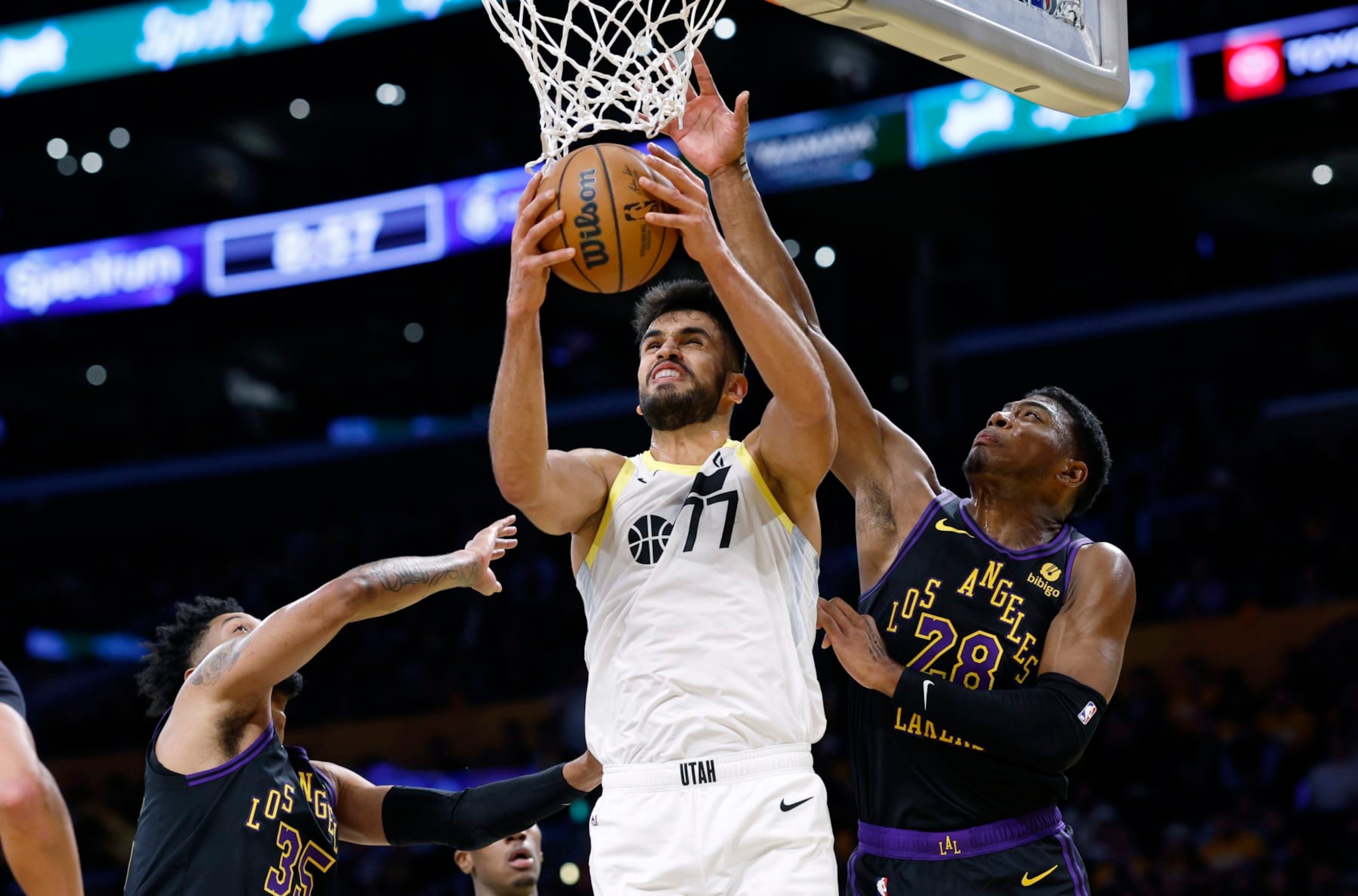
Grade: B-
Free-Agent Additions: Omer Yurtseven (two years, $5.5 million), Josh Christopher (two-way)
Like the Spurs, another Western Conference team struggling to string together wins, the Utah Jazz used their copious cap space to take on salary via trade and extend players already on the roster—neither of which are factors in their grade here.
In terms of outside help, all Utah did was sign former Miami Heat center Omer Yurtseven to a two-year, partially guaranteed deal and hand Josh Christopher, late of the Rockets, a two-way agreement. While Christopher hasn't seen any action for the Jazz, Yurtseven got a chance to contribute when an elbow injury knocked Walker Kessler out of the lineup. He's even continued to start with Kessler, now healthy, ramping his minutes back up gradually.
Yurtseven's best effort of the year came on Dec. 2, when he scored nine points, piled up 15 boards, handed out three assists and blocked one shot in a five-point win over the Portland Trail Blazers. He also had an 18-point night off the bench (in only 17 minutes) on Nov. 21 against the Los Angeles Lakers.
Only half of Yurtseven's $2.8 million salary this season is guaranteed until Jan. 10, and none of it is locked in for 2024-25. Getting even occasional starter's minutes—and some productive ones—out of a signing that cheap reflects well on Utah's relatively limited free-agent work.
Washington Wizards
30 of 30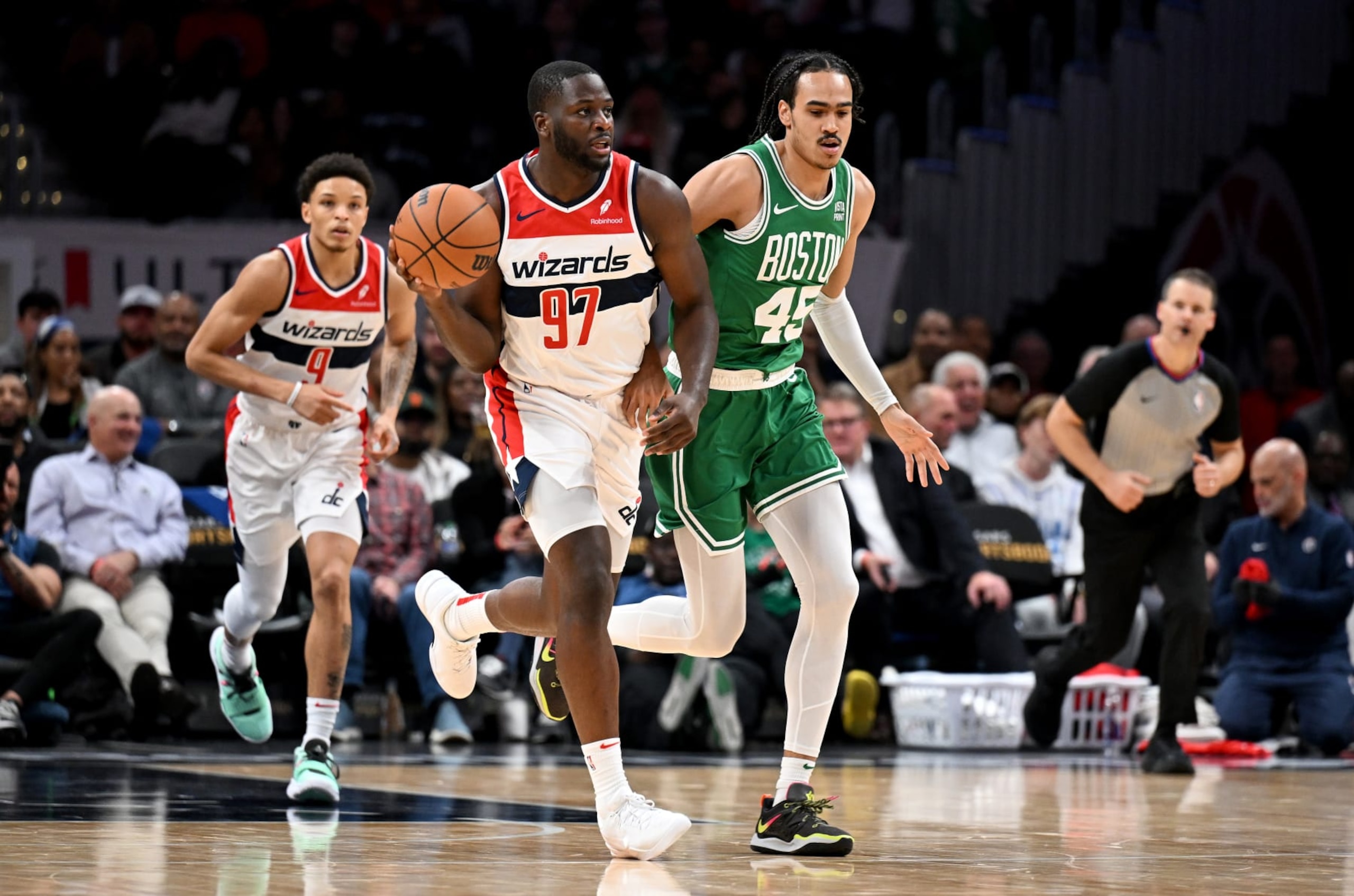
Grade: C
Free-Agent Additions: Jared Butler (two-way), Eugene Omoruyi (two-way)
We close with another team whose roster-reshaping focused much more on trades and the draft than free agency.
The Washington Wizards finally blew up a roster that wasn't bad enough to secure high draft picks and wasn't good enough to pose a playoff threat, trading away Bradley Beal and Kristaps Porziņģis as part of a long-overdue rebuild.
Chris Paul was in town for about a half-second—he was key matching salary in the blockbuster that sent Beal to the Phoenix Suns—but the Golden State Warriors swooped in and sent Jordan Poole, Patrick Baldwin Jr. and Ryan Rollins to the Wiz for CP3. Porzingis wound up in Boston, replaced by former Memphis Grizzlies point guard Tyus Jones via a complicated three-way deal.
It's safe to say Jared Butler and Eugene Omoruyi, the Wizards' two outside signings, didn't recognize the place when they showed up.
Butler has appeared in seven games, while Omoruyi has seen the floor in 11. Both are averaging single-digit points, though Omoruyi, a burly 26-year-old forward known for his rebounding and physicality, has shot the ball much better. His per-36-minute projections—30.2 points, 10.1 rebounds, 3.8 assists and 2.4 steals—are interesting but certainly not representative of the production Washington would get if Omoruyi actually had a major role.
Butler is younger at 23 and was viewed as an intriguing hybrid guard prospect when the Jazz took him out of Baylor in 2021. He might have greater upside than Omoruyi, but he hasn't had as much of a chance to prove it.
Stats courtesy of NBA.com, Basketball Reference and Cleaning the Glass. Accurate entering games played Dec. 5. Salary info via Spotrac.
Grant Hughes covers the NBA for Bleacher Report. Follow him on Twitter (@gt_hughes), and subscribe to the Hardwood Knocks podcast, where he appears with Bleacher Report's Dan Favale.

.jpg?w=2560 "Raiders Could Start Mendoza")

.jpg?w=2560 "Rodgers Iced Out on Plane 💎")
.jpg?w=2560 "Packers Safety Slams Refs 🤬")
.jpg?w=2560 "🚨 Week 8 AP Top 25 Poll")