

Early Grades for NBA's Top Players on New Teams
Get the red pens ready. It's time to assess how the splashiest NBA acquisitions are faring in their new digs.
Sure, the 2023-24 regular season isn't yet 10 games old. But the grade-everything train stops for nothing and no one. Plus, you know, it's totally cool to pass judgment while providing context. These are initial impressions of how the most impactful names are fitting in with their new teams. They can (and will) change over the course of the season.
Sentiments will be presented through a softer lens this time around. Every included player's grade will take into account the functional unfamiliarity and difficulty inherent of joining new situations. These assessments are as much about their individual performances as the roles into which they've been placed and their teams' decision to acquire them.
Please remember that "Cs" are not bad marks. They indicate a perfectly average or slightly better performance. And finally, this exercise will look at the 10 most notable arrivals, a collection of players assembled based on star power and expected impact.
Incomplete Grades
1 of 11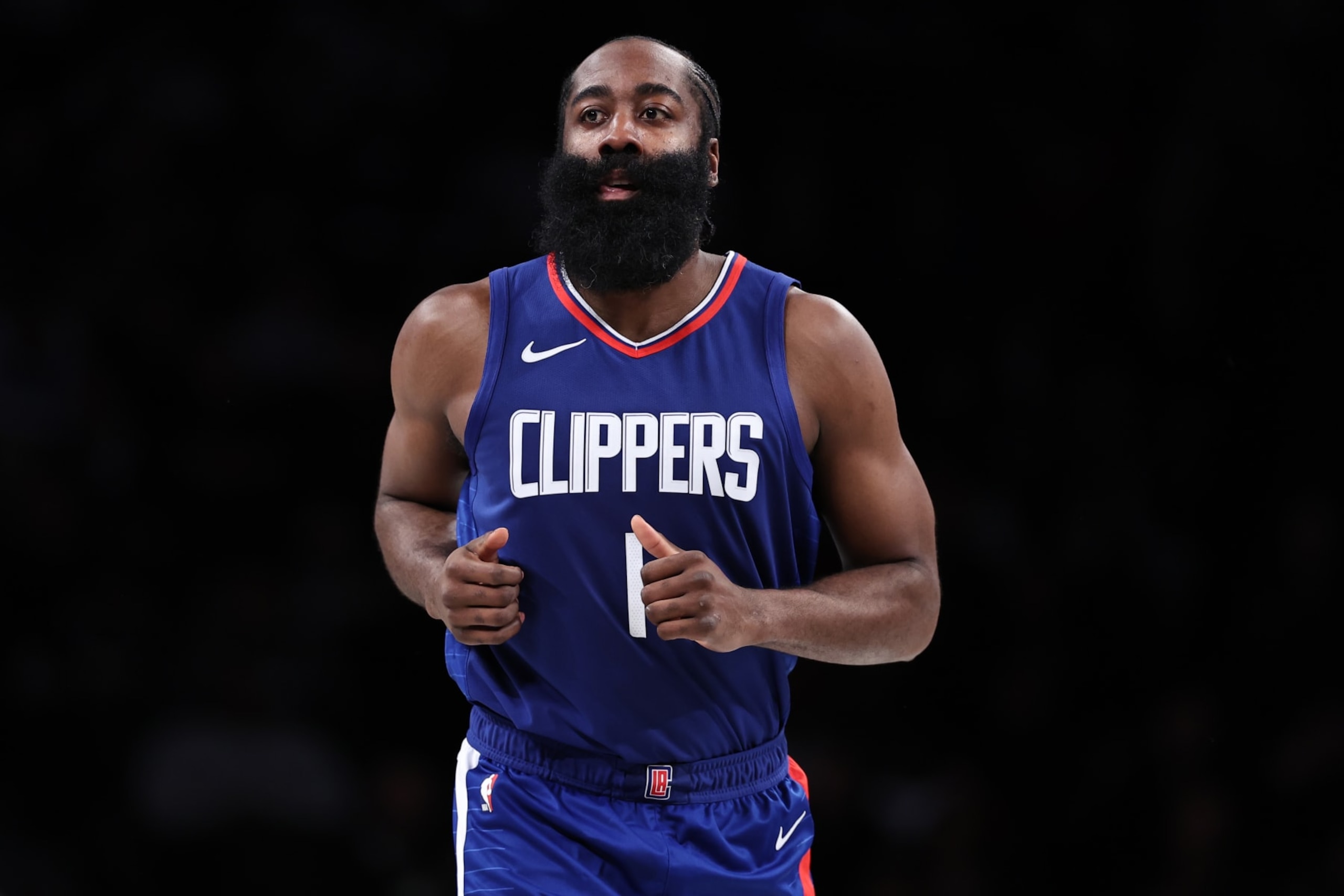
Bradley Beal, Phoenix Suns
Beal only just made his season debut after dealing with back spasms, and Phoenix's star trio still hasn't seen a single second of collective action entering Friday. Let's revisit this in a couple of weeks (or months).
James Harden, L.A. Clippers
Harden is just two games into his Clippers tenure. The results have been less than pretty, but this glitzy-yet-risky setup in L.A. needs more time to marinate before we spill buckets of blood-red ink all over it.
Robert Williams III, Portland Trail Blazers
Time Lord has logged just 119 minutes of action with the Blazers and could now miss at least two to three months with bone and ligament damage in his right kneecap depending on what course of treatment (surgery or cleanup) he undergoes. We will reconvene at a (much) later date accordingly.
Deandre Ayton, Portland Trail Blazers: C
2 of 11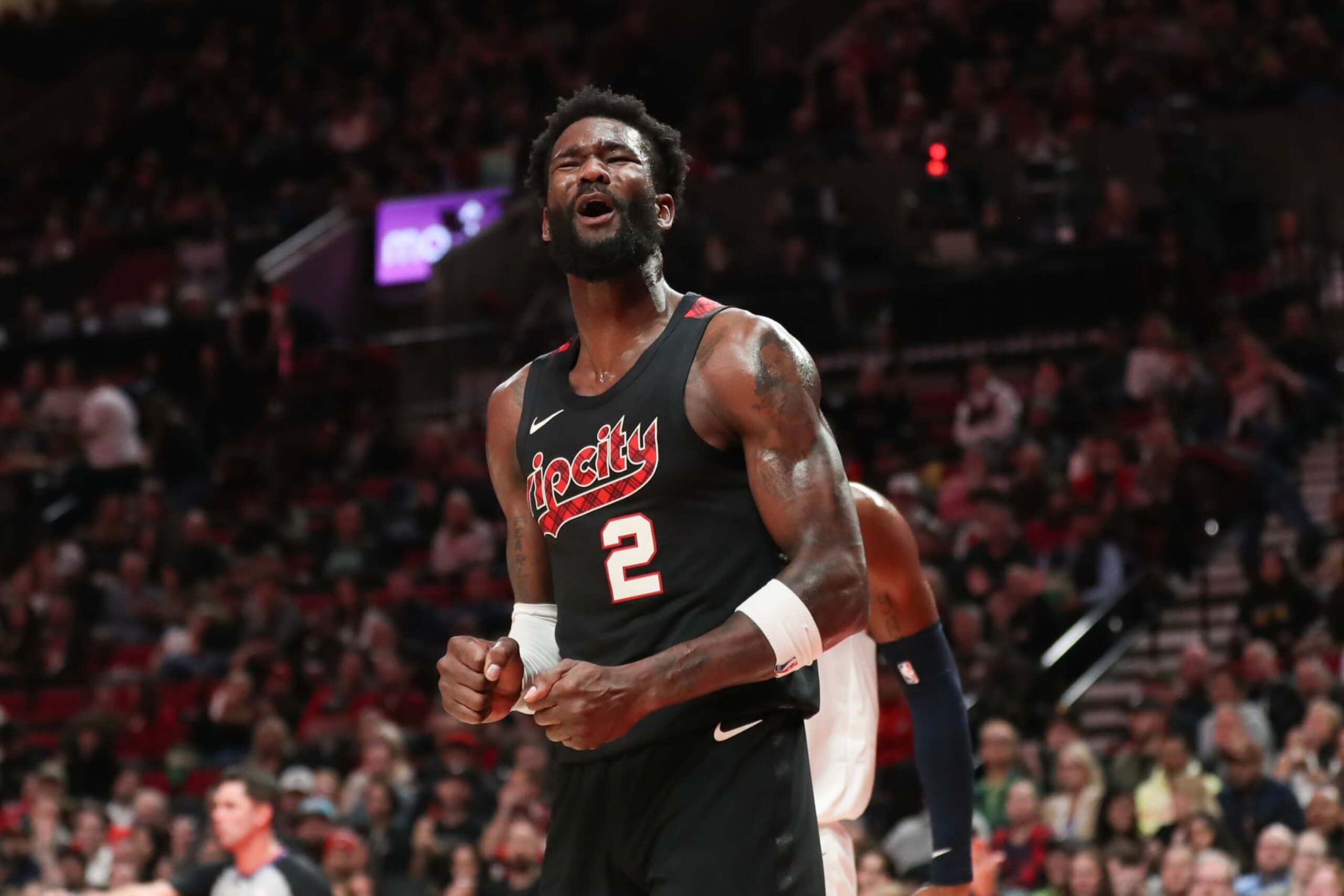
Anyone who expected Deandre Ayton to reach offensive stardom outside the confines of the Phoenix Suns pecking order will be disappointed by how he's fared on the Portland Trail Blazers.
But that's a them problem.
Ayton has never been wired to actualize self-sufficiency. He is reliant on others to get him the ball and tee up his shots. Phoenix's established pecking order was always a cleaner fit than venturing into Portland's unknown.
Whether Ayton can develop into more of a featured option remains to be seen. Which is weird. And problematic. And kind of predictable.
Portland isn't force-feeding him the ball (yet). Ayton's post-up volume (21 percent of possessions) is down from last year (23.1 percent), and his overall usage has plummeted.
These dips in volume are multifold. The Blazers don't have the spacing to indulge high-volume interior touches. They also don't have the proven playmakers required to get Ayton the ball. And that deficit is even starker following injuries to Scoot Henderson (ankle), Anfernee Simons (thumb) and, now, Malcolm Brogdon (hamstring).
Offensive rebounding will be more pivotal than ever to Ayton's scoring opportunities. Putbacks are already accounting for a larger share of his possessions than in 2021-22 and 2022-23.
And to his credit, Ayton has been a consistent presence on the glass—at both ends. His overall defensive activity is a net-positive, as well. He's cleaning up a league-high 36.1 percent of opponent misses and limiting finishers to a 52.6 percent clip at the rim, a top-seven mark among 31 players to contest as many point-blank shots.
Settling on a "C" ultimately comes down to a dearth of functional expansion. Does his lack of offensive growth (and somehow declining free-throw volume) say more about the makeup of the Blazers or his limitations? We don't yet know, which is neither promising nor damning.
Bruce Brown, Indiana Pacers: A-
3 of 11
Bruce Brown has been about as advertised for the Indiana Pacers—with a few wrinkles sprinkled in.
He doesn't shoulder nearly as much orchestration responsibility. That tends to happen when Tyrese Haliburton is your running mate. But Brown's center-floor playmaking remains special, rendering him pleasantly unpredictable when he does put the ball on the deck.
Opposing teams are also treating him like a real threat from beyond the arc. Wide-open triples continue to punctuate his behind-the-rainbow shot diet, but entering Thursday night, he was drilling over 42 percent of his treys when defenders are inside six feet of the attempt (8-of-19).
That efficiency may not hold, and he's shooting waaaay better from the corners (44 percent) than above the break (33 percent). But the Pacers' spacing looks good on him. He is finding seams in the defense both on- and off-ball and has so far converted 66.7 percent of runners (10-of-15). His timeliness lifting from the corners is aiding Indy's offensive rebounding, too.
Adding Brown has not transformed the Pacers into a top-tier defense. But he has given them another pliable body to jockey around the floor. And Indy can get to some sturdier defensive combinations by leaning into the Brown-Andrew Nembhard-Aaron Nesmith-Myles Turner quartet.



Jrue Holiday, Boston Celtics: B
4 of 11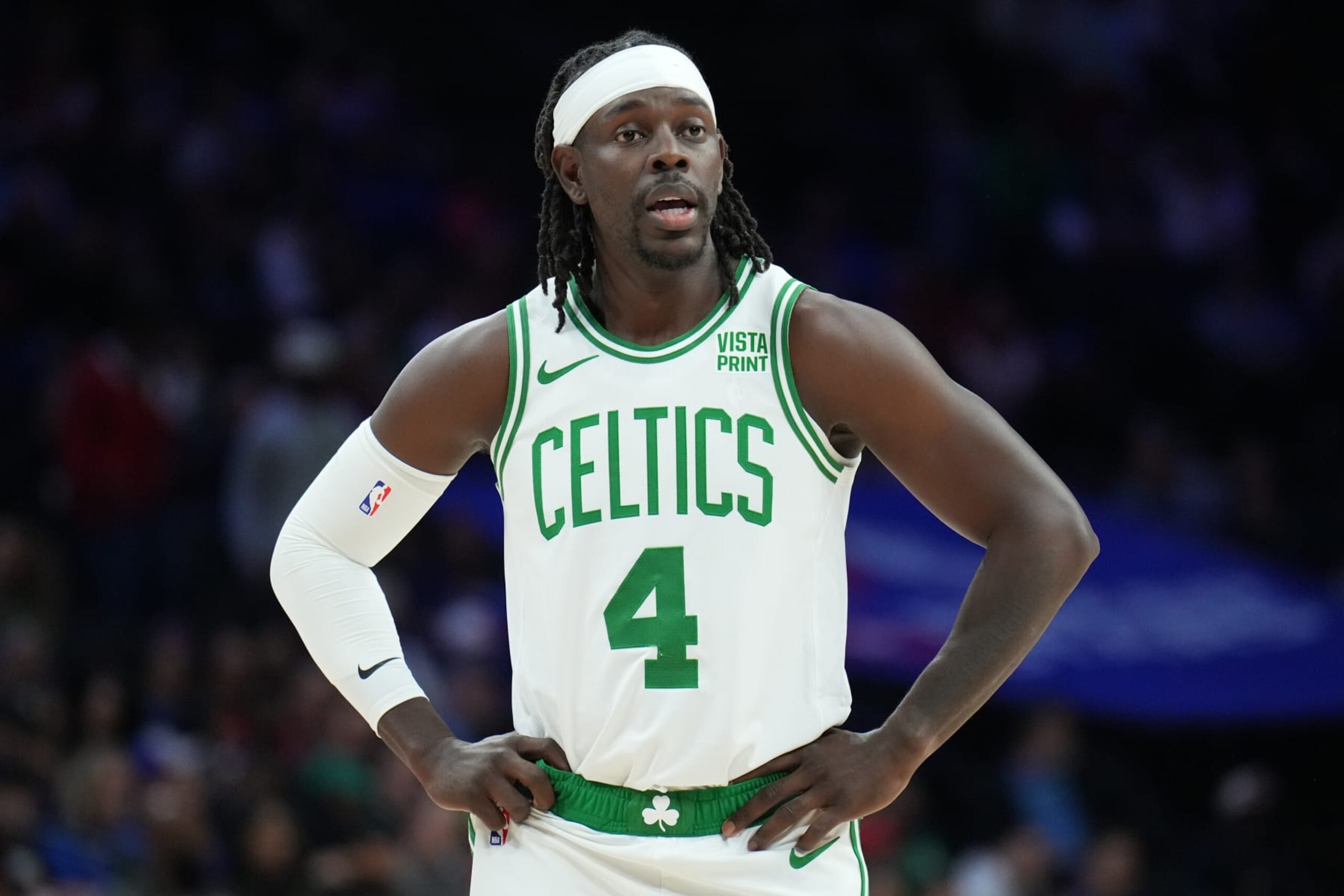
Do not let the decline in his counting stats or the Boston Celtics' consecutive losses to Minnesota Timberwolves and Philadelphia 76ers fool you: Jrue Holiday is a good fit in Beantown.
Dealing Marcus Smart appeared to cost the Celtics defensive versatility even when factoring in Holiday's arrival. It hasn't.
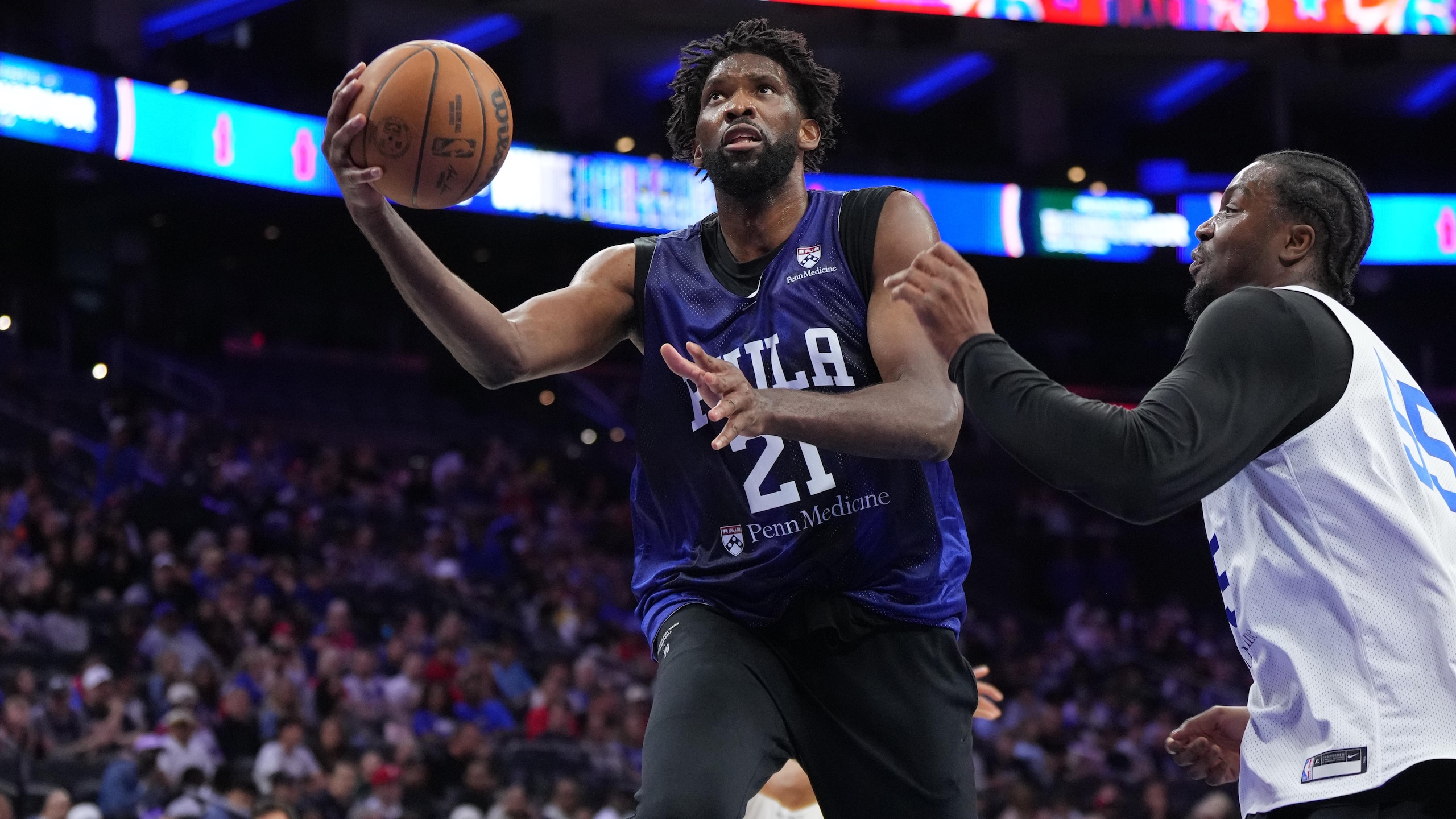
Boston has not shied from putting Holiday on bigger-than-a-wing assignments. On the contrary, the Celtics had him guarding Joel Embiid for a portion of Wednesday night's loss, during which time the Sixers as a team averaged just 0.31 points per possession. (Yes, you're reading that correctly.)
Feel free to glom onto Boston's defense being worse with Holiday on the floor. That feels like early-season noise made louder by his spending any time whatsoever outside a starting five setting an incomprehensibly high baseline and by head coach Joe Mazzulla experimenting with a bunch of different combinations outside his core two lineups.
There is room for some concern on the offensive end. Boston's open-floor concept has juiced up Holiday's rim frequency, but he's not finishing at a high clip, and he remains prone to forcing up inexplicable attempts when he's struggling.
The Celtics are also getting creamed when he plays without Jayson Tatum, which should be a huge deal. But Mazzulla hasn't staggered the two all that much. The actual huge deal: how Boston is faring when Tatum sits, period.
Damian Lillard, Milwaukee Bucks: C+
5 of 11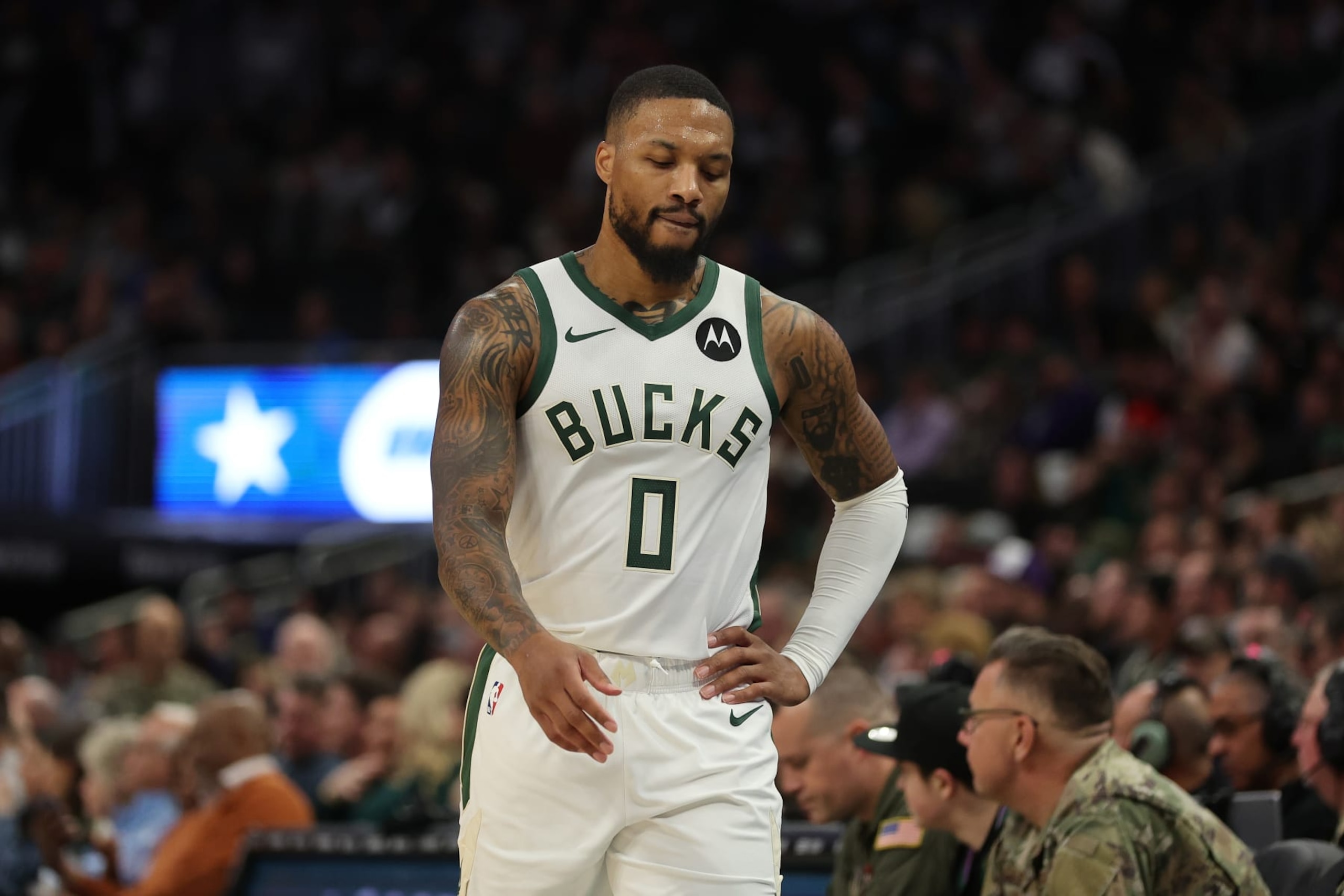
Deep breaths, everyone. This grade can and will improve. And it could be so much worse.
Damian Lillard is working his way through a frigid outside shooting stretch. He entered Thursday night downing under 30 percent of his triples, including a combined 23.1 percent clip on open and wide-open treys. That won't hold.
The same goes for Dame's on-off splits. The Milwaukee Bucks offense is eons worse when he's on the floor. But that has more to do with their two most-used combinations getting absolutely trucked. And even as Lillard searches for a hotter medium from deep, the Bucks' half-court attack remains above average with him on the court.
Defenses still devolve into existential crisis when he crosses the timeline. Will he fire away out of a ball screen from 30-plus feet? Fake into a drive only to pull back and let 'er rip? Accelerate around the corner and into the lane, splitting as many bodies as you throw at him, before putting down a runner or layup or spraying passes to comically wide-open shooters?
Havoc wrought by Lillard in the lane has been a godsend amid his hailstorm of missed threes. Of the 90 players who have finished more than 40 drives, he is the only one shooting better than 58 percent and posting an assist rate north of 15.
All the defensive concerns remain fair. Lillard continues to fall behind plays, particularly after getting screened. Shifting Brook Lopez back into drop coverage more often has already started helping here.
Yet, between not enough Lillard-Giannis Antetokounmpo two-man actions and brutal solo stretches, it's fair to say the Dame era in Milwaukee is off to a less-than-rousing start.
Chris Paul, Golden State Warriors: A-
6 of 11
I'm not entirely sure I've been more tempted to hand out an "A+" for someone whose shooting so poorly from beyond the arc.
Chris Paul is hitting just 15.2 percent of threes, an unfathomably low mark that is fueled by an 0-for-18 start on pull-up triples. (He's 4-of-10 on spot-up treys, though!) After a slow start, however, he has worked his way up to a 48.6 percent clip on pull-up twos.
The Golden State Warriors probably need CP3 to shoot and score more. That, though, says more about Andrew Wiggins' onset struggles than Paul himself. The latter has never been conditioned to be overly aggressive searching for his own offense.
Frankly, aside from the arctic-cold start from deep, CP3's integration verges on picture perfect. He has steadied the offense's turnover craze while embracing a sixth-man role. And in doing so, he is remedying the Warriors' most glaring, longest-standing issue: surviving the minutes Stephen Curry isn't on the floor.
Golden State is currently outscoring opponents by 9.7 points per 100 possessions and notching an above-average offensive rating when CP3 plays without Steph. Both of these things never happen. Seriously.
Tandem minutes with Curry and Paul have been even better. And that's with a lion's share of them taking place sans Draymond Green. Size issues may eventually deflate the Steph-CP3 pairing. For now, it's thermonuclear. And the Warriors' present-day championship equity is on the rise because of it.
Jordan Poole, Washington Wizards: C
7 of 11
The Washington Wizards have quickly become equal parts national punch line and treasure, their current iteration developing something of a cult following banded together through its love for down-by-a-trillion shenanigans and an intrinsic incapability of averting long, wide-eyed gazes at chaotic unknowns occasionally manifesting as metaphorical wreckages.
Jordan Poole is part of this Wizards-as-anarchic intrigue. It says a lot that a current Google search of his name yields more results for Ice Spice than his play.
This is largely fine—so long as we don't lose the plot in the process.
Washington is rebuilding. That process is in its infancy. The roster stripdown and its resulting haphazardry is, for now, the direction. That's expected, even welcomed when pitted against the highway to nowhere on which the Wizards and their fans have been accustomed to traveling.
To that end, Poole has not actually existed out of pocket. The lowlights will make their rounds, and he remains a defensive liability, albeit one who has turned in more disruptive moments than normal.
Still, he's not hijacking the offense to oblivion. His usage is right in line with last year's mark, and while his efficiency has dipped, that comes with the territory of standing out amid the jumbled.
Fewer of his made buckets are actually going unassisted. The share of his attempts that come after six seconds of possession time have dropped precipitously, from 23.8 percent last year to 14.3 now. And though self-created jumpers and primary-decision-maker sets don't suit him, he is shooting 74 percent at the rim and 40 percent on spot-up threes.
The Poole experience and fit, in short, is mostly as expected—sometimes a little more, other times a little less, but not yet dramatically tilting toward one end of the spectrum.
Kristaps Porziņģis, Boston Celtics: A
8 of 11
Skeptics likes yours truly wondered whether Kristaps Porziņģis' career year on a Washington Wizards team fast-tracked to nothingness would hold up on a team with actual expectations that streamlined his role and volume.
We were, with all due respect, apparently idiots.
Porziņģis' fit in Boston has been the cleanest among all the most notable new marriages. The Celtics' pecking order and open-floor concept has amplified all of his best on-court traits.
He is stretching defenses with his 41.2 percent conversion rate on triples. He is punishing them, as both passer and scorer, when thrown the ball against mismatches. And he is breaking them by getting behind the action and ducking in from the corners for buckets around the basket.
Even the staunchest optimists have to be taken aback by the early returns. Porziņģis is getting to the rim more than ever before (spacing!) and posting what would be the second-highest free-throw-attempt rate of his career as a result.
His rim protection has been as advertised. Opponents are shooting more than 10 percentage points worse inside six feet when he contests them. But he's maintained the peak mobility that defined so much of his success last season.
Hell, on Wednesday night, he was probably the Celtics' best player (despite missing a critical shot in the fourth). And for as much as Boston belly-flops during the Tatum-less stretches, Porziņģis is more of a common denominator in the lineups that actually work than anyone else. This is, without question, one of the newly minted player-team unions that could shift the title race.
Marcus Smart, Memphis Grizzlies: D+
9 of 11
The Memphis Grizzlies are quickly finding out what the Boston Celtics already knew: There is a cap on an offense that counts Marcus Smart as a primary playmaker. Beantown's ceiling just so happened to be ultra-high because it housed a megastar shot-maker and defense-splintering floor spacing. Memphis does not have that luxury.
Take this grade as an indictment of the organization more than anything else.
Absences from (too many) key players are part of the offensive wonkiness. But the Grizzlies knew Ja Morant would be serving a 25-game suspension to start the season. They also knew that Steve Adams' right knee might not fully heal without going the surgical route. Acquiring Smart had to at least partially be a response to the top-of-the-roster uncertainty they were up against.
It has not worked out.
Scorching-hot finishing inside the arc—he's shooting 59.4 percent on drives—is not enough to offset Smart's inefficiency elsewhere. His pull-up-jumper volume has almost tripled compared to 2022-23. That's basically a harbinger of doom. He's posting a 37.5 effective field-goal percentage on these looks, the seventh-worst mark among 41 players who have attempted as many pull-ups.
Relying on Smart for more overall initiation has often proved catastrophic. He is turning the ball over on more than 30 percent of his pick-and-rolls, the second-highest rate among 78 players who have finished as many possessions as the ball-handler.
On the bright side, Smart continues to wreck life for opposing offenses. He remains the Czar of Deflections and is currently the Chief Operating Officer of Forcing Steals. It'll be interesting to see whether his offense settles into a higher normal once Ja returns.
Fred VanVleet, Houston Rockets: B+
10 of 11
Box-score voyeurs will be more inclined to harshly grade Fred VanVleet. We don't do that here.
Elements of FVV's offensive performance are undeniably concerning. His 36.2 percent clip from deep is perfectly fine relative to the volume (8.6 attempts per 36 minutes) and difficulty he's shouldering. Close to 48 percent of his made threes have gone unassisted—by far and away a career high.
Struggles inside the arc are tougher to reconcile. He's shooting 36.4 percent on twos, including a disastrously low 30.8 percent on drives—the third-worst mark among 79 players who have finished at least 50 downhill attacks.
And yet, the Houston Rockets have outscored opponents by 64 points during VanVleet's court time. That is a top-16 plus-minus and, more importantly, by no means an accident.
Defenses load up on VanVleet's inside-the-arc activity despite his rickety efficiency, and he has never looked more comfortable as a facilitator. Even when it doesn't directly lead to an assist, his ball movement adds a crispness to the offense. So, too, does the attention he leverages moving away from the ball.
FVV is also a big part of the Rockets' top-10 defense. (You're reading that correctly.) Bricky opponent three-point shooting has helped fuel it, but Houston is holding rival offenses to under a point per possession (97th percentile) when he shares the floor with Dillon Brooks.
It's a tad early to declare the Rockets buh-ack. But there is a rhyme and reason to what they're doing at both ends—functional coherence that FVV's arrival, among other things, is driving.
Grant Williams, Dallas Mavericks: A
11 of 11
Grant Williams has wasted little time establishing his four-year, $53.3 million contract as one of the best bargains—and, by extension, assuaging concern over the 2030 first-round swap the Dallas Mavericks gave up to sign him.
His shooting has been so scintillating and critical that it's impossible to overstate. He is downing over 50 percent of his threes—most of which are coming above the break— on a career-high seven-plus attempts per 36 minutes.
It isn't just Williams' efficiency, either. His threat level unlocks unreal spacing in transition and has allowed the Mavs to play Derrick Jones Jr. and Dereck Lively II, two non-shooters, together without torpedoing floor balance.
Granted, the offensive returns on these combos aren't great. But their defense has held up, largely thanks to Williams' malleability.
Dallas, meanwhile, has also fared well when testing out Williams-at-the-5 arrangements. Those lineups have lit the world on fire during mega-limited run (32 possessions)—a tool in the box that might just sustain its lightning-in-a-bottle returns on the back of Williams, who can rumble with more physical assignments, even if he concedes size and strength at the rim, and who has more inside-the-arc know-how and grit than his outside volume suggests.
Unless otherwise noted, stats courtesy of NBA.com, Basketball Reference, Stathead or Cleaning the Glass and accurate entering games on Friday, Nov. 10. Salary information via Spotrac.
Dan Favale covers the NBA for Bleacher Report. Follow him on Twitter (@danfavale), and subscribe to the Hardwood Knocks podcast, co-hosted by Bleacher Report's Grant Hughes.


.jpg?w=2560 "2 NFL Officials Suspended")
.jpg?w=2560 "Mahomes' Wife Trolls Kubiak 💀")

.jpg?w=2560 "Love's Body Already 'Tired'")