
Biggest Questions Heading into the 2023-24 Men's College Basketball Season
The start of the 2023-24 men's college basketball season is finally here. IUPUI faces off with what we can only assume is a literal basketball school in Spalding University at 11 a.m. ET Monday. It's the first of around 6,000 games that will transpire before the next national champion is crowned.
But that journey begins with way more burning questions than answers.
Questions like:
- Will there be a rare repeat for national champion or National Player of the Year?
- Is Florida Atlantic here to stay?
- Which transfer will make the biggest impact in his new home?
- And what the heck is going on with the NIT?
We'll look at all those questions and more in preparation for the beginning of the season.
First Things First: Which Teams Moved to Which Conferences?
1 of 9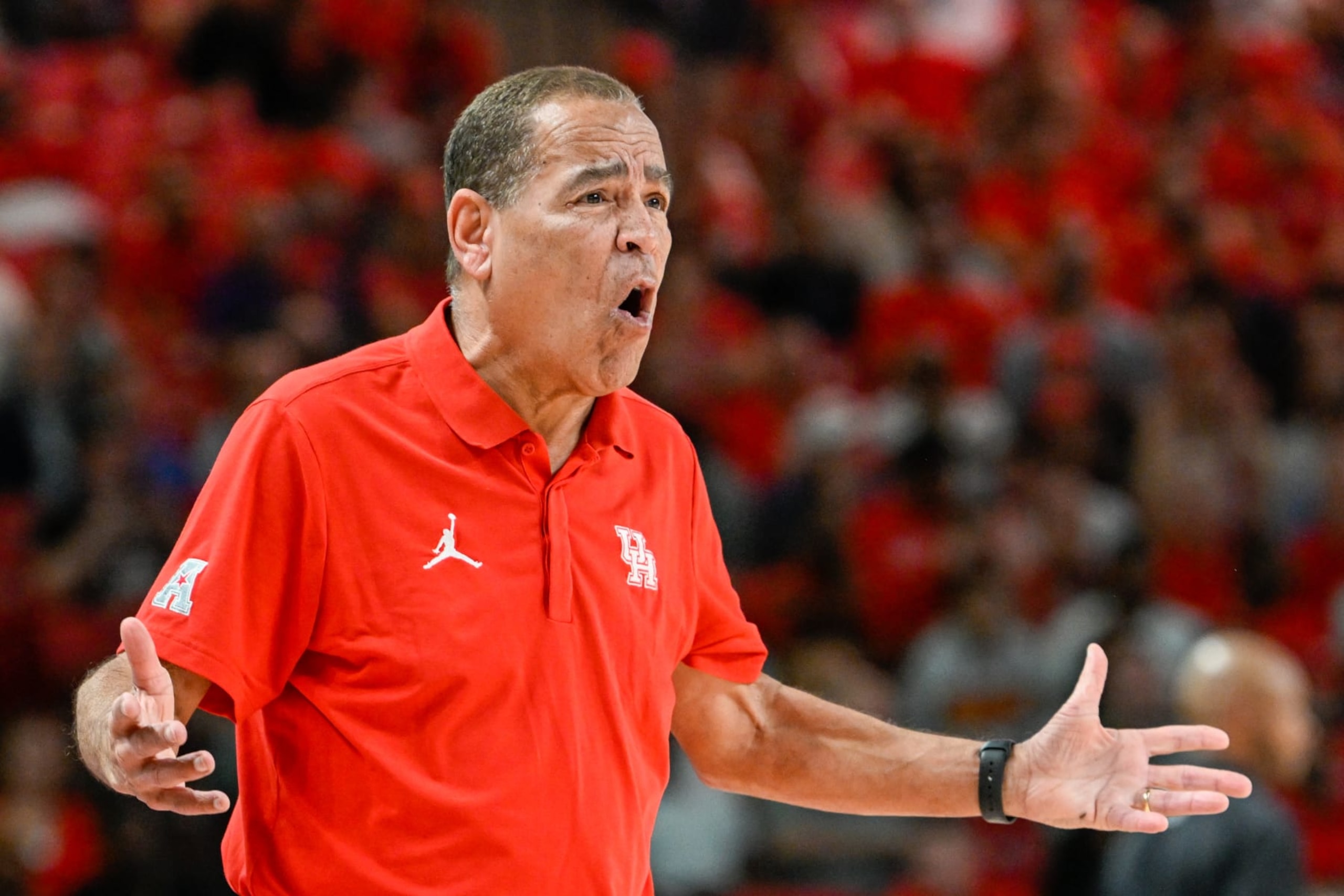
The gigantic, "forget everything you used to know about the major conferences" changes won't be happening until next summer. That's when Texas and Oklahoma go to the SEC while the Pac-12 goes into a wood chipper with splinters landing in the Big Ten, Big 12 and ACC.
But there are some teams in new places to get used to this year.
By far the biggest are the four new teams in the Big 12: Houston, Cincinnati, BYU and UCF. For three of the four, upgrading to what has been easily the best conference over the course of the past decade figures to be a tough adjustment. Houston, however, might swoop in and immediately win the league. Kansas is the favorite, but not by much.
While three teams go from the AAC to the Big 12, the AAC actually got bigger this offseason by taking in six teams from Conference USA. The most noteworthy of the bunch is preseason AP No. 10 and 2023 Final Four crasher Florida Atlantic, but the league will also add North Texas and UAB, who battled in last year's NIT championship game. Charlotte, UTSA and Rice, too, make the leap from C-USA to AAC.
By no means will the AAC be better without Houston, Cincinnati and UCF, but it should still be fairly relevant.
Beyond that, C-USA did some backfilling of its own, getting Liberty and Jacksonville State from the A-Sun, as well as New Mexico State and Sam Houston State from the WAC.
Le Moyne is graduating from D-II to the NEC, replacing St. Francis Brooklyn, which shuttered its entire athletic department.
Hartford also dropped from the D-I ranks down to D-III.
And Campbell (Big South to Colonial) and Western Illinois (Summit League to Ohio Valley) were the final movers in the shifting landscape.
Got all that memorized? There will be a quiz later.
Can UConn Repeat as National Champion? Or Purdue's Zach Edey as NPOY?
2 of 9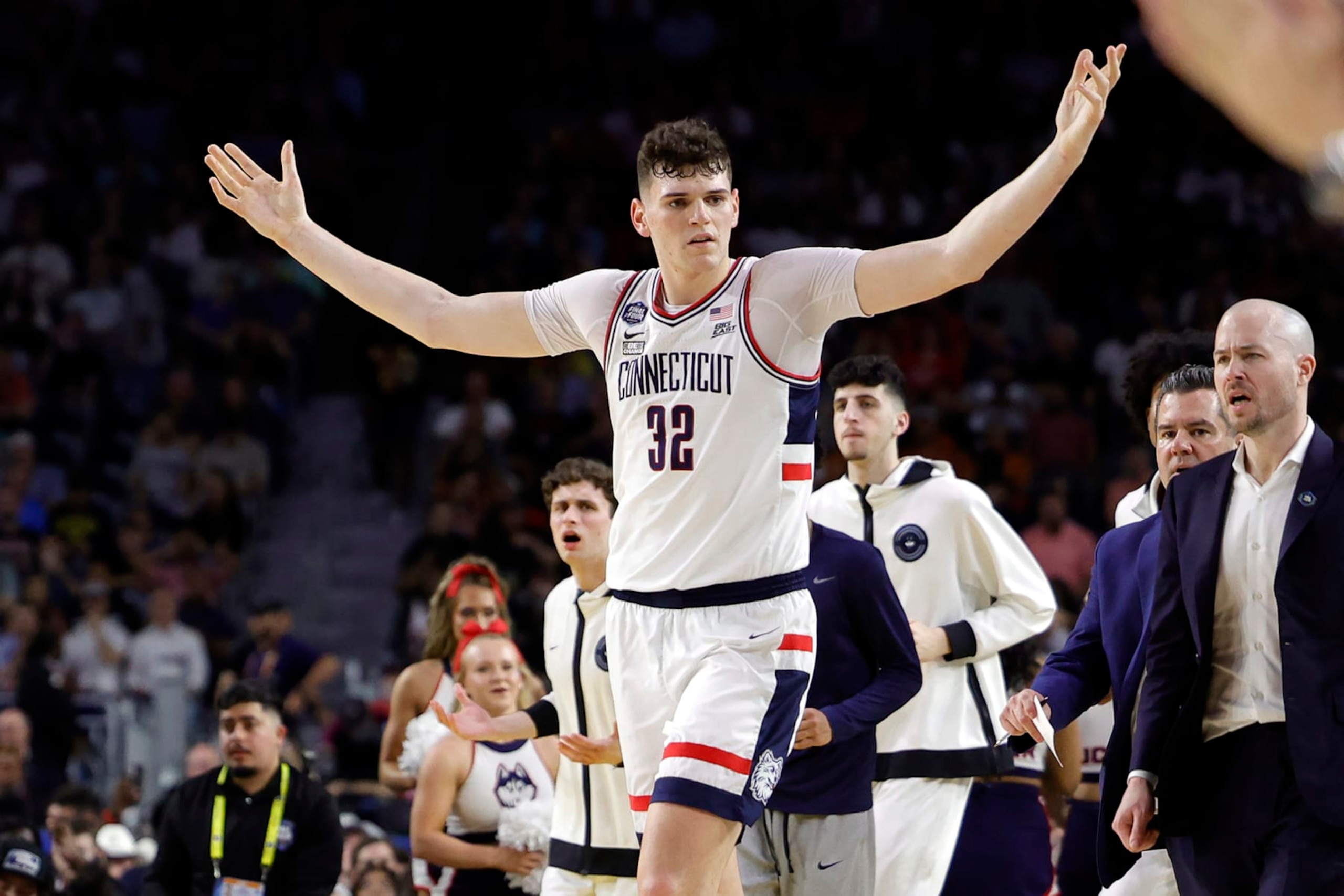
Repeats are extremely rare in men's college basketball.
In the past half-century since UCLA put together the last of its many consecutive national championship runs in 1973, the only teams to repeat as champs were Duke in 1991 and 1992 and Florida in 2006 and 2007.
And since the Wooden Award was established for the 1976-77 season, the only two-time winner was Ralph Sampson in the early 1980s.
Could both happen this year, though?
The reigning national champion Connecticut Huskies lost leading scorers Adama Sanogo and Jordan Hawkins, as well as a bad, bad man who had his fingerprints on everything that team accomplished in Andre Jackson Jr. Throw in Joey Calcaterra and Nahiem Alleyne as departures, and that's five of the eight leading scorers gone.
But with Donovan Clingan, Tristen Newton and Alex Karaban coming back, with Cam Spencer transferring in from Rutgers and with soon-to-be one-and-done lottery pick Stephon Castle headlining a loaded crop of incoming freshmen, there's still more than enough talent in Storrs to maybe run it back again.
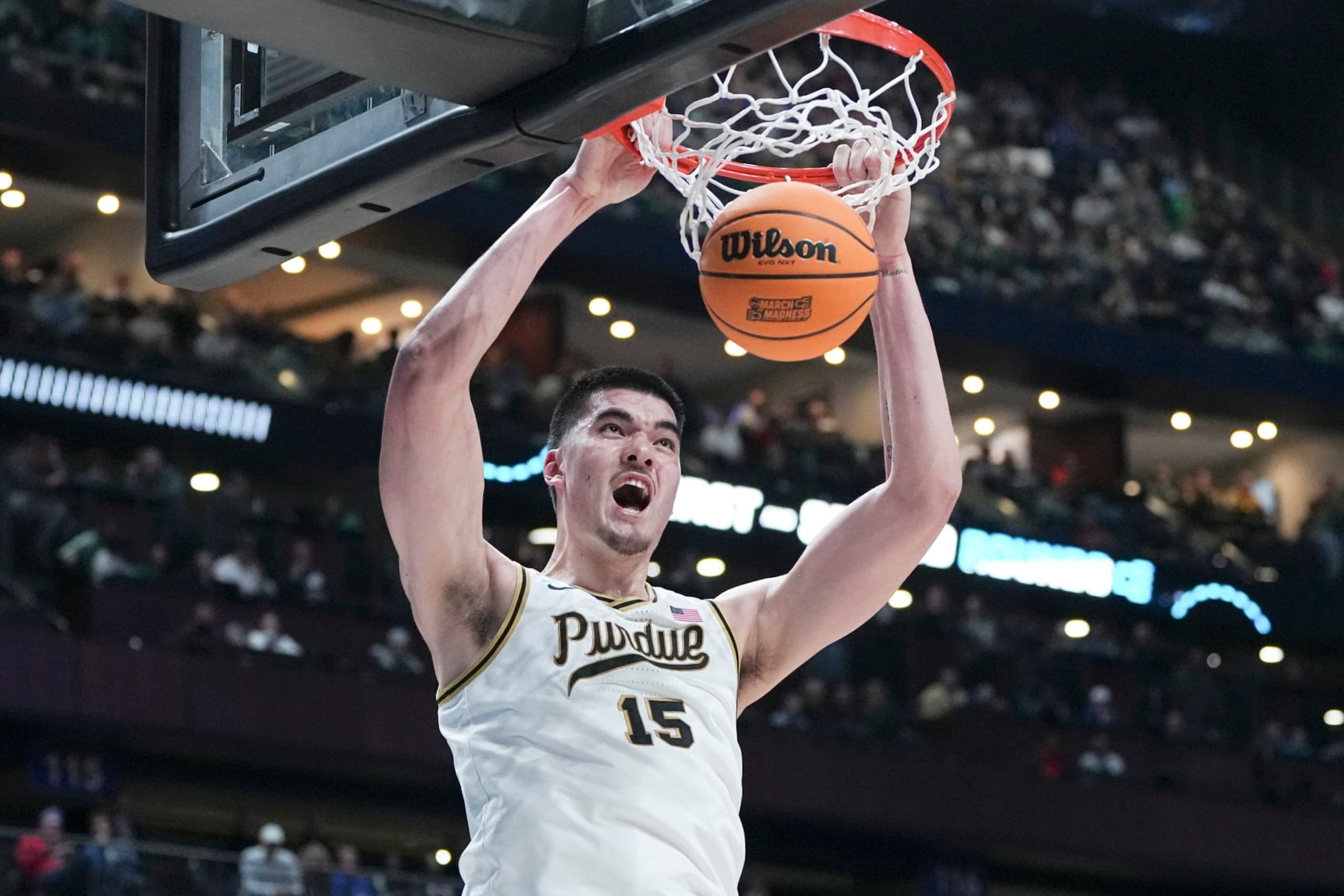
The more likely repeat, though, is Zach Edey as National Player of the Year.
The big man who averaged 22 points, 13 rebounds and a pair of blocks per game for Purdue almost certainly would've gone pro if the Boilermakers had done literally anything in the NCAA tournament. But just like Oscar Tshiebwe didn't want to end his college career with an embarrassing loss to a No. 15 seed, Edey is back for more double-doubles and NIL money after Purdue's infamous loss to No. 16 seed Fairleigh Dickinson.
The question is: Does he have another gear in him?
We all thought Tshiebwe was going to repeat last year, but after a modest dip in production—down 0.9 PPG and 1.4 RPG—Big O wasn't even named one of the five finalists for the Wooden Award.
We'll see if Edey can improve upon what was already a sensational campaign, lest he get bypassed by a few next big things.
How Will the New Block/Charge Emphasis Play Out?
3 of 9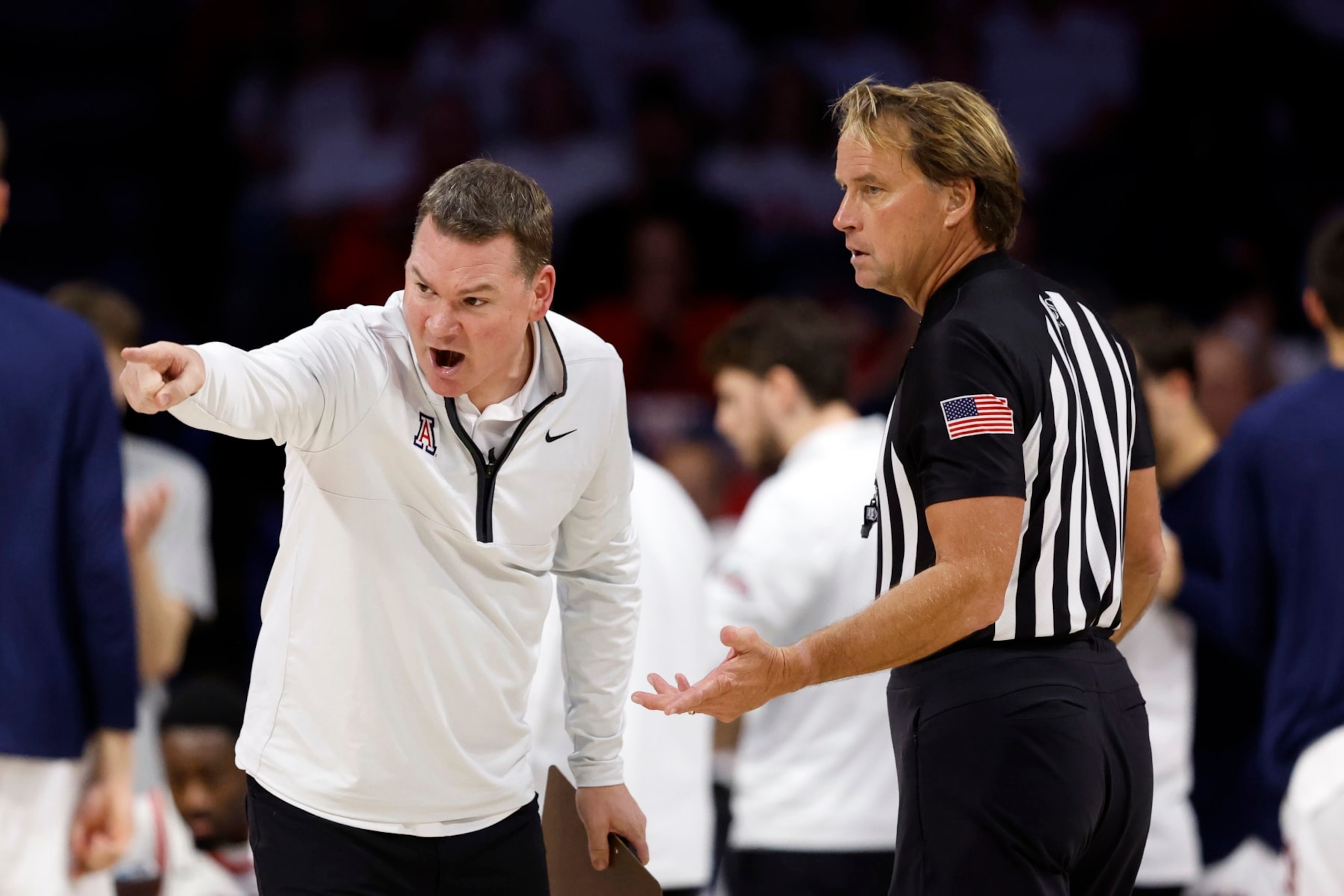
Just about every year, there are a few new rule changes put into place.
Sometimes, it's moving back the three-point line. Perhaps in the near future, it'll be shortening the shot clock. But, usually, it's adjustments to officiating rules that already exist, hoping to, say, promote better freedom of movement or mitigate flopping.
This year's big tweak is an adjustment to what constitutes a block/charge.
Under the new verbiage, in order to draw a charge, the defender is required to be set by the time the attacking player's plant foot hits the floor, as opposed to when he goes airborne.
If actually applied as intended, this should just about eradicate the "defensive" play that has driven both fans and coaches bonkers for years, in which a secondary defender slides into the lane at the last possible instant, not even remotely attempting to actually contest the shot before absorbing contact.
"Our goal is to try to reduce the number of charges that are called," said Tennessee's Rick Barnes, who is presently the committee of the NCAA Men's Basketball Rules Committee. "We want to give more time to the offensive player to adjust to defensive player movement and reduce the hard collisions that are taking place."
Per The Athletic's C.J. Moore, Big 12 coordinator of officials Curtis Shaw said in mid-October: "It's almost impossible to take a legal charge anymore."
Will this officiating emphasis actually stick, though?
Or will it follow the script we've seen with these tweaks in recent years where they over-enforce it for the first month of the season and then gradually back away from the emphasis until it's as if they never changed the rule in the first place?
If charges more or less do go the way of the dinosaur, will it encourage more players to attack the rim with reckless abandon for more highlight reel dunks?
(And if we seriously want to get rid of the "secondary defender" charges that have been so difficult for referees to judge for decades, why not just call the entire paint the restricted area?)
What in the World Is Going on with the NIT?
4 of 9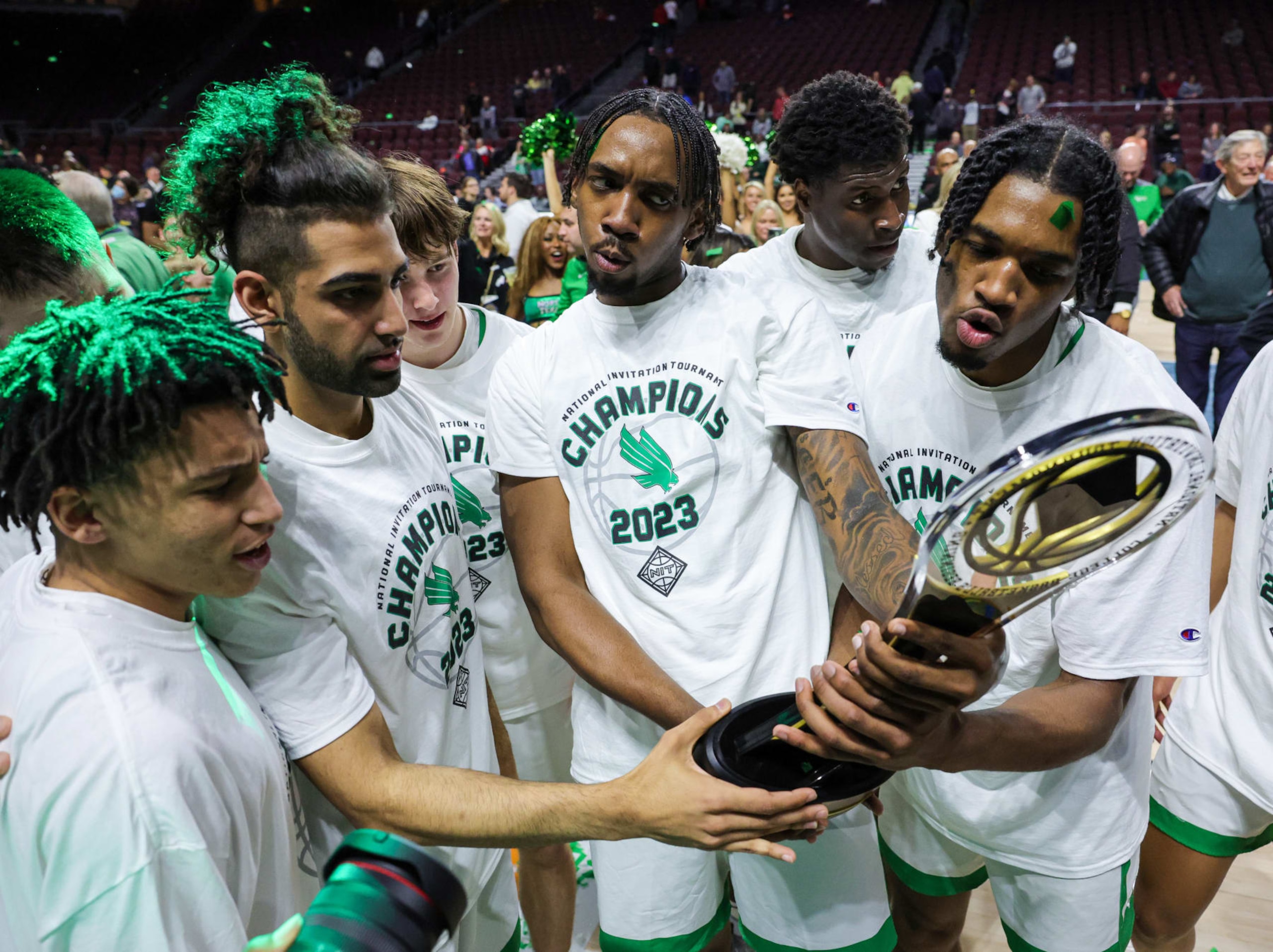
About two months ago, The Messenger's Seth Davis reported on a new postseason tournament in the works, presumably to debut in March 2025. It would feature the top 16 teams from the Big East, Big Ten and Big 12 who miss the NCAA tournament, and it would require those 16 teams to play in the event, even if invited to participate in the NIT.
In response, the NIT recently made controversial changes to its selection process, guaranteeing two bids per power conference and no longer guaranteeing bids for regular-season champions who fail to win their conference tournaments, effective immediately for this season.
And shortly after that change was announced, the NCAA's senior VP of basketball Dan Gavitt said, "The very viability of (the NIT) could be in jeopardy."
We all know exactly what this is, though, right?
Multiple guaranteed bids for each major conference?
A new tournament that is going to be simply overflowing with teams who finish the season with losing records—if not overall, at least in conference play?
These are test runs to get a sense of whether even more money could be milked from the cash cow by expanding the NCAA tournament to, heaven help us, 128 teams.
Sure, ESPN gets the NIT money, and Fox Sports would be airing whatever this new Big East/Ten/12 conglomeration ends up being called. But both CBS and the NCAA will see the ratings and proceed accordingly.
So, for the good of the 68-team tournament we all know and love as the greatest postseason event in sports, we might need to start boycotting those consolation tourneys.
Can Rick Pitino Actually Salvage St. John's?
5 of 9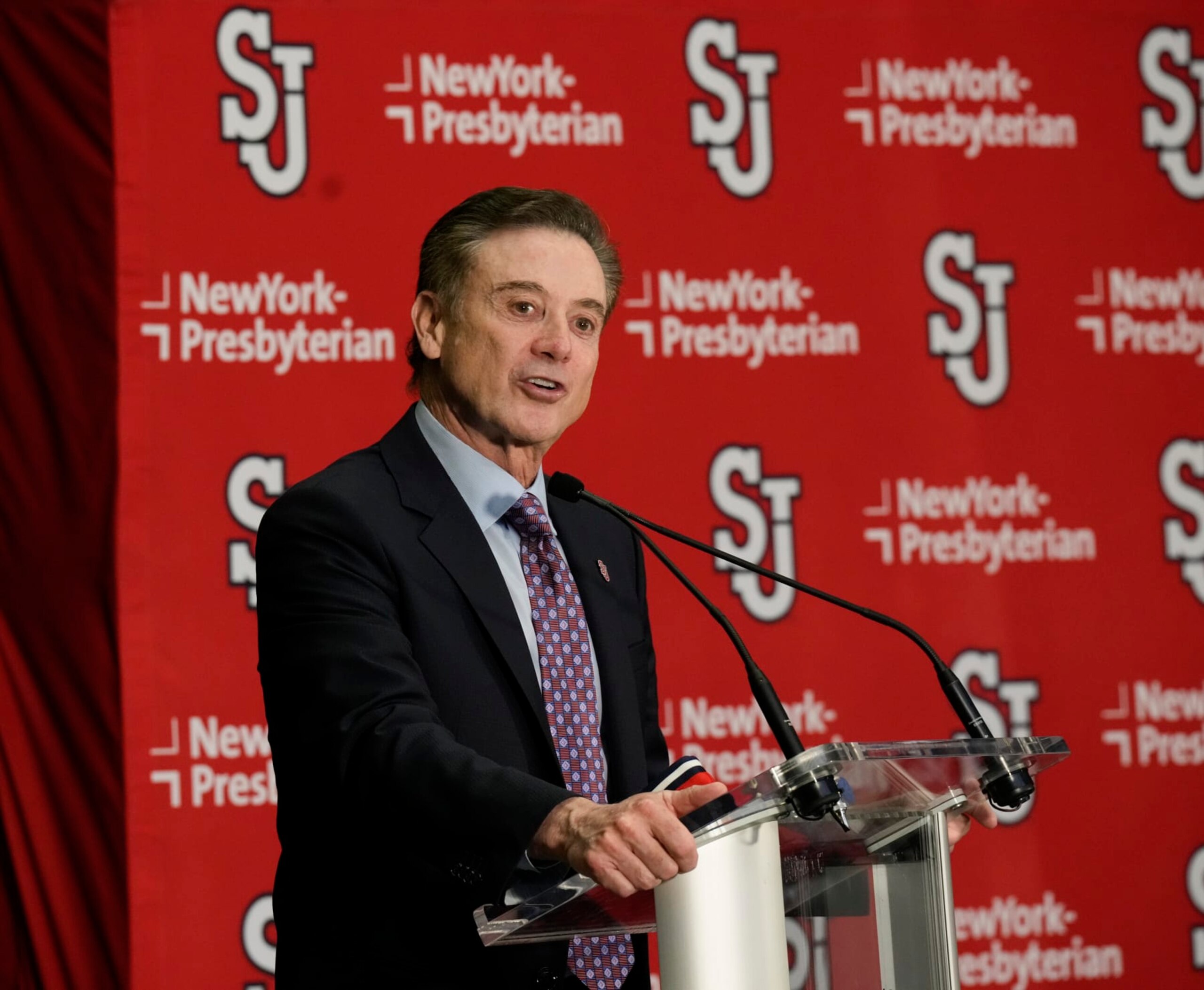
The last time St. John's won an NCAA tournament game was on March 16, 2000.
Erin Brockovich debuted in theatres that weekend. It was a couple of weeks before the Big Ten last won a national championship (Michigan State). Tom Brady wasn't drafted by the New England Patriots until a month later.
It's been a minute.
So the Red Storm brought in Rick Pitino, who is presently the winningest active coach in men's college basketball—if we don't count Bob Huggins as active and if we do count the more than 100 wins the NCAA vacated from Pitino's ledger after the scandals at Louisville.
In all five of Pitino's previous multiyear stops in the NCAA, his team won at least 70 percent of its games by his second season. That includes the job he did at Iona over the past three years before getting called back up to a major-conference gig.
How will Year No. 1 with the Johnnies go, though, particularly after one of the most drastic transfer portal-fueled roster overhauls we've ever witnessed?
Pitino did bring back one player from last year's Red Storm roster, and a doggone good one at that. Joel Soriano averaged 15.2 points and 11.9 rebounds in 2022-23 and will unquestionably remain the primary post presence for St. John's this season.
Aside from Soriano, though, it's transfers galore. Some combination of Daniss Jenkins (Iona), Jordan Dingle (Penn), Chris Ledlum (Harvard), Naheim Alleyne (Connecticut), RJ Luis (Massachusetts), Glenn Taylor Jr. (Oregon State) and Zuby Ejiofor (Kansas) will fill out the rest of the starting lineup, with freshman guard Simeon Wilcher maybe crashing the party at some point down the line.
St. John's did lose an exhibition game against D-II Pace University last weekend, but it didn't have Soriano, Dingle or Luis for that contest.
Also, people, it was an exhibition game. When did we start suddenly caring so much about these?
Speaking of Transfers, Who Are the Big Ones This Year?
6 of 9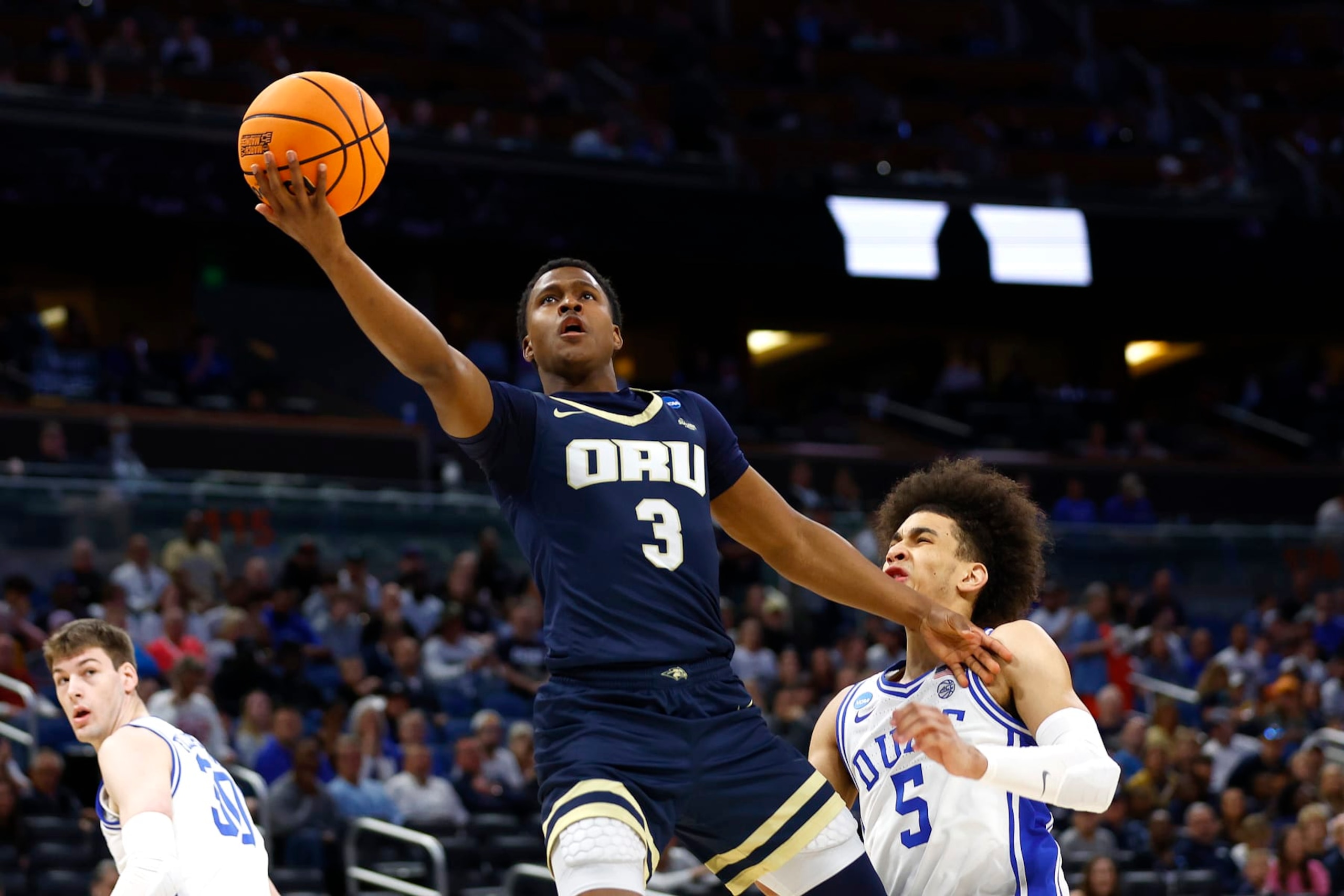
That's how many transfers there were in this year's edition of portal madness.
Even if divided equally among the 362 D-I programs, that's still more than five players per team.
Try to keep up with it all and you're liable to descend into "Charlie Kelly tracking down Pepe Silvia" levels of unhinged.
Not all 1,819 transfers were relevant, of course, but I count 94 who transferred away from preseason AP Top 25 teams and, more notably, 64 transferring onto Top 25 rosters. (Nine of whom went from one Top 25 team to a different one.)
So, who are the ones most likely to serve as All-Americans for teams that reach the Final Four?
The most noteworthy by far is Hunter Dickinson, whose decision to relocate from Michigan to Kansas was a five-week-long offseason spectacle of its own. A consensus All-American in 2020-21 who later blossomed into a more versatile and more dominant modern-day center, Dickinson is the biggest reason Kansas opens the year at No. 1 in the AP poll.
Caleb Love's transfer from North Carolina to Arizona was also quite the saga, as he originally chose Michigan before the 'student' portion of being a student-athlete caused an issue. Love's departure from the Tar Heels was complicated and high-profile enough, but throw in that hiccup with the Wolverines and it would be a pantheon-level redemption story if he went out and led Arizona to its first national championship since 1997.
Love was one of the aforementioned nine moving from one Top 25 team to another. Three other gigantic ones are Ryan Nembhard (Creighton to Gonzaga), L.J. Cryer (Baylor to Houston) and Tramon Mark (Houston to Arkansas). Cryer will probably lead the Cougars in scoring. Mark could do the same with the Razorbacks. And Nembhard will immediately become the poised point guard presence the Zags were desperately lacking last season.
But the two transfers I can't wait to watch on a more regular basis are Max Abmas (Oral Roberts to Texas) and Tylor Perry (North Texas to Kansas State). Only Liberty's Darius McGhee and Detroit's Antoine Davis (both now out of college basketball) scored more points than Abmas' 1,428 over the past two seasons. And Perry was no slouch with 1,042 points of his own. Both prolific guards should finally get more national publicity in the Big 12.
Florida Atlantic: Flash in the Pan or Next Mid-Major Powerhouse?
7 of 9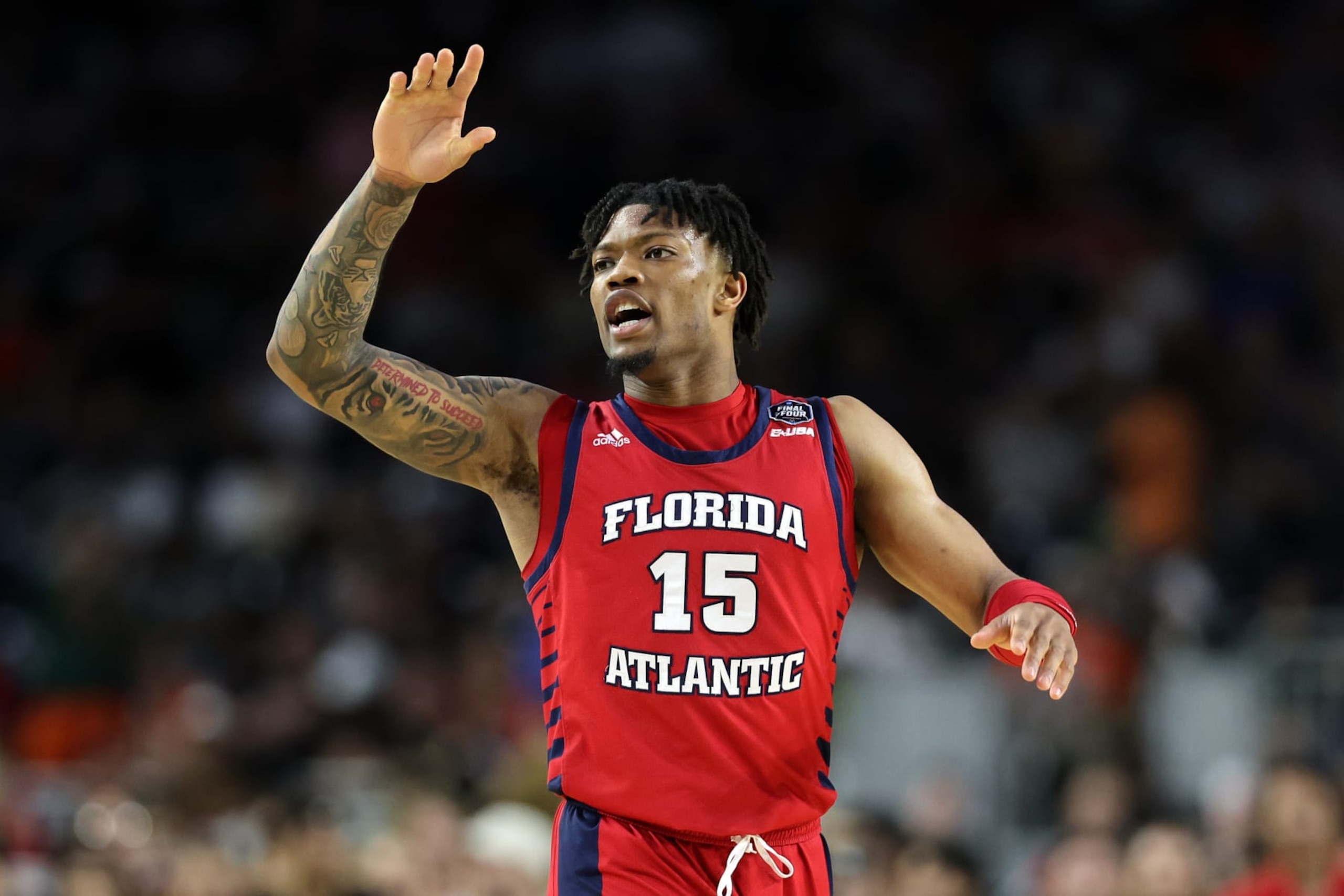
Less than one year ago, Florida Atlantic was a great big nobody.
The program had been to the NCAA tournament just once, all the way back in 2002. It had also won a regular-season conference title just once, placing first in the 2010-11 Sun Belt.
You probably didn't know they were nicknamed the Owls. You almost certainly had never heard of their head coach, Dusty May.
Their biggest selling point to recruits wasn't banners; it was a campus located a mere 1.8 miles from the beach.
However, after a magical run to the Final Four at the end of a spectacular season, FAU is now smack dab on the national radar.
And with everyone except for Michael Forrest back for another year—a degree of roster continuity that I wasn't even sure was still permissible in these transfer portal times—the Owls enter the season at No. 10 in the AP poll, somewhat symbolically one rung ahead of Gonzaga as the new favorite for best team outside the six major conferences.
Johnell Davis, Alijah Martin and Co. will be put to the test often in nonconference play. In addition to facing No. 25 Illinois in New York City and No. 12 Arizona in Las Vegas, there's a good chance they'll draw No. 15 Texas A&M in the semifinals of the ESPN Events Invitational. (And, perhaps, Boise State or Iowa State in the championship game, both of whom appeared in our preseason NCAA tournament projection.)
Let's see how the Owls fare as 'the hunted' for a change.
What Impact Will Freshmen Have?
8 of 9
By most accounts, this is one of the worst recruiting classes in decades.
Per 247 Sports, there are only 17 5-star talents, which is absurdly low. In the now 12 seasons I've been covering college hoops for Bleacher Report, this is the first time a freshman class has had fewer than 24 5-star recruits.
Worse yet, two of the best (No. 1 Ron Holland and No. 7 Matas Buzelis) skipped right over college basketball to play for the G League Ignite. Of the 5-star recruits gracing us with their presence, a bunch fall into that "dripping with raw potential, but could take a couple years to become a finished product" category of players who might not make that much of an impact in their first season.
Case in point: In The Almanac's ranking of the top 100 players for this season, there are only two freshmen in the top 65. And even at that, USC's Isaiah Collier (No. 20) and Kentucky's Justin Edwards (No. 39) aren't exactly earmarked for All-American rosters.
But surely some 'rookie' stars will arise, right?
At the very least, Kentucky is going to need some first-year dudes to shine if the Wildcats are going to come anywhere close to living up to the billing as a top-20 team. They have two established veterans in Antonio Reeves and Tre Mitchell, and that's about it. They'll need a lot from Edwards, D.J. Wagner, Aaron Bradshaw, Rob Dillingham and the rest of that loaded freshman class.
Duke also loaded up on freshmen, snagging four of the top 25 players in the class, but at least the Blue Devils have a bunch of key returnees, as well. As long as one of the two new guards (Caleb Foster or Jared McCain) pans out to some degree, they'll be in great shape riding Jeremy Roach and Kyle Filipowski to ACC supremacy.
The other big one is Stephon Castle at UConn. If 247's No. 9 overall recruit is anywhere near as impactful as last year's No. 9 overall recruit Keyonte George, the Huskies may well be the last team standing once again.
Who Are This Year's Connecticut, Purdue and North Carolina?
9 of 9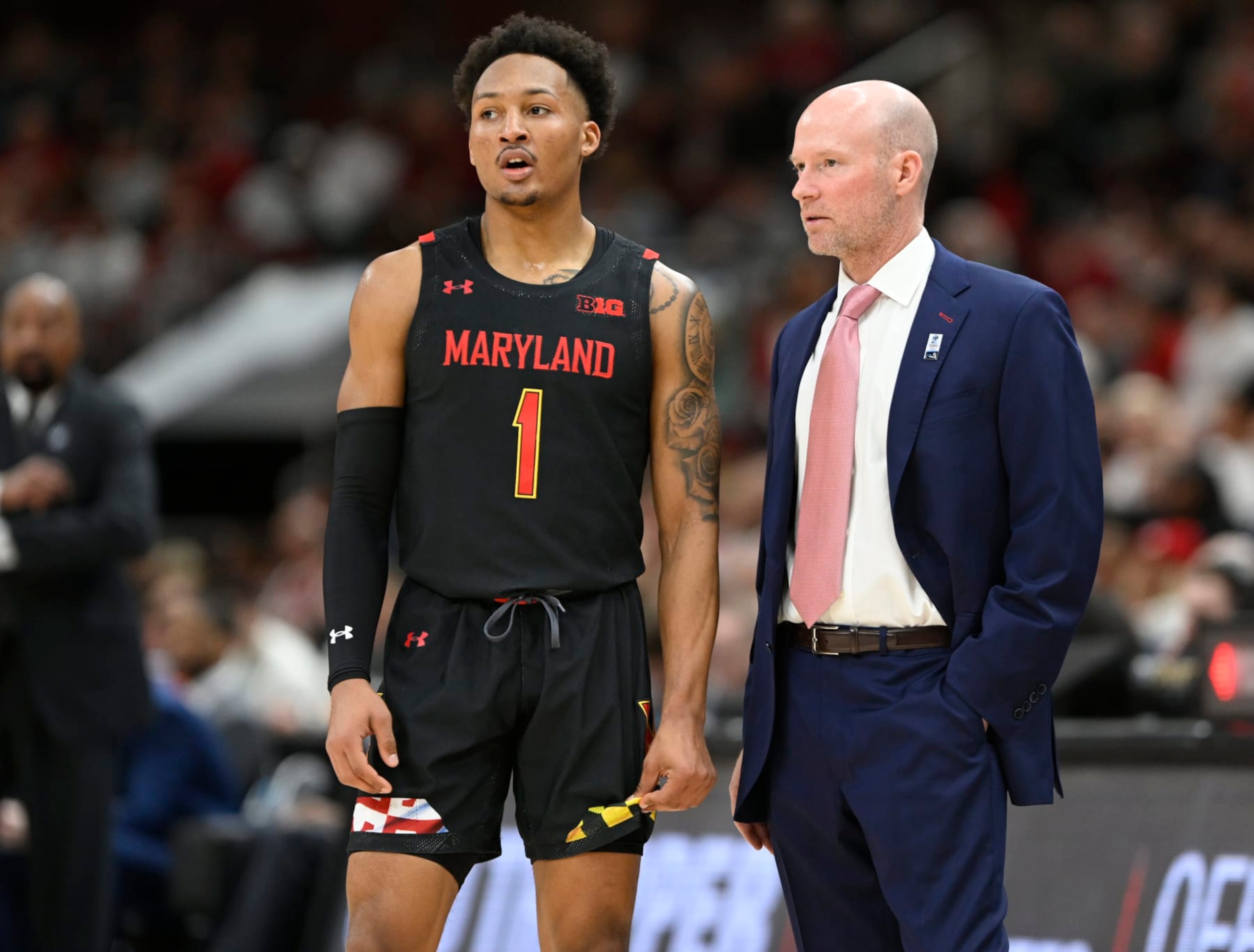
We may think we know who the 25 best teams in the country are, but last year was a vivid reminder that we don't know a damn thing before the season begins.
AP preseason No. 1 North Carolina? Missed the NCAA tournament.
No. 1 seed Purdue? Wasn't ranked to open the season.
National champion Connecticut? See: Purdue.
With that in mind, who are the teams that we'll look back on in five months and wonder what in the world we were thinking?
On the "most likely to disappoint" front, the choice almost has to be the Houston Cougars at No. 7 in the AP poll.
We're at the point with Kelvin Sampson where you have to assume he'll find some diamonds in the rough in the process of churning out a championship-caliber defense. However, replacing all of Marcus Sasser, Jarace Walker and Tramon Mark while graduating to a much higher difficulty level in the Big 12 won't be easy.
Ja'Vier Francis was one of just seven players to log at least 300 minutes with a PER of 31 or greater last season, but can he maintain that fire while going from 10 MPG to more like 30 MPG?
Houston's season may depend upon it.
At the other end of the spectrum, it sure does feel like we are sleeping on the unranked Maryland Terrapins.
I mean, how many other 22-win teams are bringing back three players who averaged at least 11 points per game?
Well, after what some people might consider "an excessive amount of research," that's one question I can answer. There were 93 teams with at least 22 wins in 2022-23, but only five retained at least three 11 PPG scorers: Maryland, two popular Final Four picks in Creighton and Marquette and two mid-majors expected to return to the dance in Saint Mary's and Boise State.
Who steps up alongside Jahmir Young, Donta Scott and Julian Reese is a bit of an unknown, but freshman guard DeShawn Harris-Smith could be an immediate elevator for an unranked Final Four candidate.
.jpg?w=2560)
.jpg?w=2560 "Maxx, Kirk Get Chippy at Practice")
.jpg?w=2560 "Harden Gun Charge Dismissed")