
'It's All Monopoly Money': Why NBA Insiders Mock Supermax Extensions for Co-Stars
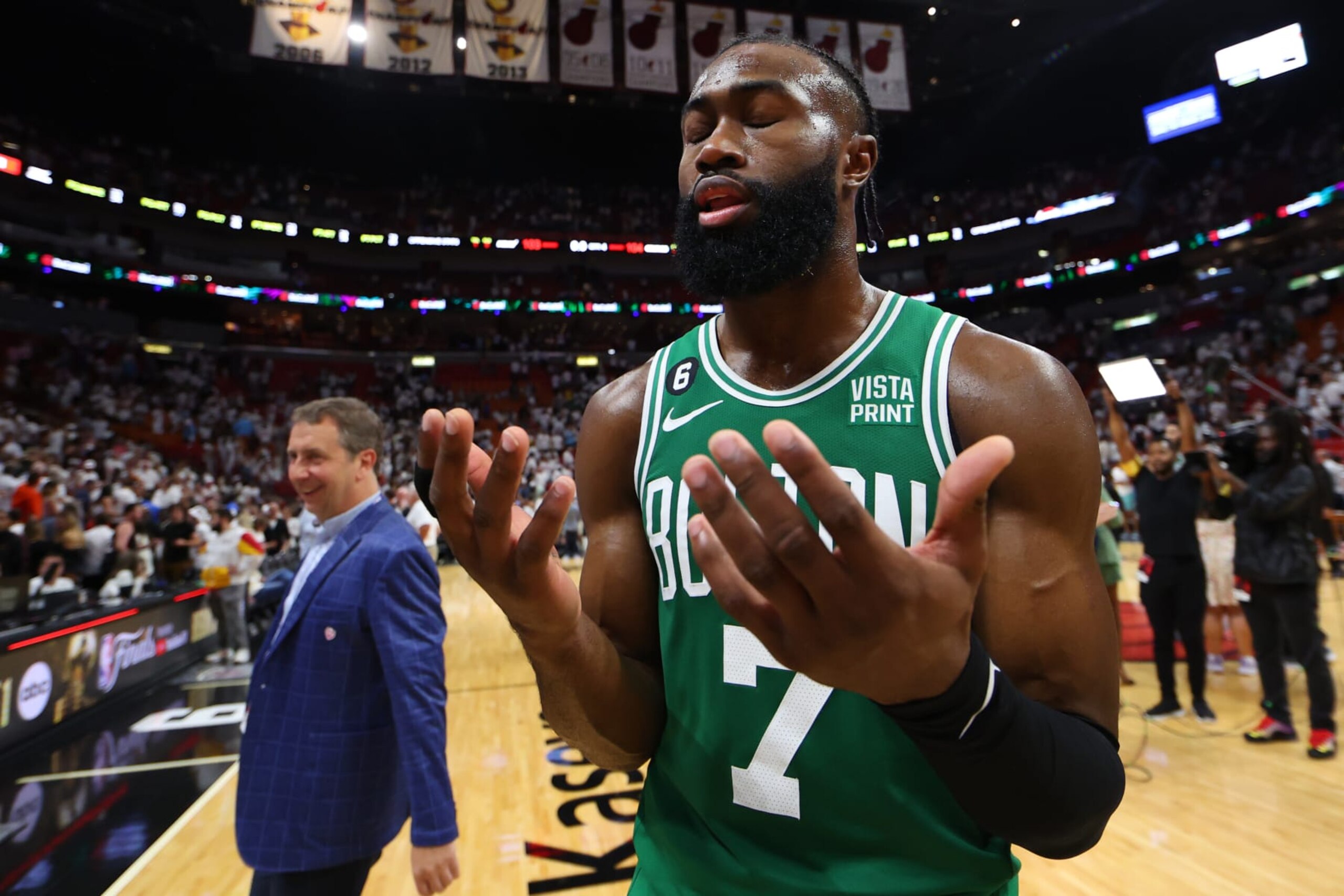
Jaylen Brown's contract status has been a hotly debated topic in NBA circles. Would—or rather should—the Boston Celtics give the All-Star a supermax extension when a standard maximum was already more than any other team could offer?
Would the Celtics yield to the new collective bargaining agreement's harsher penalties for heavy-spending teams—or give Brown the whole bag (35 percent of the cap) after he earned an All-NBA Second Team nod for the 2022-23 campaign?
The answer officially came down Wednesday, as first reported by ESPN's Marc Spears, with Brown re-signing on an extension that projects to pay him $288.3 million over five years (in addition to his $28.5 million-$31.8 million for 2023-24).
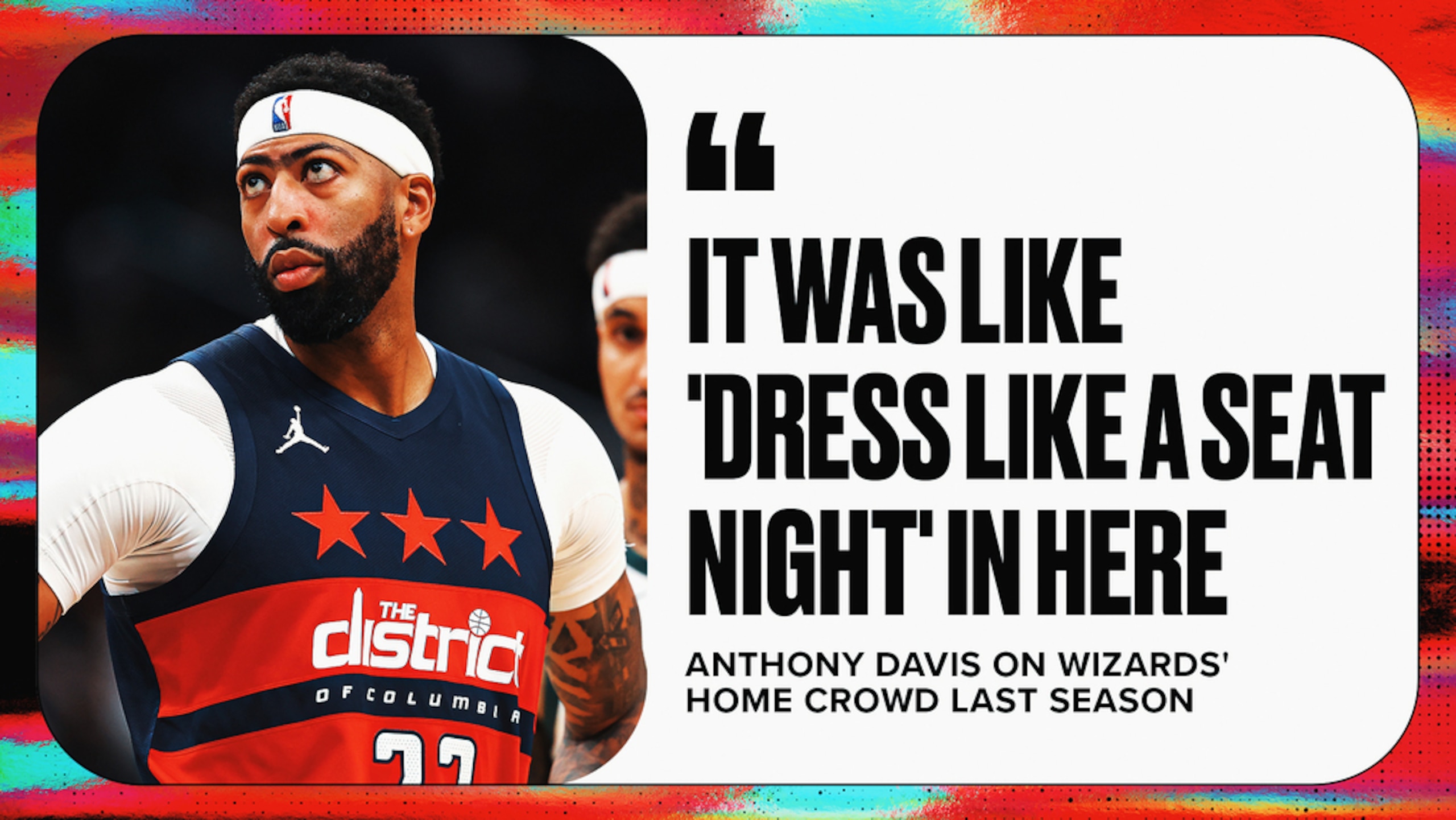
The deal is a massive win for Brown, his agent, Jason Glushon, and the NBPA itself after it negotiated a multifaceted and often criticized/misunderstood CBA.
But was it a win-win for the Celtics and, by extension, the NBA?
"Crazy—it's all Monopoly money," an Eastern Conference executive said, scoffing at the price Boston paid Brown.
"It's become a tough landscape, to be honest," a Western Conference executive said. "Supermax (contracts aren't) ideal for the league."
History hasn't been incredibly kind to teams that signed players to similar extensions. But will Brown's contract with the Celtics—which projects to top out in 2028-29 at $65.6 million—become a crippling albatross, or is it simply the cost of doing business in today's NBA?
A Spotty History
Ten players signed designated veteran supermax extensions through the previous 2017-2023 collective bargaining agreement. Two won championships after their extensions (Nikola Jokić and Giannis Antetokounmpo), and two earned NBA Most Valuable Player honors (Joel Embiid and Antetokounmpo).
But there have also been four supermax players who were traded before completing their deals (James Harden, Russell Westbrook, John Wall and Rudy Gobert), and two of those were waived before their contracts ended (Westbrook and Wall). Meanwhile, one is actively seeking a trade (Damian Lillard).
The Phoenix Suns seem happy with Devin Booker, but progress is shakier with Karl-Anthony Towns and the Minnesota Timberwolves. Steph Curry signed the only supermax contract as a free agent in 2017 and is a clear franchise player. Brown, in comparison, is a second-tier star.
"I feel like Brown might be a tough guy to negotiate with," an NBA source said. "He's a very good, 26-year-old wing—He'll be 31/32 [after this extension]—It should age OK."
Nothing like an "OK" $300 million investment. By that tepid response, should he already be lumped in with the "bad" ones?
"Wall and Westbrook were candidates to age poorly the minute they were signed for injury reasons," the source continued. "[The Utah Jazz] signed Gobert to that contract and still got a massive haul [in return from Minnesota in trade]. KAT has been hurt. It's just tough to say."
It's worth noting that the supermax doesn't technically refer to players like Luka Dončić, Ja Morant and Jayson Tatum, who signed extensions after their initial rookie-scale contracts. Dončić prequalified with All-NBA honors, but most (like Morant and Tatum) didn't earn the bump from 25 percent of the cap to 30 percent.
Also, Bradley Beal's five-year, $251 million deal in July 2022 (widely considered in the "not a great investment" category) was a standard maximum contract for a player with at least 10 years of service. Brown's extension is about $41.1 million higher than the $247.1 million he'd have been eligible for without the All-NBA honor.
Given how rare it is for a player to qualify (needing to win MVP, Defensive Player of the Year or timely All-NBA awards) without changing teams after the first four years of service—it almost seems like teams are obligated to pay the supermax when circumstances align.
Would he have really rejected that max number if the Celtics refused to offer the supermax? Conversely, if Boston views him as a core franchise player, wouldn't that be a mixed message if the team refused to pay him the most it could?
This quandary is why there was a substantial push in CBA negotiations—which failed despite significant team-side support—to get the NBA to treat supermax contracts like standard maximums against the cap and tax. Brown would get his $288.3 million, but the Celtics' books would reflect a $247.1 million deal.
The details as to why it was rejected are complex—in part, it would throw the BRI (Basketball Related Income) split out of whack.
But under the existing system, teams face a "success" problem. If too many of your players hit, the price to keep them may be too high, especially for smaller market teams.
This could put the Celtics in a difficult position, paying Brown to be a No. 1 when many around the league view him as an overpaid No. 2.
"It never seemed that things were hunky-dory there in Boston for [Brown]," the Eastern Conference executive said. "It will be difficult to move him [down the road], but anything is possible in this league."
Boston's Future
The Celtics project to be over the NBA's new second apron ($182.8 million) this season, carrying a $24.5 million tax bill with its 14 players currently under standard contracts.
The tougher penalties, like frozen draft picks, don't start until after 2023-24. Even with Brown's jump in salary, the team projects to be roughly $6 million to $7 million over a 2024-25 second apron of $190.3 million. If reducing payroll becomes a priority, the team can look to move off one of its more expensive guards like Malcolm Brogdon or Derrick White.
And while Tatum is likely to opt out and extend before the start of the 2025-26 season, the only other Celtics besides Brown under contract will be Kristaps Porziņģis ($30.7 million) and Robert Williams III ($13.3 million-$14.9 million)—both in the final years of their respective deals.
Boston will face short-term hurdles, but the Brown extension won't doom the franchise, provided he stays healthy and productive. If he or the team backslides, that's a different story.
Email Eric Pincus at eric.pincus@gmail.com and follow him on Twitter @EricPincus.

.jpg?w=2560 "B/R's Expert Week 7 NFL Picks 🔮")

.jpg?w=2560 "LaMelo Claps Back at Lonzo 🤣")
.jpg?w=2560 "Steelers Fan Event in Paris Canceled (AP)")