


The age of the superteam may be coming to a close, but several NBA offseason moves still brought big names together, creating fascinating combinations.
Some of them could define the 2023-24 championship race, while others warrant attention on the strength of their strangeness alone.
The team-ups we'll feature here are mostly new, with one holdover from last season making the cut because we saw too little of it to make any sweeping judgments.
The weirdness we're looking for can show up in several ways. Some feature positional overlap, while others highlight past feuds. We've even got a two-generation team-up almost too far-fetched to believe. Across the board, these induce double-takes, questions about how they'll fit on paper or concerns about fit on the floor.
Every one of these could turn out well, but the most exciting aspect of all of them is that we won't know for sure how the on-court and interpersonal dynamics will work until we see them in the heat of competition.
Kristaps Porziņģis and Jayson Tatum, Boston Celtics
1 of 5
Kristaps Porziņģis might not fit the traditional superstar bill, but the original unicorn is a skilled 7'3" scorer, just came off a season with averages of 23.2 points per game on 38.5 percent shooting from deep and brings an overall skill set you just don't see around the league.
He's close enough to count for our purposes, which is good because we really need to take a long look at his fit with Jayson Tatum and the Boston Celtics.
Though they've had immense success over the better part of the last decade, advancing at least as far as the Eastern Conference Finals in five of the past seven seasons, the Celtics' failure to win the whole thing owes mostly to an offense that bogs down at the worst times. Over and over, Boston's attack stagnated while turnovers mounted. When things got bad, the Celtics typically turned to Tatum as the singular creator against defenses that stopped him often enough to keep that elusive championship just out of reach.
Porziņģis is going to juice Boston's offense, offering spacing and post-up looks other frontcourt options can't provide. But he isn't the offensive organizer or pick-and-roll operator many thought the Celtics should have targeted. Add to that the departure of Marcus Smart in the deal that brought KP aboard, and Boston is missing arguably its best passer.
Talent may win out in the end; Porziņģis brings a ton of it. But it should still concern Celtics fans that their new high-profile acquisition might not be able to add real dynamism to the offense. If that happens, Tatum may still be stuck trying to create difficult looks down the stretch of postseason games.
Stephen Curry and Chris Paul, Golden State Warriors
2 of 5
Forget 38. Chris Paul will be able to get his team a decent look out of the pick-and-roll when he's 48. That's something the Golden State Warriors desperately need after a season undone by awful second units and boatloads of turnovers.
If CP3 turns only two or three go-nowhere possessions per game into lobs or elbow jumpers, even against opposing backups, it could legitimately be the difference between the Warriors' fifth title since 2015 and a first-round exit. That's because Golden State's first unit—Stephen Curry, Klay Thompson, Andrew Wiggins, Draymond Green and Kevon Looney— put up a plus-22.1 net rating when sharing the floor last season. That was, by a laughably huge margin, the best heavily used five-man group in the league.
If Paul can lead the reserve Warriors to a break-even scoring margin when Curry and Co. are out of the action, Golden State might reel off 60 wins. In that sense, Paul is a hand-in-glove fit with the Dubs.
He and Curry have had their moments of cooperation, but we can all agree it's still profoundly strange to imagine him with the Warriors.
Paul's Clippers owned Curry and the Warriors until Steve Kerr took over and flipped the rivalry in decisive fashion. It was very much a "little brother, big brother" situation until Golden State had a growth spurt.
Curry has personally embarrassed Paul, a fellow North Carolina product, but it's gone the other way as well. And there was the endlessly meme-able fake laugh that Paul threw Kerr's way when, a few years after the Clippers rivalry, the Warriors made a habit of ending the Houston Rockets' playoff runs.
Paul and Curry may not share the floor all that much, unless the fit works out in undersized closing lineups. That'll keep the weirdness under control to some degree. But it remains bizarre that these two longtime competitors at the same position are joining forces.
Ja Morant and Derrick Rose, Memphis Grizzlies
3 of 5
These two are separated by a full NBA generation, and the latter hasn't been a true superstar for over a decade, but it's still surreal that Ja Morant and Derrick Rose are now on the same team.
It's unclear how often, if ever, these two will share the floor. If Rose plays a significant role at all, it'll likely come during Morant's season-opening 25-game suspension. Ultimately, this isn't about Rose and Morant working together on the court.
The Memphis Grizzlies' acquisition of Rose felt very much motivated by a desire to get an adult in the room. Fifteen years into his NBA career, Rose can impart wisdom on what it's like to be an MVP, what it's like to nearly slide all the way out of the league and everything in between. He's here to give Morant guidance in the wake of the young guard's multiple off-court missteps.
Rose is also one of the only people on the planet who'll be able to relate when Morant wants to discuss what the tops of backboards look like from above, or how it's weird that the other nine players on the floor sometimes move in slow motion. Superhuman athletes need sounding boards, too, and Rose can be that for Morant.
Perhaps the strangest part of this union is that it disproves a theory that seemed certain during Rose's prime. Nobody thought we'd ever see a point guard as unfathomably explosive and preposterously athletic as Rose. Now, he's sharing a locker room with one.

Devin Booker and Bradley Beal, Phoenix Suns
4 of 5
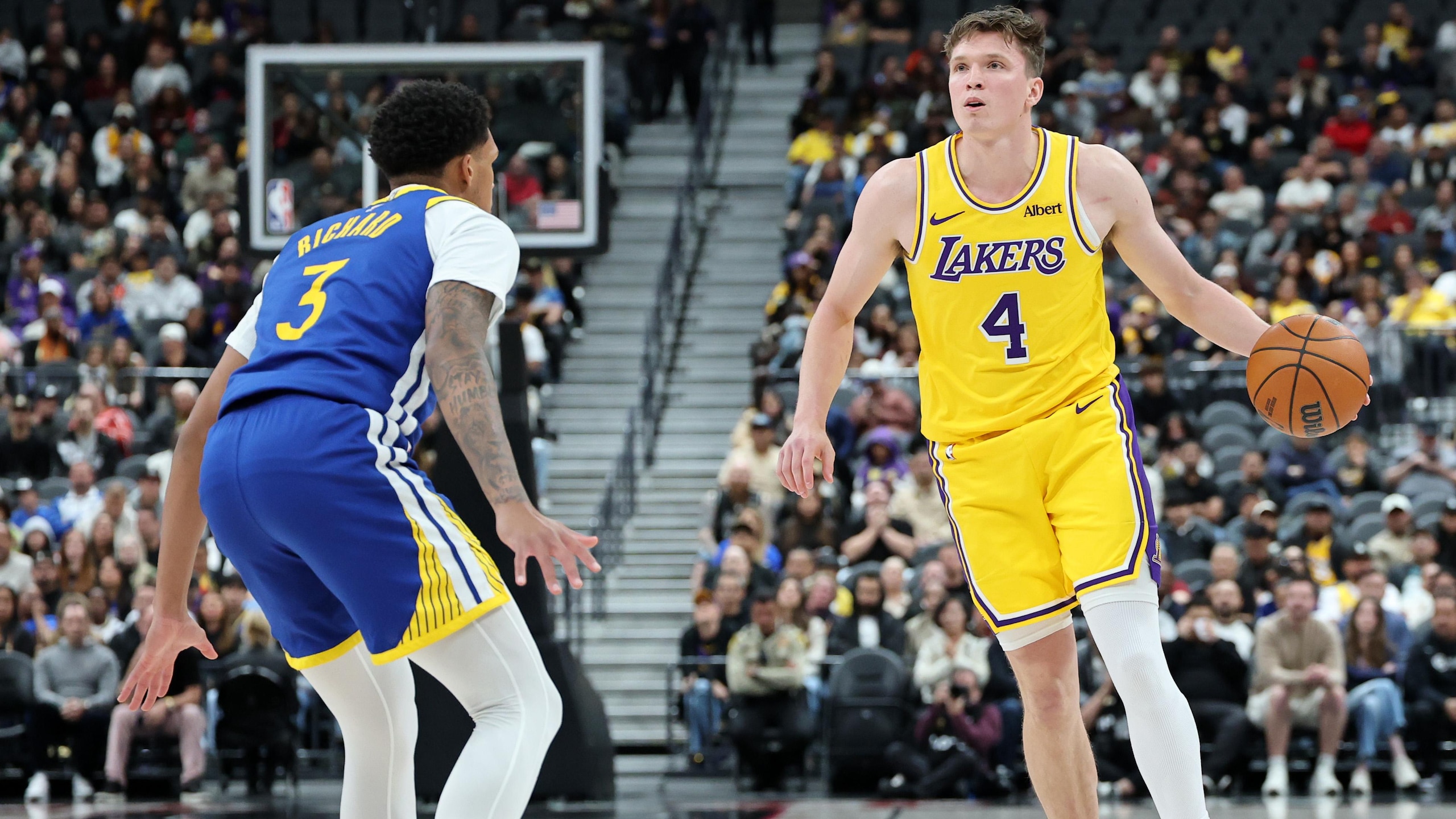
No survey of double-take-inducing partnerships would be complete without the one between new Phoenix Suns teammates Bradley Beal and Devin Booker.
This mashup, brought into being by the Washington Wizards' long overdue recognition that a rebuild was in order, flies in the face of what we thought would be a new NBA normal. Many theorized the revamped CBA would make top-heavy rosters like Phoenix's a thing of the past. With onerous financial penalties for big spenders, including the loss of roster-building tools like the taxpayer's mid-level exception and the freezing of future draft picks, unions like this one were supposed to disappear.
That Phoenix barreled right through the second apron within weeks of the new CBA is only the first strange element here. The second: Booker and Beal's duplicative skill sets.
A shared ability to threaten defenses off the ball will make the fit work, but the fact remains Phoenix is paying the max to two very similar shooting guards. Ideally, if you're going to spend that kind of money, you want players whose skills complement each other and cover for respective deficiencies. Draymond Green and Stephen Curry are the most extreme example.
The Suns will contend if they stay healthy, and it's entirely possible Beal and Booker bring out the best in one another. But seeing them share the floor with Kevin Durant—who fits so perfectly everywhere that he wasn't even a consideration for this exercise—is still going to be weird.
Karl-Anthony Towns and Rudy Gobert, Minnesota Timberwolves
5 of 5
This is the only holdover pairing from last season, but it lands here because it's so wildly off-trend, and because we still have so little information on how it's going to work.
If anything, the small sample of playing time Rudy Gobert and Karl-Anthony Towns shared last season left us with more questions than answers. We're only dealing with 1,095 possessions, the equivalent of about 10 full games based on Minnesota's 104.7 possessions per contest.
We knew there'd be kinks to work out with two players who can only defend centers, but most of the evidence suggests Towns and Gobert can function pretty well defensively. Much of that owes to Gobert's rim protection, which covers for Towns' struggles to stay in front of quicker matchups on the perimeter.
Offensively, though, the Minnesota Timberwolves were much better with one or the other on the floor than they were with both. KAT-only lineups scored 120.1 points per 100 possessions, Gobert-only looks managed 112.8 and dual-big sets put up a paltry 107.5.
Centers have generally been falling out of favor for several years, with teams preferring versatility and skill over sheer bulk. It's safe to assume the Wolves will be the last team we see paying max rates for two players at that position unless Towns and Gobert succeed on both ends across many more reps than they shared last year.
As much as any pairing in the league, this one remains an unfinished experiment. If Minnesota doesn't get the results it wants in 2023-24, it could be the last of its kind.
Stats courtesy of NBA.com, Basketball Reference and Cleaning the Glass. Salary info via Spotrac.
Grant Hughes covers the NBA for Bleacher Report. Follow him on Twitter (@gt_hughes), and subscribe to the Hardwood Knocks podcast, where he appears with Bleacher Report's Dan Favale.

.jpg?w=2560 "Rams' New Kicker Placed on IR")
.jpg?w=2560 "Hunter's Wife Calls Out Sharpe")
.jpg?w=2560 "Tank Dell Playing Sunday 💯")