
The 5 Biggest Overpays of 2023 NBA Free Agency So Far
Oh, how NBA free agency has changed.
Every year, it seems like the market is dotted with fewer overpriced agreements than the last. And this makes sense. Looser extension rules have lowered the number of bigger names entering free agency, and teams have either devalued the concept of cap space or found alternative uses for it (trades) as a result.
Still, even amid this shifting landscape, each summer invariably features a handful of deals that incite some serious head-scratching. This year's (early) batch of free-agency business is no different.
Identifying these "overpays" is more about the teams and the circumstances under which they've bankrolled these signings. Did they unnecessarily hamstring their future or spend big on a player who doesn't jibe with or adequately accelerate their timeline? What other suitors, if any, would've paid as much for the player they poached or retained? Etc., etc., etc.
Finally, only deals with two or more guaranteed years will be taken into account. One-season overpays are virtually no-risk (See: Bruce Brown's two-year, $45 million pact with the Indiana Pacers that includes a team option for 2024-25).
Dillon Brooks, Houston Rockets
1 of 5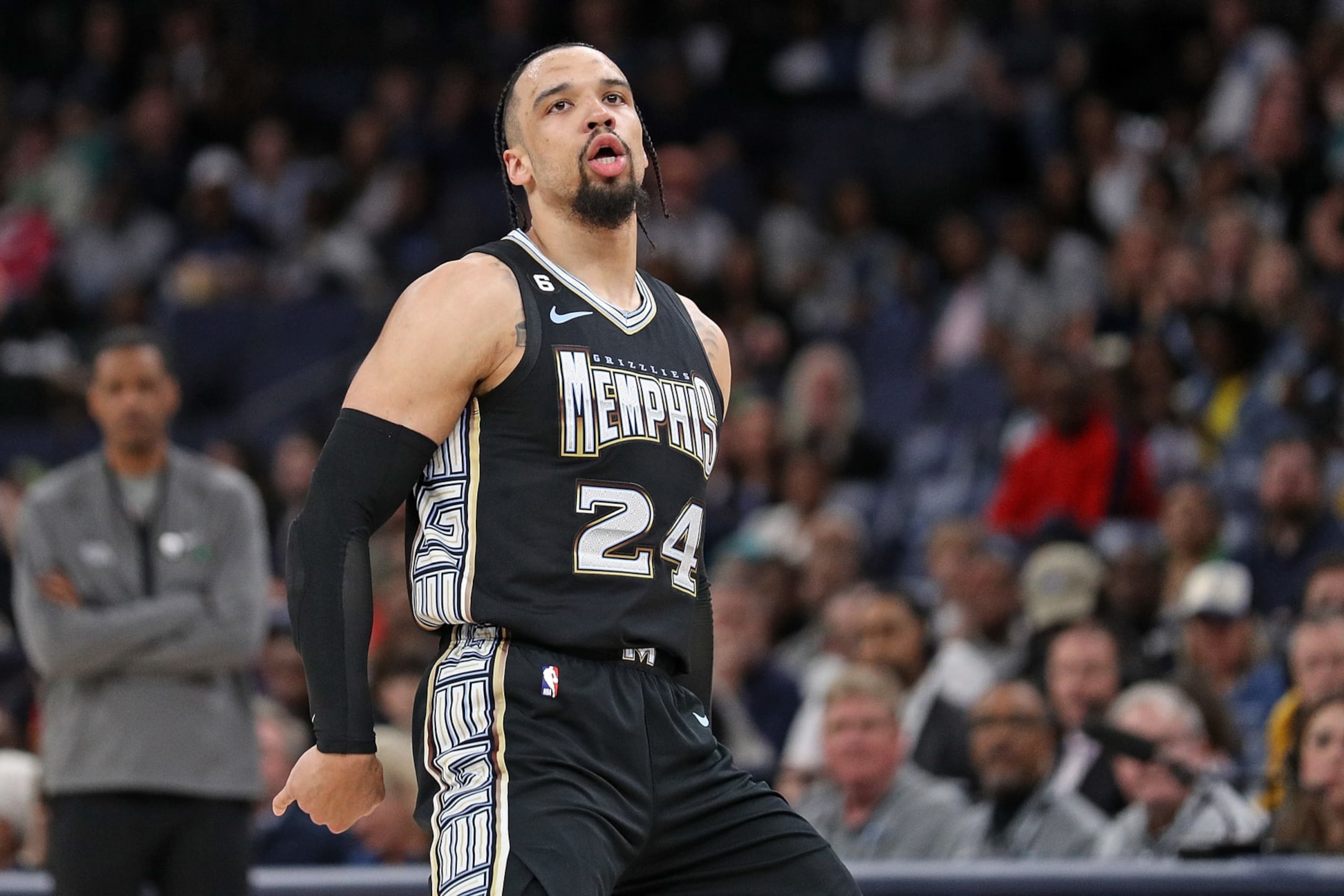
Contract: 4 years, $80 million
Fred VanVleet's three-year, $128.5 million max deal with the Houston Rockets leaps off the page, but Dillon Brooks' four-season pact smacks you in the face.
Houston is attempting to buoy its position in the Western Conference, and the 27-year-old infuses the rotation with elite defense. He can cover smaller point-of-attack creators to off-ball pinballers to larger wings and forwards. Despite his awkward close to the season in Memphis, he was still recognized for his efforts with an All-Defense selection.
Yet, there's an entire other side of the floor. And while Brooks isn't exactly a non-factor on offense, he might be something worse.
Though he's shown the ability to knock down standalone threes, defenses don't treat him like a viable threat—especially in the playoffs. And his penchant for launching looks off the dribble can be actively damaging. Among 58 players who averaged five or more pull-up jumpers per game last year, his effective field-goal percentage ranked 56th.
Structuring this deal on a declining scale will help, but only so much. Frankly, the length on this one is scarier than the annual dollar amount.
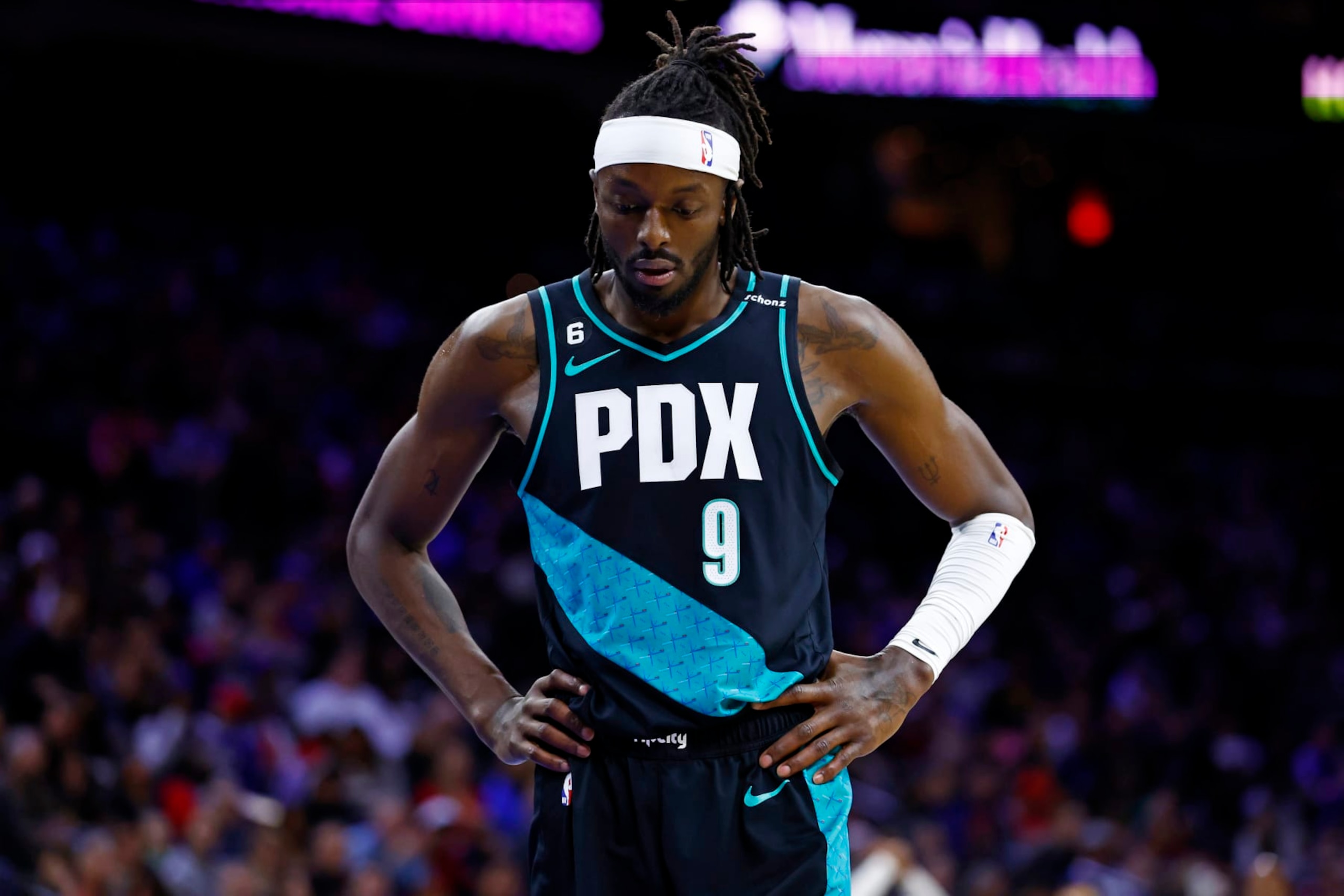
Jerami Grant, Portland Trail Blazers
2 of 5
Contract: 5 years, $160 million
It says a lot about Jerami Grant's contract that the most impassioned defenses of the Portland Trail Blazers' logic read something like, "it's not actually that bad."
There is value in weighing this money against a rising salary cap. The final year of the 29-year-old's deal will pay him $36.4 million. That's about 22.1 percent of the projected 2026-27 salary cap, which could feasibly—if unlikely—come in noticeably higher once the league brokers its next TV deal.
Paying 20-ish percent of the cap for a non-star is fine if you're a contender, or if you're on the verge of becoming one. The Blazers are neither, and that was true before the Damian Lillard trade request.
Maybe suitors treat this as a net-positive deal around the 2024 trade deadline. Grant just averaged over 20 points while downing 40-plus percent of his threes, and he continues to play rock-solid defense. But the back end of this contract figures to be scary.
The Syracuse product will turn 33 in its final season, and his effectiveness remains someone reliant on athleticism. And for all the (deserved) acclaim he's received for expanding his offensive agency, Grant is still best suited as a third or fourth option.
Reggie Jackson, Denver Nuggets
3 of 5
Contract: 2 years, $10.3 million (2024-25 player option)
After losing Bruce Brown to Indiana, the Denver Nuggets used their best spending tool on...bringing back Reggie Jackson.
This deal makes, approximately, zero sense.
Jackson, 33, barely played for the Nuggets upon joining them from the buyout market and was not a part of their postseason rotation. He should down more than 27.9 percent of his triples given more court time, but he won't do anything to elevate the second-unit playmaking or defense.
Replacing Brown was an impossible task relative to Denver's financial constraints. And devil's advocates are free to play the "who else were they doing to sign?" and "strong veteran locker room presences have value" cards.
But this isn't necessarily about the market yielding better options, though Shake Milton signed for less in Minnesota and would have been more intriguing. It's about Denver losing every aspect of this negotiation.
Jackson didn't play well enough to leverage them into spending their full mid-level, let alone giving him a player option in Year 2.

Kyle Kuzma, Washington Wizards
4 of 5
Contract: 4 years, $102 million
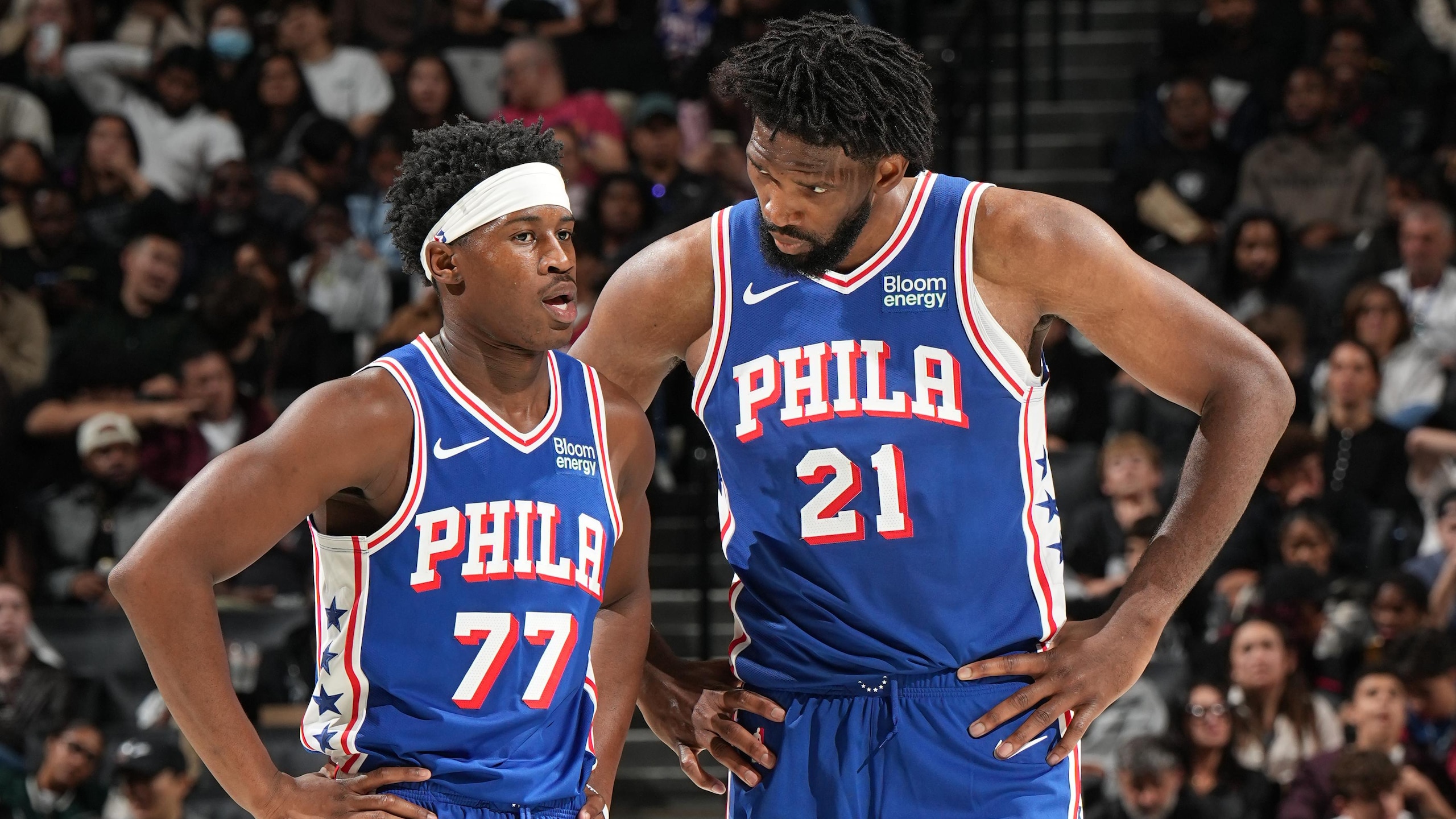
Kyle Kuzma must be evaluated as more of a trade asset than anything else.
The Washington Wizards are in the infancy of a long-overdue rebuild. Devoting long-term money to a soon-to-be 28-year-old doesn't jibe with that timeline. This is asset preservation at its most obvious.
Whether the Wizards actually preserved the asset here, though, is debatable.
Kuzma is coming off a career year in which he averaged 21.2 points while really showcasing his interior shot-making and finishing, and continuing the trend, for the most part, of holding his own on defense. But is he more than $8 million per year better than Harrison Barnes (three years, $54 million)? Or within $8 million per year as valuable as Khris Middleton (three years, $102 million)?
Again, this is debatable. But Kuzma's offensive game doesn't have their scalability. He knocked down just 33.8 percent of his catch-and-shoot triples last year and has turned in above-average spot-up efficiency just twice during his career (2019-20 and 2020-21).
Letting Kuzma walk for nothing would have been a less-than-ideal outcome, and this contract is far from immovable. But the Wizards just shelled out third-best-player-on-a-title-team money to someone who might not be that. There's no guarantee it pays off.
Jakob Poeltl, Toronto Raptors
5 of 5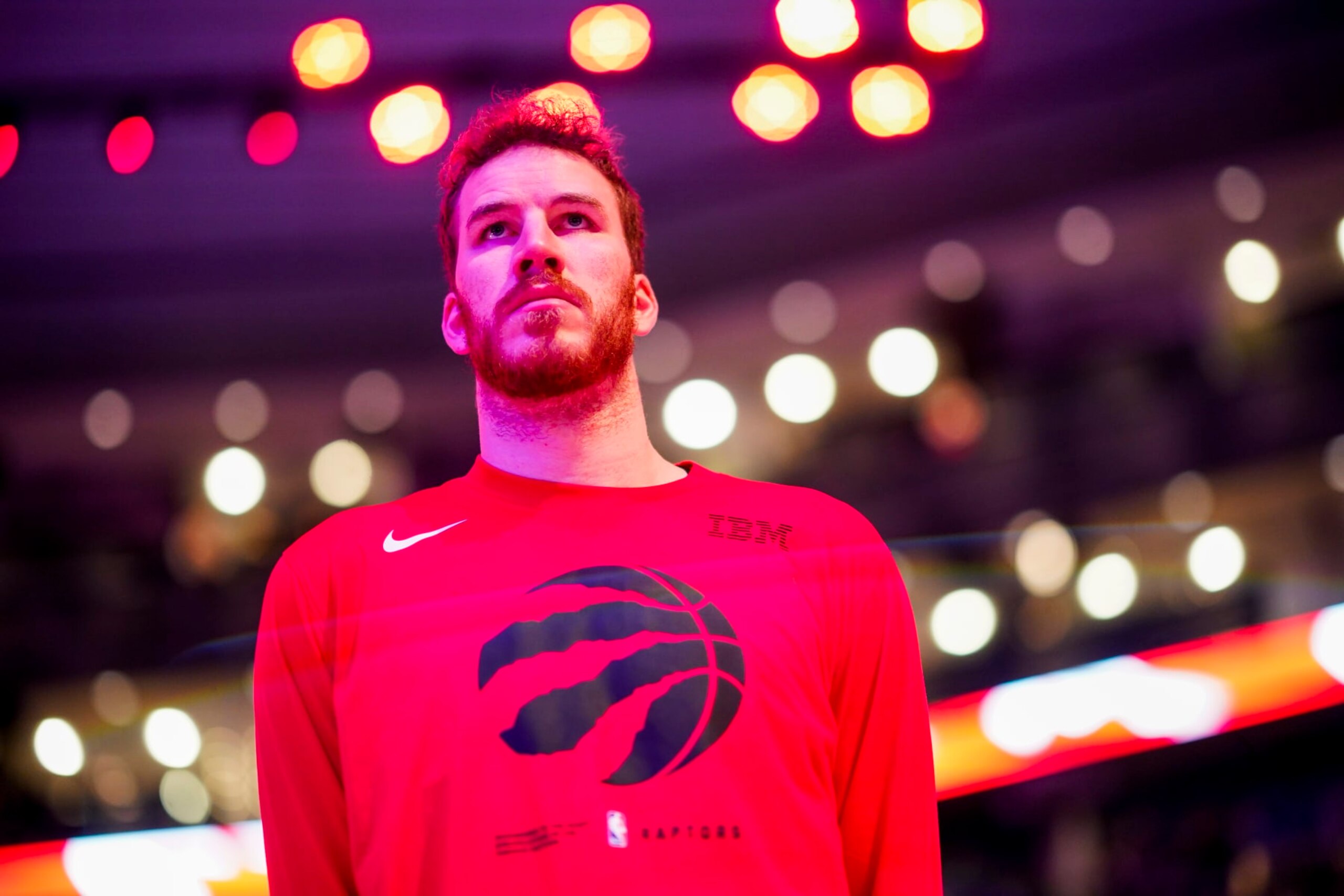
Contract: 4 years, $80 million (2026-27 player option)
Letting Jakob Poeltl walk was never a realistic option for the Toronto Raptors, not after they dealt away a top-six-protected first-round pick to get him at the trade deadline.
That doesn't make this deal any easier to stomach, though.
Starting centers should be worth $20 million per year in a vacuum, and the 27-year-old brings rim protection, rebounding, screening, ball movement and an operable floater.
However, he doesn't actively stretch the floor on offense, he won't dazzle as a switch defender, and his shaky free-throw shooting makes it difficult to close games with him in the middle.
Committing this much money—and this many years—to Poeltl looks more egregious on the heels of Fred VanVleet's departure. The Raptors' half-court spacing was clumpy as previously constructed, but it's even clunkier now. FVV also assisted on one-third of Poeltl's made buckets. Toronto won't replicate that same dynamic with the newly signed Dennis Schröder.
Certain teams might have the personnel to pay Poeltl despite these limitations. The Raptors aren't one of them.
Unless otherwise noted, stats courtesy of NBA.com, Basketball Reference, Stathead or Cleaning the Glass. Salary information via Spotrac.
Dan Favale covers the NBA for Bleacher Report. Follow him on Twitter (@danfavale), and subscribe to the Hardwood Knocks podcast, co-hosted by Bleacher Report's Grant Hughes.
.jpg?w=2560 "Cam Ward Says He's Not A Loser")
.jpg?w=2560 "Chargers Fall to 0-5 🤢")
.jpg?w=2560 "🚨 Texans Trade for MHJ")
.jpg?w=2560 "Grading MHJ Trade 📝")

.jpg?w=2560 "MHJ Bought Own Jugs Machine")