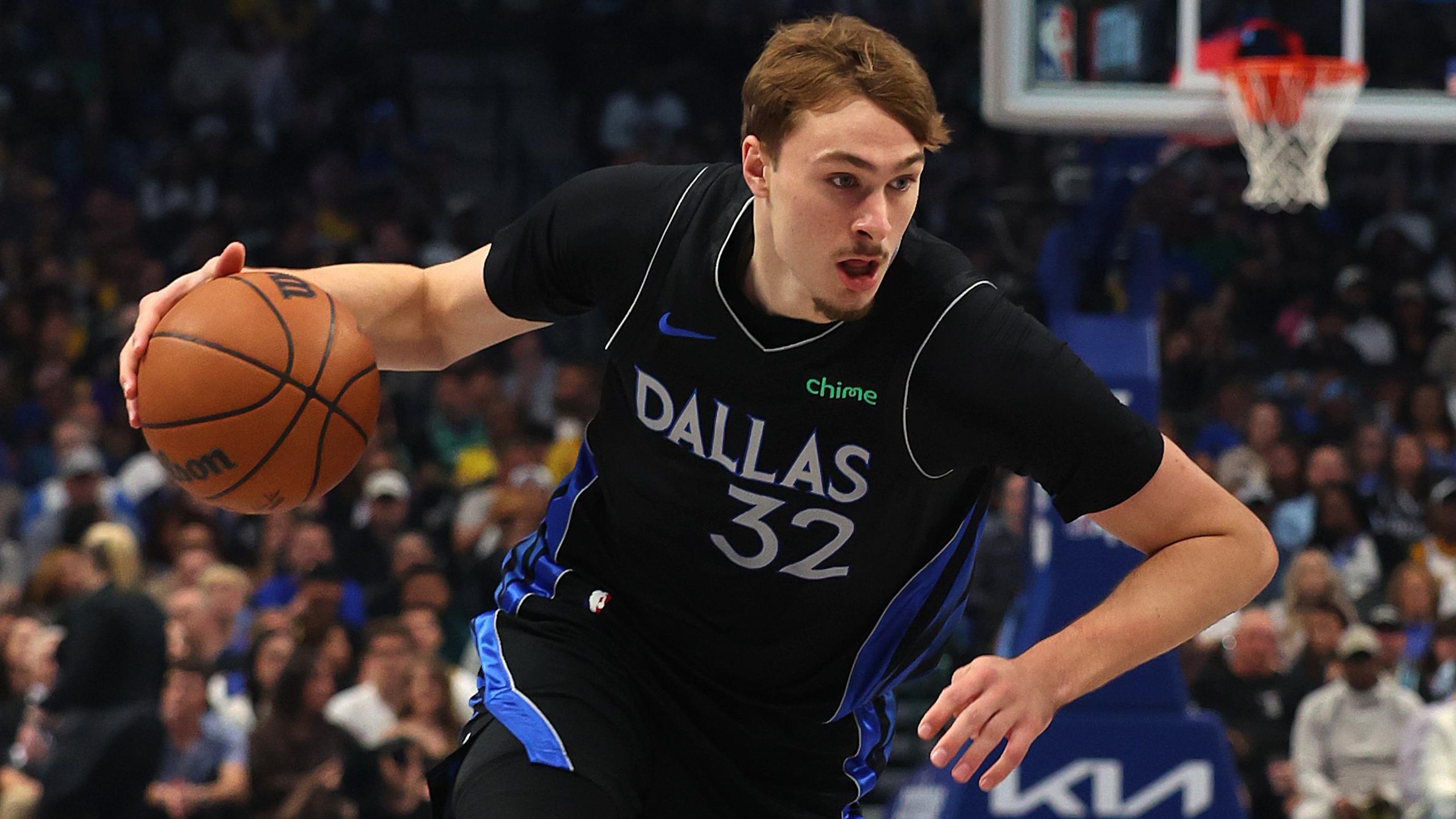


The 2025 NBA draft class delivered, producing multiple future starters and at least a couple of potential superstars.
Cooper Flagg proved he could be a primary playmaker, Kon Knueppel shot the lights out and Dylan Harper flashed finishing craft most 10-year veterans would envy. Best of all, several first-year players made impacts on playoff teams. That last part is the real bonus. Rookies have always gotten their numbers; it's rare for so many of them to do so while contributing to team success.
Let's celebrate the 10 most impressive members of the 2025 class by laying out this year's All-Rookie teams.
First Team: Kon Knueppel, Charlotte Hornets
1 of 10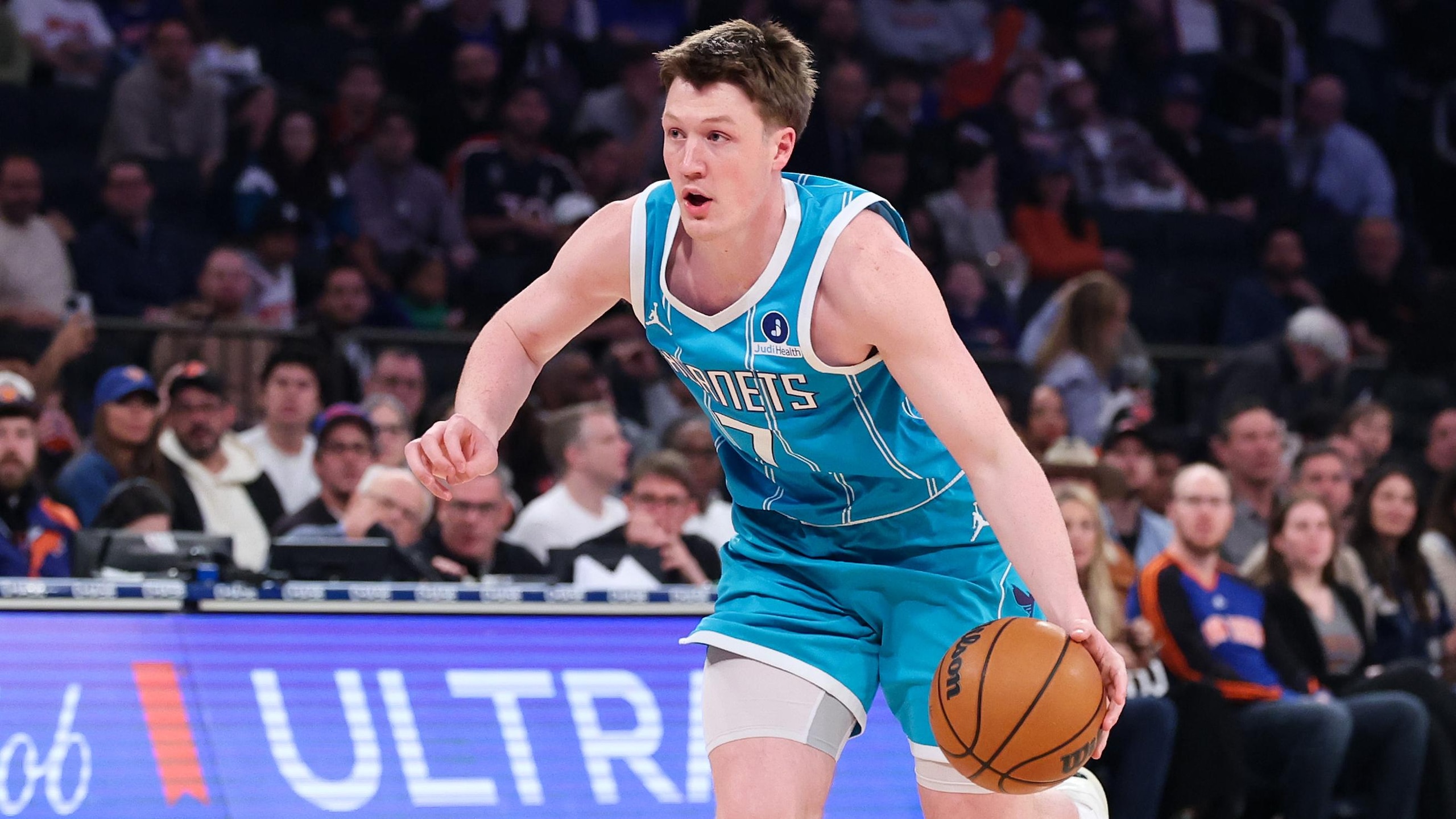
Ditch the rookie designation for a moment, and appreciate that Kon Knueppel just had one of the best shooting seasons of all time.
The 20-year-old was just the sixth player in NBA history to hit at least 42.0 percent of his threes while getting up over 600 attempts. The others are all on the short list of the top long-range threats the league has ever seen: Stephen Curry, Klay Thompson, Buddy Hield, Duncan Robinson and Dennis Scott.
In averaging 18.5 points, 5.3 rebounds and 3.4 assists, Knueppel also showcased an advanced scoring game inside the arc. His strength, patience, craft and ability to play off two feet helped him convert 54.8 percent of his twos and produced an elite 63.3 true shooting percentage. That figure was easily the best among rookies who had rotation roles, and Knueppel's combo of efficiency and volume actually mattered on a winner.
The Charlotte Hornets' breakthrough 44-win campaign wouldn't have been possible without Knueppel's 81 games of elite offense.
First Team: Cooper Flagg, Dallas Mavericks
2 of 10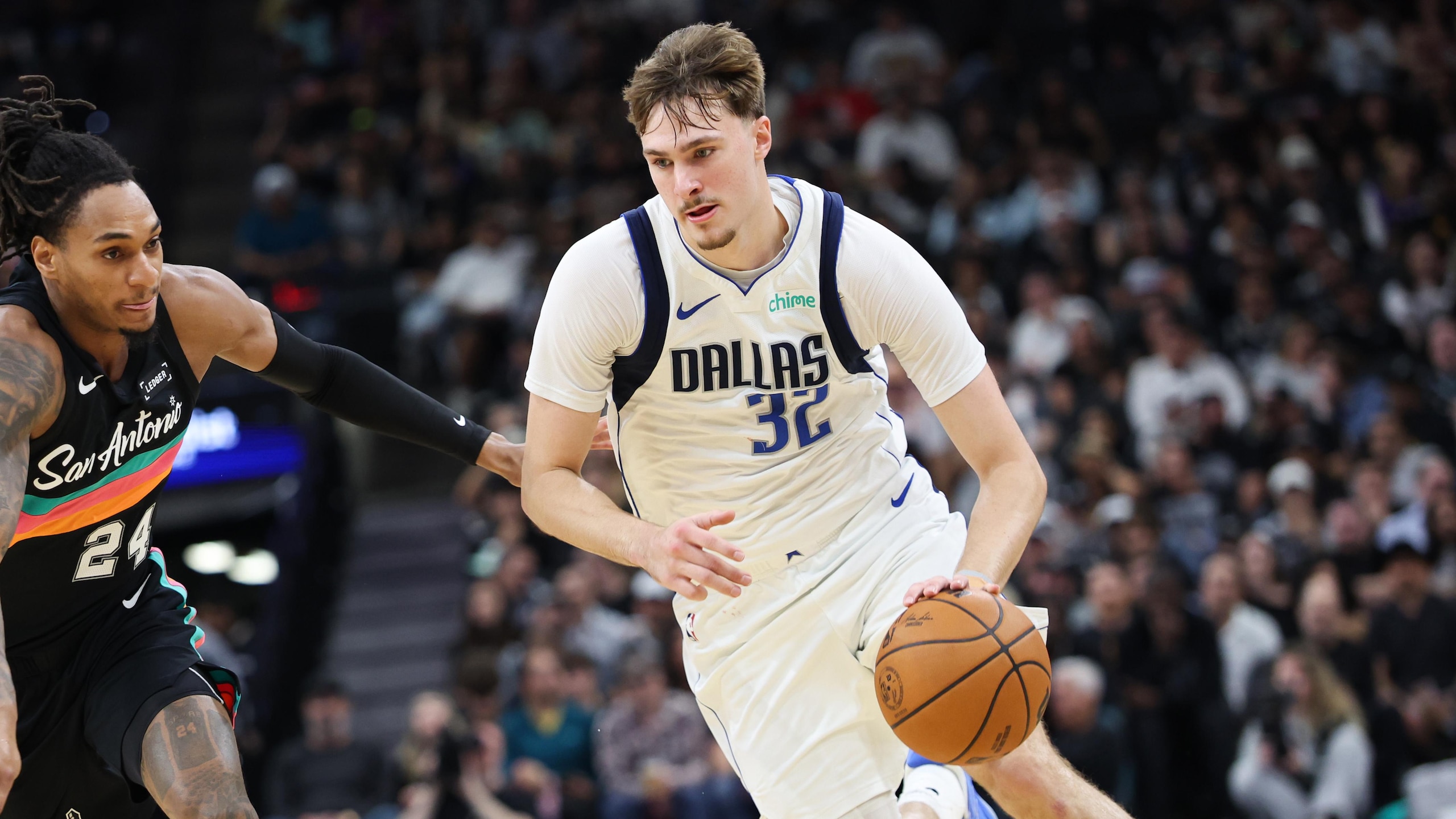
Cooper Flagg was thrust into a difficult spot as the Dallas Mavericks' primary playmaker early in the year, shot under 30.0 percent from deep and didn't deliver the elite defense most thought would be a given when he came off the board at No. 1 in last June's draft.
And he's still the main challenger to former Duke teammate Knueppel for Rookie of the Year honors.
Flagg's first year didn't progress like most expected, but that's not the same thing as saying it was a disappointment. His playmaking and scoring chops turned out to be far more advanced than his draft billing suggested, and the underwhelming defensive work is easy to write off in light of his enormous offensive role.
Flagg set records all year by becoming the youngest player to score 35, 40 and 50 points in a game, and any worries about his perimeter efficiency lose steam in the wake of 82.7 percent shooting from the foul line. When he has more help, his shot diet will ease up. Higher conversion rates are sure to follow.
With averages of 21.0 points, 6.7 rebounds and 4.5 assists, Flagg established himself as a future superstar. The Mavs rookie is still the highest-ceilinged prospect in the class.
First Team: VJ Edgecombe, Philadelphia 76ers
3 of 10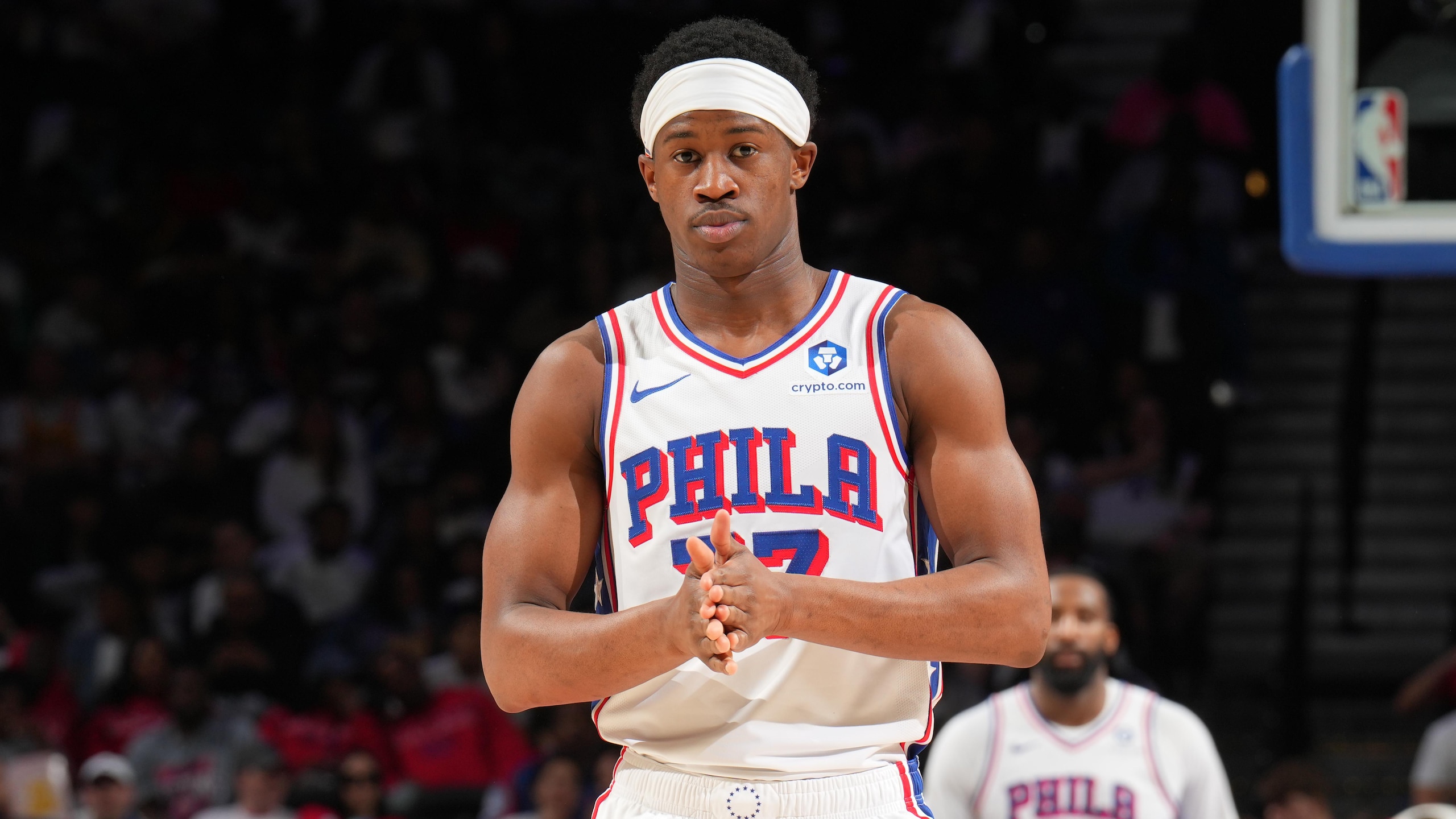
VJ Edgecombe joined Flagg and Knueppel as the only rookies to start at least 70 games, and the Philadelphia 76ers guard led the class with 2,623 minutes, the 11th-highest total in the entire league.
Like Flagg, Edgecombe delivered in unexpected ways. His three-point shot, a question coming out of Baylor, fell at a respectable 35.4 percent clip. He shot 81.8 percent from the foul line. Though his incredible athleticism helped make him disruptive in the passing lanes and a force on the offensive glass, it didn't translate to efficiency around the rim.
Edgecombe didn't disappoint when he had a clear runway, but his 61.0 percent finishing at the rim ranked in the 38th percentile among combo guards and highlighted his struggles to convert in traffic.
Coming off a campaign in which he ranked among the top three rookies in total points, assists, steals and made threes, Edgecombe seems like a lock to finish no lower than third in Rookie of the Year voting.

First Team: Dylan Harper, San Antonio Spurs
4 of 10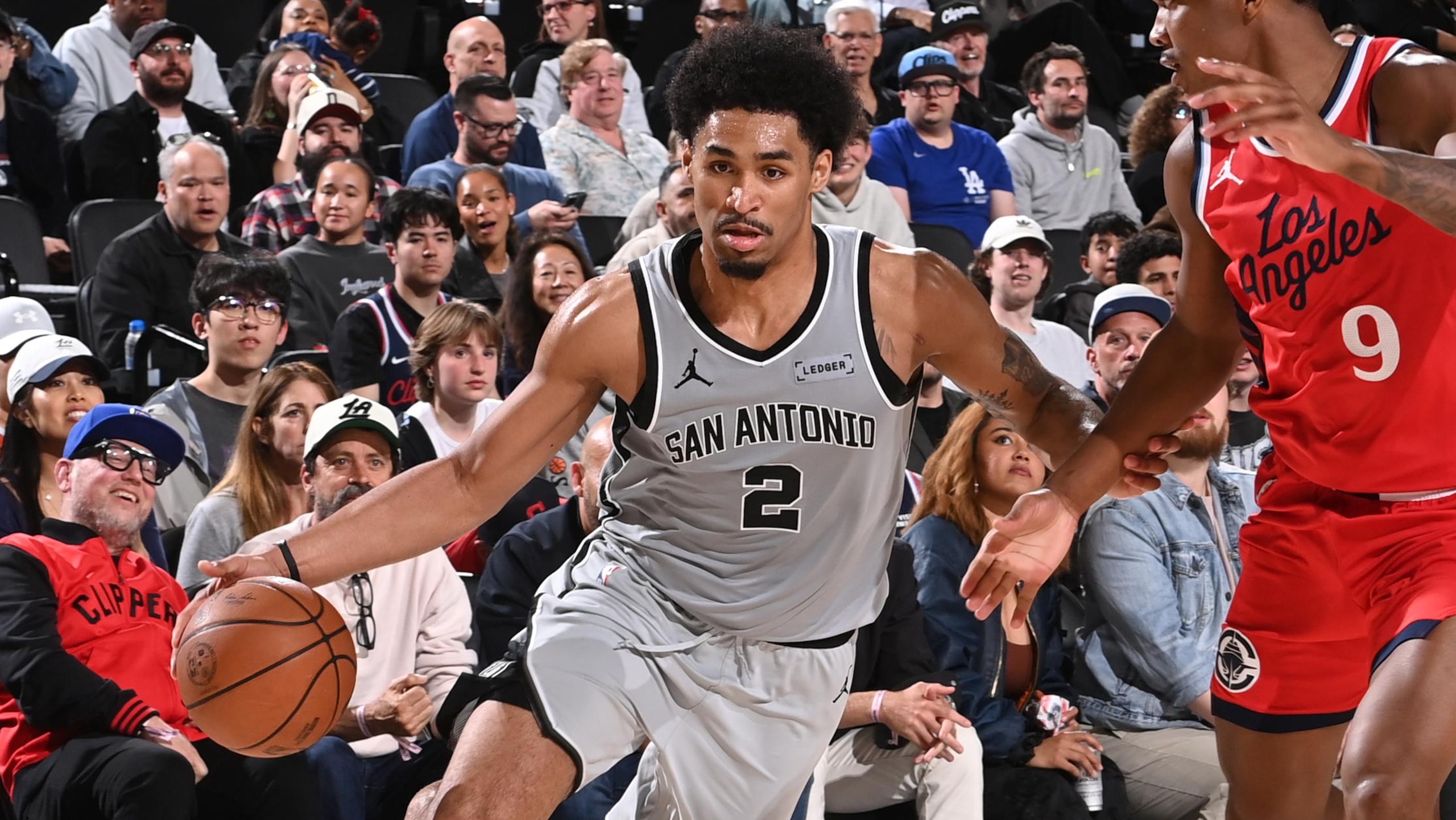
Knueppel had one of the most productive offensive seasons we've ever seen from a rookie, but Dylan Harper may still have the higher ceiling.
Though his role was nowhere near as large, Harper's exceptionally advanced finishing craft, keen passing eye and defensive tools make him a potentially transformative lead guard. If his shooting comes along—which it actually did after the break, when Harper hit 47.9 percent of his threes—the No. 2 pick could become the best guard on a team that already has Stephon Castle and De'Aaron Fox.
Harper sees the floor like few rookies in memory, and his advanced handle allows him to get wherever he wants. Already equipped with a slow-step, lightning-quick spin moves, ambidextrous finishing and terrific size, it'll be a surprise if Harper isn't among the best at-rim converters among guards for the next decade or so.
Averages of 11.8 points, 3.9 assists and 3.4 assists come nowhere close to capturing Harper's potential. He's going to be a star, and it should matter that he made such significant contributions to a 62-win Spurs team in his debut season.
First Team: Cedric Coward, Memphis Grizzlies
5 of 10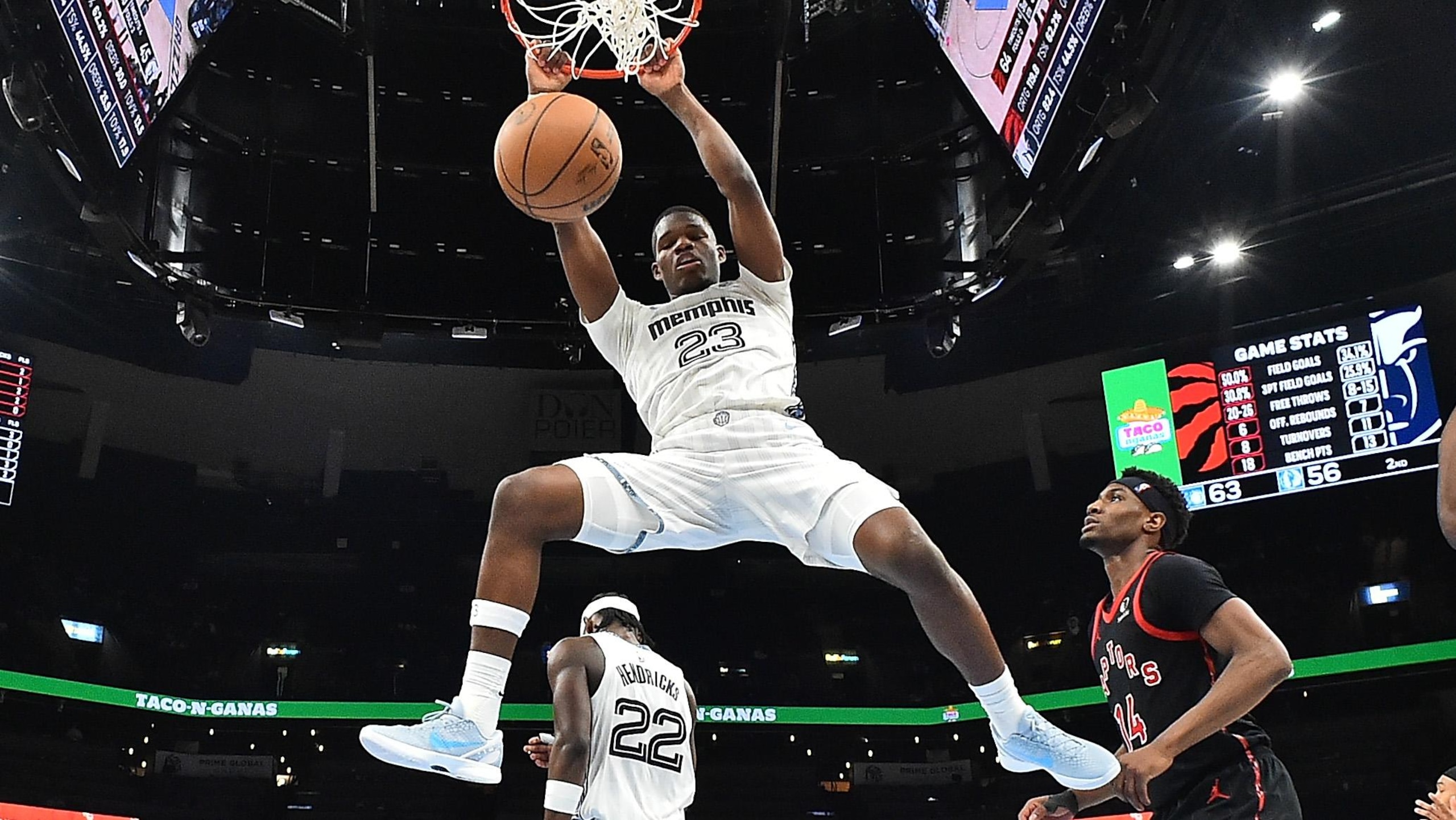
Cedric Coward exploded out of the gates, averaging 15.5 points and drilling 52.4 percent of his threes in six October games. Though the Memphis Grizzlies wing didn't sustain that level of efficiency, he established himself as a building block with two-way starter potential.
With full-season averages of 13.6 points, 5.9 rebounds and 2.8 assists in 25.8 minutes per game, Coward showcased deep shooting range and elite rebounding skill for a wing. Though his length didn't produce nearly as many steals as you'd expect, Coward still graded out as a positive force defensively—no small feat on a Grizzlies team that mailed in its season.
Box Plus/Minus didn't love him, but Coward's 4.1 Estimated Wins ranked fourth among rookies. Only two other rookies managed to get up at least 500 shots while beating Coward's 58.5 true shooting percentage: the preposterously efficient Knueppel and the mostly paint-bound Sacramento Kings center Maxime Raynaud.
One of few bright spots in Memphis this season, Coward was among the top three on his team in total points, assists, free throws, threes and minutes.
Second Team: Ace Bailey, Utah Jazz
6 of 10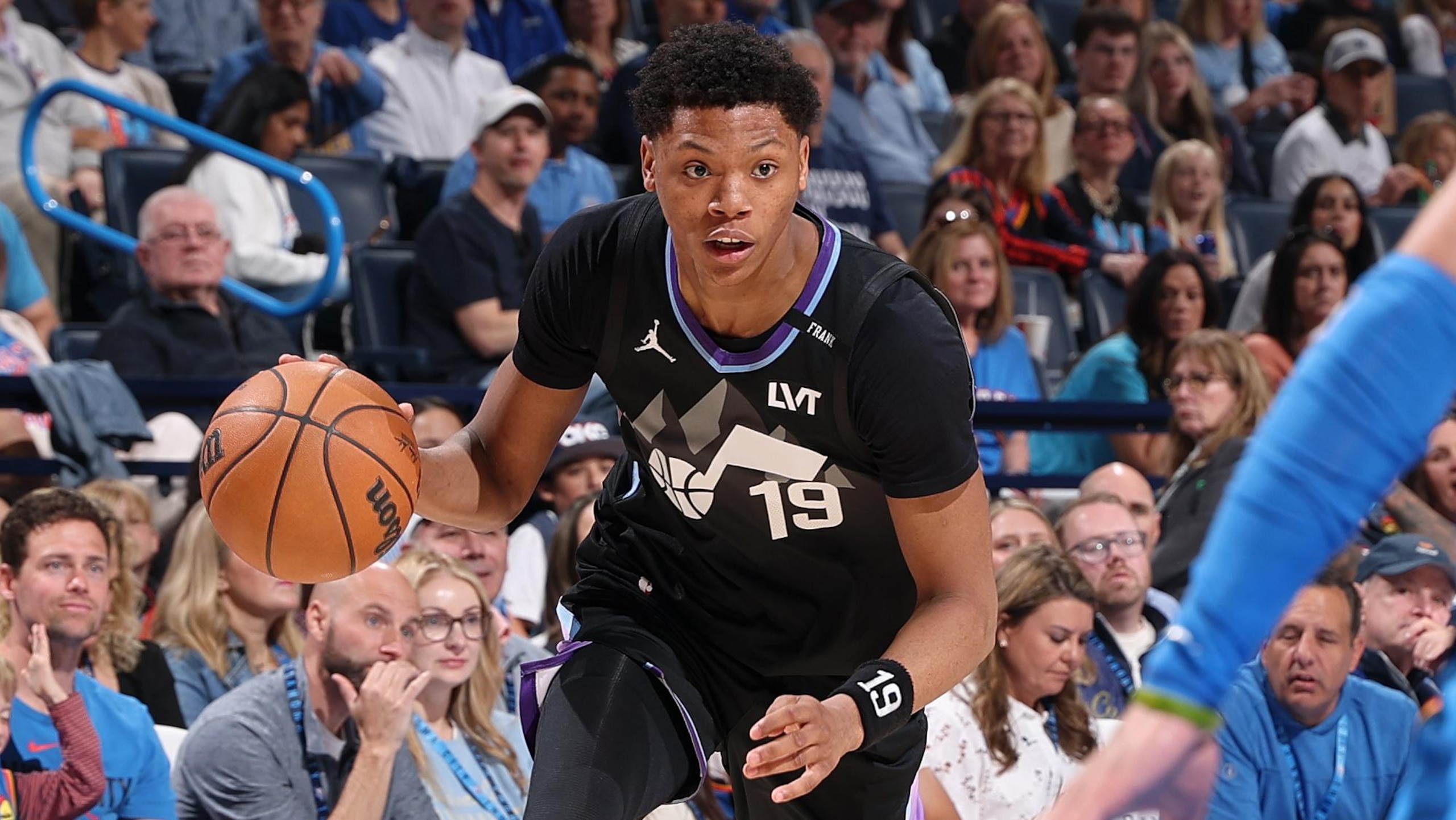
Though his efficiency and shot selection were inconsistent, Ace Bailey utilized his length to rate as one of the best shot-blocking and offensive-rebounding wings in the league this season. He checked in above the 80th percentile in both categories at his position, great signs for a player who entered the league with real questions about his ability to impact the game in ways that didn't involve scoring.
Bailey shot too many mid-rangers, and that tanked his overall percentages. But the 19-year-old was above average at his position as a finisher at the rim, in floater range and, intriguingly, on above-the-break threes. If he hadn't been completely broke from the corners (30.0 percent), his scoring profile would have looked a lot better.
Athletic, capable of creating shots for himself and useful as an off-ball defender, Bailey showed real two-way production and finished with averages of 13.8 points, 4.2 rebounds, 1.8 assists and 1.5 stocks on a 44.3/34.4/75.0 shooting split.
Second Team: Collin Murray-Boyles, Toronto Raptors
7 of 10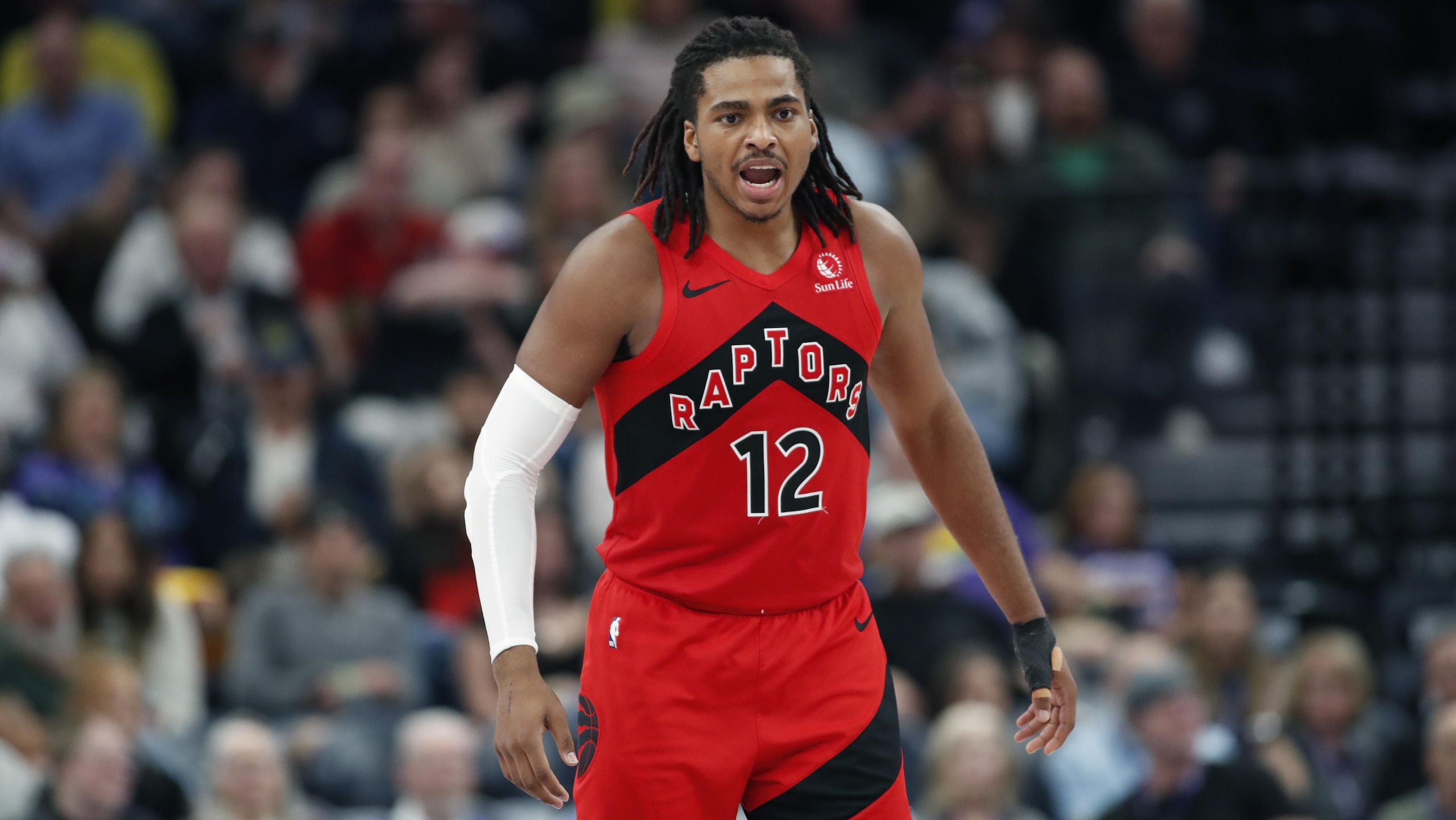
Collin Murray-Boyles didn't have quite as large of a role as the other rookies we've covered so far, and he only appeared in 57 games. That left him 20th overall among rookies in minutes, but his production when on the floor and his legitimate role in the Toronto Raptors' success is enough to land him here.
Murray-Boyles appeared in three different Toronto lineups that logged at least 99 possessions together, and two of them outscored opponents by significant margins—3.5 and 10.0 points per 100 possessions, respectively.
Used mostly as an undersized 5, Murray-Boyles flashed excellent court sense on both ends. He defended multiple positions, was highly disruptive away from the ball, rotated on time as a helper and facilitated well above the level of his position, rating in the 70th percentile in assist rate among big men.
The "Draymond Lite" comparisons are unfair, but it's not hard to understand where they came from.
Extreme left-handedness rendered CMB a merely decent finisher inside, but his mobility, willingness to cut and high-revving motor contributed to a true shooting percentage seven points above the league average.
Second Team: Maxime Raynaud, Sacramento Kings
8 of 10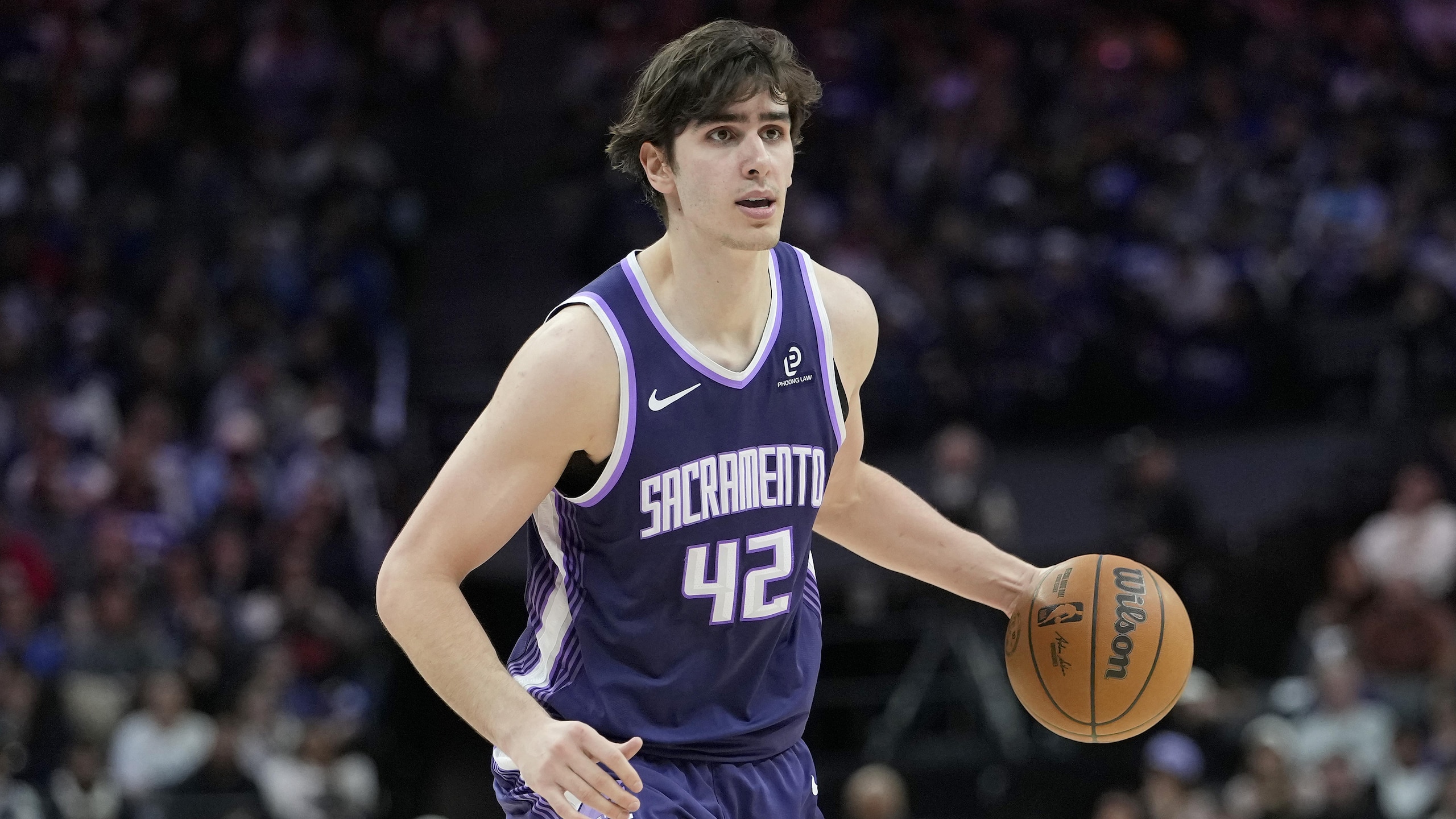
Trust the value of stats accumulated on a dysfunctional team with no other options at your own risk, but at least acknowledge that Maxime Raynaud was one of very few players who made the Sacramento Kings interesting this season.
The No. 42 overall pick got ample opportunity to play as injuries and poor roster construction left a void at center, and he seized it by averaging 12.5 points and 7.5 rebounds in 26.5 minutes per game. Gifted with good touch around the basket and especially in the tricky short mid-range area, the 7-footer showed real scoring chops with very little help around him.
It's certainly not ideal that Raynaud's shot chart featured a higher share of two-point jumpers than almost any other center, but he deserves credit for converting mid-rangers at a 54 percent clip.
This is about celebrating rookies, but we have to mention Raynaud's problematic defense. He's not all that mobile, which rules out switching, and he allowed opponents to shoot 63.8 percent inside six feet, the second-worst figure among centers who defended at least 300 shots at that range.
On a team that could maximize his strengths and cover for his weaknesses, Raynaud could lock down a real rotation role.
Second Team: Derik Queen, New Orleans Pelicans
9 of 10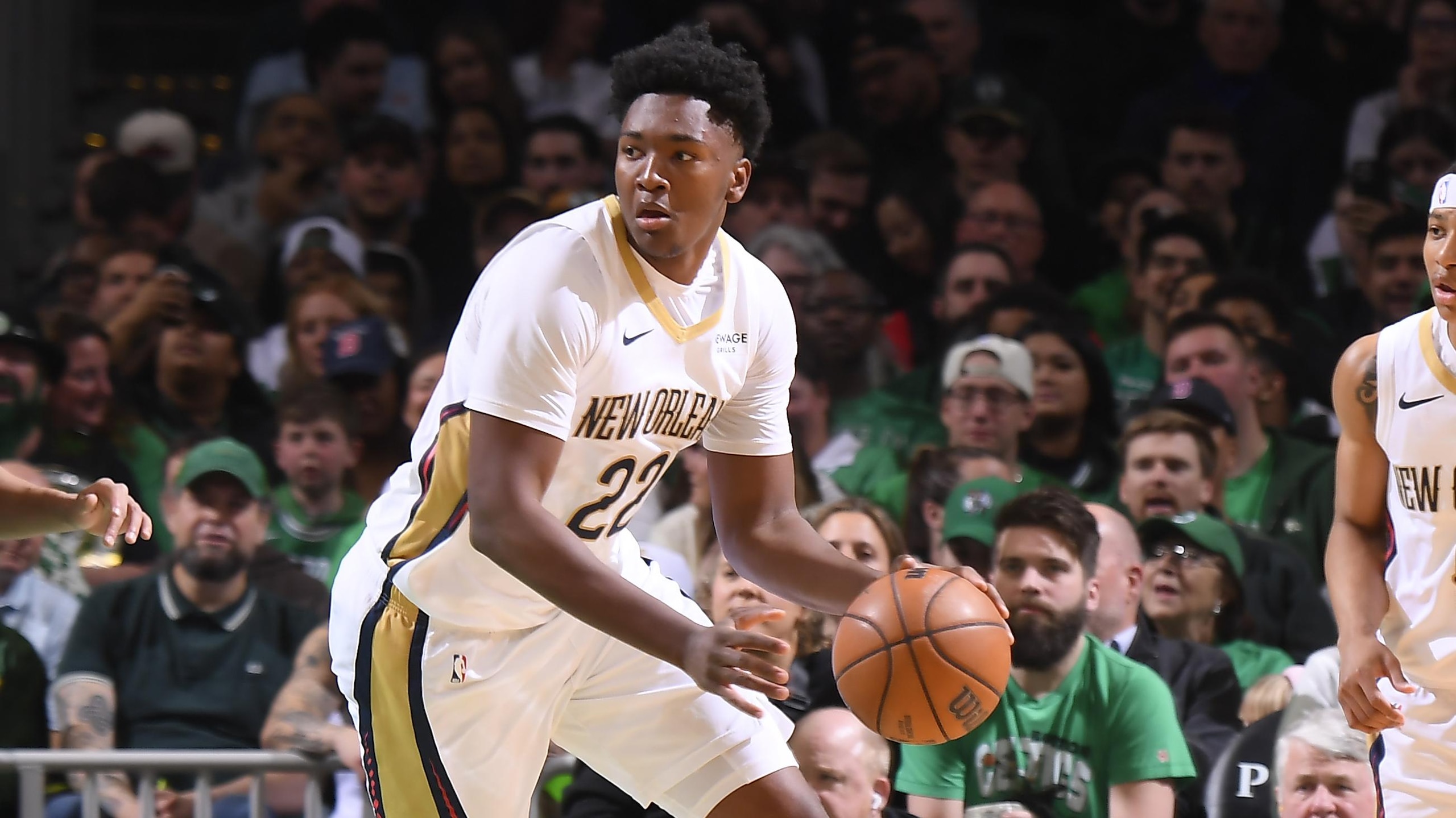
Derik Queen can absolutely pass the basketball, and he ranked fourth in the class with 298 assists. That's not going to matter if he can't defend at any position and fails to improve his 26.1 percent shooting from three-point range, but we can't just ignore a center who very often profiled as his team's top creator.
Queen's best moments were eye-opening. He compiled three 30-point games, grabbed 22 rebounds in the New Orleans Pelicans' season finale and racked up at least five assists in 28 different games. He had two of the five triple-doubles produced by rookies this year, and they were the only ones that came during the competitive portion of the season.
All told, Queen failed to live up to the trade that landed him in New Orleans. That was hardly his fault, and he deserves praise for finishing first in rebounds, fourth in assists, fourth in steals, second in blocks and sixth in points among his draft classmates.
Second Team: Ryan Kalkbrenner, Charlotte Hornets
10 of 10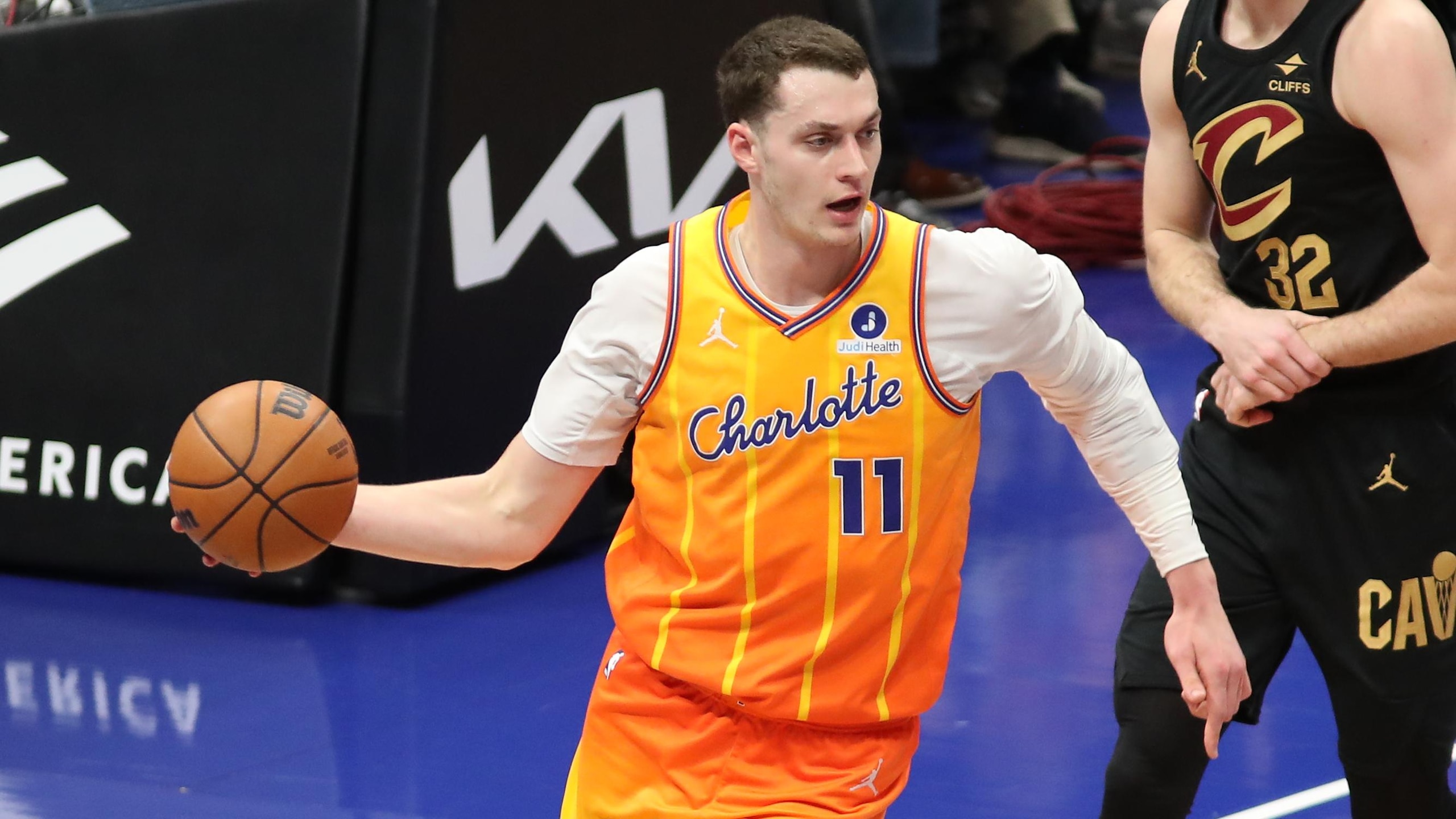
Though he gave up the starting spot he occupied for the first two months of the season, Ryan Kalkbrenner didn't let the demotion limit his effectiveness.
The rookie center averaged 8.5 points and 6.6 rebounds on 77.8 percent true shooting (not a typo) in 31 starts and still produced 6.8 points and 4.5 rebounds on 74.6 percent true shooting (again, not a typo) across 38 games off the bench.
Kalkbrenner's double-take-inducing efficiency stemmed partly from his limited role. The Hornets rarely asked him to do more than put back offensive boards and finish with dump-off dunks, but he was still undeniably among the reasons this team scored at elite rates all year.
A 3.5 percent block rate ranked in the 91st percentile among bigs, and it came with an extremely low foul rate. Charlotte's paint protection was far better with Kalkbrenner on the floor than off, as opponents took 3.5 percent fewer shots at the rim when he was in the game.
Though not ticketed for stardom and already 24, Kalkbrenner did more than enough to snag our final second-team spot.
Stats courtesy of NBA.com, Basketball Reference and Cleaning the Glass. Salary info via Spotrac.
Grant Hughes covers the NBA for Bleacher Report. Follow him on Bluesky and subscribe to the Hardwood Knocks podcast, where he appears with Bleacher Report's Dan Favale.
.jpg?w=2560 "Purdy Becomes Highest-Rated QB EVER 🤩")
.jpg?w=2560 "Grading WWE Raw 🔠")