
Where Do The Jets Fit in AFC Hierarchy After Aaron Rodgers Trade With Packers?

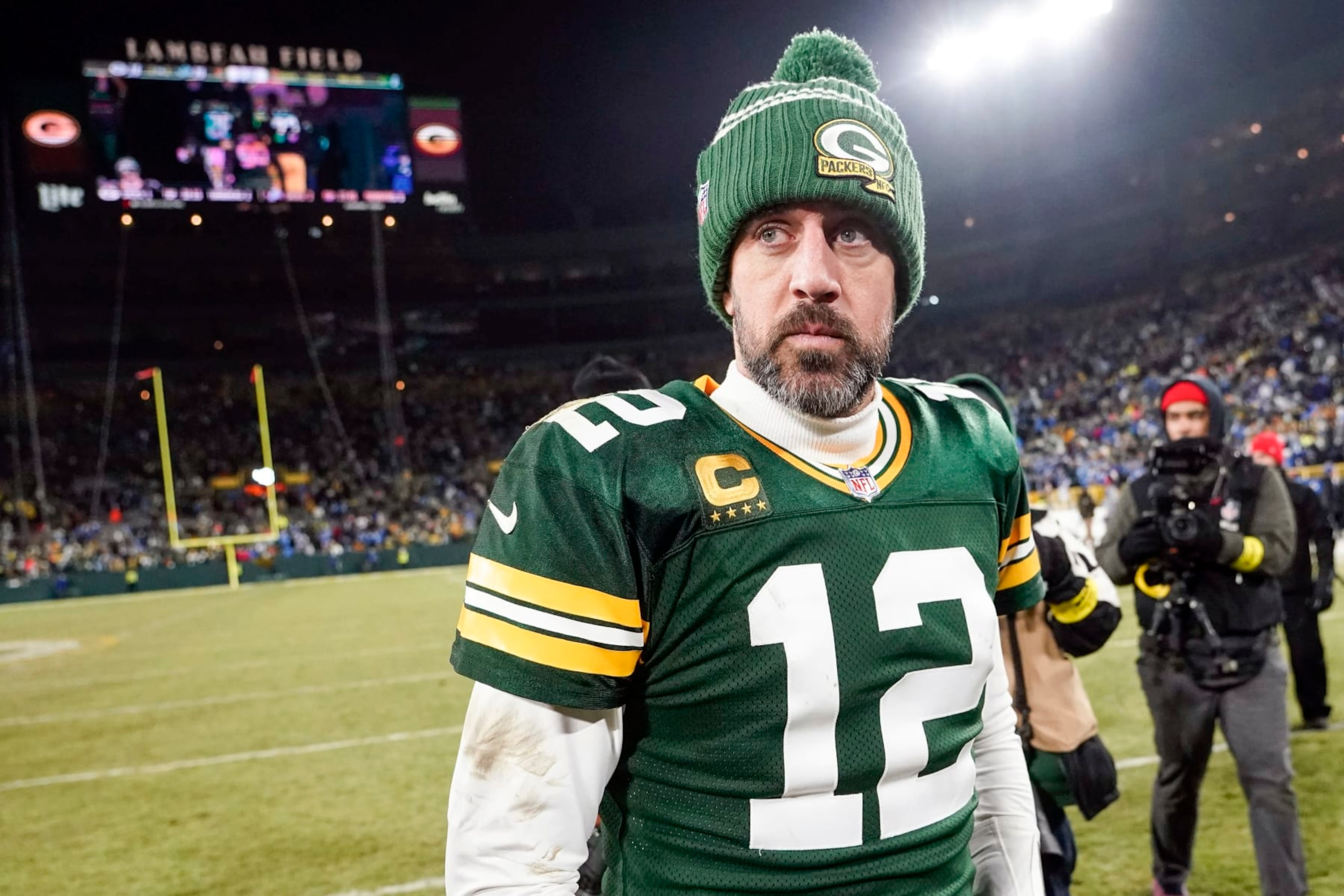
The trade the NFL world has been waiting on finally came to fruition on Monday. The Green Bay Packers and New York Jets flipped the switch on the Aaron Rodgers trade, and Rodgers will start for the Jets in 2023.
According to ESPN's Adam Schefter, the Packers will receive the 13th pick in this year's draft, a 2023 second-round pick (No. 42), a 2023 sixth-round pick (No. 207) and a conditional 2024 second-round pick that will become a first-round selection if Rodgers plays 65 percent of the offensive snaps.
The Jets will receive the 15th overall pick, a 2023 fifth-rounder (No. 170) and, of course, Rodgers.
.jpg?w=2560 "Colts Football")
.jpg?w=2560)
.jpg?w=2560 "Commanders 49ers Football")
The headliners of the trade—a swapping of first-round selections, a 2023 second-round pick and, likely, a 2024 first-rounder—represent a fairly large price for the Jets. However, it will be worth the cost if it provides them with a realistic shot at the Super Bowl.
New York now has the future Hall of Fame quarterback it hasn't had since the days of Joe Namath. The question is whether that's enough to put the Jets into the AFC's very top tier. The answer will very much depend on which version of Rodgers the Jets inherit.
The AFC's Contenders
One team stands above all others in the conference, and that's the Kansas City Chiefs. The combination of head coach Andy Reid and quarterback Patrick Mahomes has provided Kansas City with a level of consistency unrivaled in the NFL.
Since Mahomes became a full-time starter in 2018, the Chiefs have appeared in every single AFC title game. They've made three Super Bowls in five seasons and won two of them. Despite a rotating cast of supporting characters, Reid, Mahomes Travis Kelce and Co. have remained atop the AFC hierarchy.
The Cincinnati Bengals aren't far behind Kansas City. The Bengals have their own star quarterback in Joe Burrow, who has led Cincinnati to back-to-back AFC Championship Games and one Super Bowl berth.
The Bengals defeated the Chiefs in the 2021 AFC title game and gave them all they could handle this past January. With former Chiefs Pro Bowler Orlando Brown Jr. now protecting Burrow's blindside, the Bengals might be even better in 2023.
The Buffalo Bills, Miami Dolphins, Los Angeles Chargers and Jacksonville Jaguars represent the next tier. All four teams reached the postseason in 2022, each has an established or budding star quarterback, and each appears poised to contend for the foreseeable future.
However, each team in this tier has flaws.
The Bills lack a reliable third receiver behind Stefon Diggs and Gabe Davis. Their pass rush also slipped dramatically after Von Miller was lost for the season with a torn ACL.
Miami struggled to defend the pass in 2022 (27th in yards allowed) and didn't have quarterback Tua Tagovailoa in the playoffs after he suffered multiple concussions during the season. The trade for Jalen Ramsey should help address the first issue, but Tagovailoa's long-term health must remain a concern.
After back-to-back seasons with the league's worst record, the Jaguars are still learning to win consistently. The Chargers have a knack for finding creative ways to lose, and neither team had a particularly great defense this past season—Jacksonville ranked 24th in yards allowed, while Los Angeles was 20th.
It's not hard to imagine the Bills, Dolphins, Chargers or Jaguars beating the Chiefs or Bengals under the right circumstances. However, Cincinnati and Kansas City are the AFC's two most dangerous squads until someone else proves otherwise.
The Baltimore Ravens are somewhere in the mix here too, though the uncertain status of Lamar Jackson makes it hard to pinpoint where they land. Baltimore took Cincinnati to the limit in the wild-card round, despite having backup quarterback Tyler Huntley under center.
With a defense that ranked third in points allowed last season and Odell Beckham Jr. now on the offensive side, Baltimore might be a viable challenger to the AFC throne if Jackson gets a new deal or signs his franchise-tag tender.
How Did the Jets Stack Up Before Rodgers?
The pre-Rodgers Jets are fairly easy to place in the pecking order. They didn't make the playoffs last season and finished in the AFC East basement. Without Rodgers, the Jets were a merely average team.
However, it's worth digging into why the Jets were a middling team last season: New York lacked what the aforementioned teams have, an upper-echelon quarterback.
Collectively, Jets passers completed 56.9 percent of their attempts for 15 touchdowns, 14 interceptions and a lowly 75.0 quarterback rating. 2021 second-overall pick Zach Wilson was even worse, tossing six touchdowns, seven interceptions and posting a 72.8 rating.
Even worse, Wilson—the player tabbed to finally release New York from quarterback purgatory—failed to show any sort of reasonable growth and reportedly lost the locker room.
The Score's Jordan Schultz said the following on the Pat McAfee Show (h/t Steve DelVecchio of Larry Brown Sports):
"In speaking to some players on the team, his approach, or lack thereof, was not well regarded. Everyone knows this guy is super talented. He could be the franchise, but you want to see a lot more. Whether it's late to meetings, screwing around in meetings, not having the right attitude, that's what I gather."
Aside from the game's most important position, though, the Jets were a pretty stacked team. New York boasted a defense that ranked fourth in both points and yards allowed. They had a host of talented offensive standouts, including Corey Davis, Tyler Conklin, Garrett Wilson, Michael Carter and Breece Hall.
Hall suffered a torn ACL in October but appeared to be an Offensive Rookie of the Year candidate before that (681 scrimmage yards and five TDs in seven games). Wilson was named Offensive Rookie of the Year, while Sauce Gardner was Defensive Rookie of the Year.
Aside from losing quarterback Mike White and trading wideout Elijah Moore, New York's offseason losses have been minimal. The Jets have also added wideouts Allen Lazard and Mecole Hardman, punter Thomas Morstead and safety Chuck Clark.
On paper, Rodgers is joining a team that is as talented as any in the conference, and he'll reunite with former Packers and new Jets offensive coordinator Nathaniel Hackett.
If Rodgers can regain some of the MVP form he last showcased in 2021, it's hard not to think that New York can be right up there with Kansas City and Cincinnati. His ability to do so, however, remains the big unknown.
What to Expect From Rodgers
Let's not split hairs. Rodgers was not good with the Packers in 2022. He showed some flashes late in the season after finally developing chemistry with rookie receivers Romeo Doubs and Christian Watson, but the jaw-dropping big plays we've come to expect from Rodgers were few and far between.
Rodgers finished the season with a 64.6 percent completion rate and a passer rating of only 91.1, his lowest as a full-time starter.
Sure, some of Rodgers' struggles can be blamed on a receiving corps that lacked talent in some areas and experience in others. Having an average defense (17th in both yards and points allowed) didn't help because it often left Rodgers having to carry the team.
However, the 39-year-old's skills did seem to diminish during the 2022 campaign.
"The biggest piece is he just can't move as well as he used to," one team's scout told Bill Huber of FanNation. "That used to be—on top of being great at extending plays and having rare accuracy—he can't do that anymore. And his arm has taken a dip."
The early lack of chemistry Rodgers had with his young receivers is partially on the quarterback too, as Rodgers skipped a large chunk of the offseason program.
If this is the version of Rodgers the Jets are getting—an aging, declining, half-committed quarterback who won't adapt his play style—New York probably isn't entering the very top tier in the conference. However, it should be a playoff team.
Even the worst version of Rodgers we've seen to date was better than the best version of what the Jets put on the field in 2022. New York's roster is far more complete than what Rodgers worked with last season, too. Combining the two parties should create a contender that can go head-to-head with the likes of Buffalo, Miami, Los Angeles, Jacksonville and Baltimore.
If the Jets hope to be mentioned along with Kansas City and Cincinnati atop the AFC, however, they'll need an even better version of Rodgers.
It starts with Rodgers committing to his new team and the offseason program. Lazard and Hackett are familiar faces, but the four-time MVP must establish an early rapport with his teammates and be on hand early and often as New York learns a new offense.
At least publicly, Rodgers has said the right things.
"I have a fire and still want to play and play in New York," Rodgers said last month on the Pat McAfee Show (h/t Lou DiPietro of Audacy).
It's now up to Rodgers to follow through. If he does that and his play doesn't decline further, the Jets can still expect a pretty big upgrade at quarterback.
Where do the Jets Stand Now?
Let's be honest, the version of Rodgers we saw in 2021—the one who threw 37 touchdowns and only four interceptions with a league-high 111.9 QB rating—probably isn't going to reemerge in New York. Once a player's physical skills begin to decline, they don't really come back.
But Rodgers can be better than he was last year. A full offseason will help. So will an upgraded receiving corps and improved health. Rodgers stated that he had been playing through a broken thumb since Week 6.
The Jets will also get a massive boost in leadership and experience with Rodgers replacing the tandem of Wilson and White. The value of a more cohesive locker room cannot be understated.
The Jets can do their part to help Rodgers be better, too. Hackett and head coach Robert Saleh should mostly ask the quarterback to manage the game, limit mistakes and make the occasional big play happen.
General manager Joe Douglas can continue improving the roster in the draft, and replacing the oft-injured and unproven Mekhi Becton at left tackle should be high on his to-do list.
The Jets targeting a lineman early is close to a lock," according to ESPN draft analyst Todd McShay.
If all goes well, New York will probably have a quarterback similar to the iteration of Rodgers we saw in 2019—a year in which he posted a 95.4 passer rating and made the Pro Bowl but wasn't a viable MVP candidate.
Pairing that level of quarterback play with a top-five defense and a bevy of talented offensive skill players will give the Jets a strong chance of winning their division and making a deep run in the postseason.
According to The Athletic's Austin Mock, the Jets have a 30.8 percent chance of winning the AFC East with Rodgers and only an 11.6 percent chance without him. According to DraftKings Sportsbook, New York now has 14-1 odds of winning the Super Bowl, just below the Bengals and Bills but ahead of the Chargers, Dolphins, Ravens and Jaguars.
Those odds feel about right. With Rodgers in the fold, the Jets are firmly in that second tier of AFC contenders and somewhere near the top. They should push the Bills for the division crown and might even challenge for the AFC's No. 1 seed.
It's just difficult to compare what we last saw from Rodgers last season with Burrow and Mahomes and say that New York is on par with the Chiefs and Bengals. Factoring in Jackson's uncertain future in Baltimore, the AFC hierarchy should go something like this: Kansas City, Cincinnati, Buffalo, New York, Miami, Jacksonville, Los Angeles, Baltimore.
However, there's a very real possibility the Jets will face the Chiefs and/or the Bengals in the playoffs, and with Rodgers under center, New York will at least have a chance to be the better team for a day.
.jpg?w=2560 "DOLPHINS-AIKMAN")









