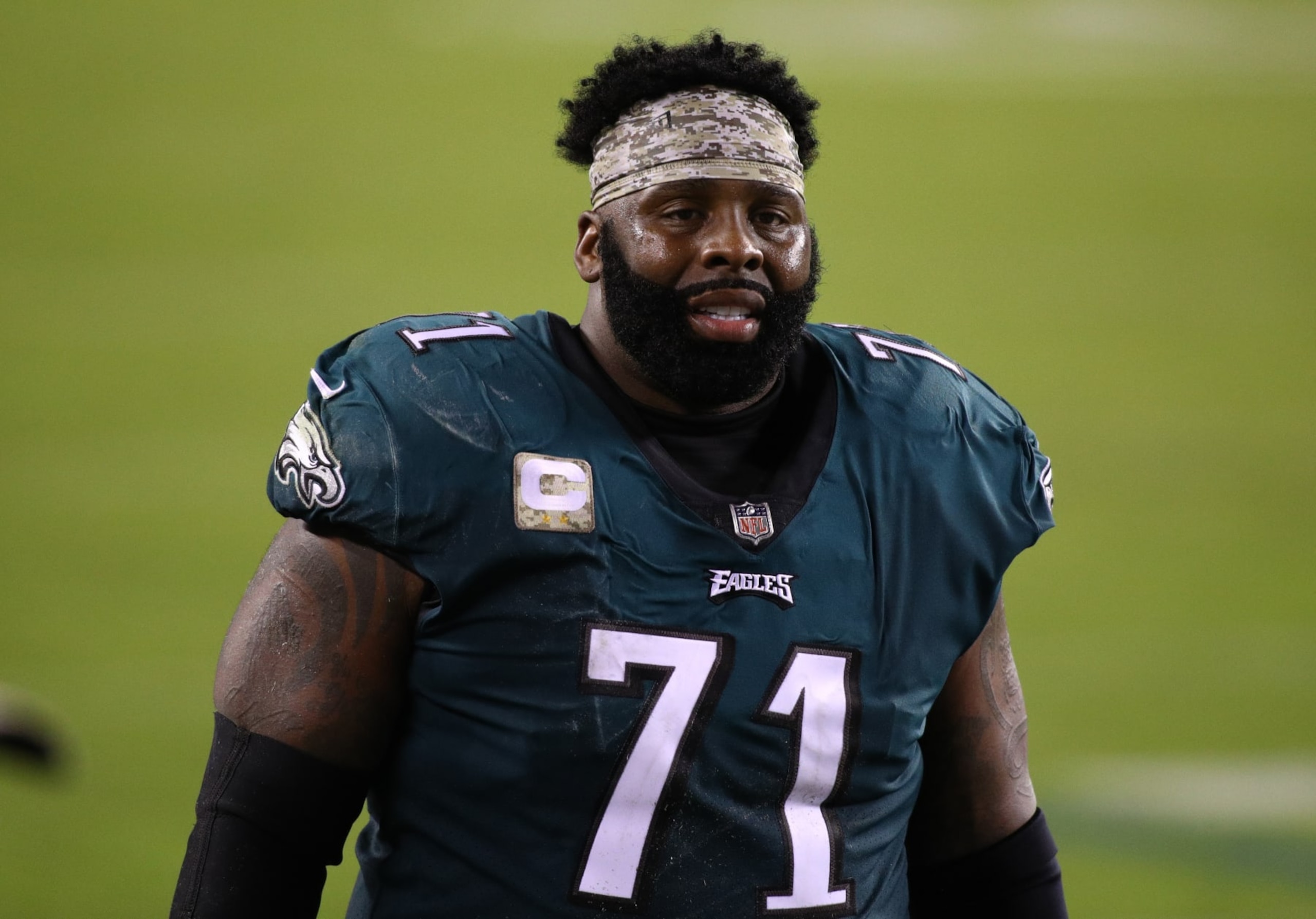

Jason Peters Is a Band-Aid on a Problem Cowboys Can Only Blame Themselves for Having

On Monday, the Dallas Cowboys signed veteran offensive tackle Jason Peters to their practice squad. The plan is for him to help replace starting left tackle Tyron Smith, who is likely to miss the bulk of the regular season after suffering a knee injury in late August.
As ESPN's Todd Archer pointed out, the move is designed to give Peters time to acclimate after not participating in a training camp. Dallas will presumably add him to the active roster at some point soon.
TOP NEWS
.jpg?w=2560 "Chiefs Giants Football")
Mahomes Told Teammate to Leave Meeting
.jpg?w=2560 "Steelers Buccaneers Football")
Baker Gets Glove From Rays 🧤

McCarthy Wins 1st Giants Start
Peters, a nine-time Pro Bowler, is one of the top offensive linemen of his generation. Although he played the bulk of his career with the rival Philadelphia Eagles, Cowboys fans should be glad to see him in the fold.
However, adding Peters is only part of a temporary solution for arguably Dallas' biggest problem: An offensive line that has plenty of questions and is now without its starting left tackle.
It's a problem for which the Cowboys can only blame themselves. It's also a potentially fatal flaw that could derail their bid for a deep postseason run.
How Dallas Got Here
Understanding where the Cowboys are and how they got here is simple enough. Dallas lost starting guard Connor Williams in free agency, released starting tackle La'el Collins and then watched as Smith went down with a hamstring injury and avulsion fracture in practice.
According to NFL Network's Ian Rapoport, Smith is likely to be out until at least December.
That likely leaves rookie first-round pick Tyler Smith starting at left tackle to open the season. Dallas has expressed confidence in the Tulsa product while also admitting that he'll go through some growing pains.
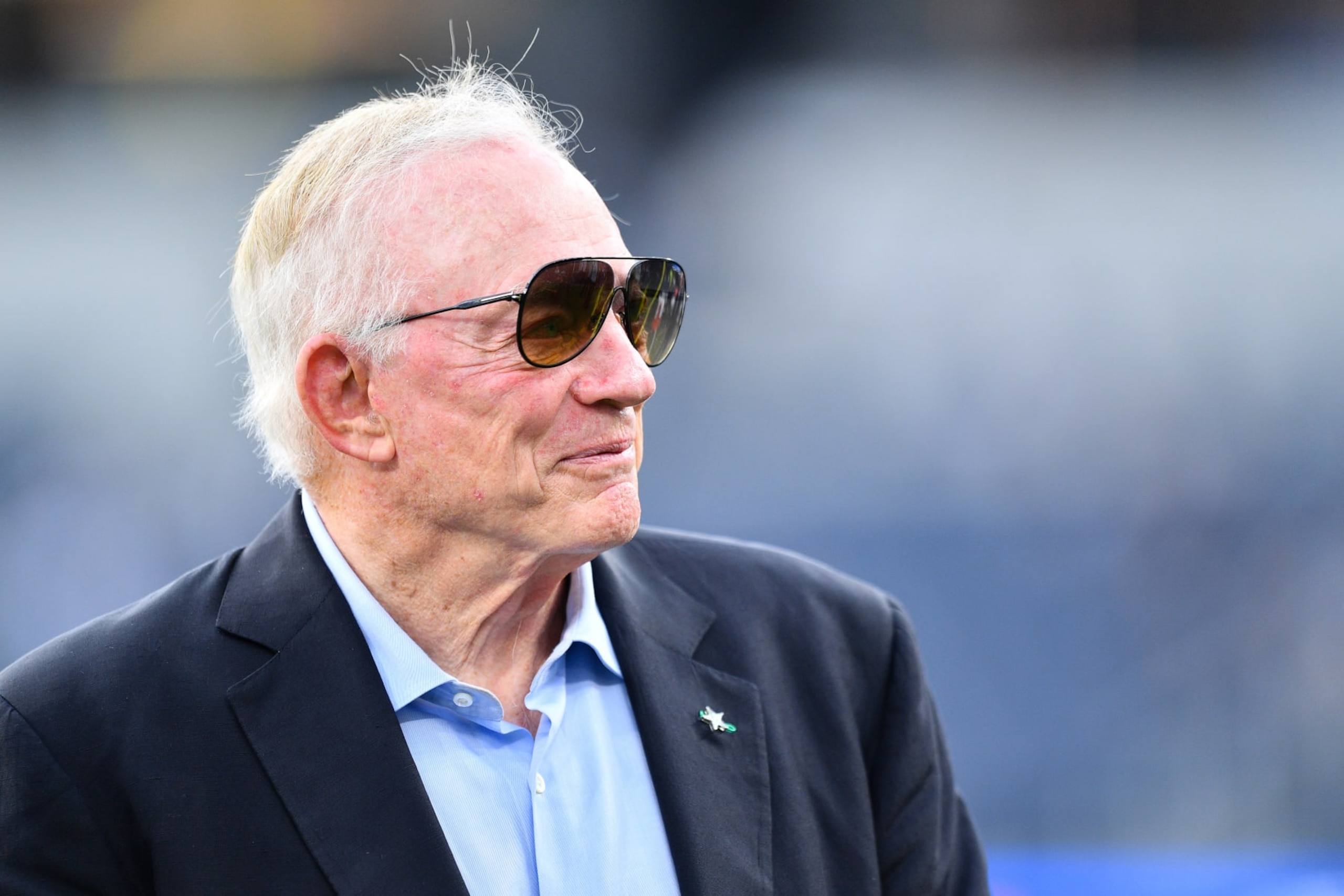
"Do I wish we had Tyron? Yes. Will we get Tyron back? Likely. But in the meantime, he’s going to come in and get a Harvard Doctor’s degree in playing LT between now and then," franchise owner Jerry Jones said, per Clarence E. Hill Jr. of the Forth Worth Star-Telegram. "Will we pay some price for it? Yes. Can we win with paying a price? I think so, yes."
The problem is that Tyler Smith was supposed to be the replacement for Williams at left guard this season. That job will now go to Connor McGovern, while Terence Steele will replace Collins at right tackle.
Standout guard Zack Martin is healthy, at least, and center Tyler Biadasz also returns. However, Dallas is now looking at three new starters along its offensive line, with an untested rookie handling the most important position.
How did the Cowboys get here? Poor planning, plain and simple.
Dallas has a high-end franchise quarterback in Dak Prescott. It should be focused on keeping him healthy and supporting him with a strong rushing attack. However, the Cowboys didn't make the offensive line an offseason priority despite losing two starters and having a 31-year-old left tackle with a notable injury history (32 missed games in the last six seasons).
Instead of bringing back Collins and/or Williams—or adding another proven vet like Brandon Scherff or Duane Brown—Dallas spent its money on pass-catchers.
The Cowboys needed to replenish their receiving corps after they traded Amari Cooper to the Cleveland Browns and lost Cedrick Wilson Jr. in free agency. However, spending to keep Dalton Schultz ($10.9 million on the franchise tag) and Michael Gallup (five years, $57.5 million) instead of a top-tier offensive line was a mistake.
Gallup and Schultz will cost roughly $15.5 million against the 2022 salary cap. Williams won't make that over the next two years with the Miami Dolphins.
Yes, the Cowboys used a first-round pick on Tyler Smith to replace Williams, but that was the extent of their succession plan.
This isn't a knock on Gallup, Smith or Schultz—and we'll never criticize a player for taking the money—but Dallas mishandled this offseason in a big way.
What Dallas Could (and Probably Should) Have Done Differently
One can certainly argue that hindsight is 20/20 and that Dallas couldn't foresee Tyron Smith's injury. Then again, it doesn't take hindsight to recognize that he had missed 20 games over the last two seasons and last played a full campaign in 2015.
The Cowboys should have been better prepared for a potential injury, even entering the 2022 draft. Jones said they had Tyler Smith rated higher than guard prospects Kenyon Green and Zion Johnson, per Hill:
Did Dallas prefer Tyler Smith because of his potential to be Tyron Smith's successor while also playing guard early? That isn't a bad plan, but the Cowboys should have paired it with a veteran safety net.
As a tackle prospect, Tyler Smith is far from polished.
"Overall, Smith has the physical traits and aggressive nature to become an eventual NFL starter," Brandon Thorn of the B/R Scouting Department wrote. "However, he is as raw as sushi and a penalty machine who needs to reconfigure his technique from the ground up before he can see an NFL field."
Had the Cowboys added, say, Brown or Eric Fisher, then the rookie wouldn't be forced to see the field right away—at least not at left tackle. And this only addresses the left tackle situation.
Having Tyler Smith and/or McGovern at guard and Steele at right tackle already led to question marks. Although Steele played like a serviceable starter in 2021, he wasn't on Collins' level.
"While Collins still comfortably outgraded him in 2021, Steele earned an admirable 64.6 overall mark in only his second season after entering the NFL as an undrafted free agent," Michael Renner of Pro Football Focus wrote.
Again, the Cowboys could have kept Williams and drafted Tyler Smith for the future and/or kept Collins for another season. They could have afforded to do so by rolling the dice on a different group of pass-catchers.
Gallup and Schultz are good players, but the latter isn't guaranteed to stick around beyond this season, while the former is working his way back from a torn ACL. Dallas had cheaper alternatives.
At tight end, for example, the Cowboys could have gotten two-time Pro Bowler Austin Hooper, who signed a one-year, $6 million deal with the Tennessee Titans—one that counts only $2.7 million against the 2022 cap.
At receiver, Dallas could have dived further into the rookie pool, where it did grab third-rounder Jalen Tolbert. We've regularly seen rookies in recent years make an instant impact in the NFL.
Had Dallas kept both Collins and Williams—keeping Steele as the backup plan at left tackle—it could have made a play for a rookie first-round receiver. Jahan Dotson (No. 16) and Treylon Burks (No. 18) both went within reasonable trade range of Dallas' 24th overall pick.
If you go back even further in the blame game, you could target Dallas' decision to give running back Ezekiel Elliott a six-year, $90 million extension in 2019—one that will cost the Cowboys $18.2 million against the cap this season. That's a topic for a different day, though.
The reality is that Dallas has been too quick to reward its own and too slow to recognize the evolution of the NFL. Rookie receivers are increasingly NFL-ready, veteran receivers are replaceable, and good offensive linemen are hard to find.
There's a reason why the Kansas City Chiefs, Green Bay Packers and Baltimore Ravens were willing to trade their No. 1 receivers this offseason. A great passing game starts with a great quarterback, not a top pass-catcher.
The Cowboys have a borderline great QB in Prescott, but they've erred by focusing on his weapons instead of his protection.
Realistic Expectations and Remaining Options
As things stand, the Cowboys should still consider themselves playoff contenders. However, they should also expect to see the offensive line take a significant step back from last season.
Having Tyron Smith and Steele at left tackle yielded some level of consistency. The Cowboys aren't likely to get that from Tyler Smith. When and if Peters is ready to take over, well, Dallas shouldn't expect a ton there, either.
At 40 years old, Peters can only help patch Dallas' line for so long. He's a Hall of Fame player, but he can't provide Hall of Fame play as he once did.
Last season with the Chicago Bears, Peters was responsible for three penalties and allowed six sacks in 853 snaps, according to Pro Football Focus. He's joining a line that was heavily penalized across the board in 2021.
Tyron Smith, Williams, Collins, Steele and Biadasz combined for 44 penalties last season, according to The Football Database.
Even if Peters plays well in 2022, the Cowboys are going to have an inconsistent and mistake-prone line. Dallas should expect a middle-of-the pack overall unit at best. If Peters struggles or the rookie can't cut it, Prescott could be in serious trouble.
After this season, Peters isn't likely to be an option, and the health and age concerns of Tyron Smith and 31-year-old Martin will remain.
By waiting until injury struck to target more offensive line depth, the Cowboys are out of long-term options. The best they can do now is hope that Tyler Smith and Peters can patch things enough to reach the postseason—and hope that Tyron Smith is ready to go by then.
If that plan doesn't work, the Cowboys are low on short-term options, too.
Fisher is still available, as are Nate Solder and Julie'n Davenport. The Cowboys still have $12.7 million in cap space, so they could add one of them if needed. Granted, they would have to undergo the same assimilation process that Peters is now experiencing.
Adding Peters was the Cowboys' best option this close to the season. But even if they can hold their line together in 2022, it's going to be a short-term fix.
The Cowboys need to meaningfully address their offensive line next offseason, because the blockers upon whom they have long relied are aging rapidly or are already gone.
.jpg?w=2560 "Eagles Jaguars Football")
.jpg?w=2560)
.jpg?w=2560 "🚨 Week 8 AP Top 25 Poll")

.jpg?w=2560 "CFP Bracket After Week 8 🏆")
.jpg?w=2560 "Steelers Roll Saints in Paris")