
A Shift Ban Is the Game-Changer MLB Needs Right Now
Major League Baseball and the MLB Players Association don't agree on much these days, but there appears to be some common ground on the possibility of defensive shifts going the way of pitchers hitting for themselves.
Which is to say, away. Finally, mercifully away.
It seems that no matter what happens with the rest of the collective bargaining negotiations between MLB and the MLBPA, teams will still be allowed to shift their defenses in 2022. But according to Jon Heyman of MLB Network, 2023 could be a different story:
TOP NEWS
Brewers Beat Dodgers In Game 1

Ranking the Top 25 MLB Trade Chips For 2026-27 Offseason 🔢

2026 MLB Playoffs Winners and Losers ⚾
The stage for this change was set last year when MLB experimented with regulating shifts at the Double-A level of the minors. First, by requiring all four infielders be positioned on the infield dirt. And later, by also requiring that teams play two infielders on either side of second base.
If these rules come to the major league level in 2023, teams will no longer be able to stack either side of the infield with three defenders or play more than three men in the outfield. Or, as the Houston Astros did in 2018, do this to Joey Gallo:
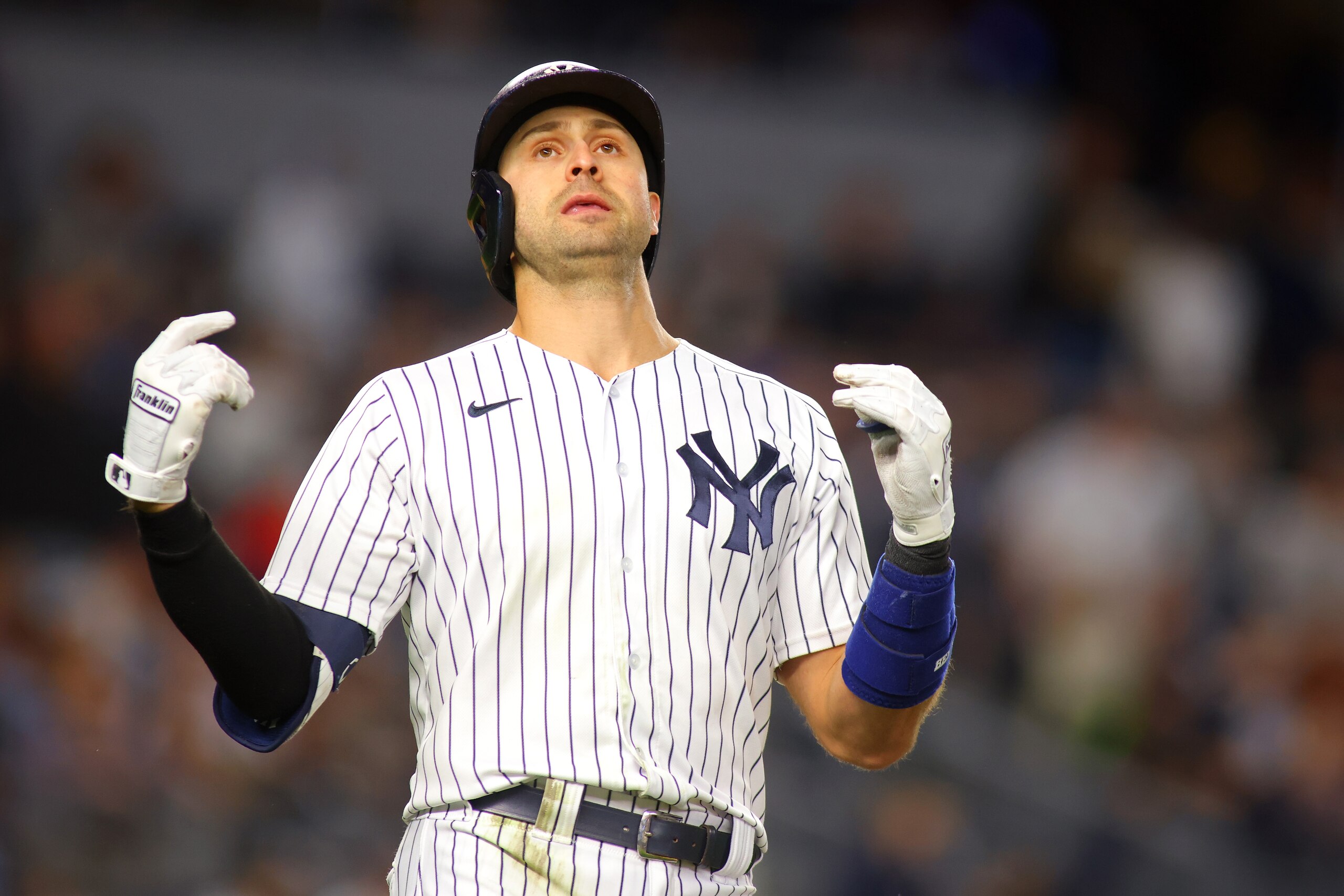
For that matter, it would be appropriate if a ban on shifts came to be known as the "Joey Gallo rule." Just as he's the face of the modern slugger whose pull-happy hitting tendencies demand special defensive treatment, he's also one of the most outspoken critics of the practice.
As the New York Yankees outfielder told Jayson Stark of The Athletic: “I get the defensive strategies. I do. I’m 100 percent not against that. But I think at some point, you have to fix the game a little bit."
There is some opposition to the idea of banning the shift. Quite a bit of it, actually, which isn't too surprising. Though the shift's roots go all the way back to 1877, it's so common now that to ban it would be akin to stifling innovation.
Even still, we're with Team Gallo on this one. There's a certain point where enough is enough, and MLB is well past that point with the shift.
The Shift Really Does Make That Much of a Difference
For the longest time, defensive shifts were strictly for the Ted Williamses, Barry Bondses and David Ortizes of the world. But as any baseball fan has surely noticed, they've gradually become common for pretty much everyone in recent years.
The percentage of pitches thrown with some kind of infield shift in the background has gone from 11.6 percent across the first two years of the Statcast era in 2015 and 2016 to 31.9 percent across 2020 and 2021. There's been a marked increase for right-handed batters, but nothing like what left-handed batters have had to put up with. In each of the last two seasons, lefty batters hit with the infield shifted more often than not.
As Stark correctly noted in his article, teams wouldn't be doing this if it didn't work. Bill James, who's kind of a big deal in the sabermetrics community, even put some numbers to it. In 2021, for example, there were 856 more hits robbed by the shift than there were instances of batters beating the shift with a hit to parts of the field left open by the defense.
In case anyone needs a refresher for what it typically looks like when a batter loses a hit to the shift, allow American League MVP Shohei Ohtani to demonstrate at the 6:52 mark here:
That ball left Ohtani's bat at 101.3 mph and had an expected batting average of .900. But instead of a game-tying single, it was easy pickings for second baseman/short right fielder Christian Arroyo for the final out.
It's worth focusing on plays like this because they reinforce the reality that the shift isn't some previously undiscovered method for preventing seeing-eye singles and other cheap hits. By all rights, the hits that batters are losing to them should be hits.
When batters pulled a hard-hit (i.e., 95 mph or above) ground ball or line drive between 2015 and 2016, it was a hit 58 percent of the time. That number was just 50 percent for 2020 and 2021, with lefty batters unsurprisingly experiencing the brunt of the losses:
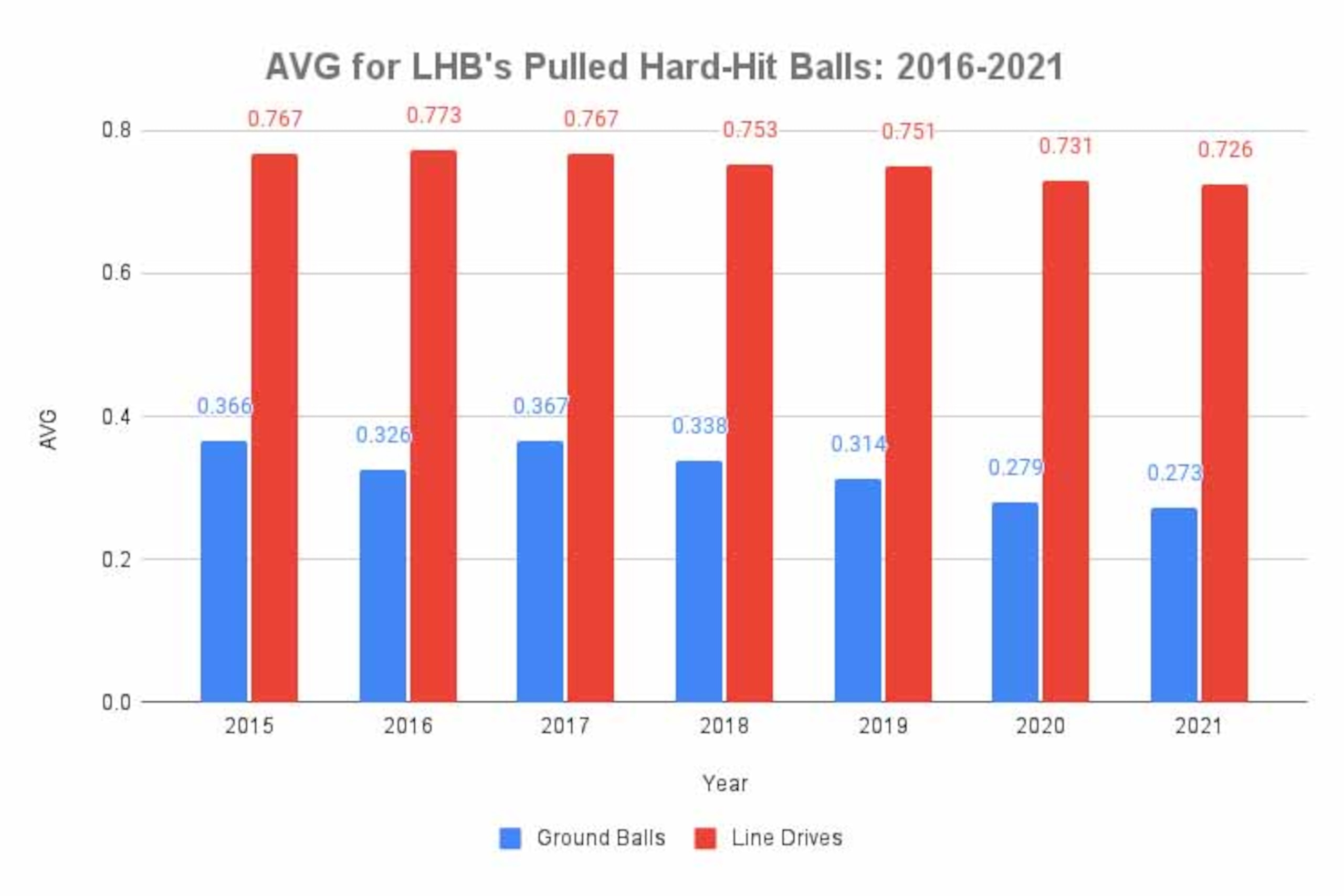
For years, one of the arguments against banning the shift has held that it should be on hitters to adjust and put more effort into hitting it where they ain't. That way, they could recoup more hits and bring more action to a modern game whose problems include a leaguewide batting average that has sunk into to the .240s in each of the last two seasons.
But if the idea is indeed to introduce more action, the data suggests a much simpler solution. Rather than somehow get several hundred hitters to modify their approaches en masse, it would be easier to disallow defenses from using an unfair competitive advantage.
Besides, Infield Defense Is Boring Now
Though a ban on shifts would primarily be meant to help hitters, it's worth discussing a potential unintended consequence that would actually be kind of awesome.
What if it made defense entertaining again?
As shifts have become more and more prevalent, it seems like sparkling plays on the infield like this one by Francisco Lindor in 2016 have become fewer and further between:
Shifts are essentially designed to eliminate the need for plays like this. Rather than trust that Lindor can range far enough, fast enough to snag 109 mph balls that aren't hit right at him, why not save him the trouble and put him where said balls are most likely to be hit?
Put another way, defensive shifts downplay things like first-step quickness, footwork and internal clocks. If a team has its infielders in the right spots, the only skills that matter are fielding the ball cleanly and making an accurate throw.
It's hard to quantify exactly how many athletic infield plays have been lost to shifts, but the answer doesn't appear to be zero. Per outs above average since 2016, the best seasons of shortstops making plays to their left and their right happened overwhelmingly before 2020 and 2021. The same holds true of second baseman making plays to the left and right.
Banning the shift could therefore do for infield defense what the Buster Posey rule did for plays at the plate. There would be losses for efficiency, but gains for athleticism. Strictly on an entertainment level, that would be a good thing.
What Banning the Shift Wouldn't Accomplish
To be clear, doing away with defensive shifts wouldn't fix all of baseball's problems.
If anything, it could make some of them worse. With more hits, the average time of game would likely climb even higher after topping out at three hours and 11 minutes in 2021. And since it would also nix one of the only incentives for hitters to cut down on their swings, it could exacerbate the league's already alarming strikeout rate.
However, this is where other possible rule changes could come in.
A pitch clocked lopped about 20 minutes off the average game in the Low-A West league in 2021 and could do something similar at the major league level if it's adopted in 2023. The automated strike zone isn't ready for prime time, but there could be a version of it that helps hitters by dropping the number of strike calls outside the zone down to zero.
Of course, it wouldn't be right for the league to throw so many bones to hitters and none to pitchers. For instance, the tackier baseball that the league has reportedly been working on could help pitchers regain what they lost with the sticky-stuff ban, which coincided with a nine-point rise in the league's batting average after its implementation last June 21.
To all these ends, regulations on shifts would merely be a start in bringing greater balance to baseball in the years to come. But as starts go, there can frankly be no better one.
Stats courtesy of Baseball Reference, FanGraphs and Baseball Savant.

.jpg?w=2560)
.jpg?w=2560 "Cam Ward Says He's Not A Loser")
.jpg?w=2560 "Viral Dan Campbell Presser 💙")
.jpg?w=2560 "Chargers Fall to 0-5 🤢")