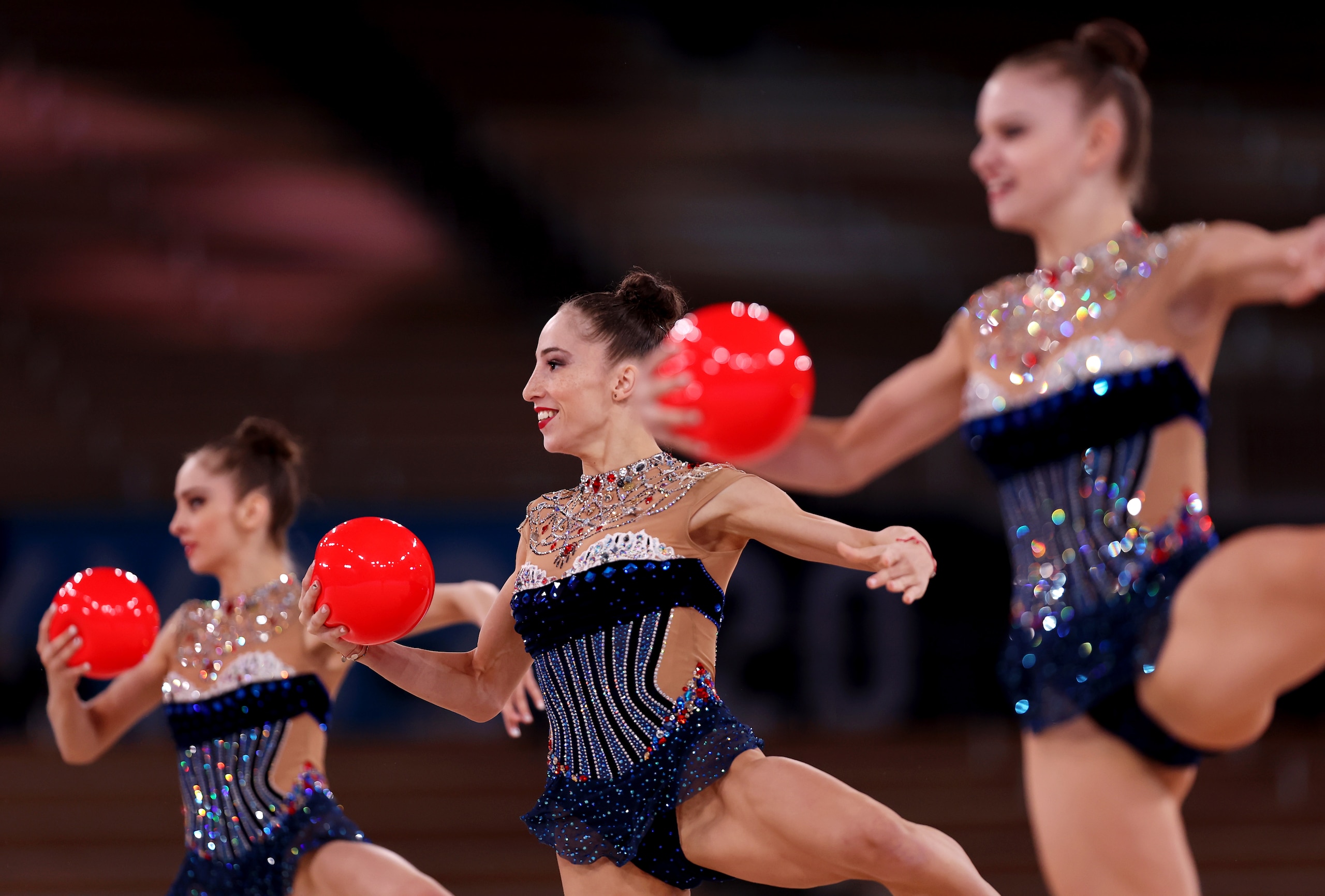

Olympic Rhythmic Gymnastics 2021: Medal Winners and Scores for Group All-Around

For the entirety of the 21st century, Russia absolutely dominated rhythmic gymnastics. They won five straight group all-around golds, a remarkable run. But that reign came to a close in Tokyo.
Bulgaria claimed gold in the rhythmic gymnastics group all-around Sunday, posting a winning score of 92.1. The Russian Olympic Committee finished second (90.4), while Italy (87.7) won the bronze.

.jpg?w=2560 "Rams Raiders Football")

Athletes from Russia are officially competing under the Russian Olympic Committee banner after the country was banned from the Games for running a state-sponsored doping program.
The ROC found itself trailing Bulgaria by 1.3 points after the single apparatus rotation. That gulf widened slightly after the double apparatus.
The women of the ROC came into the Tokyo Games as the favorites, even if Bulgaria had the top qualifying score (91.800). But the ROC was second in qualifying (89.050), and Russia has historically dominated all rhythmic gymnastics events, having won 13 of 17 gold medals in the sport's Olympic history.
That made it all the more shocking that Israel's Linoy Ashram claimed the gold in the individual all-around Saturday, upsetting a pair of ROC sisters who were the favorites, Dina and Arina Averina. They finished second and fourth, respectively.
"This is history. I'm proud of represent Israel here, on the biggest stage in the world," Ashram told reporters after her upset victory. "It's like a dream, I think it's like I'm not here."
Russia had claimed every gold medal in the sport between the 2000 and 2016 Games. After the 2016 Games, the sport rewrote its scoring code, however, removing the prior cap on the difficulty score. That, in turn, has encouraged the individual performers and teams to attempt more difficult maneuvers.
"With this new regulation it looks more like you're juggling in a circus instead of expressing yourself in an artistic way," Italian gymnast Milena Baldassarri said Saturday. "It's much more difficult and it's fun to see, but with the old system you can transmit more of your feeling and inspire the audience much more than now."
Perhaps the new rules have also ushered in a new period of parity in this event. The Russian rhythmic gymnastics dynasty came to an end, at least temporarily, in Tokyo.
.jpg?w=2560 "Steelers Saints Football")

.jpg?w=2560 "Packers Safety Slams Refs 🤬")

.jpg?w=2560 "🚨 Week 8 AP Top 25 Poll")