
UFC 130: Cole Escovedo: "I Was Paralyzed from the Waist Down"
 It’s hard to believe that only a few years ago, Cole Escovedo, who will be fighting at UFC 130 on Saturday evening, was riding a three-fight losing skid and, on account of a very serious illness, on the brink of being forced into an early retirement.
Prior to being sidelined with a staph infection in 2006, Escovedo, who fought eight times under the WEC banner from late 2001 to mid-2006, had established himself as one of the sport’s top featherweights.
The WEC’s first 145-pound champion, Escovedo, before dropping successive bouts to Urijah Faber, Jens Pulver and Antonio Banuelos, started his career by winning 11 of 12 bouts.

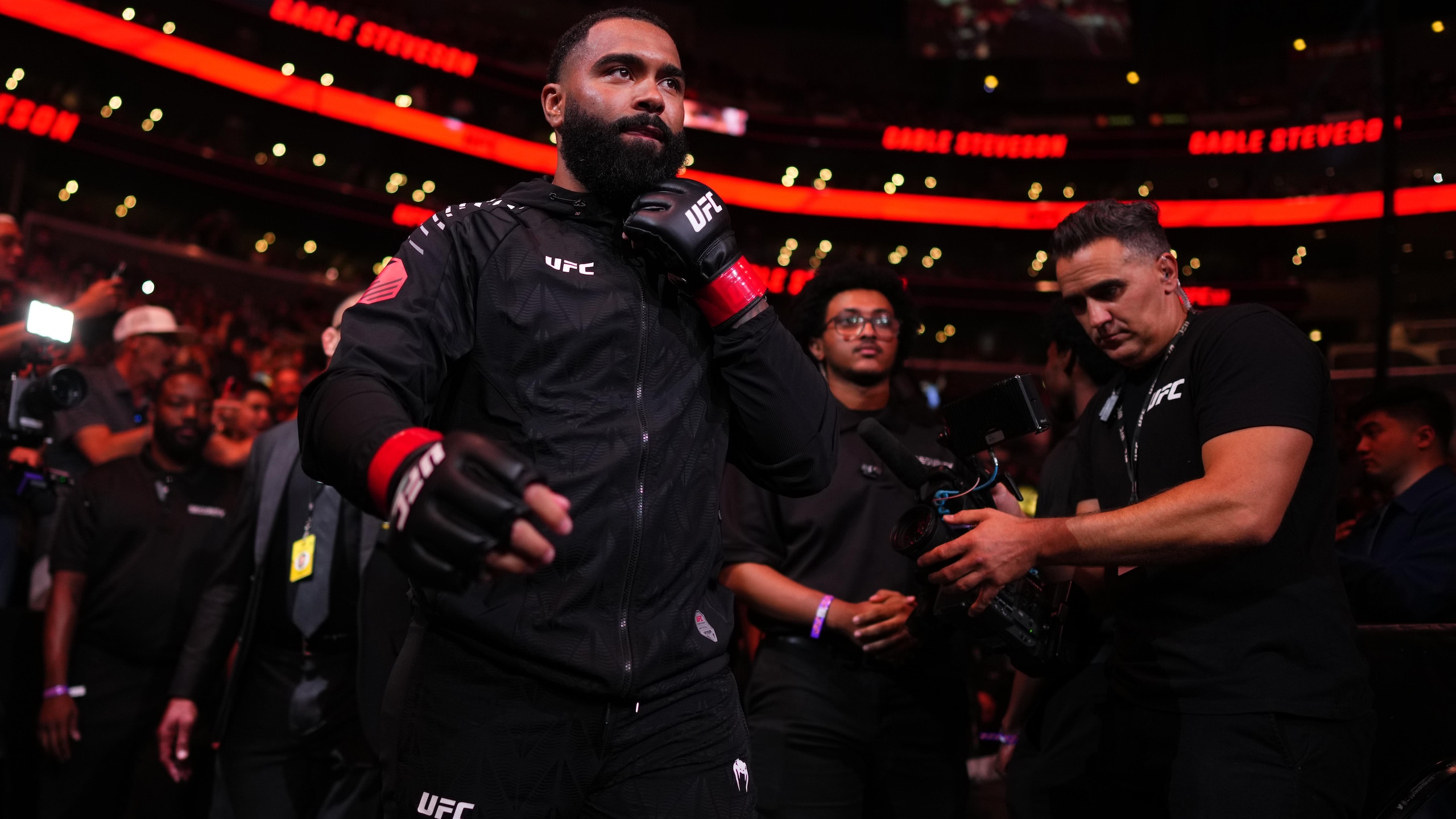
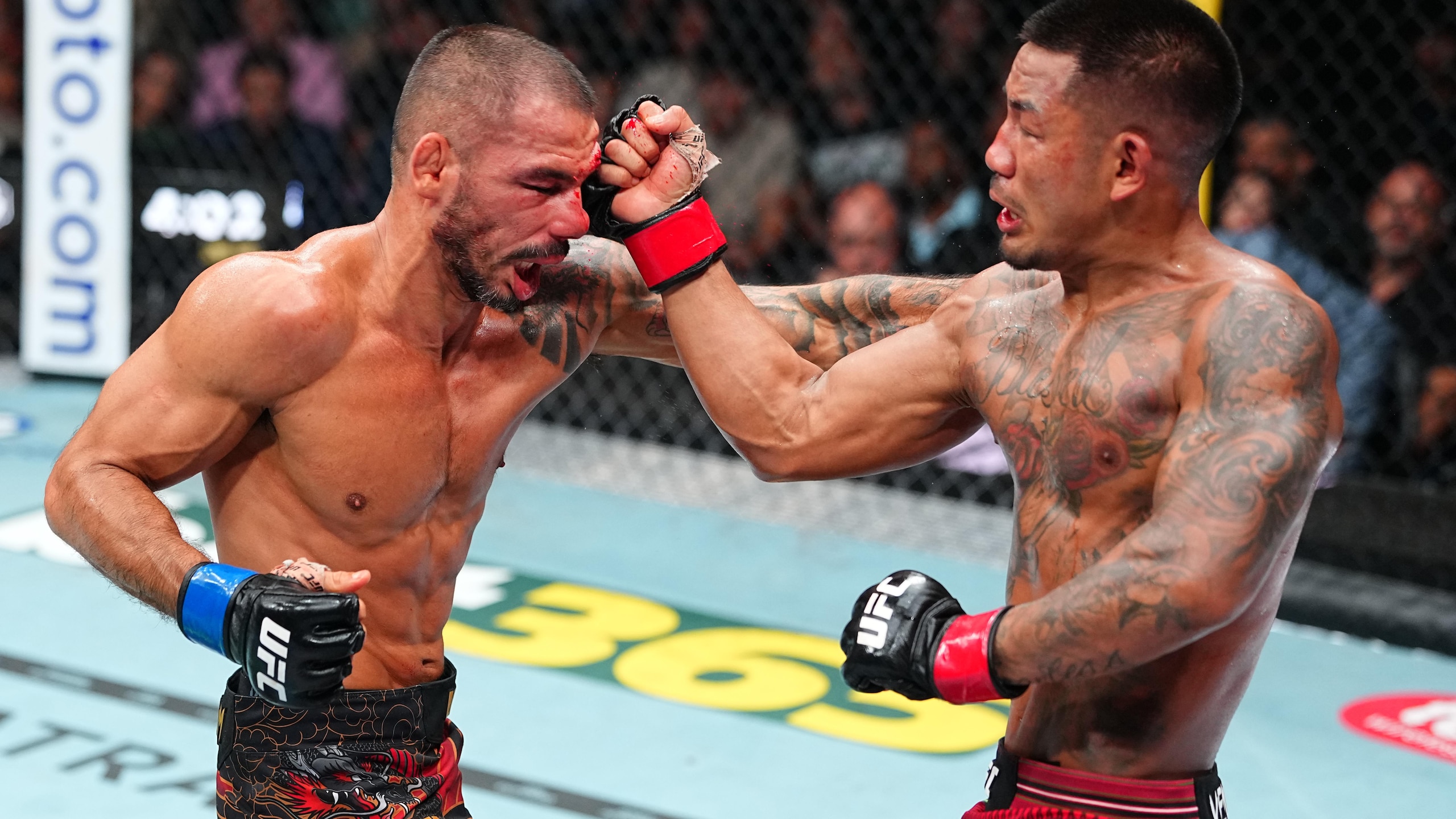
After having a simple staph infection misdiagnosed, Escovedo’s health took a sharp turn for the worst in 2007—leading many to believe that he would never compete again.
In May 2009, to the shock of many, Escovedo made his return to professional competition—winning, in his first bout at 135 pounds, the PFC bantamweight title over current UFC contender Michael McDonald.
Since his return to the sport, Escovedo has won six of eight bouts, fought for the Strikeforce and Dream FC promotions, returned to his natural 145-pound weight division, and is currently set to make his long-awaited UFC debut against Renan Barao.
Were you involved in martial arts growing up?
Yeah, I was involved in karate at age six and did that until I was, probably, 16 or 17. Then I took up Jiu-Jitsu in ’96.
What do you think made you gravitate towards martial arts?
My parents got me into it when I was six, so it wasn’t something that I naturally gravitated towards; it was something they put me in to stay in shape and to have something to do. I just stuck with it, because it was fun and it just, kind of, grew on me when I was younger.
What inspired you to try your hand at mixed martial arts?
The mixed martial arts was more so just a way to stay in shape after I graduated from the police academy. It seemed like the smartest way to stay in shape; mixed martial arts training is a great way to stay in shape.
Police academy?
Yeah, I went to the police academy when I was 18.
Did you always have an interest in law enforcement?
Actually, the goal was to be a cop for a couple years and then apply to work for the U.S. Marshals department.
Do you still plan on doing that?
I’d have to go back to the academy and re-qualify, but with the economy the way it is—the state of California is on a hiring-freeze right now—it’s kind of hard to get a job in law enforcement.
Did you ever think that you would be fighting for a living?
No. [Laughs] I definitely never thought I’d be fighting for a living. Honestly, I don’t really like fighting all that much; it’s not in my nature to want to hurt people. I happen to be good at it and it pays really well—it’s pretty much just a way to pay the bills.
Have you ever enjoyed fighting?
Not in the sense of enjoying the idea of the fighting itself; I like the idea of the competition and I like the idea of the time, effort, and discipline that it takes to be successful in it.
I like the idea of saying, you know, you’ve got one guy who’s been training really hard and he says he’s better than you and you’ve been training really hard and you feel that you’re better than them—you’re going to go in there and actually find out who’s better.
I like that competitiveness, but that’s really the only thing that I like about fighting.
Why do you fight?
Because I’m good at it and it pays the bills—and I’ve got a family to support.
If you could do something else for the same amount of money and the same amount of effort, would you do it?
Yeah, of course. That’s one of the reasons why I was looking into law enforcement. I wanted to be a cop; my dream job would be working for the U.S. Marshals or something.
What is it that motivates you to go to the gym every morning?
The fact that the bills aren’t going to pay themselves.
Do you enjoy the lifestyle?
I don’t really live the fighter’s lifestyle; I live a pretty quiet life. I’ve got my family at home and when I’m not training, I don’t really do anything involved with martial arts or anything like that; I hang around and play with my kids or play my X-BOX. I’m really not too involved with MMA when I’m not preparing for a fight.
Do you consider yourself a fan of the sport?
I love watching it; I watch just about every card.
What were your first impressions of the sport?
When I first saw it, I kind of thought the way a lot of other people thought—it was pretty violent. It was a blood-sport; people were calling it “human cock-fighting” when I first started getting into it [laughs].
There were no real weight-classes and it was just really brutal, but I always thought that the idea of taking different martial arts and pitting them against each other was really cool.
What were your goals when you started in this sport?
I didn’t really have too many. When I first started, it was more just to have fun and prove that my team—where I live in the Valley—had the best Jiu-Jitsu at the time and fighting in local fights was the best way to do it.
The goal was really just to win a couple fights and prove that our Jiu-Jitsu and MMA was better than anyone else’s in the Valley.
When did you realize that you had what it took to turn your hobby into a career?
I’d say, probably, around the time when I won my first belt. I had built up some local notoriety, so I had a bit of bargaining and negotiating power when it came to setting my fight purses.
I asked for more money here and there, and the promoters kind of let me name my own price. I was pretty flexible with it, but I realized I had a pretty good following; I sold a lot of tickets and I was making some decent money.
That was probably the time when I realized that there was good money to be made here and I thought I’d take a crack at it for a while and see how it works out.
How do you feel about what you’ve been able to accomplish so far?
I feel good. I feel like I’ve actually accomplished a lot in this sport. I’ve gotten a lot of opportunities to share my story and reach certain people and interact with my fans on a daily basis because of my involvement in the sport and what I’ve achieved.
I think I’ve achieved a lot. I think I’ve achieved more through the fighting—with the connections that I’ve made—than I would’ve been able to had I not been involved with it.
If you could go back, would you go into mixed martial arts again?
It’s hard to say, you know? I would’ve much rather gone to college and tried to get the career in law enforcement going, but it’s really hard to say.
I won’t know if it was a good decision until the story is all over. So far, it seems like it was the right decision, so I’d have to say, ‘yeah’. It’s hard to say without knowing the whole story, though.
Are people ever surprised when you tell them that you’re not passionate about mixed martial arts?
It’s not so much that I’m not passionate; I’m just not that jazzed about the whole idea of fighting. I’m a pretty non-confrontational person; I go out of my way to avoid bar fights and fighting with random people—I’m not a very violent person by nature.
It doesn’t really surprise people too much, but a lot of people don’t think that; a lot of people just assume, because I’m a fighter, I like fighting.
Do you look at mixed martial arts as a rewarding career?
Yeah. Like I said, it has afforded me a lot of opportunities that I wouldn’t have otherwise had. I’ve been able to do a lot of things that I wouldn’t have been able to do on my own.
I’ve been to Japan twice—I’ve got to see the world—these are things that I would’ve never gotten to do on my own, but with fighting, I’ve been able to do it and I’ve been able to meet a lot of people and have a lot of unique experiences. I’d say it’s been really rewarding so far.
Did you think, when you started, that you would be afforded so many opportunities in the sport?
Not really. When I first starting, it was more of a local thing. Never in my wildest dreams did I think people would be paying me to go to places like Japan to fight—I would’ve never thought that in a million years.
Could you tell me about the staph infection that you had a few years ago?
The staph infection was misdiagnosed; it was a simple staph infection that went misdiagnosed and untreated, so it turned into MRSA—which is an antibiotic-resistant strain of the infection—and it made its way into my spinal cord.
Once it got there, it kind of turned into a parasite; what that infection does—when it gets to that point—it latches onto an organ or a piece of tissue and it starts eating away at it like a parasite.
That’s essentially what it started to do to my spine, and eventually it got to the point where I was paralyzed from the waist-down and they had to do an emergency surgery on me to relieve the pressure and get the infection out of my spinal cord.
I pretty much lucked out; had I gone another 24 hours without the surgery, it probably would’ve made its way to my brain stem and I, pretty likely, wouldn’t be here talking to you [laughs].
Do you think about that a lot?
Every day when I get up and walk to the restroom I think about that—because I’m walking.
Did you ever, in your wildest dreams, think that you would compete again?
There was always that hope and that desire in my heart that told me that I could do it, but there was also the smarter part of me that told me that it probably wouldn’t happen.
The doctors were pretty convincing with their medical opinions and all of the stuff they were showing me about why I wouldn’t be able to fight again.
Were you at all apprehensive before making your return to the ring?
Yeah. We weren’t sure—even with all of the training—how my back was going to hold up until I actually had that first fight back. There were a lot of nerves and a lot of people were waiting and holding their breath to see what would happen the first time that I fought.
I had my concerns, too. Training and sparring are a lot different than the strain that you put on your body during a fight, so there were a lot of concerns.
What did you think would happen?
I honestly didn’t know. For all I knew, my spine would snap and I’d still be paralyzed [laughs], so I wasn’t really sure. Even I didn’t know what would happen—I was rolling the dice.
Are you glad that you came back to the sport?
Yeah—I am. I feel that I’ve achieved a lot more—having come back and being put in the position that I’m in; to do interviews and meet people and get my story out there and, basically, get out there and spread the word about the infection and how bad it can be.
I’m glad that I came back, because I’ve done a lot of good. I’ve been able to help people through my misfortunes.
Did you ever think that fighting would give you the opportunity to have such a strong impact on people?
No. Not until after my surgery did I think that that would be a possibility. Before my surgery, I never really thought that I would be put in the position to be able to speak and interact with people at that type of level—where they would actually listen to what I have to say.
How did you react when you learned that the UFC would be putting on fights at the lower weight-classes?
I thought it was pretty cool. I thought it was pretty cool when the WEC merged with the UFC, because the little guys were able to, pretty much, have their own show—with the WEC—and make it successful on TV and make those lower weight-classes something that people wanted to watch every day.
It’s a bigger stage with better pay-cheques and more exposure for these guys. More exposure equals more money for everyone involved, so I think it’s a good thing.
Did you ever think that you would have the opportunity to compete in the UFC?
I always felt that I belonged there; it just took a little longer than I had hoped. To me, being there is all that matters.
How did you come into contact with them?
They called me and asked if I wanted to take this replacement fight.
Was there any hesitation to sign the contract?
Nope—none at all. It’s where I feel I belong and now I have the opportunity to prove that. It’s a better opportunity to make a better life for my family, so it was an easy, easy decision.
What does fighting in the UFC mean to you?
It means a better life. The opportunities that the UFC offers you; with the marketing and the PR and the different avenues that you can take to market yourself and get yourself out there and get people to want to watch you.
There are so many avenues that they open up for you—it’s almost mind-boggling.
Did you ever think that the sport would be this big?
Yeah—I always thought the sport would be this big. It’s just taken a little bit longer than I think it should have; some things have to crawl and then they walk and run—but I think the UFC is well into the mainstream.
The sport itself was marketed properly and it’s a good sport that everyone can get involved with.
How does it feel to be a part of the UFC?
It feels good—so far [laughs]. I haven’t had any bad experiences yet. You’ve got to take the good with the bad, but so far it’s been a good experience and I’m more than happy that I’m involved with them.
How are you feeling going into this weekend’s bout?
I feel good. I have no concerns; the weight is good, I’m in shape, and everything is going fine. For me, it’s just another day at the office—it just happens to be a bigger office.
What problems do you think your opponent poses to you?
He’s definitely got a dangerous ground game. He comes with a lot of power strikes. The dangers are there—just like with any other opponent—I just need to make sure I stick to my game plan and use my strengths to counter his and exploit his weaknesses.
Do you have a prediction for how it’s going to end?
I would like to see it ending by a TKO or a knockout. My goal for this fight is to win by TKO or knockout.
What would a win this weekend mean to you?
It would be huge. It would solidify another milestone in my career and it would take it one step further in proving that my world didn’t end—just because I had the problems that I did.
I’m here and I’ve been saying I belong here for a while—it will be another milestone in my career. It would be proving something that I always knew was true; I belong in the UFC.
What do you feel is the next milestone in your career?
The next fight [laughs], winning my next fight, a title. Winning a title—I think—would be the next milestone in my career. Each fight is a different goal, but each goal is leading to an eventual title fight.
What do you feel you can accomplish in this sport?
The sky is the limit, really. It’s just a matter of how much effort and time I’m willing to put into it and making the most of the opportunities that the UFC has given me. The more that I put in, the more—I think—I will be able to get out.
What would you like to accomplish in mixed martial arts?
As far as interacting with younger people and letting them know that life gets really hard sometimes—and just because life gets really hard, doesn’t mean that you should give up.
I think being able to tell people that and prove to them that taking the easy way out isn’t always the best way—sometimes you’ve got to bite down and bear it. There are benefits to the struggle and the hardships.
Have you thought about how much longer you’d like to compete?
I decided that I’ll compete as long as my body lets me do it and as long as there is money to be made doing it; as long as I can make a living doing it. The day that it’s no longer profitable—from a risk vs. reward standpoint—then I’ll move on to something else.
What do you think the next move will be?
No clue. I won’t know until I get to that bridge.
Have you given any thought as to what you might like to do when you’re done fighting?
I’d like to stay involved in the sport; maybe become an instructor so I can pass my knowledge and experience down to other fighters. I’ve tossed around the idea of working the UFC—maybe in their marketing or PR department somehow.
Those are just off the top of my head. I haven’t thought too much about after fighting—I’ll figure it out as I get closer to the end of my career.
.jpg?w=2560 "Browns to Revisit QB Situation")


.jpg?w=2560 "EVERY Fantasy Update 📝")

.JPEG?w=2560 "NFL Changes Video Board Rules")
.jpg?w=2560 "Diggs Fined for TD Celebration")